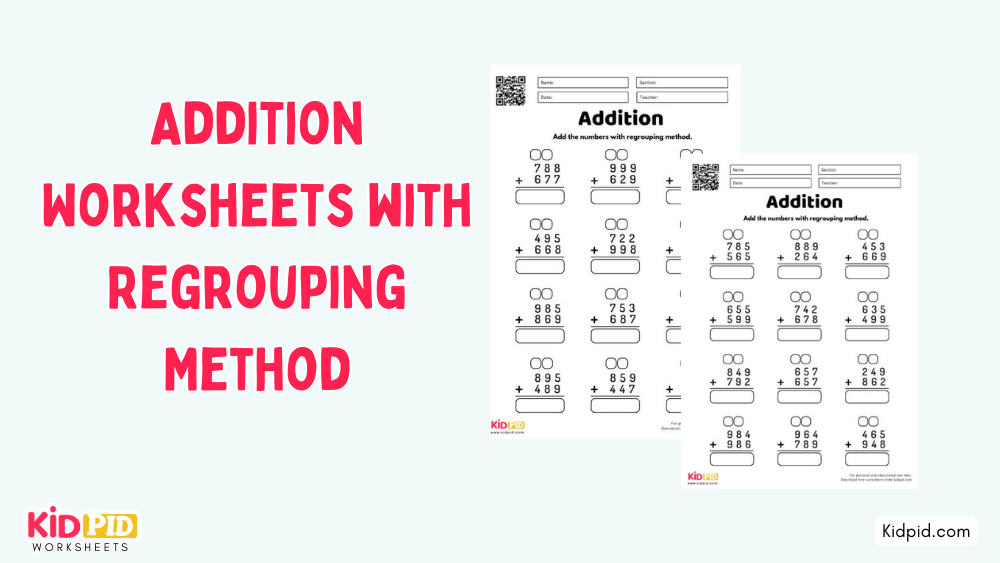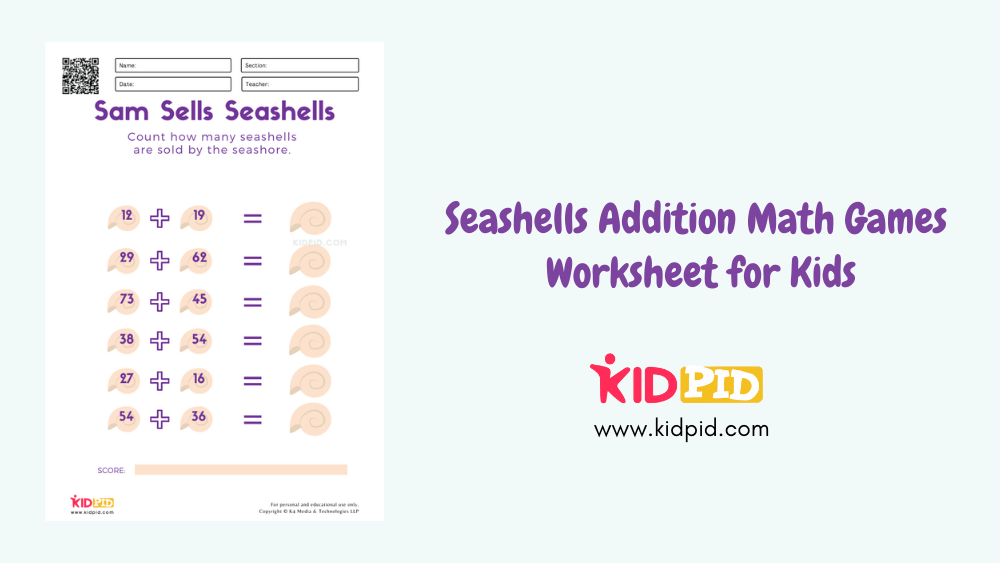
- Addition is the process of calculating the total of two or more numbers or amounts.
- It is the basis of all mathematics.
- Brahmagupta discovered addition along with subtraction, multiplication, and division.
- The plus sign ‘ + ‘ is used to denote addition. Example: 2+2
- The answer to addition is called the Sum. Example: 2+2= 4
- The addition of small numbers can be done with the help of our fingers, too.
- Adding zero ‘0’ to any number gives the sum as the number itself.
- It doesn’t matter in which order we add a group of numbers together, as the answer will always be the same. Example: 1+2+3+4 gives the same answer (10) as 4+3+1+2.
Contents
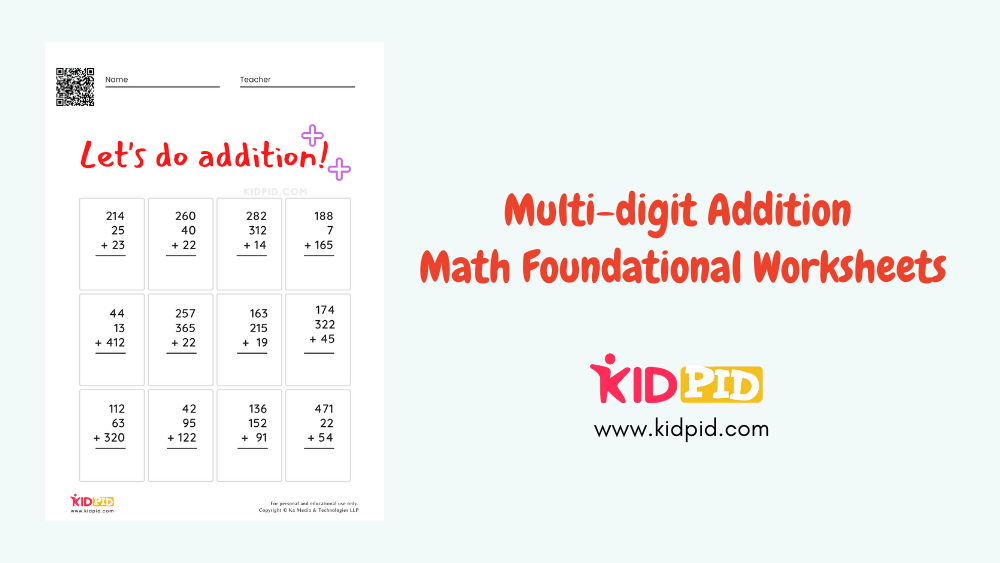
- Multi-digit Addition Math Foundational Worksheets
- How to explain addition to a child?
- Addition with Regrouping Strategies
- Key Facts About Multi-Digit Addition Math Foundational Worksheets
- Parts, Types, and Examples of Multi-Digit Addition Worksheets
- How Do Multi-Digit Addition Math Foundational Worksheets Work?
- Benefits of Learning About Multi-Digit Addition
- Learning Objectives
- Worksheet Instructions
- Interesting Facts About Multi-Digit Addition
- Vocabulary Words
- Real-Life Applications
- FAQs
- Q1. At what age or grade should a child start multi-digit addition worksheets?
- Q2. What is the difference between addition “with regrouping” and “without regrouping”?
- Q3. Why should I avoid teaching my child shortcut math “tricks” early on?
- Q4. How can I make multi-digit addition worksheets more fun for a reluctant learner?
- Read More:
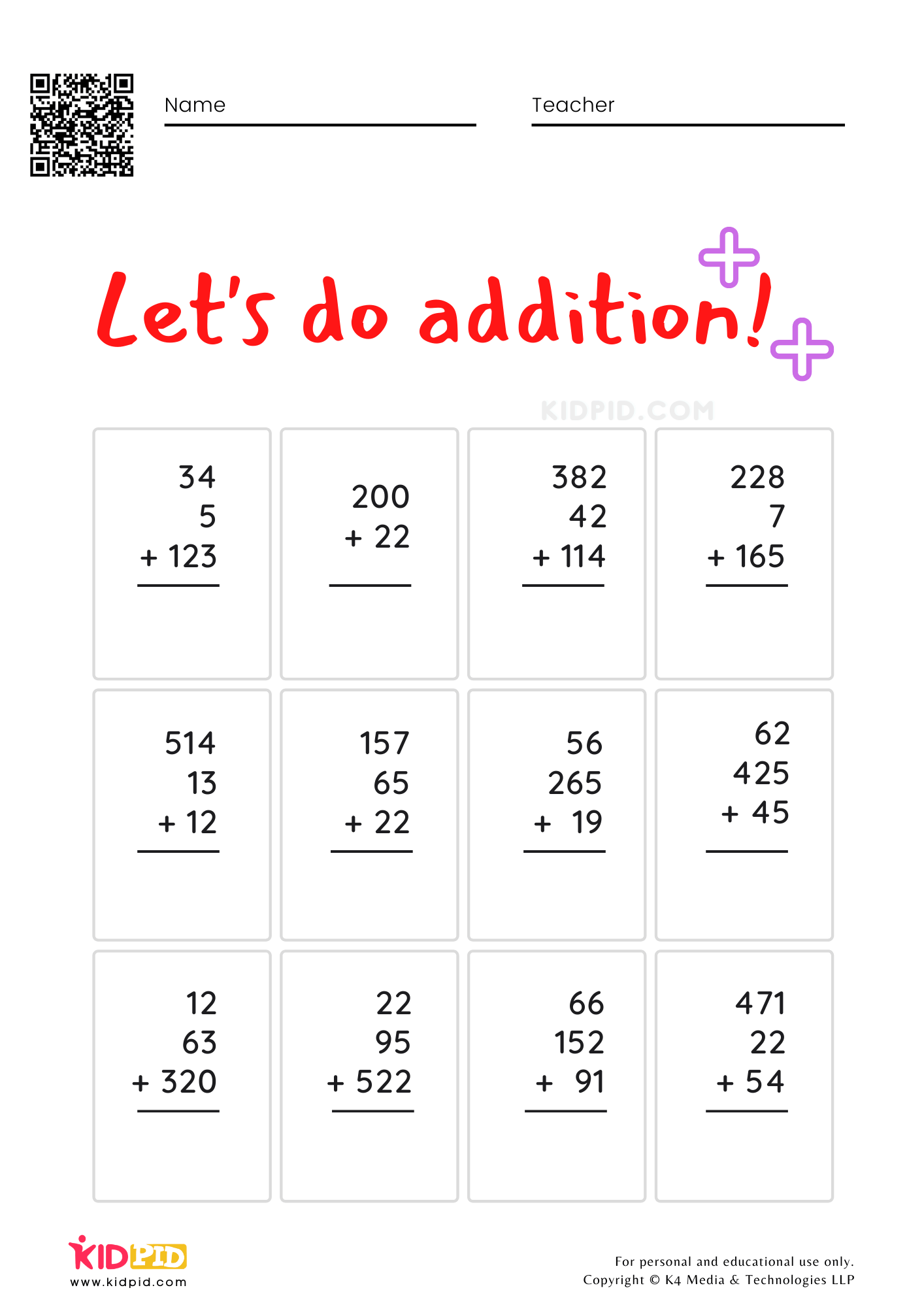
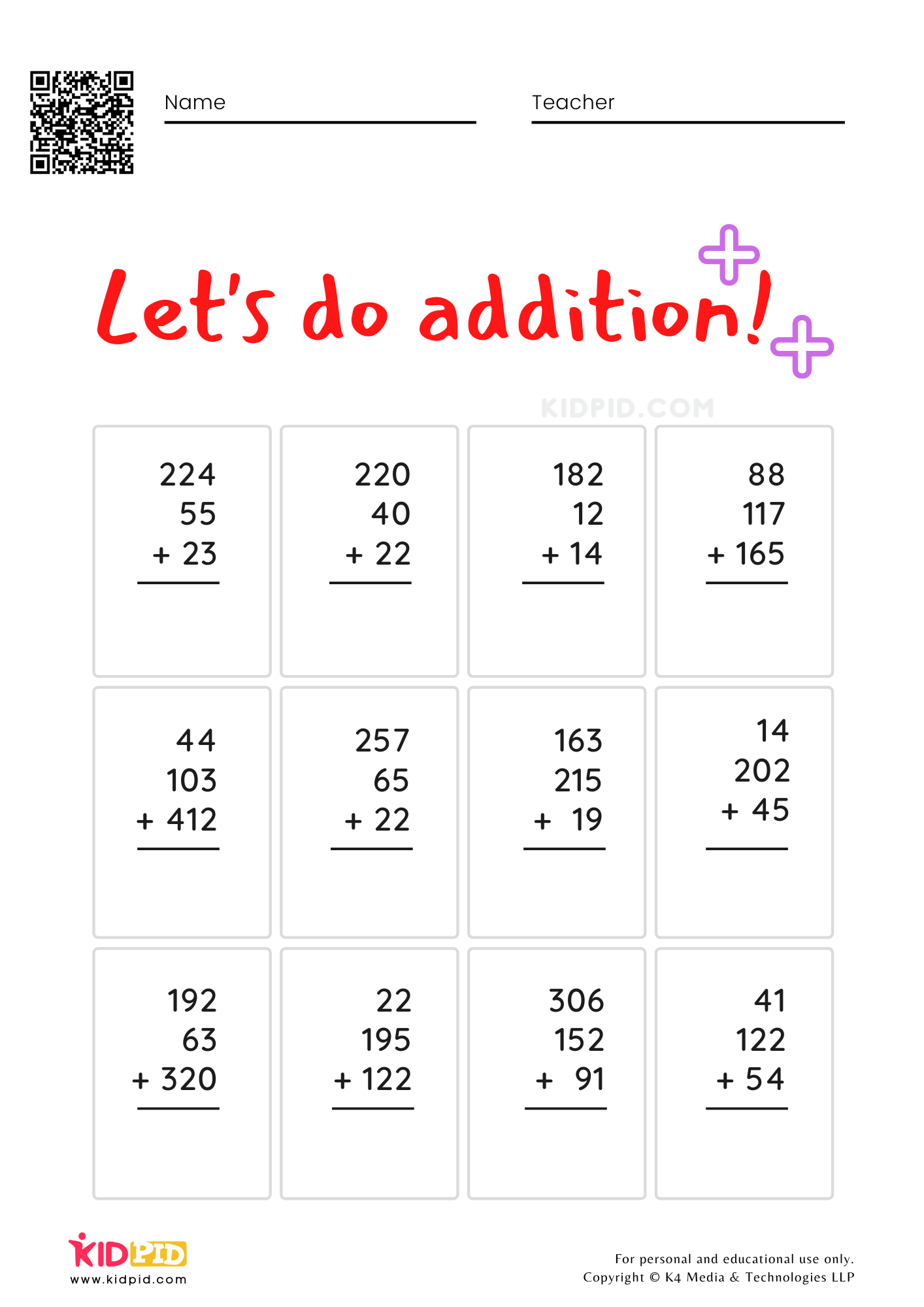
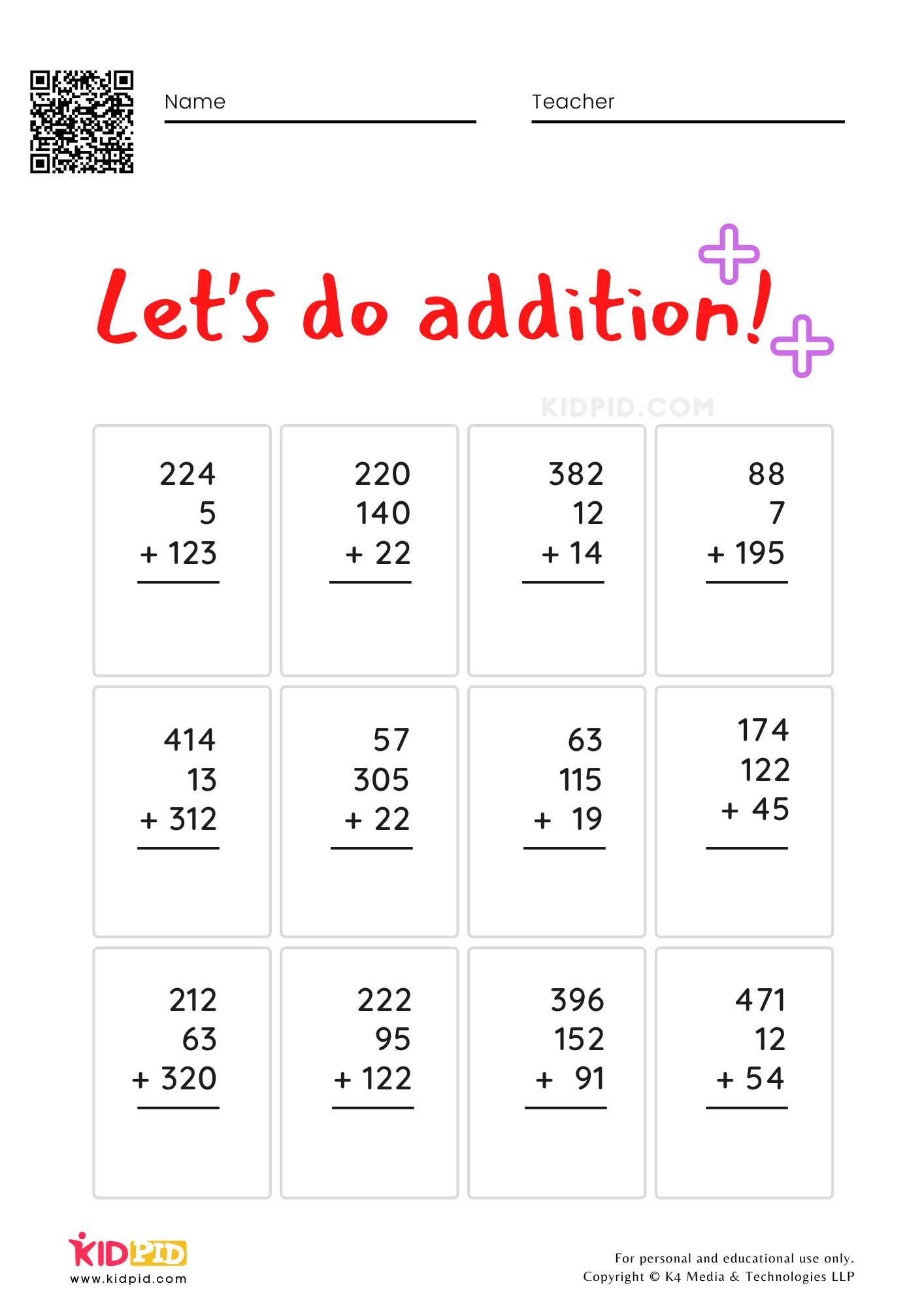
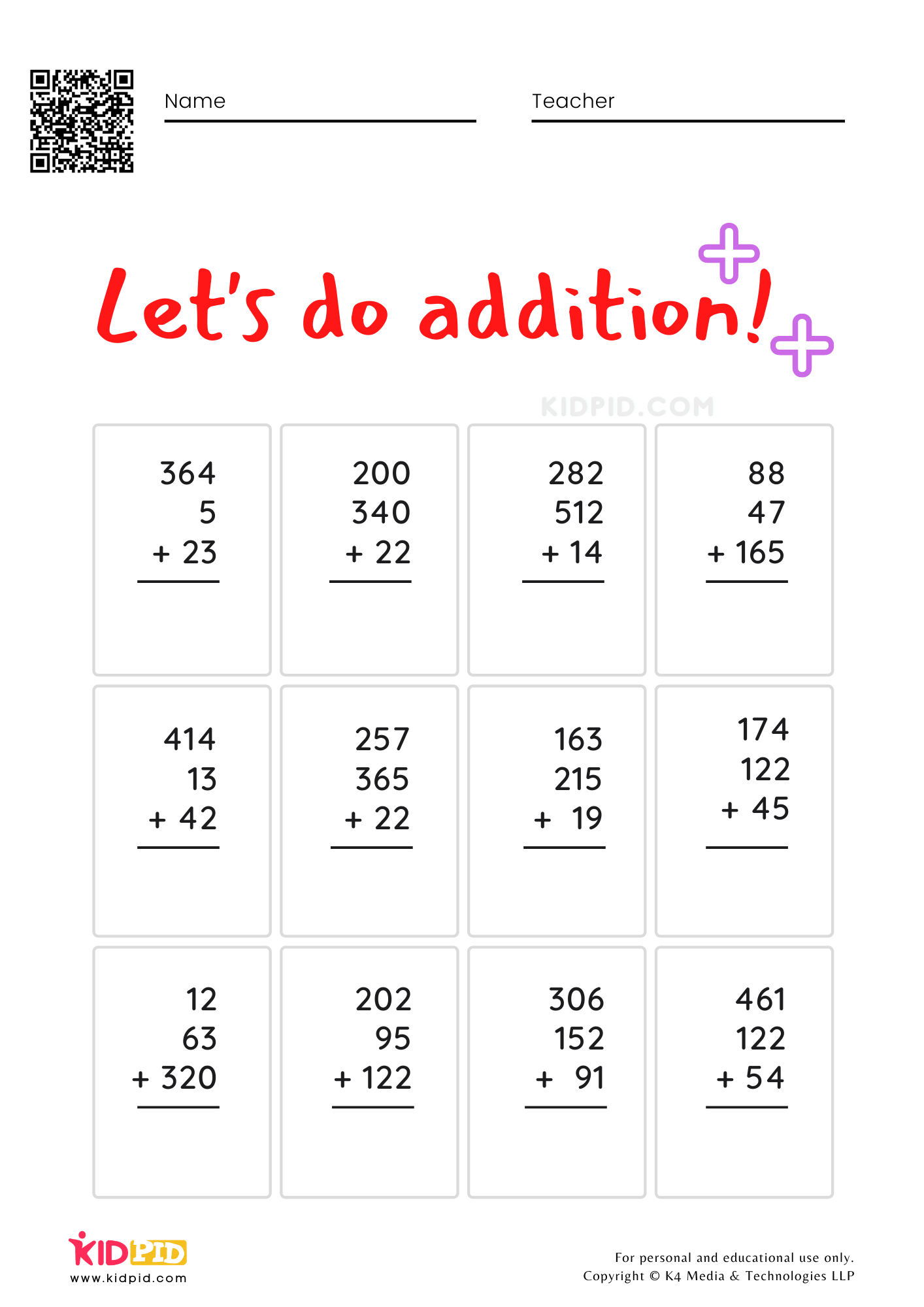
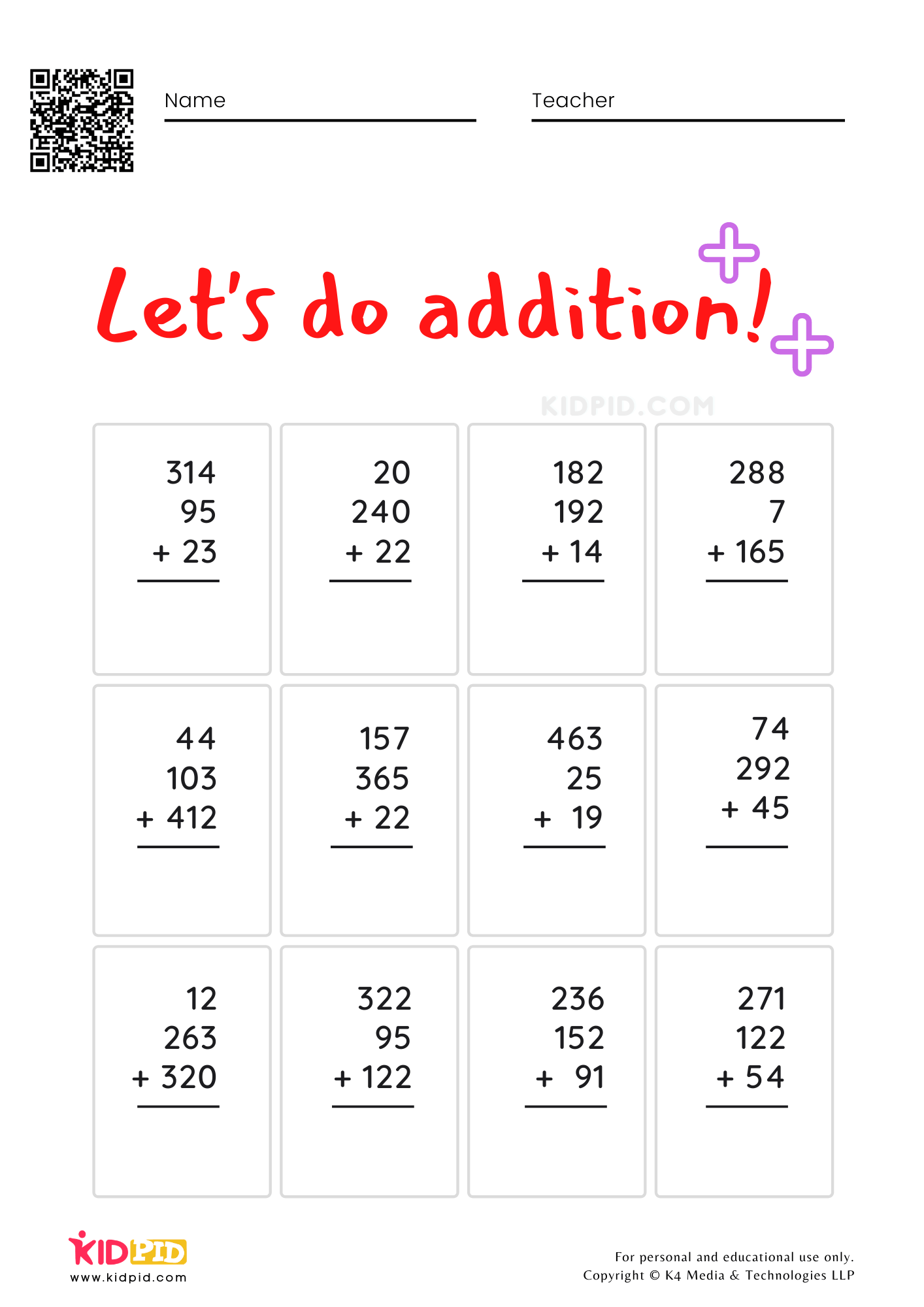
Multi-digit Addition Math Foundational Worksheets

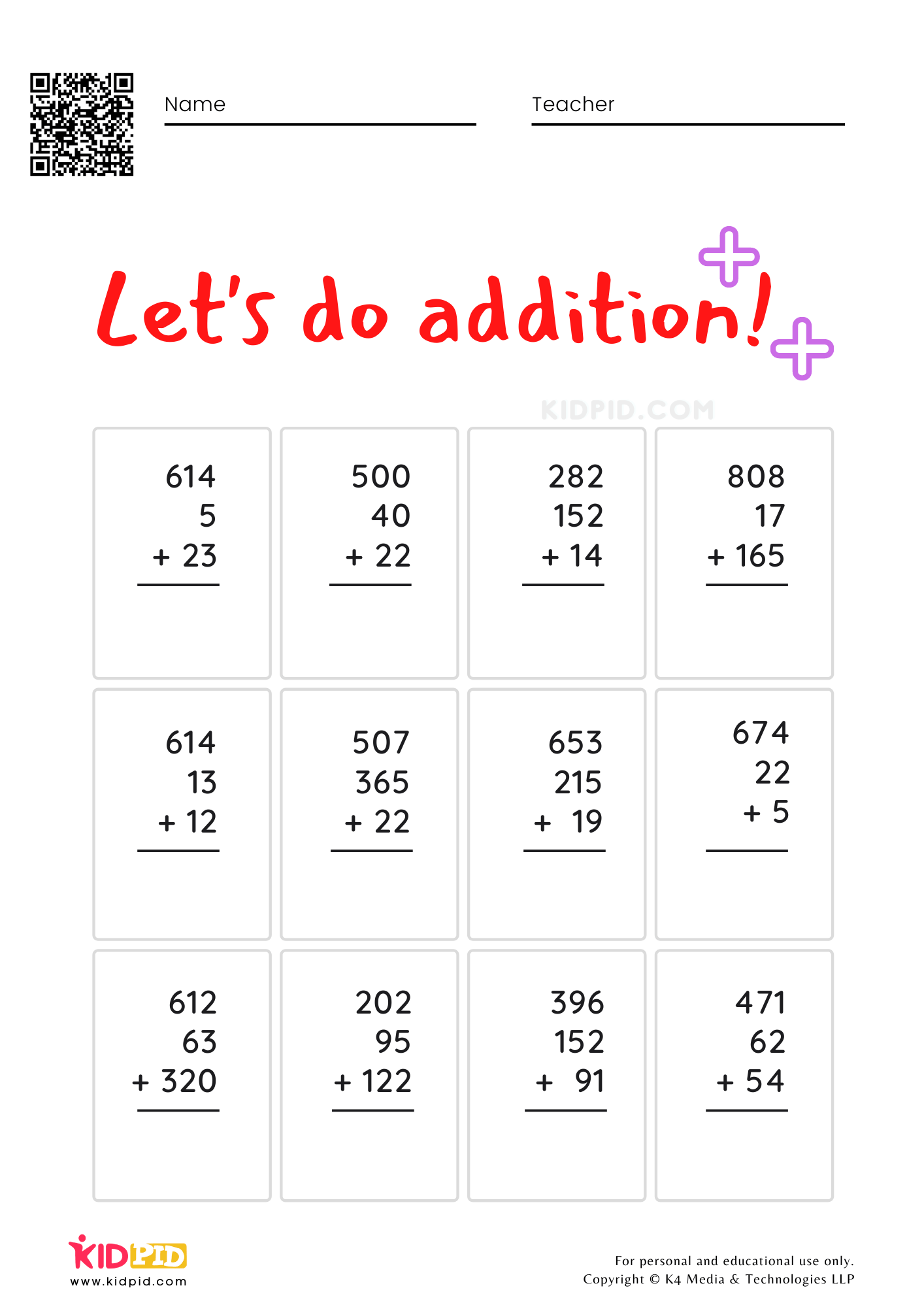
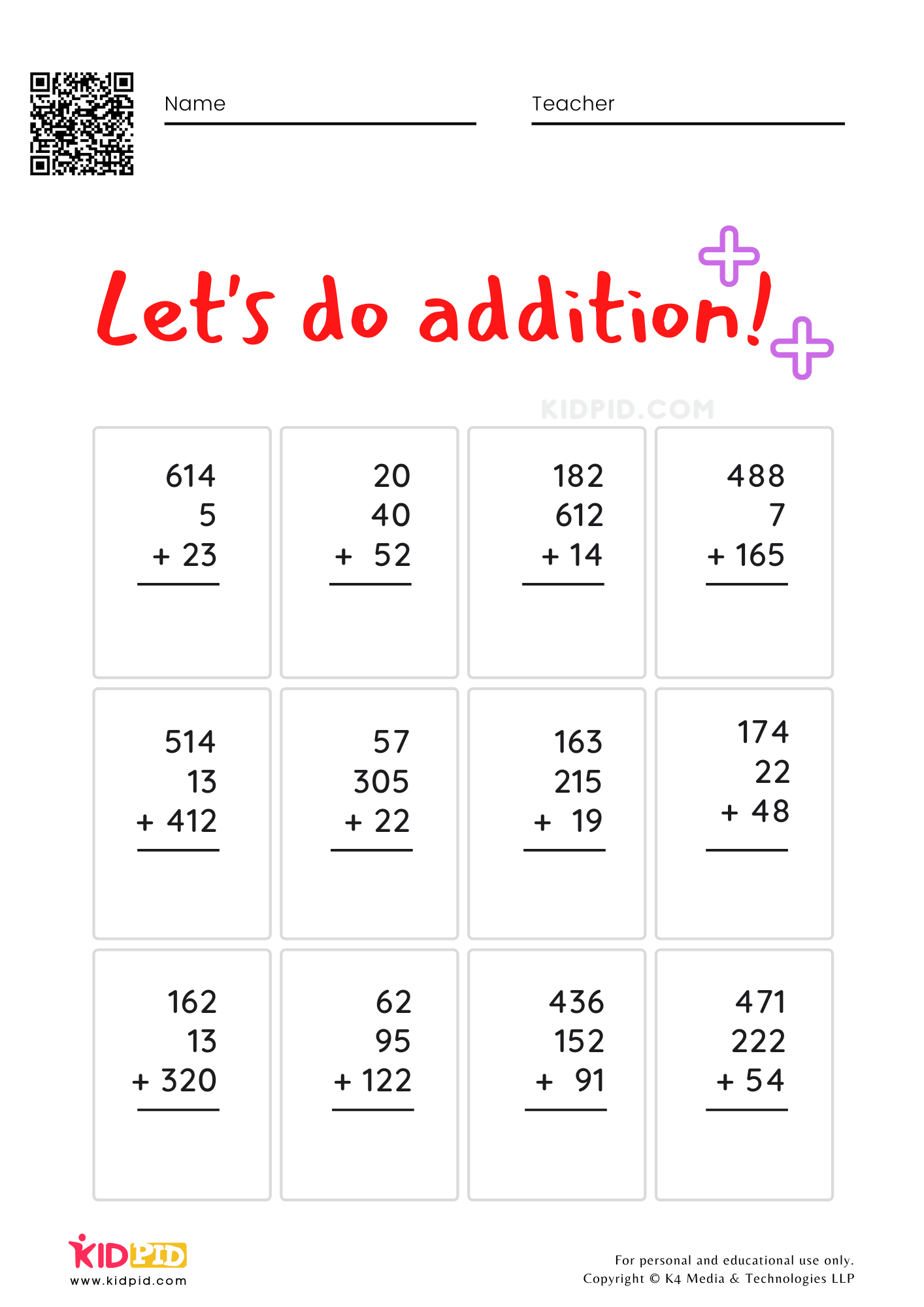
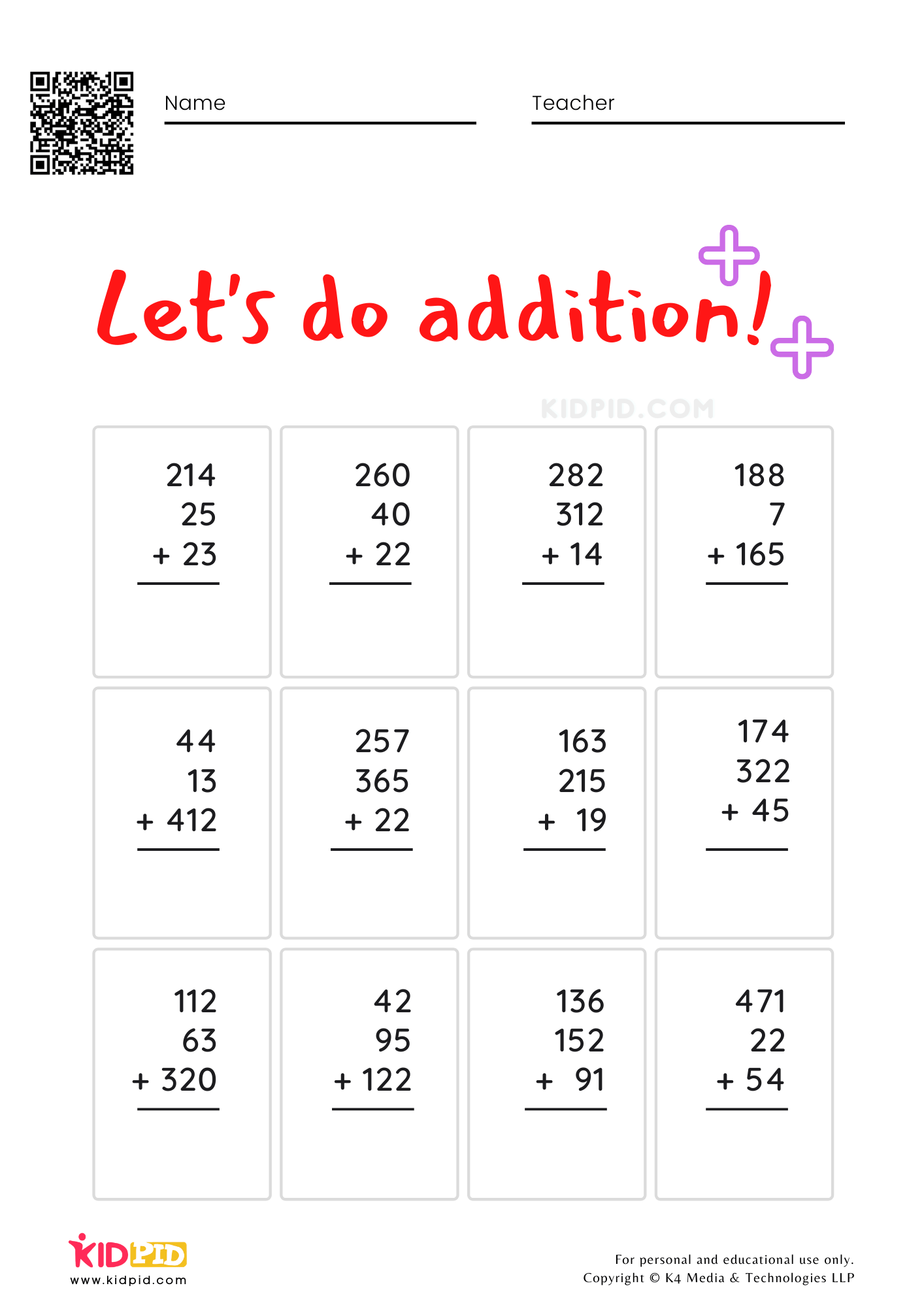
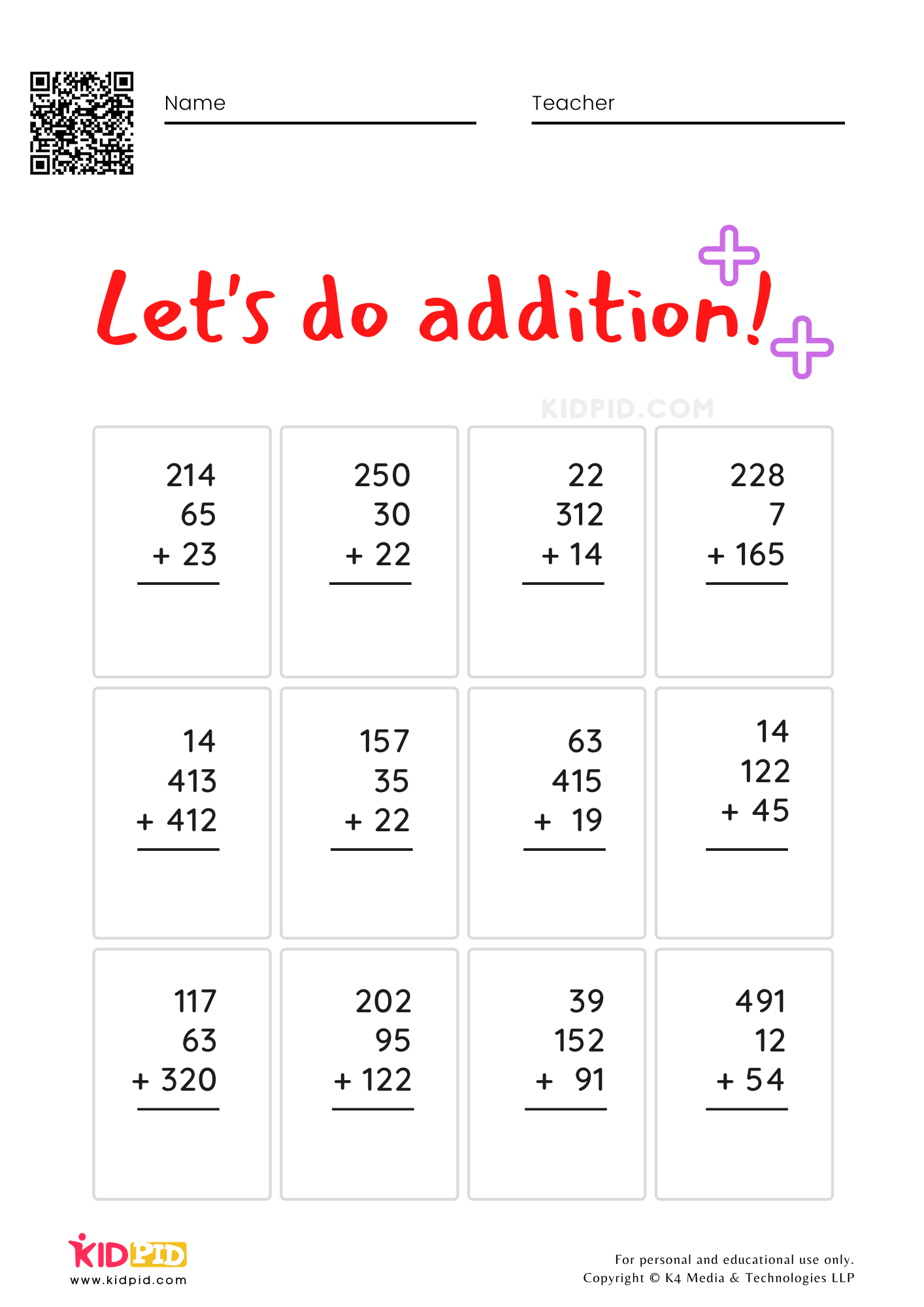
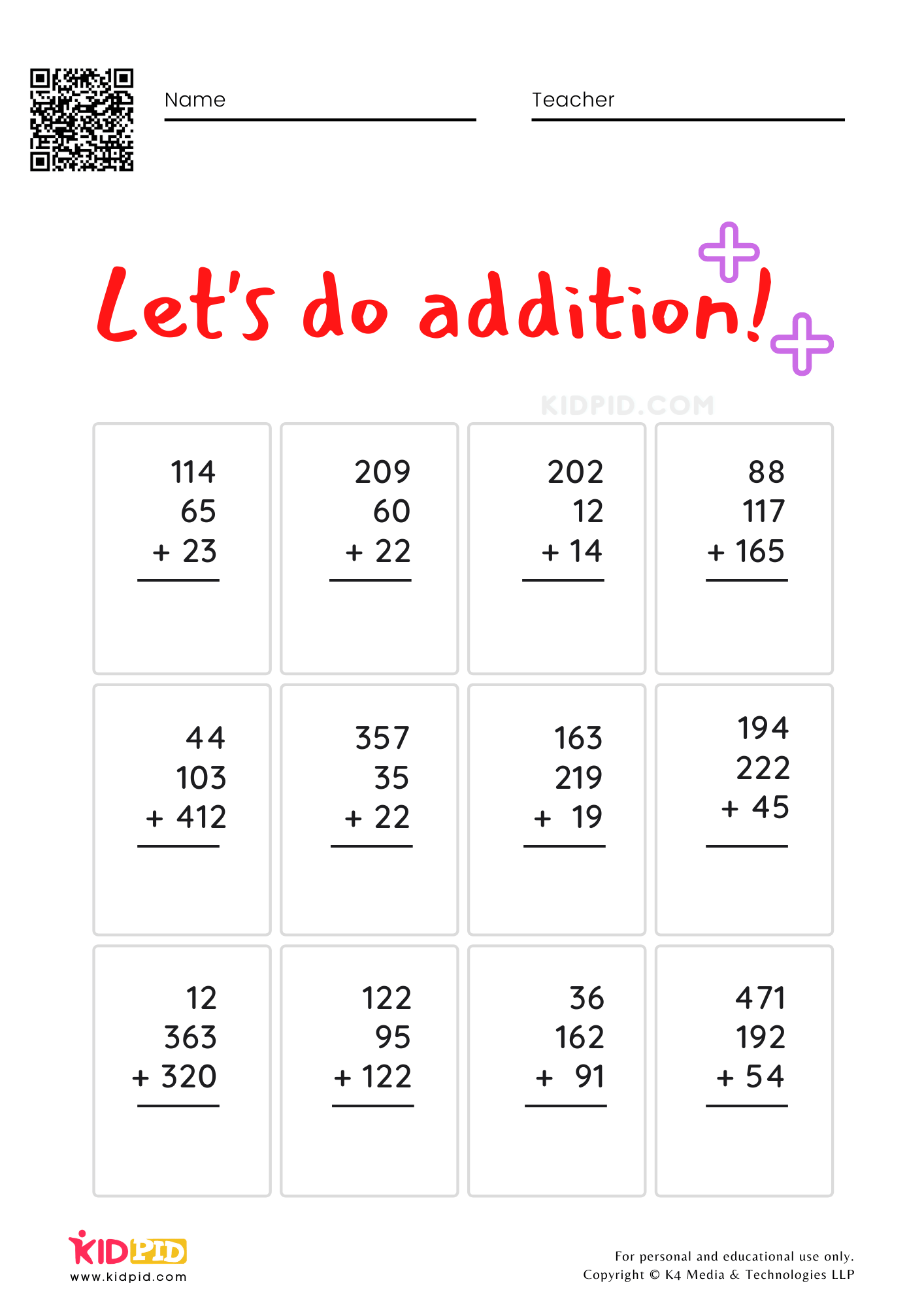
How to explain addition to a child?
- We can use addition in our everyday situations.
- When travelling, we can add up the distance. Example: 5 (km)+ 6(km)= 11 (km)
- We can use addition in counting money.
- We can make our kid add random things, like how many apples are there in the kitchen, or what is the total number of apples and bananas in total.
- Break the mode of teaching. For example, before teaching a child how to do addition, make them learn numbers up to 30, and when they have a proper command of that, then give them numbers to add up to 30.
- When they start to do well, increase the number of learning sessions up to 50 or 70.
- Teach your child the concept of Place- value. For example, make them understand that 17 is the same as 10+7.
- We should avoid using tricks, as more tricks will lead to more confusion.
- Remember that visual learning is more effective.
- Use as many colours as you want, as kids love colour play.
- We should also avoid doing the addition in our heads as kids because, as kids, we should learn and practice the exact method.
- We can randomly pick up any number and can ask the kid to answer it. It will help the parents and the teachers to know that the kid is not mugging up the homework and instead is trying their best to learn the Addition problems method.
- If a kid takes less than five seconds, he/she has mastered the Addition method.
- There are many board games available for children in the market, which will also help them learn, and at the same time, they will be having fun too.
Addition with Regrouping Strategies
- Students should know the concept of Place- value as stated earlier.
- Once a kid mastered the single- digit addition, it’s now turn of making them learn about 2 or 3-digit addition or multi-digit addition.
- Before trying to learn on their notebook, bring some board games where you can teach them multi-digit addition.
- Basically, a cubical board game will work.
- Don’t let the kids do the maths in their minds before mastering it. Tell them to speak up every digit they are thinking of adding up.
- Do the sum of multi-digit addition one by one. For example, if given a sum of 235+64 to add, then add 5 and 4 first, then go to the second number. This way, you will find it easier to learn
Key Facts About Multi-Digit Addition Math Foundational Worksheets
- Historical Origins: The mathematical framework for multi-digit addition, along with the fundamental operations of subtraction, multiplication, and division, was systematically detailed by the ancient Indian mathematician Brahmagupta.
- Core Symbolism: Multi-digit addition problems utilise the plus sign (
+) to denote the operation. The final result of combining these values is formally known as the sum. - The Identity Property: Adding zero (
0) to any multi-digit number results in a sum equal to the original number. - The Commutative Property: The order in which you add numbers together does not alter the final sum. For example,
235 + 64yields the same result as64 + 235. - Prerequisite Milestones: Before advancing to these foundational worksheets, young learners should possess a strong command of numbers up to 100 and master single-digit addition.
Parts, Types, and Examples of Multi-Digit Addition Worksheets
Foundational addition worksheets are intentionally structured into progressive categories to build a child’s confidence and mathematical stamina.
- Non-Carrying Addition (Static Addition): Problems where the digits in each place-value column add up to 9 or less, requiring no carrying or regrouping.
- Example:
123 + 54 = 177(3+4=7, 2+5=7, 1+0=1)
- Example:
- Addition with Regrouping (Dynamic Addition): Problems where the sum of a specific column is 10 or greater, requiring the “carrying” of the tens digit to the next column to the left.
- Example:
235 + 64 = 299(A multi-digit problem that tests column alignment)
- Example:
- 2-Digit, 3-Digit, and 4-Digit Worksheets: Layouts tailored to a student’s grade level, scaling up the complexity of the numbers as place value understanding matures.
How Do Multi-Digit Addition Math Foundational Worksheets Work?
These math worksheets break down large, intimidating numbers into manageable, bite-sized components using a highly structured, columnar layout.
The worksheets function by forcing the child to process the mathematical equation from right to left, rather than the standard left-to-right reading direction. They guide the student through a systematic, step-by-step workflow:
- Column Alignment: The worksheets visually align numbers vertically based on their place value—Ones under Ones, Tens under Tens, and Hundreds under Hundreds.
- Right-to-Left Processing: Students solve the column on the far right (the Ones place) first.
- The Regrouping Mechanism: If a column’s sum exceeds 9, the worksheet provides space at the top of the next column for the student to physically write the “carried” digit. This concrete visual reminder prevents mental fatigue and calculation errors.
Benefits of Learning About Multi-Digit Addition
Mastering multi-digit addition via targeted worksheets unlocks critical cognitive and academic advantages for elementary students:
- Deepens Place Value Comprehension: It bridges the gap between abstract numbers and physical reality, helping kids understand that the
1in17actually represents a value of10. - Eliminates Over-Reliance on “Mental Tricks”: Worksheets discourage kids from guessing or doing complex arithmetic entirely in their heads, which often leads to systemic math anxiety.
- Builds Working Memory: Processing multi-step operations teaches the brain to hold and manipulate numerical data effectively.
- Gateway to Advanced Math: Multi-digit addition is the absolute baseline prerequisite for learning multiplication, long division, and algebraic thinking.
Learning Objectives
By systematically working through these foundational math printables, students will achieve the following academic milestones aligned with core elementary curricula:
- Accurately align multi-digit numbers vertically by their correct place value.
- Demonstrate fluency in adding multi-digit numbers both with and without the regrouping (carrying) method.
- Articulate the steps of the addition algorithm out loud while solving a problem, reinforcing conceptual understanding over rote memorisation.
- Solve real-world word problems involving multi-digit totals within a time-to-solution threshold of fewer than 5 seconds per column.
Worksheet Instructions
To maximise the educational value of these printables, teachers and parents should instruct students to follow these precise procedural steps:
- Grab your pencil and colouring tools: Keep a sharp pencil ready for writing sums and use colored pencils to highlight distinct place-value columns if needed.
- Read the numbers out loud: Before writing, vocalise the problem (e.g., “Two hundred thirty-five plus sixty-four”).
- Start on the far right: Always begin adding with the digits in the Ones column.
- Write clearly: Place your sum directly underneath the solid horizontal line in the same column.
- Carry carefully: If your column sum is 10 or more, write the ones digit below the line and place the tens digit squarely at the top of the very next column to your left.
- Do not rush: Avoid doing the math in your head. Write down every step to visually track your work.
Interesting Facts About Multi-Digit Addition
- The Magic of Zero: Zero acts as the “additive identity.” No matter how massive a multi-digit number is—even if it is a million—adding zero leaves the value completely unchanged.
- The Five-Second Mastery Rule: Educational psychologists note that if a child can compute a single column of a multi-digit problem in less than five seconds without hesitating, they have successfully achieved cognitive mastery over that specific addition fluid mechanic.
- Gamified Geometry: The foundational principles of multi-digit addition can be perfectly modelled in the physical world using cubical board games and base-ten blocks, proving that abstract math is highly spatial.
Vocabulary Words
To build a child’s mathematical literacy, ensure they understand and use these key terms while working through the worksheets:
- Addition: The mathematical process of calculating the total of two or more numbers or amounts.
- Sum: The final total resulting from the addition of a set of numbers.
- Plus Sign (+): The operational symbol used to indicate that numbers are being combined.
- Place Value: The numerical value that a digit has because of its position in a number (such as the ones, tens, hundreds, or thousands position).
- Regrouping / Carrying: The process of turning a group of ten ones into a single ten, or ten tens into a single hundred, and moving it to the adjacent left column during addition.
Real-Life Applications
Multi-digit addition isn’t just an abstract school subject—it is a functional life skill used daily:
- Financial Literacy: Counting pocket money, calculating the total cost of multiple toys at a store, or working out a grocery budget.
- Travel and Navigation: Adding up distances in kilometres or miles during a family road trip to determine how far away a destination is (e.g.,
5 km + 6 km = 11 km). - Kitchen Math & Household Inventory: Counting random items around the house, such as figuring out the total volume of fruit by adding the number of apples to the number of bananas in the kitchen.
FAQs
Q1. At what age or grade should a child start multi-digit addition worksheets?
Answer: Children typically transition to 2-digit addition without regrouping at the end of 1st Grade or the beginning of 2nd Grade (around ages 6 to 7), provided they have thoroughly mastered single-digit addition and understand numbers up to 100.
Q2. What is the difference between addition “with regrouping” and “without regrouping”?
Answer: Addition without regrouping occurs when the columns add up to 9 or less, meaning no values need to be moved. Addition with regrouping (traditionally called “carrying”) occurs when a column totals 10 or more, requiring the tens digit to be moved over to the top of the next column to the left.
Q3. Why should I avoid teaching my child shortcut math “tricks” early on?
Answer: While shortcuts might give fast answers temporarily, introducing too many tricks before a child understands place value causes profound confusion later on. Practising the exact, structured vertical method on worksheets builds a concrete mental framework that lasts a lifetime.
Q4. How can I make multi-digit addition worksheets more fun for a reluctant learner?
Answer: Incorporate visual colour-coding by using different colored highlighters for the ones, tens, and hundreds columns. You can also pair the worksheet printables with physical board games, building blocks, or reward-based real-world counting tasks.
Master addition with these Multi-Digit Addition Math Foundational Worksheets. Engaging printable exercises help children practice multi-digit addition, strengthen place value understanding, improve calculation accuracy, develop problem-solving skills, and build confidence in essential math concepts. Dive into fun learning with our collection of paragraphs, essays, worksheets, flashcards, quizzes, and interactive resources. Follow us on YouTube & Facebook for more. Practice as much as you can to make your addition skills better.
The Content Team crafted this worksheet to promote student improvement.
Reviewed By Parul Rana
Read More: