

The “School and Home Vocabulary Worksheet for Kindergarten” is designed to bridge the gap between the familiar surroundings of home and the exciting new experiences of school. By focusing on common vocabulary associated with these two environments, this worksheet aims to enhance children’s language skills, comprehension, and confidence. Through engaging activities and colorful imagery, kindergartners will not only expand their vocabulary but also learn to connect words with their everyday experiences, making the learning process both fun and meaningful.
[Scroll Down for Download Link]
Contents
- School and Home Vocabulary Missing Letters
- Key Facts About the School and Home Vocabulary Worksheet
- Parts, Types, and Examples of Kindergarten Vocabulary Worksheets
- How Does the School and Home Vocabulary Worksheet Work?
- Benefits of Learning About School and Home Vocabulary
- Learning Objectives
- Worksheet Instructions
- Interesting Facts About Vocabulary Words for Kids
- Real-Life Applications
- FAQs
- You may like these:
School and Home Vocabulary Missing Letters
Read More: Festival Vocabulary Printable Worksheets for Kids

- Write
- Sing
- Read
- Draw
- Paint
- Cook

- Laugh
- Eat
- Drink
- Cry
- Wash
- Brush
Key Facts About the School and Home Vocabulary Worksheet
- Target Age Group: Kindergarteners (ages 5–6 years old).
- Core Focus: Early literacy, word-to-object association, and environmental language alignment.
- Format: High-engagement, downloadable, missing-letter activity sheets utilizing everyday action words.
- Educational Alignment: Supports early childhood literacy benchmarks (such as Common Core State Standards for Language and Speaking/Listening).
- Developmental Value: Bridges dual-environment learning by connecting the structured vocabulary of the classroom with the comfortable, familiar vocabulary used at home.
Parts, Types, and Examples of Kindergarten Vocabulary Worksheets
- Action Verbs: Words that describe daily routines across both environments.
- Examples: Write, Sing, Read, Draw, Paint, Cook, Laugh, Eat, Drink, Cry, Wash, Brush.
- School Environment Nouns: Physical objects and spaces a child interacts with during the school day.
- Examples: Desk, backpack, pencil, whiteboard, playground, teacher.
- Home Environment Nouns: Everyday comforts and items found in a child’s personal space.
- Examples: Bed, kitchen, sofa, toys, toothbrush, family.
- Social-Emotional Words: Vocabulary used to express feelings and instructions in both settings.
- Examples: Share, help, listen, happy, kind.
How Does the School and Home Vocabulary Worksheet Work?
- Visual Cueing: The child looks at a vibrant illustration of an action (e.g., a child brushing their teeth or painting a picture).
- Phonic Decoding: The child identifies the word representing the image, which is presented with missing letters (e.g., R _ a d or E _ t).
- Active Recall & Fine Motor Practice: The child traces or writes the missing phonetic sound into the blank space. This dual-action pathway strengthens muscle memory while simultaneously solidifying letter-sound correspondence.
Benefits of Learning About School and Home Vocabulary
- Eases Transitional Anxiety: Kindergarten is a massive transition. Giving children the precise language to describe their day helps them process the shift from home life to school life smoothly.
- Boosts Expressive Language Skills: Expanding a child’s vocabulary reduces communication frustration. Instead of acting out or gesturing, they can explicitly say, “I want to paint” or “I am drinking water.”
- Enhances Reading Readiness: Recognizing common sight words and decoding simple spelling patterns forms the structural baseline for reading fluency in the first grade.
- Strengthens Home-School Connection: When parents use the same targeted vocabulary words at home that teachers are tracking in the classroom, it doubles the child’s learning exposure and speeds up word mastery.
Learning Objectives
- Identify, read, and correctly spell foundational 3-to-5 letter action verbs related to home and school.
- Demonstrate phonemic awareness by filling in missing consonants and vowels in simple words.
- Connect abstract text and spelling structures to concrete, real-world daily actions.
- Improve fine motor pencil grip and control through deliberate letter-writing practice.
Worksheet Instructions
For the best learning outcomes, parents and educators can guide children through the printable with these simple steps:
- Look and Talk: Point to the first image on the worksheet. Ask the child, “What is the person doing in this picture?” Encourage them to say the action word out loud.
- Sound It Out: Read the incomplete word beneath the picture together. Accentuate the missing letter sound (e.g., if the word is Wash and the ‘a’ is missing, emphasize the short /o/ or /ah/ vowel blend).
- Fill in the Blank: Have the child carefully write the missing letter in the blank space using a pencil.
- Read and Confirm: Have the child trace the entire word with their finger and read it aloud from start to finish to celebrate their success!
Interesting Facts About Vocabulary Words for Kids
- The Power of Verbs: Research shows that toddlers who learn more action verbs early on develop more complex grammar and sentence structures later in childhood compared to children who only memorize nouns.
- The 21-Day Mapping Rule: A child typically needs to hear, see, and use a new vocabulary word in a natural context across roughly 10 to 21 distinct instances before it fully transfers into their permanent working vocabulary.
- Visual Dominance: Up to 80% of a young child’s brain processing is entirely visual. Pairing a word like “Cook” or “Wash” with an explicit illustration increases cognitive retention rates by over 50% compared to audio repetition alone.
Real-Life Applications
Learning shouldn’t stop when the worksheet is put away! Here is how to apply these specific vocabulary words to a child’s daily routine:
- In the Kitchen (Cook, Eat, Drink, Wash): While preparing dinner, involve your child by saying, “Look, I am going to cook the vegetables now. Can you wash your hands before we eat?”
- During Playtime (Draw, Paint, Read): Label their activities dynamically. “You chose to draw a house with your crayons! Next, would you like to read this storybook with me?”
- Morning Routines (Brush, Wash): Hang a mini-checklist by the sink. Prompt them: “First, we brush our teeth, then we wash our faces.”
FAQs
Q1. At what age should my child start using this vocabulary worksheet?
Answer: This specific worksheet is optimized for children aged 4 to 6 years old (Preschool, Pre-K, and Kindergarten). It is ideal for children who are beginning to recognize letter sounds but still need visual pictures to guide their reading.
Q2. My child is struggling to write the missing letters. What should I do?
Answer: Don’t worry! Kindergarteners develop fine motor skills at wildly different paces. You can write the letter lightly using a yellow highlighter and have your child trace over it, or focus purely on verbal phonics first by asking them to say the missing letter sound out loud.
Q3. How can teachers use this resource during a busy school day?
Answer: This printable serves beautifully as a morning bell-ringer activity, a quiet independent center rotation task, or an easy, low-stress homework assignment that parents can actively participate in at home.
Q4. Why does this worksheet focus so heavily on action words instead of objects?
Answer: Action words serve as the functional “glue” of language. While nouns name the world, verbs allow children to express their immediate physical needs, relate to others, and build their very first complete, descriptive sentences.

School and Home Vocabulary Worksheets help kindergarten children learn everyday words related to familiar places. These engaging activities strengthen vocabulary, reading, and language skills while building confidence through practical learning experiences. Don’t forget to follow us on our website for creative worksheets, essays, paragraphs, flashcards, quizzes, and interactive resources on Facebook, Pinterest, YouTube & Telegram. You can also ask for free printables in our Telegram group. Thanks, and keep visiting!
This worksheet is crafted by the Content Team to support learning in academics.
Reviewed By Komal Singh
You may like these:
Just-Try Vocabulary Activities for Kids’ Language Development
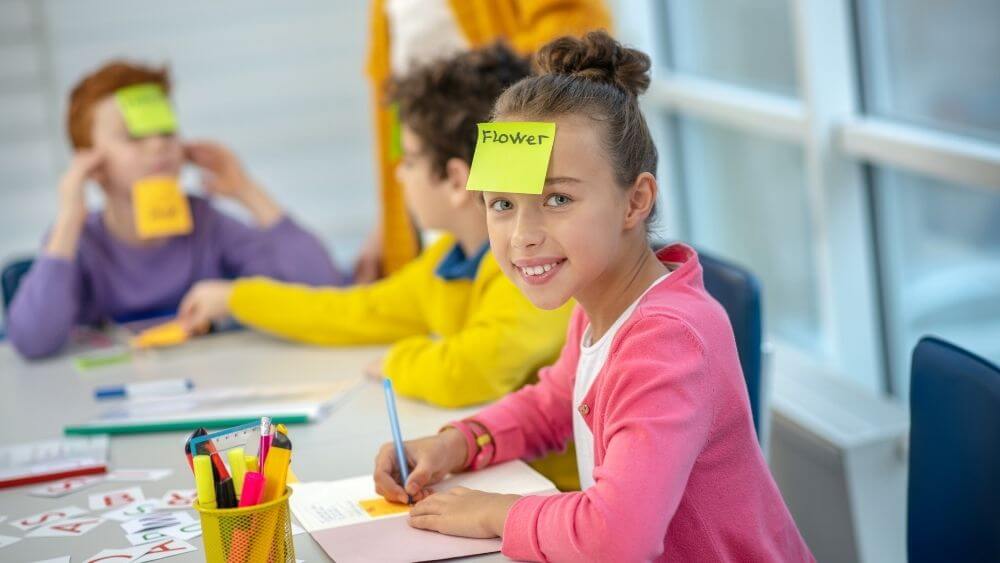
Exciting and creative activities are designed to boost kids’ vocabulary skills, making learning new words fun and effective for better communication and language growth.
Body Parts Vocabulary Practice Sheet for Kids
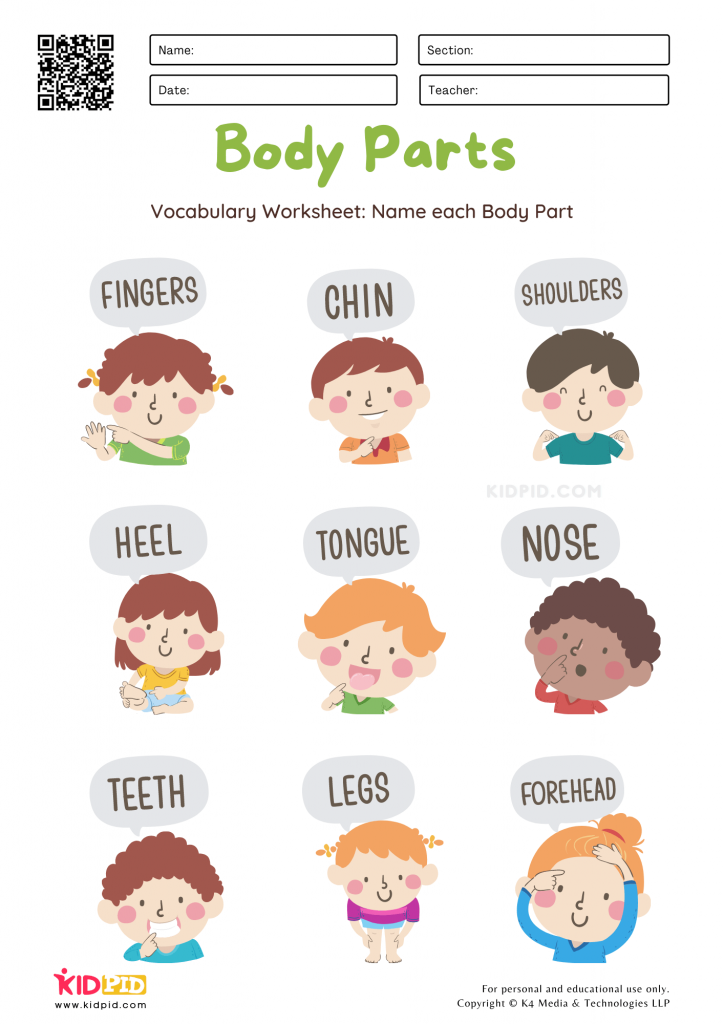
A fun worksheet to help kids learn body parts like “eyes,” “nose,” and “hands” through easy and engaging activities.
Essential Shop Vocabulary for Kids and Beginners
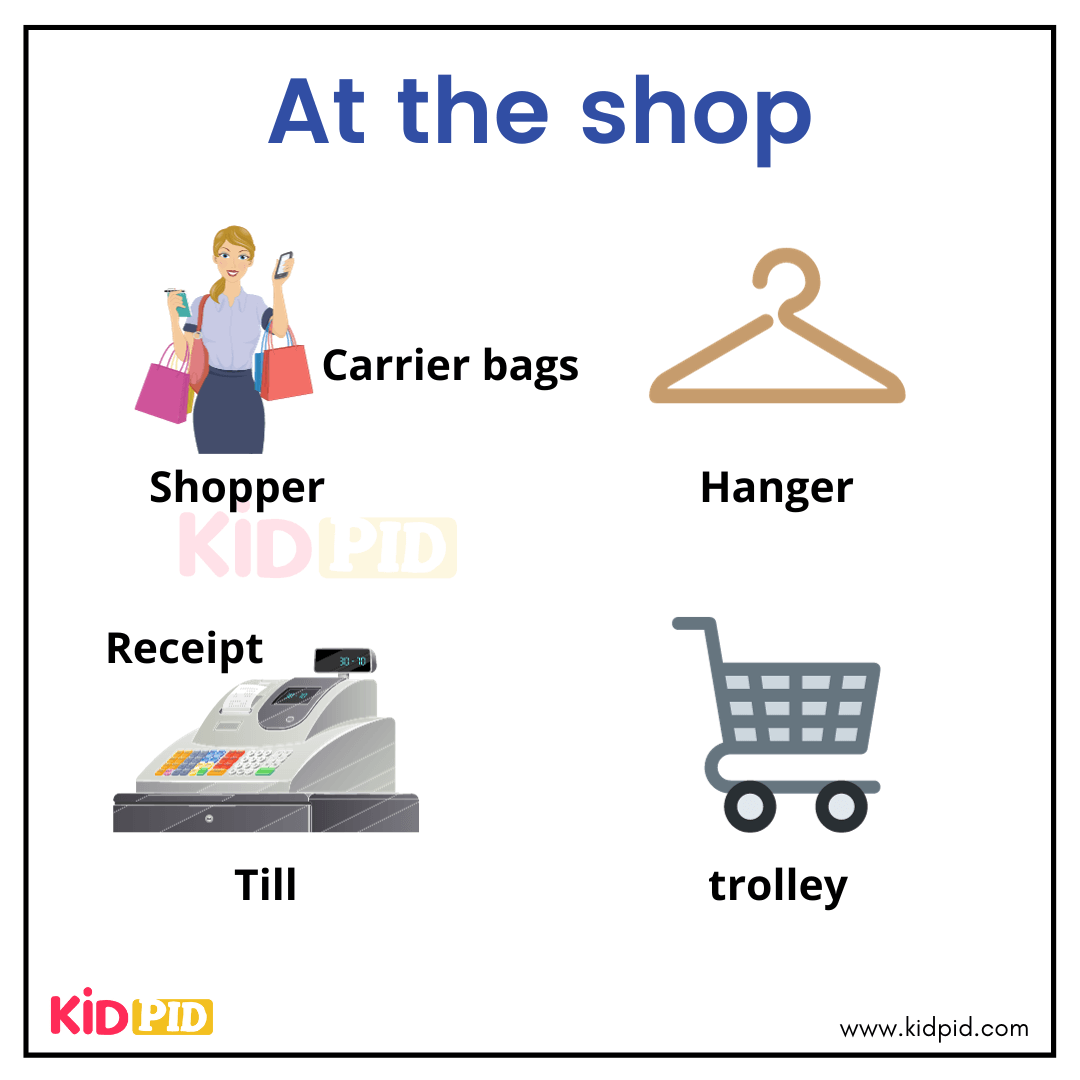
Simple and practical words like “buy,” “sell,” and “money” help kids understand and talk about shopping in a fun way!
Printable Computer Technology Flashcards for Classrooms

Bright and colorful flashcards with tech words like “keyboard,” “mouse,” and “screen” to help kids learn about computers while having fun!
States of Matter Vocabulary Visual Aids for Science Learning

Cool visuals with words like “solid,” “liquid,” and “gas” to help kids explore and understand the states of matter in science!



