

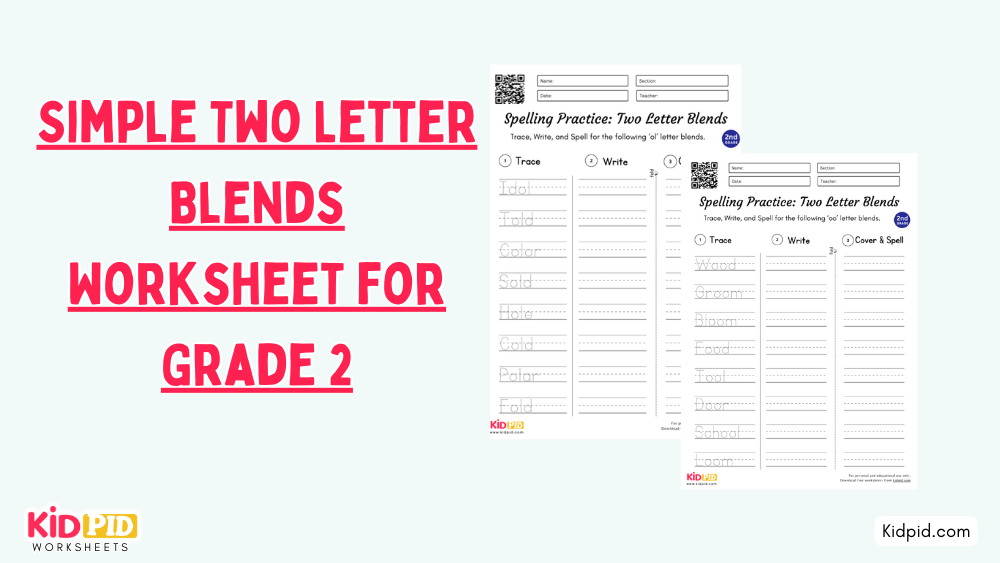
Welcome to your Two-Letter Blends Worksheet! Today, we’ll practice tracing, writing, and spelling with some fun letter blends. You’ll work with blends like ‘ol,’ ‘on,’ ‘ou,’ ‘oo,’ ‘oy,’ and ‘qu.’ These blends help make words sound smooth and flowy. By tracing and writing these blends, you’ll get better at reading and spelling. Have fun exploring these new words and becoming a blending expert!
[Scroll Down for Download Link]
Contents
- Trace, Write, and Spell Two-Letter Blend Word Worksheets
- Key Facts About Simple Two-Letter Blends Worksheet
- Parts/Types/Examples of Simple Two-Letter Blends Worksheet
- How Does the Simple Two-Letter Blends Worksheet Work?
- Benefits of Learning About the Simple Two-Letter Blends Worksheet
- Learning Objectives
- Worksheet Instructions
- Interesting Facts About Simple Two-Letter Blends
- Vocabulary Words
- Real-Life Applications
- FAQs
- Q1. What are two-letter blends?
- Q2. Why are blends important for Grade 2 students?
- Q3. What is the difference between a blend and a digraph?
- Q4. How can students practice blends at home?
- Q5. Which blends are most common?
- Q6. How do worksheets help with blended learning?
- Q7. Can learning blends improve reading comprehension?
Trace, Write, and Spell Two-Letter Blend Word Worksheets
Read More: Letter Hunt Worksheet Printables for Preschool
‘ol’ – Letter Blend Words
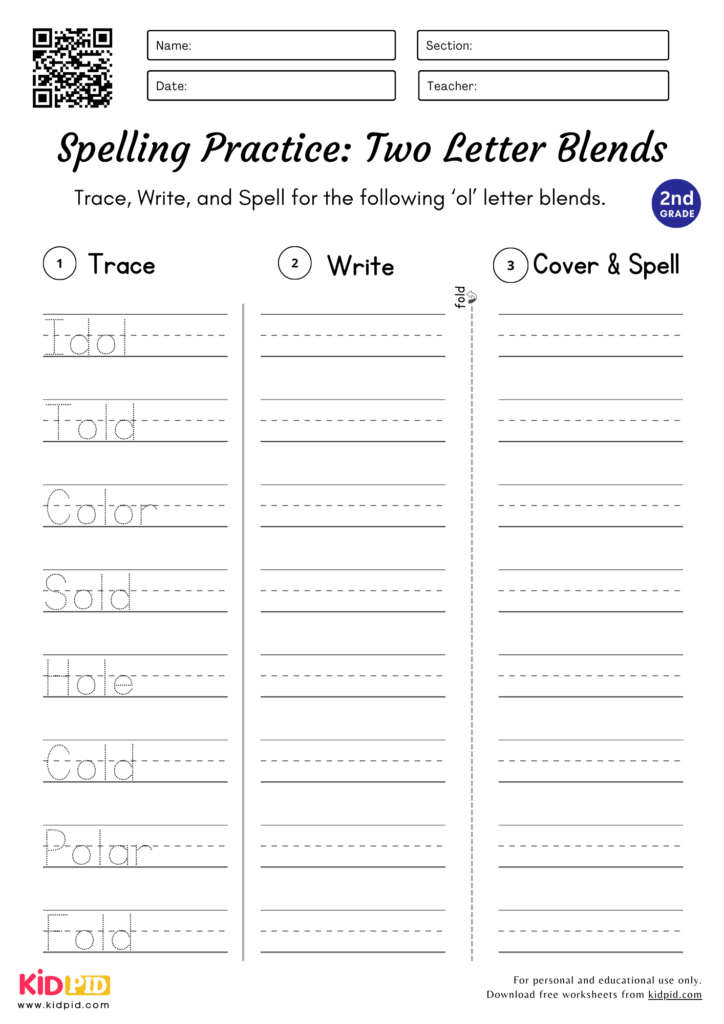
‘on’ – Letter Blend Words
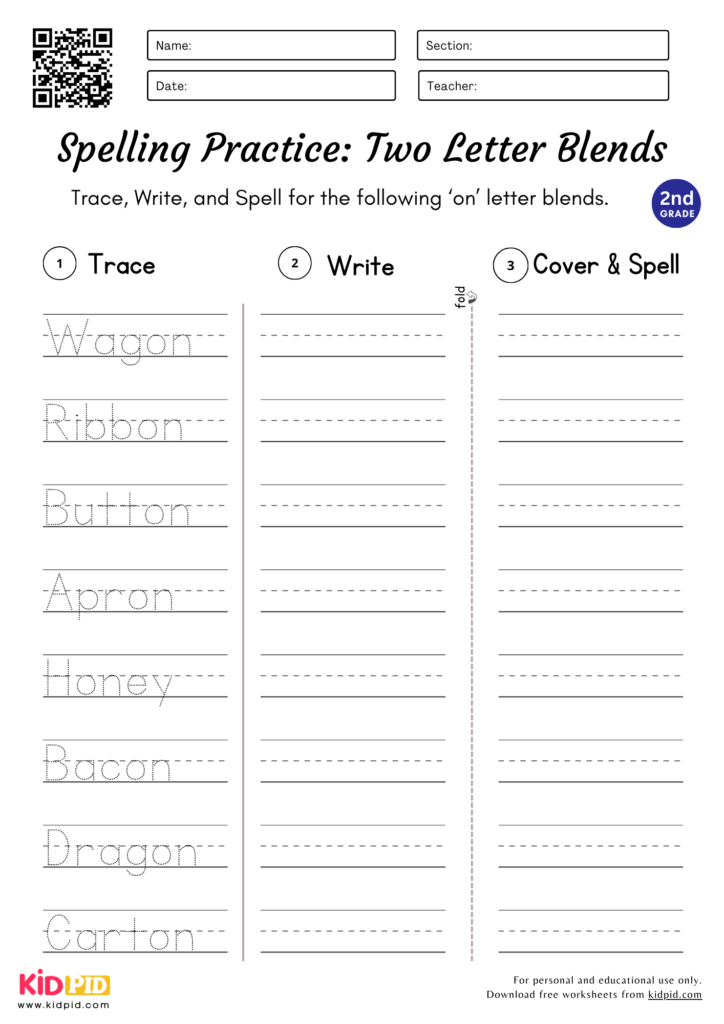
‘oo’ – Letter Blend Words
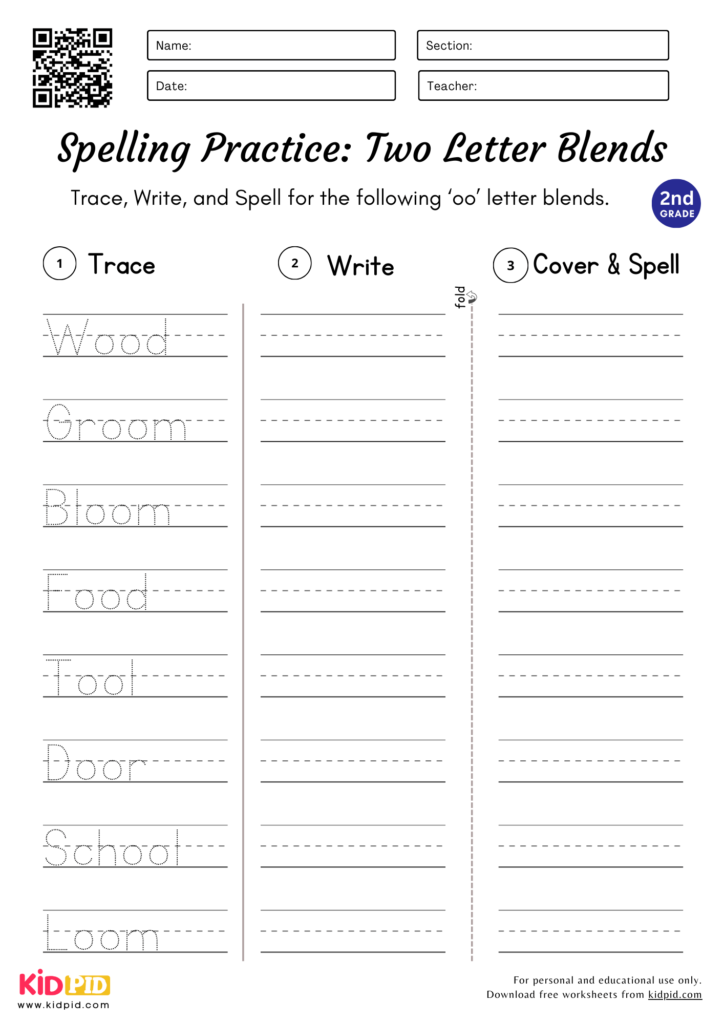
‘ou’ – Letter Blend Words
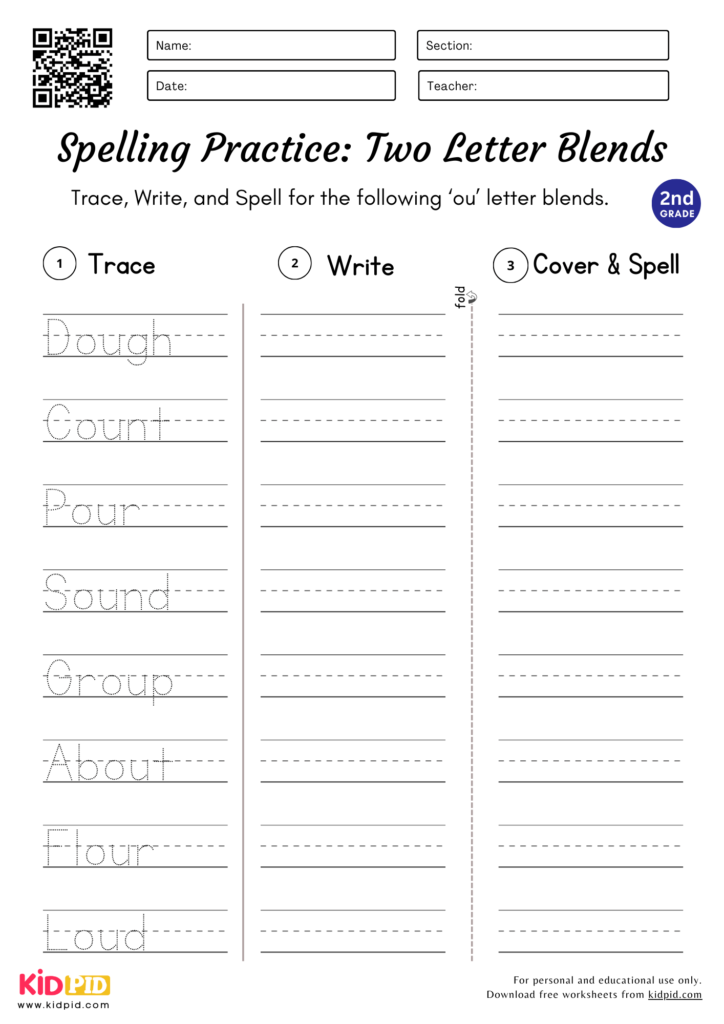
‘oy’ – Letter Blend Words.
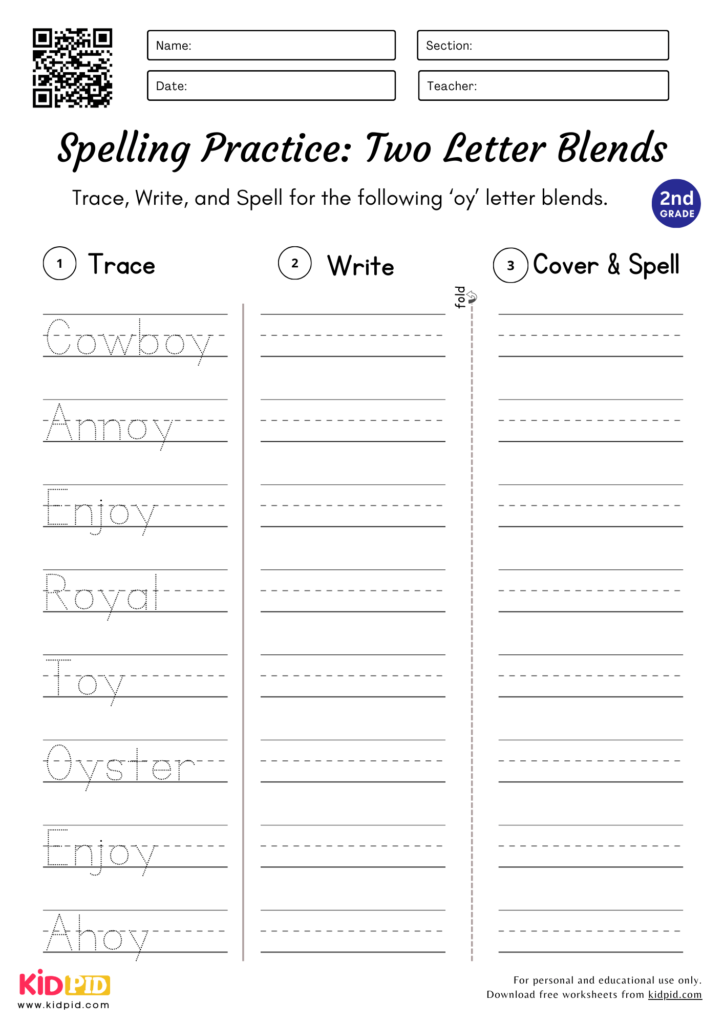
‘qu’ – Letter Blend Words
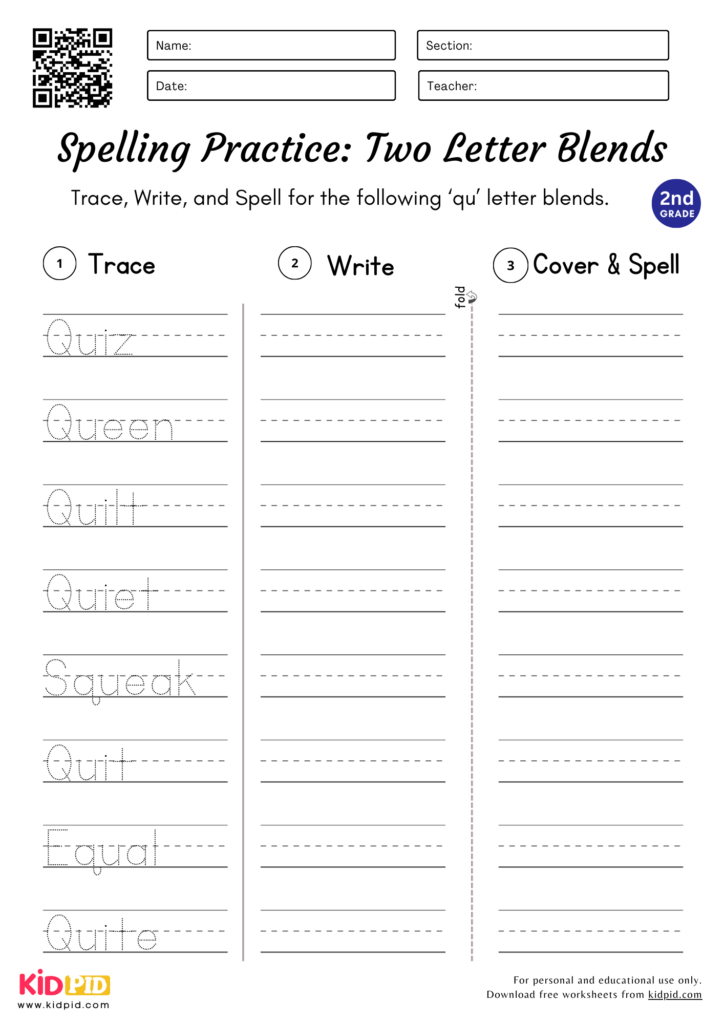
Key Facts About Simple Two-Letter Blends Worksheet
The Simple Two-Letter Blends Worksheet for Grade 2 is designed to help young learners recognize and use common consonant blends in reading and writing. A blend occurs when two consonants are placed together, and each letter sound can still be heard. These worksheets provide engaging activities that strengthen phonics skills, improve pronunciation, and build reading confidence.
Key Facts:
- Focuses on common beginning blends such as bl, cl, fl, gl, br, cr, dr, fr, gr, pr, tr, and sc.
- Supports Grade 2 phonics and literacy development.
- Helps students decode unfamiliar words more easily.
- Encourages correct spelling and vocabulary growth.
- Includes fun exercises like matching, fill-in-the-blanks, and word identification.
Parts/Types/Examples of Simple Two-Letter Blends Worksheet
Understanding different blend types helps children become more fluent readers.
Common Types of Two-Letter Blends
L-Blends
- bl – black, blue
- cl – clap, clock
- fl – flag, flower
- gl – glass, glove
R-Blends
- br – brown, brush
- cr – crab, crown
- dr – drum, dress
- fr – frog, fruit
- gr – green, grape
- pr – prize, prince
- tr – tree, train
S-Blends
- sc – scarf, scale
- sk – skate, skip
- sl – slide, sleep
- sm – smile, small
- sn – snow, snake
- sp – spoon, spider
- st – star, stop
- sw – swing, swim
How Does the Simple Two-Letter Blends Worksheet Work?
The worksheet introduces students to blend sounds through structured phonics activities. Children identify blends, read blend words, complete sentences, and practice spelling.
Typical Activities Include:
- Reading blend words aloud.
- Matching blends to pictures.
- Filling in missing blend letters.
- Sorting words by blend type.
- Writing new words using blends.
- Identifying blends in sentences.
These exercises help learners connect sounds with letters and improve word recognition skills.
Benefits of Learning About the Simple Two-Letter Blends Worksheet
Learning consonant blends provides a strong foundation for literacy success.
Benefits:
- Improves phonemic awareness.
- Enhances reading fluency.
- Strengthens spelling abilities.
- Expands vocabulary knowledge.
- Builds confidence in independent reading.
- Develops pronunciation and speaking skills.
- Supports overall language development.
Regular practice helps students become more accurate and fluent readers.
Learning Objectives
After completing the worksheet, students should be able to:
- Identify common two-letter consonant blends.
- Recognize blend sounds in words.
- Read blend words accurately.
- Spell words containing blends correctly.
- Use blended words in sentences.
- Improve decoding and word-analysis skills.
- Increase reading confidence and fluency.
Worksheet Instructions
Follow these simple steps to complete the worksheet:
- Look carefully at each blend.
- Say the blend sound aloud.
- Read the words provided.
- Match words to the correct pictures when required.
- Fill in missing blend letters.
- Complete word-building activities.
- Review your answers after finishing.
- Practice reading all blend words aloud.
Take your time and focus on hearing both consonant sounds in each blend.
Interesting Facts About Simple Two-Letter Blends
- In a consonant blend, each letter keeps its own sound.
- Blends are different from digraphs, where two letters create one sound.
- Many everyday English words contain consonant blends.
- Learning blends helps children read longer words more easily.
- Most early reading programs introduce blends after basic letter sounds.
- Strong blend recognition contributes to improved reading comprehension.
- Blends appear at the beginning, middle, and end of words.
Vocabulary Words
Here are some useful two-letter blend vocabulary words:
| Blend | Vocabulary Words |
|---|---|
| bl | black, blue, blanket |
| cl | clap, clock, clip |
| fl | flower, flag, fly |
| gl | glove, glass, glue |
| br | bread, brush, bridge |
| cr | crab, crown, cream |
| dr | drum, dress, dragon |
| fr | frog, fruit, friend |
| gr | green, grape, grass |
| pr | prize, prince, present |
| tr | tree, train, truck |
| st | star, stick, stone |
Real-Life Applications
Two-letter blends are found everywhere in daily life. Understanding them helps children become stronger readers and communicators.
Real-Life Uses:
- Reading storybooks and school textbooks.
- Understanding classroom instructions.
- Improving spelling during writing activities.
- Recognizing words on signs and labels.
- Building stronger speaking and pronunciation skills.
- Expanding everyday vocabulary.
- Supporting future reading and academic success.
Students who master blends often read more smoothly and confidently.
FAQs
Q1. What are two-letter blends?
Answer: Two-letter blends are combinations of two consonants where both letter sounds can still be heard, such as bl, tr, and gr.
Q2. Why are blends important for Grade 2 students?
Answer: Blends help children decode words, improve reading fluency, and strengthen spelling skills.
Q3. What is the difference between a blend and a digraph?
Answer: In a blend, both sounds are heard. In a digraph, two letters combine to make one sound, such as sh or ch.
Q4. How can students practice blends at home?
Answer: Students can read blend word lists, play phonics games, complete worksheets, and read books containing blend-rich vocabulary.
Q5. Which blends are most common?
Answer: Common blends include bl, cl, fl, br, cr, dr, fr, gr, pr, tr, st, sp, and sk.
Q6. How do worksheets help with blended learning?
Answer: Worksheets provide structured practice that improves sound recognition, reading accuracy, spelling, and vocabulary development.
Q7. Can learning blends improve reading comprehension?
Answer: Yes. Faster word recognition allows students to focus more on understanding the meaning of what they read.

Simple two-letter blends introduce Grade 2 students to essential phonics patterns through enjoyable practice. These worksheets enhance decoding abilities, spelling accuracy, reading confidence, vocabulary growth, and early language development. Start learning creatively with worksheets, essays, paragraphs, flashcards, quizzes, and interactive resources. Follow us on YouTube & Facebook.
This worksheet was developed by the Content Team to strengthen classroom learning.
Reviewed By Chaitrali Shelar
Read More:



