

For second graders, mastering two-letter blends is a significant step towards becoming proficient readers and writers. A two-letter blend consists of two consonants that come together to create a distinct sound, such as “bl” in “blue” or “st” in “star.” Understanding these blends helps young learners decode words more efficiently, enhancing their spelling and reading skills.
Contents
- Two Letter Blends Worksheet Activities For Grade 2
- Key Facts About Spelling Practice with Two Letter Blends Worksheet
- Parts/Types/Examples of Spelling Practice Blends Worksheet
- How Does Spelling Practice with Two-Letter Blends Worksheet Work?
- Benefits of Learning About Spelling Practice with the Two-Letter Blends Worksheet
- Learning Objectives
- Worksheet Instructions
- Interesting Facts About Spelling Practice with Two Letter Blends Vocabulary Words
- Real-Life Applications
- FAQs
- Q1. What are two-letter blends?
- Q2. Why are blend worksheets important for Grade 2 students?
- Q3. What is the difference between a blend and a digraph?
- Q4. How often should children practice blending words?
- Q5. Can parents use this worksheet at home?
- Q6.Which blends are most commonly taught in Grade 2?
- Q7. How do blended worksheets improve reading?
- Q8. Are two-letter blends part of phonics instruction?
Two Letter Blends Worksheet Activities For Grade 2
Read More: Letter Hunt Worksheet Printables for Preschool
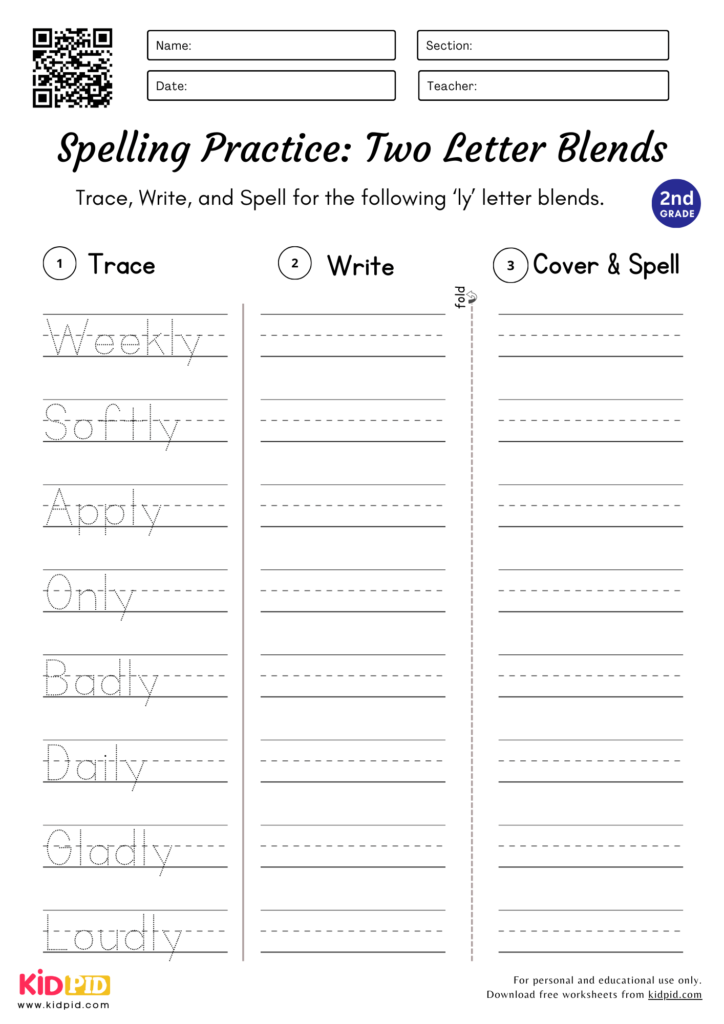
‘lt’ – Letter Blend Words
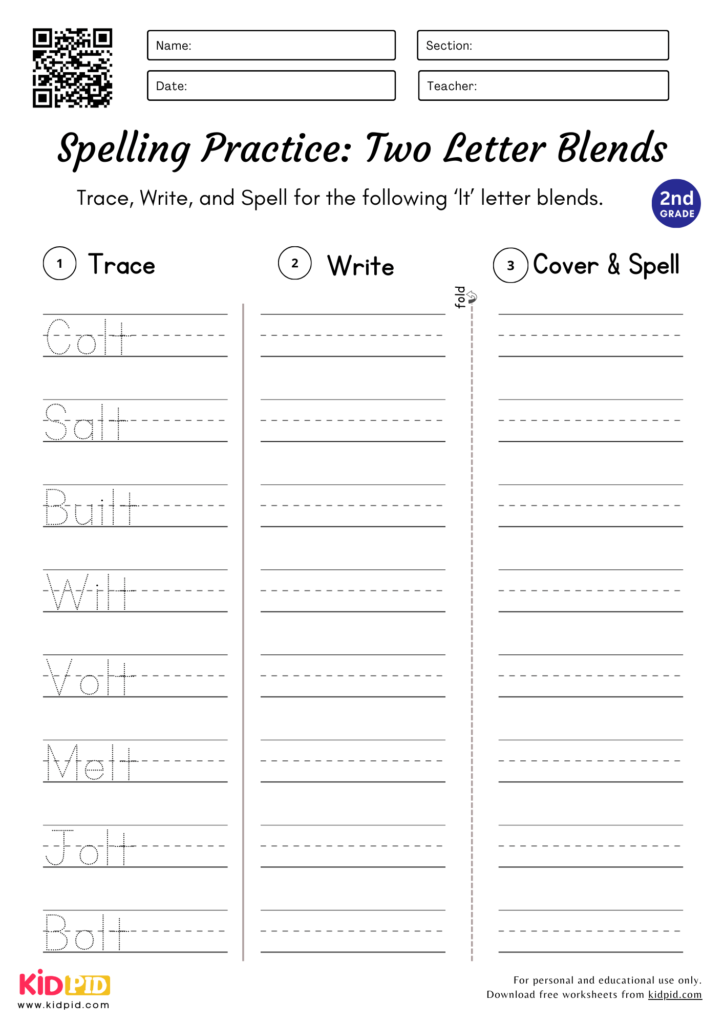
‘ly’ – Letter Blend Words
‘mp’ – Letter Blend Words

‘nd’ – Letter Blend Words

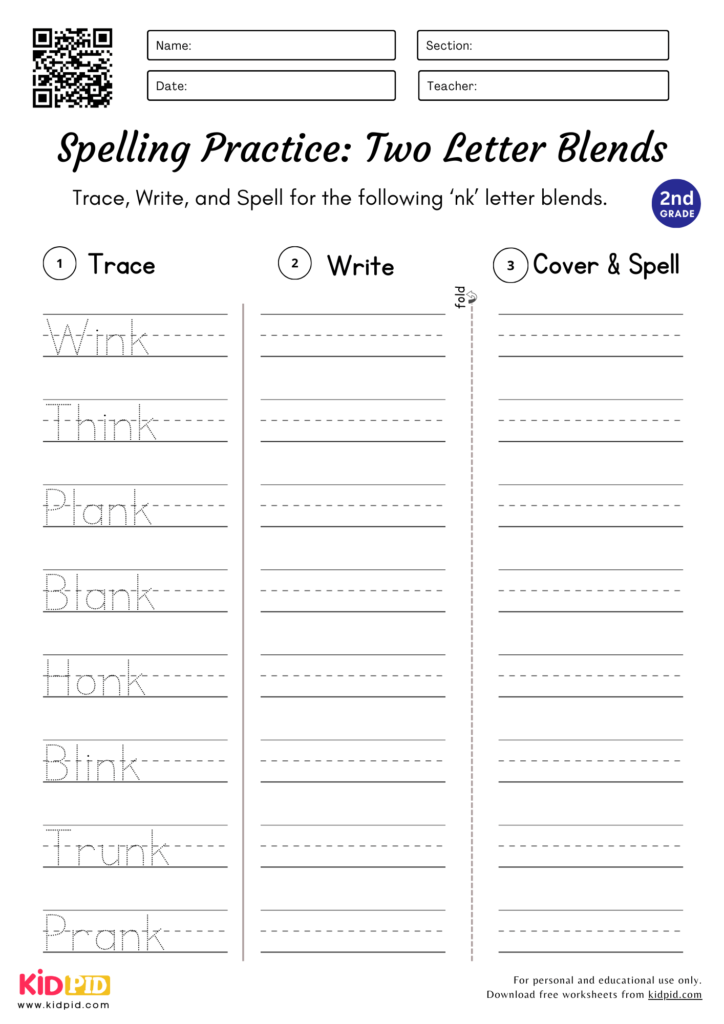
‘nk’ – Letter Blend Words
Key Facts About Spelling Practice with Two Letter Blends Worksheet
The Spelling Practice with Two Letter Blends Worksheet for Grade 2 helps young learners improve their spelling, reading, and phonics skills by focusing on common two-letter consonant blends. These blends contain two consonants that appear together while keeping their individual sounds. Through engaging exercises, children learn to recognize blend patterns, spell words accurately, and strengthen their vocabulary. The worksheet is designed according to early elementary literacy standards and supports classroom learning as well as home practice.
Key Facts:
- Suitable for Grade 2 students.
- Focuses on common consonant blends such as bl, cl, fl, gr, br, st, and tr.
- Enhances spelling and phonemic awareness.
- Supports reading fluency and word recognition.
- Encourages independent learning and practice.
- Helps build a strong foundation for advanced literacy skills.
Parts/Types/Examples of Spelling Practice Blends Worksheet
The worksheet contains various activities that help children master two-letter blends through repetition and application.
Common Parts of the Worksheet:
- Word tracing exercises
- Fill-in-the-blank activities
- Match-the-word tasks
- Picture-to-word connections
- Word-building exercises
- Sentence completion activities
Types of Two-Letter Blends:
- Beginning Blends: bl, cl, fl, gl, br, cr, dr
- Ending Blends: nd, st, mp, nt, sk
- L-Blends: bl, cl, fl, gl, pl
- R-Blends: br, cr, dr, fr, gr, tr
- S-Blends: sc, sk, sl, sm, sn, sp, st
Examples:
- bl → blue, block, black
- br → bread, brush, brown
- cl → clap, clock, clean
- st → star, stop, stick
- tr → tree, train, truck
How Does Spelling Practice with Two-Letter Blends Worksheet Work?
The worksheet introduces children to blend sounds and provides structured activities that reinforce learning through practice. Students identify blends, read related words, and apply correct spelling patterns in different exercises.
The learning process generally includes:
- Recognizing the blend.
- Pronouncing the blend sound.
- Reading blend words.
- Writing and spelling words correctly.
- Using blended words in sentences.
- Reviewing and correcting mistakes.
Repeated exposure helps children develop confidence in reading and spelling words containing consonant blends.
Benefits of Learning About Spelling Practice with the Two-Letter Blends Worksheet
Learning two-letter blends offers numerous literacy benefits for Grade 2 students.
Major Benefits:
- Improves spelling accuracy.
- Strengthens phonics knowledge.
- Enhances reading fluency.
- Expands vocabulary development.
- Builds pronunciation skills.
- Supports writing confidence.
- Encourages pattern recognition in words.
- Develops listening and decoding abilities.
- Improves overall language comprehension.
Regular practice allows children to become more confident readers and writers.
Learning Objectives
By completing this worksheet, students will be able to:
- Identify common two-letter consonant blends.
- Read words containing blends accurately.
- Spell blend words correctly.
- Differentiate between similar blend sounds.
- Use blended words in meaningful sentences.
- Improve phonemic awareness and decoding skills.
- Strengthen vocabulary and language development.
- Apply spelling rules during reading and writing tasks.
Worksheet Instructions
Follow these simple instructions while completing the worksheet:
- Read each blend carefully.
- Say the blend sound aloud.
- Look at the accompanying pictures or words.
- Fill in the missing letters where required.
- Write each word neatly and correctly.
- Match words with their corresponding images.
- Complete sentence activities using blend words.
- Check your answers after finishing.
- Practice difficult words multiple times.
Teachers and parents can provide guidance and pronunciation support when needed.
Interesting Facts About Spelling Practice with Two Letter Blends Vocabulary Words
- A blend combines two consonant sounds without removing either sound.
- The word “blend” means sounds are spoken together but remain distinct.
- Many common English words begin with consonant blends.
- Children often learn blends after mastering individual letter sounds.
- Blending words helps improve reading speed and decoding skills.
- Consonant blends are an essential part of phonics instruction.
- Learning blends helps students recognize larger word patterns quickly.
- Strong blend knowledge supports future spelling success.
Real-Life Applications
Understanding two-letter blends helps children in everyday communication and academic learning.
Practical Applications:
- Reading storybooks and classroom texts.
- Writing school assignments and journal entries.
- Improving spelling during tests and assessments.
- Following written instructions accurately.
- Expanding speaking and communication skills.
- Learning new vocabulary more efficiently.
- Building confidence during classroom reading activities.
- Developing stronger language skills for future grades.
Mastering blends creates a foundation for lifelong literacy success.
FAQs
Q1. What are two-letter blends?
Answer: Two-letter blends are combinations of two consonants where both sounds can still be heard when pronounced together, such as bl, tr, and st.
Q2. Why are blend worksheets important for Grade 2 students?
Answer: They help students improve spelling, reading fluency, phonics understanding, and vocabulary development.
Q3. What is the difference between a blend and a digraph?
Answer: In a blend, both consonant sounds are heard separately. In a digraph, two letters combine to make one sound, such as sh or ch.
Q4. How often should children practice blending words?
Answer: Daily practice for 10–15 minutes can significantly improve reading and spelling skills.
Q5. Can parents use this worksheet at home?
Answer: Yes. The worksheet is suitable for homeschooling, homework practice, and additional literacy support.
Q6.Which blends are most commonly taught in Grade 2?
Answer: Common blends include bl, cl, fl, br, cr, dr, gr, st, sp, sk, tr, and pl.
Q7. How do blended worksheets improve reading?
Answer: They help children recognize sound patterns quickly, making decoding and reading more accurate and fluent.
Q8. Are two-letter blends part of phonics instruction?
Answer: Yes. Two-letter blends are a fundamental component of phonics education and early literacy development.
Spelling practice with two-letter blends helps Grade 2 students build accurate word-writing skills. These engaging worksheets improve phonics knowledge, spelling confidence, reading fluency, vocabulary development, and overall language proficiency. Explore fun-filled worksheets, essays, paragraphs, flashcards, quizzes, and interactive resource materials created for young learners. Visit our website, YouTube & Facebook.
The worksheet is prepared by the Content Team to support lesson objectives.
Reviewed By Gargy
Read More:



