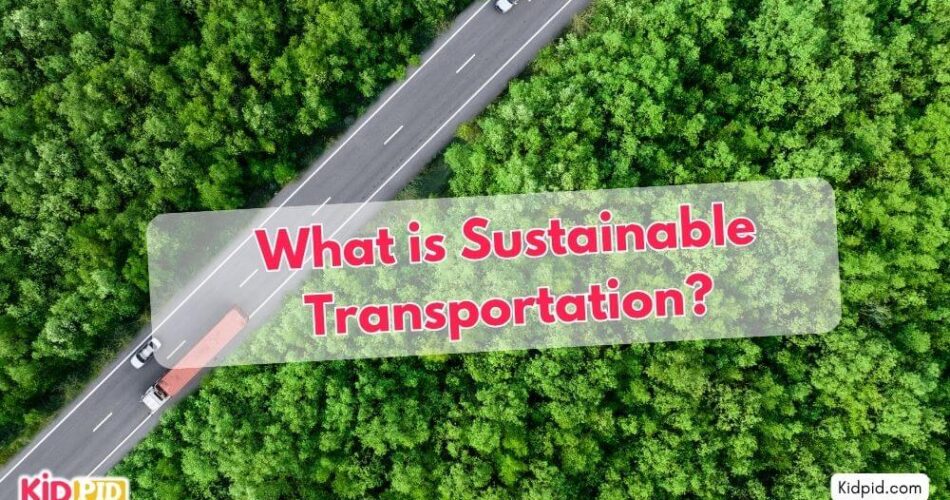
Sustainable transportation focuses on reducing environmental impacts and promoting the planet’s health, rather than merely increasing speed or reducing business costs.

Contents
- MCQs
- Fill In The Blanks
- 1. Sustainable transportation refers to modes of transportation that minimize ______________ impact and use resources efficiently.
- 2. What are some examples of sustainable transportation options? Walking, biking, taking public transportation, or using vehicles that run on alternative fuels like ______________ cars.
- 3. By choosing sustainable transportation options, we can help reduce ______________ pollution, decrease traffic congestion, and conserve energy for future generations.
- 4. What is the goal of sustainable transportation? To minimize environmental impact and use resources ______________.
- True/False Questions:
- 1. Riding a bike is a form of sustainable transportation. (True/False)
- 2. Driving a car that runs on gasoline is a form of sustainable transportation. (True/False)
- 3. Taking the bus to school is a sustainable transportation option. (True/False)
- 4. Walking to the park is not considered sustainable transportation. (True/False)
- 5. Using an electric scooter is not a sustainable transportation option. (True/False)
MCQs
1. Which of the following is not a characteristic of sustainable transportation?
A) Low greenhouse gas emissions
B) High levels of pollution
C) Use of renewable resources
D) Encouragement of physical activity
Answer: B) High levels of pollution
Explanation: Sustainable transportation aims to minimize pollution and greenhouse gas emissions, not increase them. It promotes the use of clean, renewable resources and encourages activities that benefit human health and the environment.
2. How does sustainable transportation contribute to public health?
A) By increasing air pollution
B) By promoting sedentary lifestyles
C) By reducing exposure to harmful pollutants
D) By limiting access to outdoor spaces
Answer: C) By reducing exposure to harmful pollutants
Explanation: One of the benefits of sustainable transportation is its contribution to public health, primarily through the reduction of harmful pollutants in the air, which can result from traditional forms of transportation.
3. Which of the following is an example of sustainable transportation?
A) Gasoline-powered cars
B) Electric bicycles
C) Diesel buses
D) Coal trains
Answer: B) Electric bicycles
Explanation: Electric bicycles represent a form of sustainable transportation because they emit no pollutants during operation and promote physical activity, unlike gasoline-powered cars, diesel buses, and coal trains that depend on fossil fuels.
4. What role does urban planning play in sustainable transportation?
A) Discouraging the use of public transportation
B) Designing cities to be less walkable
C) Encouraging car dependency
D) Facilitating access to multiple forms of transport
Answer: D) Facilitating access to multiple forms of transport
Explanation: Effective urban planning is crucial for sustainable transportation as it involves designing cities in a way that makes easy access to a variety of transport options, including walking, cycling, and public transportation, rather than promoting car dependency.
Fill In The Blanks
Choose From These Words: air, environmental, electric, efficiently
1. Sustainable transportation refers to modes of transportation that minimize ______________ impact and use resources efficiently.
Answer: environmental
2. What are some examples of sustainable transportation options? Walking, biking, taking public transportation, or using vehicles that run on alternative fuels like ______________ cars.
Answer: electric
3. By choosing sustainable transportation options, we can help reduce ______________ pollution, decrease traffic congestion, and conserve energy for future generations.
Answer: air
4. What is the goal of sustainable transportation? To minimize environmental impact and use resources ______________.
Answer: efficiently
True/False Questions:
1. Riding a bike is a form of sustainable transportation. (True/False)
Answer: True. Biking is a sustainable form of transportation because it does not produce any harmful emissions and helps reduce traffic crowding.
2. Driving a car that runs on gasoline is a form of sustainable transportation. (True/False)
Answer: False. Cars that run on gasoline emit harmful pollutants into the air, contributing to air pollution and climate change.
3. Taking the bus to school is a sustainable transportation option. (True/False)
Answer: True. Public transportation, like buses, is a sustainable option because it can transport multiple people at once, reducing the crowding of cars on the road.
4. Walking to the park is not considered sustainable transportation. (True/False)
Answer: False. Walking is one of the most sustainable forms of transportation because it does not produce any emissions and promotes physical activity.
5. Using an electric scooter is not a sustainable transportation option. (True/False)
Answer: False. Electric scooters are a sustainable option because they run on electricity, which can be generated from renewable sources like solar or wind power.
Read More: