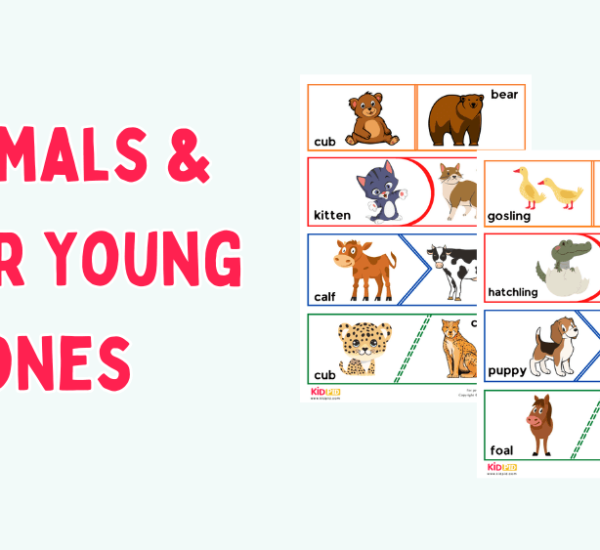
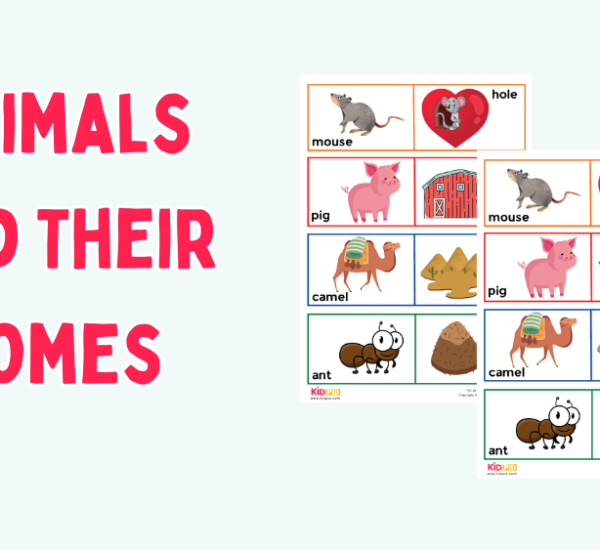
Wild animals are amazing creatures that live in forests, jungles, oceans, and mountains. They come in many shapes, sizes, and colors. Some are big and strong, while others are small and quick. Learning about wild animals helps us understand nature and how to protect these wonderful animals and their homes.
[Scroll Down for Download Link]
Contents
Wonderful Wild Animals!


ALLIGATOR

This is an Alligator

A baby alligator is called a Hatchling.

Alligators live in marshes, rivers, and swamps.

GORILLAS

Look, this is a Gorilla.

A baby gorilla is called an Infant.

Gorillas are found in jungles and mountains.

HIPPOPOTAMUS

Here we have a Hippopotamus.

A young hippopotamus is called a Calf.

They live near rivers and lakes.

ELEPHANT

And this is an Elephant.

A baby elephant is called a Calf.

They are found in swamps and forests.

FOX

This cute animal is a Fox.

at school today!

They are mainly found in forests.

GIRAFFE

Now, let’s see a Giraffe.

A baby giraffe is called a Calf.

Giraffes are mainly found in open grasslands and woodlands.

TIGER

Look at this powerful creature, a Tiger.

A baby tiger is called a Cub.

Tigers live in the jungle, and their home is called a Den.

RHINOCEROS

Here we have a Rhinoceros.

A baby rhinoceros is called a Calf.

They are mainly found in grasslands, dry forests, and plains.

PENGUIN

Oh, look at the adorable Penguin.

A baby penguin is called a Chick.

Penguins live in oceans, seas, and cold areas.

PANDA

This is a Panda.

A baby panda is called a Cub.

Pandas are mainly found in the cold forests of China.

KOALA

Now, let’s see a Koala.

A baby koala is called a Joey.

Koalas are mainly found in the eucalyptus forests of Australia.

MONKEY

This is a Monkey.

A baby monkey is called an Infant.

Monkeys live on trees in forests.

LION

Here we have a Lion.

A baby lion is called a Cub.

Lions live in the jungle, and their home is called a den.

KANGAROO

Look at this Kangaroo.

A baby kangaroo is called a Joey.

Kangaroos are mainly found in the grasslands of Australia.

ZEBRA

Now, let’s see a Zebra.

A baby zebra is called a Cult.

Zebras are found in grasslands, woodlands, mountains, and hills.

DEER

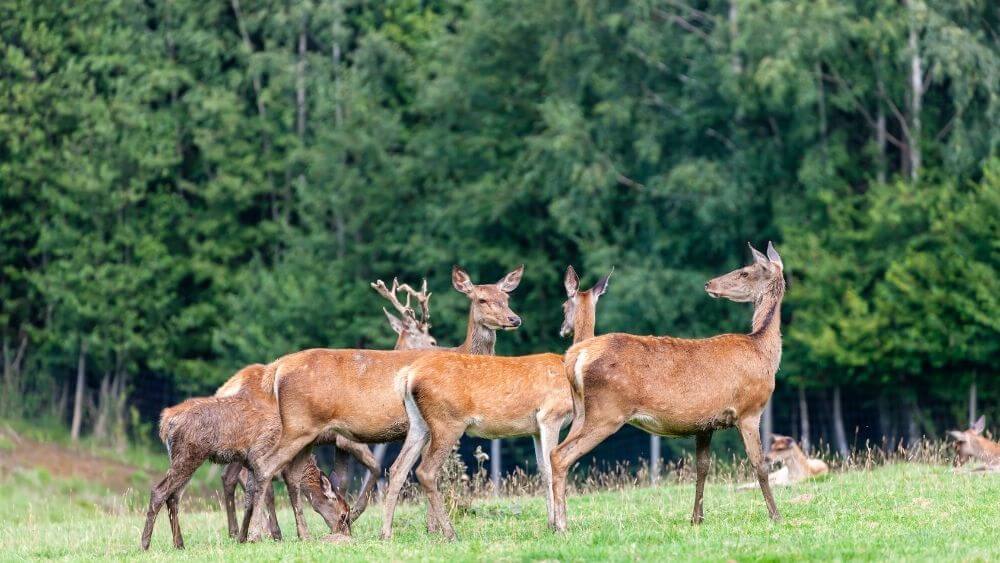
Now, this is a Deer.

A baby deer is called a Fawn.

Deers live in the forest.

CHEETAH

Look at the Cheetah.

A baby cheetah is called a Cub.

She lives in the jungle.

BEAR

Lastly, we have a Bear.

A baby bear is called a Cub.

Bears live in jungles, and their home is called a cave.

In conclusion, wild animals are an important part of our planet’s beauty and balance. Each animal, from lions to penguins, has a special home and unique features. Knowing about wild animals helps us respect nature, protect them, and enjoy the amazing world we live in. Every animal has its own story.

You may like this:
Wild Animals Worksheets for Kindergarten
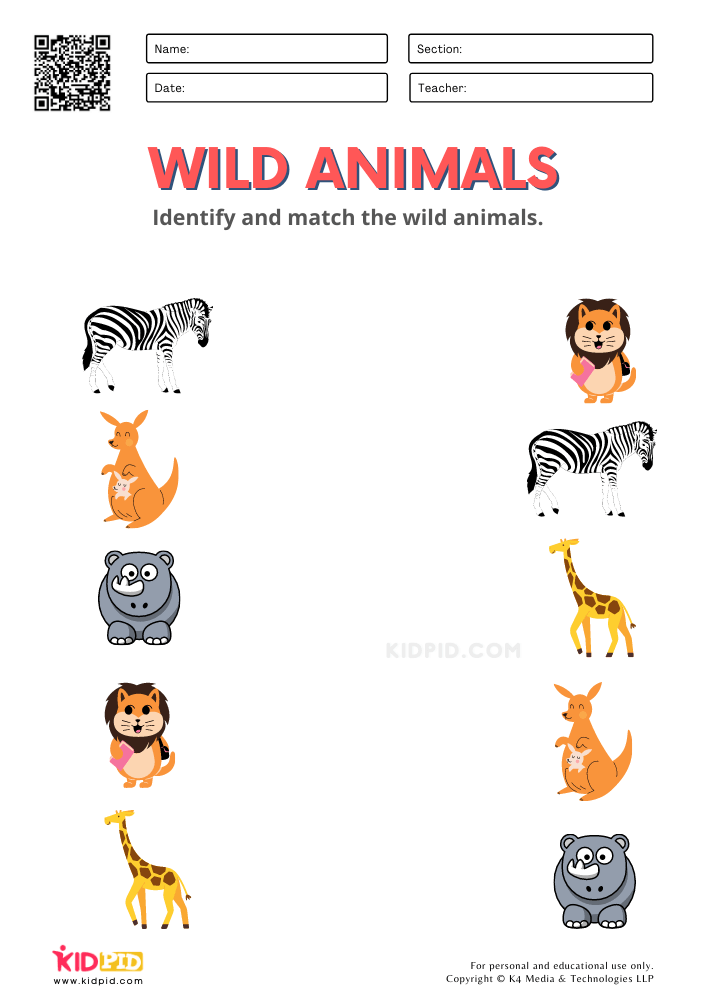

Engaging wild animals worksheets for kindergarten featuring activities like matching, tracing, word-search, coloring, and identifying habitats (forest, ocean, farm)—designed to build early science vocabulary, observation, and wildlife awareness.
Paragraph on ‘Living in the Wild West’


A simple, kid‑friendly paragraph on living in the Wild West: describes settlers facing danger—wild animals, sickness, harsh weather—while building homes, hunting for food, and interacting with cowboys, outlaws, and Native Americans.
Paragraph on ‘My Experience at a Wildlife Sanctuary

A vivid, kid‑friendly paragraph on visiting a wildlife sanctuary: describes watching rescued animals roam freely, learning from caring staff, understanding conservation, and feeling inspired to protect wildlife and their habitats.
Animals Name With Pictures
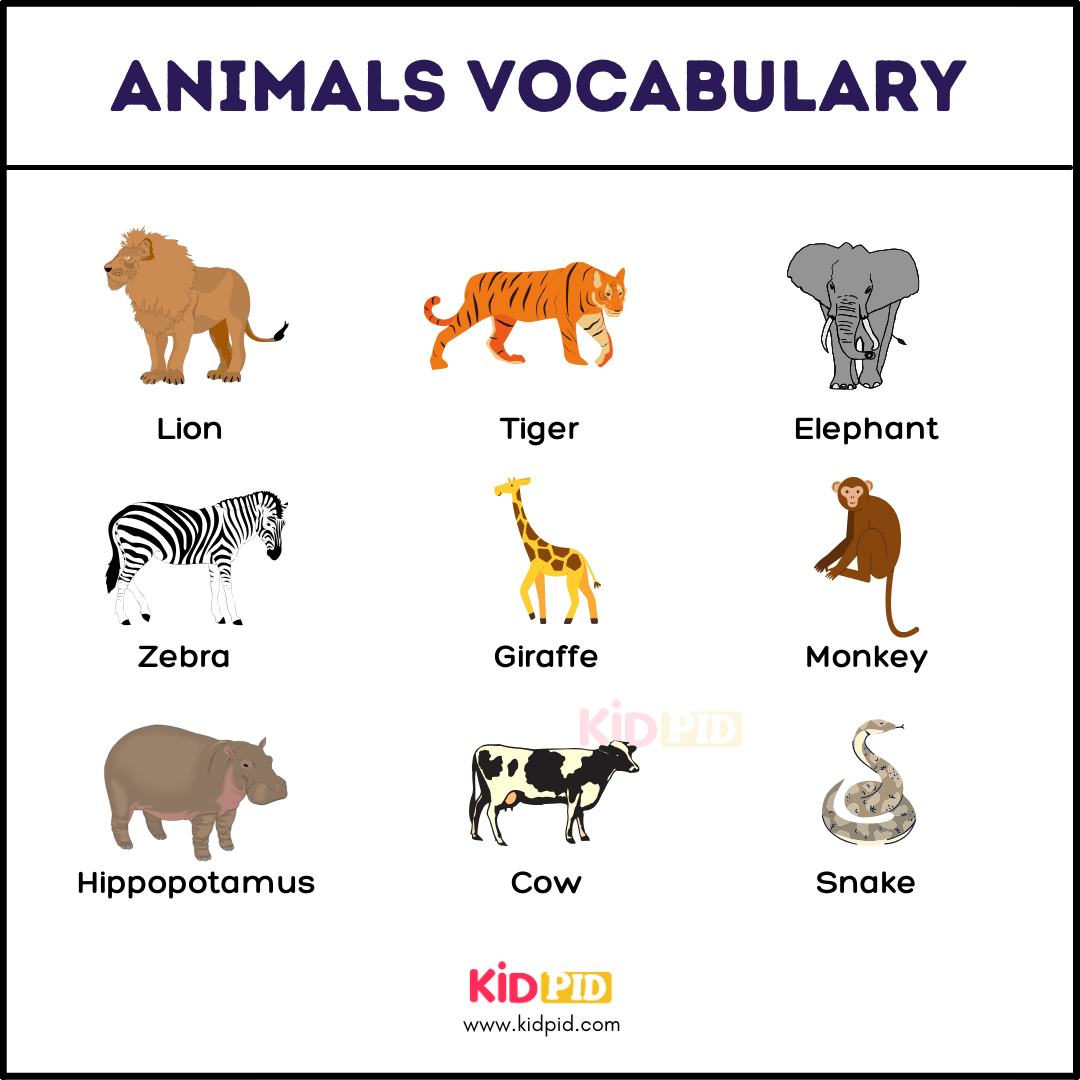

Engaging “Animals Name With Pictures” flashcards featuring colorful images and clear names—covering lions, zebras, giraffes, elephants, monkeys, cows, snakes, and more—are designed to help young learners recognize and remember animal names easily.
Conservation of Plants and Animals

A clear, kid‑friendly article on conservation of plants and animals: explains how national parks, wildlife sanctuaries, and biosphere reserves protect flora, fauna, prevent deforestation, and preserve biodiversity for a balanced ecosystem.