

Learning to distinguish between upper- and lower-case letters is an important skill to gain at an early age. A lot of them tend to look the same, especially when not in cursive. While the differences might seem really obvious to a grown-up’s eyes, they can be quite confusing for children. These worksheets are here to help your child do away with this confusion.
[Scroll Down for Download Link]
Contents
- Uppercase and Lowercase Letters Worksheet
- List of Uppercase and Lowercase Alphabets 1
- Columns for Placing the Alphabets 1
- List of Upper case and Lower case Alphabets 2
- Columns for Placing the Alphabets 2
- List of Upper case and Lower case Alphabets 3
- Columns for Placing the Alphabets 3
- List of Uppercase and Lowercase Alphabets 4
- Columns for Placing the Alphabets 4
- List of Upper-case and Lower-case Alphabets 5
- Columns for Placing the Alphabets 5
- Key Facts About Uppercase and Lowercase Letters Sorting Worksheet
- Parts/Types/Examples of Uppercase and Lowercase Letters Sorting Worksheet
- How Does the Uppercase and Lowercase Letters Sorting Worksheet Work?
- Benefits of Learning About Uppercase and Lowercase Letters Sorting Worksheet
- Learning Objectives
- Worksheet Instructions
- Interesting Facts About Uppercase and Lowercase Letters Sorting Worksheet
- Real-Life Applications
- FAQs
- Q1. What is an uppercase and lowercase letters sorting worksheet?
- Q2. Who can use this worksheet?
- Q3. Why is learning uppercase and lowercase letters important?
- Q4. How often should children practice letter sorting?
- Q5. Can this worksheet support reading development?
- Q6. Are uppercase letters taught before lowercase letters?
- Q7. What skills does this worksheet improve?
- Q8. Can parents use this worksheet at home?
Uppercase and Lowercase Letters Worksheet
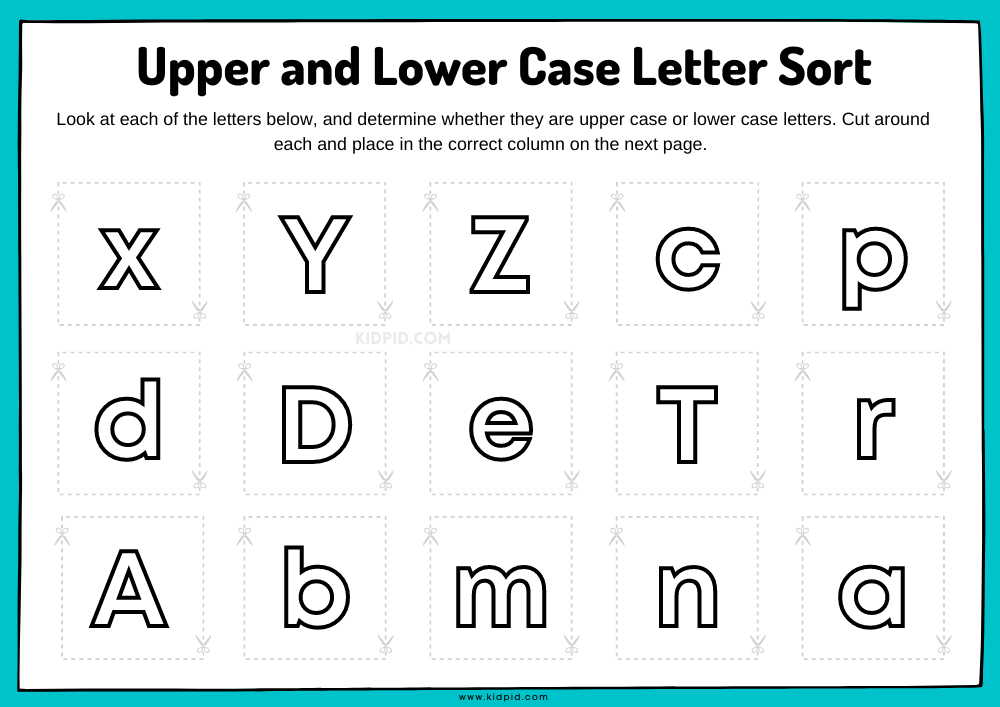
List of Uppercase and Lowercase Alphabets 1
Columns for Placing the Alphabets 1
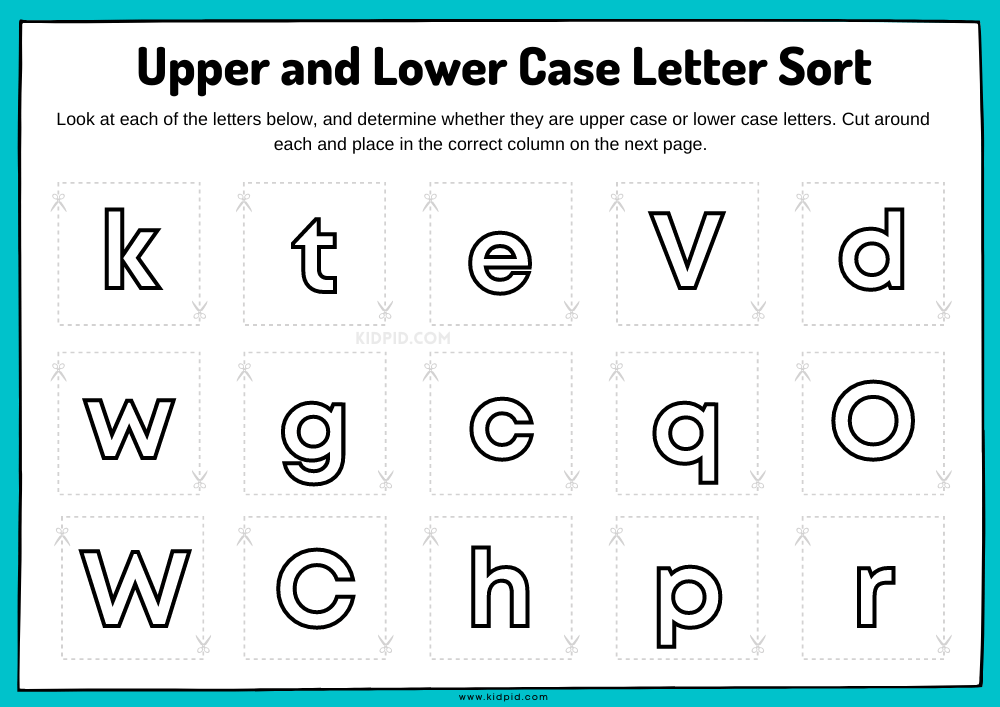
To start with this exercise, you will need a pair of round-tip scissors and printouts of these worksheets. Your child needs to cut around each letter and place them under the uppercase/lowercase column.
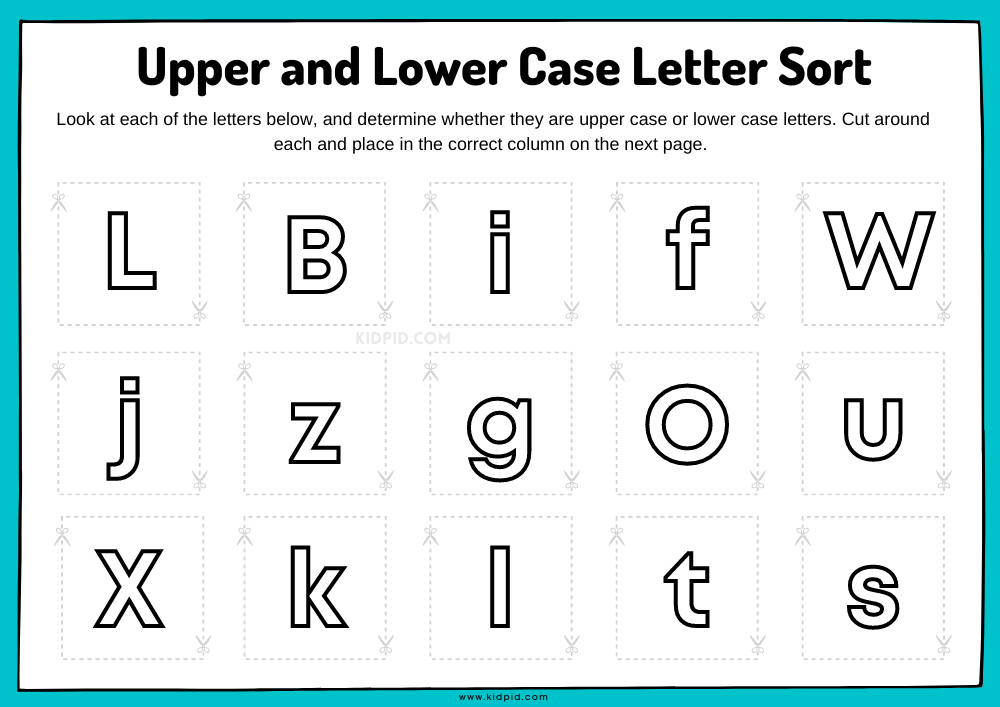
List of Upper case and Lower case Alphabets 2
Columns for Placing the Alphabets 2
Let the kid solve the whole worksheet independently at first. You should chime in only if they need dire help; this will help boost their confidence level. In case they have made any mistakes, ask them to take another look at the columns and reevaluate before you correct them.
List of Upper case and Lower case Alphabets 3
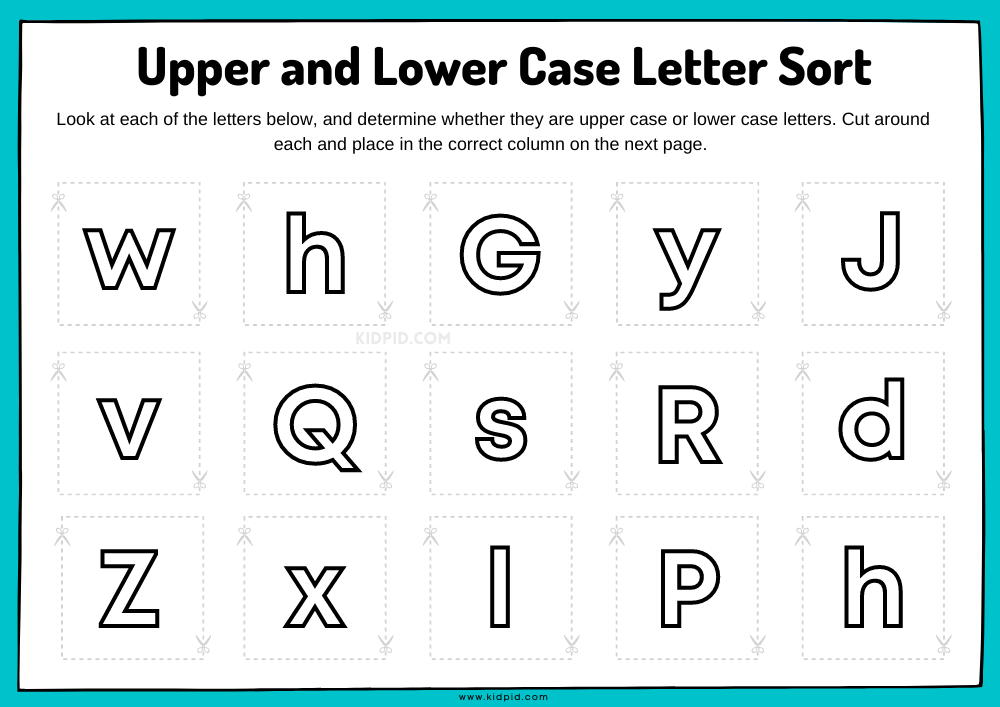
Columns for Placing the Alphabets 3
List of Uppercase and Lowercase Alphabets 4
Columns for Placing the Alphabets 4
These worksheets are made with a playful design that adds an accent of craft to study material that could easily have become a source of boredom for the child. So let them enjoy that part of the activity to aid in their understanding of the actual question asked.
List of Upper-case and Lower-case Alphabets 5
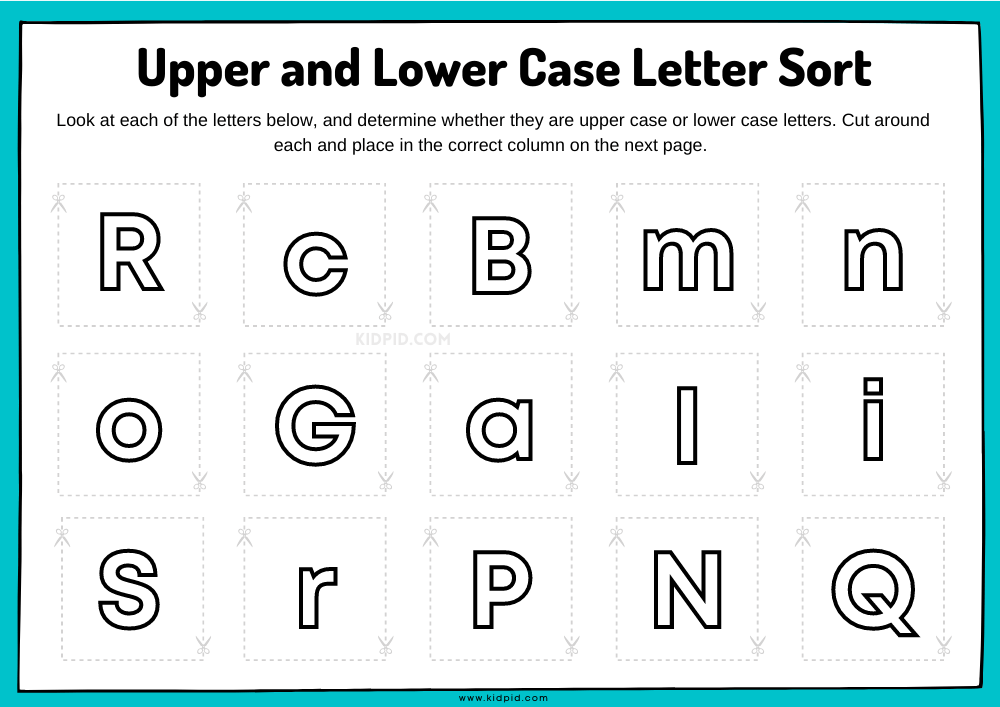
Columns for Placing the Alphabets 5
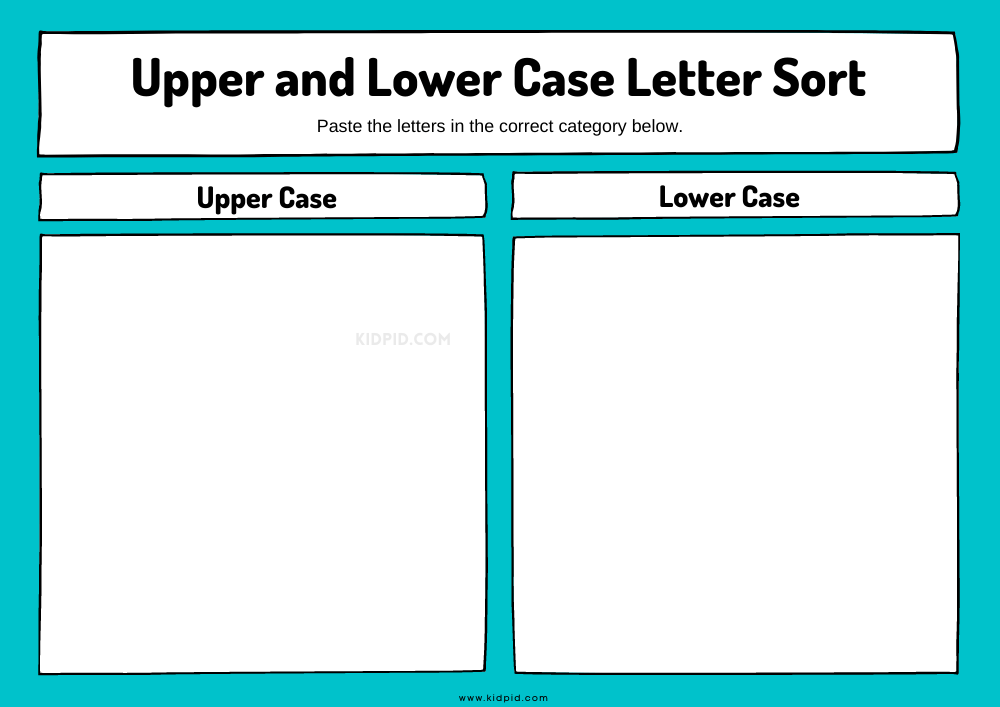
It is very important to solidify the basic concepts of uppercase and lowercase letters before a child moves on to the next, more advanced stage of learning. Download, print, and use these worksheets to help your kid excel.
Key Facts About Uppercase and Lowercase Letters Sorting Worksheet
The Uppercase and Lowercase Letters Sorting Worksheet is an engaging literacy activity designed to help children recognize, differentiate, and match capital letters with their corresponding lowercase letters. This worksheet supports early reading and writing development by strengthening letter identification skills.
Key facts include:
- Suitable for preschool, kindergarten, and Grade 1 learners.
- Focuses on alphabet recognition and letter matching.
- Helps children understand the relationship between uppercase and lowercase letters.
- Supports phonics and early literacy development.
- Encourages visual discrimination and attention to detail.
- Can be used in classrooms, homeschooling, and independent practice.
- Provides hands-on learning through sorting and categorization activities.
Parts/Types/Examples of Uppercase and Lowercase Letters Sorting Worksheet
The worksheet may include various activities to help children practice alphabet recognition.
Common parts include:
- Uppercase letter section
- Lowercase letter section
- Sorting boxes or categories
- Matching exercises
- Cut-and-paste activities
- Coloring and tracing elements
Types of sorting activities:
- Letter Matching
- Match A with a, B with b, and so on.
- Cut-and-Paste Sorting
- Cut letter cards and place them in the correct uppercase or lowercase category.
- Circle the Matching Letter
- Identify the correct lowercase letter for a given uppercase letter.
- Alphabet Sorting Charts
- Organize letters into separate uppercase and lowercase columns.
Examples:
- A → a
- M → m
- T → t
- R → r
- Z → z
How Does the Uppercase and Lowercase Letters Sorting Worksheet Work?
This worksheet works by presenting children with a variety of uppercase and lowercase letters that need to be matched, grouped, or sorted correctly.
The process typically involves:
- Observing the letters.
- Identifying whether each letter is uppercase or lowercase.
- Matching corresponding letter pairs.
- Sorting letters into designated categories.
- Reviewing completed work to reinforce learning.
Repeated practice helps children develop automatic recognition of letter forms, which is essential for reading fluency and writing accuracy.
Benefits of Learning About Uppercase and Lowercase Letters Sorting Worksheet
Learning through letter sorting activities offers numerous educational benefits.
Benefits include:
- Improves alphabet recognition skills.
- Strengthens reading readiness.
- Builds writing confidence.
- Enhances visual perception and memory.
- Develops fine motor skills during cutting and sorting activities.
- Supports phonics and language development.
- Encourages independent learning.
- Increases concentration and attention span.
- Helps children recognize letter patterns quickly.
Learning Objectives
By completing this worksheet, children will be able to:
- Identify the uppercase letters of the alphabet.
- Recognize lowercase letters accurately.
- Match uppercase letters with their lowercase counterparts.
- Differentiate between capital and small letters.
- Improve visual discrimination skills.
- Develop alphabet sequencing knowledge.
- Strengthen foundational literacy skills.
- Enhance fine motor coordination through worksheet activities.
Worksheet Instructions
Follow these simple instructions to complete the worksheet successfully:
- Look at each letter carefully.
- Determine whether the letter is uppercase or lowercase.
- Match corresponding uppercase and lowercase letter pairs.
- Sort letters into the correct category boxes.
- If required, cut and paste letters into the correct sections.
- Double-check your answers before finishing.
- Practice reading the matched letters aloud for additional reinforcement.
Interesting Facts About Uppercase and Lowercase Letters Sorting Worksheet
- The English alphabet contains 26 uppercase letters and 26 lowercase letters.
- Uppercase letters are often called capital letters.
- Books, signs, and digital text use both uppercase and lowercase letters.
- Children generally learn uppercase letters first because they are easier to identify.
- Letter recognition is one of the strongest predictors of future reading success.
- Sorting activities help the brain categorize information efficiently.
- Alphabet learning forms the foundation for reading, spelling, and writing skills.
Real-Life Applications
Uppercase and lowercase letter recognition is used every day in various situations.
Examples include:
- Reading books and storybooks.
- Writing names and sentences.
- Using computers, tablets, and smartphones.
- Understanding road signs and public notices.
- Completing school assignments.
- Sending emails and text messages.
- Reading menus, labels, and advertisements.
Strong letter recognition skills make everyday reading and writing easier and more effective.
FAQs
Q1. What is an uppercase and lowercase letters sorting worksheet?
Answer: It is an educational activity that helps children identify, match, and sort capital and small letters of the alphabet.
Q2. Who can use this worksheet?
Answer: The worksheet is ideal for preschoolers, kindergarten students, Grade 1 learners, homeschoolers, and early literacy learners.
Q3. Why is learning uppercase and lowercase letters important?
Answer: Understanding both forms of letters helps children read, write, spell, and recognize words accurately.
Q4. How often should children practice letter sorting?
Answer: Short daily practice sessions of 10–15 minutes can significantly improve letter recognition skills.
Q5. Can this worksheet support reading development?
Answer: Yes. Letter recognition is a foundational skill that supports phonics, vocabulary building, reading fluency, and writing development.
Q6. Are uppercase letters taught before lowercase letters?
Answer: In many early learning programs, uppercase letters are introduced first because they are visually distinct and easier for young children to identify.
Q7. What skills does this worksheet improve?
Answer: The worksheet improves alphabet knowledge, visual discrimination, fine motor skills, concentration, phonics awareness, and literacy readiness.
Q8. Can parents use this worksheet at home?
Answer: Yes. Parents can use the worksheet as a fun and effective home-learning activity to reinforce classroom instruction and build confidence in early reading skills.
The Uppercase and Lowercase Letters Sorting Worksheet helps children recognize, match, and sort letter pairs with confidence. This engaging activity strengthens alphabet knowledge, letter recognition, and early reading skills through fun hands-on practice. Give kids a smarter way to learn with worksheets, essays, paragraphs, flashcards, quizzes, and interactive resources on our website. Follow our YouTube & Facebook pages for more ideas.
The Content Team designed this worksheet to nurture learning success.
Reviewed By Mahak Agarwal
Read More:



