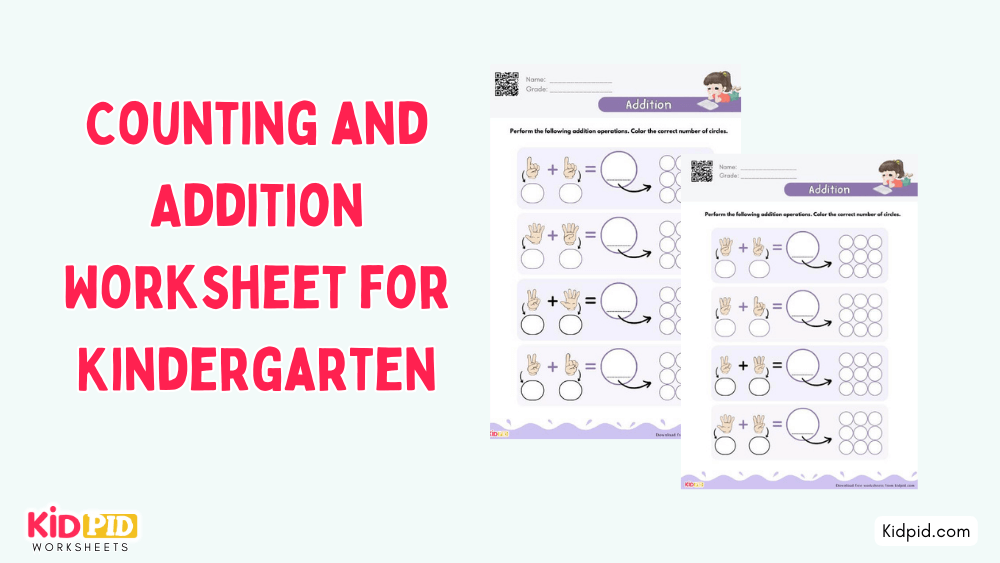
Kids seem to find developing a function that enables them to discover new things for the rest of their educational lives, and mathematics is one of those things. Additionally, Subtraction is the basic concept that kids learn and try to master in their early days. The addition also helps children to understand the relationships between different numbers and learn how they are related to each other.
Contents
- Apple Addition Practice Worksheet
- Key Facts About Apple Addition Worksheets for Kids
- Parts, Types, and Examples of Apple Addition Worksheets
- How Does Apple Addition Work?
- Benefits of Learning with Apple Addition Worksheets
- Learning Objectives
- Worksheet Instructions
- Interesting Facts About Apples and Math!
- Vocabulary Words
- Real-Life Applications
- FAQs
- Read More:
Apple Addition Practice Worksheet

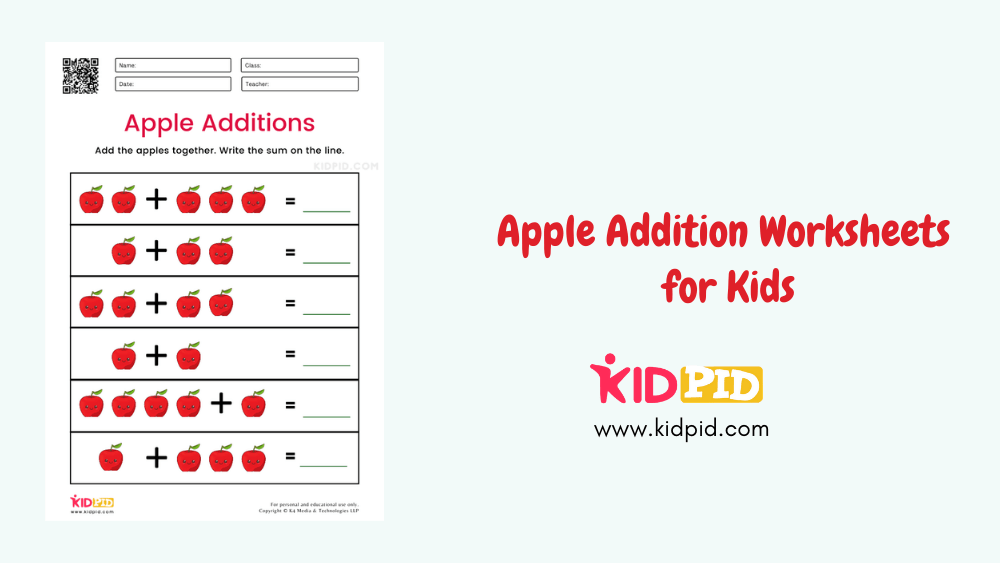
In this edition, we have brought some worksheets, which help the kids to work on their basic Addition concept by adding apples. These sessions can create an enduring interest in mathematics that helps kids shine when they grow up.
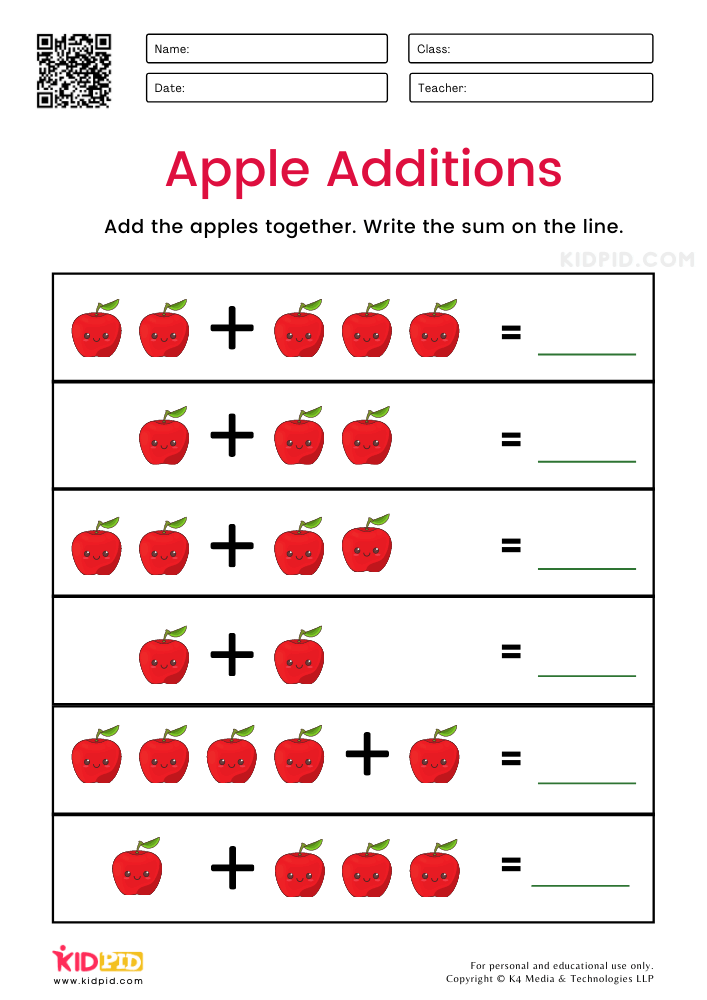
The worksheet below asks the child to add the apples together and write the line. For example, 2 apples + 3 apples 5 Apples. Here, he could learn about simple addition and finding the answer in the form of an Apple to make things interesting. As parents, the kid needs to be looked at, so this is a basic level worksheet that leads the kid if they make a mistake. Classes in school use numerous different educational tactics to help children learn about addition and provide structure. A requirement for excelling in fundamental mathematics and beyond.
Key Facts About Apple Addition Worksheets for Kids
- Target Age Group: Best suited for early learners aged 4 to 7 years old (Preschool, Kindergarten, and 1st Grade).
- Core Mathematical Concept: Introduces single-digit addition using concrete, visual objects to bridge the gap between counting and abstract math.
- Skill Level: Foundational/Beginner level. No prior addition experience is required—just basic counting skills from 1 to 10.
- Format: Downloadable, print-ready PDFs designed with high-contrast, child-friendly visuals that keep young minds engaged without distracting them.
Parts, Types, and Examples of Apple Addition Worksheets
To help children master addition progressively, these worksheets utilize a few different structured formats:
- Visual Group Counting (The Pictorial Method): The worksheet displays actual clusters of apples. For instance, a group of 3 red apples next to a group of 2 green apples. The child counts them all together to find the sum.
- Number Sentences with Clues: These feature standard equations (e.g., $4 + 3 = \text{?}$) with tiny apple icons printed beneath each number. This allows kids to fall back on physical counting if they get stuck on the numerals.
- Color by Sum Activities: A creative variation where solving the apple addition problem tells the child what color to paint a larger picture, reinforcing their memory through artistic play.
How Does Apple Addition Work?
The human brain—especially a young one—understands concrete objects long before it can process abstract symbols like “+” or “=”.
These worksheets rely on a classic early-childhood teaching framework called the Concrete-Pictorial-Abstract (CPA) approach. Instead of memorizing cold numbers on a page, a child uses the apples as visual anchors. They count the first group of apples, continue counting through the second group, and intuitively realize that “addition” simply means putting groups of things together. It shifts their thinking from rote memorizing to genuine conceptual understanding.
Benefits of Learning with Apple Addition Worksheets
- Reduces Math Anxiety: Using familiar, friendly objects like apples makes math feel like a game rather than a stressful test.
- Builds Fine Motor Skills: Writing down the numbers and coloring the apples helps develop the tiny muscles in a child’s hands, preparing them for better handwriting.
- Develops Subitizing Skills: Over time, looking at these worksheets helps kids recognize small patterns of objects (like seeing 3 apples and instantly knowing it is 3) without counting them one by one.
Learning Objectives
By completing these apple addition worksheets, young learners will achieve the following milestones:
- Mastery of Sums up to 10: Confidently combine two single-digit numbers.
- Understanding Math Symbols: Successfully identify and use the plus sign (+) and equal sign (=).
- One-to-One Correspondence: Strengthen the ability to match one spoken number with exactly one physical or visual object.
Worksheet Instructions
Parents and teachers can read these simple steps aloud to guide their young learners:
- Count the first group: Look at the first pile of apples on the left side of the math problem. Count them out loud one by one, pointing with your finger.
- Count the second group: Now, move your finger to the second pile of apples just after the plus (+) sign. Count how many apples are in that group.
- Count them all together: Go back to the very beginning and count all the apples across both groups without stopping.
- Write the final number: Write down the total number you just counted in the blank box right after the equal (=) sign. You did it!
Interesting Facts About Apples and Math!
- The Original Calculator: Long before tablets and plastic counting blocks existed, teachers in historical one-room schoolhouses used real apples from nearby orchards to teach children how to count and add!
- A Symbol of Appreciation: The tradition of giving an apple to a teacher started as a way for families to support educators in rural communities during hard times.
- Fractions on a Plate: Apples aren’t just great for addition; because they are perfectly round and easy to slice, they are considered one of the best real-world tools for teaching halves, quarters, and fractions later on.
Vocabulary Words
Help your child build their mathematical language by practicing these key terms while working through the pages:
- Addition: The action of putting two or more numbers or groups of items together to find a total amount.
- Plus Sign (+): The math symbol that tells us we need to add numbers together.
- Equal Sign (=): The math symbol that shows the amounts on both sides have the same value.
- Sum: The final answer or total result you get when you add numbers together.
Real-Life Applications
Math isn’t confined to a piece of paper! Show your kids how apple addition applies directly to their daily lives:
- Grocery Shopping: Ask your child to help you gather fruit at the store. “If we put 3 red apples and 2 green apples into our basket, how many apples will we have for the week?”
- Snack Time: Give them a small pile of apple slices or berries. Have them calculate their total snack count before they begin eating.
- Setting the Table: Have them calculate how many plates or utensils are needed based on how many family members are sitting down to dinner.
FAQs
Q1: My child keeps losing track when counting the pictures. How can I help them?
Answer: Encourage your child to cross out each apple with a pencil or crayon as they count it. This gives them a clear visual indicator of which items have already been counted and prevents double-counting.
Q2: What should I do if my child is struggling to write the numbers in the answer boxes?
Answer: At this age, math skills and handwriting skills develop at different speeds. If writing is frustrating them, let them use number stamps, stickers, or simply tell you the answer out loud so their math confidence keeps growing.
Q3: When is a child ready to move on from these apple worksheets to abstract math?
Answer: Once your child can look at the equations and accurately tell you the answers without needing to count the visual apple pictures, they are ready to transition to worksheets featuring text numbers only.
Little kids don’t need to memorize the problems; they need to understand the concept. The Addition, Subtraction is one of the various continuing challenges the child is going to face in the near future. Make sure your child is prepared for such interesting topics. Find educational worksheets, engaging paragraphs, useful flashcards, informative essays, and exciting quizzes in our growing resource library. Follow us on YouTube & Facebook.
This worksheet was created by the Content Team to support student improvement.
Reviewed By Kartik
Read More: