
This activity is designed for kindergarten kids to build their knowledge about the positions. Students have to learn what the position of between means and be able to recognize it by doing an activity. So check out these amazing worksheets to build your knowledge about the positions.
Contents
- Color The Between Position Shape Worksheets For Kindergarten
- Key Facts About Between Position Worksheets
- Parts, Types, and Examples
- How Does the Between Position Worksheet Work?
- Benefits of Learning About the Positions
- Learning Objectives
- Worksheet Instructions
- Interesting Facts About Between-Position Vocabulary
- Real-Life Applications
- FAQs
Color The Between Position Shape Worksheets For Kindergarten
[Scroll Down for Download Link]
Read More: Position Vocabulary Worksheet For Kindergarten

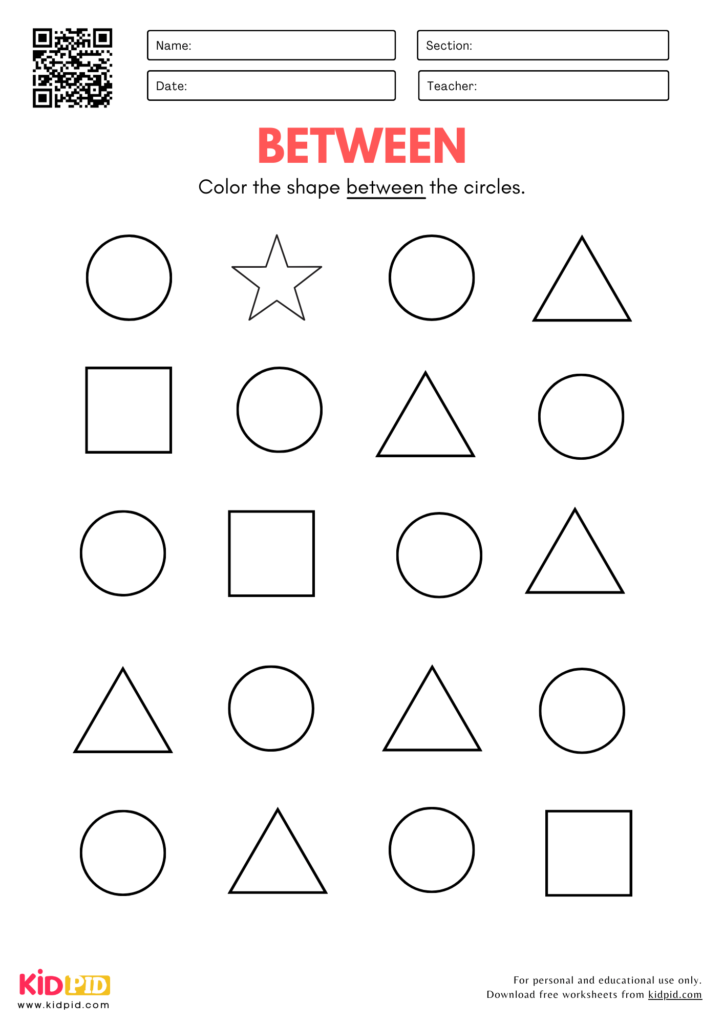


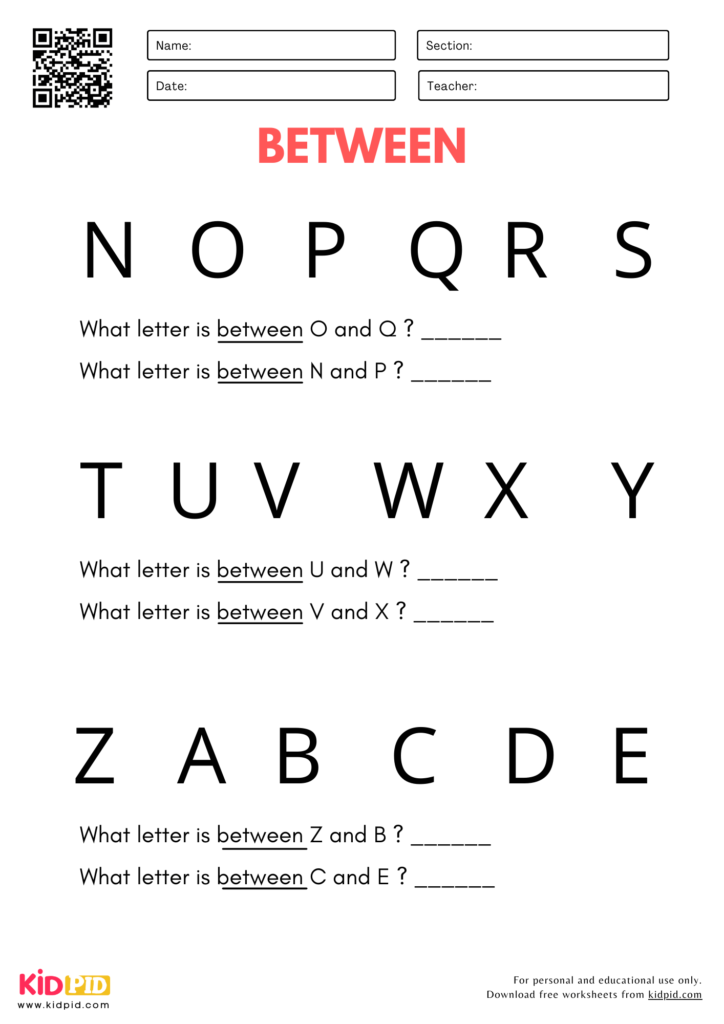
The worksheet acts as a guided cognitive exercise. It presents a series of visual prompts that force the child to analyze spatial relationships. By comparing the position of an item relative to two distinct reference points, children learn to use directional vocabulary. The structured layout allows children to practice identifying patterns, which is a critical step in visual-spatial development.
By the end of these activities, students will be able to:
Answer: Most children begin to grasp basic positional concepts around age 4 or 5, typically during kindergarten.
Answer: Use physical props. Line up three stuffed animals or blocks and physically move them to show which one is in the middle. Practical demonstration helps bridge the gap to paper worksheets.
Answer: Yes, these resources are designed by educators to align with early childhood math standards regarding spatial geometry and directional awareness.
Key Facts About Between Position Worksheets
Parts, Types, and Examples
How Does the Between Position Worksheet Work?
Benefits of Learning About the Positions
Learning Objectives
Worksheet Instructions
Interesting Facts About Between-Position Vocabulary
Real-Life Applications
FAQs
Q1. At what age should a child learn “between” positions?
Q2. How can I help my child if they struggle with this?
Q3. Are these worksheets aligned with curriculum standards?
Identifying objects placed between others helps kindergarten learners strengthen positional understanding, improve observation skills, build spatial awareness, and confidently use location words through engaging, hands-on learning activities. Give young learners access to worksheets, essays, paragraphs, flashcards, quizzes, and interactive resources on our website. Join us on YouTube & Facebook.
The Content Team crafts the worksheet to promote experiential practice.
Reviewed By Parul Rana
Read More: