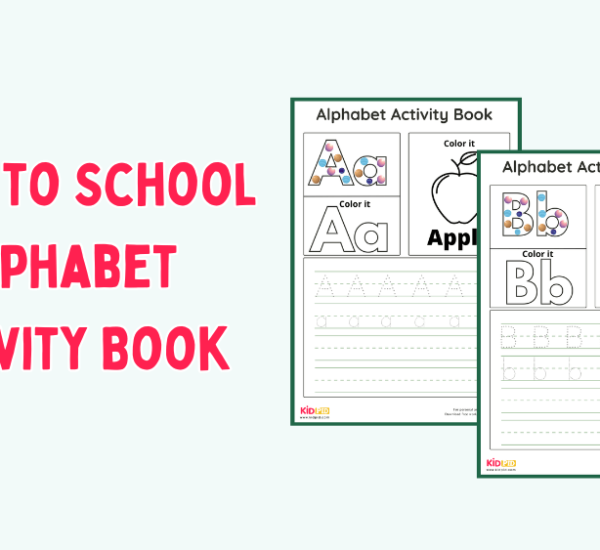
Welcome to the before-and-after position worksheet for kindergarten kids. They will learn about the alphabet with the help of these amazing worksheets. They include fill-in-the-blank, which the children have to do before and after the particular letter given in the worksheets.

Before & After Position Worksheet Activity For Kindergarten

[Scroll Down for Download Link]

Read More: Alphabet Collage Book For Kindergarten

Before and After Position Worksheet for Kindergarten

Before and After Position Worksheet for Kindergarten

Before and After Position Worksheet for Kindergarten

Before and After Position Worksheet for Kindergarten

Key Facts About Before and After Position Worksheets

  • Target Audience: Designed specifically for kindergarten-aged children (ages 4–6).
  • Educational Focus: Builds foundational literacy by reinforcing alphabetical order and sequential logic.
  • Format: Utilizes “fill-in-the-blank” exercises to promote active recall rather than passive recognition.
  • Skill Development: Targets cognitive sequencing, spatial awareness, and English language basics.
  • Curriculum Alignment: Developed by educational experts to support early childhood developmental milestones.

Parts, Types, and Examples

  • Alphabetical Sequencing: Students identify the letter that comes before or after a given letter (e.g., “_ B C” or “X Y _”).
  • Visual-Textual Pairing: Sheets often include illustrations paired with letters to strengthen the association between symbolic representation and position.
  • Progression Types:
    • Beginning Level: Simple A-Z sequences.
    • Intermediate Level: Scattered letters requiring students to recall the full alphabet order.
    • Mixed Practice: Combining “before” and “after” prompts on a single page to test attentiveness.

How Does This Worksheet Work?

These worksheets function on the principle of scaffolded learning. By providing a target letter in the center, the child is prompted to perform a mental retrieval of the surrounding sequence. This repetitive practice transitions the alphabet from short-term memory to long-term fluency. The visual structure—a blank space preceding or following a letter—acts as a non-verbal cue, signaling exactly what logical step the child needs to perform.

Benefits of Learning About Position Sequences

  • Foundational Literacy: Mastering “before and after” is a precursor to understanding alphabetical indexing, which is essential for dictionary use and library skills.
  • Logical Reasoning: Sequencing is a core mathematical and linguistic skill that helps children understand patterns and causality.
  • Confidence Building: The clear, actionable nature of fill-in-the-blank exercises provides immediate feedback, giving children a sense of accomplishment upon completion.

Learning Objectives

  • To accurately identify and write letters in the correct alphabetical sequence.
  • To distinguish between the relative positions of “preceding” (before) and “following” (after).
  • To enhance fine motor skills through handwriting practice within the designated blanks.
  • To improve visual discrimination between similar-looking letters.

Worksheet Instructions

  1. Preparation: Print the worksheet on high-quality paper. Ensure the child has a comfortable grip on their pencil.
  2. Guided Practice: Start by reciting the alphabet together as a warm-up.
  3. The Prompt: Point to the middle letter and ask, “What letter comes before this?” and “What letter comes after this?”
  4. Execution: Have the child write the missing letter in the blank space.
  5. Review: Encourage the child to read the full sequence aloud once the blanks are filled to confirm it sounds correct.

Interesting Facts About Vocabulary Words

  • “Position” Defined: In early education, position words (like before, after, between, next to) are technically known as spatial prepositions.
  • The Power of Order: Learning the sequence of the alphabet is not just about rote memorization; it is the first step in learning to categorize information.

Real-Life Applications

  • Calendar Skills: Understanding what comes “before” or “after” is critical for mastering days of the week, months of the year, and daily schedules.
  • Organization: This logic is applied when arranging items in a classroom cubby or organizing toys from smallest to largest.
  • Following Directions: Classroom instructions such as “Line up after Sarah” or “Wash your hands before lunch” rely on the same positional logic.

FAQs

Q1. At what age should a child start these worksheets?

Answer: These are typically most effective for children aged 4–6 who are beginning to recognize and write individual letters.

Q2. Can these worksheets be used for math as well?

Answer: Yes. The concept of “before and after” is identical when applied to number lines. Once a child masters letter sequencing, you can apply the same methodology to numbers 1–20.

Q3. How often should my child complete these?

Answer: Consistency is better than intensity. A 10-minute session two to three times a week is more effective for retention than one long, exhausting session.

We hope you find these knowledgeable worksheets valuable for learning the alphabet. In this before-and-after activity, kindergarten kids will be able to intensify their mental ability and learn the basics of English. Learning becomes more exciting with our worksheets, essays, paragraphs, flashcards, quizzes, and interactive resources. Follow us onYouTube & Facebook.

This worksheet is designed by the Content Team to enhance experiential learning.

Reviewed By Palak

Read More:

About the Author

Content Team

Kidpid Content Team is a team of experienced educators, curriculum researchers, and child-focused content creators specializing in early childhood and primary education. The team develops high-quality, research-based worksheets, learning activities, and educational articles aligned with age-appropriate learning standards. Every resource is carefully reviewed to ensure accuracy, clarity, and educational value, making Kidpid a trusted platform for parents, teachers, and schools worldwide.

View All Articles