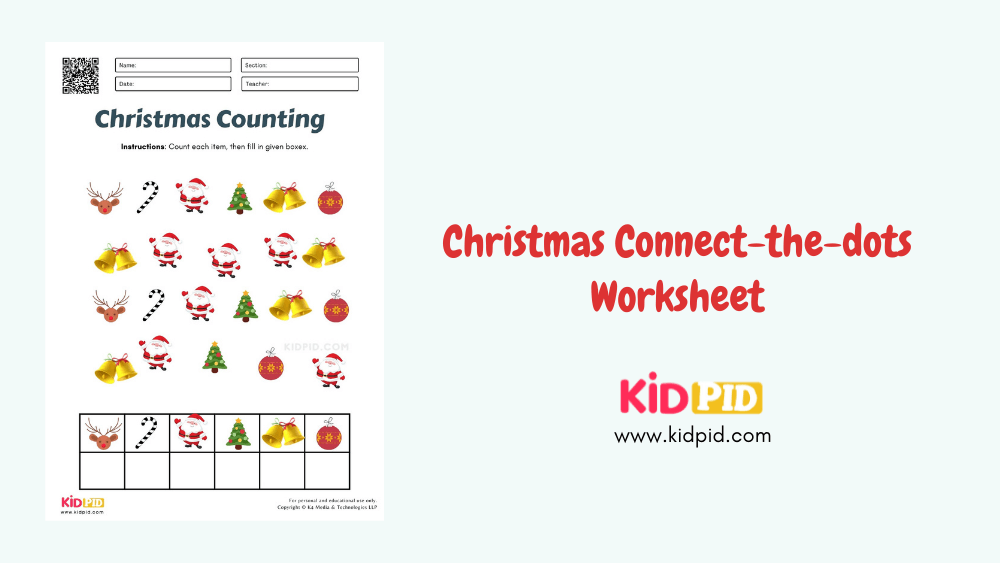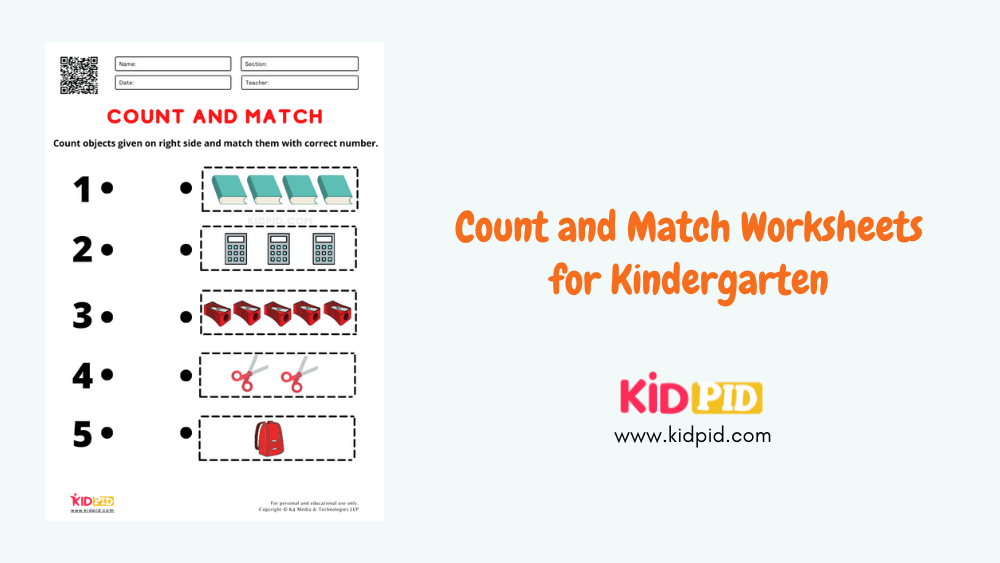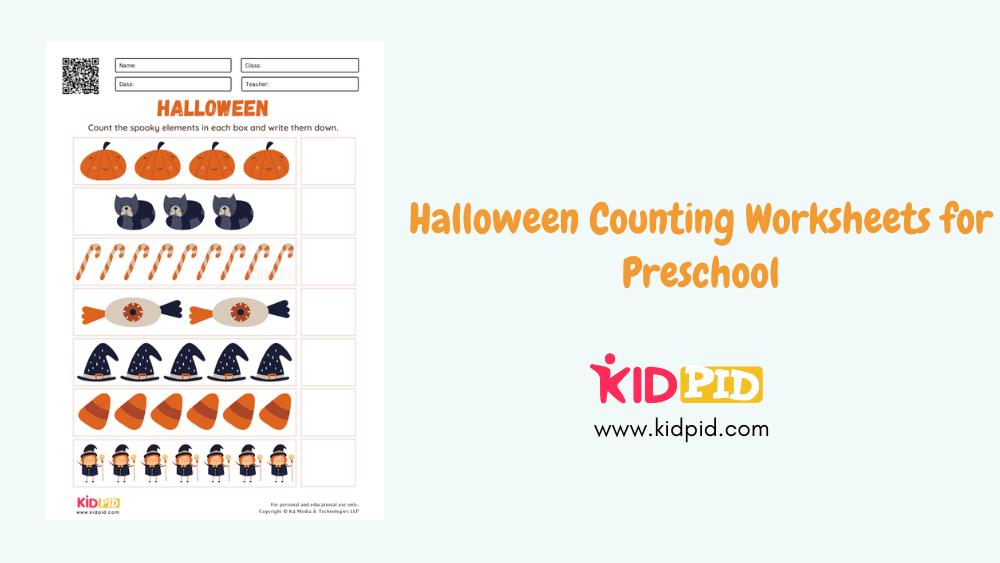
A preschool kid is between the ages of 3 and 5 years. During the moment, a kid can comprehend different skills before they enter school. It is a primary mission of each parent to be mindful of the kids as they develop, otherwise. However, the recent dilemma of COVID-19 has affected schools forthwith. How can kids learn? Is it possible from home? The parents recall their kids, and they must discover several techniques to prepare their kids. It is a widespread fact that every kid is unique, but the understanding of each child may be similar or different.
Creativity is the secret behind it. Creativity boosts mental evolution and helps to lock everything in memory. A kid can struggle to point out by overheating and schooling. Mainly, parents or teachers go with digits first and digit-corner identification, counting, and writing. Counting means assigning a specific digit to one or a set of objects. It is an early step towards the fundamental portion of the mathematical institution. Funny and joyful knowledge rapidly acts. Try to find new, crazy methods for counting and matching. You can involve many attributes of your kid.
Attend The Five Steps Initially:
- Count the digits up to 5.
- Identify the digits.
- Become familiar with digits with regular exercise.
- Test the knowledge using a demo worksheet.
- Once a kid’s grip turns for the next level.
[Scroll Down for Download Link]
Contents
- Count and Match Worksheets for Preschool
- Key Facts About Count Match Worksheets for Preschoolers
- Parts/Types/Examples of Count Match Worksheets for Preschoolers
- How Do Count Match Worksheets for Preschoolers Work?
- Benefits of Learning About Count Match Worksheets for Preschoolers
- Learning Objectives
- Worksheet Instructions
- Interesting Facts About Count Match Worksheets for Preschoolers
- Real-Life Applications
- FAQs
- Q1. What age group are Count Match Worksheets suitable for?
- Q2. What skills do children learn from Count Match Worksheets?
- Q3. Are Count Match Worksheets good for beginners?
- Q4. How often should children practice these worksheets?
- Q5. Can these worksheets be used at home?
- Q6. Why is matching important in early math education?
- Q7. Do Count Match Worksheets prepare children for future math lessons?
Count and Match Worksheets for Preschool
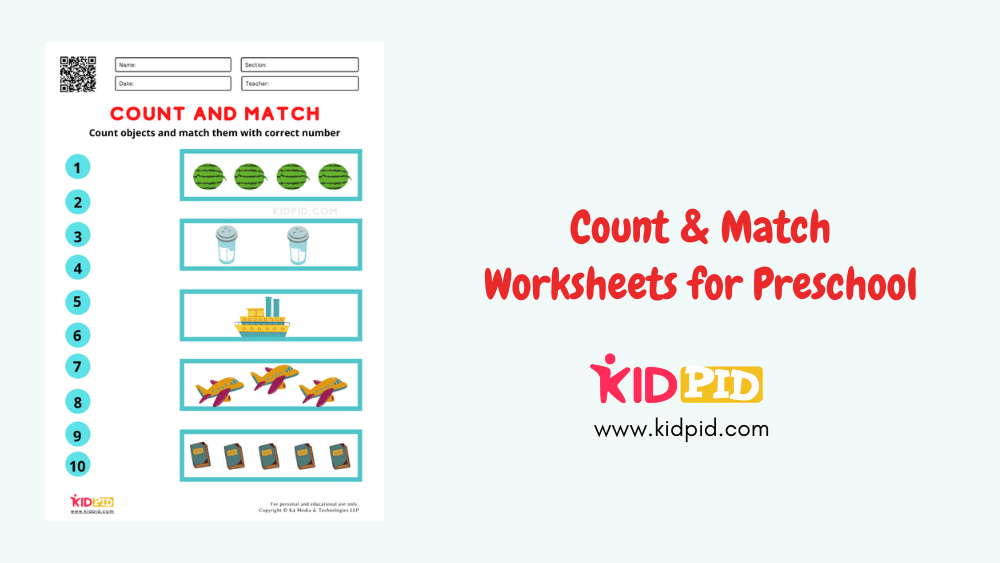
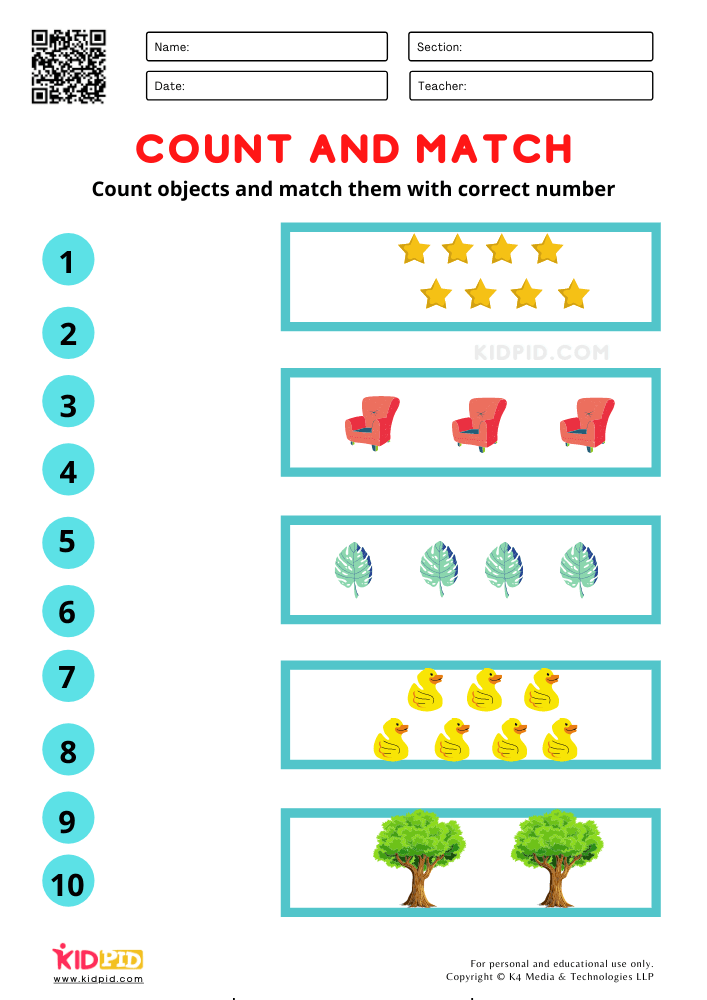
Count & Match Printable 1
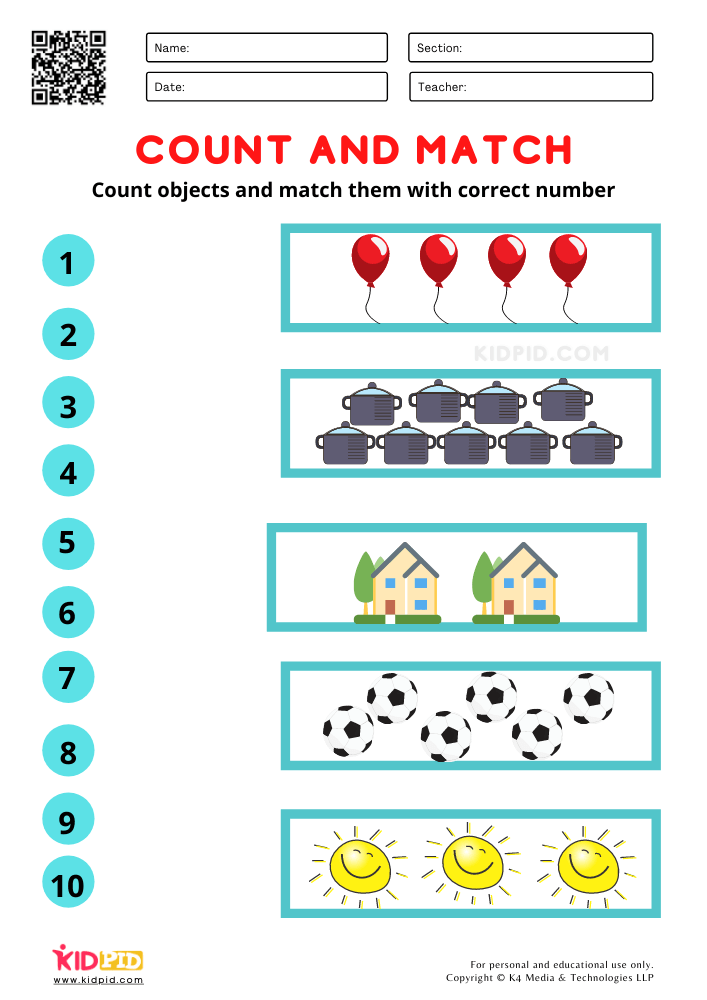
Count & Match Printable 2
Count & Match Printable 3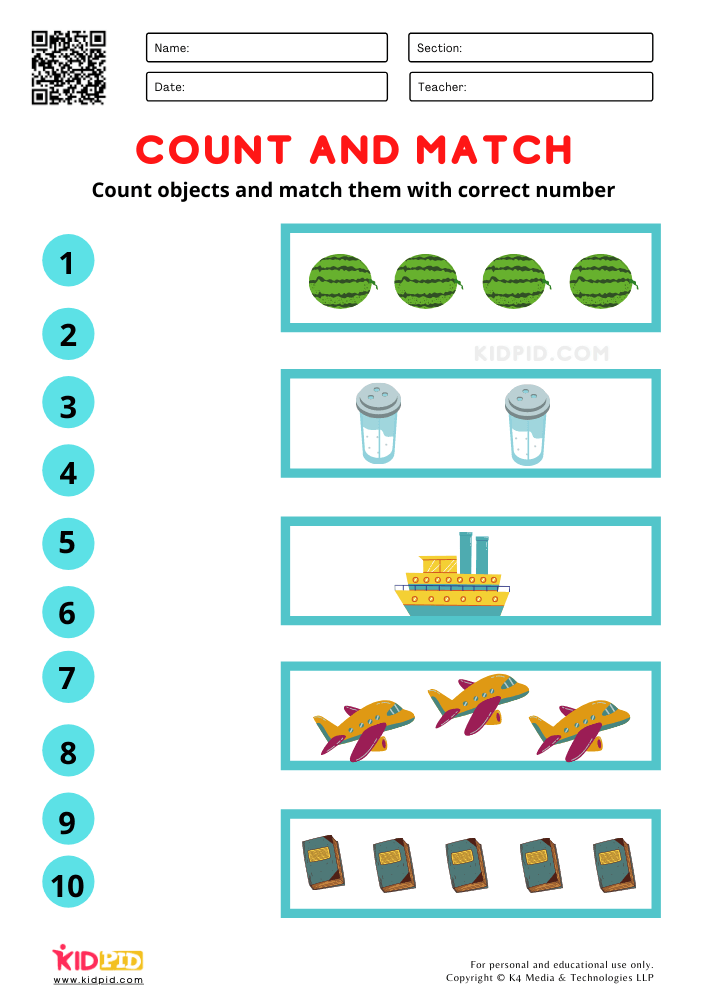
Count & Match Printable 4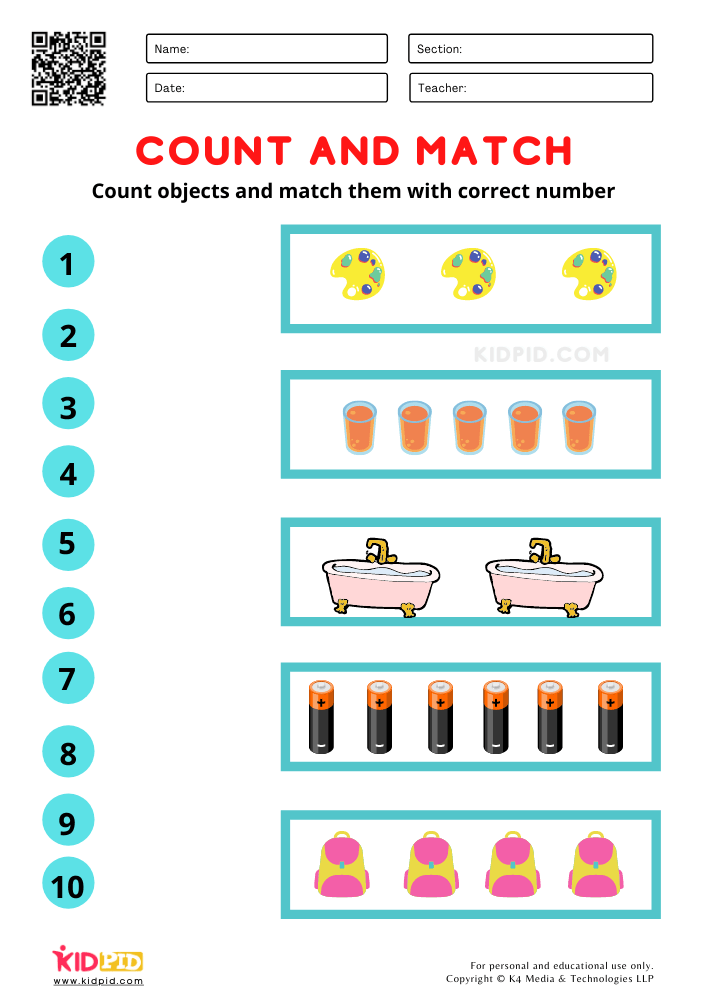
Count & Match Printable 5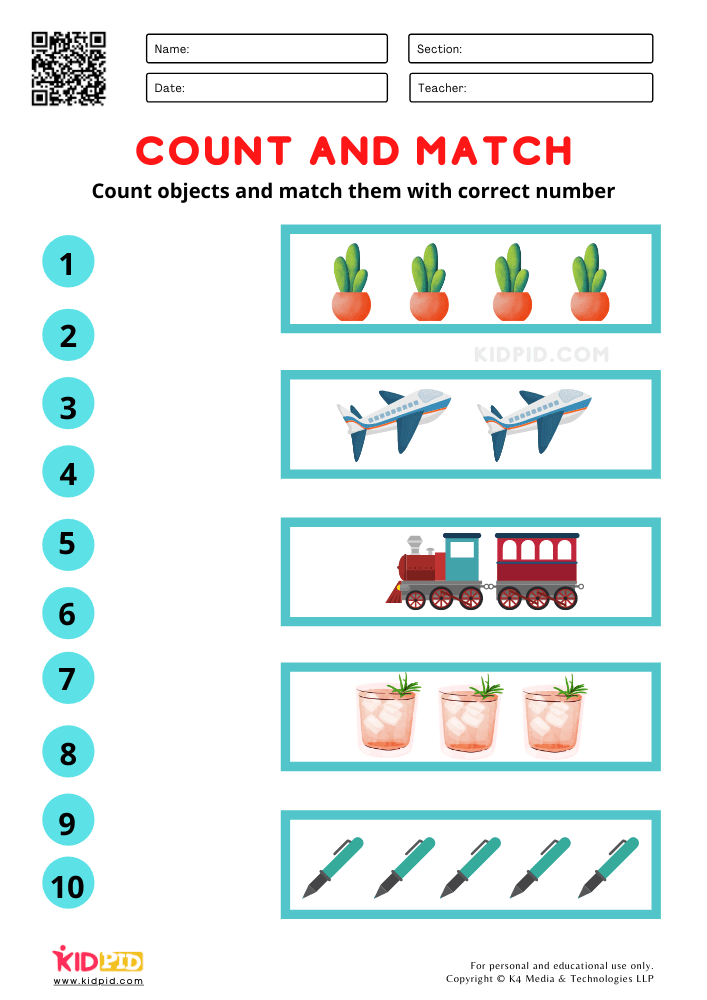
It certainly relies on simple ideas that you wish to implement. The following are a few count and match worksheet ideas for a preschooler.
Apple Tree:
Bring a sheet of paper and draw a picture of the tree. Write a specific digit on the tip of the paper. Place the crafted apples on the tree.
Dot and Pair:
The left side is of digits, and on the opposite side, place the dots. Teach counting first and match the appropriate pair with the respective digit.
Ball Count:
Here you require colourful balls, a slate, and one jug. The activity is to give balls to the kids for counting and tell them to write the digit on the sheet and deposit the respective digits of balls inside the jug.
Draw, Count, and Write:
It includes three sections: a certain image, a second digit, and lastly a vacant pillar. The kid has to count the images present on the sheet because that digit was already present in the second row; in the end, rewrite the count.
Colour and Match:
Again, two sections consist of colourless images and their count. A kid can fill in the colour and match the perfect pair. Kids love this kind of entertainment.
Mixed Shapes:
Use a big piece of paper, use many structures, and hold aside. Draw a figure on paper and simply place the pattern in front of the respective figure.
Game of Seeds:
Draw colourful fruit, say, a watermelon, and add certain seeds into the portion. Tell me to figure out those seeds and write them in the empty box, which is waiting for your reply.
Number Matching:
Counting and matching can take place by drawing small images and teaching counting to your kid by holding their finger, saying loudly, and writing the correct count for those images.
Count and Circle:
This is something interesting where you just draw images, and below, put three options. A kid can count the images and make a circle around the correct option.
Join Dots:
During this activity, place dots on the sheets and tell a specific digit to the kid, and join the dots. Say the digit is four; the kid has to join four dots.
Finger Count:
Formerly, people used fingers for numbering. Here, your kid wishes to measure on fingers 1,2,3, 2, 3,… and as usual, next have to specify the count on the worksheet and match them to the exact image.
Count Ballons and Match To Numbers(1-10):
The preschooler worksheet teaches counting and enhances numbers from 1 to 10. Here single worksheet for one number. The kid has to count the balloons and match them with one of the numbers revealed on the printable worksheet.
Counting Stars:
In the worksheet, kids have to count the stars, which are between 1 and 10 primarily, and write the correct number in the box.
Tracing The Numbers:
In the whole worksheet, rewrite the printable number, then count how many images are involved below and circle the perfect number from the square.
Two columns consist of different images of triangles on one side and dots on the other hand. Tell your kid to recall a specific number and try to match. For example, two triangles connect with a box of two dots.
Craft Home:
The craft can bring this action to life. Cut different shapes of cardboard, such as a triangle, two circles, a rectangular shape, and three steps for the basic house. The parents have to write the digits on the sheet and instruct the kid to identify those digits and place their respective shapes. Eventually, the kid would get a surprise home.
Fish Pot:
The same game parents have to play, like drawing two columns along with digits on the left side, drawing images of fish on the other, and matching them. Also, bring tiny, ready-made fish. However, to cheer, after finishing matching, put those fish into the water pond.
In short, the parents can enforce multiple tricks. It simply depends on your kid’s attention. The playful efforts help in recollecting any topics effortlessly.
Key Facts About Count Match Worksheets for Preschoolers
Count Match Worksheets for Preschoolers are educational activities designed to help young children develop early math skills by counting objects and matching them with the correct numbers. These worksheets introduce number recognition, one-to-one correspondence, visual discrimination, and problem-solving in a fun and engaging way. They are suitable for preschoolers aged 3–5 years and support foundational numeracy development through hands-on learning experiences.
Quick Facts:
- Designed for preschool and kindergarten learners.
- Focus on counting, matching, and number recognition.
- Improve observation and concentration skills.
- Use colourful images to keep children engaged.
- Support early mathematical thinking and cognitive development.
Parts/Types/Examples of Count Match Worksheets for Preschoolers
Count Match Worksheets come in various formats to suit different learning levels and interests.
Parts of a Count Match Worksheet
- Objects Section: Pictures of animals, fruits, toys, shapes, or everyday items.
- Number Section: Numerals displayed for matching.
- Instructions Area: Clear directions for completing the activity.
- Answer Space: Lines, circles, or boxes for connecting matches.
Types of Count Match Worksheets
- Count and Match Numbers
- Count and Circle the Correct Number
- Count and Draw Lines to Match
- Count and Colour Matching Activities
- Count and Match with Shapes
- Count and Match with Animals or Objects
Examples
- Count 5 apples and match them to the number 5.
- Count 8 stars and connect them to the numeral 8.
- Count a group of animals and circle the correct number.
How Do Count Match Worksheets for Preschoolers Work?
Count Match Worksheets encourage children to count a set of objects carefully and identify the corresponding numeral. Students observe each picture group, count the items one by one, and then connect or circle the matching number. This process strengthens number sense, improves concentration, and reinforces the relationship between quantities and numerals.
The worksheets gradually increase in difficulty, helping children build confidence while learning essential early math concepts. Repeated practice improves counting accuracy and prepares learners for addition, subtraction, and more advanced mathematical operations.
Benefits of Learning About Count Match Worksheets for Preschoolers
Count Match Worksheets provide several educational advantages for young learners.
Academic Benefits
- Strengthen counting skills.
- Improve number recognition.
- Develop early mathematical understanding.
- Build a foundation for future math concepts.
Cognitive Benefits
- Enhance memory and concentration.
- Improve logical thinking.
- Strengthen visual perception skills.
- Encourage problem-solving abilities.
Developmental Benefits
- Improve fine motor skills through drawing lines and circling answers.
- Boost confidence through successful task completion.
- Promote independent learning habits.
Learning Objectives
By completing Count Match Worksheets, children will be able to:
- Count objects accurately from 1 to 10 and beyond.
- Match quantities with the correct numerals.
- Develop one-to-one correspondence skills.
- Recognize and identify numbers quickly.
- Improve attention to detail and observation skills.
- Build confidence in early math activities.
- Strengthen hand-eye coordination and fine motor development.
Worksheet Instructions
Follow these simple steps to complete the worksheet:
- Look carefully at each group of objects.
- Count the items one by one.
- Find the matching number from the options provided.
- Draw a line or circle the correct numeral.
- Double-check your counting before moving to the next question.
- Complete all sections neatly and carefully.
Tips for Success
- Count slowly and point to each object.
- Avoid skipping or counting the same object twice.
- Review your answers after finishing.
Interesting Facts About Count Match Worksheets for Preschoolers
- Counting activities help build the brain’s early mathematical pathways.
- Children learn best when numbers are connected to visual objects.
- Matching games improve memory and attention span.
- Preschool counting activities support future success in mathematics.
- Visual counting exercises make learning numbers more enjoyable and engaging.
- Early numeracy skills are strong predictors of later academic achievement.
Real-Life Applications
Count Match skills are useful in everyday situations and help children understand numbers in the world around them.
Examples
- Counting toys during playtime.
- Match the number of snacks to the number of family members.
- Counting fruits while shopping.
- Identifying numbers on clocks, calendars, and houses.
- Organizing objects into groups based on quantity.
- Following simple instructions that involve counting.
These practical experiences help children apply mathematical concepts outside the classroom.
FAQs
Q1. What age group are Count Match Worksheets suitable for?
Answer: These worksheets are ideal for preschoolers and kindergarten students, typically between 3 and 5 years old.
Q2. What skills do children learn from Count Match Worksheets?
Answer: Children develop counting, number recognition, one-to-one correspondence, concentration, and fine motor skills.
Q3. Are Count Match Worksheets good for beginners?
Answer: Yes. They are designed to introduce basic counting concepts simply and engagingly.
Q4. How often should children practice these worksheets?
Answer: Practicing 2–4 times per week can help reinforce counting and number recognition skills effectively.
Q5. Can these worksheets be used at home?
Answer: Absolutely. Parents can use them as fun educational activities to support early learning.
Q6. Why is matching important in early math education?
Answer: Matching helps children understand the relationship between quantities and numbers, which is essential for developing strong number sense.
Q7. Do Count Match Worksheets prepare children for future math lessons?
Answer: Yes. They create a strong foundation for addition, subtraction, measurement, and other mathematical concepts learned in later grades.
These Count & Match Worksheets for Preschoolers provide a fun and interactive way to reinforce counting skills. Regular practice enhances number recognition, improves concentration, strengthens logical thinking, and builds a solid foundation for future math learning. Discover engaging educational content featuring worksheets, flashcards, quizzes, essays, paragraphs, and interactive learning materials. Join us on YouTube & Facebook.
The Content Team has crafted this worksheet to support academic mastery.
Reviewed By Poornima Ravi
Read More: