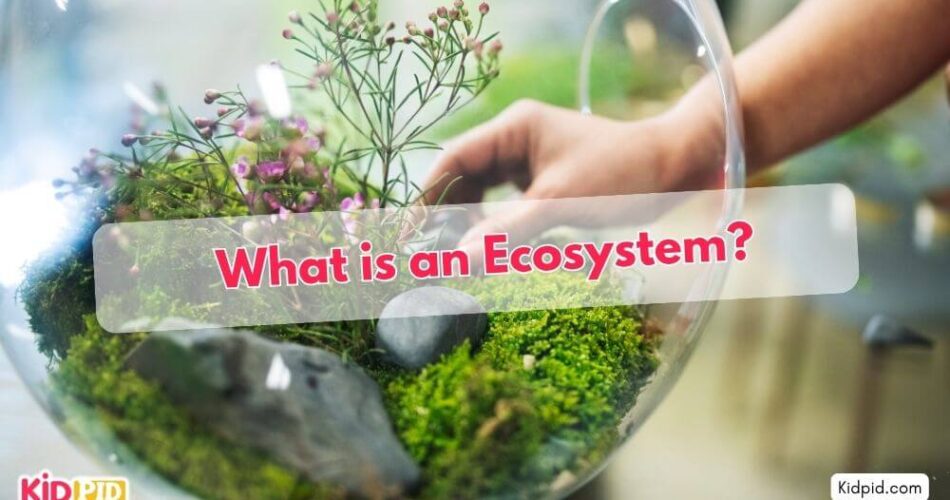
An ecosystem is a community of living organisms, such as plants, animals, and microbes, interacting with each other and their non-living environment, including air, water, and soil, forming a complex network of relationships.

Contents
- MCQs
- Fill in The Blanks
- 1. ________________ helps to protect the environment by conserving resources and reducing pollution.
- 2. By reducing the amount of waste we produce, we can help to ________________ our planet for future generations.
- 3. Reusing items instead of throwing them away can help to ________________ the amount of waste in landfills.
- 4. Recycling paper and cardboard helps to save ________________ trees from being cut down.
- True / False
- 1. Recycling helps to conserve natural resources (True / False )
- 2. Reusing items helps to reduce waste (True / False )
- 3. It is important to only focus on recycling and not reducing or reusing (True / False )
- 4. Recycling can help to reduce pollution (True / False )
- 5. Reducing, reusing, and recycling can help create a more sustainable future (True / False )
MCQs
1. Which of the following is not a component of an ecosystem?
A) Animals
B) Plants
C) Cars
D) Water
Answer: C) Cars
Explanation: An ecosystem consists of all the biological components (animals and plants) and the environment’s physical components (such as water, soil, and climate). Cars, being man-made objects, are not considered a natural part of ecosystems.
2. What role do plants have in an ecosystem?
A) They produce oxygen through the process of photosynthesis.
B) They are the only consumers of water.
C) They create sunlight.
D) They eat other plants and animals.
Answer: A) They produce oxygen through the process of photosynthesis.
Explanation: Plants play a crucial role in ecosystems as they produce oxygen through photosynthesis, which converts carbon dioxide into organic compounds, especially sugars, using the energy from sunlight.
3. What does a decomposer do in an ecosystem?
A) Adds sunlight to the ecosystem
B) Eats living plants and animals
C) Breaks down dead material and recycles nutrients back into the soil
D) Makes water from hydrogen and oxygen
Answer: C) Breaks down dead material and recycles nutrients back into the soil
Explanation: Decomposers, like fungi and bacteria, play a vital role in ecosystems by breaking down dead organisms and waste materials, which recycle nutrients back into the soil, making them available for use by plants and other organisms.
4. Which of the following is an example of a man-made ecosystem?
A) A forest
B) A desert
C) An aquarium
D) An ocean
Answer: C) An aquarium
Explanation: An aquarium is an example of a man-made ecosystem. It is an artificial environment created by humans to mimic some aspects of a natural aquatic ecosystem, including living organisms and their interactions within a controlled setting.
Fill in The Blanks
Choose from These Words: Recycling, Preserve, Reduce, Thousands.
1. ________________ helps to protect the environment by conserving resources and reducing pollution.
Answer: Recycling
2. By reducing the amount of waste we produce, we can help to ________________ our planet for future generations.
Answer: Preserve
3. Reusing items instead of throwing them away can help to ________________ the amount of waste in landfills.
Answer: Reduce
4. Recycling paper and cardboard helps to save ________________ trees from being cut down.
Answer: Thousands
True / False
1. Recycling helps to conserve natural resources (True / False )
True: Recycling helps to conserve natural resources by reducing the need to extract raw materials from the earth, such as trees for paper or metal ores for manufacturing.
2. Reusing items helps to reduce waste (True / False )
True: By reusing items, we can prevent them from being thrown away and ending up in landfills, which helps reduce the amount of waste we produce.
3. It is important to only focus on recycling and not reducing or reusing (True / False )
False: It is important to focus on all three aspects – reducing, reusing, and recycling – to have the greatest impact on reducing waste and protecting the environment.
4. Recycling can help to reduce pollution (True / False )
True: Recycling can help to reduce pollution by decreasing the amount of energy and resources needed to produce new products, which in turn reduces emissions and waste.
5. Reducing, reusing, and recycling can help create a more sustainable future (True / False )
True: By practicing these habits, we can help to create a more sustainable future by conserving resources, reducing waste, and protecting the environment for future generations.
Read More: