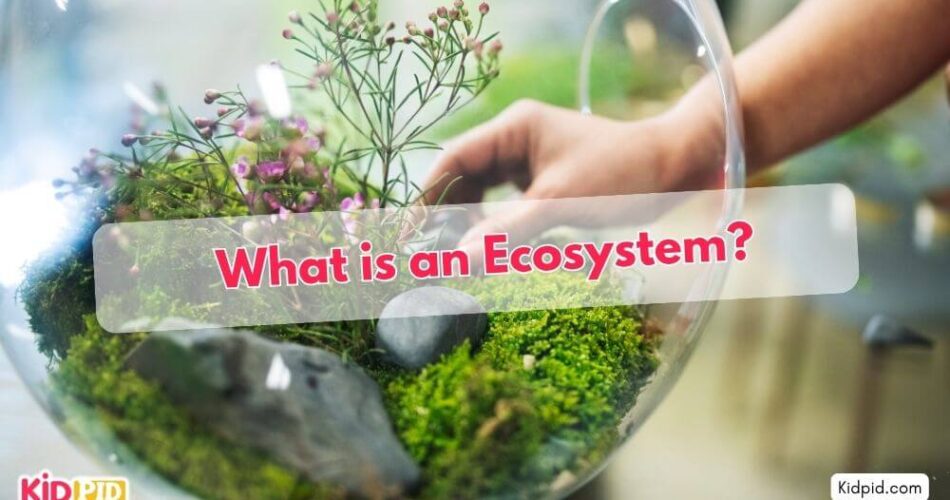
An ecosystem is a community of living organisms, such as plants, animals, and microbes, interacting with each other and their non-living environment, including air, water, and soil, forming a complex network of relationships.
Contents
- MCQs
- Fill in The Blanks
- 1. ________________ helps to protect the environment by conserving resources and reducing pollution.
- 2. By reducing the amount of waste we produce, we can help to ________________ our planet for future generations.
- 3. Reusing items instead of throwing them away can help to ________________ the amount of waste in landfills.
- 4. Recycling paper and cardboard helps to save ________________ trees from being cut down.
- True / False
- 1. Recycling helps to conserve natural resources (True / False )
- 2. Reusing items helps to reduce waste (True / False )
- 3. It is important to only focus on recycling and not reducing or reusing (True / False )
- 4. Recycling can help to reduce pollution (True / False )
- 5. Reducing, reusing, and recycling can help create a more sustainable future (True / False )
MCQs
1. Which of the following is not a component of an ecosystem?
A) Animals
B) Plants
C) Cars
D) Water
2. What role do plants have in an ecosystem?
A) They produce oxygen through the process of photosynthesis.
B) They are the only consumers of water.
C) They create sunlight.
D) They eat other plants and animals.
3. What does a decomposer do in an ecosystem?
A) Adds sunlight to the ecosystem
B) Eats living plants and animals
C) Breaks down dead material and recycles nutrients back into the soil
D) Makes water from hydrogen and oxygen
4. Which of the following is an example of a man-made ecosystem?
A) A forest
B) A desert
C) An aquarium
D) An ocean
Fill in The Blanks
Choose from These Words: Recycling, Preserve, Reduce, Thousands.
1. ________________ helps to protect the environment by conserving resources and reducing pollution.
2. By reducing the amount of waste we produce, we can help to ________________ our planet for future generations.
3. Reusing items instead of throwing them away can help to ________________ the amount of waste in landfills.
4. Recycling paper and cardboard helps to save ________________ trees from being cut down.
True / False
1. Recycling helps to conserve natural resources (True / False )
2. Reusing items helps to reduce waste (True / False )
3. It is important to only focus on recycling and not reducing or reusing (True / False )
4. Recycling can help to reduce pollution (True / False )
5. Reducing, reusing, and recycling can help create a more sustainable future (True / False )
Read More: