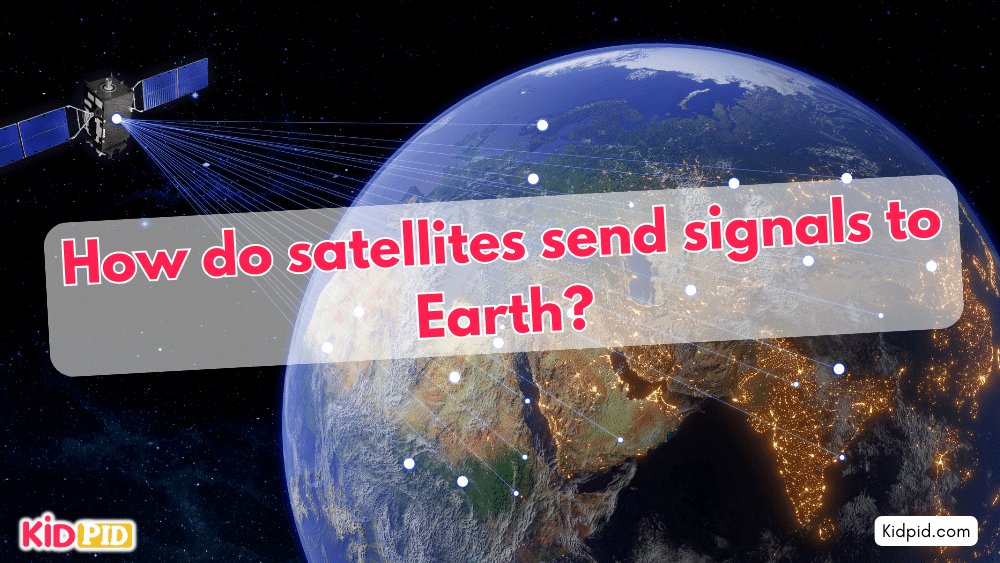
Satellites send signals to Earth using radio waves. These signals are transmitted through antennas on the satellite, directed towards Earth, where they are received by ground stations or receivers designed to pick up these radio waves.
Contents
MCQs
1. What do satellites use to communicate with Earth?
A) Magic
B) Radio waves
C) Shouting loud
D) Carrier pigeons
Answer: B) Radio waves
Explanation: Satellites communicate with Earth using radio waves. These are a type of electromagnetic wave that can travel through the vacuum of space.
2. How do signals from satellites reach your TV at home?
A) Through underwater cables
B) Via the Internet
C) Through satellite dishes
D) By direct mail
Answer: C) Through satellite dishes
Explanation: Satellite dishes receive signals sent by satellites using radio waves. These signals are then converted into TV shows and movies.
3. Why can satellites send signals over long distances?
A) Because they have big lungs
B) Due to the curvature of the Earth
C) Because they use a lot of power
D) Because they’re in space
Answer: D) Because they’re in space
Explanation: Being in space, satellites can send signals over the horizon, beyond the Earth’s curvature, making long-distance communication possible.
4. What part of the satellite receives signals from Earth?
A) The antenna
B) The engine
C) The solar panels
D) The window
Answer: A) The antenna
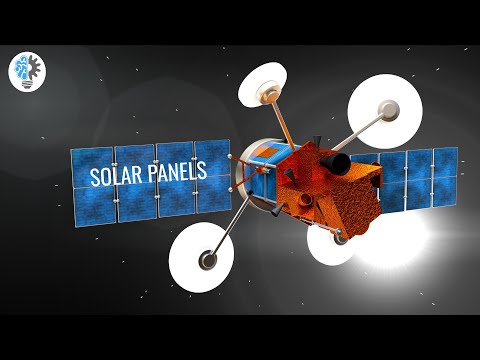
Explanation: The antenna on a satellite is designed to receive and transmit signals to and from Earth, functioning similarly to how a radio antenna works.
5. How do satellites stay powered to send signals?
A) By eating snacks
B) Using solar panels
C) By plugging into an outlet
D) Using batteries only
Answer: B) Using solar panels
Explanation: Satellites use solar panels to convert sunlight into electricity, powering their systems to send and receive signals.
Read More