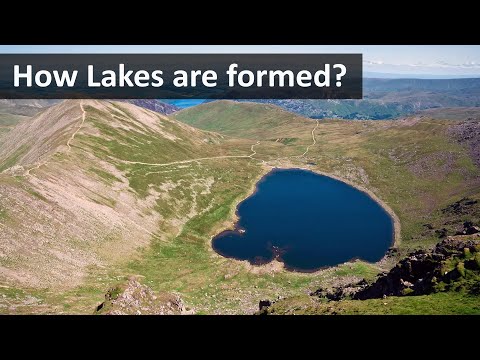
Lakes form through various natural processes, including glacial activity, where glaciers carve basins in the earth, volcanic activity creating craters that fill with water, tectonic movements forming basins, and river activity where bends become isolated forming oxbow lakes. Over time, these depressions collect and hold water, creating lakes.
Contents
- MCQs
- Fill in The Blanks
- 1. Lakes form when water collects in a natural __________ or basin on the Earth’s surface.
- 2. How do lakes form? They can form from melting __________.
- 3. Rivers flowing into a low-lying area can contribute to the formation of a __________.
- 4. What type of activity can also lead to the formation of a lake? __________ activity.
- 5. Lakes provide important habitats for __________ and animals.
- True / False
MCQs
1. How can a glacier lead to the formation of a lake?
A) By heating the ground
B) By moving rocks
C) By melting and leaving behind a basin filled with water
D) By creating rivers
Answer: C) By melting and leaving behind a basin filled with water
Explanation: As glaciers move, they can carve out basins in the earth. When the glacier melts, these basins can fill with water, forming a lake.
2. What type of lake is formed when a river changes its course?
A) Volcanic lake
B) Oxbow lake
C) Glacier lake
D) Crater lake
Answer: B) Oxbow lake
Explanation: An oxbow lake is formed when a wide meander from the mainstem of a river is cut off, creating a free-standing body of water.
3. When humans build a dam, what type of lake is formed?
A) Artificial lake
B) Natural lake
C) Saltwater lake
D) Temporary lake
Answer: A) Artificial lake
Explanation: Artificial lakes, also known as reservoirs, are created when humans build dams across rivers to store water.
4. What causes a sinkhole lake to form?
A) Earthquake
B) The drying up of a river
C) The collapse of the ground above a cave
D) Heavy rainfall
Answer: C) The collapse of the ground above a cave
Explanation: Sinkhole lakes form when the ground collapses into a cave or other voids below, creating a depression that can fill with water.
5. What kind of lake is formed by the impoundment of water behind a beaver dam?
A) Beaver lake
B) Man-made lake
C) Salt lake
D) Temporary lake
Answer: A) Beaver lake
Explanation: Beavers build dams across streams to create ponds or lakes where they can build their lodges, known as beaver lakes.
Fill in The Blanks
Choose From These Words: depression, glaciers, lake, volcanic, plants.
1. Lakes form when water collects in a natural __________ or basin on the Earth’s surface.
Answer: depression
2. How do lakes form? They can form from melting __________.
Answer: glaciers
3. Rivers flowing into a low-lying area can contribute to the formation of a __________.
Answer: lake
4. What type of activity can also lead to the formation of a lake? __________ activity.
Answer: volcanic
5. Lakes provide important habitats for __________ and animals.
Answer: plants
True / False
1. Lakes can only form from the melting of glaciers (True / False)
False: Lakes can form in a variety of ways, including the melting of glaciers, the filling of old river valleys, or the sinking of the Earth’s crust.
2. Lakes can form from volcanic activity (True / False)
True: Lakes can form from volcanic activity when lava blocks a river or stream, creating a natural dam that fills with water.
3. Man-made dams cannot create lakes (True / False)
False: Man-made dams can create lakes by blocking rivers or streams and allowing water to accumulate behind them.
Read More