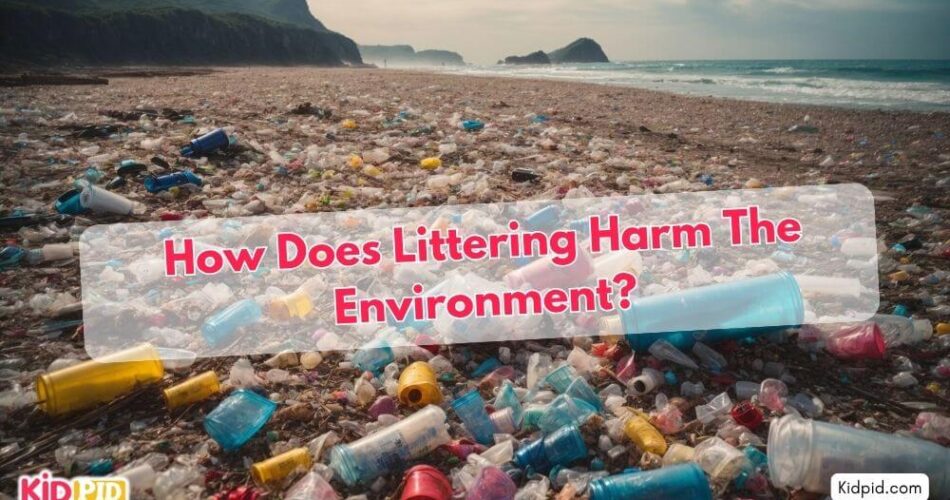
Littering harms the environment by polluting land and waterways, harming wildlife through ingestion and entanglement, and contributing to the degradation of natural landscapes and ecosystems.

MCQs
1. What happens to plastic waste that is littered in the environment?
A) It quickly dissolves in water
B) It breaks down into harmful chemicals
C) It turns into food for animals
D) It grows into plastic trees
Answer: B) It breaks down into harmful chemicals
Explanation: Plastic waste breaks down into smaller pieces called microplastics, releasing chemicals that are harmful to the environment and living organisms.
2. Why is littering bad for the soil?
A) It makes the soil more fertile
B) It increases the soil’s water-absorbing capacity
C) It can introduce toxic substances
D) It makes the soil softer
Answer: C) It can introduce toxic substances
Explanation: Littering can introduce harmful chemicals and substances into the soil, which can affect plant growth and soil health.
3. How does littering contribute to climate change?
A) By cleaning the air
B) By promoting plant growth
C) By releasing greenhouse gases
D) By cooling the Earth’s temperature
Answer: C) By releasing greenhouse gases
Explanation: Decomposing trash, especially organic waste, releases methane, a potent greenhouse gas that contributes to climate change.
4. How does one-way littering affect our water sources?
A) It purifies the water
B) It increases water levels
C) It can lead to water pollution
D) It makes water warmer
Answer: C) It can lead to water pollution
Explanation: Litter can be carried into streams, rivers, and oceans, contaminating the water with chemicals and harmful substances, making it unsafe for drinking and harming aquatic life.
Fill in The Blanks
Choose from these words: pollute, unsightly and unhealthy, storm, environment.
1. Littering can __________ water sources and harm wildlife.
Answer: pollute
2. Trash left on the ground can create __________ conditions.
Answer: unsightly and unhealthy
3. Littering can lead to clogged __________ drains.
Answer: storm
4. Properly disposing of trash helps to protect our __________.
Answer: environment
True / False
1. Littering can harm wildlife (True / False)
True: When animals ingest litter or get caught in it, it can cause harm or even death.
2. Littering only affects land-based environments (True / False)
False: Litter can also end up in water sources, harming aquatic life.
3. Littering makes natural areas less enjoyable for everyone (True / False)
True: Litter can create an eyesore and detract from the beauty of our natural spaces.
4. Littering has no impact on water quality (True / False)
False: Litter can contaminate water sources, leading to pollution and harm to aquatic ecosystems.
Read More: