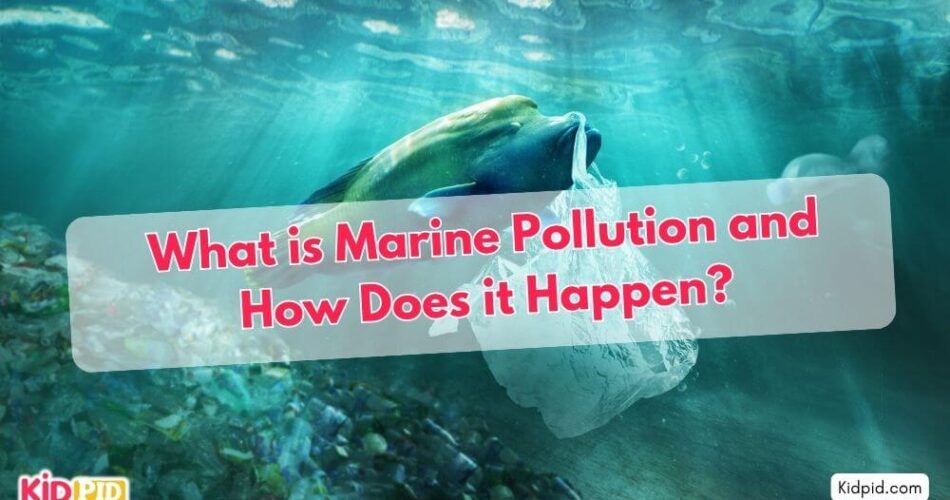
Marine pollution primarily occurs due to human activities such as industrial runoff, oil spills, and plastic waste disposal into oceans.

Contents
- MCQs
- 1. Which of the following is not a common source of marine pollution?
- 2. How does plastic waste contribute to marine pollution?
- 3. What can be an effect of oil spills in the ocean?
- 4. Which of the following practices can help reduce marine pollution?
- 5. Agricultural runoff into oceans often contains high levels of:
- Fill In The Blanks
- 1. Marine pollution is the contamination of the __________ with harmful substances.
- 2. People can contribute to marine pollution by littering on __________.
- 3. Ships can contribute to marine pollution by dumping waste into the __________.
- 4. Chemicals from factories and farms can run off into rivers and eventually reach the __________.
- 5. Marine pollution can harm marine animals and __________ that rely on the ocean for survival.
- True/False Questions:
- 1. Marine pollution only happens from oil spills. (True/False)
- 2. Marine pollution only affects marine life. (True/False)
- 3. Littering on beaches does not contribute to marine pollution. (True/False)
- 4. Marine pollution can harm marine animals and plants.(True/False)
- 5. Marine pollution can be prevented by properly disposing of waste and recycling. (True/False)
MCQs
1. Which of the following is not a common source of marine pollution?
A) Oil spills
B) Agricultural runoff
C) Solar flares
D) Plastic waste
Answer: C) Solar flares
Explanation: Solar flares are not related to marine pollution. Common sources include oil spills, agricultural runoff, and plastic waste, which are all human-related activities.
2. How does plastic waste contribute to marine pollution?
A) By dissolving in water
B) By releasing toxic gases
C) By harming marine life and ecosystems
D) By increasing water temperature
Answer: C) By harming marine life and ecosystems
Explanation: Plastic waste contributes to marine pollution by entangling marine life, being ingested by them, and disrupting ecosystems, rather than dissolving or directly changing water temperature.
3. What can be an effect of oil spills in the ocean?
A) Improved water quality
B) Increased fish populations
C) Damage to marine life
D) Enhanced coral reef growth
Answer: C) Damage to marine life
Explanation: Oil spills are detrimental to marine environments, coating marine life in oil, which can suffocate or poison them, and disrupt the overall ecosystem health.
4. Which of the following practices can help reduce marine pollution?
A) Increased use of single-use plastics
B) Responsible waste disposal
C) Unregulated industrial discharge
D) Overfishing
Answer: B) Responsible waste disposal
Explanation: Responsible waste disposal, including reducing, reusing, and recycling materials, can significantly reduce the amount of pollution that enters marine environments.
5. Agricultural runoff into oceans often contains high levels of:
A) Oxygen
B) Nutrients
C) Pure water
D) Plastic particles
Answer: B) Nutrients
Explanation: Agricultural runoff often contains high levels of nutrients from fertilizers, which can lead to eutrophication, a process that depletes oxygen in water and harms marine life.
Fill In The Blanks
Choose From These Words: sea, beaches, ocean, ecosystems, ocean,
1. Marine pollution is the contamination of the __________ with harmful substances.
Answer: ocean
2. People can contribute to marine pollution by littering on __________.
Answer: beaches
3. Ships can contribute to marine pollution by dumping waste into the __________.
Answer: ocean
4. Chemicals from factories and farms can run off into rivers and eventually reach the __________.
Answer: sea
5. Marine pollution can harm marine animals and __________ that rely on the ocean for survival.
Answer: ecosystems
True/False Questions:
1. Marine pollution only happens from oil spills. (True/False)
Answer: False. Marine pollution can occur from various sources such as littering, waste dumping, and runoff from land.
2. Marine pollution only affects marine life. (True/False)
Answer: False. Marine pollution can also have negative impacts on ecosystems and human health.
3. Littering on beaches does not contribute to marine pollution. (True/False)
Answer: False. Littering on beaches can be carried into the ocean by tides and currents, contributing to marine pollution.
4. Marine pollution can harm marine animals and plants.(True/False)
Answer: True. Marine pollution can disrupt ecosystems and harm marine life by introducing harmful substances into their environment.
5. Marine pollution can be prevented by properly disposing of waste and recycling. (True/False)
Answer: True. By reducing waste and properly disposing of it, we can help prevent marine pollution and protect our oceans.
Read More: