


The Proper Noun Capitalizations Practice Worksheet is designed to help kindergarten students develop a solid understanding of capitalizing proper nouns. Children will strengthen their grasp of this essential grammar concept by engaging in exercises that require identifying and applying capitalization rules to names of people, places, and things. This worksheet supports early literacy skills and prepares young learners for more complex written communication.
[Scroll Down for Download Link]
Contents
- Capitalizations Practice Worksheet for Kindergarten
- Key Facts About Proper Noun Capitalizations Practice Worksheet
- Parts, Types, and Examples of Capitalization Exercises
- How Does the Proper Noun Capitalization Practice Worksheet Work?
- Benefits of Learning About Capitalization
- Learning Objectives
- Worksheet Instructions for Teachers and Parents
- Interesting Facts About Capitalization and Proper Nouns
- Vocabulary Words
- Real-Life Applications
- FAQs
- Read More:
Capitalizations Practice Worksheet for Kindergarten
Read More: Color and Draw Words Kindergarten Practice Worksheet
Capital Letters: The Days Of The Week
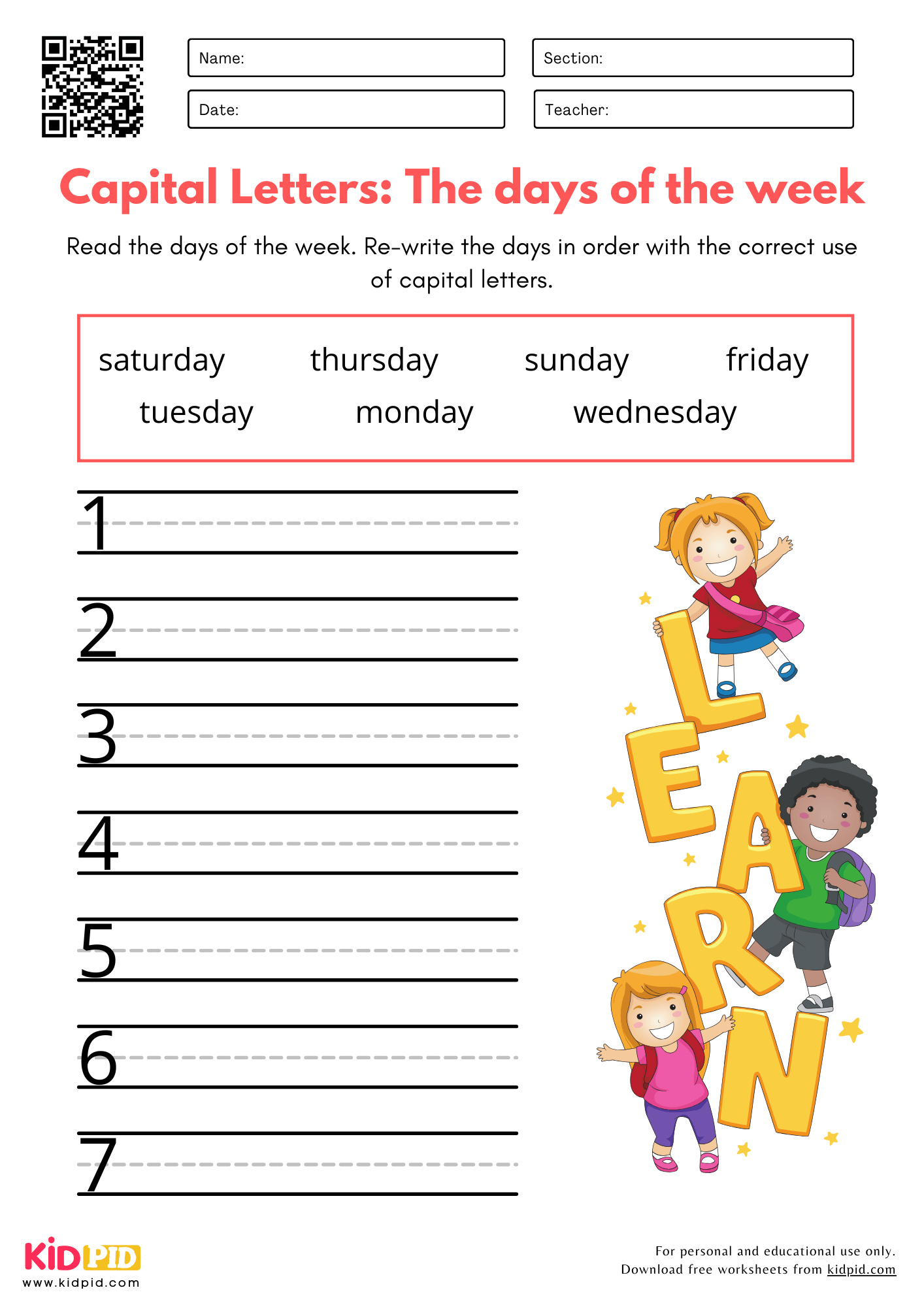
- Monday
- Tuesday
- Wednesday
- Thursday
- Friday
- Saturday
- Sunday
Capital Letters: Names
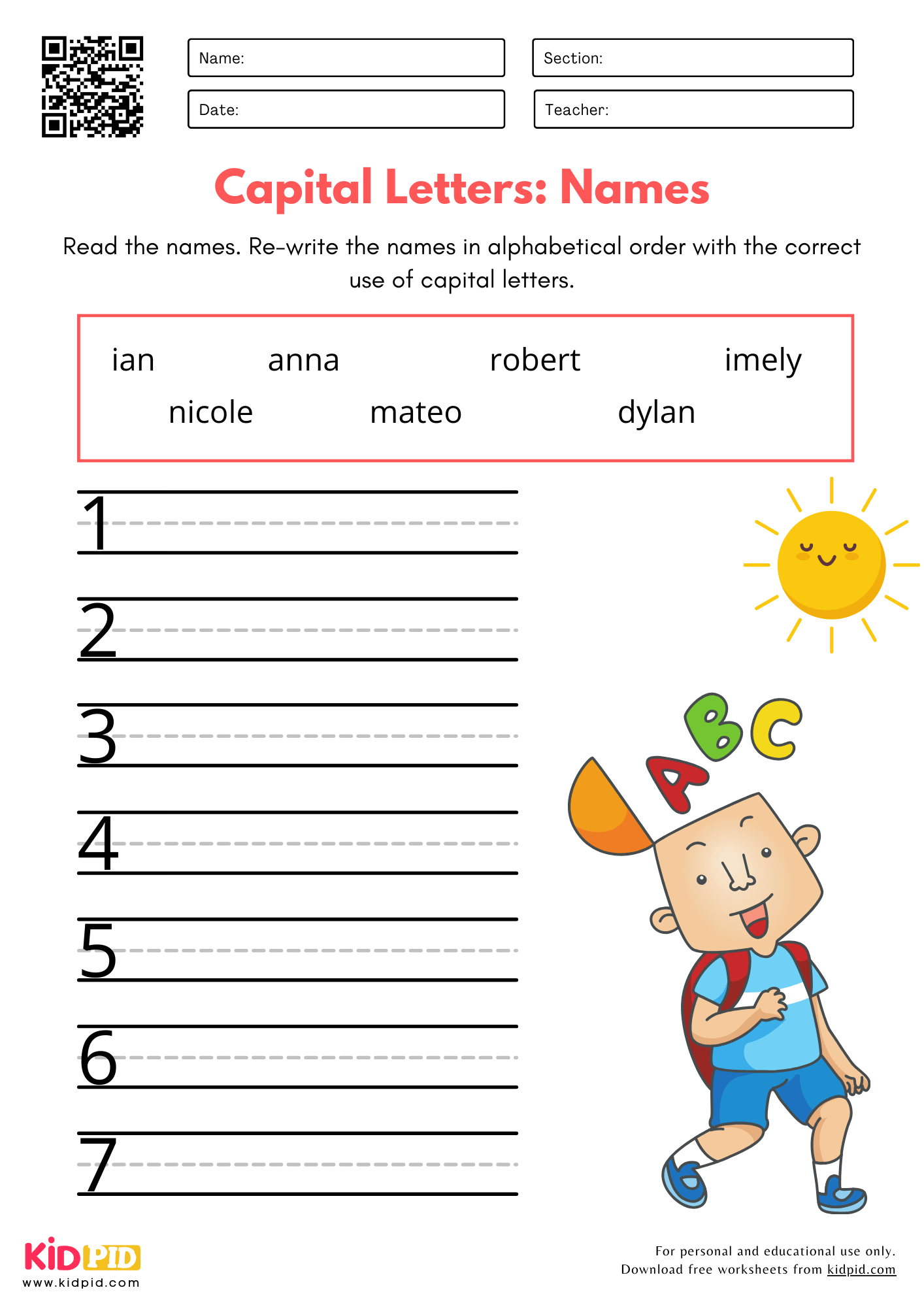
- Anna
- Dylan
- Ian
- Imely
- Mateo
- Nicole
- Robert
Capital Letters: Months
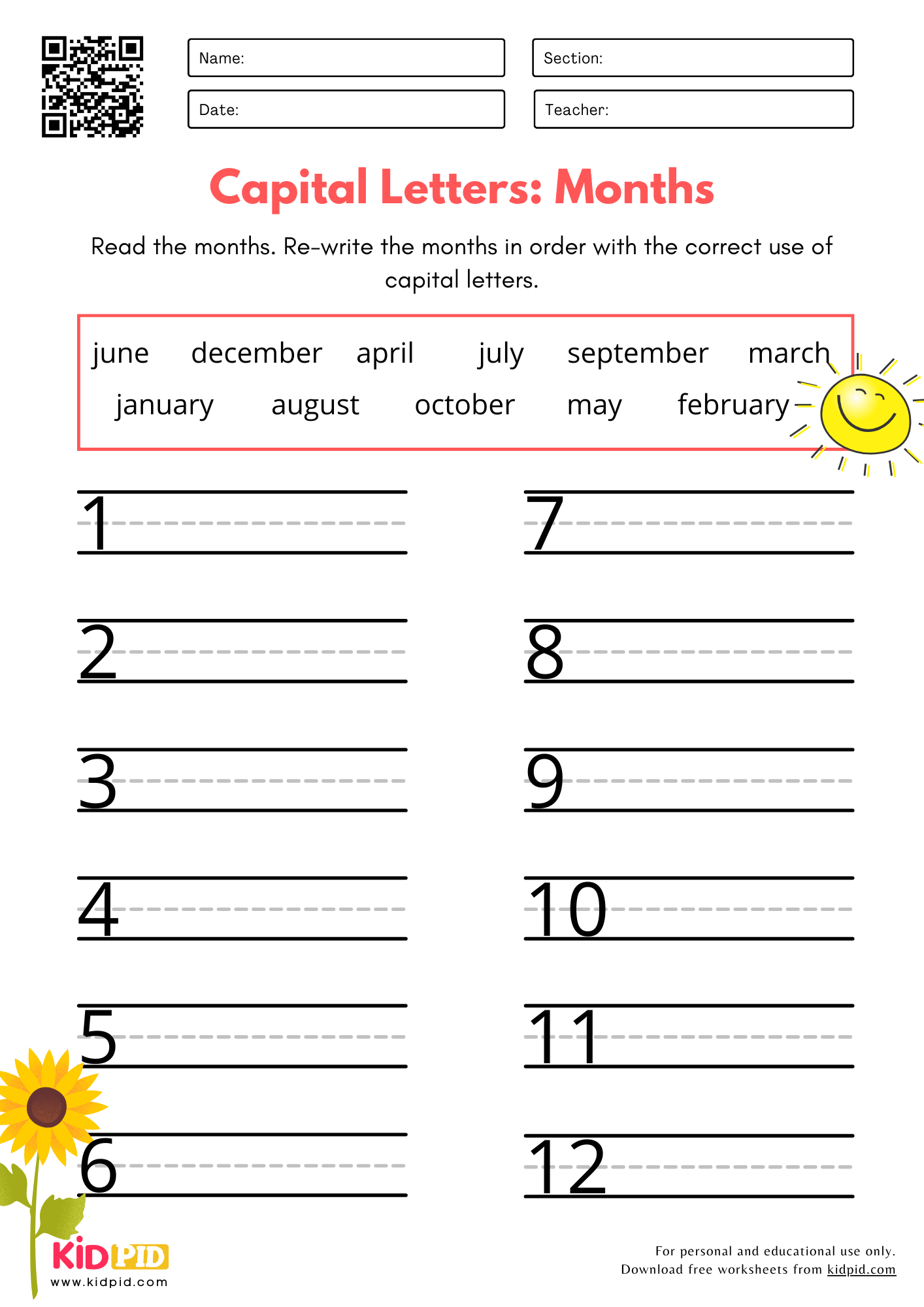
- January
- February
- March
- April
- May
- June
- July
- August
- September
- October
- November
- December
Capital Letters: Places
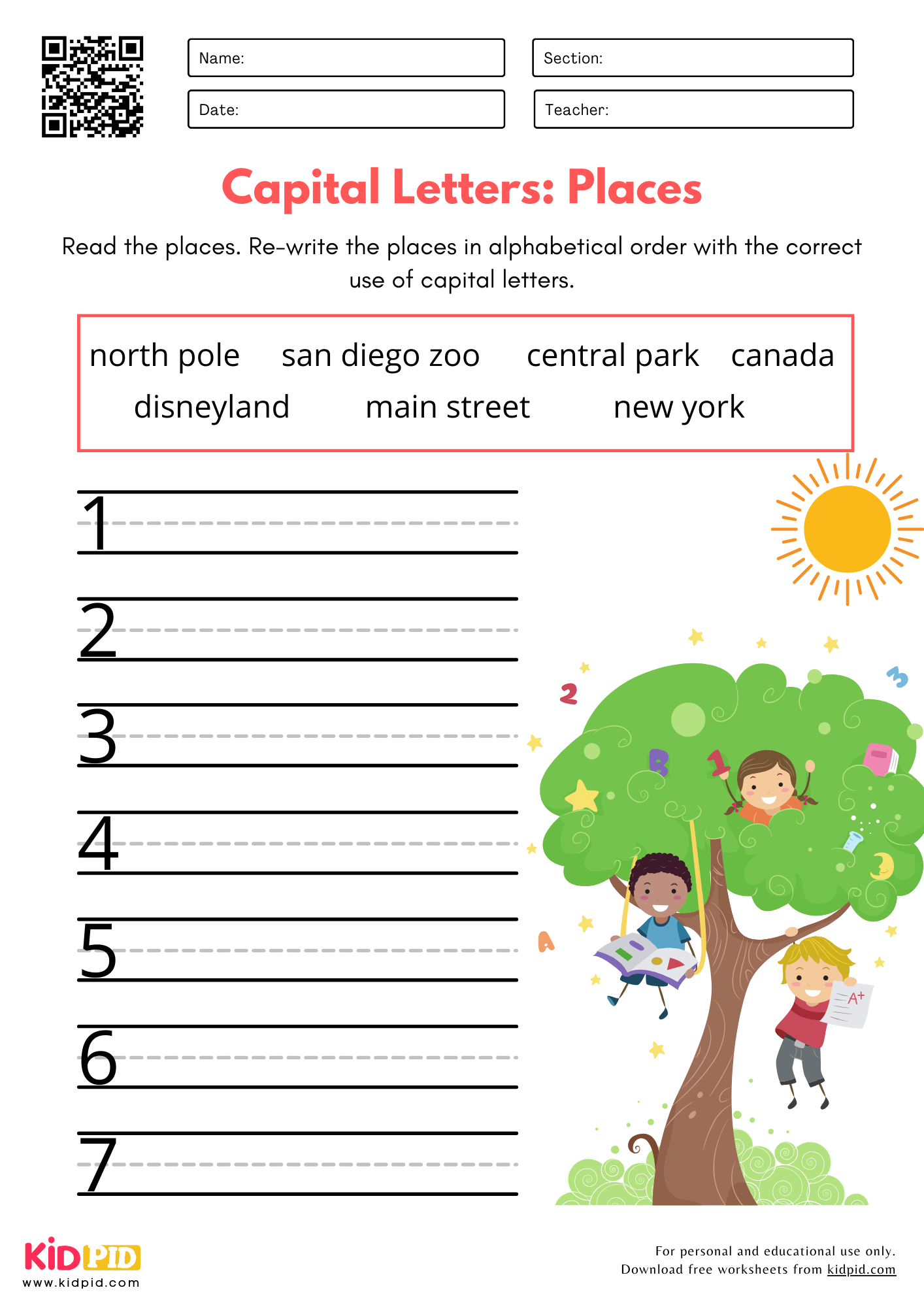
- Canada
- Central Park
- Disneyland
- Main Street
- New York
- North Pole
- San Diego Zoo
Capital Letters: Holiday
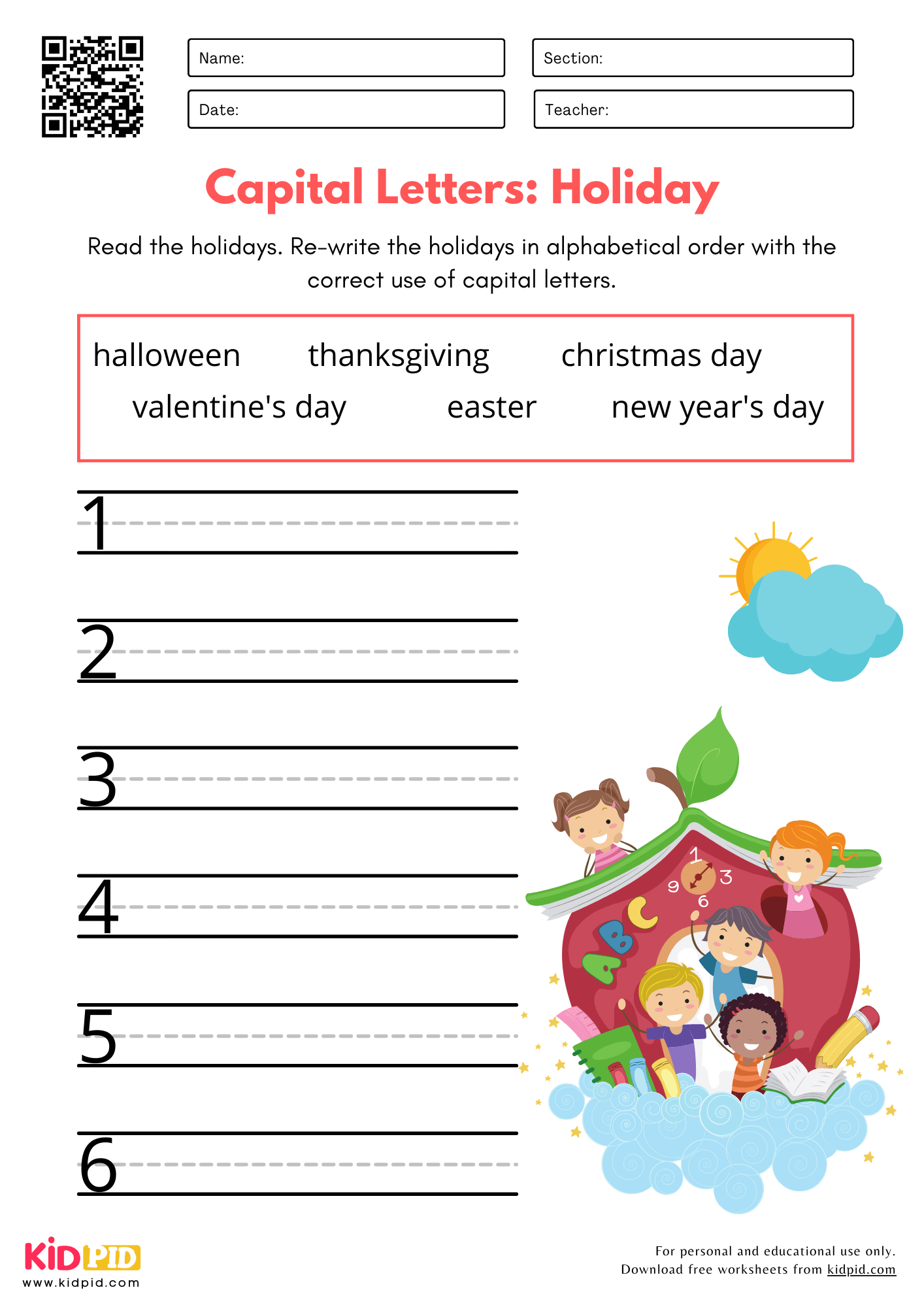
- Christmas Day
- Easter
- Halloween
- New Year’s Day
- Thanksgiving
- Valentine’s Day
Capital Letters: Things
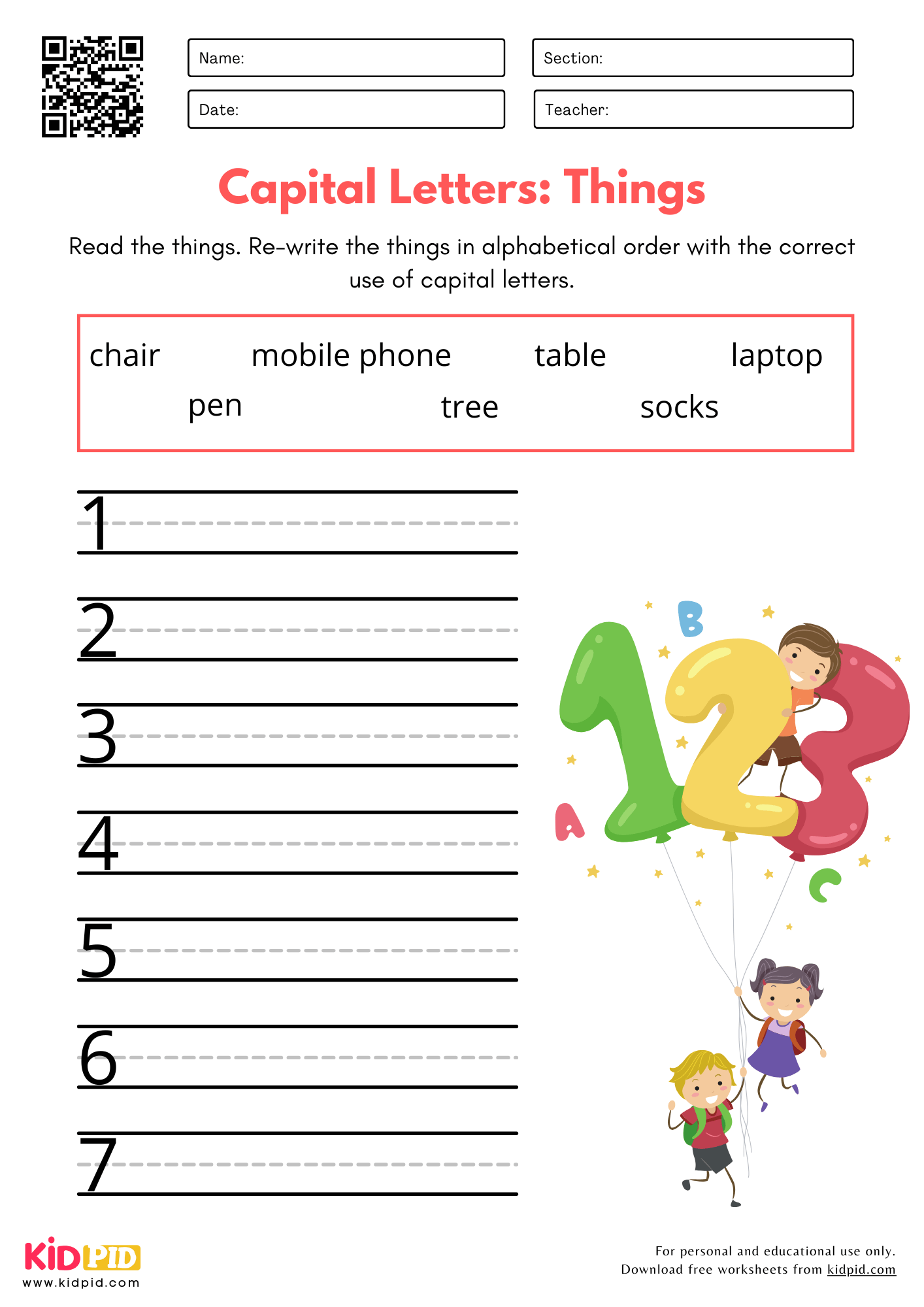
- Chair
- Laptop
- Mobile Phone
- Pen
- Socks
- Table
- Tree
Capital Letters: Wild Animals
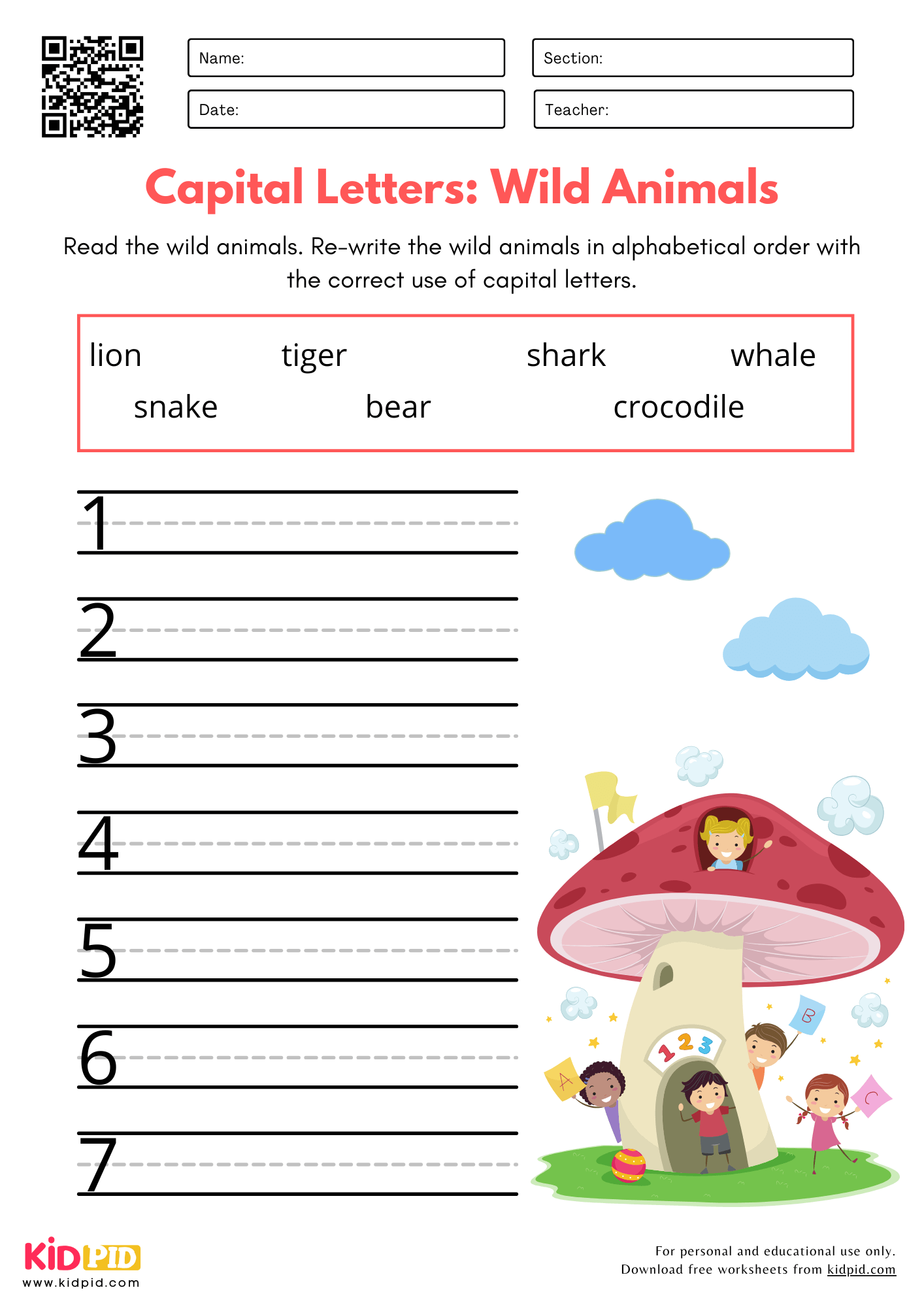
- Bear
- Crocodile
- Lion
- Shark
- Snake
- Whale
Capital Letters: Parts of the Body
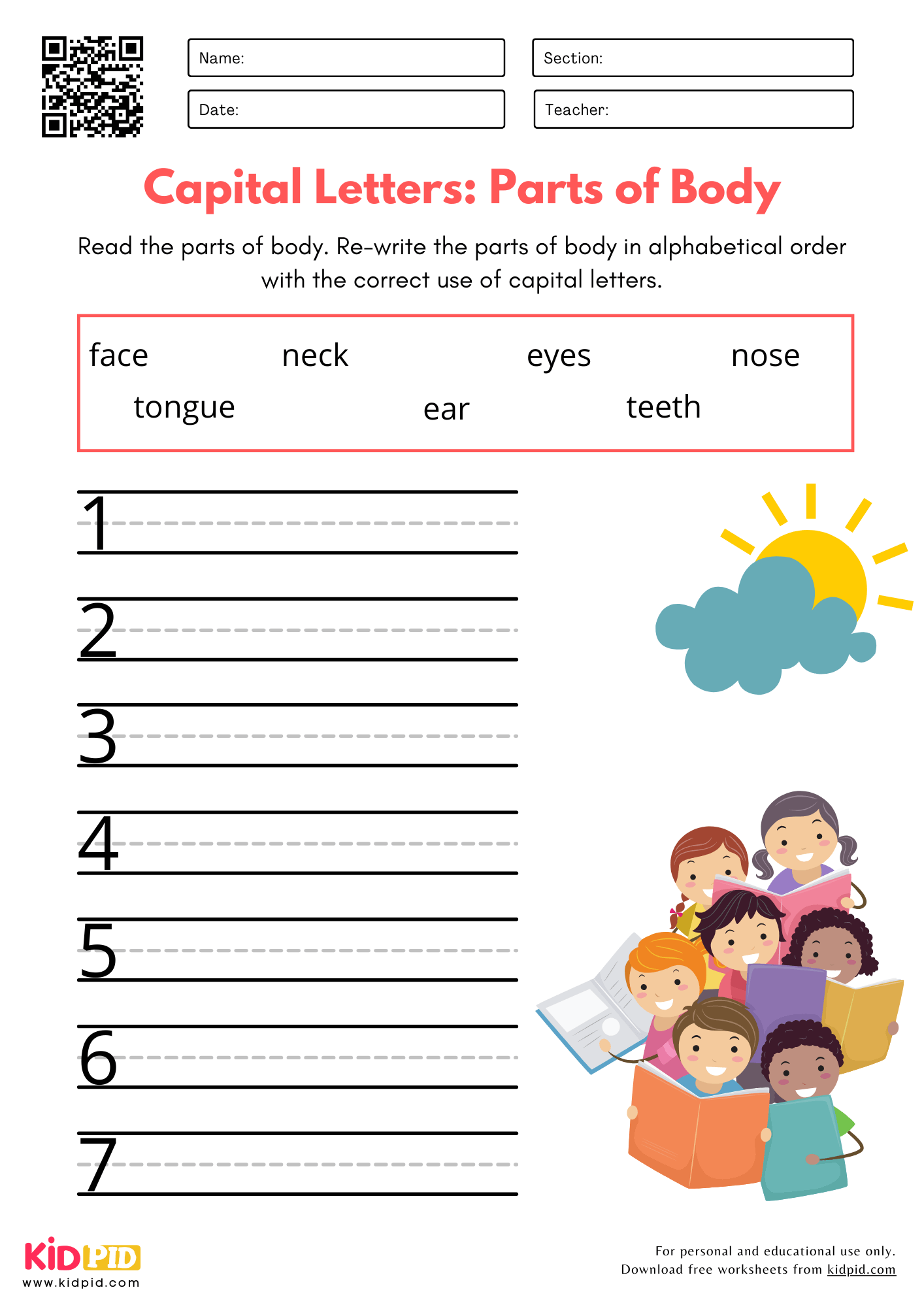
- Ear
- Eyes
- Face
- Neck
- Nose
- Teeth
- Tongue
Capital Letters: Flower Names
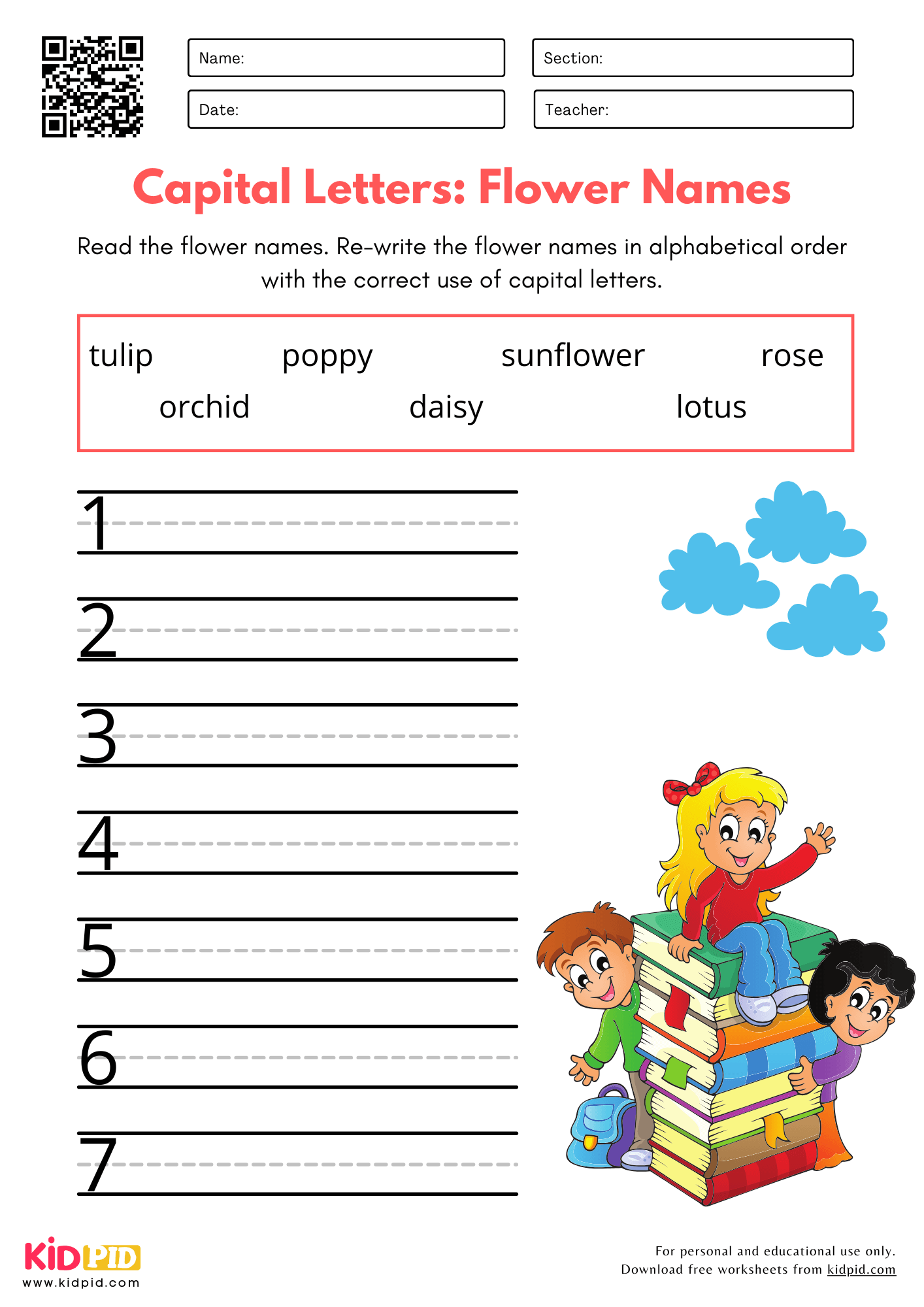
- Daisy
- Lotus
- Orchid
- Poppy
- Rose
- Sunflower
- Tulip
Capital Letters: Modes Of Transportation
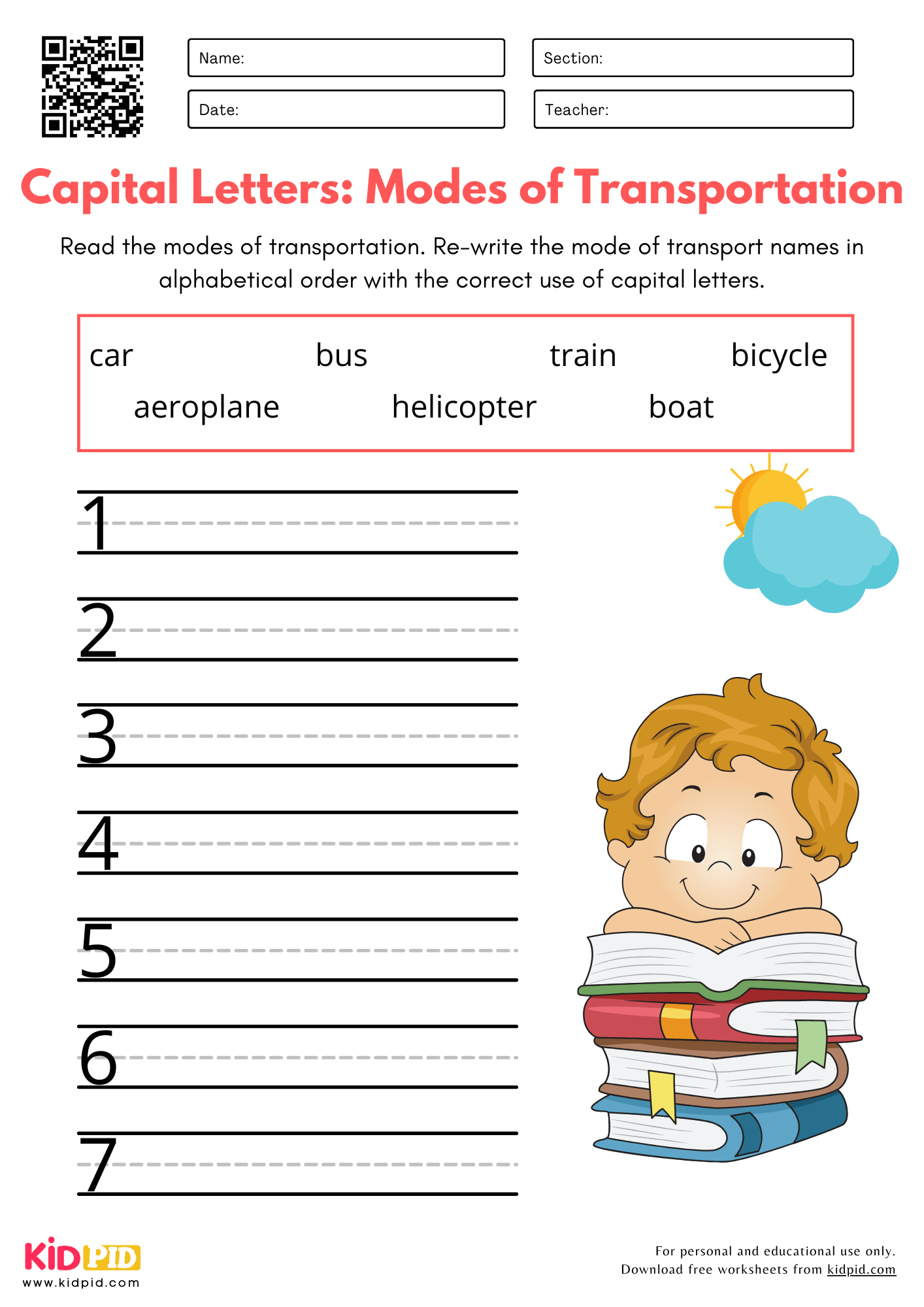
- Aeroplane
- Bicycle
- Boat
- Bus
- Car
- Helicopter
- Train
Key Facts About Proper Noun Capitalizations Practice Worksheet
- Target Grade Level: Kindergarten (Ages 5–6)
- Core Subject: English Language Arts (ELA) / Early Literacy & Grammar
- Format: Free downloadable and printable PDF worksheets
- Design Strategy: Minimalist design with clear text layout to reduce visual cognitive load for early readers.
- Content Focus: Distinguishing between proper nouns (which require capital letters) and common nouns (which remain lowercase unless starting a sentence).
Parts, Types, and Examples of Capitalization Exercises
This comprehensive worksheet packet breaks capitalization down into bite-sized, thematic categories that young learners can easily grasp. The exercises cover several distinct types of words:
- Names of People: Practice with proper names like Anna, Dylan, Ian, and Nicole.
- Days of the Week and Months: Learning to capitalize Monday, Wednesday, January, and October.
- Specific Places and Landmarks: Identifying geographic locations and specific attractions such as Canada, Disneyland, Central Park, and the North Pole.
- Holidays: Recognizing festive days like Christmas Day, Halloween, and Valentine’s Day.
- Contrast Practice (Common Nouns): To ensure deep understanding, the worksheet includes common noun categories like Things (chair, laptop), Wild Animals (lion, shark), Parts of the Body (face, nose), Flowers (daisy, rose), and Transportation (car, train). This helps children see that these general words do not get a capital letter.
How Does the Proper Noun Capitalization Practice Worksheet Work?
The worksheet operates on an interactive, pattern-recognition learning model:
- Visual Contrast: Children look at lists of categorized words. Some categories contain specific, unique names (proper nouns), while others contain everyday items (common nouns).
- Identification: Instructors guide children to read through a specific group (e.g., “Months” vs “Flowers”).
- Trace and Correct: Students practice rewriting the words using the correct uppercase starting letters for proper nouns while practicing lowercase execution for the common nouns. This dual approach solidifies muscle memory and letter-case awareness simultaneously.
Benefits of Learning About Capitalization
Mastering capitalization rules in kindergarten offers critical developmental advantages:
- Accelerates Reading Fluency: Recognizing capital letters helps children identify the start of sentences and the names of characters faster while reading books.
- Prevents Fossilized Errors: Learning correct punctuation habits early prevents bad habits from forming, making first- and second-grade writing transitions much smoother.
- Builds Attention to Detail: Sorting words into capital and lowercase categories boosts cognitive classification and critical thinking skills.
- Enhances Written Expression: It gives children the confidence to write their own stories, knowing exactly how to write their name, their friends’ names, and their favorite places.
Learning Objectives
By completing these grammar worksheets, students will be able to:
- Identify the difference between a specific name (proper noun) and a general item (common noun).
- Apply the rule of capitalization to days, months, people’s names, specific places, and major holidays.
- Demonstrate proper fine-motor pencil control by correctly writing uppercase and lowercase letters side-by-side.
- Self-Correct capitalization errors in simple, beginner-level sentences.
Worksheet Instructions for Teachers and Parents
To get the most out of this printable resource, follow these simple steps:
- Print the Packet: Download and print the worksheet pages in high resolution.
- Review the Rule: Before starting, tell the child: “Special names for people, places, days, and holidays always get a big capital letter. Everyday items get a small lowercase letter.”
- Guided Example: Point to the “Names” section. Read “Anna” together and point out the capital ‘A’.
- Independent Practice: Have the child read through the remaining lists, tracking with their finger, and tracing or circling the capital letters to acknowledge the proper nouns.
- The Contrast Check: Move to a common noun section like “Wild Animals” and ask: “Is ‘lion’ a special name for one specific pet, or is it a general animal?” Help them understand why it stays lowercase.
Interesting Facts About Capitalization and Proper Nouns
- The “I” Rule: The word “I” is the only pronoun in the English language that is always capitalized, no matter where it falls in a sentence!
- Capital History: Hundreds of years ago, in Old English, writers used to capitalize every single noun in a sentence, just like German writers still do today.
- The Name “Capital”: The word “capital” comes from the Latin word capitalis, which means “of the head.” Just like your head sits at the top of your body, a capital letter sits at the “head” of a proper noun!
Vocabulary Words
- Noun: A person, place, thing, or animal.
- Proper Noun: A specific, special name for a person, place, or thing (e.g., Disneyland).
- Common Noun: A general word for a person, place, or thing (e.g., toy).
- Capital Letter: An uppercase letter (e.g., A, B, C).
- Lowercase Letter: A small letter (e.g., a, b, c).
Real-Life Applications
Capitalization isn’t just an exercise for school worksheets—it is used every single day in the real world:
- Writing Their Own Name: The most immediate use for a kindergartener is learning to always capitalize the first letter of their first and last name.
- Reading Signs and Maps: Recognizing capitalized names helps kids spot familiar places when driving or walking, like Main Street or a grocery store name.
- Marking Calendars: When counting down to a birthday or holiday, children use their capitalization knowledge to write out December or Friday.
FAQs
Q1: Why does a kindergarten student need to learn about proper nouns?
Answer: While formal grammar definitions are taught later, kindergarteners are already writing names and stories. Introducing the concept of “special names needing big letters” early builds strong reading and writing foundations.
Q2: My child wants to capitalize every word. Is this normal?
Answer: Yes, completely! Kindergarteners are just developing fine motor skills and often favor capital letters because they are physically easier to draw than lowercase letters. Worksheets like this help them practice intentional restraint.
Q3: Are animals considered proper nouns?
Answer: General animal names like bear or crocodile are common nouns. However, if an animal has a specific name—like Mickey Mouse or Simba—that name becomes a proper noun and must be capitalized!
Q4: Can I reuse this worksheet for extra practice?
Answer: Absolutely. To save paper, you can slide the printed worksheet into a plastic dry-erase sleeve. Your child can use dry-erase markers to practice over and over again until they master the rules.
Help kindergarten learners understand proper nouns with this Proper Noun Capitalization Practice Worksheet. Children practice capitalizing names, places, and special words while strengthening grammar, writing, reading, and sentence-building skills through engaging activities. Discover exciting worksheets, essays, paragraphs, flashcards, quizzes, and interactive resources designed to help children learn through fun activities. Stay updated on YouTube & Facebook.
This educational worksheet is prepared by the Content Team to strengthen academic learning.
Reviewed By Muskan Bhardwaj
Read More:



