

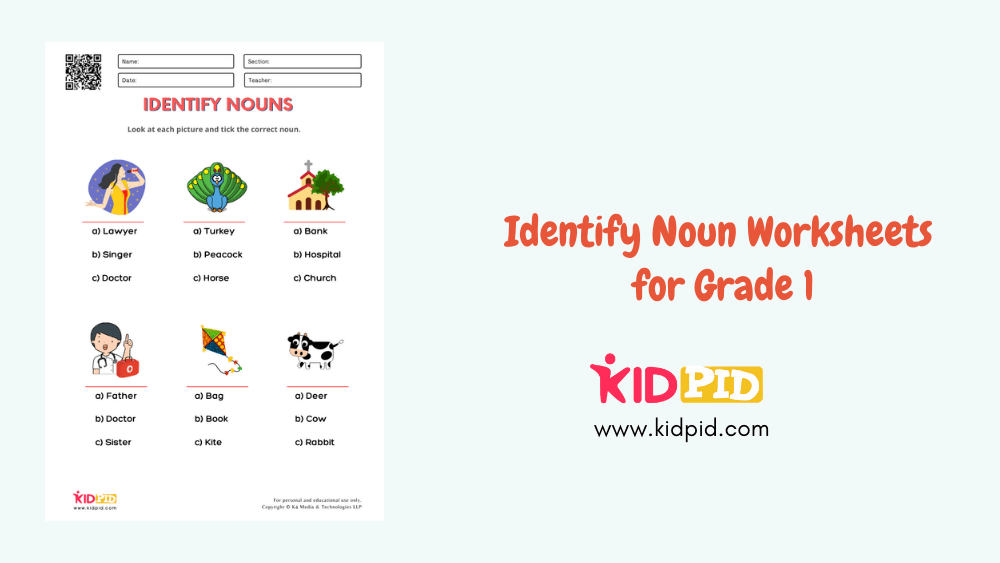
A noun is one of the eight parts of speech in the English language. The part of speech indicates how a word functions in meaning as well as grammatically correct within any given sentence. The following worksheets consist of several exercises that focus on nouns. It would help children understand what a noun is and where we use it in a sentence.
Contents
- Noun Identification Practice Worksheets
- Key Facts About Grade 1 Noun Identification Worksheets
- Parts, Types, and Examples of Nouns Covered
- How Do Grade 1 Noun Worksheets Work?
- Benefits of Learning About Nouns in First Grade
- Learning Objectives
- Worksheet Instructions for Parents & Teachers
- Interesting Facts About Nouns & Early Language Learning
- Vocabulary Words
- Real-Life Applications
- FAQs
- You may like these:
Noun Identification Practice Worksheets

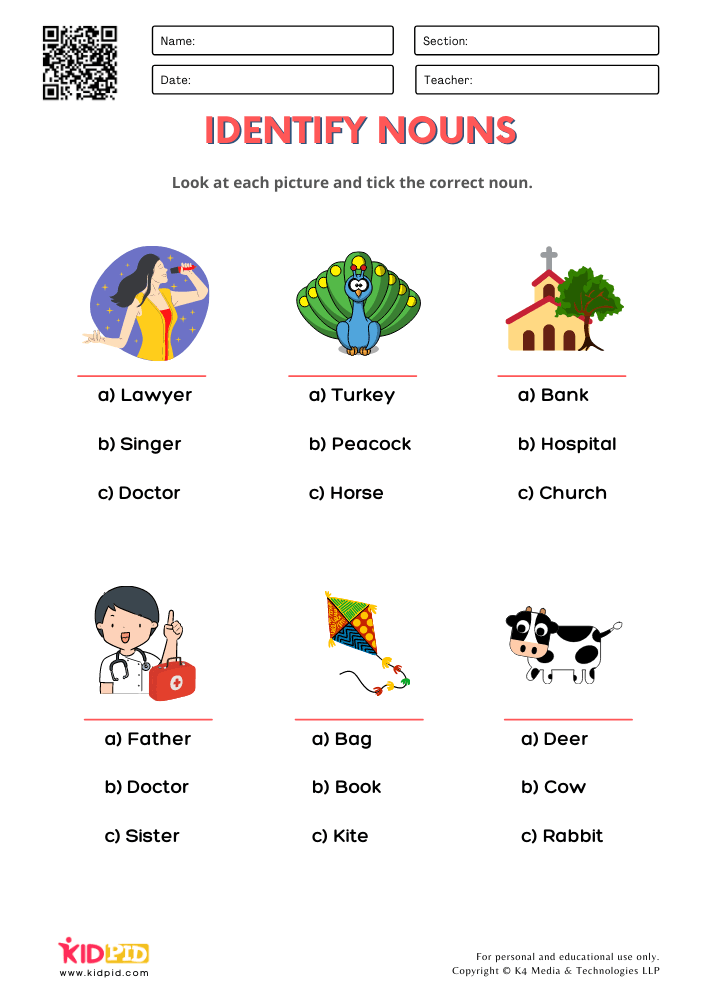
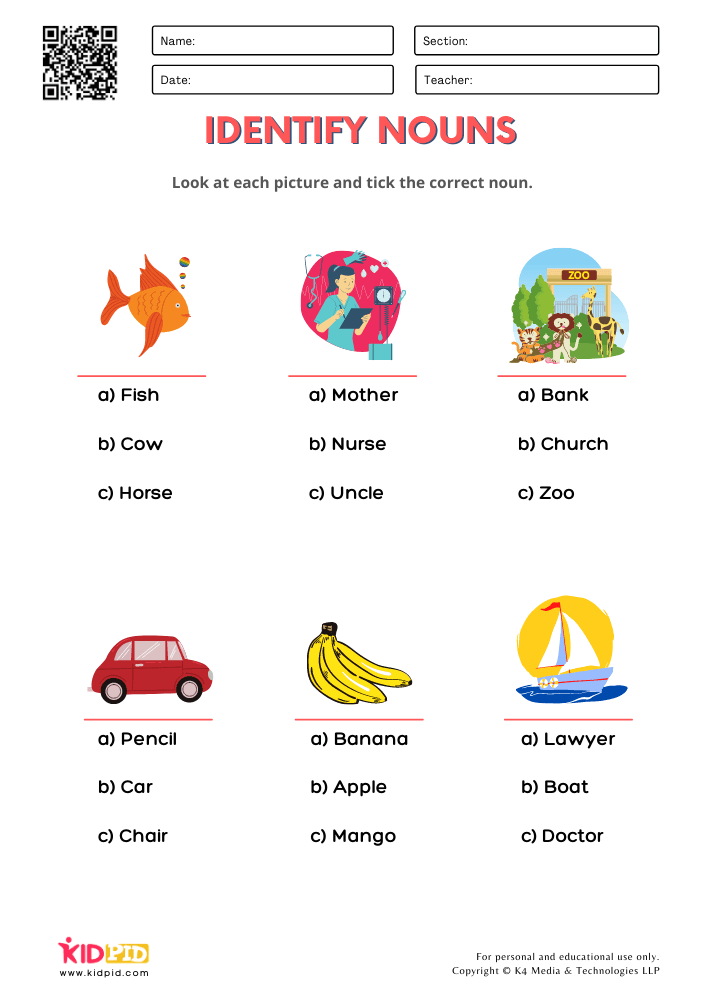
There are six sheets in total. Each sheet consists of six questions. The task at hand is pretty easy. Children have to look at the images provided and identify them as to what they are, and then tick the correct noun from the list given below.
Nouns can be of several types. It can be collective, proper, common, or abstract.
- Collective nouns are nouns such as “team,” “gang,” etc.
- A proper noun is a specific name given to a thing, place, or person. Taj Mahal is a proper noun.
- Common nouns are words used to denote something. Words like “car,” “man,” and “bridge” are common nouns.
- Abstract nouns are nouns that refer to things that you cannot see or feel. Anger, fear, and courage are abstract nouns.
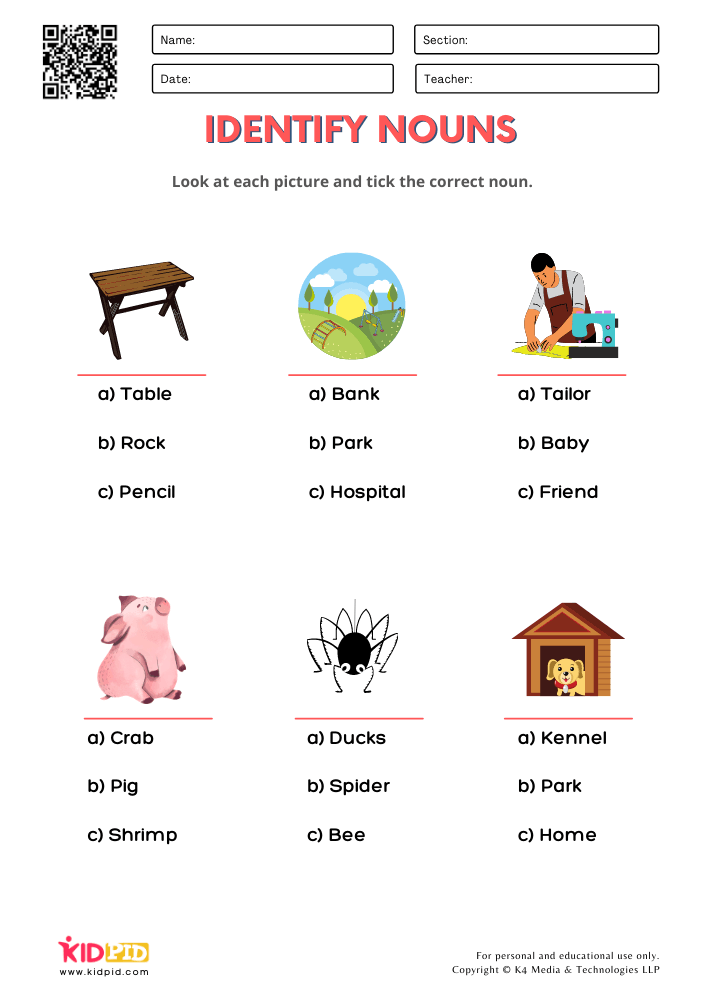
Each word in the worksheet is a noun. Children have to identify the correct word with the help of the image. He must understand the difference between nouns and other parts of speech.
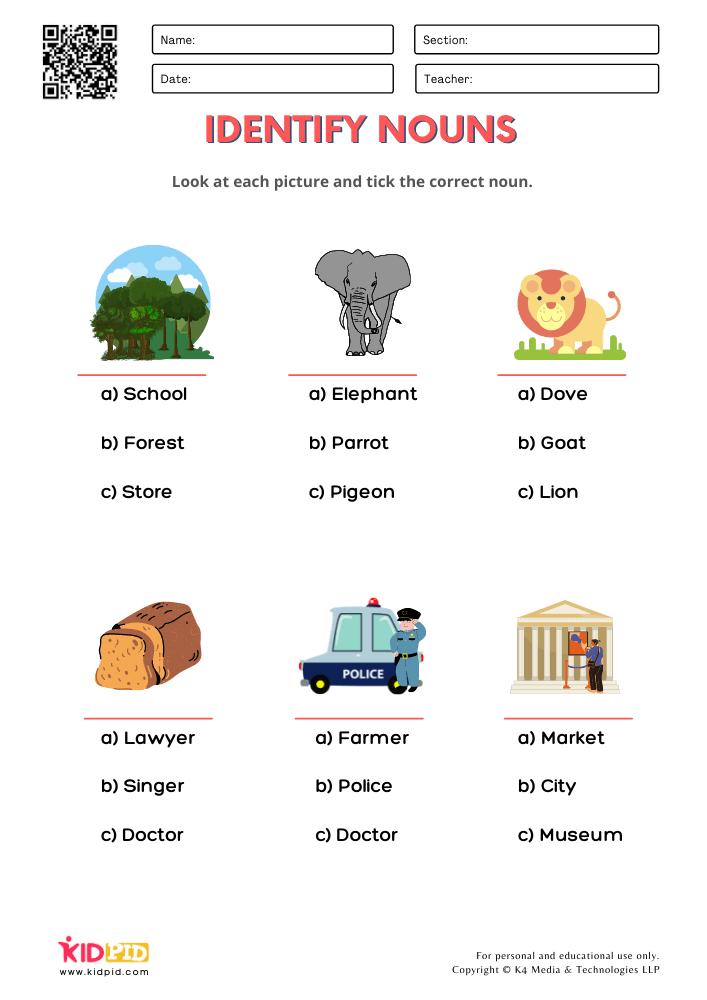
The worksheet is relatively easy to solve. If your kid is still not sure of what a noun is, try telling him again. It is only through practice that one can learn things. Similarly, making mistakes is the way to learn. Allow him sufficient guidance and time to get the task done.
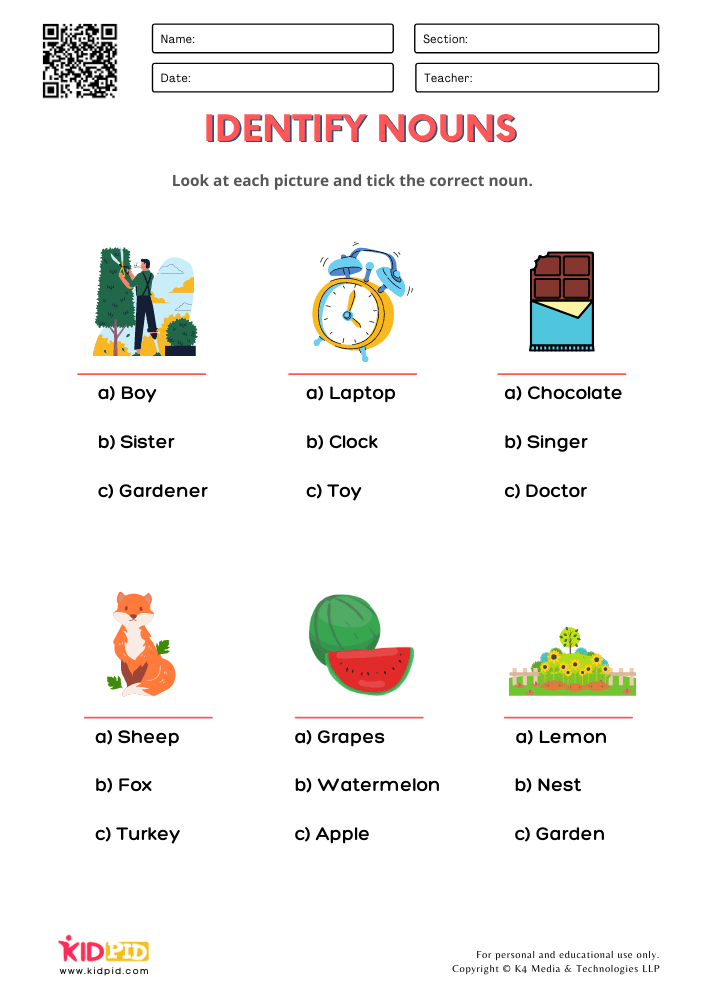
All our worksheets are available for download. You can also search for other exercises related to nouns. We have several other worksheets for nouns and other parts of speech.
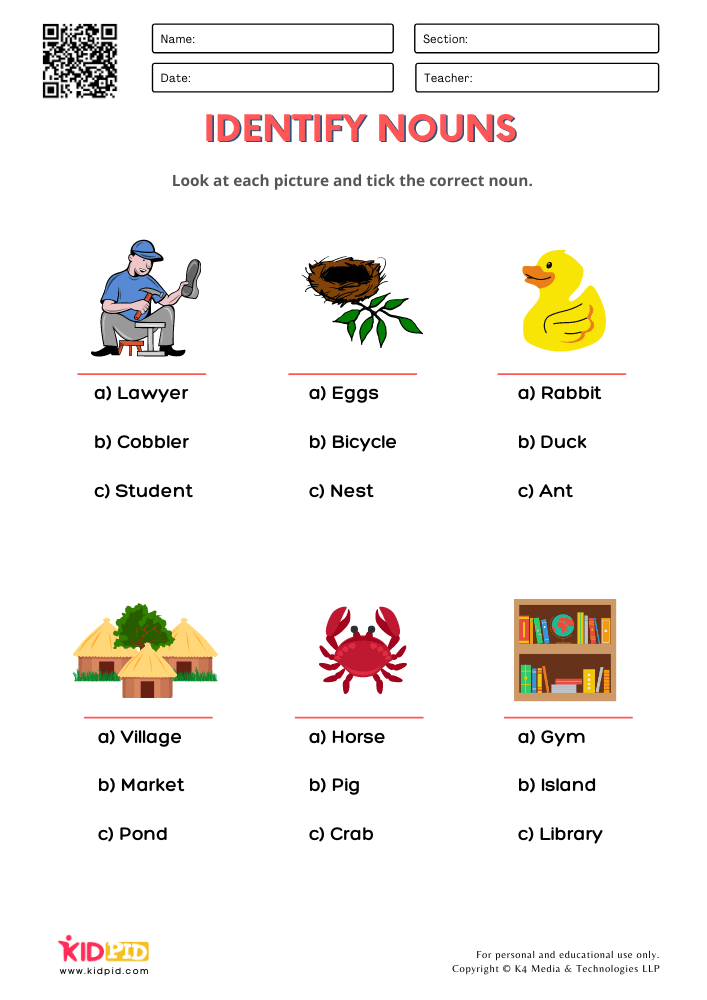
To gain proficiency in the English language is no easy feat. But everything in this world is attainable through enough practice. Children begin their learning process by learning the basics. One can say that understanding the parts of speech is the basis of understanding the English language.
Key Facts About Grade 1 Noun Identification Worksheets
Building a solid foundation in English grammar starts early. These printable worksheets are specifically designed to ease first graders into the world of parts of speech without overwhelming them.
- Target Audience: Grade 1 students, homeschoolers, and early ESL/ELL learners (typically ages 6–7).
- Format: 6 comprehensive printable sheets containing 6 beautifully illustrated questions per page.
- Core Focus: Merging visual cues with textual vocabulary to bridge the gap between concrete objects and written words.
- Accessibility: Available as free, high-quality downloads tailored for classroom handouts or home-schooling packets.
Parts, Types, and Examples of Nouns Covered
While first graders primarily focus on recognizing basic everyday words, these worksheets introduce the fundamental building blocks of grammar. A noun functions as the name of a person, place, animal, or thing. Here is how they break down with examples:
| Noun Category | What It Represents | Grade 1 Examples |
|---|---|---|
| People | Names of individuals or their roles | Teacher, boy, mom, doctor, girl |
| Places | Locations we can visit or see | School, park, home, zoo, beach |
| Animals | All creatures great and small | Cat, dog, bird, lion, frog |
| Things | Non-living, physical objects | Car, book, apple, toy, pencil |
How Do Grade 1 Noun Worksheets Work?
The mechanics of these worksheets are intentionally simple to encourage independent learning and boost confidence.
- Visual Stimulation: Each question features a clear, kid-friendly image representing a specific noun.
- Context Clues: Beneath the image, a list of multiple-choice text options is provided.
- Identification & Action: The child analyzes the picture, reads through the text options, and ticks or circles the correct corresponding noun.
- Self-Paced Progression: Spanning across six different pages, parents and educators can space these out over a week to prevent cognitive fatigue.
Benefits of Learning About Nouns in First Grade
Early mastery of nouns acts as a springboard for all future language arts milestones. Introducing these worksheets yields distinct benefits:
- Accelerated Reading Comprehension: Nouns make up the subject or object of almost every basic sentence structure. Identifying them helps kids understand who or what a story is about.
- Enhanced Vocabulary Acquisition: Associating written words with pictures reinforces memory retention and expands their working vocabulary.
- Sentence Building Blocks: Children cannot progress to verbs, adjectives, or proper sentence construction without first mastering the “naming words” (nouns).
Learning Objectives
By completing this worksheet bundle, first-grade students will achieve the following educational benchmarks:
- Identify common nouns representing people, places, animals, and things from visual prompts.
- Distinguish between nouns and other basic parts of speech through contextual elimination.
- Read basic early-childhood sight words and everyday vocabulary terms with increased fluency.
- Demonstrate fine motor accuracy by successfully checking, ticking, or circling targeted answers.
Worksheet Instructions for Parents & Teachers
To get the most out of these printables, follow these quick steps to guide your young learners:
- Print in Clear Quality: Download and print the 6-page PDF bundle. (Color printing is recommended to keep the illustrations engaging.
- Review the Concept: Before handing out the sheet, remind the child that “A noun is a naming word for a person, place, animal, or thing.” Run a quick 1-minute verbal game, pointing at objects in the room.
- Model the First Question: Complete the very first question together. Point to the image, read the options aloud, and show them how to tick the correct box.
- Encourage Sounding Out: Encourage the child to phonetically sound out the word choices independently.
- Embrace Mistakes: If they tick the wrong box, treat it as a learning moment! Ask them to describe what they see in the picture and try reading the options again.
Interesting Facts About Nouns & Early Language Learning
- The Brain Loves Pictures: Studies show that children learn abstract language concepts up to 40% faster when paired with visual imagery, which is why these illustrated worksheets are so highly effective.
- Nouns Take First Place: In almost every language on Earth, nouns are the very first words a human baby learns to speak (typically words like “Mama”, “Dada”, or “Ball”).
- Word Dominance: Over 50% of the entire English dictionary is made up of nouns!
Vocabulary Words
Here is a list of foundational vocabulary words featured throughout these exercises that your child will learn to read and identify:
- People: Sister, Boy, Firefighter, Baby, Chef, Doctor
- Places: Garden, Market, Farm, Kitchen, Playground, Hospital
- Animals: Rabbit, Elephant, Monkey, Duck, Fish, Puppy
- Things: Chair, Banana, Clock, Umbrella, Balloon, Shoes
Real-Life Applications
Grammar isn’t just an isolated school subject—it is used everywhere! Here is how children apply noun identification outside the classroom:
- Reading Signs: Recognizing that a sign says “Park”, “Store”, or “Library” relies on identifying situational places (nouns).
- Storytelling: When children tell you about their day (“The dog chased the ball at the park”), they are stringing together three nouns to communicate effectively.
- Following Directions: When a parent says, “Please pick up your shoes and put them in the closet,” the child relies entirely on decoding the nouns (“shoes”, “closet”) to successfully carry out the task.
FAQs
Q1: At what age should a child start learning about nouns?
Answer: Formal grammar concepts like identifying nouns usually begin around ages 6 and 7 in Grade 1. However, informal learning starts much earlier as toddlers begin naming objects around them.
Q2: My child is struggling to read the word options on the worksheets. What should I do?
Answer: That is completely normal! Sit with them and read the options aloud together. Focus on pointing to the picture and matching the starting letter sounds of the word choices to what they see.
Q3: What is the difference between a common noun and a proper noun for Grade 1?
Answer: A common noun is general (e.g., castle, boy, dog), while a proper noun is a specific name that always starts with a capital letter (e.g., Disneyland, Sam, Snoopy). These worksheets focus primarily on accessible common nouns to build foundational confidence.
Q4: Can I use these worksheets for virtual or remote learning?
Answer: Absolutely. While printing them out provides excellent tactile practice, you can also open the downloaded files on a tablet and allow your child to use a stylus or touch screen to tick the correct answers.
These Identify Noun Worksheets help Grade 1 students recognize people, places, animals, and things with confidence. Fun activities strengthen grammar, vocabulary, reading comprehension, and writing skills through enjoyable practice. Visit our website for more paragraphs, essays, worksheets, flashcards, Quizzes, and interactive resources. Don’t forget to follow us on YouTube & Facebook.
The Content Team created this worksheet to foster scholastic attainment.
Reviewed By Sushmita
You may like these:
Printable Worksheets on Possessive Nouns for Grade 1
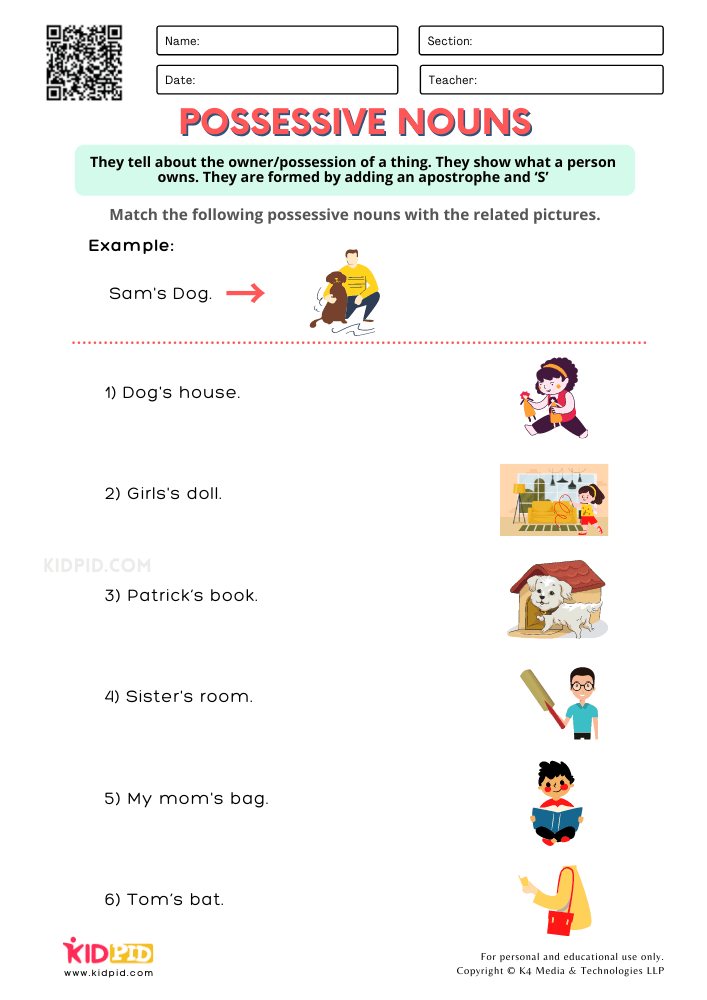 These worksheets introduce Grade 1 students to possessive nouns, helping them understand ownership concepts through engaging exercises that build foundational grammar and writing skills effectively.
Printable Worksheets on Common and Proper Nouns for Grade 2
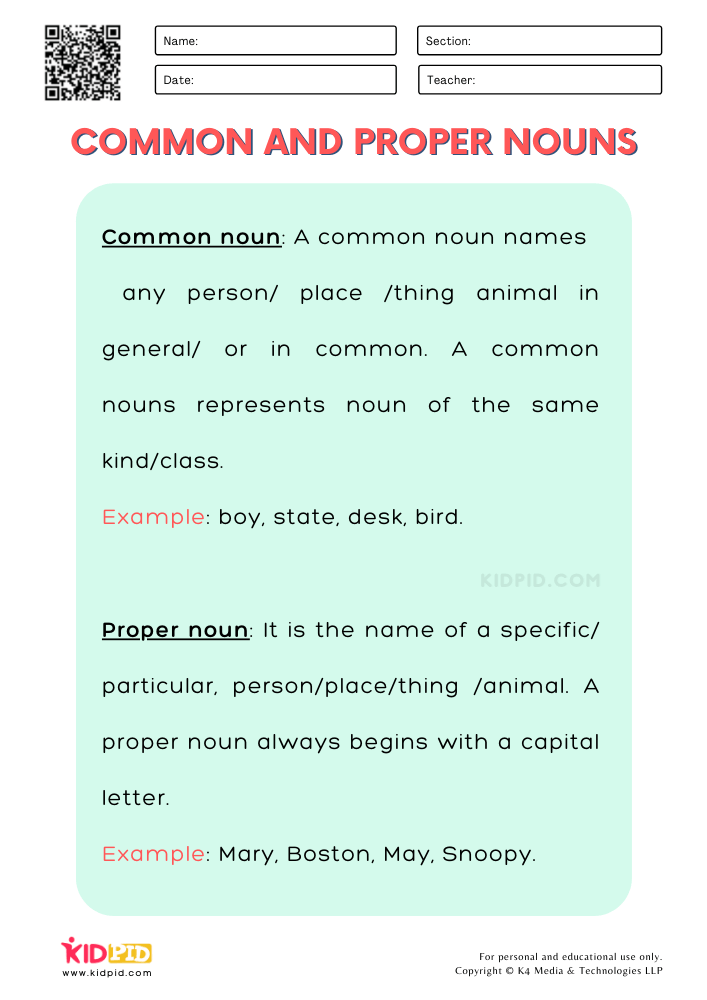
Designed for second graders, these worksheets focus on distinguishing between common and proper nouns, enhancing vocabulary and grammatical understanding through structured practice activities.
Printable Worksheets on Collective Nouns for Grade 2
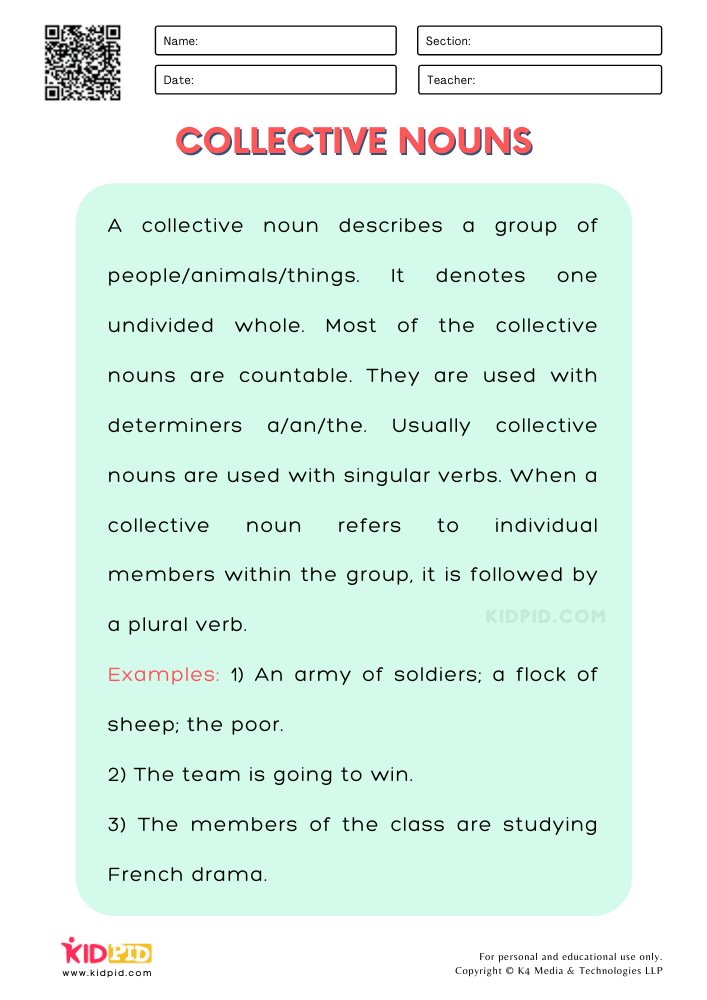
These worksheets assist Grade 2 learners in identifying collective nouns, promoting comprehension of group terminology while strengthening language proficiency through targeted exercises.
Printable Worksheets on the Application of Collective Nouns for Grade 2
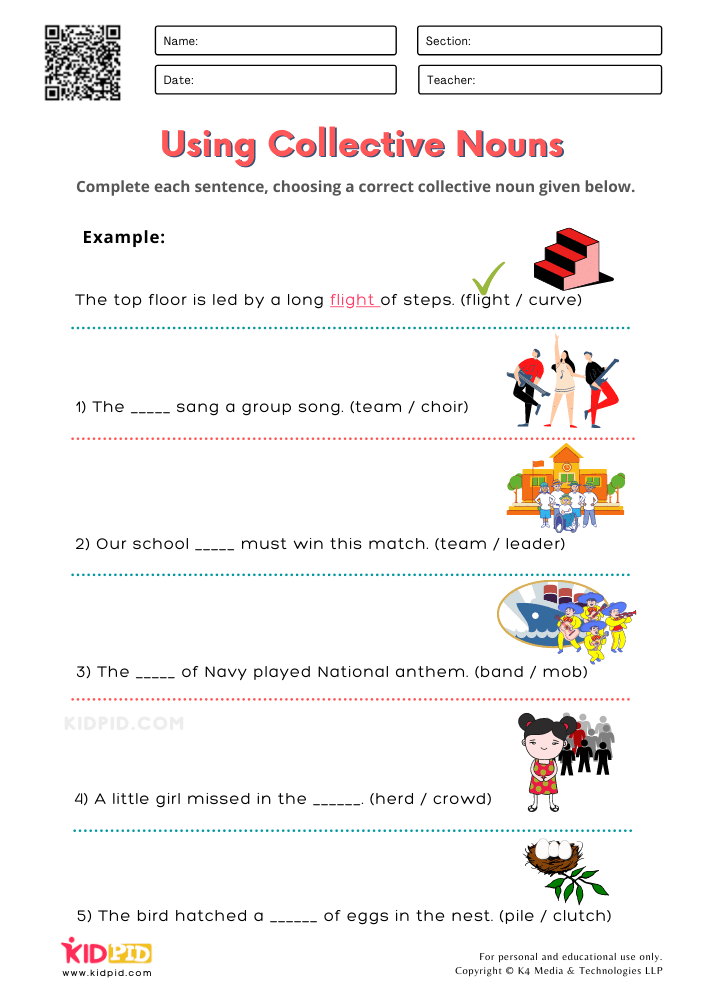
Grade 2 students practice using collective nouns in context, improving their ability to apply these terms accurately and enhancing their overall grammatical competence systematically.
Printable Worksheets for Matching Collective Nouns for Grade 2
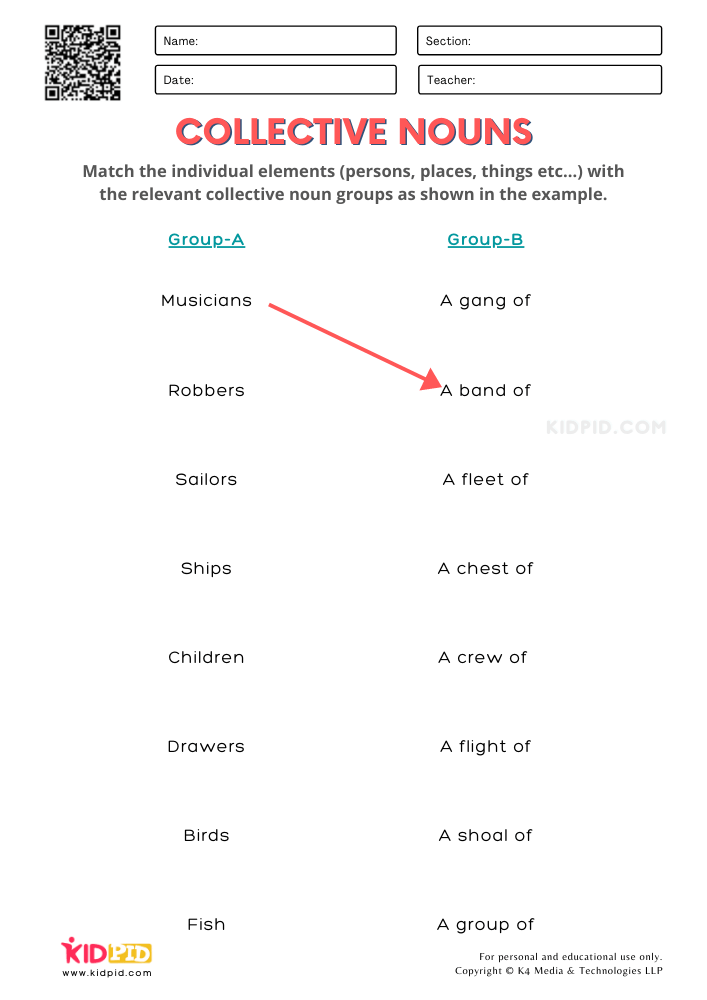
Enhance Grade 2 grammar skills with printable worksheets on matching collective nouns! Fun exercises help kids identify and use group names like “flock” or “herd” through engaging activities, word matching, and coloring tasks.



