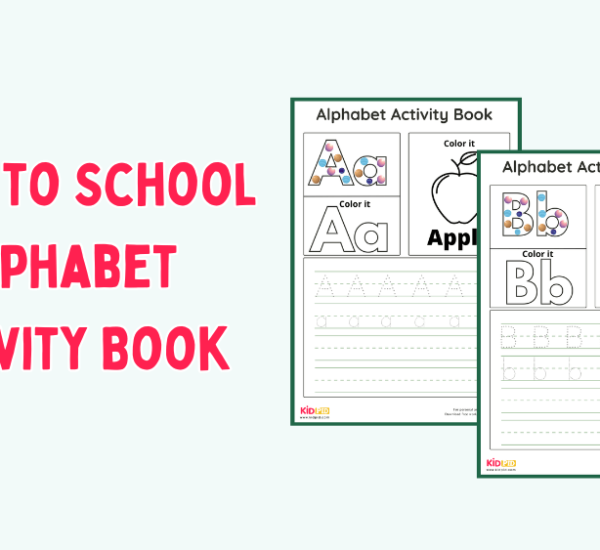

Here are the sort-by-property worksheets for your kindergarten kids to learn about different sizes, sounds, touch, height, and temperature, and recognize them accurately. These worksheets include several images in which the children have to circle and cross out the images according to the given instructions in the questions. So check out these worksheets and build your knowledge about sorting different elements.
Contents
- Circle & Cross Out The Sort By Property Worksheets For Kindergarten
- Key Facts About the Sort by Property Worksheet for Kindergarten
- Parts/Types/Examples of Sort by Property Worksheet for Kindergarten
- How Does the Sort by Property Worksheet Work?
- Benefits of Learning About the Sort by Property Worksheet
- Learning Objectives
- Worksheet Instructions
- Interesting Facts About the Sort by Property Worksheet
- Vocabulary Words
- Real-Life Applications
- FAQs
- Q1. What is a Sort by Property Worksheet?
- Q2. Why are sorting worksheets important for kindergarten students?
- Q3. What properties can children sort by?
- Q4. At what age should children start sorting activities?
- Q5. How do sorting worksheets support math learning?
- Q6. Can sorting worksheets be used at home?
- Q7. Are sorting activities suitable for different learning levels?
- Q8. What skills do children gain from sorting by property?
- Read More:
Circle & Cross Out The Sort By Property Worksheets For Kindergarten
[Scroll Down for Download Link]
Read More: Hot and Cold Activity Sort Worksheets
Sort by Size

Sort by Sound

Sort by Touch

Sort by Height

Sort by Temperature

Sort by Color

Sort by Shape

Key Facts About the Sort by Property Worksheet for Kindergarten
A Sort by Property Worksheet for Kindergarten helps children identify, compare, and classify objects based on their attributes. These worksheets encourage logical thinking and early math development by teaching students how to group items according to shared characteristics such as color, shape, size, texture, or type.
Key Facts:
- Designed for kindergarten and early elementary learners.
- Focuses on sorting and classification skills.
- Introduces basic mathematical concepts like grouping and categorizing.
- Enhances observation and critical-thinking abilities.
- Uses colorful pictures and engaging activities.
- Supports cognitive and visual discrimination development.
- Can be used in classrooms, homeschooling, and independent learning.
Parts/Types/Examples of Sort by Property Worksheet for Kindergarten
A sorting worksheet may include different activities based on object properties.
Common Parts:
- Picture sets or objects
- Sorting categories
- Sorting boxes or columns
- Counting sections
- Instructions area
Types of Sorting Worksheets:
- Sort by color
- Sort by shape
- Sort by size
- Sort by texture
- Sort by category (animals, fruits, vehicles, etc.)
- Sort by number of sides or features
Examples:
- Place all red objects in one group and blue objects in another.
- Sort animals into farm animals and wild animals.
- Group circles, squares, and triangles separately.
- Arrange objects from smallest to largest.
How Does the Sort by Property Worksheet Work?
Sort by Property Worksheets require children to carefully observe objects and identify common characteristics. Students examine each item and place it into the correct category based on the given property.
Typical Process:
- Look at all the pictures or objects.
- Identify the sorting rule.
- Compare each object with the rule.
- Place the object in the correct group.
- Count and discuss the sorted items if required.
This process strengthens reasoning skills while making learning interactive and enjoyable.
Benefits of Learning About the Sort by Property Worksheet
Sorting activities offer several educational advantages for young learners.
Benefits Include:
- Improves observation skills.
- Develops logical and analytical thinking.
- Builds early math foundations.
- Enhances problem-solving abilities.
- Encourages attention to detail.
- Strengthens visual discrimination skills.
- Supports vocabulary growth through object identification.
- Promotes independent learning and confidence.
Learning Objectives
By completing Sort by Property Worksheets, children will be able to:
- Identify similarities and differences among objects.
- Classify items based on specific attributes.
- Improve sorting and grouping skills.
- Develop early mathematical reasoning.
- Strengthen critical-thinking abilities.
- Increase concentration and focus.
- Practice counting and comparing objects.
- Build confidence in making decisions independently.
Worksheet Instructions
Follow these simple steps to complete the worksheet:
- Read or listen to the sorting rule carefully.
- Observe all pictures or objects provided.
- Identify the property being used for sorting.
- Place each object in the correct category.
- Double-check your answers.
- Count the items in each group if requested.
- Discuss why each object belongs in its group.
Interesting Facts About the Sort by Property Worksheet
- Sorting is one of the earliest math skills children learn.
- Classification helps children understand patterns and relationships.
- Sorting activities are used in Montessori and other hands-on learning approaches.
- Young children naturally sort objects during play.
- Sorting prepares students for graphing, data analysis, and advanced mathematics.
- Scientists and researchers use classification systems similar to sorting every day.
Vocabulary Words
Understanding these words can help children complete sorting activities successfully.
| Vocabulary Word | Meaning |
|---|---|
| Sort | To arrange items into groups |
| Property | A characteristic or feature of an object |
| Classify | To place items into categories |
| Group | A collection of similar items |
| Category | A type or class of objects |
| Compare | To identify similarities and differences |
| Attribute | A quality or characteristic |
| Pattern | A repeated arrangement |
| Shape | The form of an object |
| Size | How big or small something is |
Real-Life Applications
Sorting skills are used every day in many situations.
Examples Include:
- Organizing toys by type or size.
- Sorting laundry by color.
- Arranging books by subject.
- Grouping fruits and vegetables while shopping.
- Organizing classroom materials.
- Categorizing recyclable and non-recyclable items.
- Filing documents in offices.
- Sorting mail by address or destination.
These practical activities help children understand the importance of classification in daily life.
FAQs
Q1. What is a Sort by Property Worksheet?
Answer: A Sort by Property Worksheet is an educational activity that teaches children to group objects according to shared characteristics such as color, shape, size, or category.
Q2. Why are sorting worksheets important for kindergarten students?
Answer: They help develop logical thinking, observation skills, early math concepts, and problem-solving abilities.
Q3. What properties can children sort by?
Answer: Children can sort by color, shape, size, texture, type, number, pattern, and many other characteristics.
Q4. At what age should children start sorting activities?
Answer: Most children begin simple sorting activities between ages 3 and 5, making kindergarten an ideal time to strengthen these skills.
Q5. How do sorting worksheets support math learning?
Answer: Sorting introduces classification, grouping, counting, comparing, and data organization, which are foundational mathematical concepts.
Q6. Can sorting worksheets be used at home?
Answer: Yes. Parents can use sorting worksheets as fun educational activities to reinforce learning outside the classroom.
Q7. Are sorting activities suitable for different learning levels?
Answer: Yes. Worksheets can be adapted from simple two-category sorting tasks to more advanced multi-category classification activities.
Q8. What skills do children gain from sorting by property?
Answer: Children improve critical thinking, observation, categorization, reasoning, concentration, and early mathematical understanding.
Sorting objects by their properties helps Kindergarten children recognize similarities and differences, strengthen classification skills, improve logical thinking, and build a solid foundation for early math and science learning. Support your child’s education with printable quizzes, worksheets, essays, flashcards, paragraphs, and interactive resources available on our website. Follow us on YouTube & Facebook.
This worksheet was created by the Content Team to strengthen learning practice habits.
Reviewed By Sushmita
Read More: