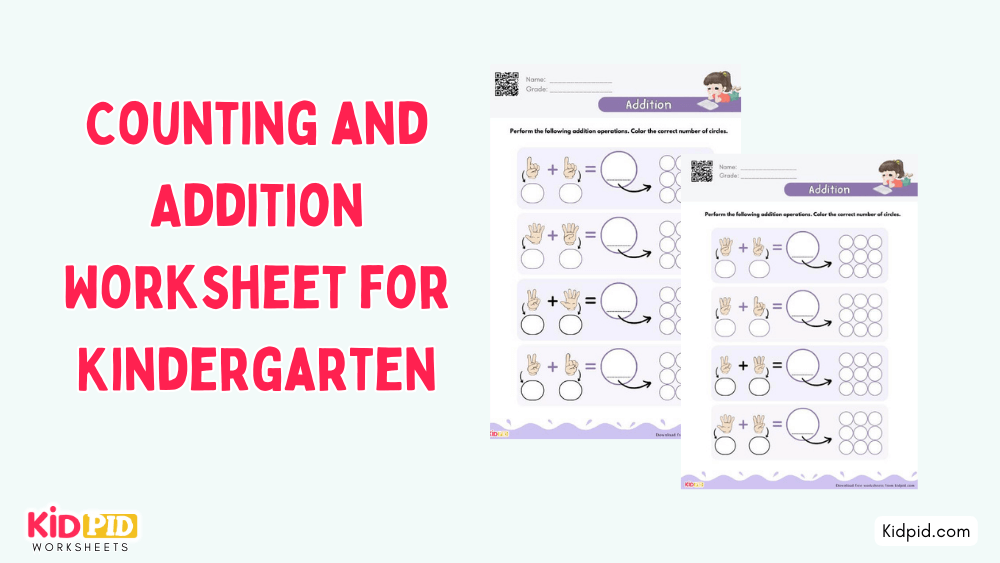
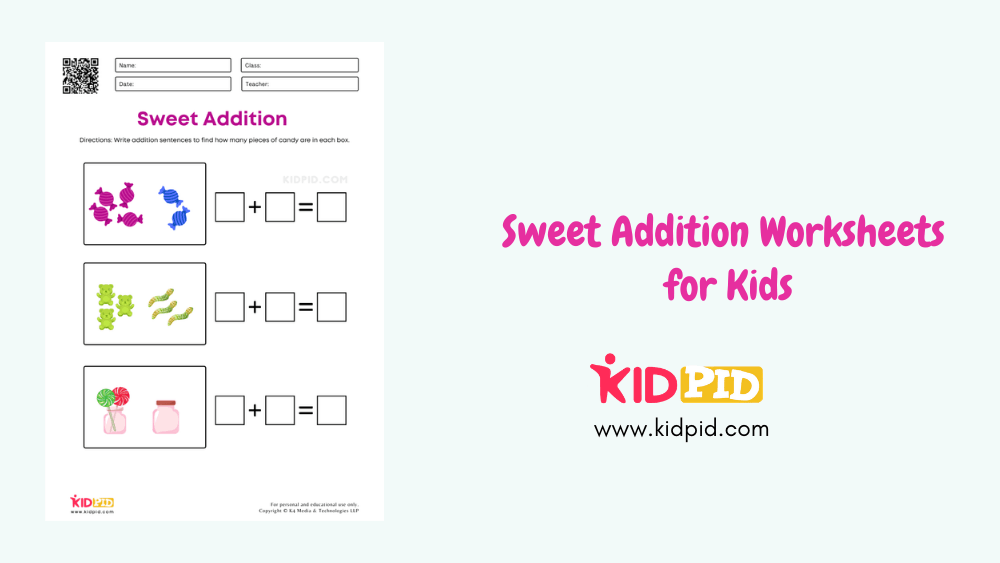
Addition is one of the four fundamental concepts of basic mathematics and arithmetic. It is one of the first things taught to kids who are new to the subject. Kids need to practice addition as it is not only an important concept in mathematics, but is also important in day-to-day aspects of routine life.
Contents
- Sweet Addition Practice Worksheets
- Key Facts About Sweet Addition Worksheets for Kids
- Parts, Types, and Examples of Sweet Addition Worksheets
- How Do Sweet Addition Worksheets for Kids Work?
- Benefits of Learning About Sweet Addition
- Learning Objectives
- Worksheet Instructions
- Interesting Facts About Math and Sweet Additions
- Vocabulary Words
- Real-Life Applications
- FAQs
- Read More:
Sweet Addition Practice Worksheets

The following worksheets allow kids to learn to find the sum of two numbers.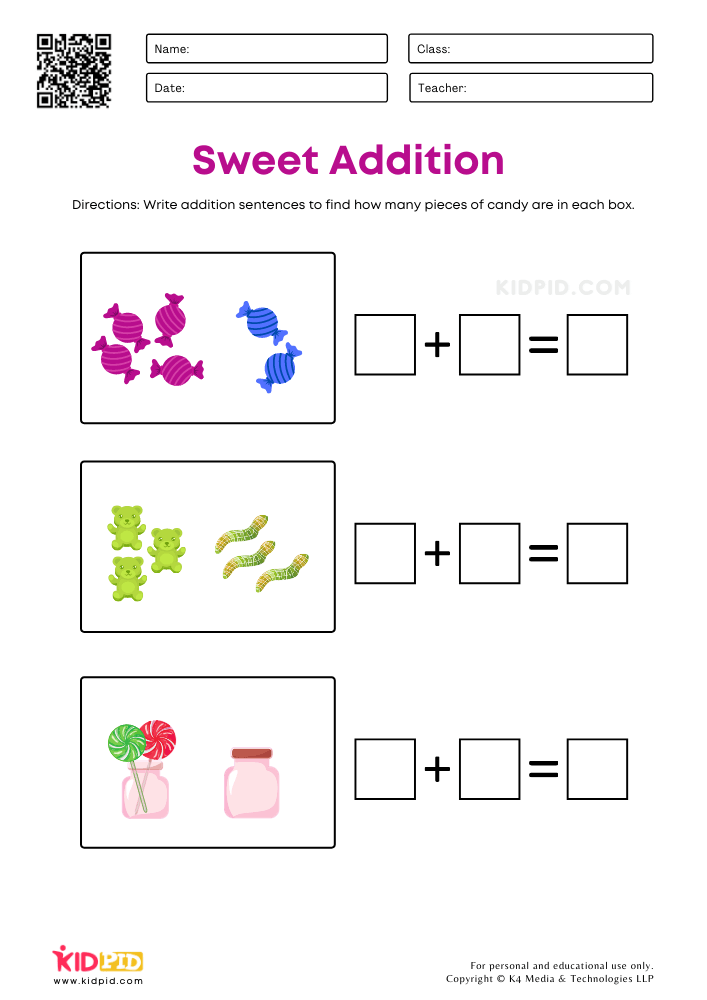
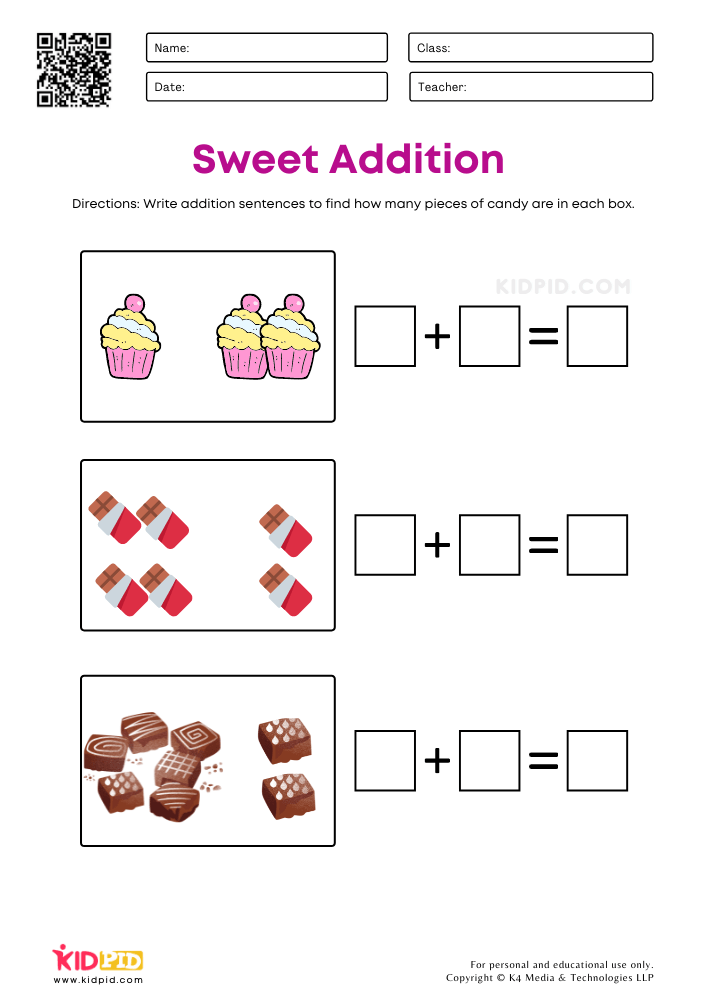
The task at hand is simple. Ask your student to count the number of sweets in each picture. There are two groups of sweets, he has to count them individually and then write the numbers in the box, and at last, add the two numbers and write the sum of those two numbers in the box.
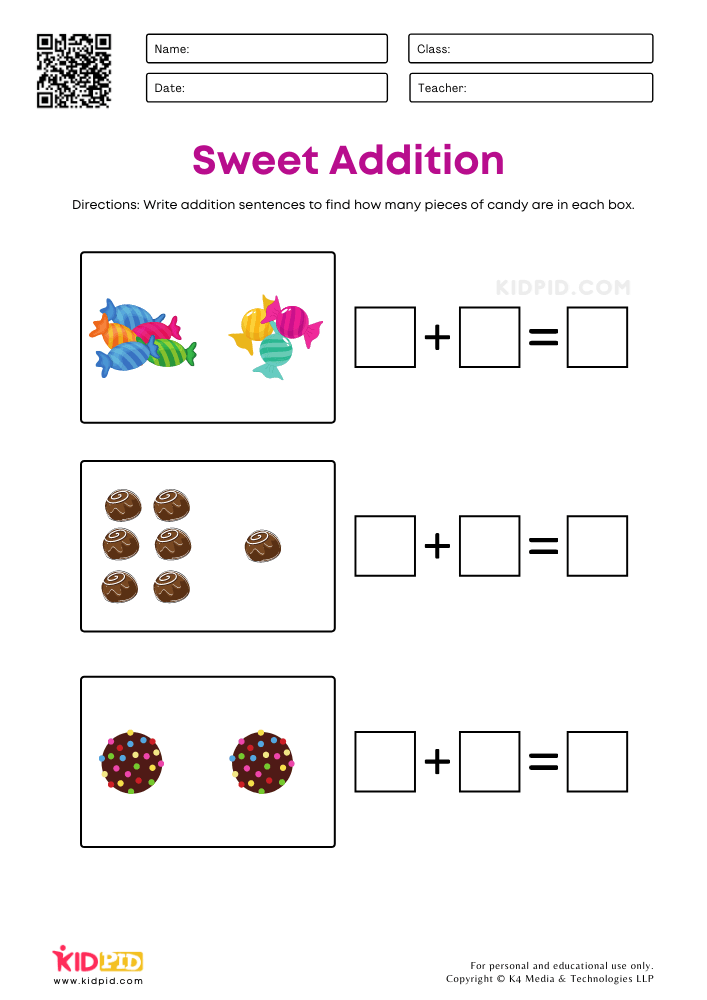
Practice and consistency are the keys to success. The third worksheet allows for more practice. It is a good practice not to burden the kid with several sheets at once. Instead, allow him to take his time, make mistakes, and learn.
As the adage goes, “Rome wasn’t built in a day”. It is necessary to keep practicing. Introduce time-based testing to check your students’ skills and understanding. You can use the fourth sheet for that purpose.
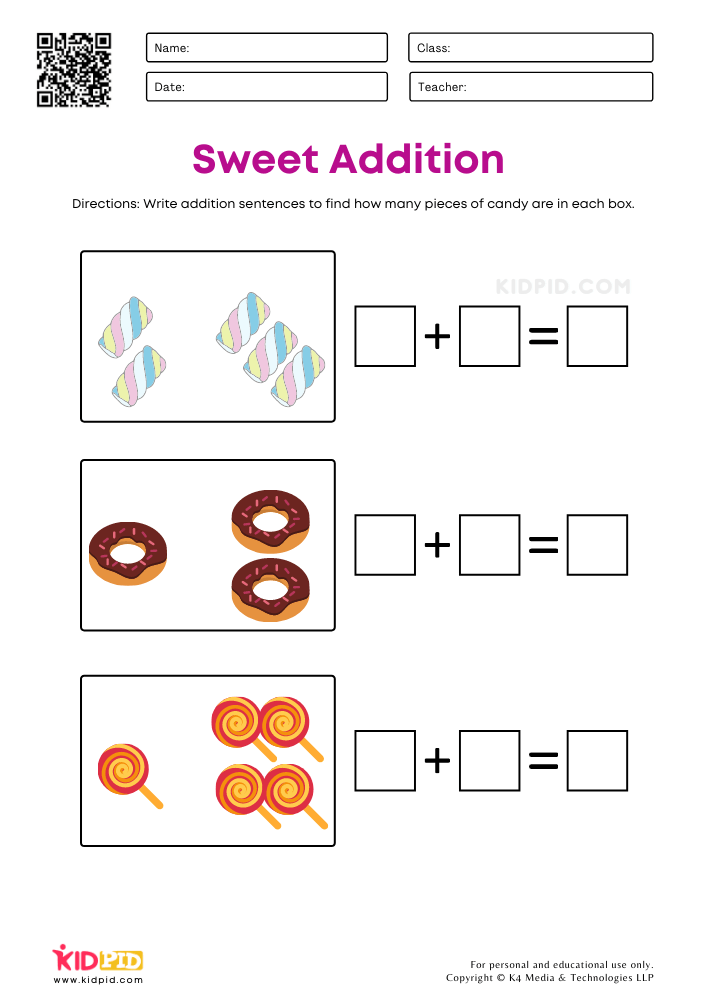
These worksheets would help students conceptualize addition and write the expressions used for addition by combining two groups of sweets as one. It is relatively easy and designed to encourage kids to tackle the rather intimidating problems of mathematics.
Visual addition resources typically fall into distinct categories to help children build confidence at their own pace.
These are ideal for absolute beginners. Instead of numbers, children count groups of items—such as three lollipops and two jellybeans—to discover the total visually.
These sheets act as a bridge. The page shows pictures of candies with empty boxes underneath them, teaching children to write the matching numeral (like “3” or “2”) before solving the equation.
Once kids understand the concept, these sheets mix different sweet illustrations across the page to keep the exercises engaging during repetition.
These printables turn abstract arithmetic into concrete math problems through a three-step visual framework:
By completing these math sheets regularly, your students will meet the following milestones:
Follow these steps to get the most value out of each session with your student:
Math isn’t confined to a desk—young learners will use these skills every single day:
Q1: What age group is best suited for sweet addition printables?
Answer: These sheets are ideal for children aged 4 to 7 who are in preschool, kindergarten, or first grade and are learning to connect numbers to physical sets of items.
Q2: How many pages should my child practice each day?
Answer: Avoid overloading your young learner. Completing one or two pages a day keeps the activity fun and productive without causing mental fatigue.
Q3: My child keeps making mistakes. How should I handle it?
Answer: Mistakes are a normal part of the learning curve! Use real household items, like buttons or actual snacks, to mimic the problems on the page so they can touch and move the pieces physically.
Key Facts About Sweet Addition Worksheets for Kids
Parts, Types, and Examples of Sweet Addition Worksheets
1. Visual Counting Worksheets
2. Picture-to-Number Transition Practice
3. Mixed Single-Digit Challenges
How Do Sweet Addition Worksheets for Kids Work?
Benefits of Learning About Sweet Addition
Learning Objectives
Worksheet Instructions
Interesting Facts About Math and Sweet Additions
Vocabulary Words
Real-Life Applications
FAQs
Colorful addition activities turn math practice into an enjoyable experience. These sweet-themed worksheets strengthen calculation skills, improve number confidence, and encourage children to solve problems with enthusiasm. Keep visiting our website and explore more paragraphs, essays, worksheets, flashcards, Quizzes, and many other interactive resources. Don’t forget to follow us on YouTube & Facebook.
The Content Team created this worksheet to support learning mastery.
Reviewed By Komal Singh
Read More: