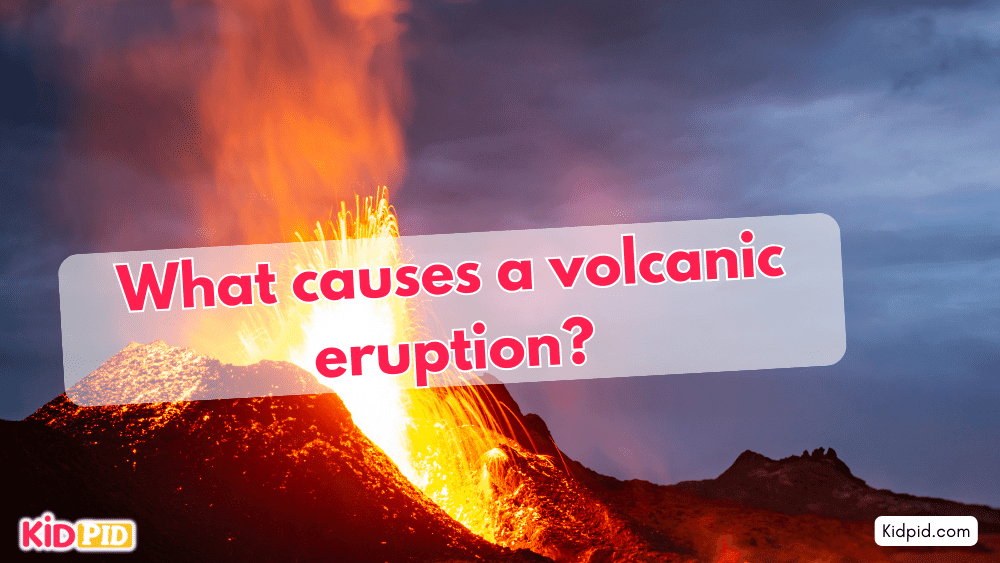
A volcanic eruption is caused by the movement of molten rock, known as magma, from beneath the Earth’s surface to the surface. When the magma is less dense than the surrounding solid rock, it rises towards the surface. As it ascends, gases dissolved in the magma expand due to the decrease in pressure. This expansion of gases increases the pressure within the magma chamber and pushes the magma through cracks in the Earth’s crust, resulting in a volcanic eruption.
Contents
- MCQs
- 1. What is found beneath the Earth’s surface that can cause a volcanic eruption?
- 2. What happens to the magma during a volcanic eruption?
- 3. Which of the following can trigger a volcanic eruption?
- 4. What role does gas play in volcanic eruptions?
- 5. What is the name of the opening through which volcanic materials are expelled?
- 6. Which type of volcanic material can flow down the sides of a volcano during an eruption?
- 7. What is the term for a large volcanic explosion that can affect the global climate?
MCQs
1. What is found beneath the Earth’s surface that can cause a volcanic eruption?
A. Water
B. Magma
C. Sand
D. Oil
2. What happens to the magma during a volcanic eruption?
A. It turns to ice
B. It becomes lava
C. It disappears
D. It turns to glass
3. Which of the following can trigger a volcanic eruption?
A. Rain
B. Earthquake
C. Snow
D. Wind
4. What role does gas play in volcanic eruptions?
A. It cools the lava
B. It increases pressure in the magma
C. It solidifies the magma
D. It absorbs the magma
5. What is the name of the opening through which volcanic materials are expelled?
A. Crater
B. Cave
C. Pit
D. Tunnel
6. Which type of volcanic material can flow down the sides of a volcano during an eruption?
A. Rocks
B. Snow
C. Lava
D. Water
7. What is the term for a large volcanic explosion that can affect the global climate?
A. A lava flow
B. A volcano sprint
C. A volcanic winter
D. A magma storm
Read More