

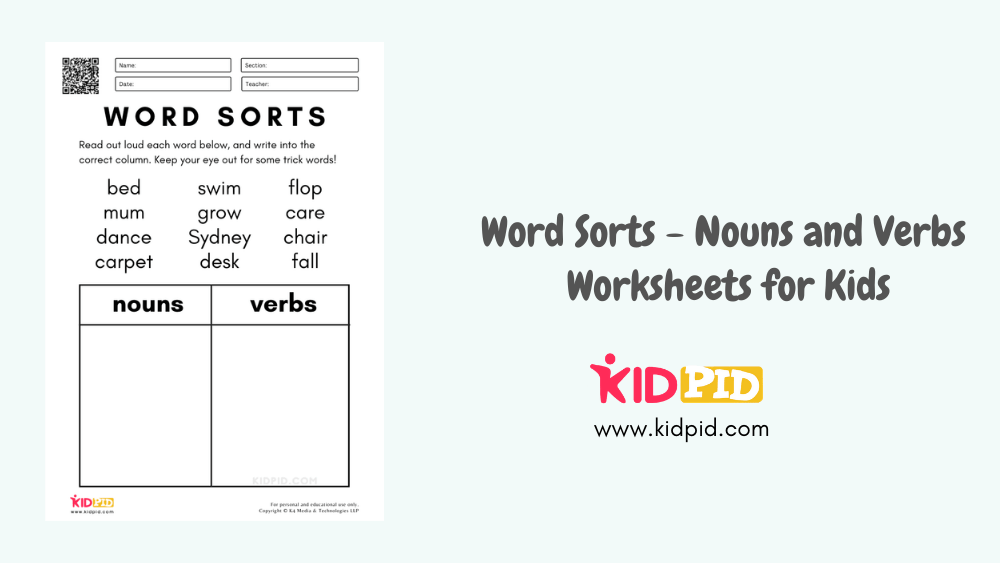
This is a nouns and verbs-related English grammar worksheet. In today’s world, being able to communicate in English is essential. Children should be able to differentiate between nouns and verbs in English, just as they should be able to distinguish between numbers in mathematics.
Contents
- Nouns and Verbs Word Sorting Worksheets
- Key Facts About Word Sorts, Nouns, and Verbs Worksheets for Kids
- Parts/Types/Examples of Word Sorts Nouns and Verbs Worksheets for Kids
- How do Word Sorts Nouns and Verbs Worksheets Work?
- Benefits of Learning About Word Sorts, Nouns, and Verbs Worksheets for Kids
- Learning Objectives
- Worksheet Instructions
- Interesting Facts About Word Sorts, Nouns and Verbs Worksheets
- Real-Life Applications
- FAQs
- Q1. What is a noun?
- Q2. What is a verb?
- Q3. Why are noun and verb worksheets important?
- Q4. At what age can children use these worksheets?
- Q5. Can these worksheets improve writing skills?
- Q6. Are these worksheets useful for homeschooling?
- Q7. How often should children practice noun and verb sorting activities?
- Q8. Do these worksheets support vocabulary development?
- You may like these:
Nouns and Verbs Word Sorting Worksheets

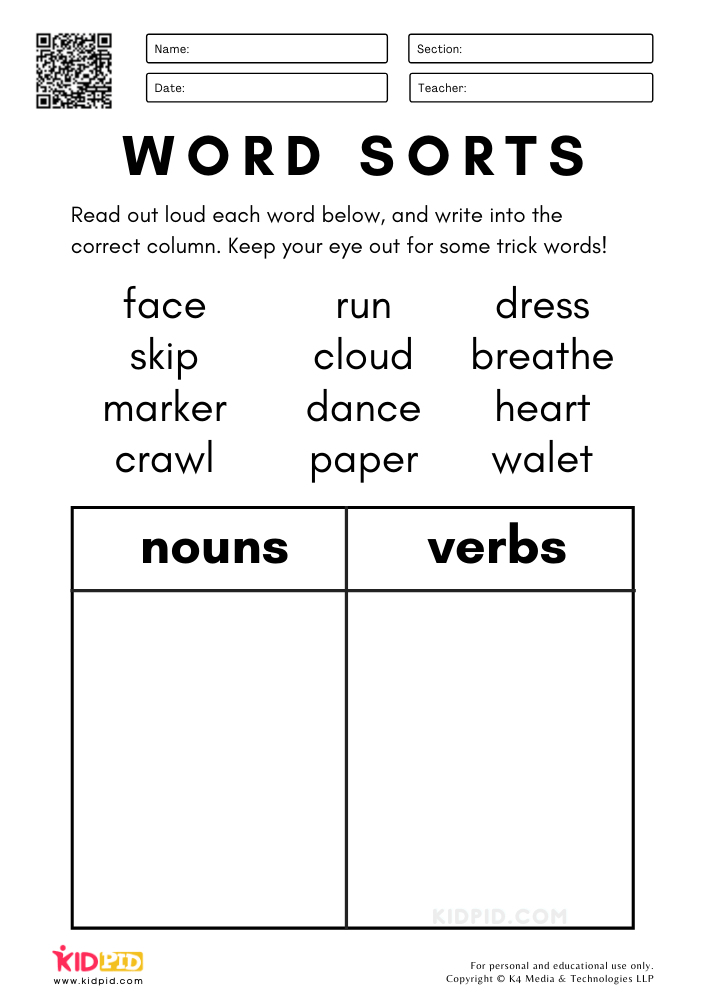 A noun is a word that refers to someone, somewhere, or something, but a verb is a word that implies activity. When children can speak and comprehend a language that has a high social standing, they feel more confident.
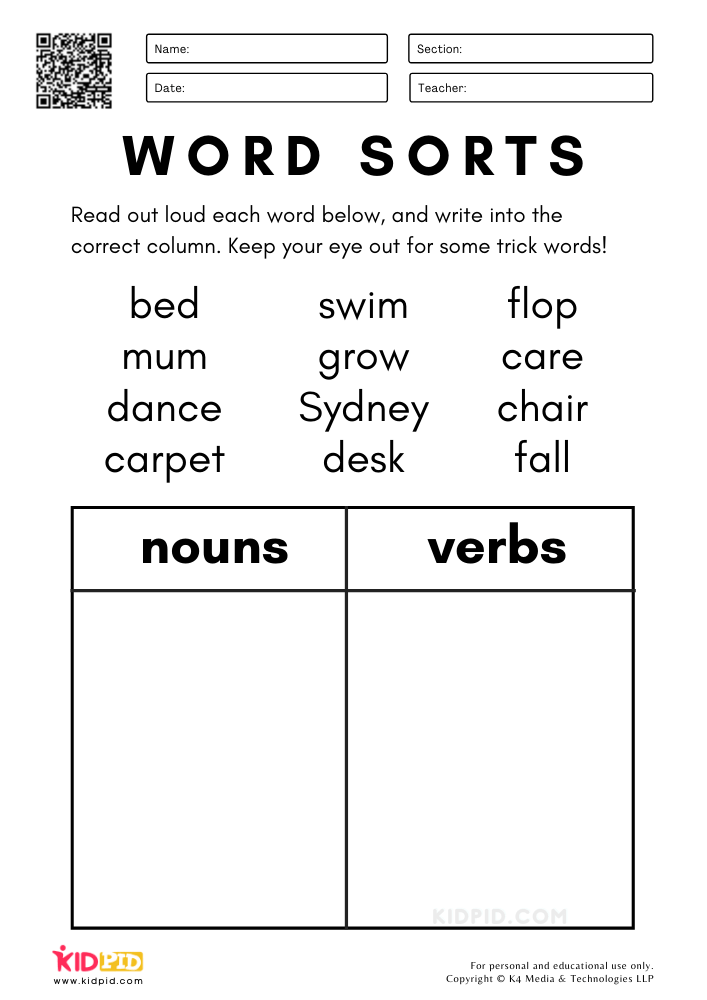
This is similar to a revision worksheet in that it follows the same style as the previous one, but with different amounts. The same worksheet style, but with a small variation, will let your child feel more at ease when answering the question.
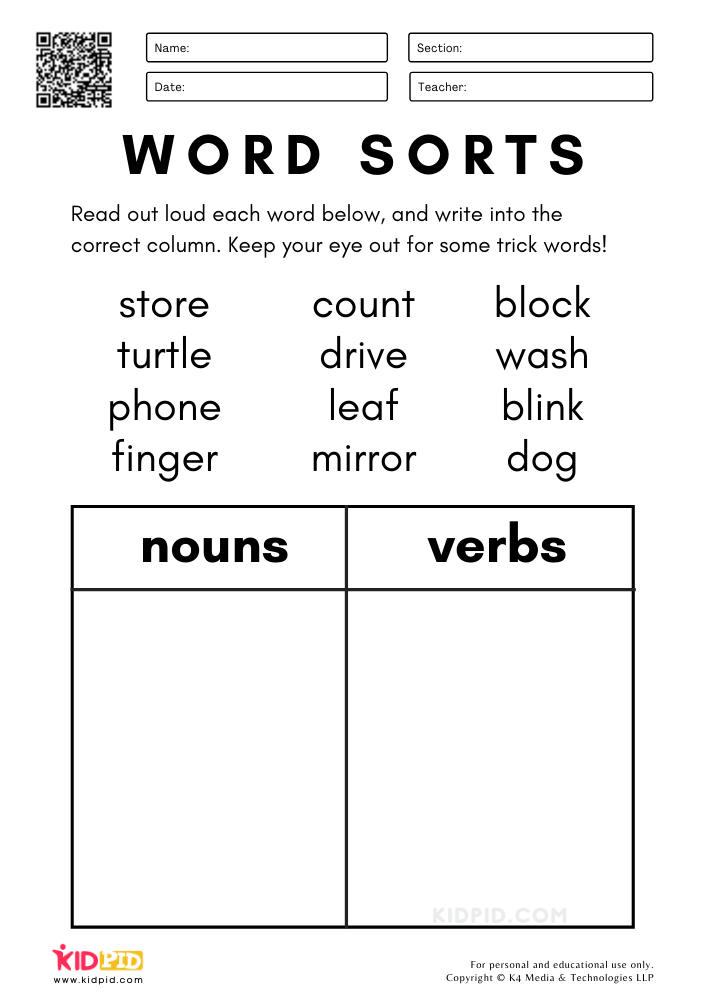
These worksheets can be printed for a better view. These worksheets will assist them in creating better phrases and speaking English with greater diligence. A confident person has more opportunities in life, and this habit should begin at a young age.
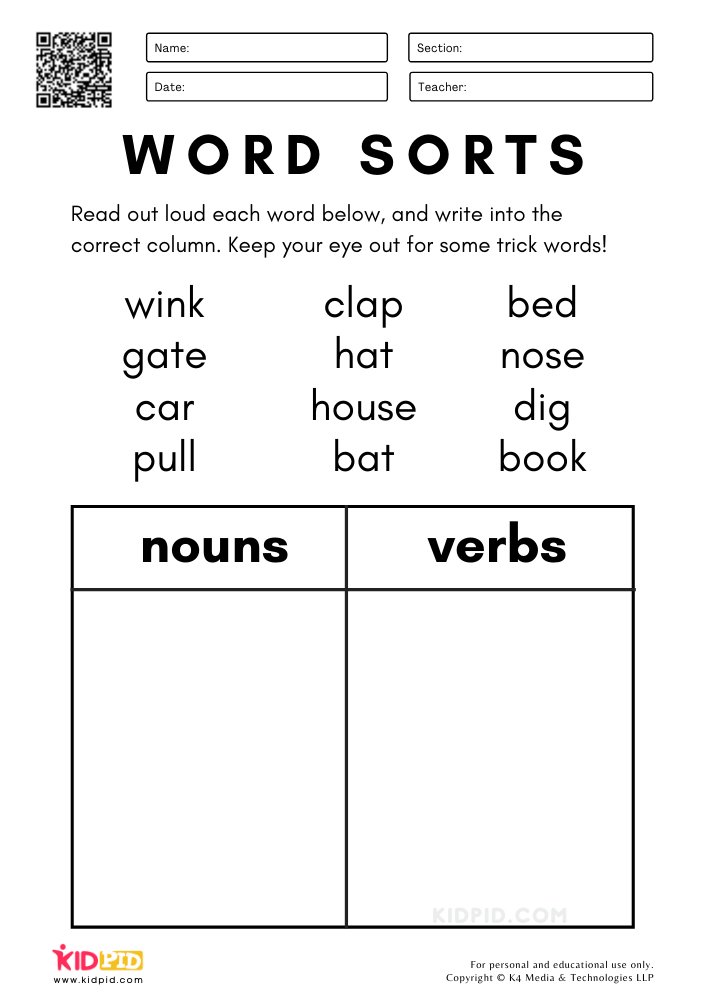
Knowing English improves your chances of landing a decent job at a global firm in your native country or abroad. Children who are taught challenging English at a young age can learn it, which will benefit them in the future.
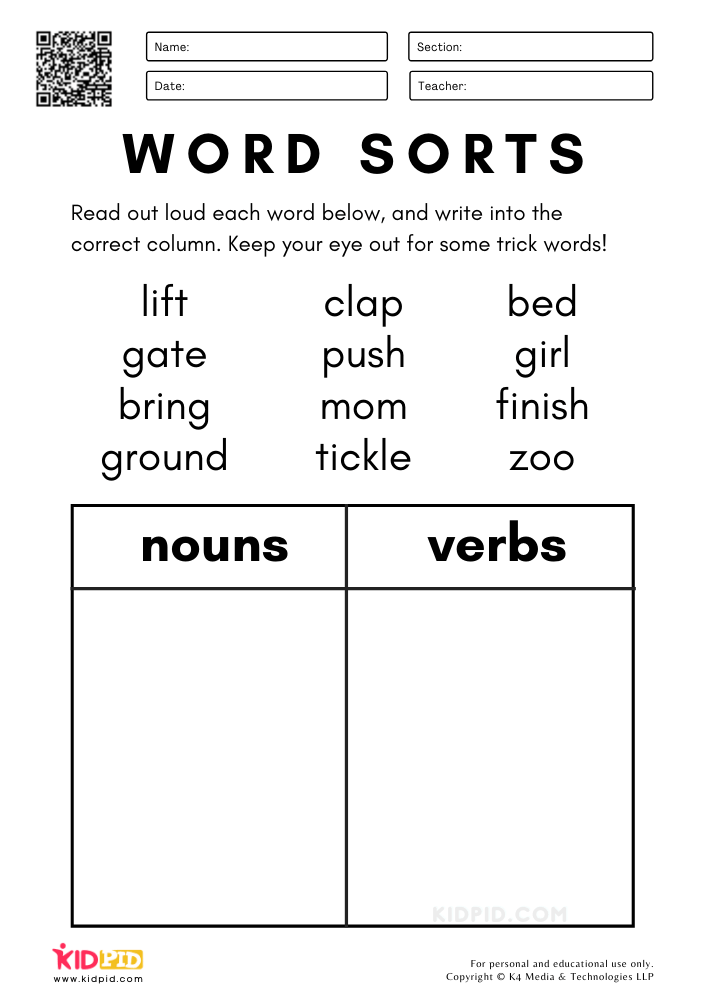
Any mistakes made in the first practice worksheet can be fixed in subsequent worksheets. They will pay more attention if they practice and get the right answers, and they may consider English to be one of their favorite topics as they become older.
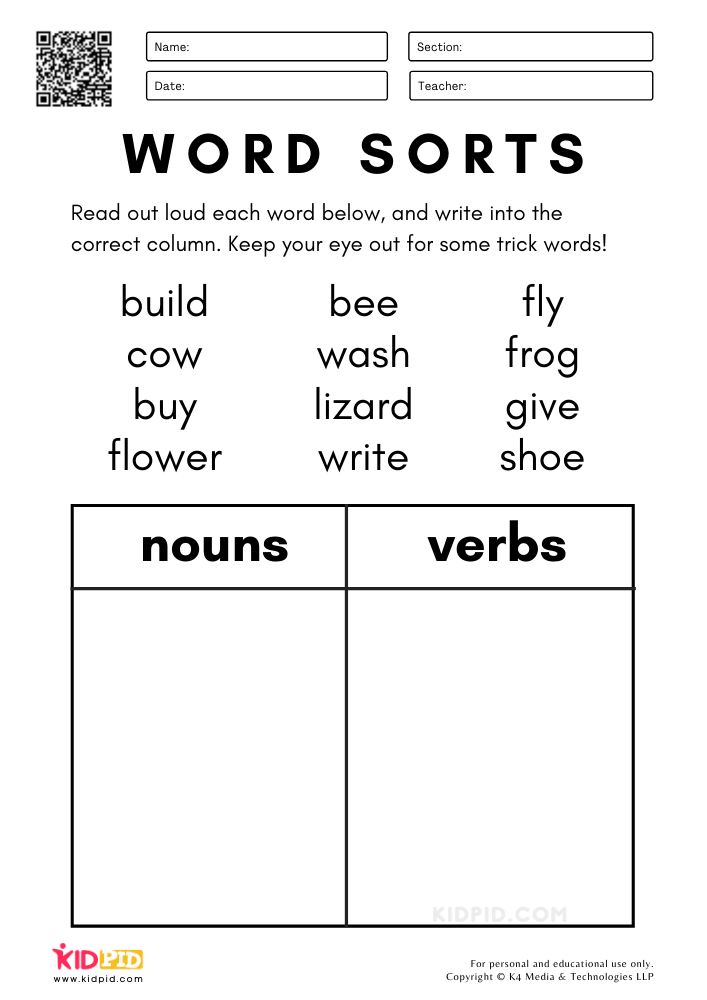
These worksheets will not only assist children in recognizing nouns and verbs, but they will also help them learn new terms. Different terms will assist them in discovering new things and words that they may find intriguing and imaginative.
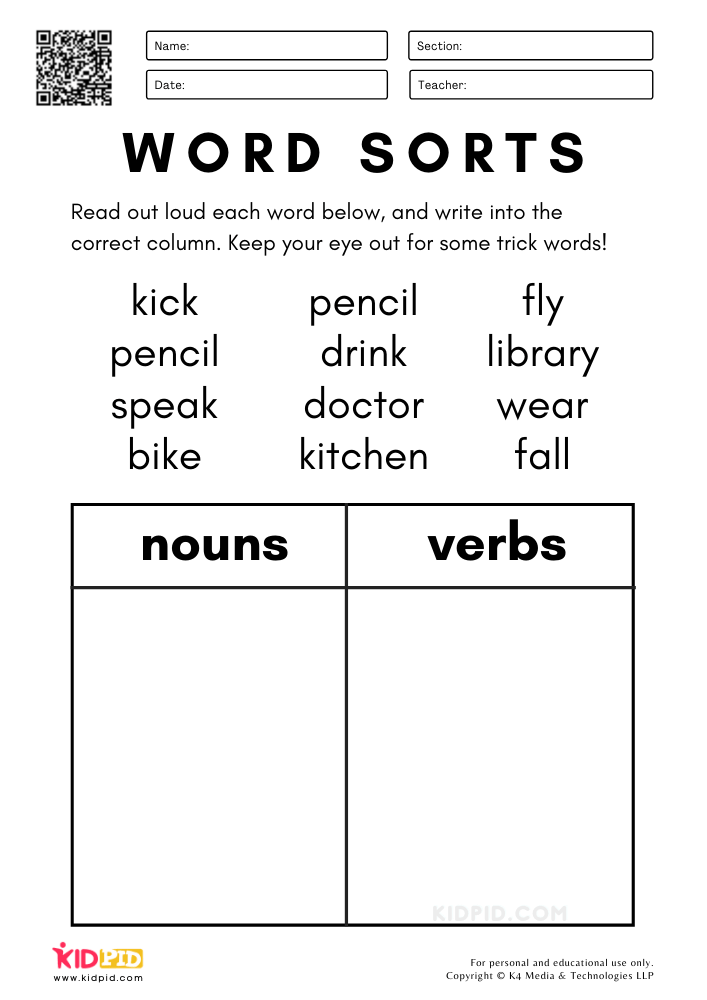
Your youngster will be able to brush up on their knowledge by doing more and more worksheets. More worksheets will help them improve their skills and knowledge.
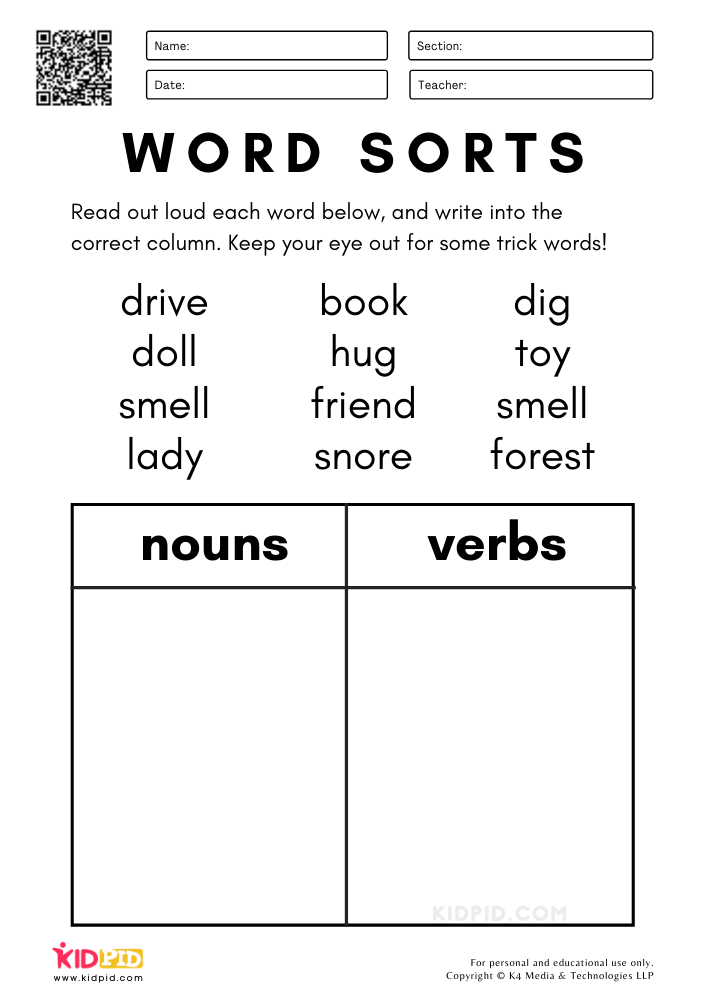
You’d be guiding your child through the first few worksheets, and they’d have done every sum with your assistance, but once they’re familiar with the pattern, it’s OK to hand them the next worksheet to do on their own. Make learning as fun as possible for them.
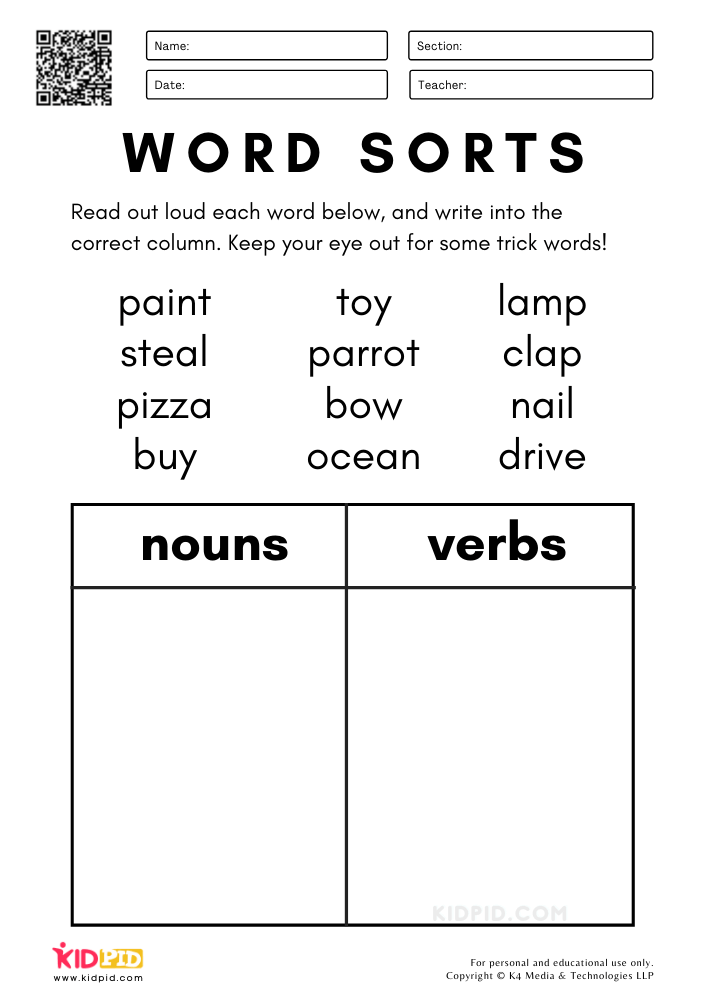
Even though this is the last worksheet, the job isn’t done yet. When your child has free time, go over these subjects again. Every time students think about revising, the degree of learning should be raised.
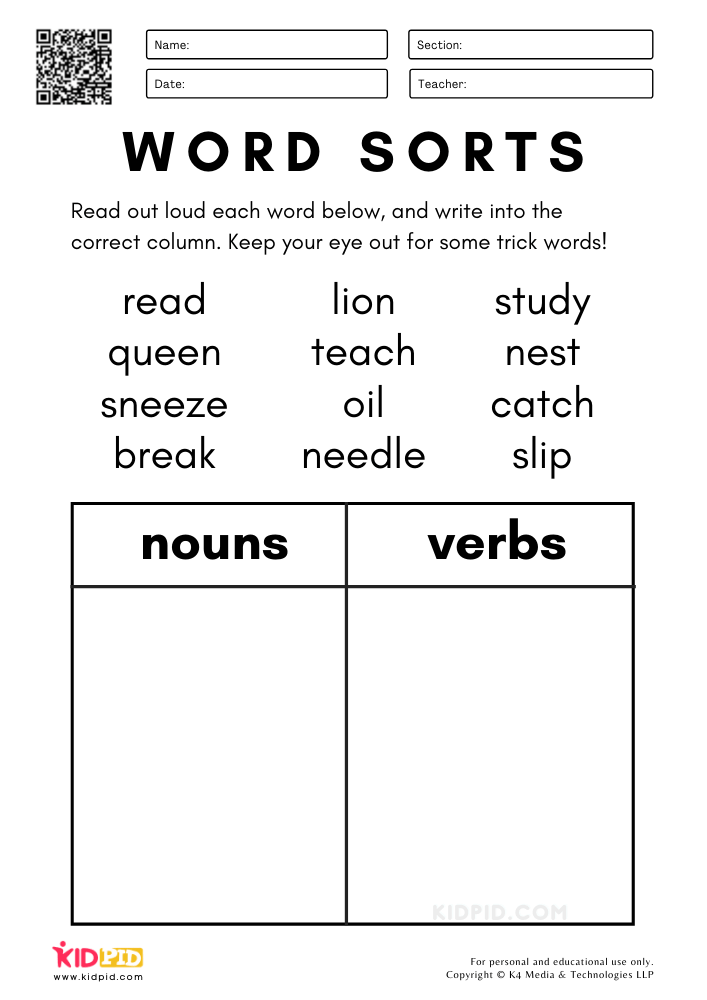
Key Facts About Word Sorts, Nouns, and Verbs Worksheets for Kids
Word Sorts Nouns and Verbs Worksheets help children identify and categorize words based on their grammatical function. Nouns are words that name people, places, animals, or things, while verbs describe actions, occurrences, or states of being. These worksheets provide engaging sorting activities that strengthen language skills and improve grammar understanding.
Key Facts:
- Suitable for kindergarten, Grade 1, Grade 2, and Grade 3 learners.
- Focuses on identifying nouns and verbs correctly.
- Encourages critical thinking through classification activities.
- Supports reading, writing, and speaking development.
- Helps children build a strong grammar foundation.
Parts/Types/Examples of Word Sorts Nouns and Verbs Worksheets for Kids
These worksheets may include several activity formats to keep learning enjoyable and interactive.
Common Types:
- Word sorting activities
- Cut-and-paste grammar exercises
- Circle and categorize worksheets
- Matching nouns with verbs
- Picture-based noun and verb identification
Examples of Nouns:
- Dog
- School
- Teacher
- Apple
- Car
Examples of Verbs:
- Run
- Jump
- Write
- Read
- Dance
How do Word Sorts Nouns and Verbs Worksheets Work?
These worksheets present a list of words, pictures, or sentences. Children carefully examine each word and decide whether it belongs to the noun category or the verb category.
The process typically involves:
- Reading the given words.
- Understanding the meaning of each word.
- Sorting words into noun and verb groups.
- Checking answers for accuracy.
- Practicing repeatedly to reinforce learning.
This hands-on approach helps students recognize word functions more effectively than simple memorization.
Benefits of Learning About Word Sorts, Nouns, and Verbs Worksheets for Kids
Learning nouns and verbs is essential for language development and sentence construction.
Major Benefits:
- Improves grammar skills.
- Enhances vocabulary knowledge.
- Develops sentence-building abilities.
- Strengthens reading comprehension.
- Boosts writing confidence.
- Encourages logical classification skills.
- Supports effective communication.
Children who understand parts of speech can express ideas more clearly and accurately.
Learning Objectives
By completing these worksheets, children will be able to:
- Identify nouns and verbs correctly.
- Differentiate between naming words and action words.
- Expand their vocabulary.
- Use nouns and verbs appropriately in sentences.
- Improve grammar accuracy.
- Strengthen reading and writing skills.
- Develop confidence in language usage.
Worksheet Instructions
Follow these simple instructions to complete the worksheet successfully:
- Read each word carefully.
- Decide whether the word is a noun or a verb.
- Place the word in the correct category.
- Review your answers before submitting.
- Practice regularly to improve recognition skills.
Interesting Facts About Word Sorts, Nouns and Verbs Worksheets
Learning grammar can be fun when children discover interesting language facts.
- Nouns are often called “naming words.”
- Verbs are known as “action words.”
- Every complete sentence usually contains a verb.
- Proper nouns begin with capital letters.
- Some words can act as both nouns and verbs depending on usage.
- English contains thousands of nouns and verbs used in everyday communication.
These facts help students understand the importance of grammar in daily life.
Real-Life Applications
Understanding nouns and verbs has practical value beyond the classroom.
Real-Life Uses Include:
- Writing stories and essays.
- Reading books with better comprehension.
- Following instructions accurately.
- Communicating clearly with others.
- Creating school projects and presentations.
- Developing strong speaking and writing skills.
Grammar knowledge helps children become effective readers, writers, and communicators.
FAQs
Q1. What is a noun?
Answer: A noun is a word that names a person, place, animal, thing, or idea. Examples include cat, school, and teacher.
Q2. What is a verb?
Answer: A verb is a word that shows an action, occurrence, or state of being. Examples include run, jump, and write.
Q3. Why are noun and verb worksheets important?
Answer: They help children understand sentence structure, improve grammar, and build strong communication skills.
Q4. At what age can children use these worksheets?
Answer: These worksheets are generally suitable for children aged 5–9 years, depending on their learning level.
Q5. Can these worksheets improve writing skills?
Answer: Yes. Understanding nouns and verbs helps children create clearer and more complete sentences.
Q6. Are these worksheets useful for homeschooling?
Answer: Absolutely. They provide structured grammar practice that supports both classroom and home learning environments.
Q7. How often should children practice noun and verb sorting activities?
Answer: Regular practice, even for 10–15 minutes a few times a week, can significantly improve grammar recognition and language skills.
Q8. Do these worksheets support vocabulary development?
Answer: Yes. Children learn new words while understanding their grammatical functions, helping them expand their vocabulary naturally.
Sorting nouns and verbs helps children recognize word functions with greater ease. These engaging worksheets strengthen grammar understanding, expand vocabulary, and encourage confident language use through meaningful practice. Our website is filled with worksheets, quizzes, essays, flashcards, paragraphs, and hands-on learning activities for children. Follow us on YouTube & Facebook.
This worksheet was created by the Content Team to advance learning progress.
Reviewed By Poornima Ravi
You may like these:
Worksheets with pictures of nouns for grade 1.
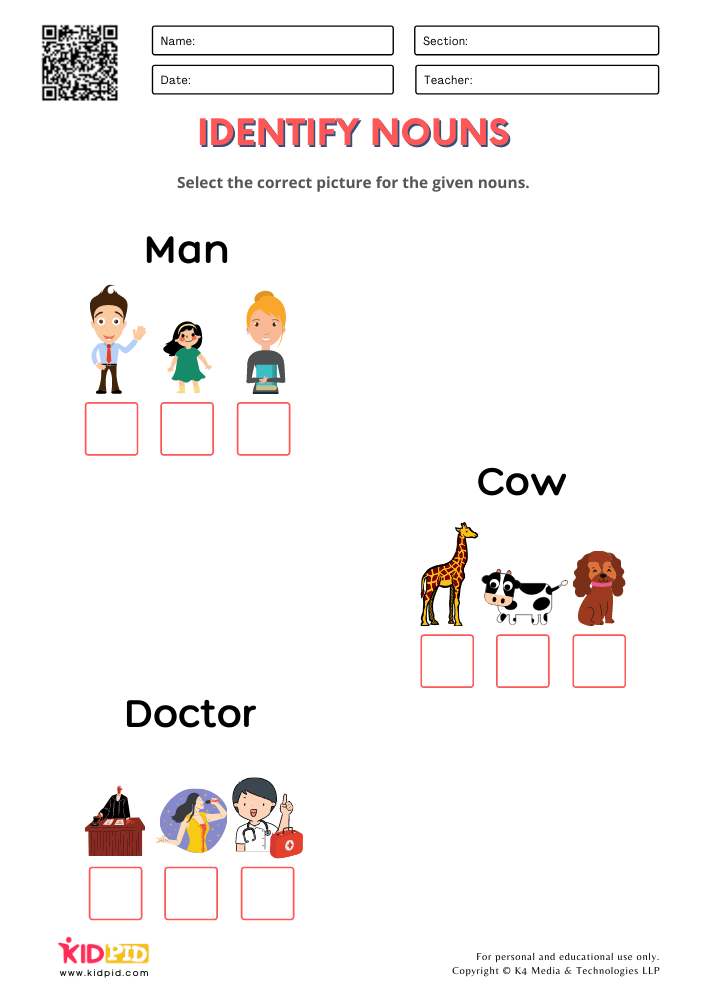
Engaging worksheets featuring images where students identify and label nouns, helping them connect visuals to words and build vocabulary.
Worksheet about nouns around us.

Activities where students list or identify everyday nouns from their surroundings, fostering awareness of common people, places, and things.
Worksheets to identify nouns for grade 1.
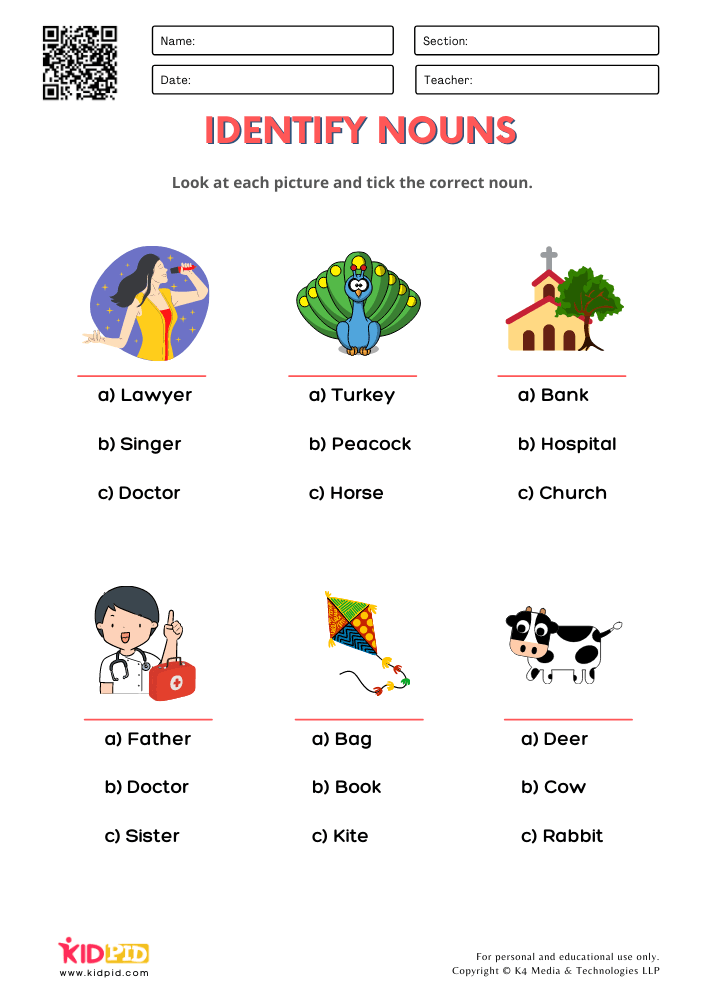
Simple exercises where students pick out nouns from word lists or sentences, reinforcing basic grammar concepts.
Worksheets to identify and write nouns for grade 1.
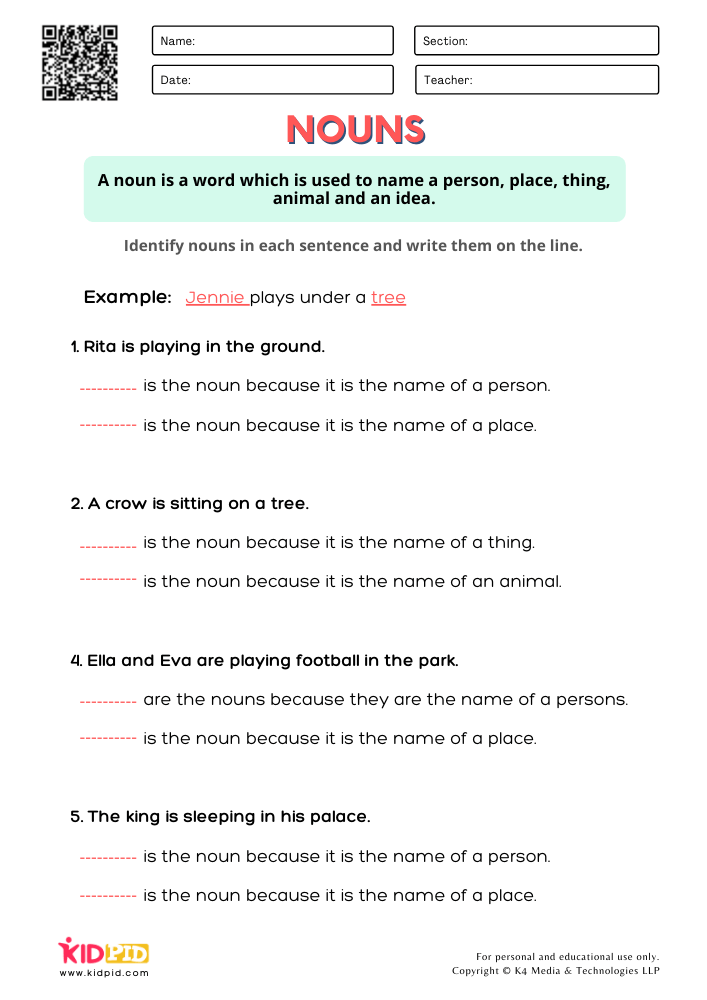
Tasks combining noun identification with writing practice, enhancing both recognition and spelling skills.
Worksheets to find nouns in sentences for grade 2.
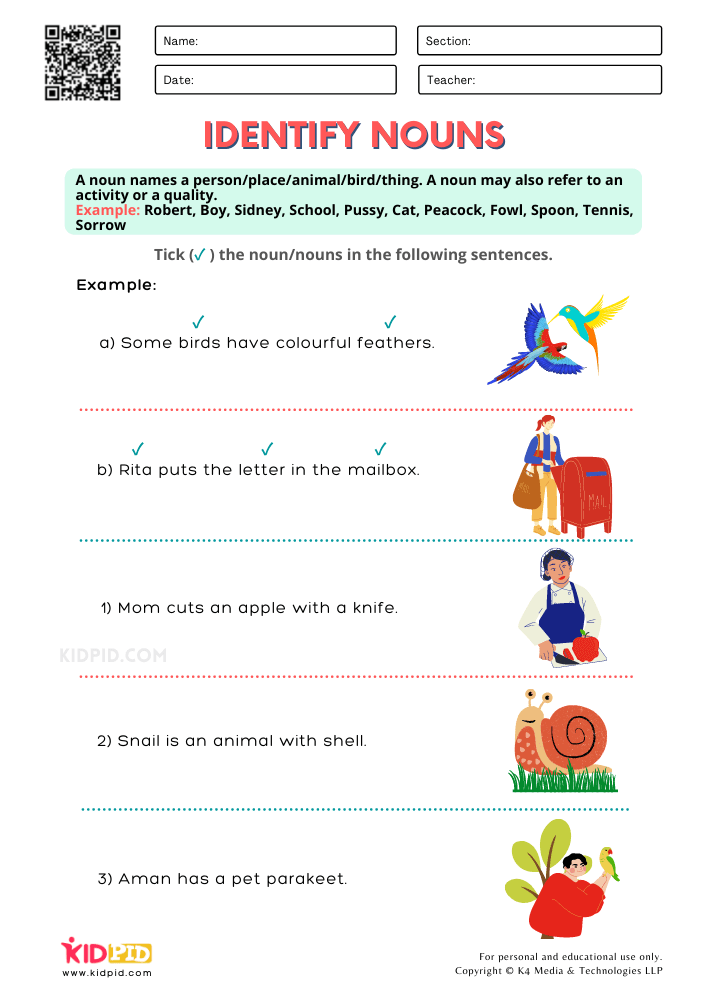
Advanced exercises where students locate nouns within sentences, improving grammar and sentence analysis abilities.



