

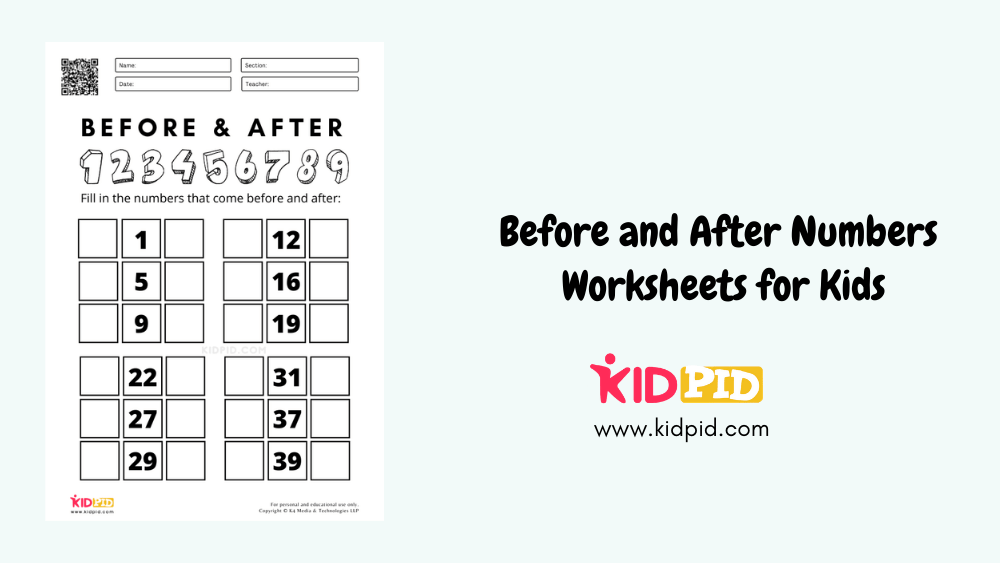
Here’s an edition where we are providing two worksheets to enrich your kid’s brain, by fabricating and improving their basic mathematics and number counting skills. Here we have a collection of worksheets to assist your children in acquiring the concept and follow the idea for the numbers from zero to one hundred. So, let’s take a look at the exercise.
Contents
- Before and After Numbers Practice Worksheet
- Key Facts About Before and After Numbers Worksheets for Kids
- Parts/Types/Examples of Before and After Numbers Worksheets
- How do Before and After Numbers Worksheets Work?
- Benefits of Learning About Before and After Numbers Worksheets
- Learning Objectives
- Worksheet Instructions
- Interesting Facts About Before and After Numbers
- Vocabulary Words
- Real-Life Applications
- FAQs
- Q1. What are Before and After Numbers Worksheets?
- Q2. What age group are these worksheets suitable for?
- Q3. Why are the before and after numbers important?
- Q4. Can these worksheets improve counting skills?
- Q5. How can parents help at home?
- Q6. Are these worksheets aligned with early math learning standards?
- Q7. What should a child do if they find the worksheet difficult?
- Q8. How often should children practice before and after numbers?
- You May Like This:
Before and After Numbers Practice Worksheet

The first worksheet works on the counting skills of the child, as he will try to tell what comes before and after the given number. For example, _, 1, _. The solution will be 0, 1, 2. Children must have a good grip of this idea because they will have to utilize their awareness of long calculations as well as other new mathematical difficulties eventually.
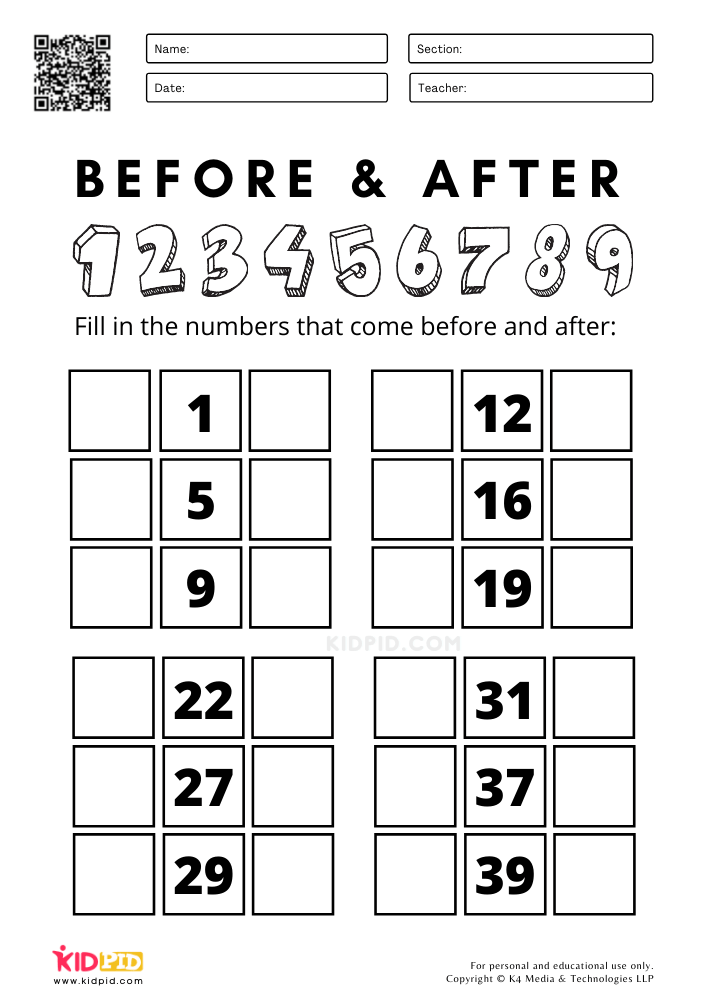
The second worksheet is the same as the first. Here, the numbers 41 to 79 are being listed, and the child will have to figure them out in each problem. Set a solid number of worksheets for your kid every day to support their practice and enhance their calculation and counting skills.
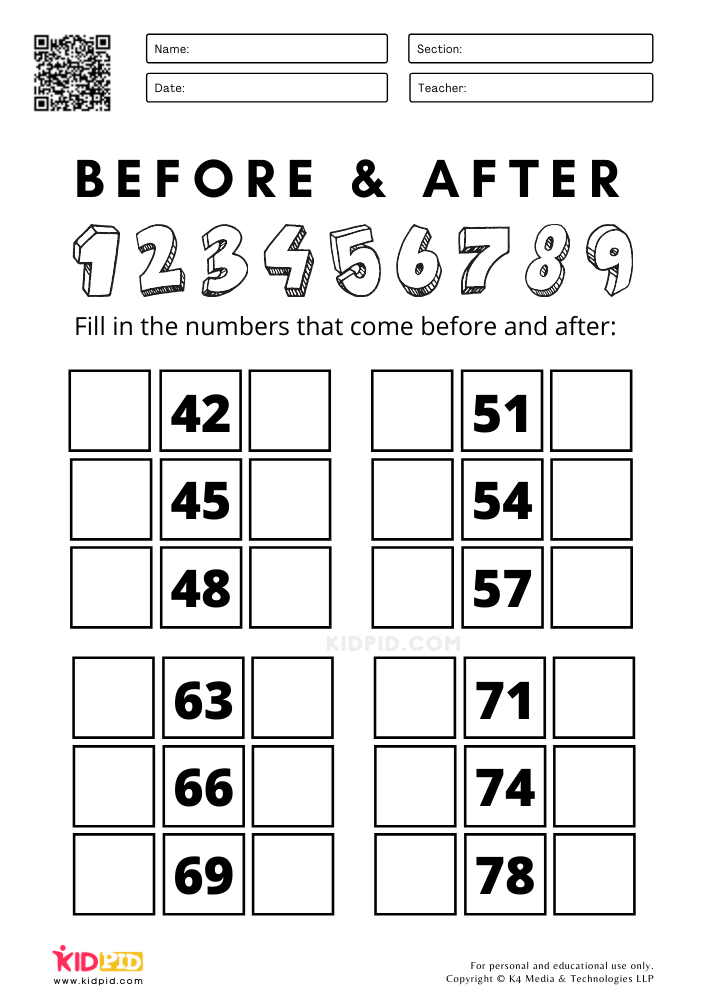
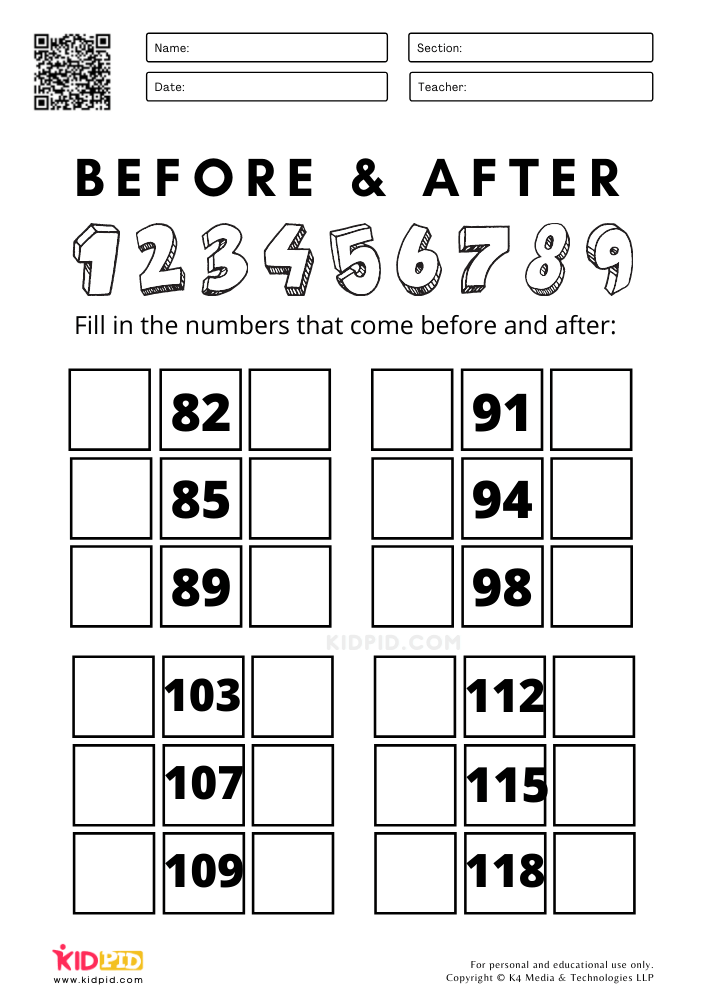
The third worksheet is the same as the above two. Here, from the numbers 81 to 119 are being listed, and the child will have to figure them out in each problem. To solve double and triple-digit counting problems, the child must already know the counting and numbers above 80.
The fourth worksheet is the same as the above three. Here, from the numbers 120 to 160 are being listed, and the child will have to figure them out in each problem. Working on these problems is not tiresome and time-consuming if the child knows the counting up to that extent. This is where the parents need to help the child understand why these worksheets are necessary.
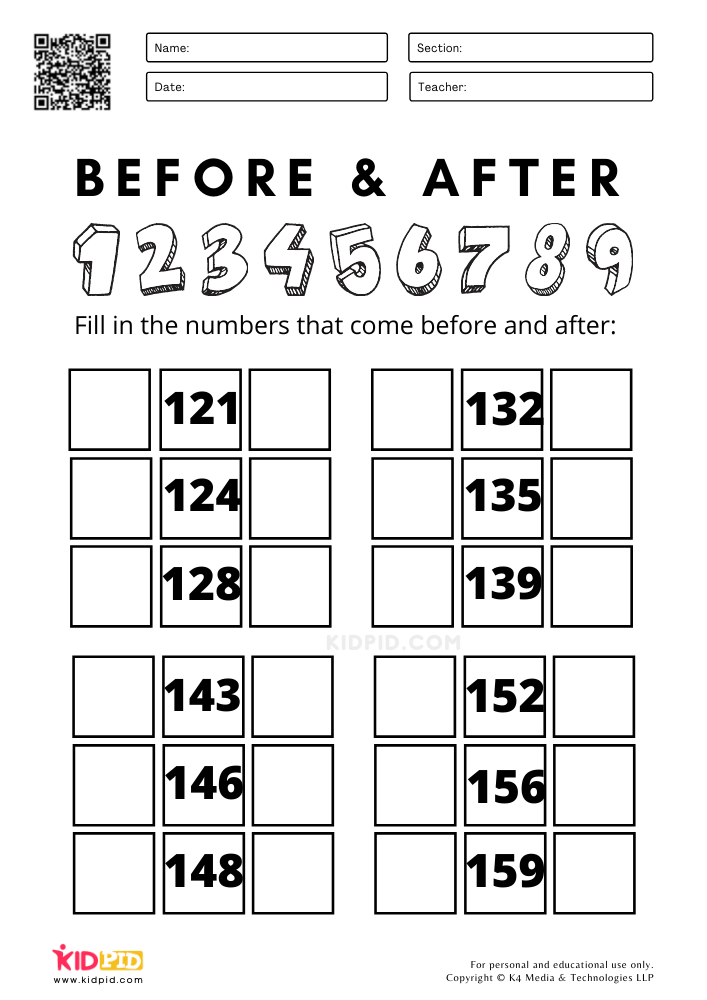
The fifth worksheet is the same as the above worksheets. If your child gets stuck on a particular number and doesn’t know what comes next, ask them to quietly move on to the next one and explain to them later. This know-how will help them stay confident and excited during their assignment. Make sure your child is concentrated on the worksheets.
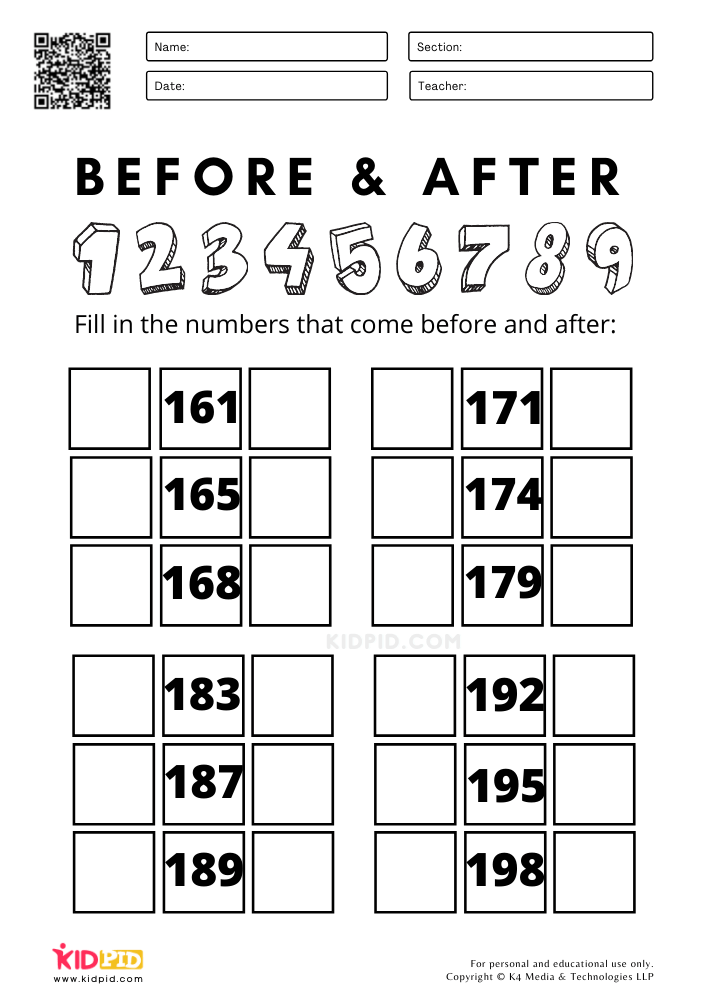
Counting large numbers may feel threatening or scary at the beginning, and your kid is expected to make a lot of errors. All a kid needs is practice, and he’ll open up like a flower. In order to make them perform well, just set a time limit for completion of a worksheet, by looking at the time the kid will perform faster under pressure. Worksheets are an excellent way to determine new things as it not only enables children to learn in a new way but also help keep track of their progress.
Key Facts About Before and After Numbers Worksheets for Kids
Before and After Numbers Worksheets help children understand number sequences and counting patterns. These worksheets teach kids how to identify the number that comes before or after a given number, strengthening their number sense and foundational math skills. They are commonly used in preschool, kindergarten, and early elementary classrooms to build confidence in counting and numerical order.
Key Facts:
- Suitable for preschool and kindergarten learners.
- Improves counting and sequencing abilities.
- Supports number recognition skills.
- Develops logical thinking and problem-solving.
- Provides hands-on practice with number patterns.
- Helps prepare children for addition and subtraction concepts.
Parts/Types/Examples of Before and After Numbers Worksheets
Before and After Numbers Worksheets come in different formats to keep learning engaging and effective.
Types of Worksheets:
- Before Number Worksheets: Find the number that comes before a given number.
- After Number Worksheets: Identify the next number in a sequence.
- Before and After Combined Worksheets: Fill in both missing numbers around a given number.
- Number Line Activities: Use a number line to determine neighboring numbers.
- Missing Number Puzzles: Complete number sequences with missing values.
- Picture-Based Worksheets: Count objects and identify before and after numbers.
Examples:
- Before 8 = ___ (Answer: 7)
- After 15 = ___ (Answer: 16)
- ___ 20 ___ (Answers: 19, 21)
How do Before and After Numbers Worksheets Work?
These worksheets present children with a number and ask them to identify the number that comes immediately before or after it. Students use counting skills, number lines, and pattern recognition to determine the correct answers.
For example:
- If the worksheet shows 12, the child writes
11 as the number before and 13 as the number after. - Some worksheets may include visual aids such as number charts or counting objects to support learning.
Regular practice helps children become comfortable with number order and numerical relationships.
Benefits of Learning About Before and After Numbers Worksheets
Learning before and after numbers offers several educational benefits:
- Strengthens number recognition skills.
- Improves counting accuracy.
- Develops understanding of number sequences.
- Enhances logical reasoning abilities.
- Builds confidence in basic mathematics.
- Prepares children for addition and subtraction.
- Encourages independent learning and problem-solving.
- Supports classroom and home learning activities.
Learning Objectives
By completing these worksheets, children will be able to:
- Identify numbers that come before and after a given number.
- Recognize and extend number patterns.
- Count forward and backward with confidence.
- Improve number sequencing skills.
- Develop early mathematical thinking.
- Use number lines effectively.
- Build a strong foundation for future math concepts.
Worksheet Instructions
Follow these simple steps to complete the worksheet:
- Read the given number carefully.
- Think about the counting sequence.
- Write the number that comes before or after as instructed.
- Use a number line if needed.
- Double-check your answers.
- Complete all questions neatly and accurately.
Interesting Facts About Before and After Numbers
- Every whole number has a number before and after it (except 0, which has no whole number before it).
- Number sequencing is one of the earliest math skills children learn.
- Understanding neighboring numbers helps with mental math.
- Number lines make it easier to visualize before-and-after relationships.
- Counting backward often requires more practice than counting forward.
- Sequencing activities improve memory and concentration.
Vocabulary Words
Understanding these terms can help children complete the worksheets more effectively:
| Word | Meaning |
|---|---|
| Number | A symbol used for counting and measuring |
| Before | Comes earlier in a sequence |
| After | Comes later in a sequence |
| Sequence | A specific order of numbers |
| Counting | Saying numbers in order |
| Number Line | A visual representation of numbers |
| Pattern | A repeated arrangement or order |
| Neighbor Numbers | Numbers immediately before and after another number |
Real-Life Applications
Before and after number skills are useful in everyday situations:
- Reading dates on calendars.
- Counting steps while walking.
- Following page numbers in books.
- Understanding house numbers and addresses.
- Tracking scores in games and sports.
- Managing schedules and timelines.
- Learning money and measurement concepts.
These practical applications help children see the importance of number sequencing beyond the classroom.
FAQs
Q1. What are Before and After Numbers Worksheets?
Answer: They are educational worksheets that help children identify the numbers that come immediately before or after a given number.
Q2. What age group are these worksheets suitable for?
Answer: They are generally designed for preschool, kindergarten, and early elementary students aged 4–7 years.
Q3. Why are the before and after numbers important?
Answer: They help children understand number order, counting sequences, and foundational math concepts.
Q4. Can these worksheets improve counting skills?
Answer: Yes. Regular practice strengthens both forward and backward counting abilities.
Q5. How can parents help at home?
Answer: Parents can use number charts, number lines, counting games, and daily activities to reinforce sequencing skills.
Q6. Are these worksheets aligned with early math learning standards?
Answer: Yes. They support key early childhood mathematics objectives, including counting, number recognition, and sequencing.
Q7. What should a child do if they find the worksheet difficult?
Answer: Using a number line, counting aloud, or practicing with smaller numbers can make the activity easier and more enjoyable.
Q8. How often should children practice before and after numbers?
Answer: A few minutes of practice several times a week can significantly improve number sense and confidence in mathematics.
Recognizing number sequences lays the groundwork for stronger math skills. These before-and-after numbers worksheets improve sequencing, counting fluency, and logical thinking through engaging everyday practice. Keep kids engaged with our educational quizzes, paragraphs, essays, worksheets, flashcards, and interactive resources. Follow us daily on YouTube & Facebook.
The Content Team prepared this worksheet to enhance academic attainment.
Reviewed By Sansriti Pandey
You May Like This:
“Fun Number Naming Worksheets for First Graders!”
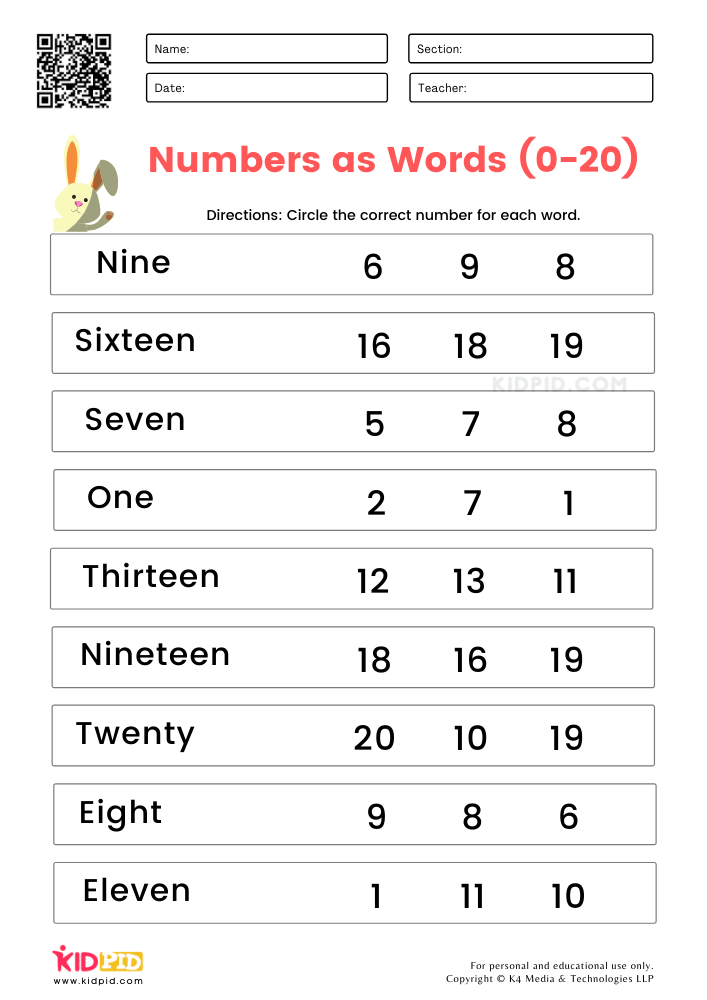
Engaging worksheets designed to help first graders learn number naming. Activities include colorful visuals, tracing, and fun exercises to reinforce number recognition and enhance counting skills.
Free Printable Opposite Numbers Math Activity Worksheet for Kids
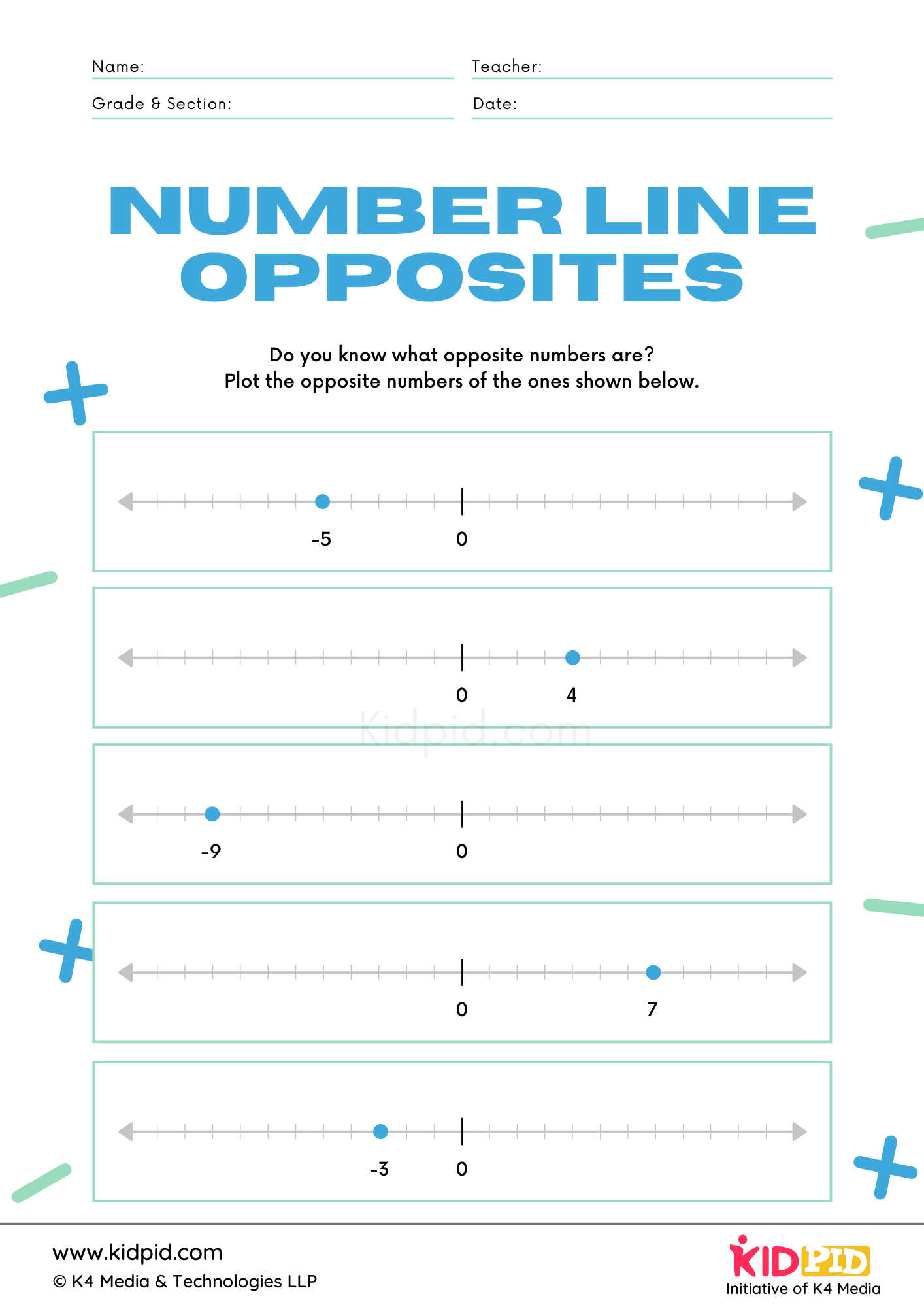
This free worksheet introduces children to opposite numbers through engaging activities. Kids will enjoy identifying and matching pairs, enhancing their understanding of mathematical relationships in a fun way.
Grade 1 Data Interpretation Printable Worksheets for Kids
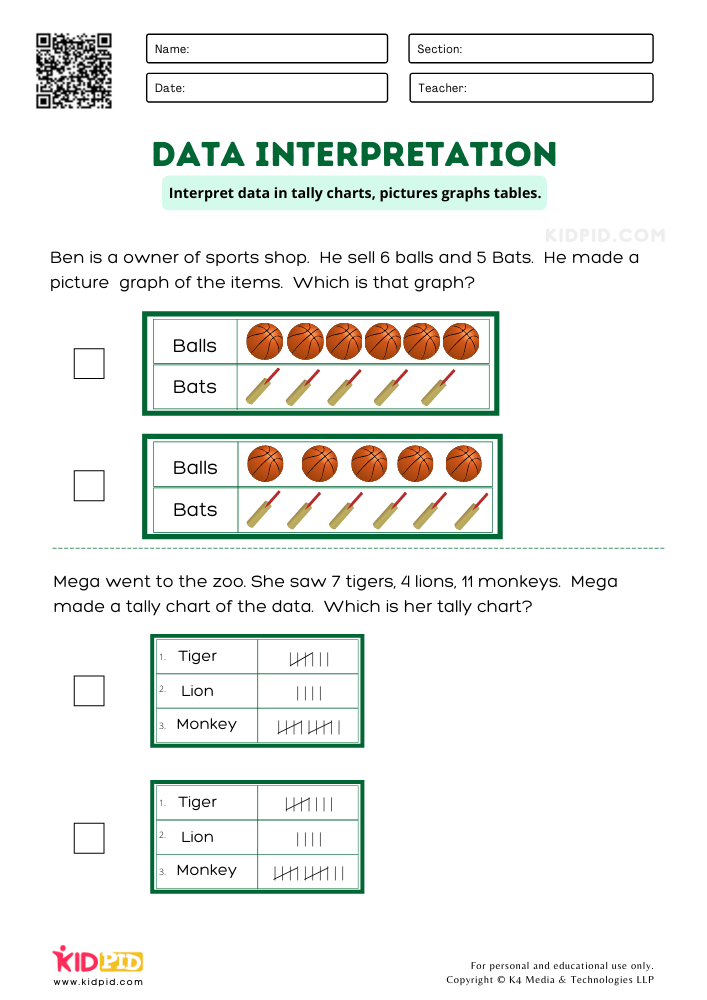
These printable worksheets help first graders interpret simple data. Activities include reading graphs and charts, answering questions, and developing analytical skills, all while making learning enjoyable and interactive.
Grade 1 Tally Charts Free Printable Worksheets for Kids
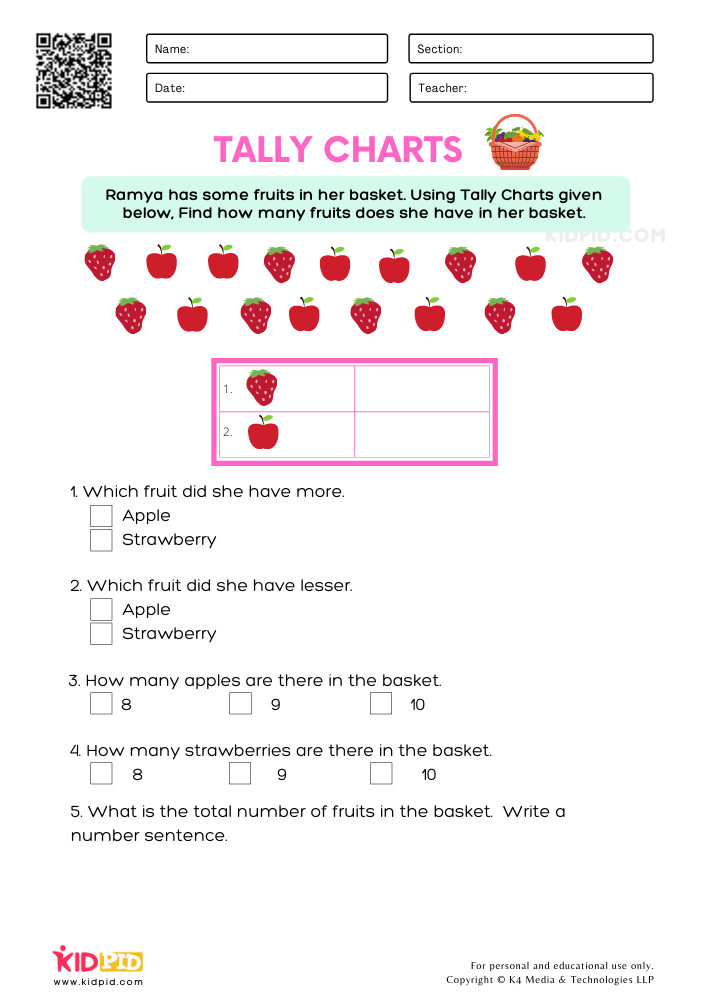
Printable tally chart worksheets designed for first graders. Kids will practice counting and recording data using tally marks, enhancing their math skills through engaging and hands-on activities.
Free Printable Tally Chart Worksheets for Grade 1 Kids
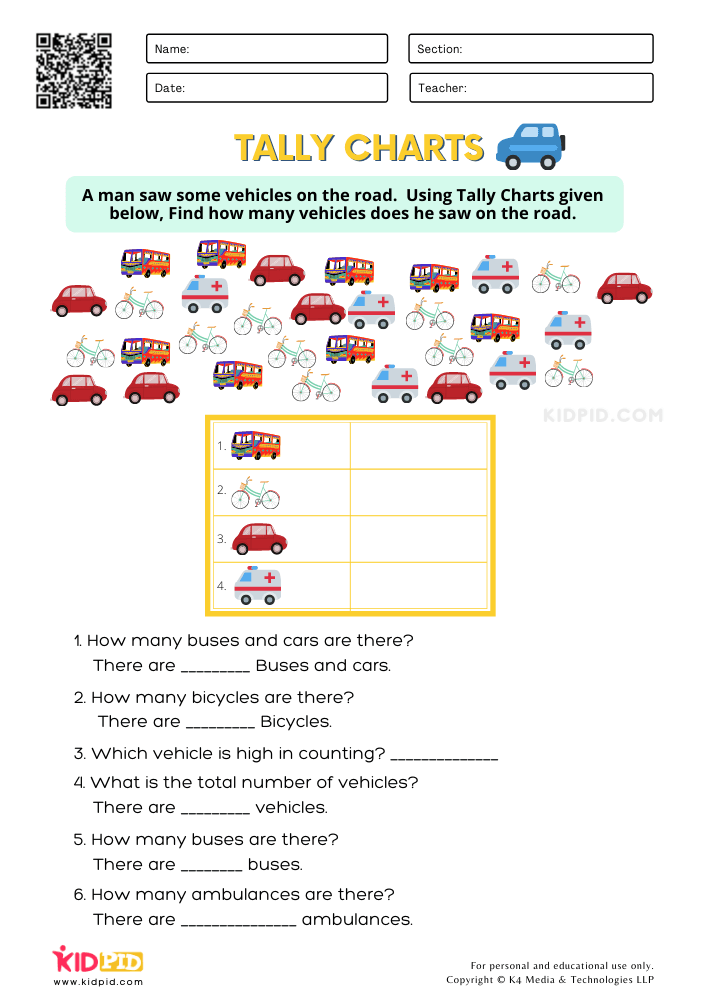
These free worksheets focus on teaching first graders how to create and read tally charts. Fun exercises encourage counting and data collection, interactively reinforcing foundational math skills.



