Young children are very curious at this age and instinctively know the different parts of their bodies. But do they know the correct word for it? Learning the parts of the body is a crucial step in a child’s learning journey, and what better way to teach them than using fun and colourful worksheets?
The various parts of the body, such as fingers, arms, and legs, are depicted in each worksheet along with a tracing exercise. Tracing is a great way to teach young learners the correct way to write letters and words, which ultimately helps them become quick learners. The task here is to trace each letter and associate that word with the correct body part. You can ask children to point out each body part as they learn the word for it- this will help them visualize the words that they’re learning.
Contents
- Body Parts Tracing Worksheets for Kids
- Key Facts About Body Parts Tracing Worksheets
- Parts, Types, and Examples of Worksheets Included
- How Do Body Parts Tracing Worksheets Work?
- Benefits of Learning About Body Parts
- Learning Objectives
- Worksheet Instructions for Parents & Teachers
- Interesting Facts About the Human Body for Kids
- Vocabulary Words
- Real-Life Applications
- FAQs:
- Read More:
Body Parts Tracing Worksheets for Kids

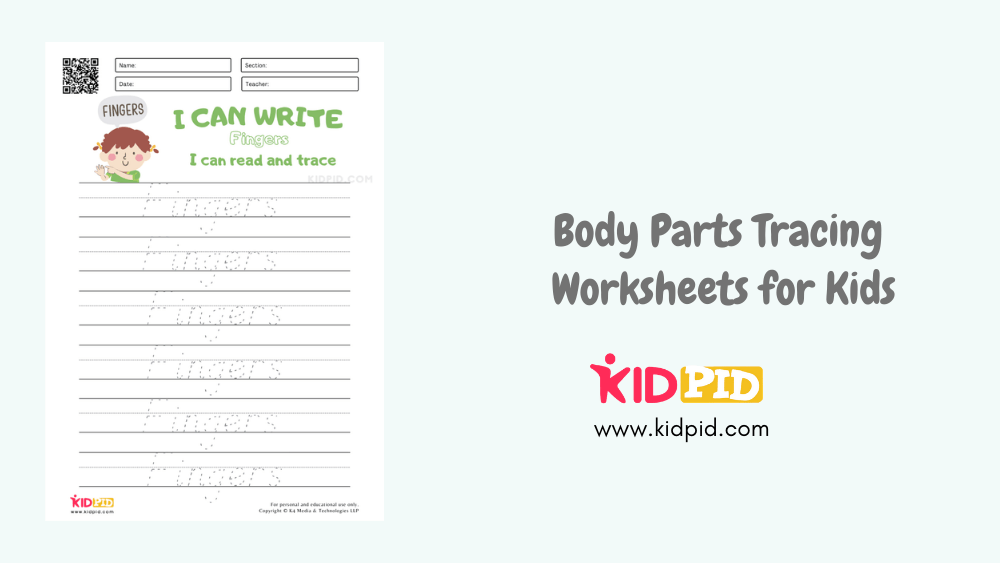
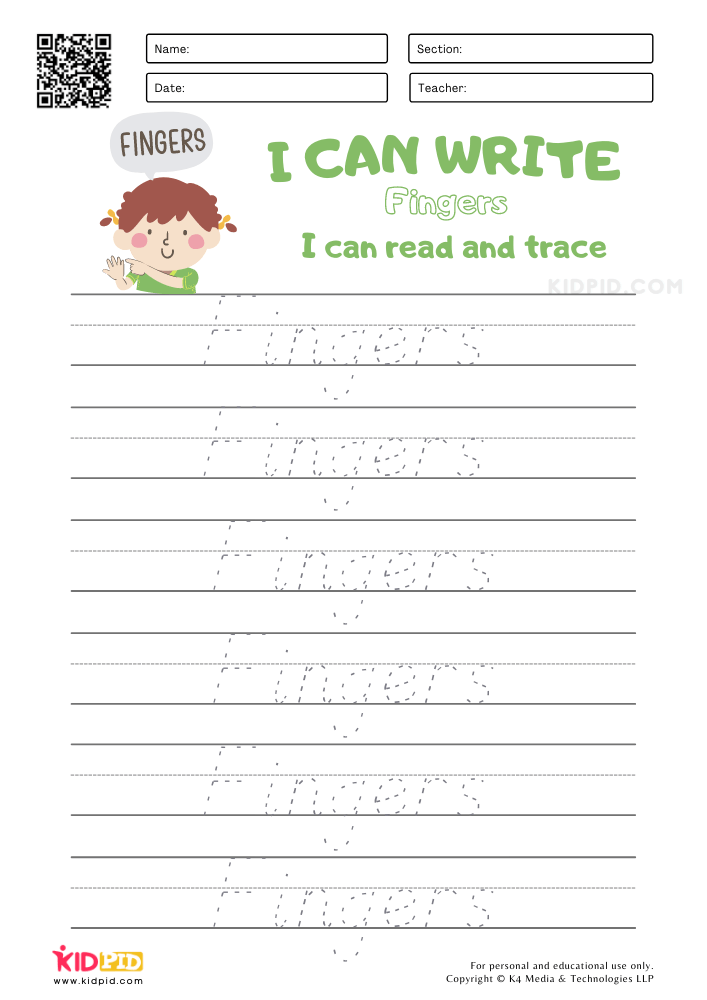
This first worksheet depicts the word fingers. The writing pattern in these worksheets is similar to the cursive writing pattern. The cursive pattern can be initially challenging, so make sure that your child carefully concentrates on the task at hand.
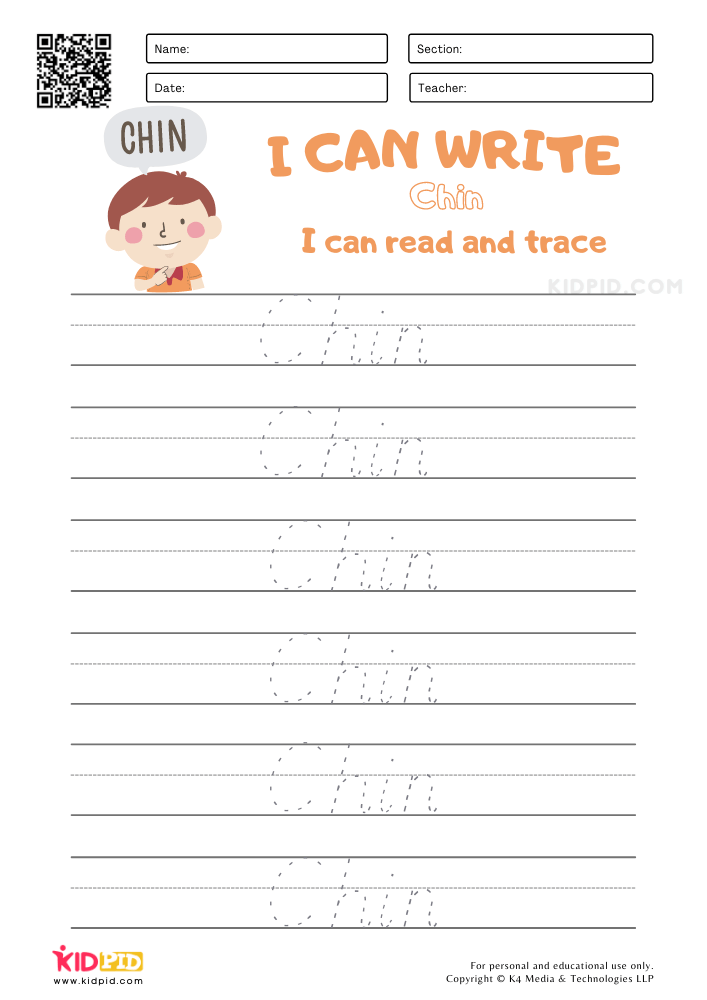
The second worksheet depicts the word chin.
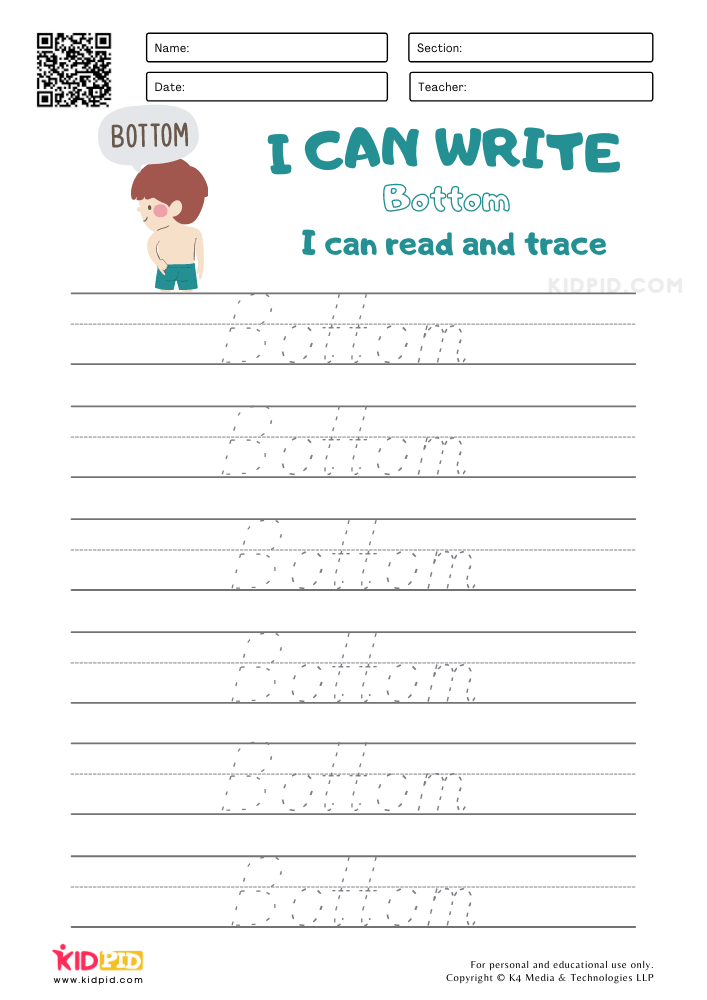
This worksheet depicts the word bottom.
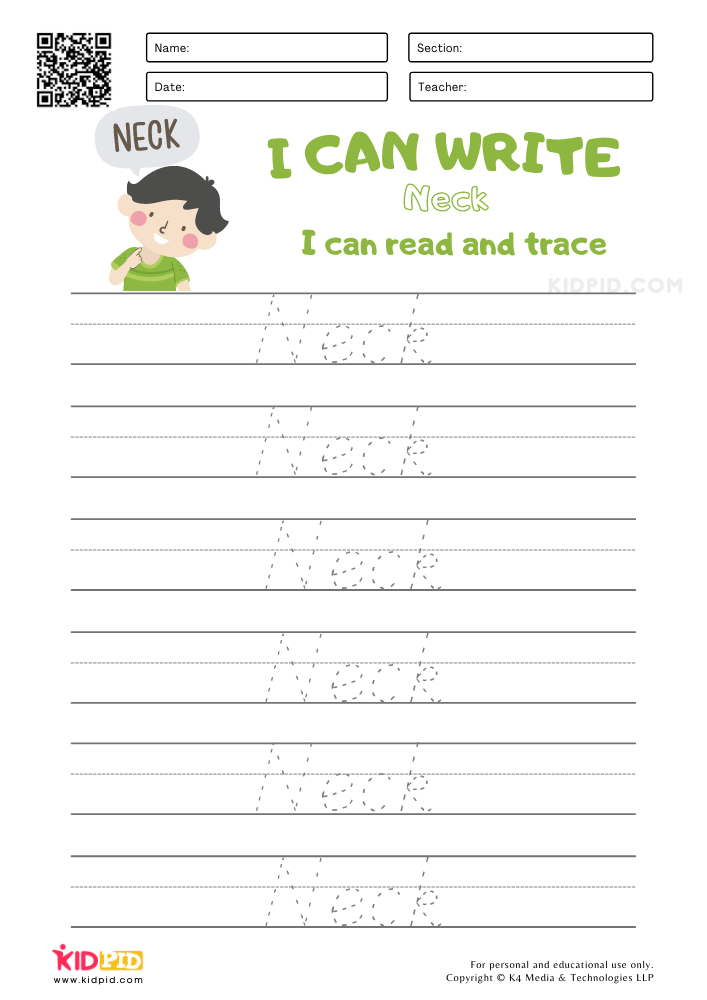
This worksheet depicts the word neck.
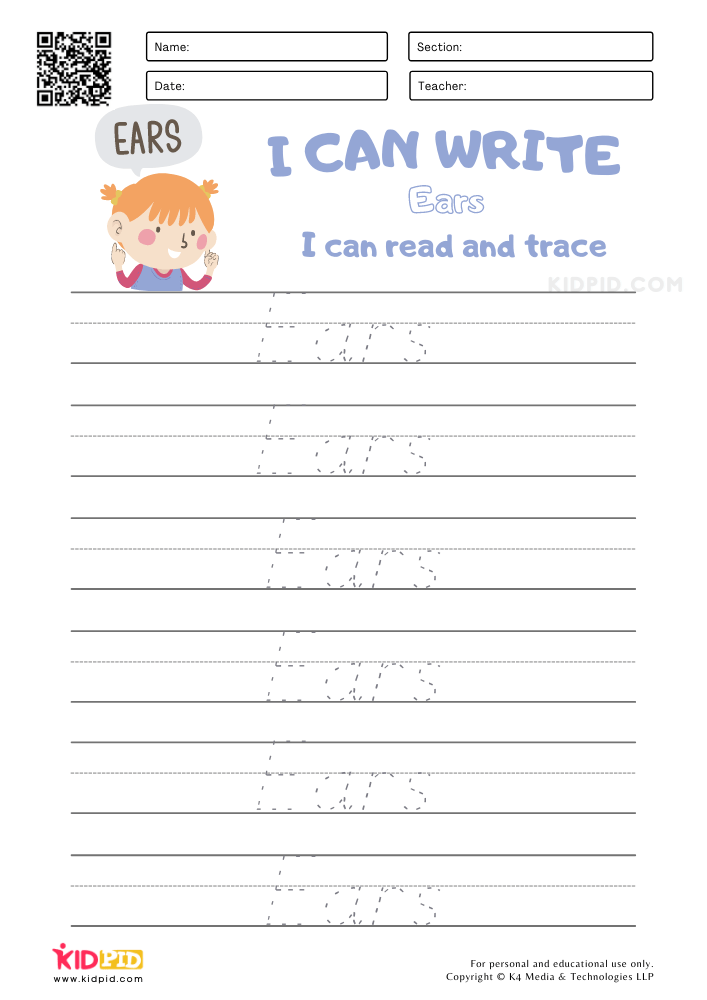
This worksheet depicts the word ears. Play a fun activity with your child to help them learn better – name a body part out loud and ask them to point it out on themselves! This will keep them motivated throughout the process.
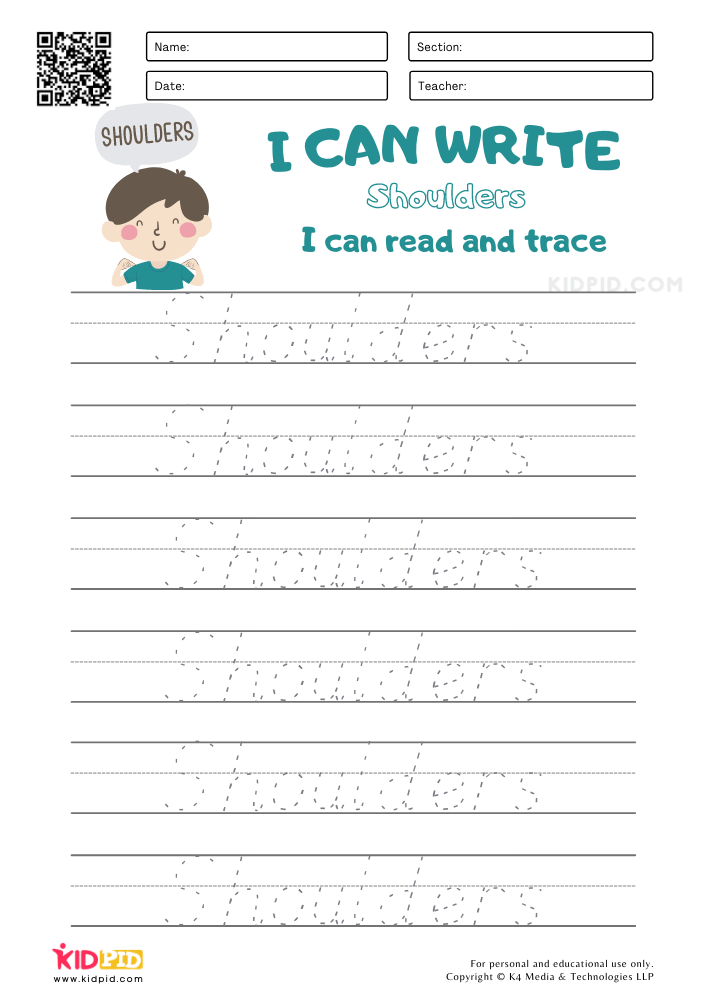
This worksheet depicts the word shoulders.
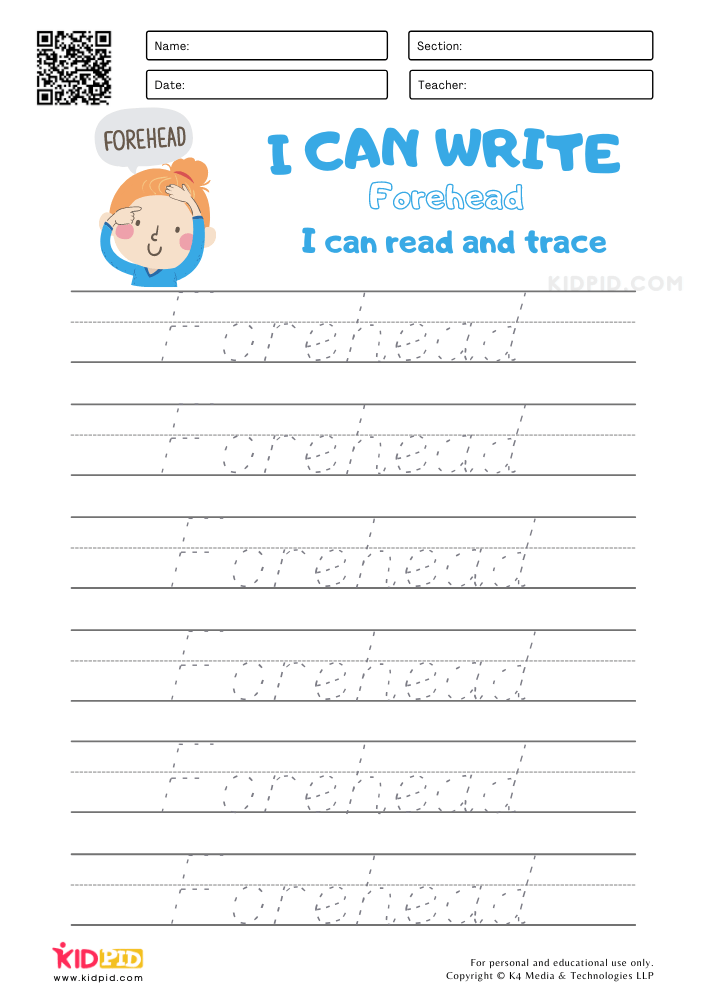
This worksheet depicts the word forehead.
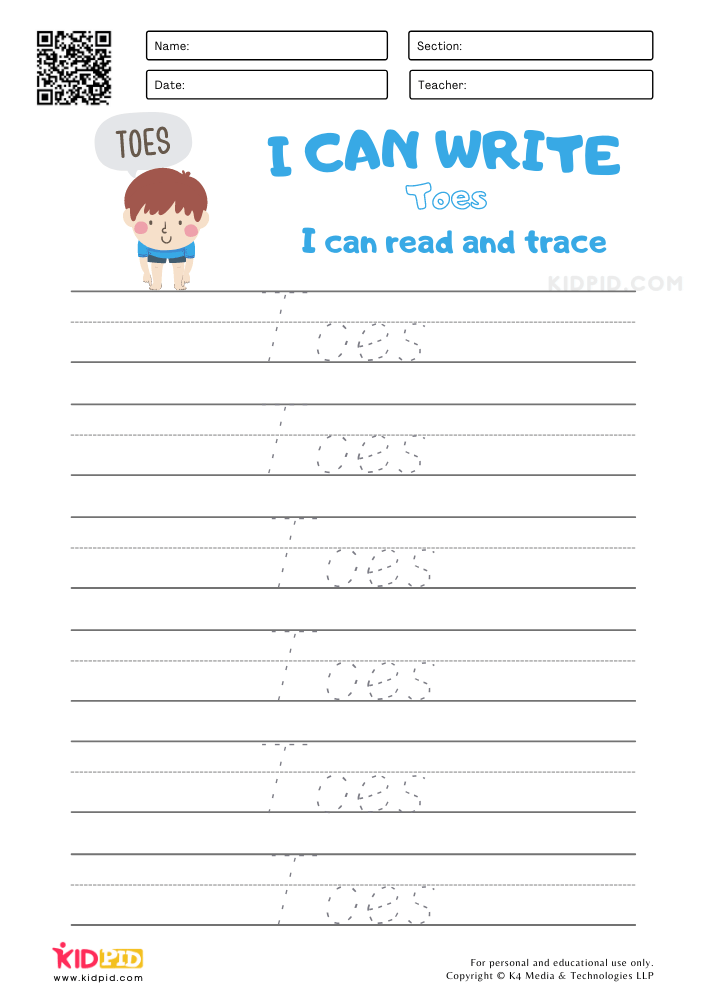
This worksheet depicts the word toes.
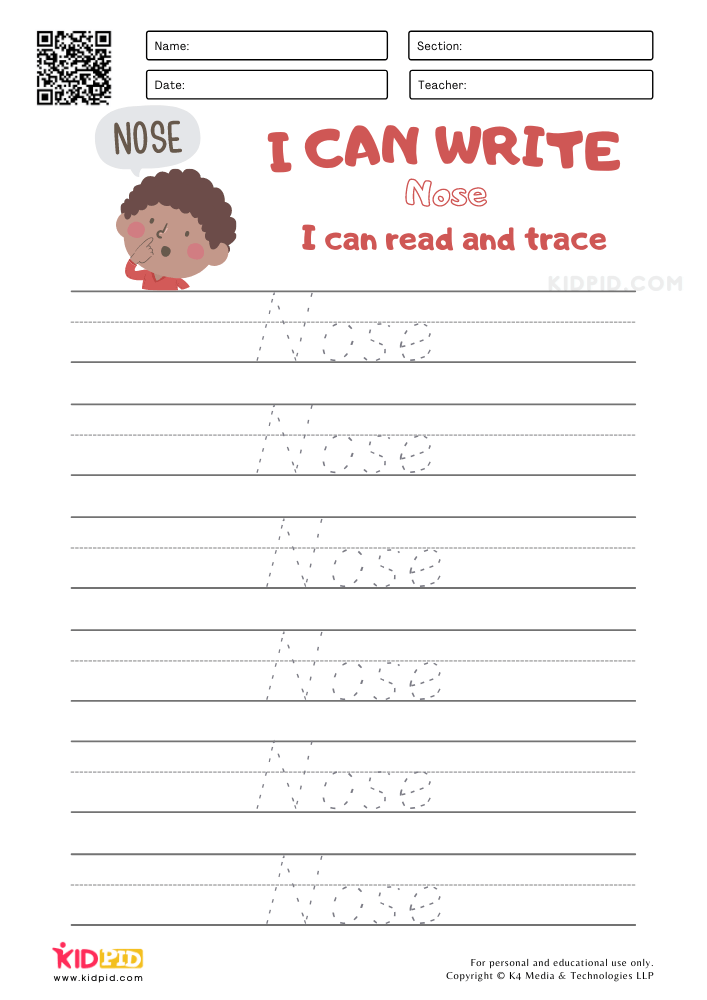
This worksheet depicts the word nose.
This worksheet depicts the word tongue.
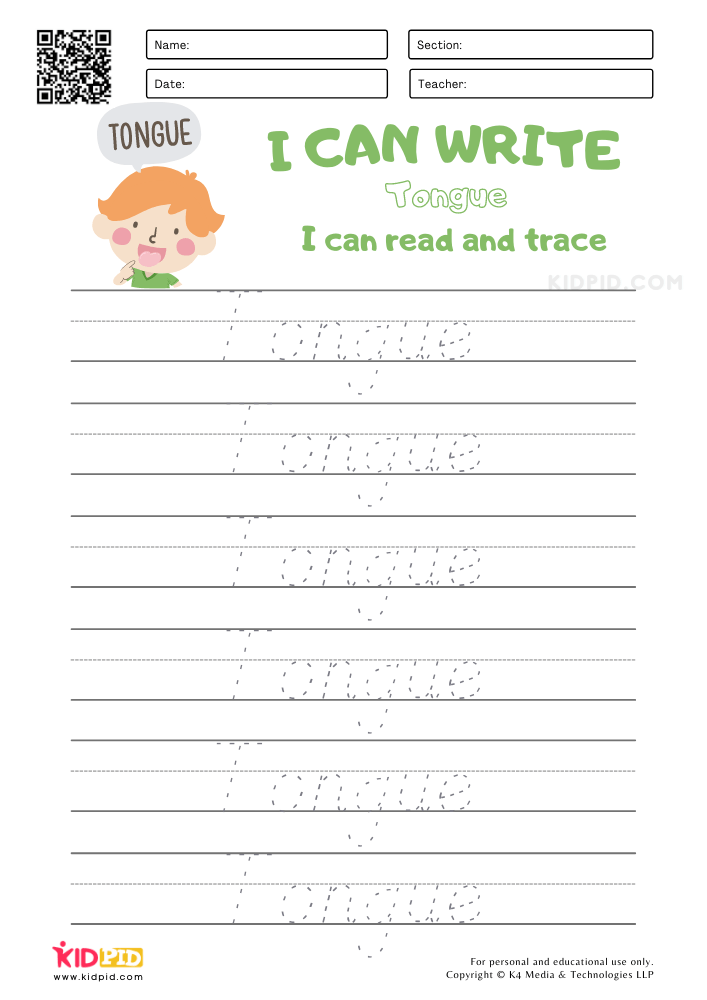
This worksheet depicts the word arm.
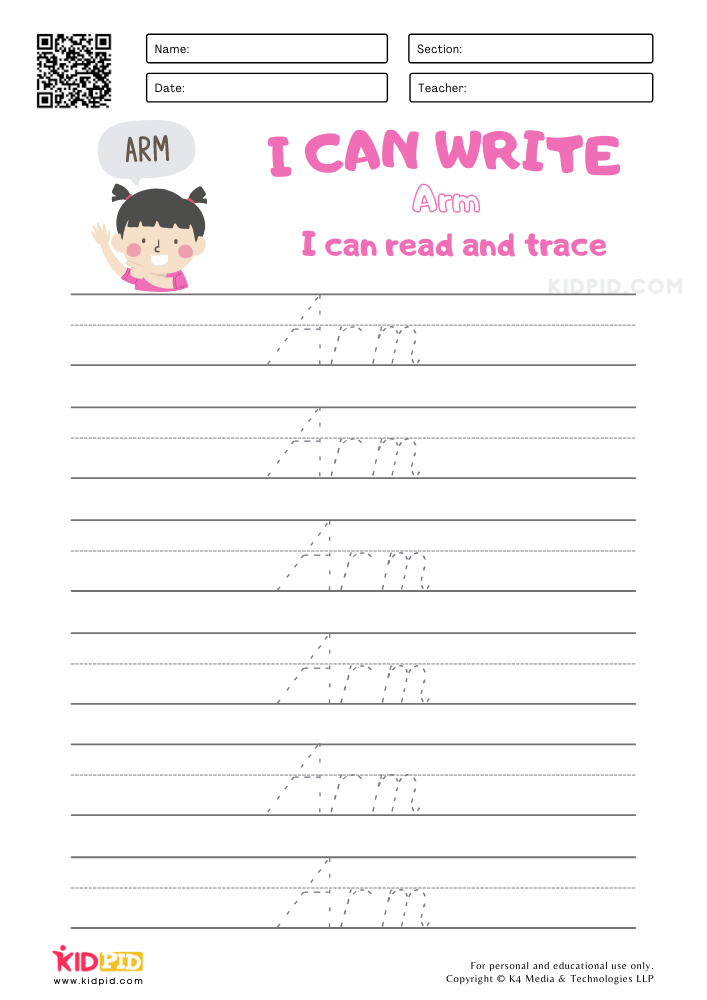
This worksheet depicts the word legs.
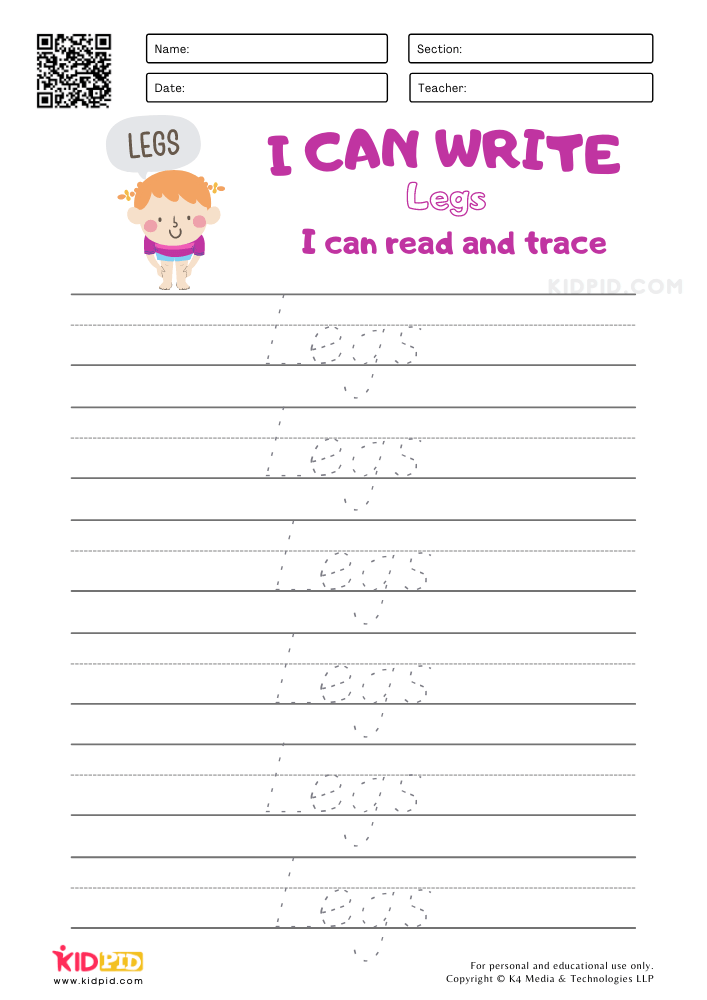
This worksheet depicts the word hair.
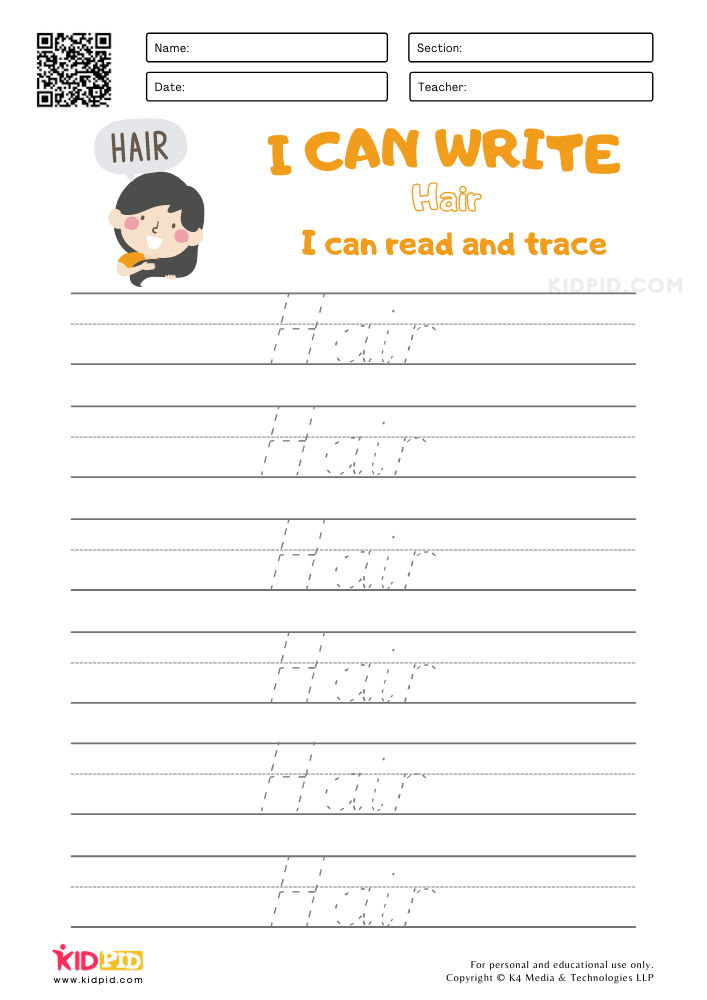
This worksheet depicts the word hair.
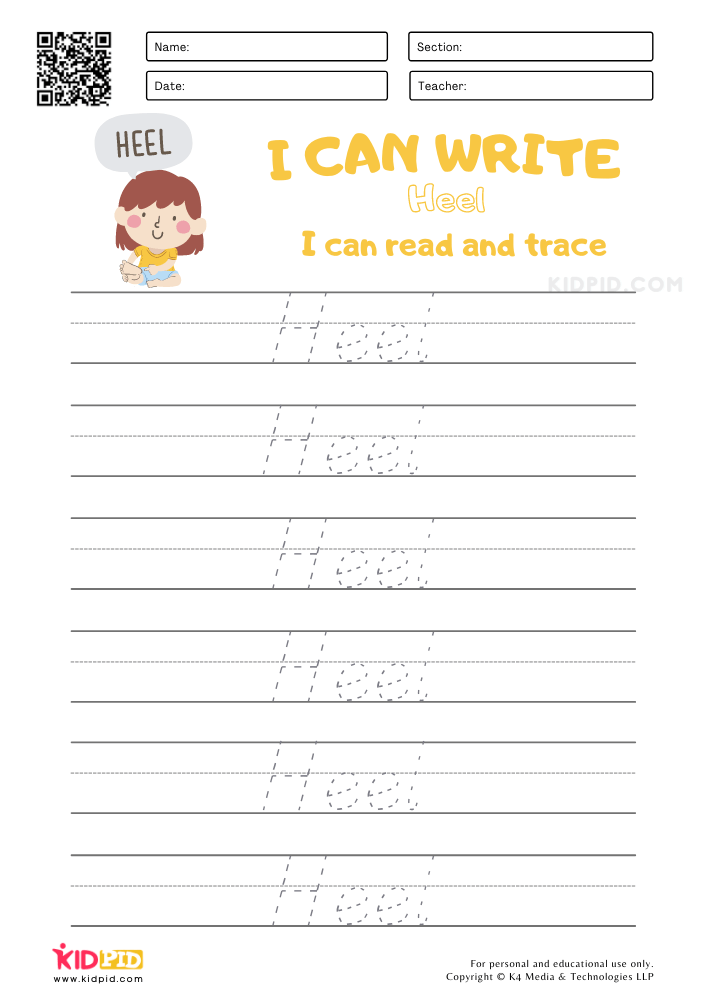
This worksheet depicts the word heel.
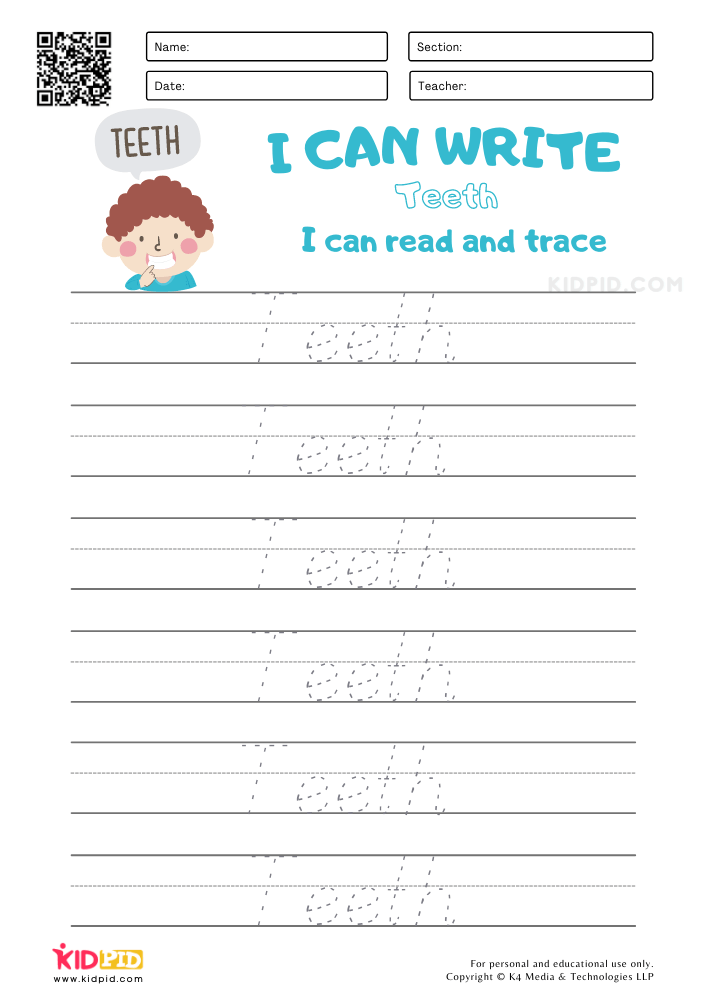
This worksheet depicts the word teeth.
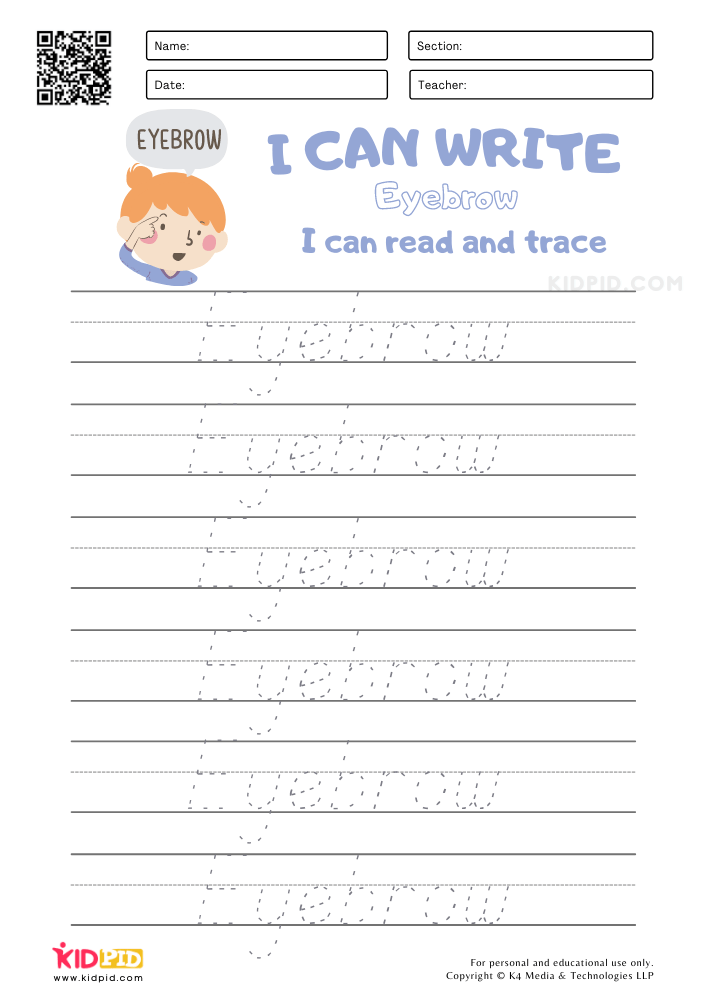
This worksheet depicts the word eyebrow.
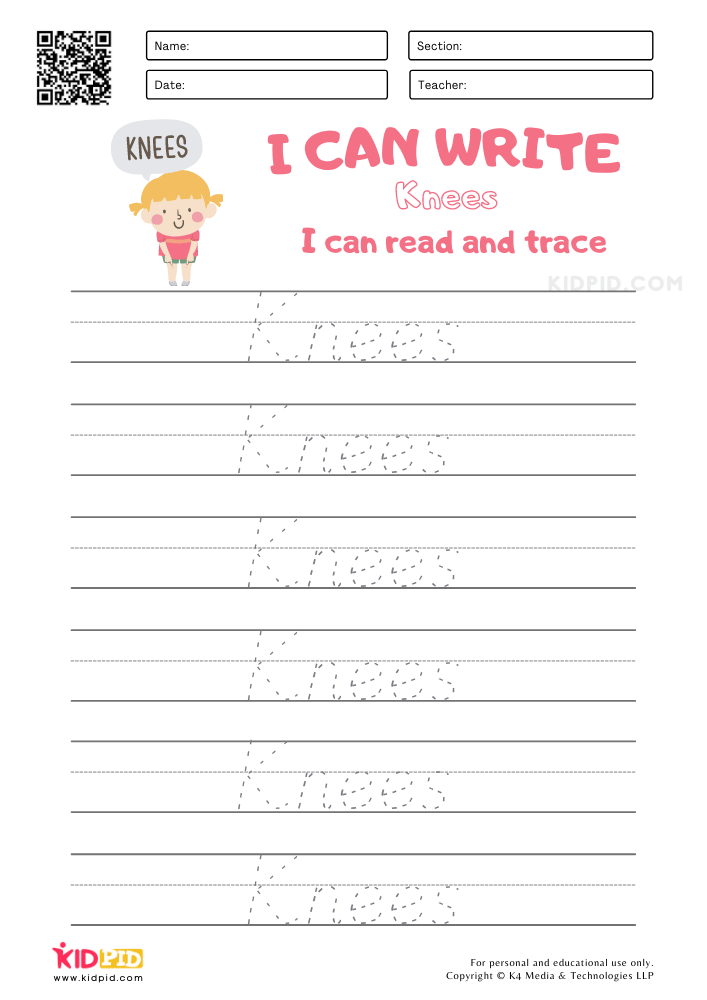
This worksheet depicts the word knees.
A combination of tracing worksheets and games will allow kids to not only learn the body parts of the human body perfectly, but learning the words will help them express themselves better, both verbally and in writing.
Key Facts About Body Parts Tracing Worksheets
- Target Age Group: Ideally designed for early learners, including toddlers, preschoolers, and kindergarteners (ages 3 to 6).
- Format & Design: Free downloadable and printable PDF worksheets featuring vivid, colourful illustrations paired with large, clear tracing fonts.
- Font Style: Utilizes fluid, cursive-adjacent tracing patterns to encourage continuous hand movement, an essential stepping stone for advanced handwriting.
- Core Subject Focus: Combines basic human anatomy (general knowledge) with foundational literacy (letter formation, spelling, and word association).
Parts, Types, and Examples of Worksheets Included
This comprehensive printable pack splits the vast concept of the human body into digestible, individual focus sheets. The package includes:
- Facial Features: Detailed tracing sheets for the forehead, eyebrow, ears, nose, tongue, and teeth.
- Upper Body & Torso: Focused exercises introducing structural words like the neck and shoulders.
- Limbs & Extremities: Active body parts that kids interact with daily, including the arm, fingers, legs, knees, heel, and toes.
- General Anatomy: Everyday structural identifiers like hair and the bottom.
How Do Body Parts Tracing Worksheets Work?
These worksheets bridge the gap between visual recognition and physical writing through a multi-sensory approach:
-
- Visual Association: The child looks at a bright, clear illustration of a specific body part (e.g., a hand pointing to a knee).
- Tactile Tracing: Using a pencil or crayon, the child traces over the dotted guide letters. This movement builds muscle memory for proper stroke order and word composition.
- Phonic & Verbal Reinforcement: As they trace, educators or parents encourage the child to say the word aloud, connecting the written letters to the spoken name of the body part.
Benefits of Learning About Body Parts
- Refines Fine Motor Skills: Holding a writing utensil and following dotted patterns strengthens the small muscles in a child’s hands and fingers, directly improving pencil grip and control.
- Boosts Spatial & Self-Awareness: Learning anatomical names helps young children build a healthy self-image and accurately map out their own physical presence in the world.
- Enhances Autonomy & Communication: When a child knows the precise words for their body parts, they can communicate much more effectively with adults, especially when expressing comfort, discomfort, or pain.
- Develops Pre-Reading Skills: Tracing left-to-right establishes fundamental reading pathways, while learning to spell anatomy words expands their early sight-word vocabulary.
Learning Objectives
By completing these interactive tracing activities, young learners will be able to:
- Identify and name over 15 primary external parts of the human body.
- Demonstrate proper pencil grip and control while following guided letter paths.
- Connect spoken words to their written form through intentional word-object association.
- Practice focus and patience by completing individual, task-oriented writing pages.
Worksheet Instructions for Parents & Teachers
To get the absolute most out of this printable resource, follow these simple setup and teaching steps:
- Print cleanly: Download and print the worksheets on standard printer paper. For repeated use, slip the sheets into plastic sheet protectors and use dry-erase markers.
- Model first: Guide your child’s hand for the first few strokes to show them where to begin tracing each letter.
- Keep sessions short: Young attention spans vary. Focus on 2 to 3 body parts per day rather than trying to finish the entire packet at once.
- Incorporate tactile pauses: When your child completes a worksheet (such as the “ears” sheet), pause and ask them to gently touch their own ears or point to yours.
Interesting Facts About the Human Body for Kids
Keep your students or children engaged while they work by sharing these fun, kid-friendly trivia snippets:
- Your teeth are like rocks: Even though they are white and inside your mouth, teeth are the hardest part of your entire body—even stronger than your bones!
- Smart toes: Your big toes are incredibly important; they carry a massive amount of your body weight and help you keep your balance when running and jumping.
- Growing hair: The hair on your head grows around 6 inches every single year, and it keeps your head warm and protected.
- Sneezing speed: Your nose is super powerful—a single sneeze can blast air out of your nose at speeds up to 100 miles per hour!
Vocabulary Words
Introduce, spell, and reinforce these foundational anatomical terms found throughout the worksheet pack:
- Anatomy: The structural parts that make up a living body.
- Forehead: The smooth area of your face right above your eyebrows and below your hairline.
- Emulsion (Visual Concept): How individual letters blend smoothly together to form a clear, readable word.
- Texture: How something feels (like smooth teeth or soft hair).
- Verbalize: Using spoken words to express an idea, thought, or feeling.
Real-Life Applications
Learning about body parts isn’t just an academic exercise; it carries massive real-world utility for a growing child:
- Health and Safety: If a child falls at the playground, knowing the difference between their heel, knee, and shin allows them to accurately tell a parent or school nurse exactly where it hurts.
- Daily Dressing Routines: Morning routines become much smoother when a child understands instructions like “pull the sleeves over your arms” or “wiggle your toes into your shoes.”
- Physical Education & Games: Participating in classic childhood games like Simon Says or Head, Shoulders, Knees, and Toes requires instant physical recognition of these vocabulary words.
FAQs:
Q1. What age group is best suited for these body parts tracing worksheets?
Answer: These worksheets are perfectly tailored for children ages 3 to 6 years old (Preschool, Pre-K, and Kindergarten). However, older toddlers with advancing fine motor skills or Grade 1 students practicing cursive writing transitions can also benefit immensely.
Q2. Why does the font look slightly different from standard block letters?
Answer: The font choice mimics a fluid, continuous script similar to cursive handwriting patterns. This helps children practice smooth, connected hand movements, which reduces hand fatigue and builds a foundation for advanced writing down the line.
Q3. How can I make these worksheets reusable?
Answer: Instead of printing new sheets every time, place the printed pages into reusable dry-erase pockets or laminate them. Your child can use dry-erase markers to trace the words, wipe them clean with a cloth, and practice as many times as they like.
Q4. Should my child learn the words or the spelling first?
Answer: Focus on recognition first! Have your child identify the body part in the picture, point to it on themselves, and say the name out loud. Once they are familiar with the spoken word, transition to tracing the letters to reinforce spelling and literacy.
Tracing body parts helps children connect early writing practice with basic science learning. These worksheets improve pencil control, fine motor development, vocabulary, and body awareness through enjoyable activities. Visit our website for educational flashcards, worksheets, quizzes, essays, paragraphs, and engaging classroom resources. Follow us on YouTube & Facebook.
The Content Team created this worksheet to enhance academic improvement.
Reviewed By Muskan Bhardwaj
Read More: