

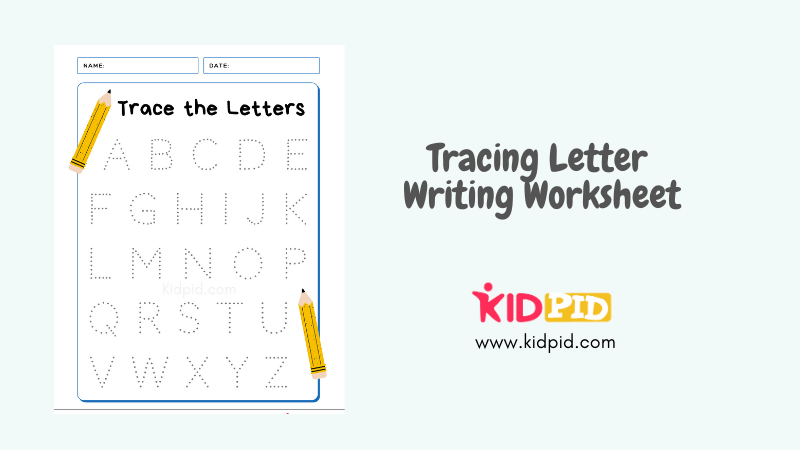
Tracing letters helps kids learn the alphabet and build penmanship skills. We provide a tracing worksheet for all 26 uppercase letters.
[Scroll Down for Download Link]
Contents
- Tracing Letter Writing Worksheet
- Key Facts About Letter Tracing Foundational Worksheets
- Types and Examples of Handwriting Practices
- How Does a Letter Tracing Worksheet Work?
- Benefits of Learning Through Tracing Worksheets
- Learning Objectives
- Worksheet Instructions
- Interesting Facts About Handwriting and Literacy
- Early Literacy Vocabulary Words
- Real-Life Applications
- FAQs
Tracing Letter Writing Worksheet
Click here for more printable worksheets.
Name That Polygon Free Printable Worksheet
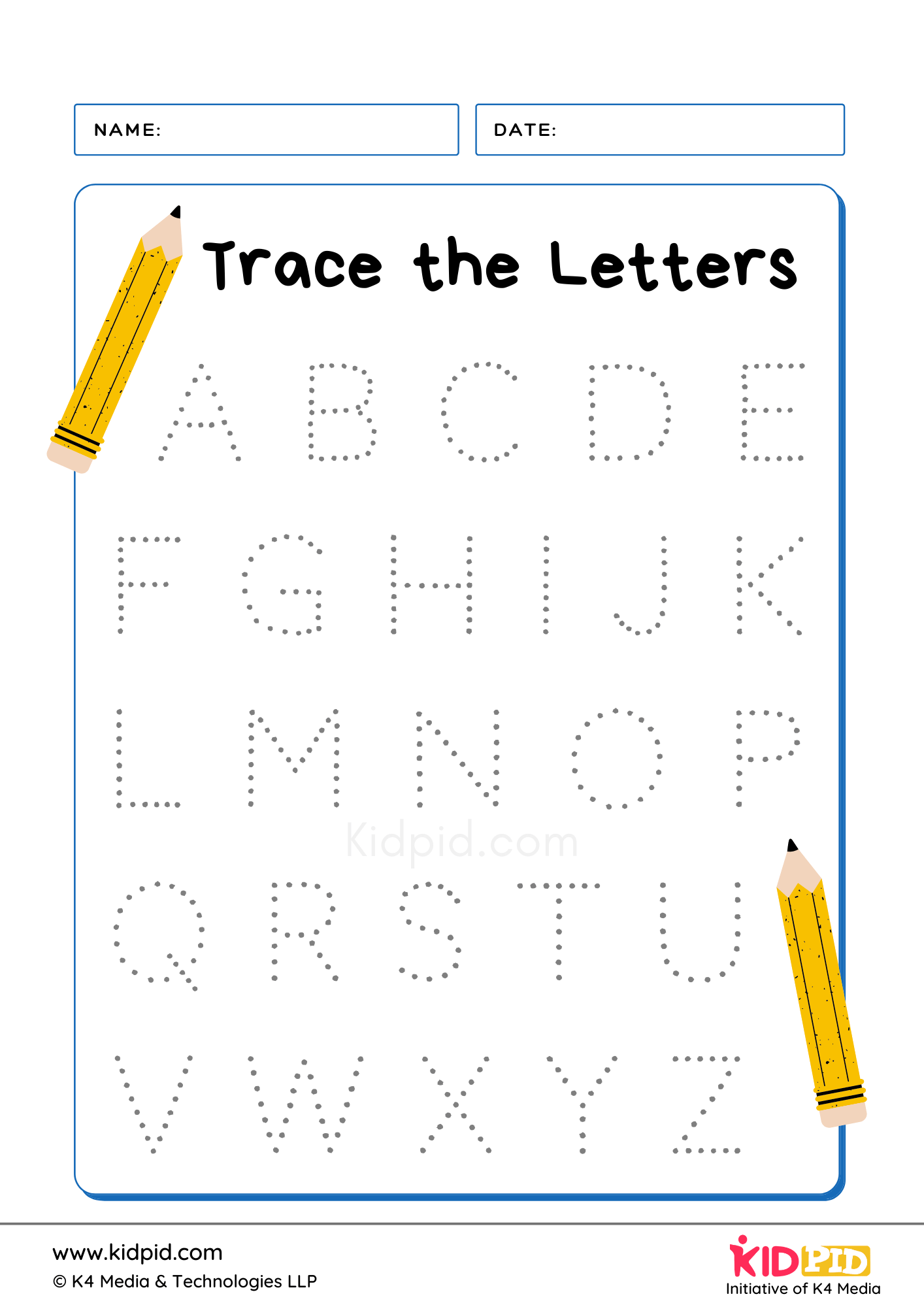
Letter tracing worksheets are essential transitional tools used in early childhood education. They act as a bridge between recognizing a letter and physically reproducing it independently.
Early writing development relies on progressive styles of practice. Using a mix of these keeps young learners engaged:
Letter tracing functions through muscle memory and neurological pathways.
Introducing structural tracing worksheets yields measurable cognitive and physical milestones:
By utilizing this foundational package, young learners will achieve the following milestones aligned with early childhood educational standards:
To get the most out of this printable pack, follow these simple pedagogical steps with your child or class:
Introduce these key terms in line during your teaching sessions to build context:
Learning to write isn’t just an academic checklist; it is an entry point into daily independence. Children apply these newly traced shapes when:
Q1. At what age should a child start using tracing worksheets?
Answer: Most children are ready to explore basic line and shape tracing around age 3. Structured letter tracing worksheets are ideal for children aged 4 to 6 who show interest in writing and can hold a crayon stably.
Q2. Should I teach uppercase or lowercase letters first?
Answer: It is highly recommended to start with uppercase (capital) letters. Uppercase letters rely mostly on simple vertical, horizontal, and diagonal straight lines, making them much easier for developing hand muscles to control than the complex curves of lowercase letters.
Q3. What writing tool is best for beginners?
Answer: Start with short, thick crayons or triangular pencils. These are specifically scaled for small hands and naturally encourage a proper tripod grip, preventing children from fist-grasping the tool.
Q4. My child keeps writing letters backwards. Is this normal?
Answer: Yes, letter reversal (like mixing up B and D, or writing a letter in mirror image) is incredibly common and normal up until around age 7 or 8. Consistent tracing practice helps correct this naturally over time by reinforcing correct directional muscle memory.
Key Facts About Letter Tracing Foundational Worksheets
Types and Examples of Handwriting Practices
How Does a Letter Tracing Worksheet Work?
Benefits of Learning Through Tracing Worksheets
Learning Objectives
Worksheet Instructions
Interesting Facts About Handwriting and Literacy
Early Literacy Vocabulary Words
Real-Life Applications
FAQs

Letter tracing lays the foundation for neat handwriting and confident literacy development. This worksheet strengthens pencil control, letter formation, fine motor coordination, and early writing skills through consistent practice. Hope you liked these letter tracing printables. Kidpid is super fun for all ages: for boys and girls, kids and parents, teachers, teenagers, toddlers, preschoolers, and older kids at school. Discover more free worksheets, essays, paragraphs, flashcards, quizzes, and interactive resources on our website for children of all ages. Follow us on YouTube & Facebook.
More Printables



