

A great way to teach kids how to pronounce words is through phonics. But what is phonics? Well, simply put, phonics is the process of teaching children to read by identifying the individual sounds in a word one by one and blending them together to pronounce the word as a single unit or whole.
Now, as kids begin learning words and their distinct pronunciations, it may become difficult for them to keep up at times. The best way to keep your child motivated during the learning process is to allow them to have fun and enjoy themselves. These worksheets are the best of both worlds – not only will they help your child hone their phonics skills, but the colourful pictures will keep them interested.
The task here is very simple – the child must speak the word given out loud and circle the picture that represents that word. So, let’s get started!
[Scroll Down for Download Link]
Contents
- Phonic Sounds Worksheets for Kids
- Key Facts About Phonics Sounds Worksheets for Kids
- Parts, Types, and Examples of Phonics Worksheets
- How Do Phonics Sounds Worksheets Work?
- Benefits of Learning About Phonics
- Learning Objectives
- Worksheet Instructions for Parents and Teachers
- Interesting Facts About Phonics
- Vocabulary Words
- Real-Life Applications
- FAQs
Phonic Sounds Worksheets for Kids
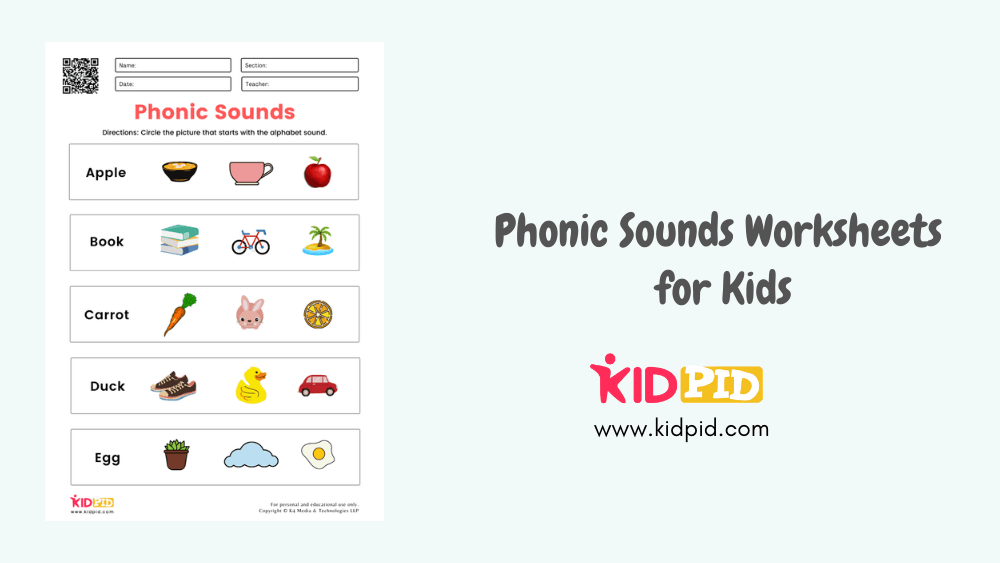
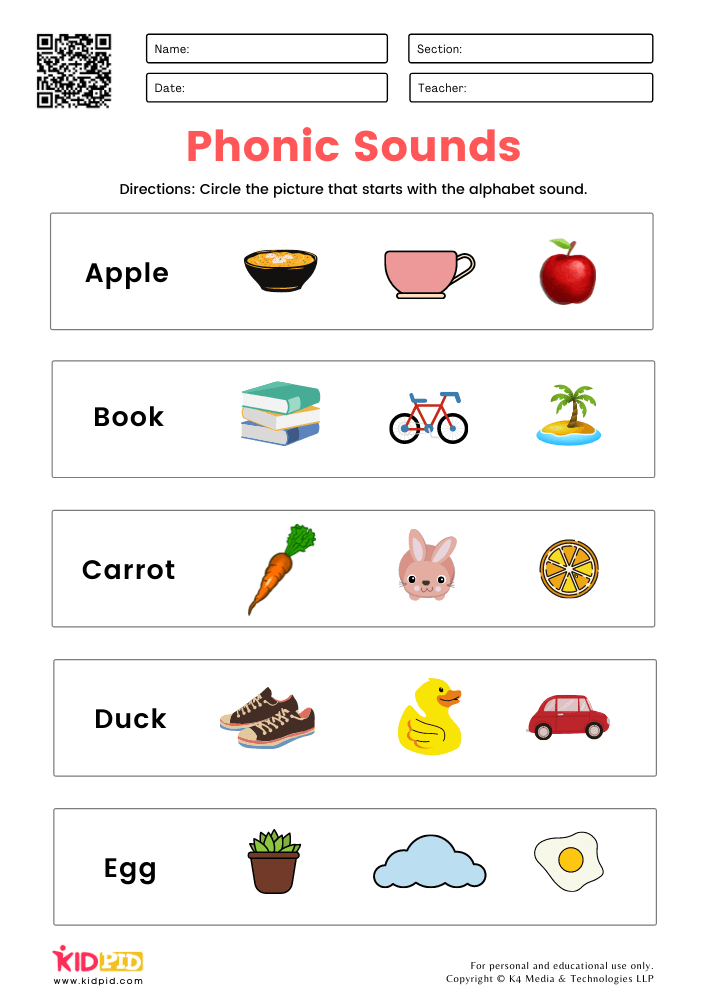
This is the first worksheet, and it represents five words starting with the first five letters of the alphabet.
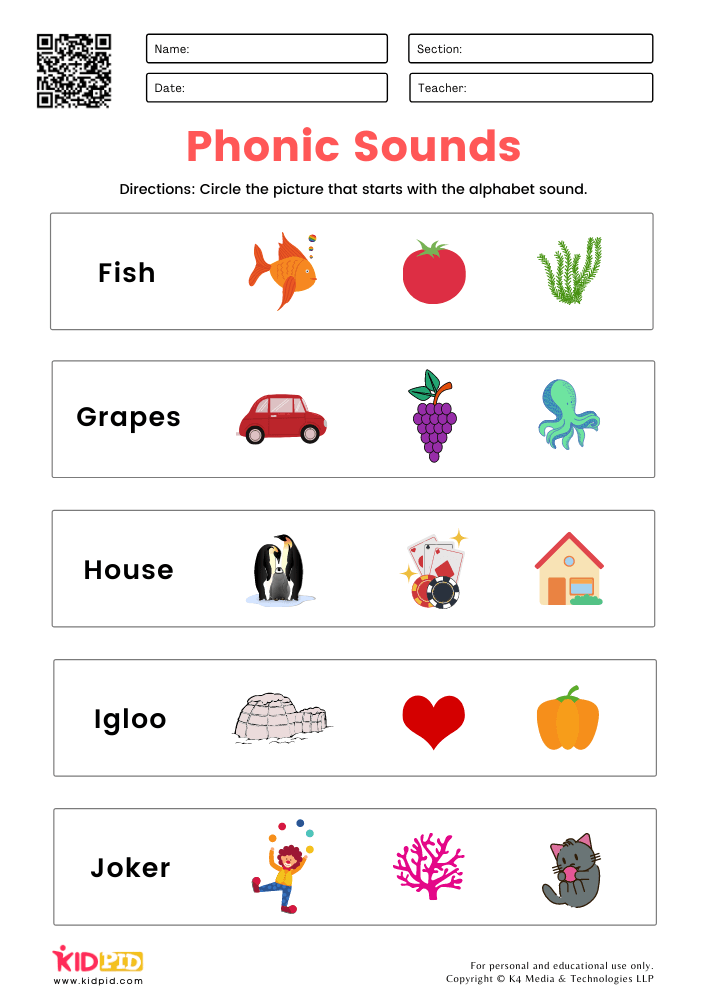
This is the second worksheet depicting fun and interesting pictures. The words are arranged in alphabetical order; you can ask questions to see if your child has noticed this or can even directly draw their attention to it. It is a great way for kids to brush up on their alphabet as well.
Make sure the child is sounding out each letter of the word slowly and carefully. This will help them understand the sound or pronunciation associated with every letter and, with time, make reading easier.
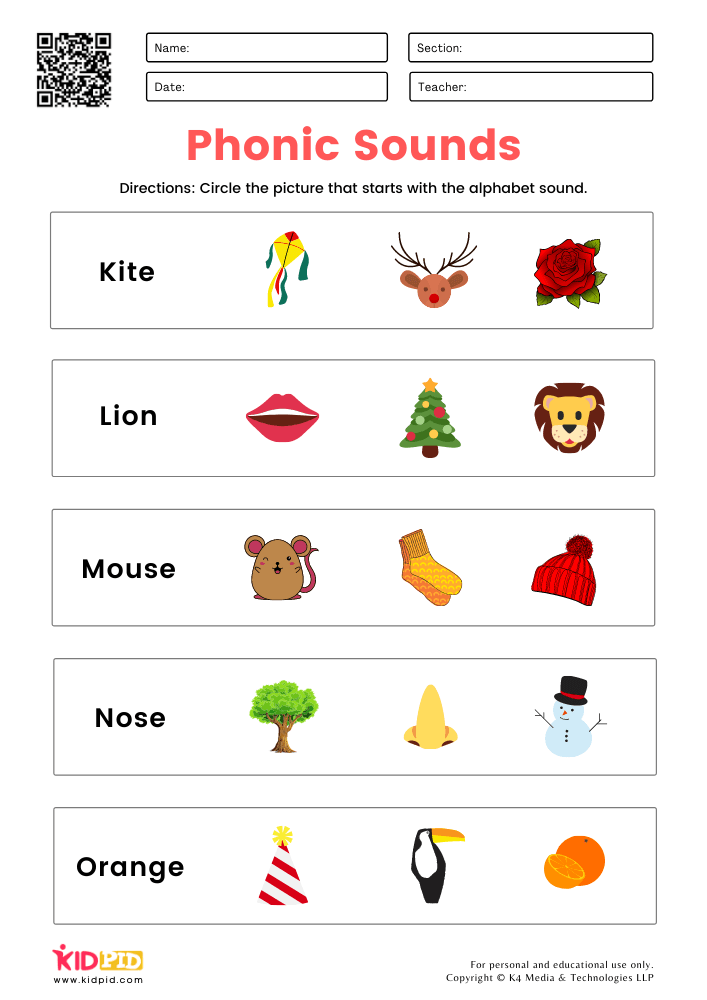
Sounding out each letter is important, but emphasize blending the sounds as well – while knowing the pronunciation of each letter is helpful during learning, the final goal is to sound out the entire word correctly.
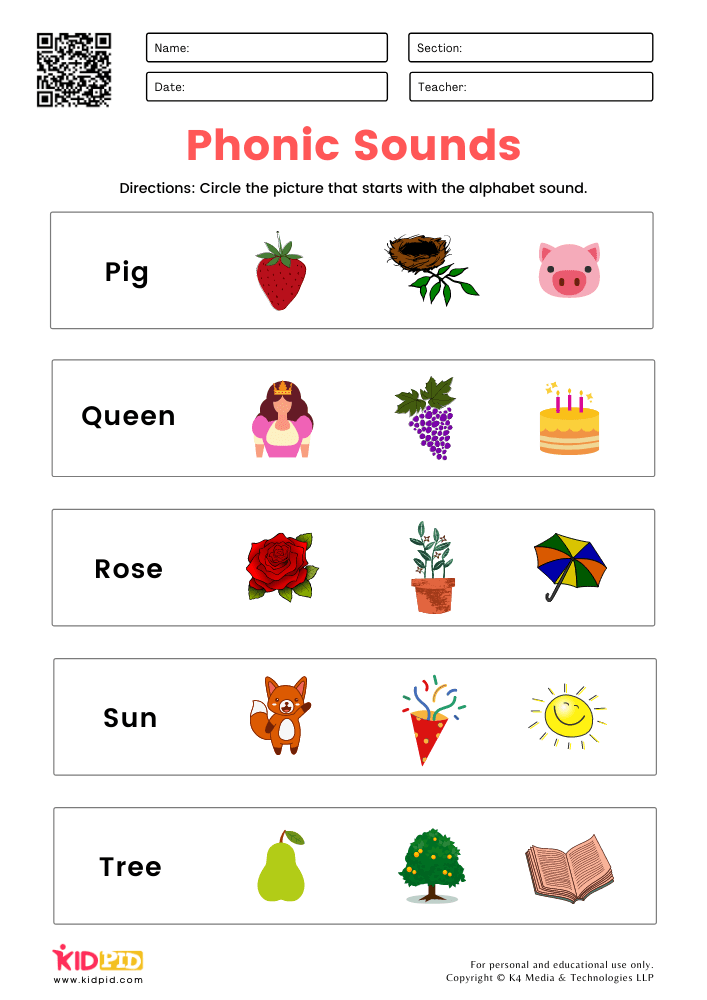
A great way to utilize the worksheet is to not only circle the picture corresponding to the given word, but also urge your child to try to guess the words depicted by the other pictures – it’s a great way for them to learn new words visually.
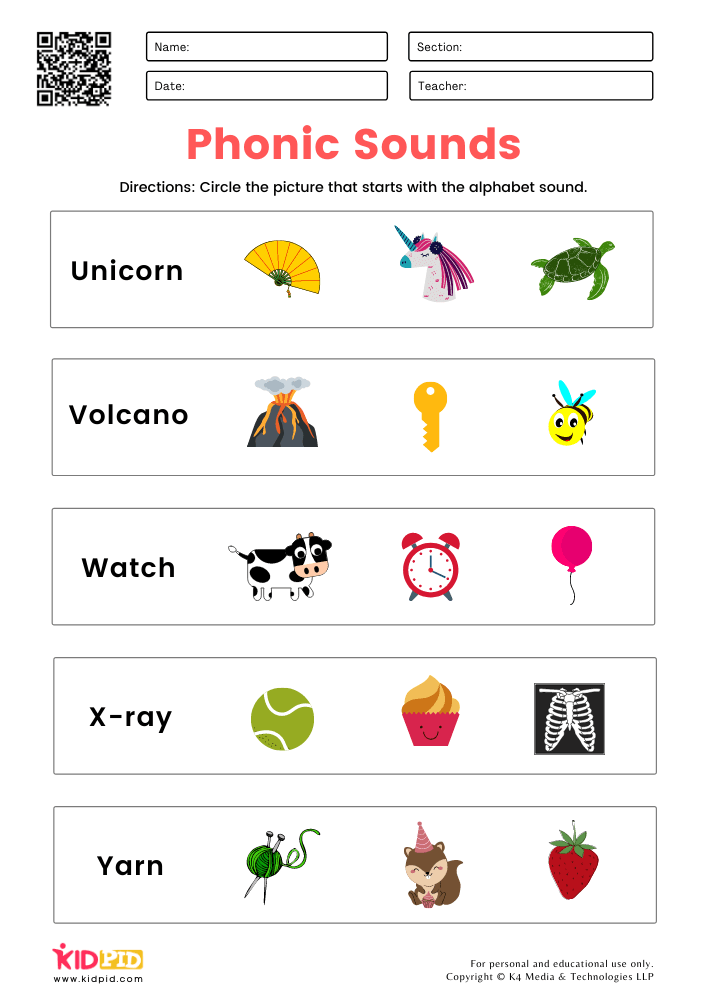
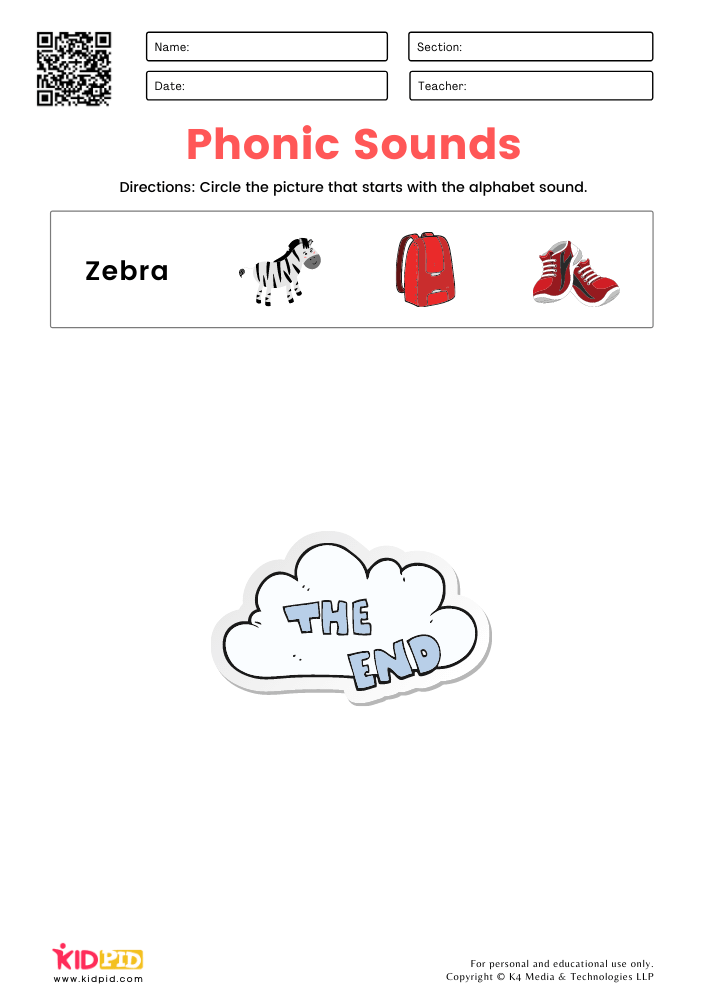
Pronouncing words with letters such as ‘z’, ‘w’, and ‘q’ can be a little difficult at this age, but through practice and examples, it will become much easier.
Phonics instruction is developmental. To build a strong foundation, worksheets typically break down into these specific categories:
Phonics worksheets work by turning an abstract concept—spoken language—into a visual, concrete puzzle. The cognitive process follows three distinct steps:
By completing these phonics worksheets, learners will achieve the following milestones:
To get the most out of these printables, guide your child using these steps:
Using these sheets introduces young learners to essential early-reading vocabulary across the alphabet, including:
Phonics isn’t just an academic exercise; it alters how children interact with their environment every day:
Answer: Phonemic awareness deals strictly with spoken sounds—it can be done completely with your eyes closed (e.g., hearing that “hat” starts with Answer: Absolutely. Letters that occur less frequently in everyday language take longer to master. Use targeted worksheet practice, repeat the sounds clearly, and associate them with fun visual examples (like a Quail, a Whale, or a Zebra) to build familiarity.
Answer: You can start introducing simple phonics worksheets around ages 3 or 4, provided the child already recognizes most of their alphabet letters. Keep sessions short, playful, and focused on the joy of discovery rather than perfection.
Answer: Young children are highly visual learners. Pairing a decoded word with a picture-matching activity provides instant positive reinforcement. When they circle the correct picture, it confirms to their brain that they successfully decoded the word.
Key Facts About Phonics Sounds Worksheets for Kids
Parts, Types, and Examples of Phonics Worksheets
/æ/ sound./k/ – /æ/ – /t/) to build blending skills.How Do Phonics Sounds Worksheets Work?
/b/, /ʌ/, and /s/.Benefits of Learning About Phonics
Learning Objectives
Worksheet Instructions for Parents and Teachers
Interesting Facts About Phonics
Vocabulary Words
/b/).Real-Life Applications
FAQs
Q1: What is the difference between Phonics and Phonemic Awareness?
/h/). Phonics introduces print; it is the relationship between those spoken sounds and the visual letters on a page.
Q2: My child struggles with tricky letters like ‘Q’, ‘W’, and ‘Z’. Is this normal?
Q3: At what age should I start using phonics worksheets with my child?
Q4: Why does this worksheet use pictures instead of just text?
Learning phonics is the first step towards achieving fluency in verbal communication and is crucial in a child’s learning journey. Activities that encourage them to speak and express themselves are highly beneficial in the long run. Improve learning skills with our paragraphs, flashcards, essays, Quizzes, worksheets, and educational activities for every age. Follow us on YouTube & Facebook.
The Content Team prepares this educational worksheet to strengthen academic improvement.
Read More:


Hello..
Thanks KIDPID for ur support to us