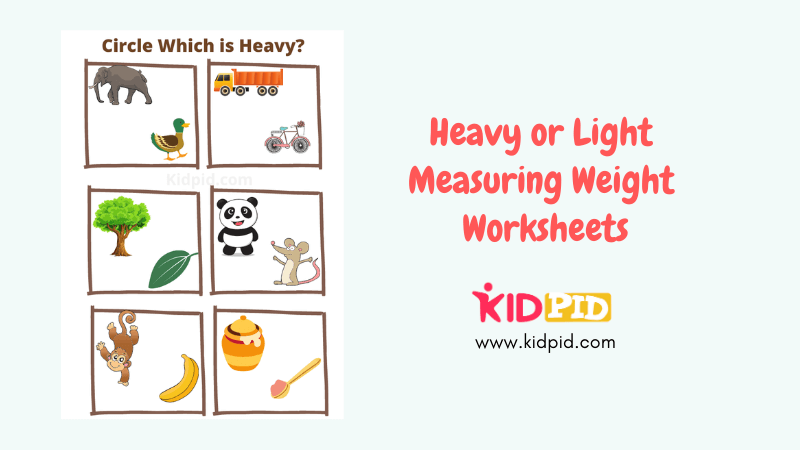
Free Heavy or Light measuring weight worksheets for kids to learn math concepts at an early stage of learning. It is perfect for toddlers and preschoolers. You can download these beautiful worksheets with colorful images to print & practice.
[Scroll Down for Download Link]
Heavy or Light Worksheets for Kids
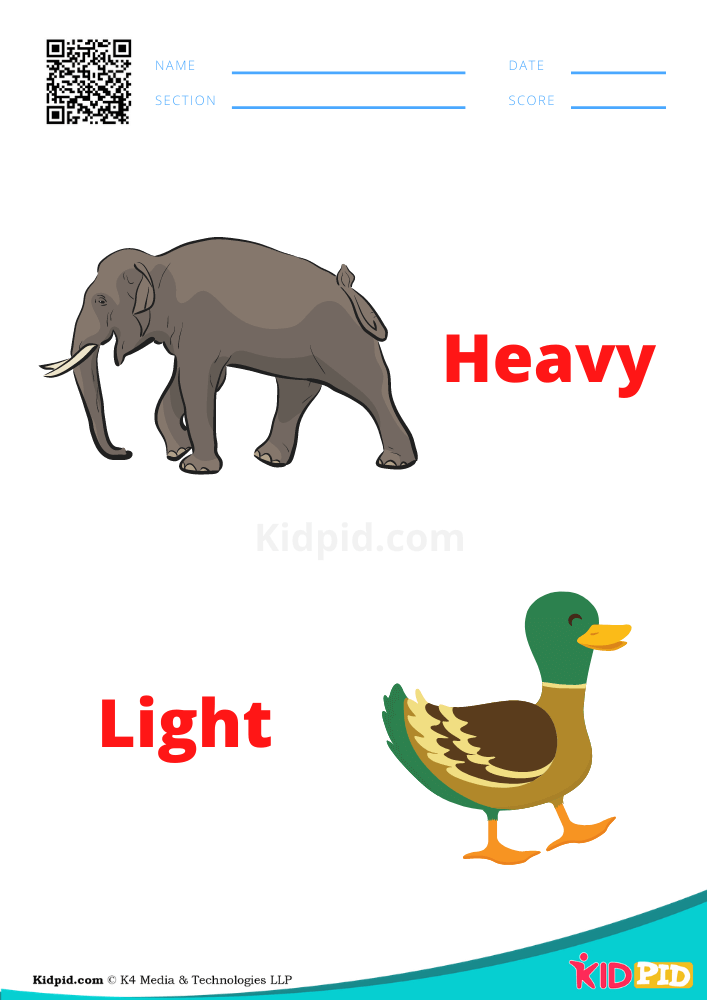
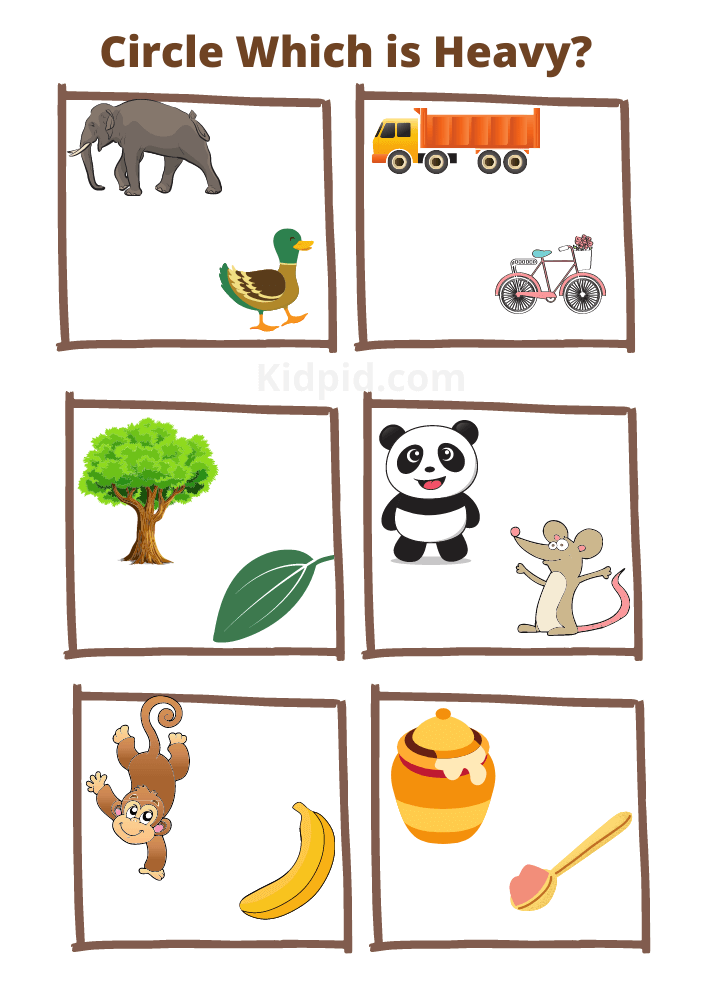
Elephant or Duck?

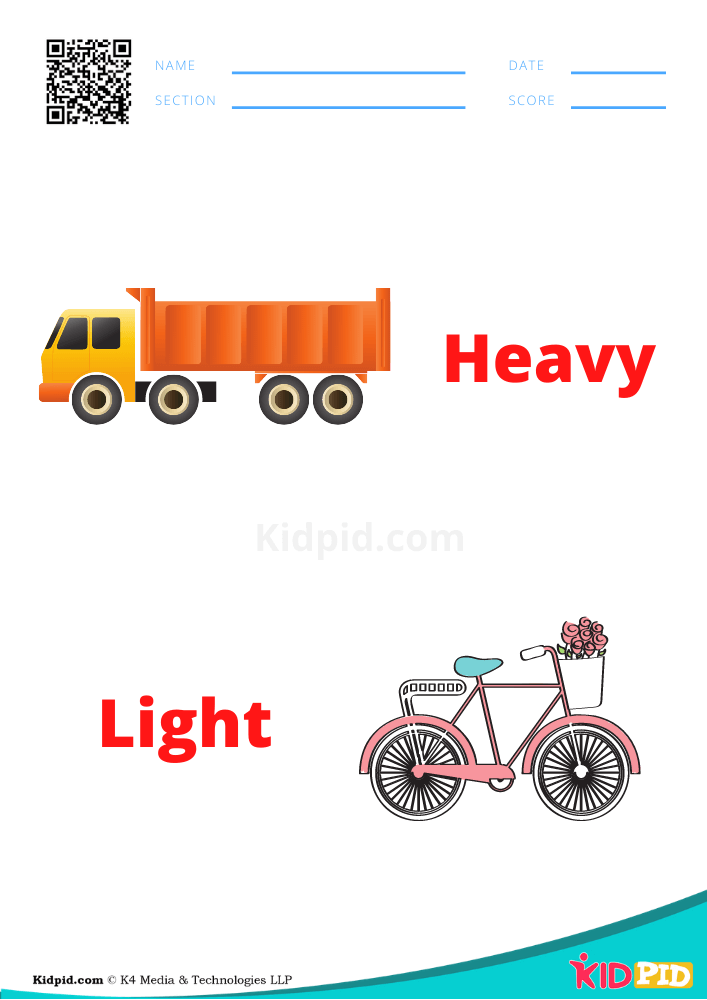
Truck or Bicycle
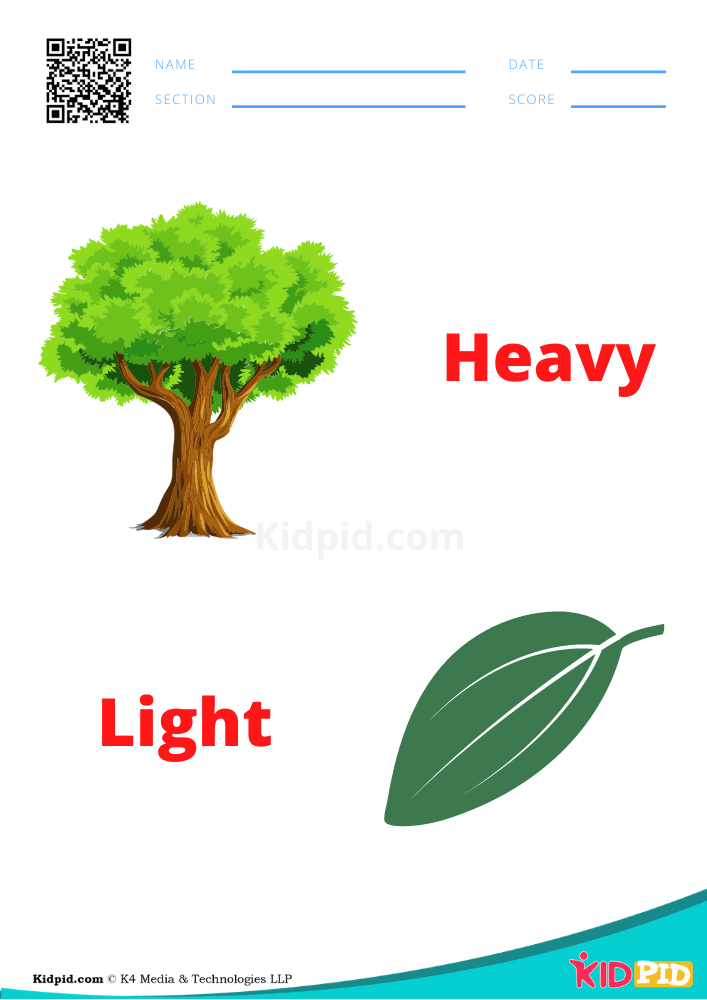
Tree or Leaf
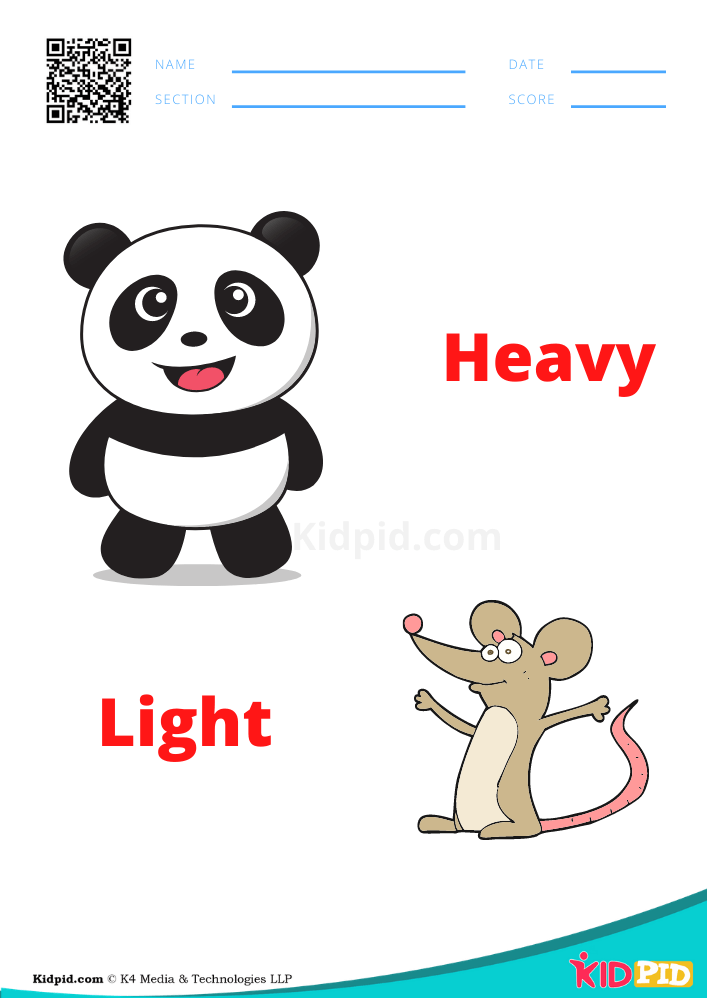
Panda or Rat
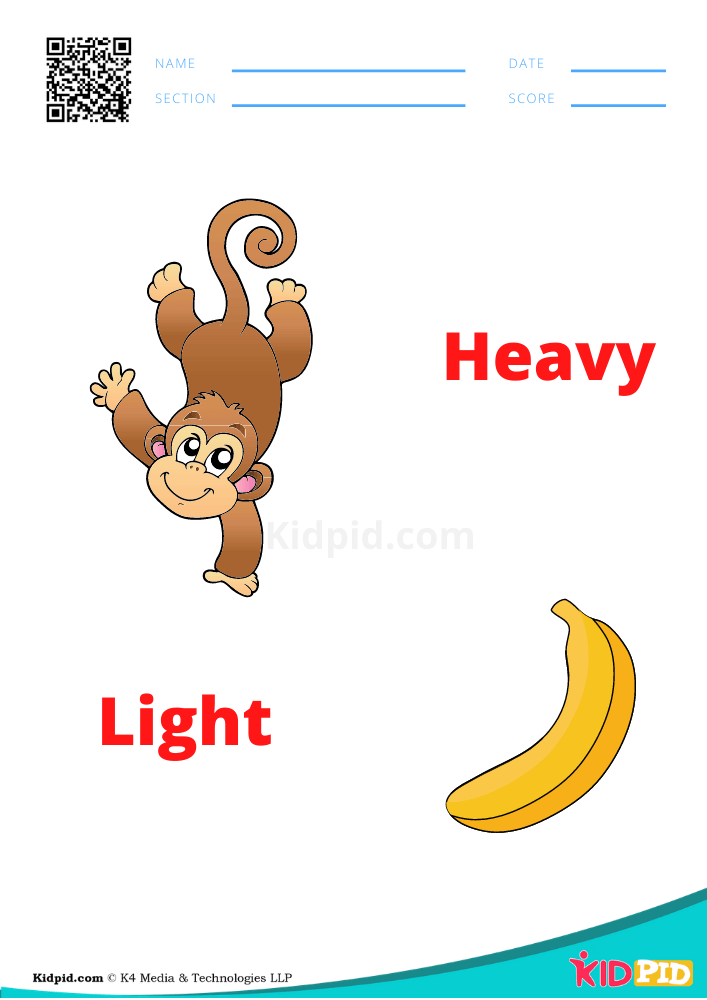
Monkey or Banana
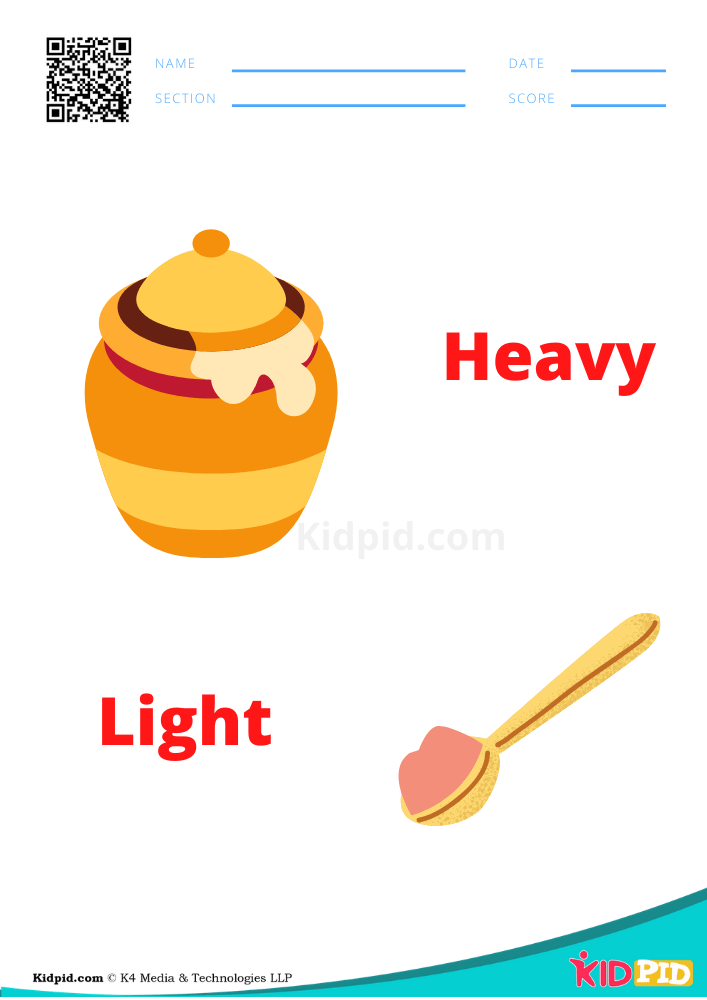
Pot or Spoon
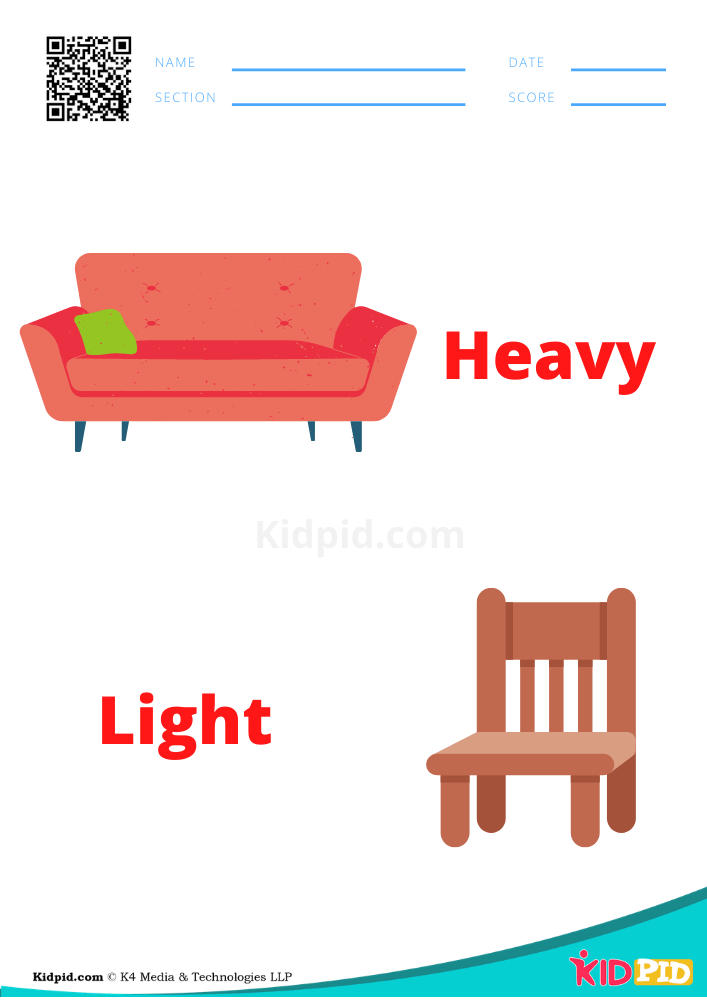
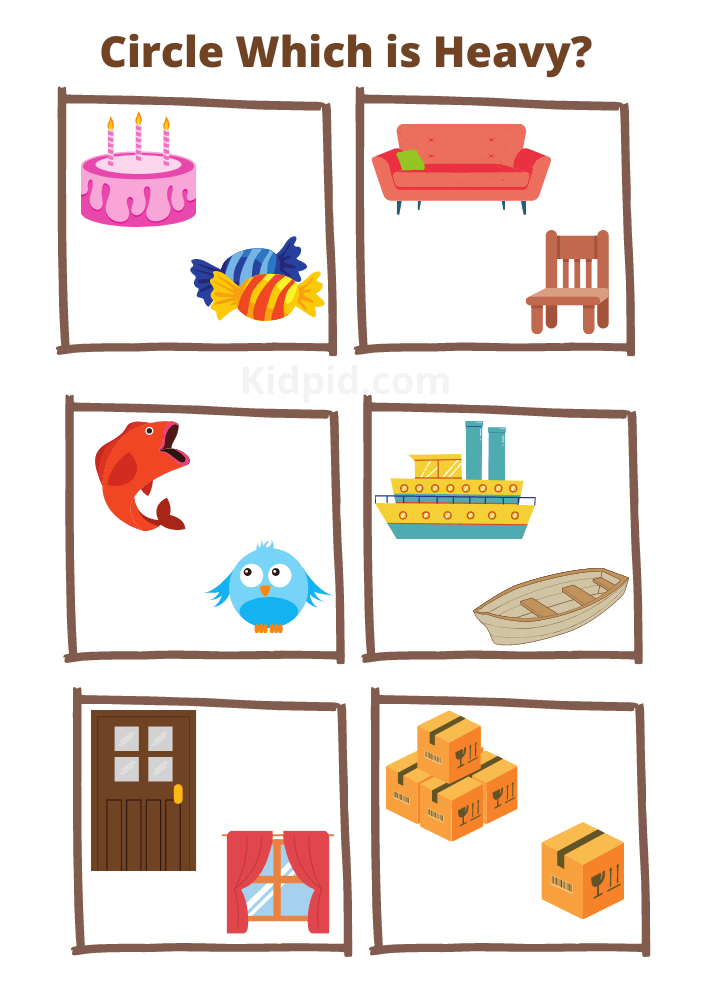
Sofa or Chair
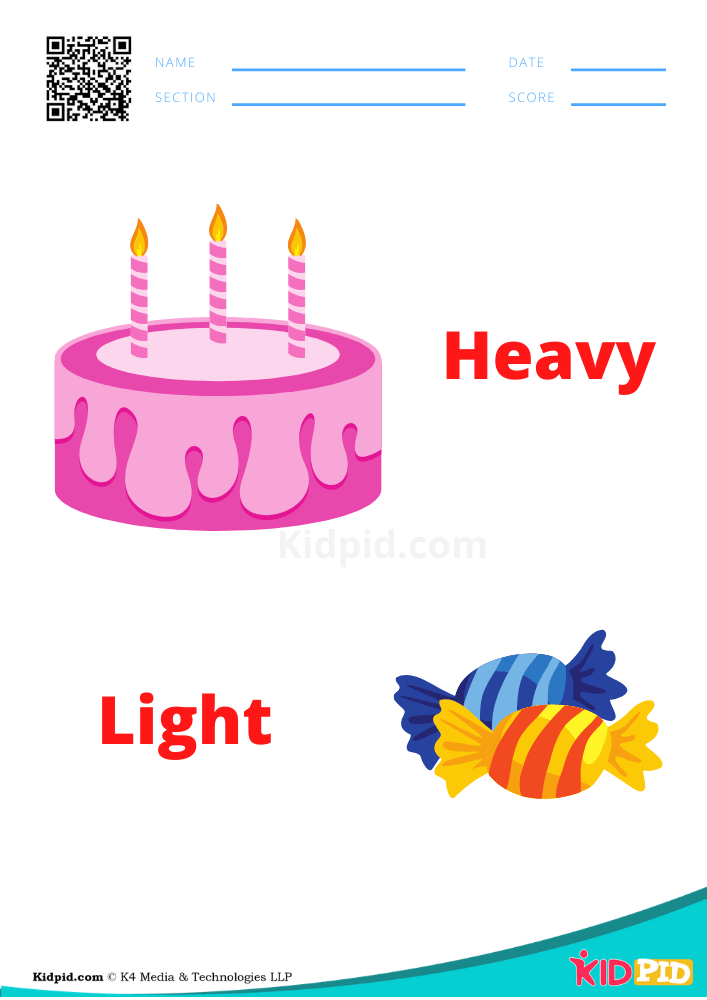
Cake or Toffee
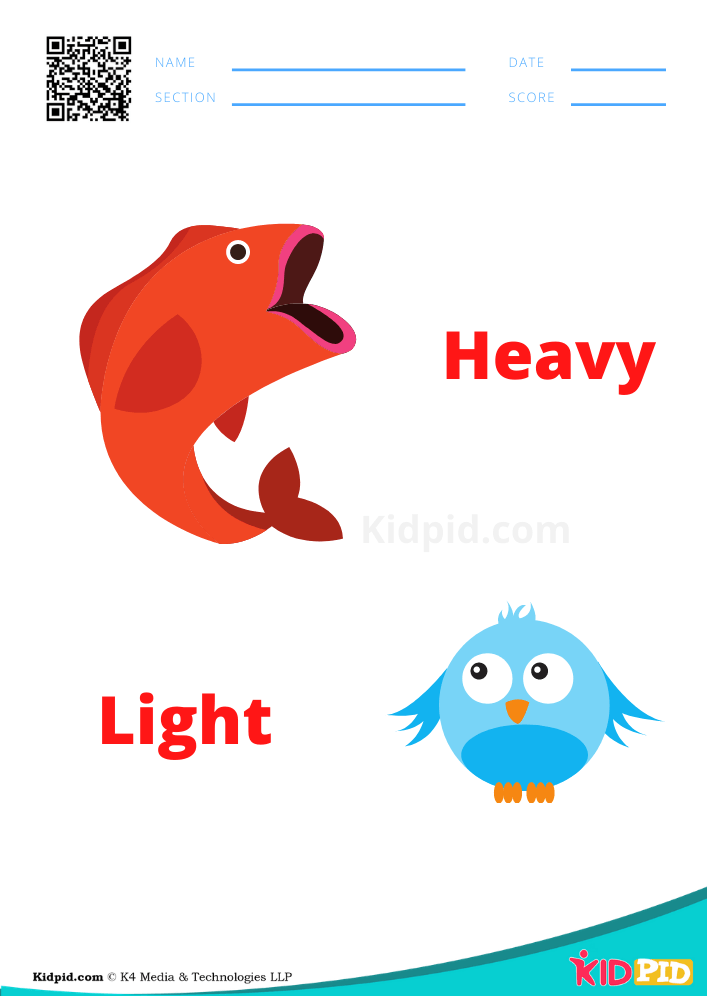
Fish or Bird
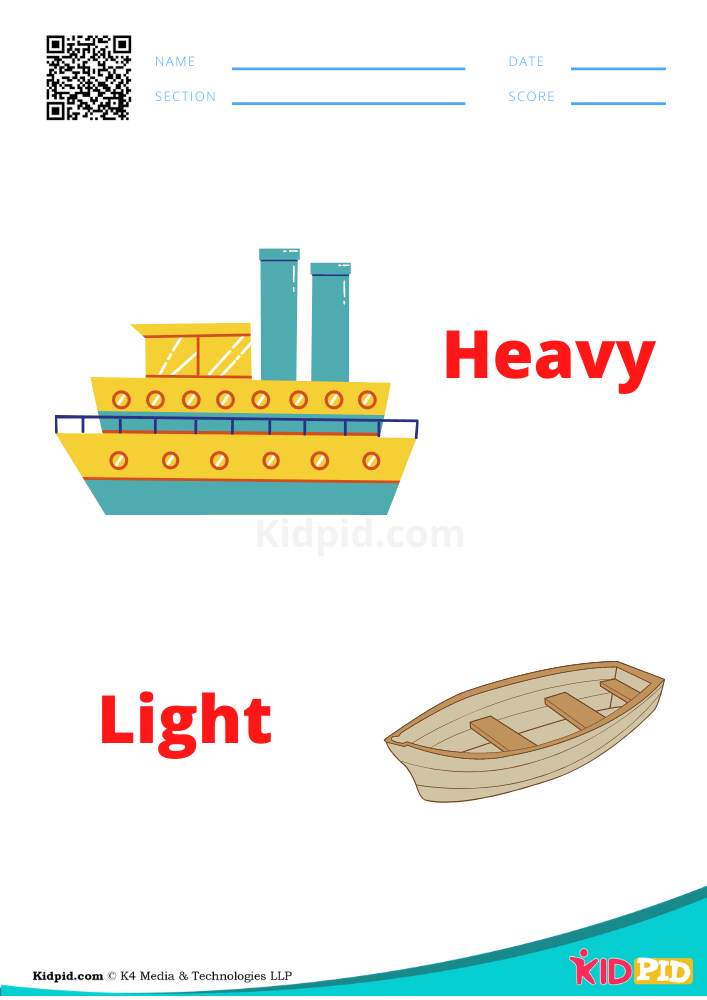
Ship or Boat
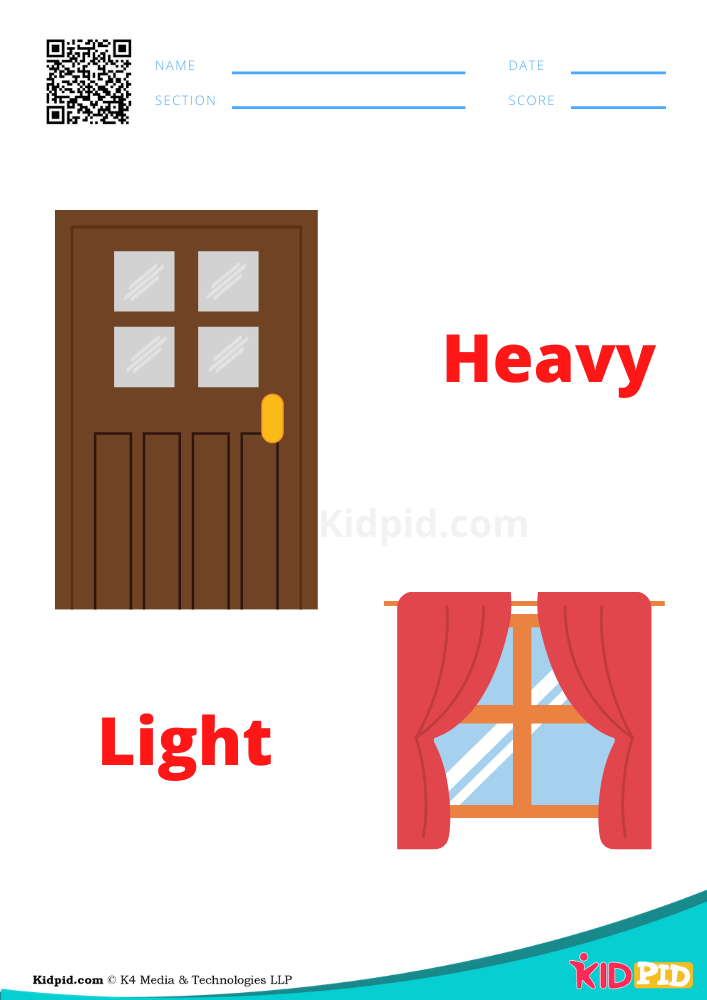
Door or Window
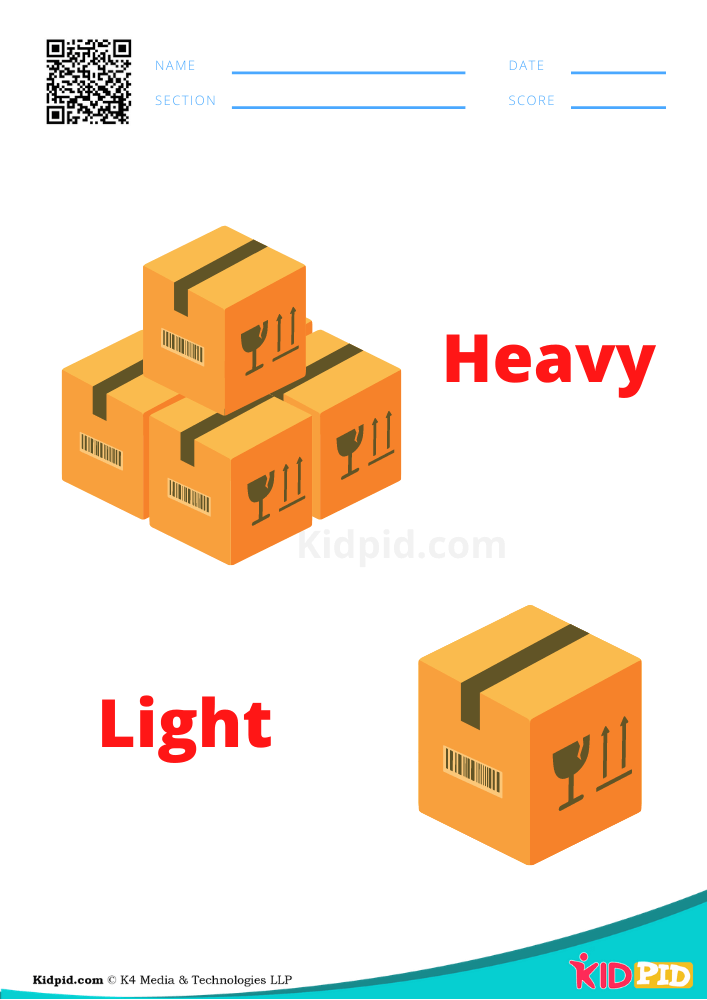
5 Boxes or 1 Box
Circle Which is Heavy
Key Facts About Heavy or Light Measuring Weight Worksheets
- Target Audience: Specifically designed for early childhood learners, including toddlers, preschoolers, kindergarteners, and 1st-grade students (ages 3–7).
- Core Concept: Introduces the fundamental mathematical and scientific concept of mass/weight through relative comparison (heavier vs. lighter) rather than complex numerical units (grams/pounds).
- Format: Free, downloadable, and high-quality printable PDF worksheets that are accessible for both classroom use and home learning.
- Curriculum Alignment: Directly supports foundational early math standards, such as the Common Core State Standards for Mathematics (CCSS.MATH.CONTENT.K.MD.A.1 and K.MD.A.2), which focus on describing and comparing measurable attributes.
Parts/Types/Examples of Heavy or Light Measuring Weight Worksheets
To keep young minds engaged, the KidPid collection includes a diverse variety of thematic layouts and activity types:
- Thematic Matching & Sorting: Worksheets that group objects by familiar environments, such as a Zoo Theme (comparing an elephant to a mouse) or a Vehicle Theme (comparing a bicycle to a city bus).
- Seesaw & Balance Scale Visuals: Exercises featuring a classic balance beam or seesaw illustration, visually prompting students to realize that the side dipping “down” holds the heavier object, while the side pointing “up” holds the lighter one.
- Circle the Heaviest / Lightest: Multi-object comparison tasks (groups of 3 or 4 items) that challenge children to determine extremes rather than just pairs.
- Interactive Cut-and-Paste Activities: Tactile worksheets where children physically cut out various everyday items and paste them into designated “Heavy” and “Light” columns.
- Color and Compare: Fine-motor-skill building exercises where kids color-code objects based on weight (e.g., coloring heavy items red and light items blue).
How Does the Measuring Weight Worksheet Work?
The KidPid worksheets act as a visual and cognitive bridge between real-world physical sensations and abstract mathematical thinking. They function through a structured, three-step cognitive process:
- Visual Stimulus Evaluation: A child looks at clear, relatable illustrations of everyday objects (like a leaf vs. a rock).
- Cognitive Recalling & Estimation: The child recalls their real-life experiences with these objects or relies on visual context clues (such as a balance scale tilt) to estimate which object requires more effort to lift.
- Active Response Mechanics: The child executes instructions—whether circling, coloring, or tracing—to solidify their classification, training their brains to map the concepts of “heavy” and “light” to tangible imagery.
Benefits of Learning About Heavy and Light
Introducing weight comparison at an early stage yields extensive cognitive and developmental rewards:
- Lays the Foundation for STEM: Before children can understand standard measurement tools like scales, kilograms, or ounces, they must first master qualitative comparison. This acts as the bedrock for elementary physics and math.
- Enhances Critical Thinking & Observation: Children are encouraged to look past pure size—learning that a large balloon can actually be much lighter than a small, dense rock.
- Boosts Language Development: Using comparative adjectives expands a child’s descriptive vocabulary, helping them accurately express thoughts about the physical world.
- Strengthens Fine Motor Skills: Activities that require precise coloring, circling, and scissors control (cut-and-paste) refine hand-eye coordination.
Learning Objectives
By completing the KidPid Heavy or Light Measuring Weight Worksheets, students will achieve the following benchmarks:
- Identify and differentiate between “heavy” and “light” objects based on visual depictions.
- Apply comparative terms (heavier than, lighter than) correctly when discussing pairs of items.
- Analyze a balance scale or seesaw graphic to determine which side holds more mass.
- Categorize a scattered group of miscellaneous everyday items into distinct weight groups.
- Order a sequence of objects from lightest to heaviest (and vice versa).
Worksheet Instructions
Parents and teachers, please read these simple directions aloud to guide your young learners:
- Look Closely: Examine the two pictures inside each box carefully.
- Think and Compare: Imagine holding both of these items in your hands. Which one feels like it would be hard to lift? Which one feels easy to lift?
- Mark Your Answer:
- If the instructions say “Tick the Heavy Object,” place a checkmark (✓) inside the circle next to the item that weighs more.
- If the instructions say “Circle the Lighter Object,” draw a neat circle all the way around the item that weighs less.
- Coloring Time (Optional): Once you have completed your choices, grab your crayons and color in the pictures neatly!
Interesting Facts About Measuring Weight
- Size Can Be Deceiving: A giant beach ball is much larger than a tiny metal marble, yet the marble is much heavier! Weight depends on what an object is made of (density), not just how big it looks.
- Weight Changes in Space: If you took these worksheets to the Moon, the objects would still have the same mass, but they would weigh much less because the Moon has weaker gravity than Earth!
- The Origin of Scales: Ancient Egyptians invented the first balance scales over 5,000 years ago using a simple beam and cords to compare the weights of goods and gold.
Vocabulary Words
Help your child practice pronouncing and using these key words during the worksheet activities:
- Weight: How heavy or light something is.
- Heavy: Something that takes a lot of strength to lift (e.g., an elephant, a brick).
- Light: Something that is very easy to lift or carry (e.g., a feather, a cloud).
- Heavier Than: Used when comparing two things to show which one has more weight.
- Lighter Than: Used when comparing two things to show which one has less weight.
- Balance Scale: A tool with two pans that shows which object is heavier by tilting downward.
Real-Life Applications
Connecting worksheets to the physical world cements a child’s understanding. Use these daily scenarios to extend the lesson:
- Grocery Shopping: Have your child hold a watermelon in one hand and a bag of chips in the other while walking down the grocery aisle. Ask them to identify which is heavier.
- Playground Physics: Sit with your child on a playground seesaw. Point out how the heavier person sinks to the ground while the lighter person rises into the air.
- Packing a Backpack: Let your child feel an empty school bag versus one filled to the top with storybooks to experience how adding objects increases total weight.
FAQs
Q1. At what age should children start learning about heavy and light?
Answer: Children can start learning basic qualitative concepts of weight around ages 3 to 4 (Preschool). By ages 5 to 6 (Kindergarten), they are ready to complete visual worksheets and understand balance scales.
Q2. Why does my child think bigger objects are always heavier?
Answer: This is a completely natural developmental stage called the “size-weight illusion.” Children assume volume equals weight. You can easily correct this by having them hold a large, empty cardboard box in one hand and a small, heavy rock or can of soup in the other.
Q3. Do these worksheets require actual scales to complete?
Answer: No. The KidPid worksheets utilize highly recognizable everyday objects and clear illustrations, allowing children to solve the problems using logic, memory, and visual cues alone.
Q4. How can I make these worksheets more interactive for kinesthetic learners?
Answer: Gather real objects featured on the printed page (e.g., a real book, a spoon, a coin, a leaf). Have your child physically hold the items to “feel” the answer before marking it down on the worksheet.
These Heavy or Light: Measuring Weight worksheets help children compare object weights, develop observation and reasoning skills, and understand basic measurement concepts. Fun activities build confidence while strengthening early math and critical thinking abilities. We hope you enjoyed these Heavy or Light Measuring Weight worksheets. Visit our website to explore a wide collection of free worksheets, essays, paragraphs, flashcards, quizzes, and interactive resources designed to make learning fun for kids. Follow us on YouTube & Facebook.
The Content Team has prepared this worksheet to support strong academic outcomes.
Reviewed By Swati
More Printables