

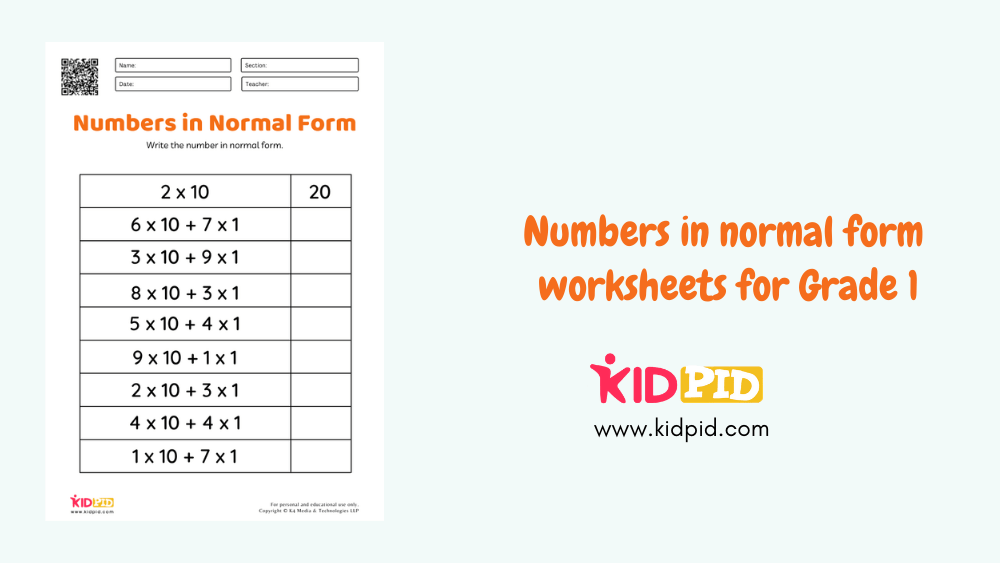
Children like investigating and correcting problems. These worksheets are based on standard mathematical calculations; however, they are solved in a novel method. It will improve their thinking capacity and ability to solve problems if they are forced to perform these complicated yet simple-looking mathematical computations. Mathematics is a topic that allows one’s mind to expand. By solving sums quickly, you learn to solve things up rather than leaving things aside.

Contents
- Normal Form of Number Practice Worksheets
- Key Facts About Numbers in Normal Form Worksheets
- Parts/Types/Examples of Numbers in Normal Form Worksheets
- How do numbers in Normal Form Worksheets for Grade 1 Work?
- Benefits of Learning About Numbers in Normal Form Worksheets
- Learning Objectives
- Worksheet Instructions
- Interesting Facts About Numbers in Normal Form Worksheets
- Vocabulary Words
- Real-Life Applications
- FAQs
- Q1. What is a number in normal form?
- Q2. Why should Grade 1 students learn normal form?
- Q3. What skills do these worksheets improve?
- Q4. How often should children practice these worksheets?
- Q5. Are these worksheets suitable for beginners?
- Q6. How do parents support learning at home?
- Q7. What is the difference between number words and normal form?
- Q8. Do these worksheets help with place value?
- You may like this:
Normal Form of Number Practice Worksheets
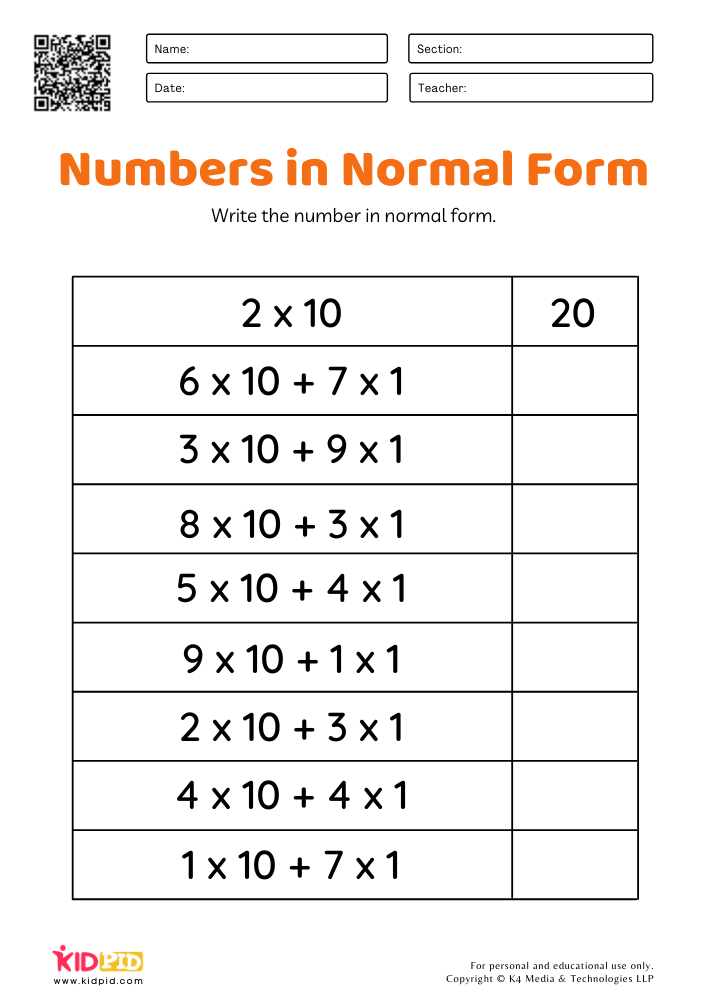
The second worksheet is similar to the first, but with different numbers to offer your child a broader understanding of the subjects and improve their ability to answer them. You must instruct them on how to solve the problem by guiding them through the stages. These worksheets will assist you in locating appropriate amounts that a kid should be able to answer.
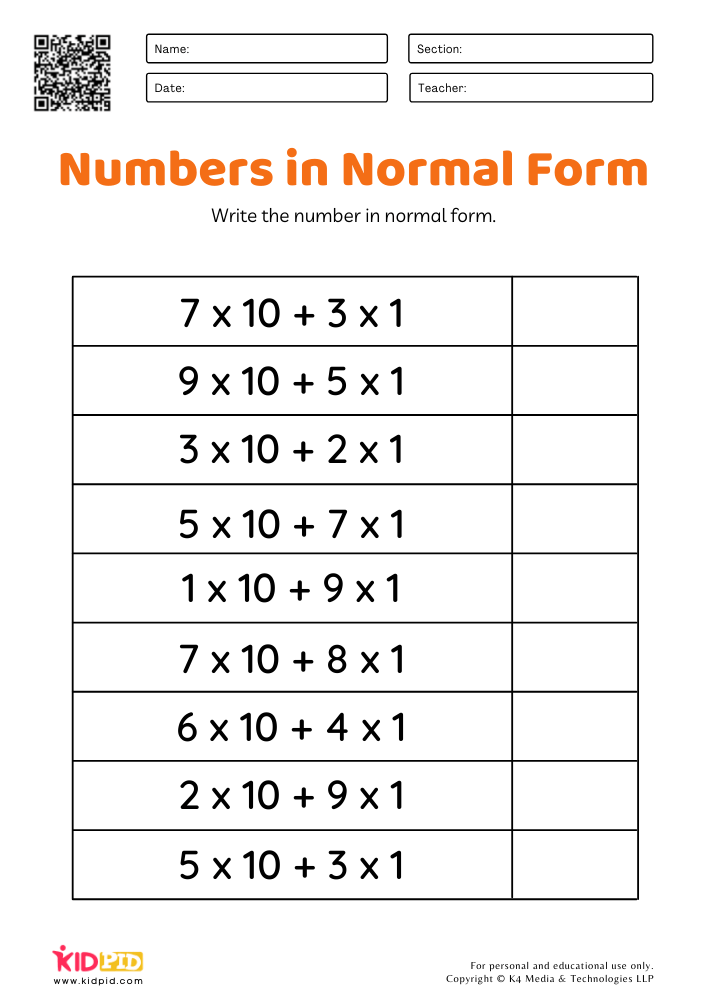
Distinct worksheets provide a different set of questions. When your kid examines a collection of various amounts, they will not only learn how to answer the sums, but they will also improve their capacity to investigate further. The acquisition of new cognitive skills at a young age is extremely beneficial, since it aids a child’s personal growth.
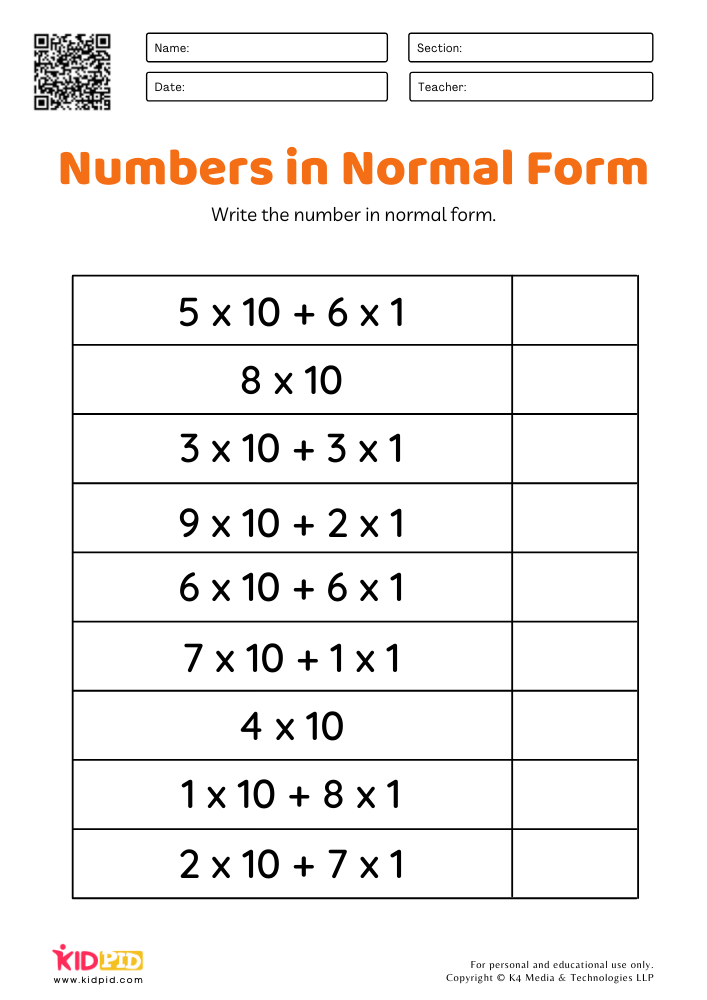
Practice makes a man perfect, as someone wisely put it. Worksheets should be completed on a regular basis to assist your youngster in polishing his or her mathematical skills. Because you stood alongside your child on the previous worksheets, you can now let them sit alone and complete them on their own. These worksheets have been prepared in a way that anybody can understand.
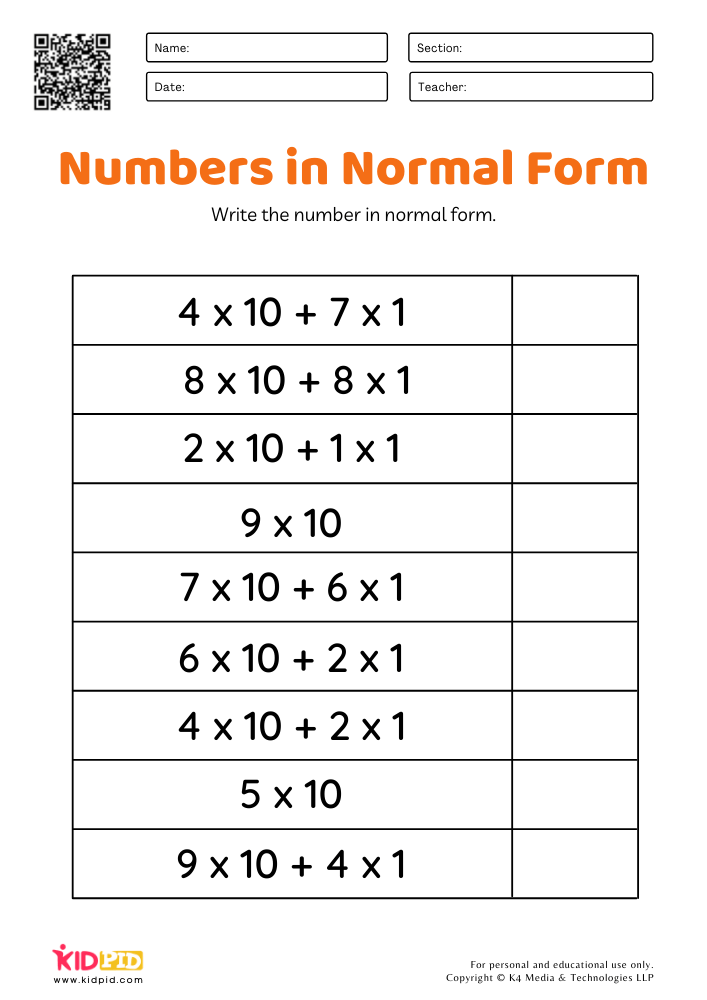
Multiple worksheets with the same style and various sums can aid in your child’s regular revision of the work. Things that were incorrect in earlier worksheets can be corrected in this one. They will learn and understand the concept of “slow and steady wins the race.” They will develop patience as they realize that learning takes time, but that you can always make up for lost time.
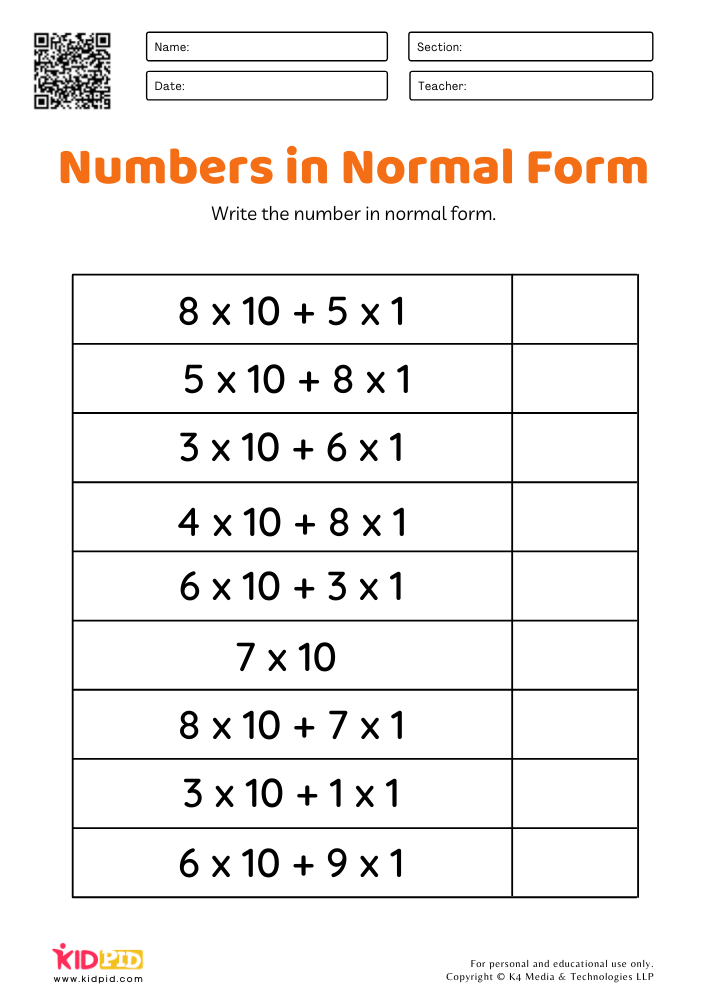
After completing a large number of worksheets and receiving the right answers, their desire to learn and solve more will grow. These worksheets will assist them in sharpening their minds and improving their abilities. They will be able to understand the pattern of the sum and solve it in their unique ways.
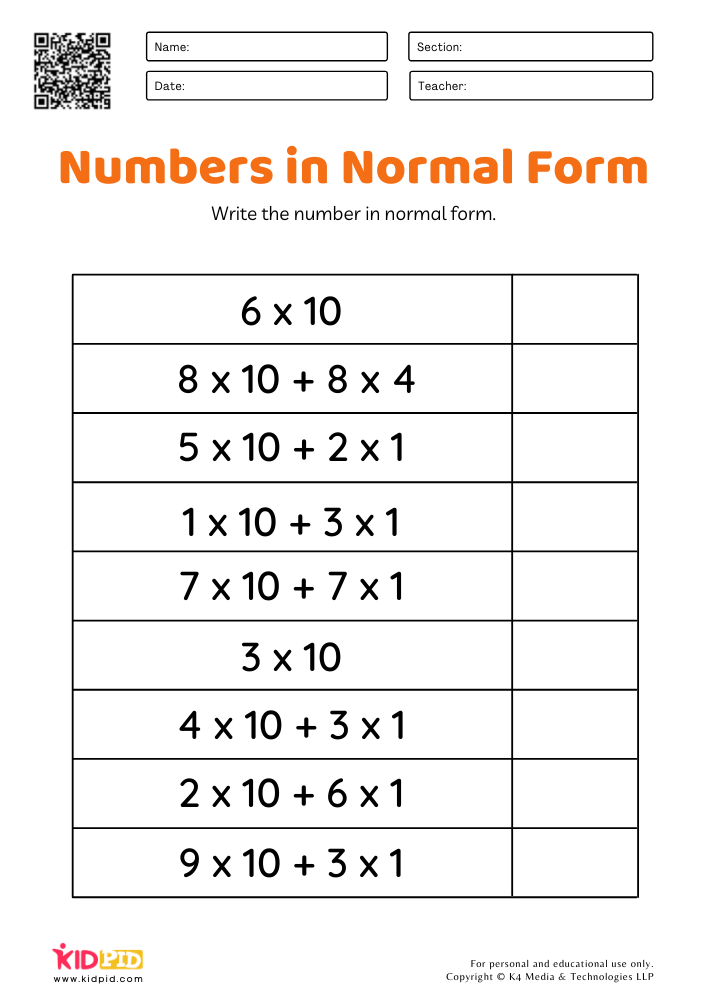
Math will assist youngsters in problem-solving, measuring, and developing spatial awareness, as well as teaching them how to utilize and comprehend shapes. Children’s minds are inquisitive and perceptive. They are constantly eager to try new things. These sums with varied digits will pique their interest in learning and growing.
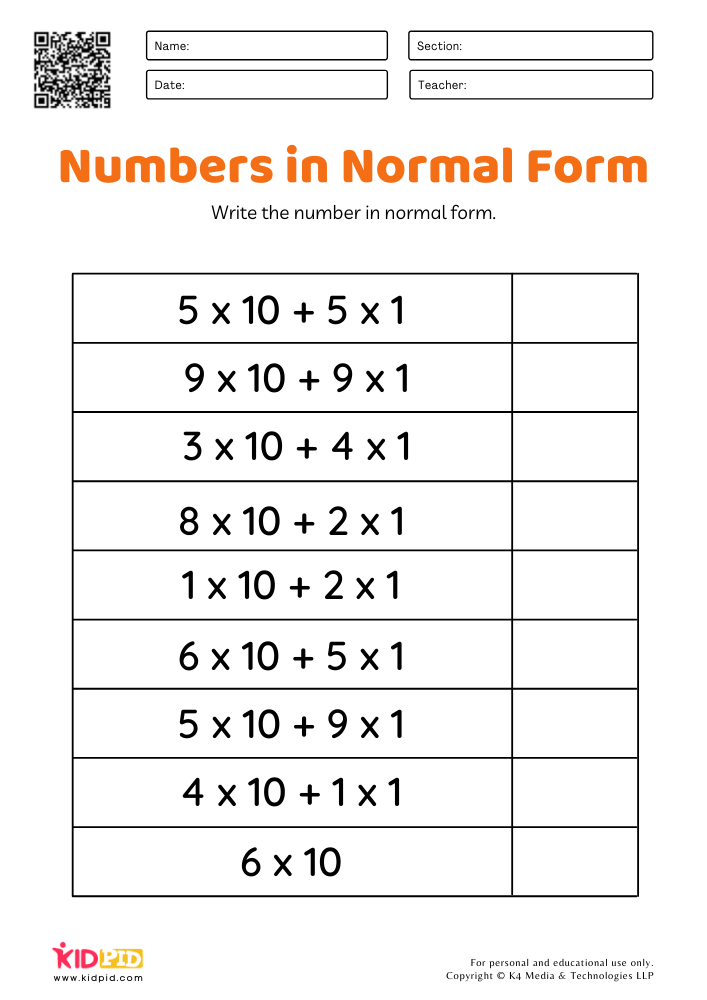
These worksheets can be printed and used over and over again for further practice. Many worksheets are supplied so that you don’t have to go for information elsewhere and can discover it all in one spot. The printout will assist your youngster in better understanding how to solve the amounts.
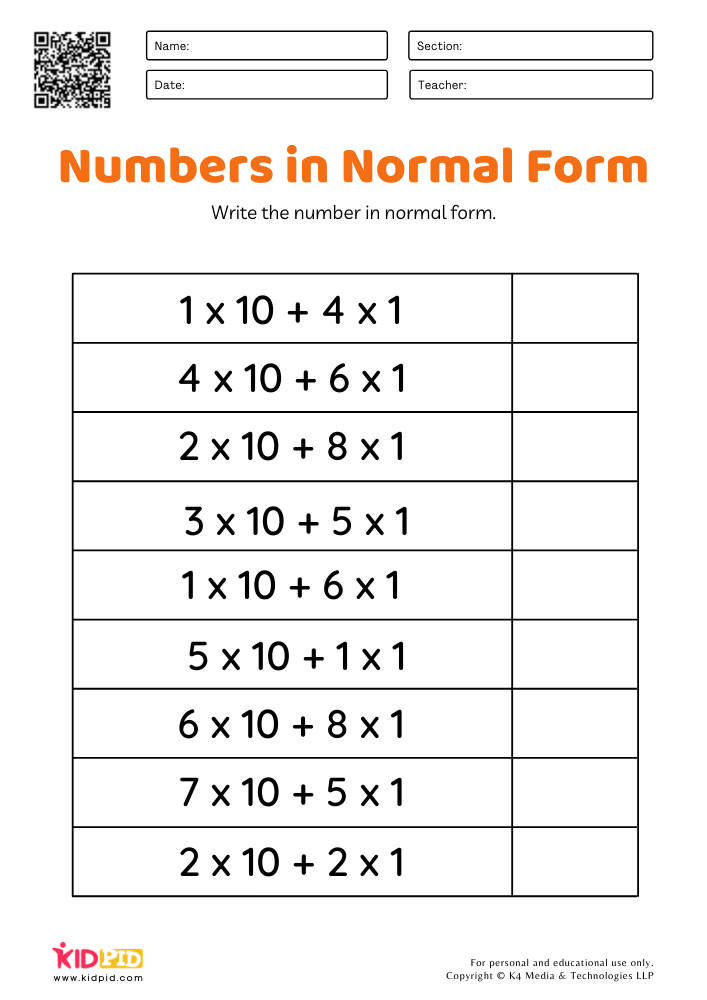
These worksheets follow a pattern, which makes students’ work easier and more enjoyable when they recognize or are told about the pattern. Parents should give their children lots of attention as they work on these worksheets since they are at a key learning stage.
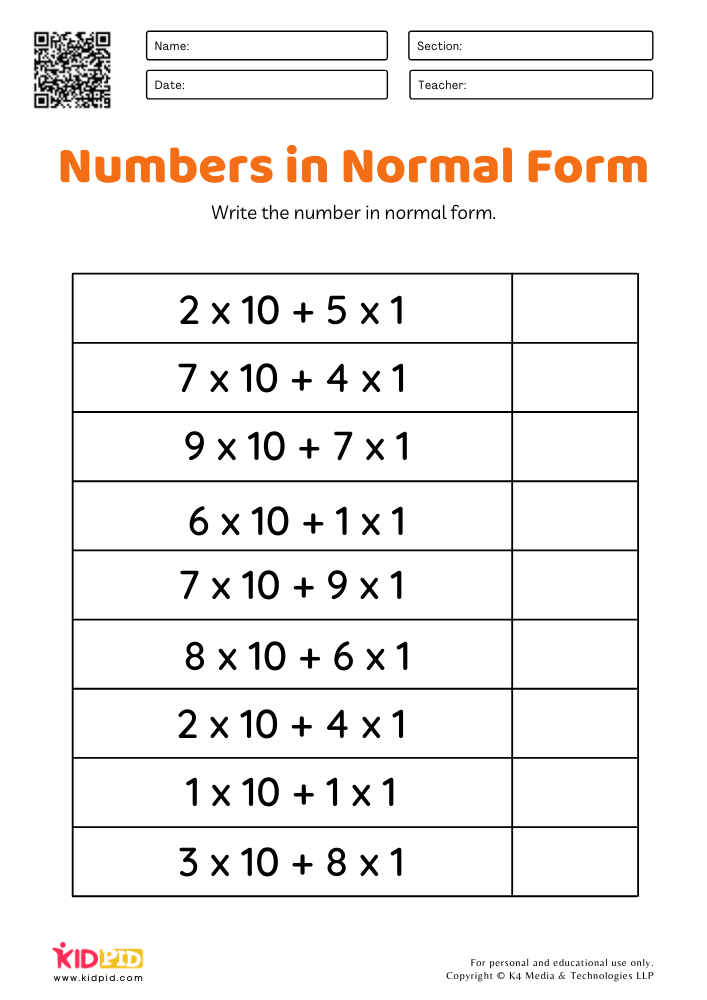
The job does not end here, despite the fact that this is the last worksheet. To remember them for a long time, children must practice them on a regular basis. After they’ve learnt to solve them, make sure they rewrite them without looking at the worksheets.
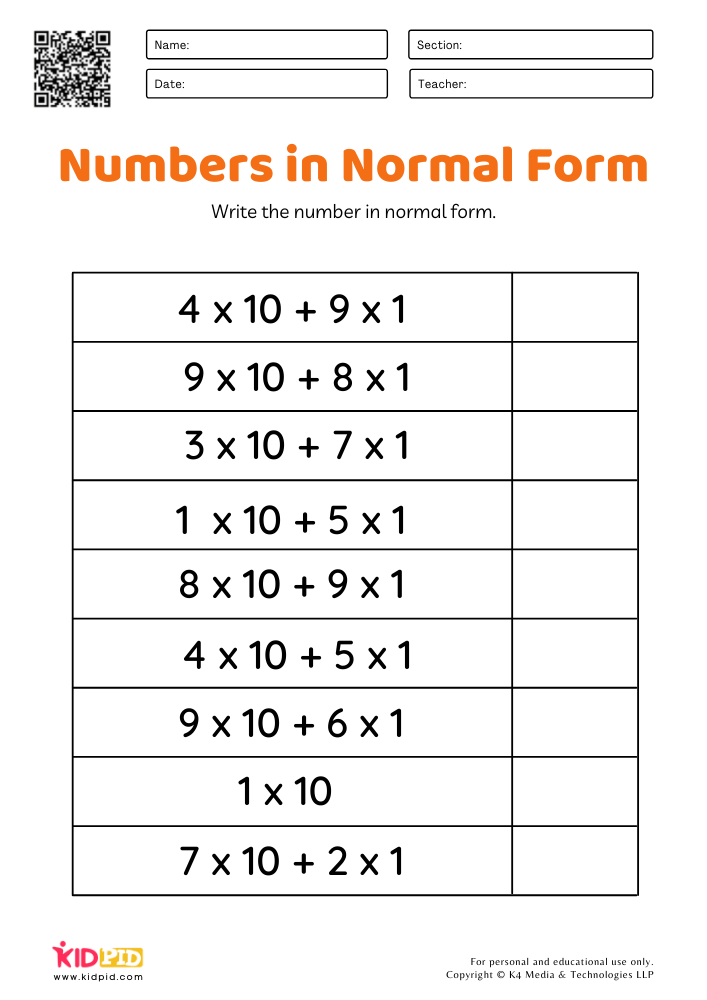
Key Facts About Numbers in Normal Form Worksheets
Numbers in Normal Form Worksheets for Grade 1 help young learners understand how numbers are written in their standard numerical format. These worksheets introduce children to the relationship between number words and digits, strengthening their early math foundation. Students practice converting written numbers such as “twenty-five” into 25 and identifying numbers correctly in everyday situations. The activities are designed to improve number recognition, place value awareness, and basic mathematical understanding. Regular practice builds confidence and prepares children for more advanced arithmetic concepts in later grades.
Parts/Types/Examples of Numbers in Normal Form Worksheets
Different worksheet formats help children learn numbers in normal form effectively:
- Number Words to Digits: Convert written numbers into numerical form.
- Matching Activities: Match number words with the correct digits.
- Fill-in-the-Blank Exercises: Complete missing numbers based on clues.
- Multiple-Choice Questions: Select the correct normal form from several options.
- Color and Write Activities: Combine creativity with number learning.
Examples:
- Forty-two → 42
- Seventy-eight → 78
- One hundred → 100
- Ninety-five → 95
How do numbers in Normal Form Worksheets for Grade 1 Work?
These worksheets present numbers in word form and ask students to write them as digits. Children read the number words carefully, identify the value represented, and convert them into standard numerical form. Activities may also include matching, tracing, counting, and identifying numbers in real-life examples. Through repeated practice, students become familiar with number patterns and improve their understanding of place value. This hands-on learning approach encourages accuracy, concentration, and independent problem-solving skills.
Benefits of Learning About Numbers in Normal Form Worksheets
- Strengthens number recognition skills.
- Develops understanding of place value concepts.
- Improves reading and interpreting number words.
- Enhances mathematical confidence and accuracy.
- Supports future learning in addition to subtraction and other operations.
- Encourages logical thinking and problem-solving abilities.
- Provides engaging and interactive learning experiences.
- Builds a strong foundation for everyday math applications.
Learning Objectives
By completing these worksheets, students will:
- Recognize numbers written in word form.
- Convert number words into normal numerical form.
- Understand the connection between words and digits.
- Develop place value awareness.
- Improve counting and number sequencing skills.
- Increase accuracy in writing numbers.
- Build confidence in handling basic math tasks.
- Apply number knowledge in real-life situations.
Worksheet Instructions
- Read each number word carefully.
- Think about the value represented by the words.
- Write the correct number in normal form.
- Check your answer for accuracy.
- Complete all worksheet activities neatly.
- Review any mistakes and correct them.
- Practice regularly to improve speed and confidence.
Interesting Facts About Numbers in Normal Form Worksheets
- Numbers can be written in words, expanded form, and normal form.
- The normal form is the most commonly used way to write numbers.
- Understanding normal form helps children read clocks, calendars, and prices.
- Place value knowledge makes converting numbers easier.
- Number word recognition also supports reading development.
- Learning numbers in different formats improves overall mathematical fluency.
- Many everyday tasks involve identifying numbers in normal form.
Vocabulary Words
- Number: A symbol or word used for counting.
- Digit: A single numerical symbol from 0 to 9.
- Normal Form: A number written in its standard numerical format.
- Number Word: A number written using words.
- Place Value: The value of a digit based on its position.
- Tens: A group of ten units.
- Ones: Single units within a number.
- Standard Form: Another term for normal form.
- Count: To determine the total number of items.
- Numeral: A written symbol representing a number.
Real-Life Applications
Numbers in normal form are used every day in various situations:
- Reading prices while shopping.
- Understanding house numbers and addresses.
- Reading calendars and dates.
- Identifying page numbers in books.
- Using clocks and timers.
- Following the classroom attendance lists.
- Reading sports scores and game statistics.
- Recognizing phone numbers and important codes.
FAQs
Q1. What is a number in normal form?
Answer: A number in normal form is written using digits rather than words. For example, “forty-five” is written as 45.
Q2. Why should Grade 1 students learn normal form?
Answer: Learning normal form helps children recognize, read, and write numbers accurately, building a strong math foundation.
Q3. What skills do these worksheets improve?
Answer: These worksheets improve number recognition, place value understanding, reading comprehension, and mathematical confidence.
Q4. How often should children practice these worksheets?
Answer: Regular practice, even a few times each week, helps reinforce learning and improve accuracy.
Q5. Are these worksheets suitable for beginners?
Answer: Yes. They are designed specifically for Grade 1 learners and provide age-appropriate activities.
Q6. How do parents support learning at home?
Answer: Parents can encourage children to identify numbers on signs, clocks, calendars, and household items and practice writing them in normal form.
Q7. What is the difference between number words and normal form?
Answer: Number words use text (e.g., “sixty-two”), while normal form uses digits (e.g., 62).
Q8. Do these worksheets help with place value?
Answer: Yes. Many activities reinforce the understanding of tens and ones, which are essential place value concepts.
These Numbers in Normal Form Worksheets for Grade 1 help young learners build number-writing skills, strengthen place value understanding, and improve confidence in converting number words into standard numerical form through engaging practice activities. Keep learning by following us on Facebook, Pinterest, YouTube & Telegram! Join our Telegram group to receive the latest updates.
Hope you liked these worksheets. Please visit our other worksheets to make learning more interactive and fun.
This worksheet was crafted by the Content Team to encourage scholastic success.
Reviewed By Madhulika
You may like this:
Expanded Form Math Practice Sheets for First Graders
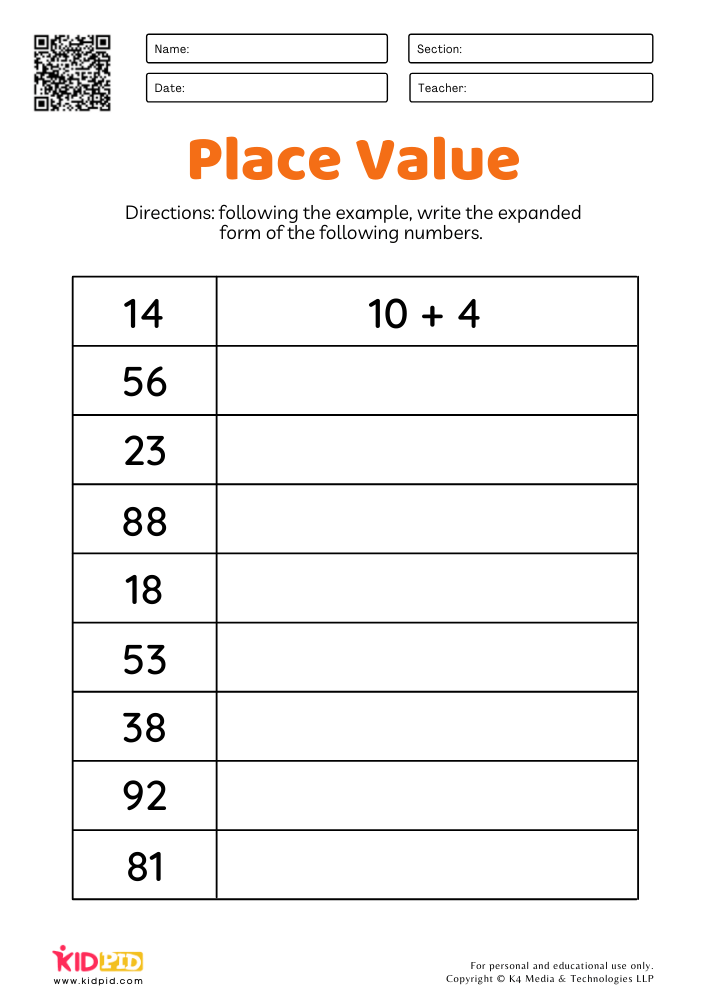
These practice sheets help first graders learn to express numbers in expanded form. Engaging activities reinforce understanding of place value, making math enjoyable while enhancing foundational skills.
Understanding Place Value for 2-Digit Numbers – Engaging Grade 1 Worksheets
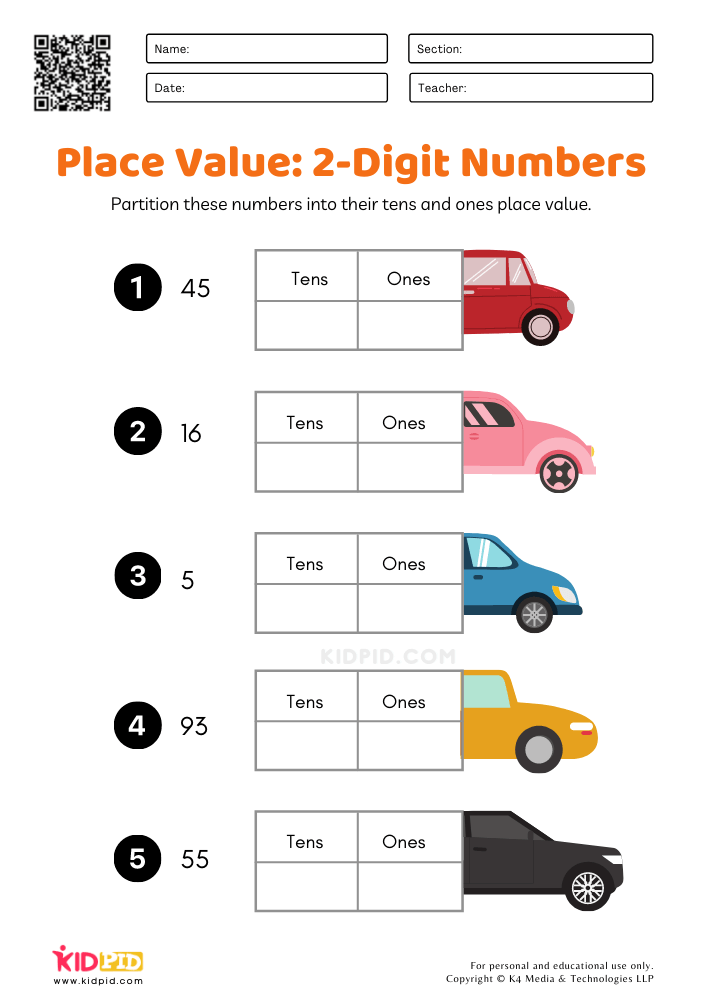
These engaging worksheets focus on place value concepts for 2-digit numbers. Fun activities encourage first graders to explore tens and ones, building a strong mathematical foundation for future learning.
Rounding Worksheets for Grade 1: Mastering 2-Digit Numbers with Ease
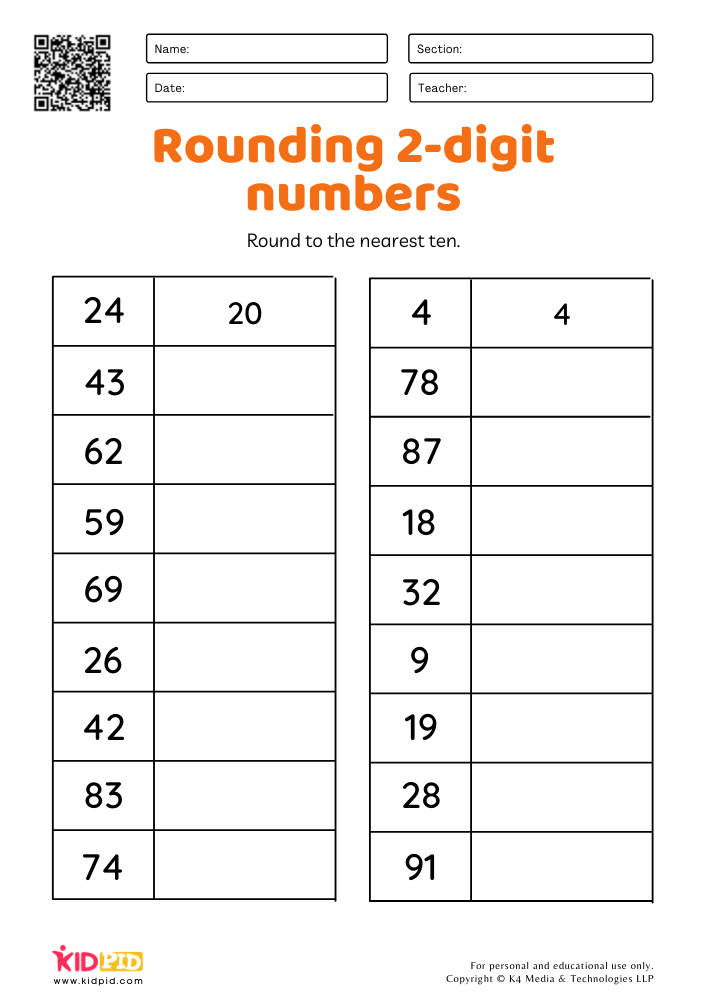
These rounding worksheets assist first graders in mastering 2-digit numbers. Interactive exercises make rounding concepts accessible, enhancing students’ confidence and proficiency in their early math skills.
Grade 1 Math Worksheets: Mastering Place Value Concepts for Kids
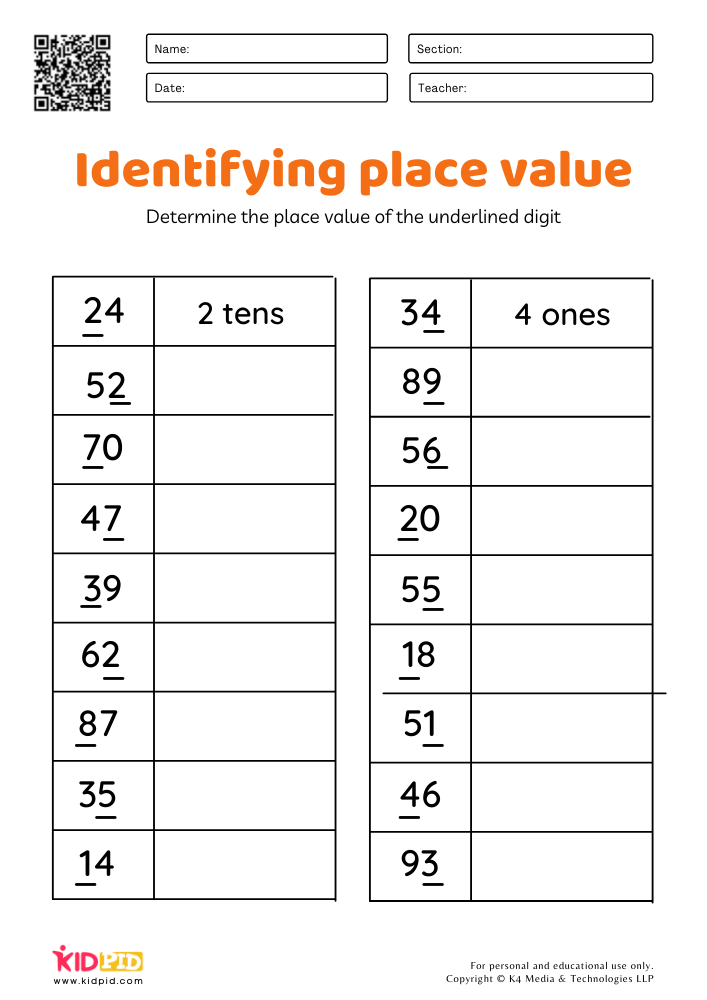
These worksheets are designed to help first graders master place value concepts. Engaging activities foster understanding of tens and ones, supporting children in developing essential math skills for success.



