

Ever visited a zoo?? Or ever seen a giant elephant on television?? Ever seen a lion on television or heard its roar?? Why don’t they live with us as cats and dogs like pets? Ever thought about that? ‘Cause these animals are wild; that is, they don’t need humans’ assistance. They live in the forest away from humans or towns.
The following worksheets include such animals. Take a look at these and enhance your knowledge. Let’s get lost in the world of wild animals, with Zebras, monkeys, lions, and tigers. We bring to you an entire package of wild animals. Let your child visualize the hidden beauty of these species.
Here we come with a wide variety of series of worksheets for your child. Let your child playfully learn everything. To begin with, here’s a matching scheme: identify the animals given alongside.
[Scroll Down for Download Link]
Contents
- Identify and Match The Wild Animals
- Tick The Correct Wild Animal Pictures
- Wild Animals Tracing Words
- Wild Animals Word Search in the Puzzle
- Key Facts About Wild Animals Worksheets for Kindergarten
- Parts/Types/Examples of Wild Animals Worksheets for Kindergarten
- How Do Wild Animals Worksheets for Kindergarten Work?
- Benefits of Learning About Wild Animals Worksheets for Kindergarten
- Learning Objectives
- Worksheet Instructions
- Interesting Facts About Wild Animals Worksheets for Kindergarten
- Vocabulary Words
- Real-Life Applications
- FAQs
- Q1. What are Wild Animals Worksheets for Kindergarten?
- Q2. What age group are these worksheets suitable for?
- Q3. What skills do children develop through these worksheets?
- Q4. Why is learning about wild animals important?
- Q5. Can these worksheets be used at home?
- Q6. Are wild animal worksheets useful for classroom learning?
- Q7. What animals are commonly included in these worksheets?
- Q8. How do wild animal worksheets support early education?
Identify and Match The Wild Animals
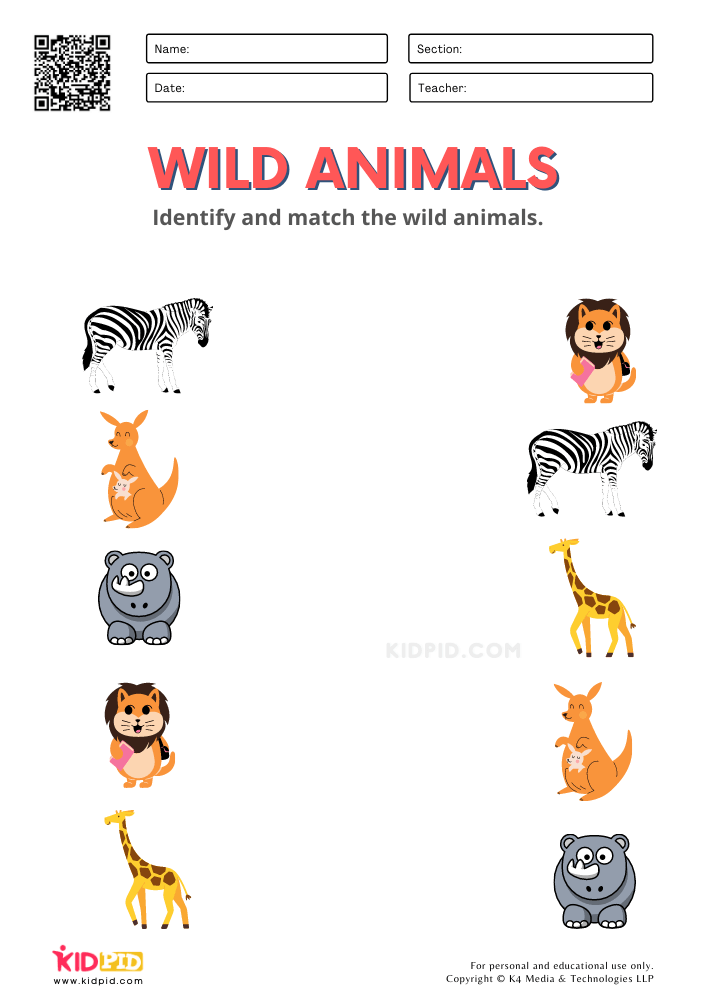
The above worksheet includes the following animals:
- Zebra– with strips of black and white, these are found in the forest. Terrified by the lions, these zebras feed on grass.
- Kangaroos– with a pouch (brood pouch) on their abdomen, these are generally native to Australia.
- Elephants– the big, fat, and giant animals with a trunk and great tusks.
- Giraffe – the tallest of all the animals, feeding on tree leaves.A
- lion is a big, strong cat with a roar. It has a mane around its head and lives in a pride in the African savanna.
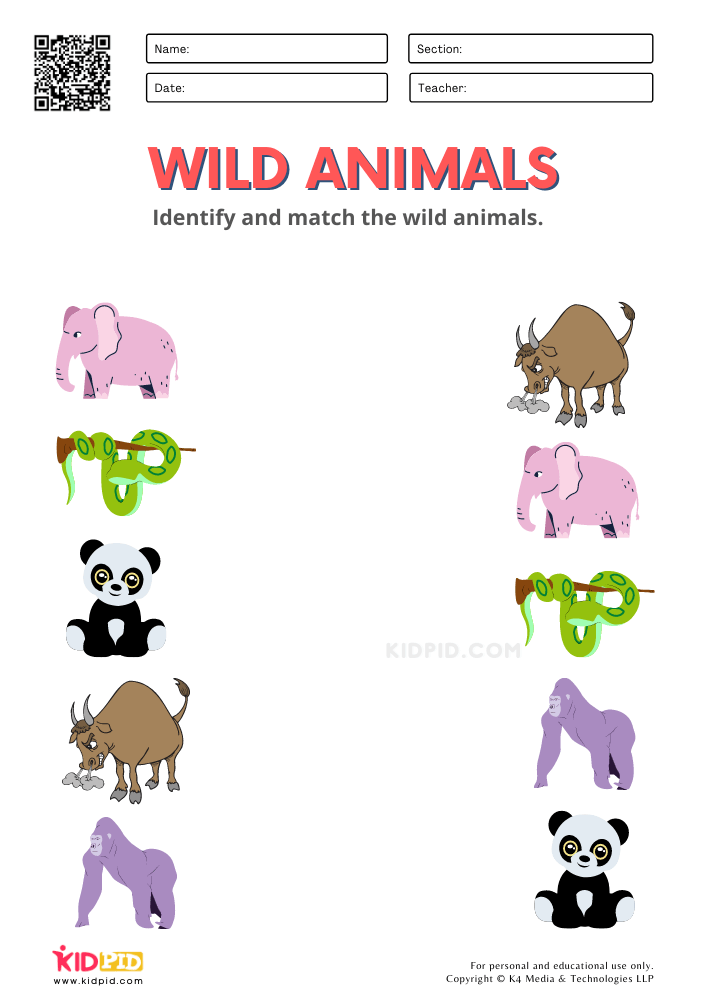
The above worksheet includes the following animals:
- Elephant: the largest land animal. They have a long trunk and big tusks and are known for being intelligent and living in herds in Africa and Asia.
- A bull is a large, muscular animal with horns. It is known for being aggressive and is often used in rodeos and on farms.
- A gorilla is the largest living primate. It is very smart and powerful, living in family groups in the forests of Africa.
- Snake – a long, scaly animal without legs. Some snakes have venom that can be dangerous to humans. They can be found all over the world.
- Panda – a cute, fluffy bear with black and white fur. It eats bamboo and lives in the mountains of China.
Tick The Correct Wild Animal Pictures
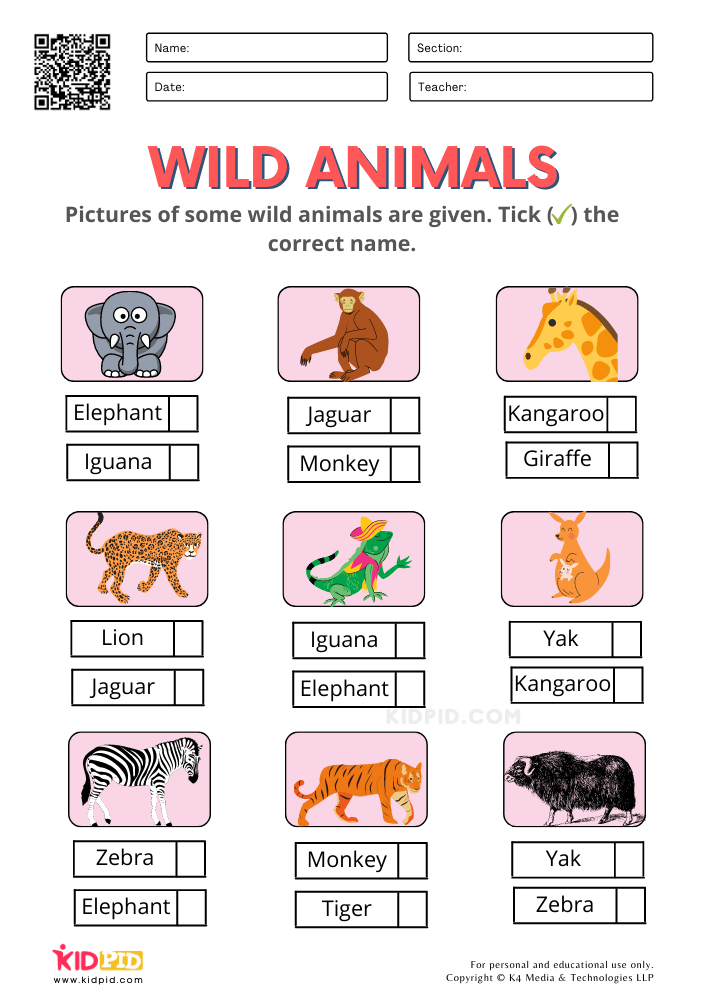
Tick the correct wild animal pictures is a fun and educational activity designed for kids and animal lovers. Participants are presented with various pictures of animals and must identify and select the wild ones. This activity helps improve knowledge about wildlife and animal habitats, making it both entertaining and informative.
Wild Animals Tracing Words
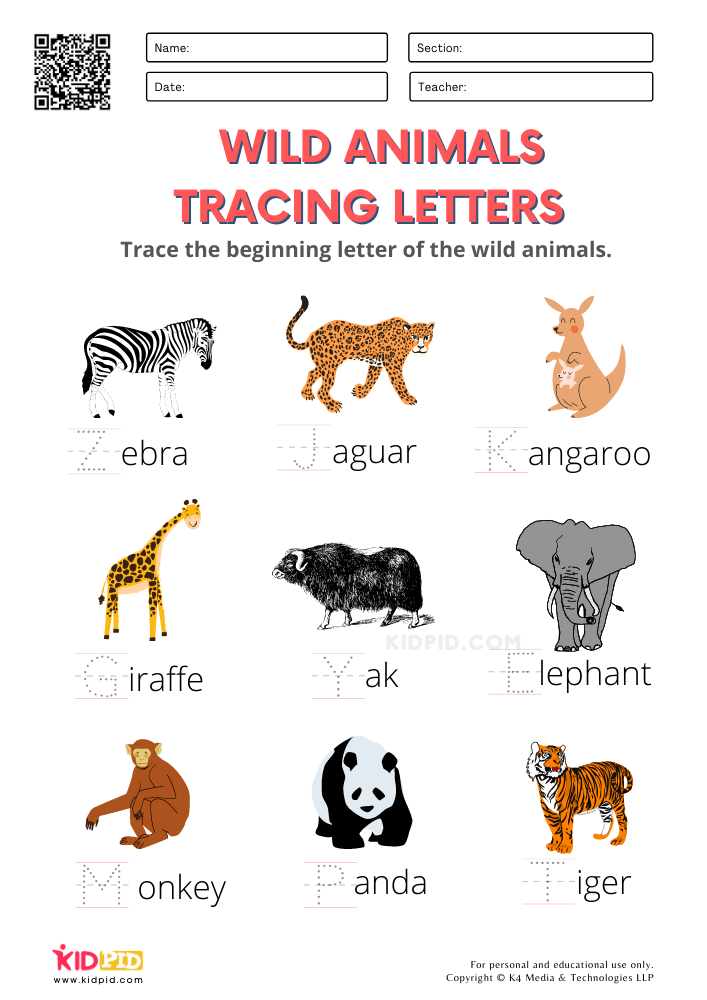
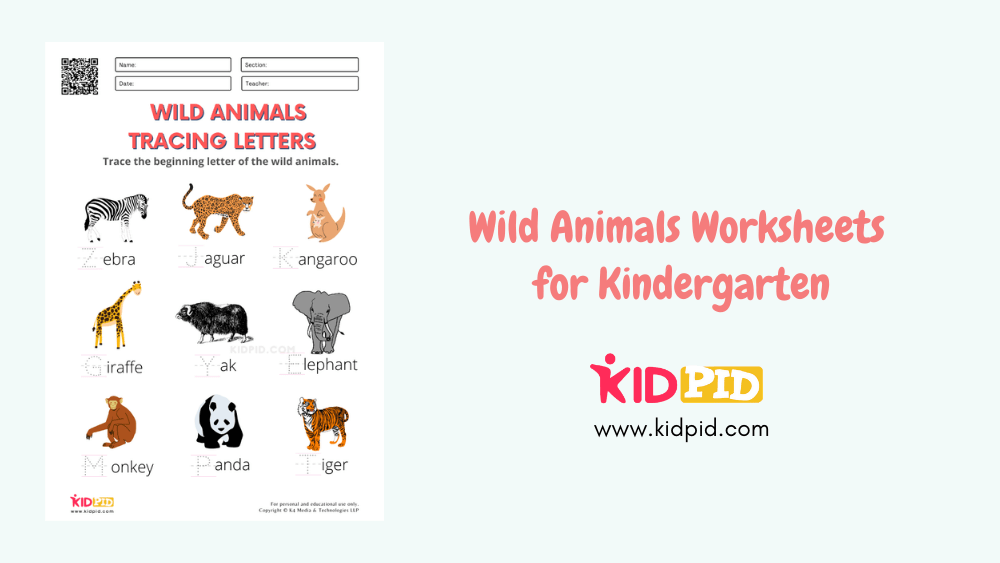
Wild animals tracing words is a fun and educational activity for kids. It involves tracing the names of different wild animals and helping children practice their writing skills. As they follow the dotted lines to form each word, they also learn to recognize and spell the names of various wild animals, making the learning process enjoyable and interactive.
Wild Animals Word Search in the Puzzle

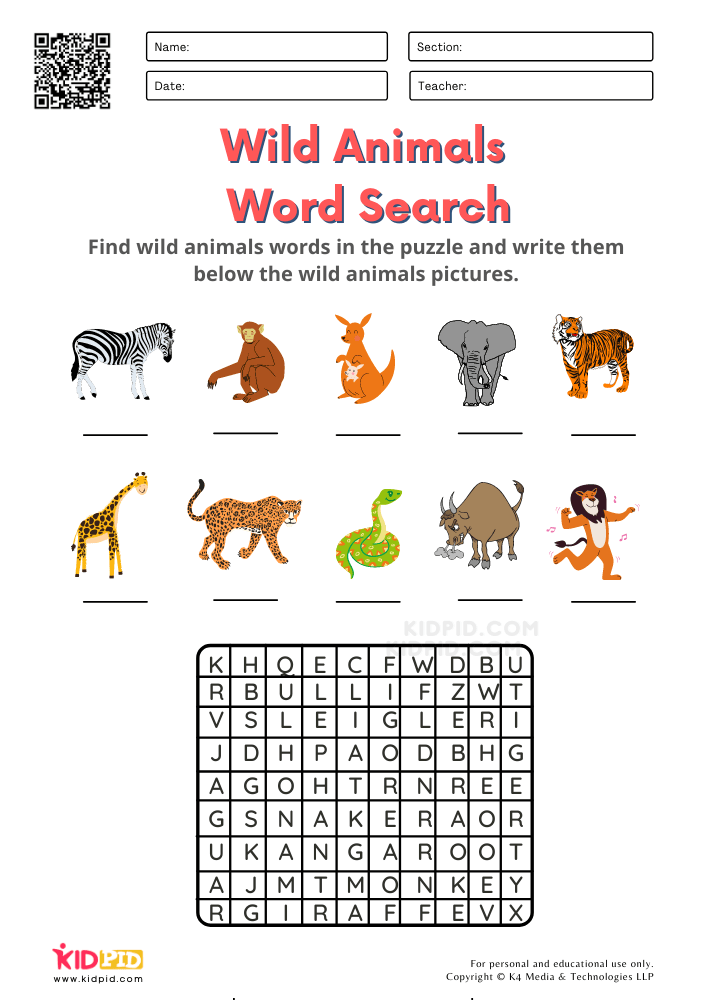
Wild animals word search in the puzzle is a game where you search for the names of wild animals hidden in a grid of letters. This puzzle helps improve vocabulary and spelling skills. As you find and circle each animal name, you learn about different wild creatures, making it an enjoyable way to enhance your language abilities.
Key Facts About Wild Animals Worksheets for Kindergarten
Wild Animals Worksheets for Kindergarten are educational resources designed to introduce young children to animals that live in forests, jungles, deserts, grasslands, and other natural habitats. These worksheets combine fun activities with learning opportunities to help children recognize, identify, and understand various wild animals.
Key facts include:
- Suitable for kindergarten and preschool learners.
- Focus on animal identification and classification.
- Improve observation and vocabulary skills.
- Include coloring, matching, tracing, and sorting activities.
- Support early science and environmental education.
- Encourage curiosity about wildlife and nature.
- Help develop fine motor and cognitive skills.
These worksheets provide an engaging way for children to learn about animals while building foundational academic skills.
Parts/Types/Examples of Wild Animals Worksheets for Kindergarten
Wild animal worksheets come in different formats to suit various learning styles and developmental levels.
Parts of a Wild Animal Worksheet:
- Animal pictures or illustrations
- Activity instructions
- Matching or labeling sections
- Coloring spaces
- Tracing and writing exercises
- Question-and-answer activities
Types of Wild Animals Worksheets:
- Animal matching worksheets
- Wild animal coloring pages
- Trace and write animal names worksheets
- Animal habitat worksheets
- Animal sorting activities
- Cut-and-paste worksheets
- Animal counting worksheets
- Animal identification quizzes
Examples of Wild Animals Included:
- Lion
- Tiger
- Elephant
- Giraffe
- Zebra
- Monkey
- Bear
- Fox
- Deer
- Crocodile
How Do Wild Animals Worksheets for Kindergarten Work?
Wild Animals Worksheets for Kindergarten use interactive activities to help children learn through visual recognition, hands-on practice, and repetition.
The process typically includes:
- Children observe pictures of wild animals.
- They identify animals by name or appearance.
- Activities such as matching, coloring, and tracing reinforce learning.
- Habitat and classification exercises help children understand where animals live.
- Repeated exposure improves memory retention and vocabulary development.
These worksheets encourage active participation, making learning enjoyable and effective for young learners.
Benefits of Learning About Wild Animals Worksheets for Kindergarten
Learning through wild animal worksheets offers several educational advantages.
Educational Benefits:
- Enhances animal recognition skills.
- Expands vocabulary and language development.
- Strengthens observation and critical-thinking abilities.
- Supports early science learning.
- Improves concentration and attention span.
Developmental Benefits:
- Develops fine motor skills through coloring and tracing.
- Encourages visual discrimination.
- Builds confidence through independent learning.
- Promotes curiosity about nature and wildlife.
Environmental Awareness Benefits:
- Introduces wildlife conservation concepts.
- Encourages respect for animals and habitats.
- Helps children understand biodiversity.
Learning Objectives
The primary learning objectives of Wild Animals Worksheets for Kindergarten include:
- Identify common wild animals.
- Recognize animal names and pictures.
- Understand basic animal habitats.
- Improve vocabulary related to wildlife.
- Develop fine motor and handwriting skills.
- Strengthen matching and classification abilities.
- Enhance observation and memory skills.
- Foster an appreciation for nature and animals.
By completing these worksheets, children gain foundational knowledge that supports future science and language learning.
Worksheet Instructions
Follow these simple instructions to complete the worksheet activities successfully:
- Look carefully at each wild animal picture.
- Read or listen to the animal name.
- Match animals to their correct names or habitats.
- Color the animals using appropriate colors.
- Trace and write animal names neatly.
- Complete sorting and classification activities.
- Answer any simple questions included in the worksheet.
- Review completed work with a teacher or parent.
Encourage children to discuss the animals they see and share interesting facts they know.
Interesting Facts About Wild Animals Worksheets for Kindergarten
Learning becomes more exciting when children discover fascinating facts about wild animals.
- Lions are often called the “King of the Jungle.”
- Giraffes are the tallest land animals in the world.
- Elephants have excellent memories.
- Tigers have unique stripe patterns, like human fingerprints.
- Monkeys use their tails for balance and movement.
- Zebras have distinct stripe patterns that help identify them.
- Crocodiles have powerful jaws and can live for many years.
- Bears can hibernate during winter in some regions.
These facts make worksheet activities more engaging and memorable.
Vocabulary Words
Introduce children to important wildlife-related vocabulary.
Basic Wild Animal Vocabulary:
- Wild Animal
- Habitat
- Jungle
- Forest
- Safari
- Predator
- Mammal
- Reptile
- Herbivore
- Carnivore
Animal Names Vocabulary:
- Lion
- Tiger
- Elephant
- Giraffe
- Zebra
- Monkey
- Bear
- Fox
- Deer
- Crocodile
Practicing these words helps improve language skills and animal knowledge.
Real-Life Applications
Wild animal knowledge learned through worksheets can be applied in everyday life.
- Identifying animals during zoo visits.
- Recognizing wildlife in books and documentaries.
- Understanding animal habitats in science lessons.
- Participating in nature and conservation activities.
- Developing awareness about environmental protection.
- Building communication skills through animal discussions.
- Supporting future studies in biology and ecology.
These practical connections help children understand the importance of wildlife in the natural world.
FAQs
Q1. What are Wild Animals Worksheets for Kindergarten?
Answer: They are educational worksheets that teach young children about animals living in natural habitats through engaging activities such as coloring, matching, tracing, and identification exercises.
Q2. What age group are these worksheets suitable for?
Answer: They are typically designed for children aged 4 to 6 years, including preschool and kindergarten students.
Q3. What skills do children develop through these worksheets?
Answer: Children improve animal recognition, vocabulary, fine motor skills, observation, matching abilities, and early science knowledge.
Q4. Why is learning about wild animals important?
Answer: Learning about wild animals helps children understand nature, biodiversity, habitats, and the importance of protecting wildlife.
Q5. Can these worksheets be used at home?
Answer: Yes. Parents can easily use them for homeschooling, homework practice, enrichment activities, and educational play.
Q6. Are wild animal worksheets useful for classroom learning?
Answer: Yes. Teachers often use them to support science lessons, vocabulary development, group activities, and independent learning centers.
Q7. What animals are commonly included in these worksheets?
Answer: Common examples include lions, tigers, elephants, giraffes, zebras, monkeys, bears, foxes, deer, and crocodiles.
Q8. How do wild animal worksheets support early education?
Answer: They combine visual learning, hands-on activities, and language practice to build foundational skills that prepare children for future academic success.
These Wild Animals Worksheets for Kindergarten make learning about wildlife fun and educational. Regular practice helps children recognize different animals, improve vocabulary, build observation skills, and develop a lifelong interest in science and nature. Learn, practice, and grow with our collection of worksheets, paragraphs, essays, flashcards, quizzes, and interactive resources. Stay connected on YouTube & Facebook.
The Content Team crafted this worksheet to promote student improvement.
Reviewed By Manpreet Kaur
Read More:



Thank you so much