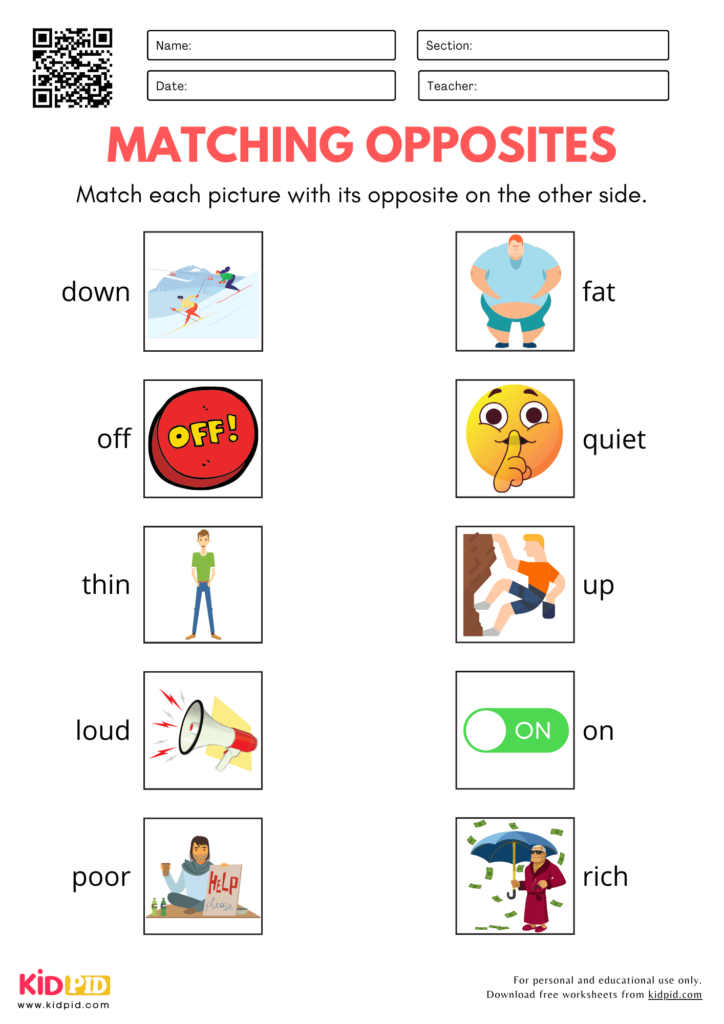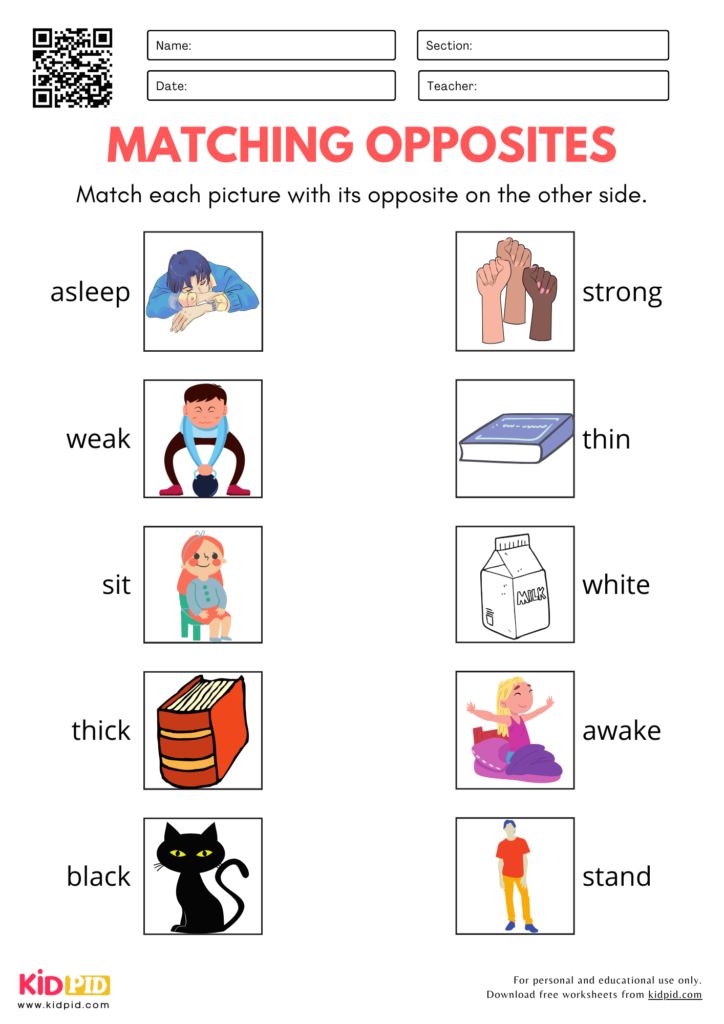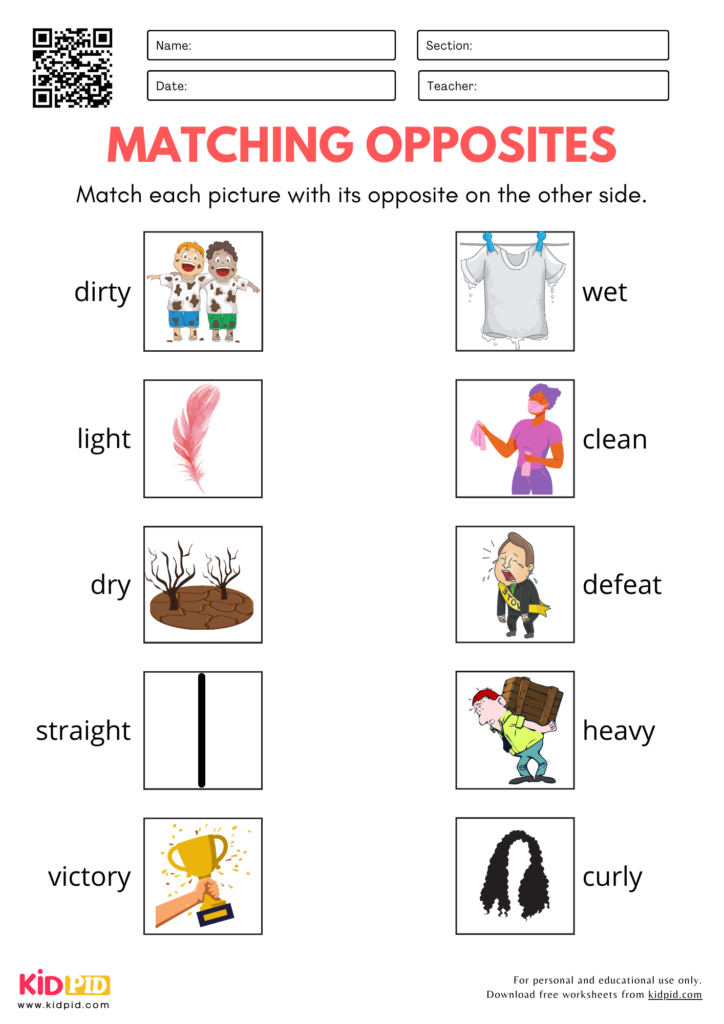
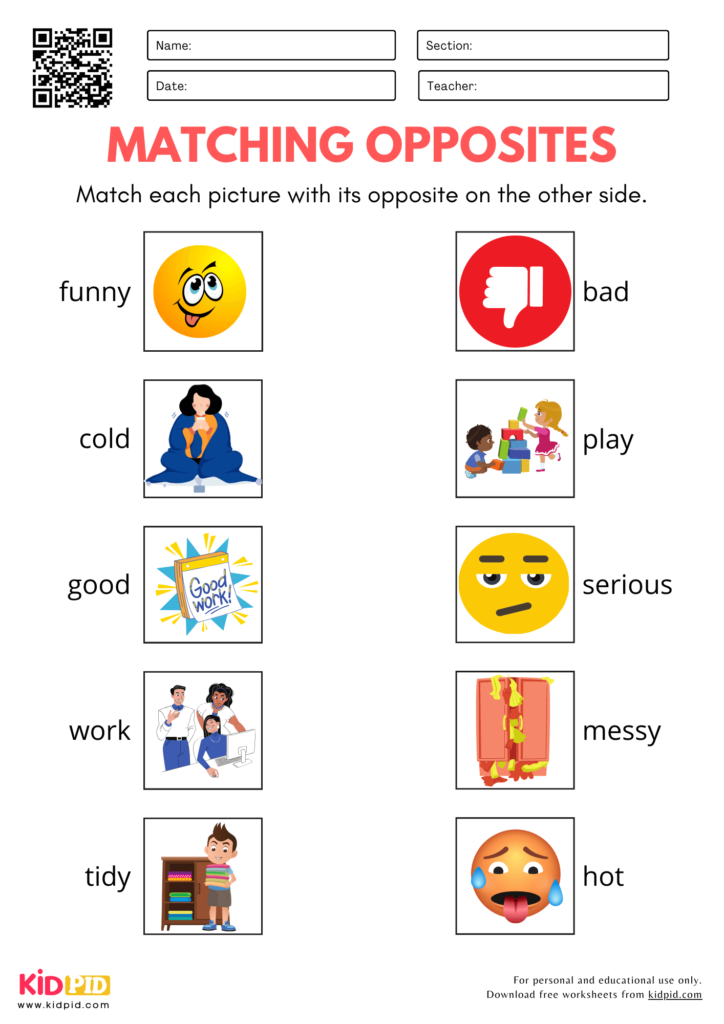
So in this activity, kindergarten kids have to match the opposite pictures. It includes several worksheets with various images and their opposites. So the children will match each picture with their opposites on the other side. This will enhance their vocabulary skills and improve their communication. Check out these amazing worksheets and practice them.

Matching Opposite Word Worksheets For Kindergarten

[Scroll Down for Download Link]

Read More: Matching Rhyming Words Worksheets for Kindergarten

Matching Opposites Pictures Worksheet for Kindergarten

Matching Opposites Pictures Worksheet for Kindergarten

Matching Opposites Pictures Worksheet for Kindergarten

Matching Opposites Pictures Worksheet for Kindergarten

Matching Opposites Pictures Worksheet for Kindergarten

Matching Opposites Pictures Worksheet for Kindergarten

Matching Opposites Pictures Worksheet for Kindergarten

Matching Opposites Pictures Worksheet for Kindergarten

Matching Opposites Pictures Worksheet for Kindergarten

Matching Opposites Pictures Worksheet for Kindergarten

Key Facts About Matching Opposites Worksheets

  • Target Audience: Designed specifically for kindergarten-aged children (approx. 5–6 years old).
  • Educational Purpose: These worksheets bridge the gap between visual recognition and language acquisition by teaching antonyms.
  • Skill Focus: Enhances cognitive development, visual discrimination, and foundational vocabulary.
  • Expertly Crafted: Developed by educational specialists to align with early childhood literacy standards.
  • Accessibility: These printables are designed to be easily integrated into both classroom lesson plans and at-home homeschooling routines.

Parts, Types, and Examples of Matching Opposites Worksheets

These worksheets utilize various methods to keep learners engaged:

  • Picture-to-Picture Matching: Young learners match images (e.g., a tall giraffe with a short mouse).
  • Picture-to-Word Matching: Connecting an illustration to its written opposite word to reinforce literacy.
  • Categorized Themes: Worksheets often focus on specific contexts, such as weather (sunny/rainy), emotions (happy/sad), or physical sizes (big/small).
  • Interactive Activities: Many include drawing lines, cutting and pasting, or coloring, which helps build fine motor skills alongside language learning.

How Does This Worksheet Work?

The activity operates on the principle of associative learning. Children observe two sets of images or words on opposite sides of the page. By identifying the relationship between these items—recognizing that they represent opposite concepts—the child draws a line to connect them. This interactive process forces the brain to classify information and improves memory retention compared to passive learning methods.

Benefits of Learning About Opposites

  • Vocabulary Expansion: Provides the foundational knowledge needed for more complex grammar and descriptive language.
  • Cognitive Development: Encourages critical thinking by requiring the child to compare and contrast objects.
  • Improved Communication: Learning antonyms allows children to express themselves with greater precision.
  • Fine Motor Skill Enhancement: Tasks like drawing straight lines or circling images refine hand-eye coordination.

Learning Objectives

By the end of these exercises, learners will be able to:

  1. Define Antonyms: Understand the basic concept that some words have opposite meanings.
  2. Visual Literacy: Successfully identify and distinguish between different visual cues in pictures.
  3. Logical Reasoning: Apply reasoning skills to match paired items accurately.
  4. Literacy Readiness: Build the foundational vocabulary necessary for early reading and sentence construction.

Worksheet Instructions

  1. Preparation: Download and print the high-quality worksheet PDF.
  2. Guided Introduction: Ask the child to name the objects on the left side of the page first.
  3. Active Matching: Ask, “What is the opposite of this?” and encourage the child to find the corresponding picture on the right.
  4. Reinforcement: Have the child draw a line connecting the pair.
  5. Review: Once finished, ask the child to say the pair out loud (e.g., “Hot and Cold”) to reinforce the verbal link.

Interesting Facts About Opposite Vocabulary Words

  • Foundation of Language: Understanding opposites is one of the earliest forms of linguistic classification.
  • Dual Processing: Learning “hot” while learning “cold” helps the brain anchor new vocabulary through contrasting associations, making it easier to remember than learning words in isolation.
  • Cultural Universality: Opposites exist in every language, making this a universal building block for human communication.

Real-Life Applications

  • Descriptive Language: Children can describe their surroundings better (e.g., “The soup is hot, but the ice cream is cold”).
  • Following Directions: Understanding concepts like “on/off,” “up/down,” or “in/out” helps children follow multi-step instructions at school and home.
  • Critical Thinking: Helping children understand that one state of being is relative to another, fostering early scientific thinking.

FAQs

Q1. At what age should kids start learning opposites?

Answer: Most children begin identifying basic opposites around age 3 or 4, but kindergarten (ages 5–6) is the ideal time to formalize this through written worksheets.

Q2. Can these worksheets help children with reading?

Answer: Absolutely! By associating a visual object with a word, children build sight-word recognition and improve their ability to decode text later on.

Q3. How often should my child practice these worksheets?

Answer: Consistency is key. Practicing 10–15 minutes twice a week is more effective than doing one long session.
After completing these matching opposites worksheets, kindergarten kids will strengthen their vocabulary by learning the opposite of several words, and it helps them to identify the images of the words. Keep practicing them if you want to gain knowledge about antonyms and enhance your communication and writing skills. Learn, explore, and grow with our collection of quizzes,  worksheets, essays, flashcards, paragraphs, and interactive resources. Follow us on  YouTube & Facebook.

This worksheet is designed by the Content Team to support learning drills.

Reviewed By Sheereen

Read More:

About the Author

Content Team

Kidpid Content Team is a team of experienced educators, curriculum researchers, and child-focused content creators specializing in early childhood and primary education. The team develops high-quality, research-based worksheets, learning activities, and educational articles aligned with age-appropriate learning standards. Every resource is carefully reviewed to ensure accuracy, clarity, and educational value, making Kidpid a trusted platform for parents, teachers, and schools worldwide.

View All Articles