

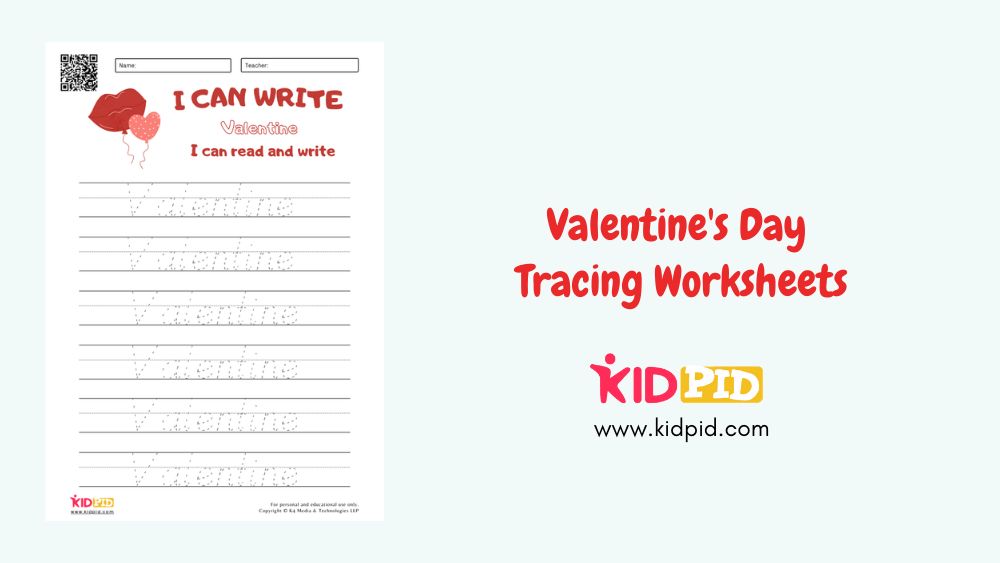
Looking for free tracing printables worksheets for Valentine’s Day? Try these beautifully created tracing worksheets for kids to enjoy the day. Kids in kindergarten can practice writing words like Valentine, Love Letter, Chocolate, Teddy Bear, among other similar words. So, let’s start with these free printables.
Valentine’s Day is a day when we show how much the people we love mean to us. It is famously celebrated on 14 February of every year. The day is celebrated by exchanging and gifting essentials such as candies, flowers, and more. Let’s dig in deeper and understand how the beautiful day actually came to be.
The Lupercalia was later outlawed and was labeled as something that was ‘un-Christian’. This took place at the end of the 5th century, the same time when 14th February was declared to be Valentine’s Day by Pope Gelasius. No sooner was the day named Valentine’s day it was officially connected with love.
Contents
- Valentine’s Day Tracing Worksheets
- Key Facts About KidPid’s Valentine’s Day Tracing Worksheets
- Parts/Types/Examples of Tracing Worksheets
- How Does a Tracing Worksheet Work?
- Benefits of Learning with Valentine’s Day Tracing Worksheets
- Learning Objectives
- Worksheet Instructions
- Interesting Facts About Valentine’s Day
- Vocabulary Words
- FAQs
- Q1. What are Valentine’s Day tracing worksheets?
- Q2. Who can use these Valentine’s Day tracing worksheets?
- Q3. What skills do these worksheets help children develop?
- Q4. Can these worksheets be used in classrooms and at home?
- Q5. Do children need special materials to complete these worksheets?
- Q6. Are these worksheets suitable for beginners?
- Q7. How can parents make tracing practice more engaging?
- Check out these printables
HOW CAN YOU CELEBRATE VALENTINE’S DAY
There are many ways that you can use to help your kid celebrate Valentine’s Day.
- You can sit with your kid and tell them the importance of the day and how it can be celebrated
with people who are dear to them. - Instead of exchanging and gifting expensive stuff, you can show the importance of giving
kindness, time, and love to the people whom they love. - Some families exchange handmade cards with their children on Valentine’s Day; you can do the same, as it will help your kid to understand the depth of love and the importance of family.
Valentine’s Day Tracing Worksheets

Valentine
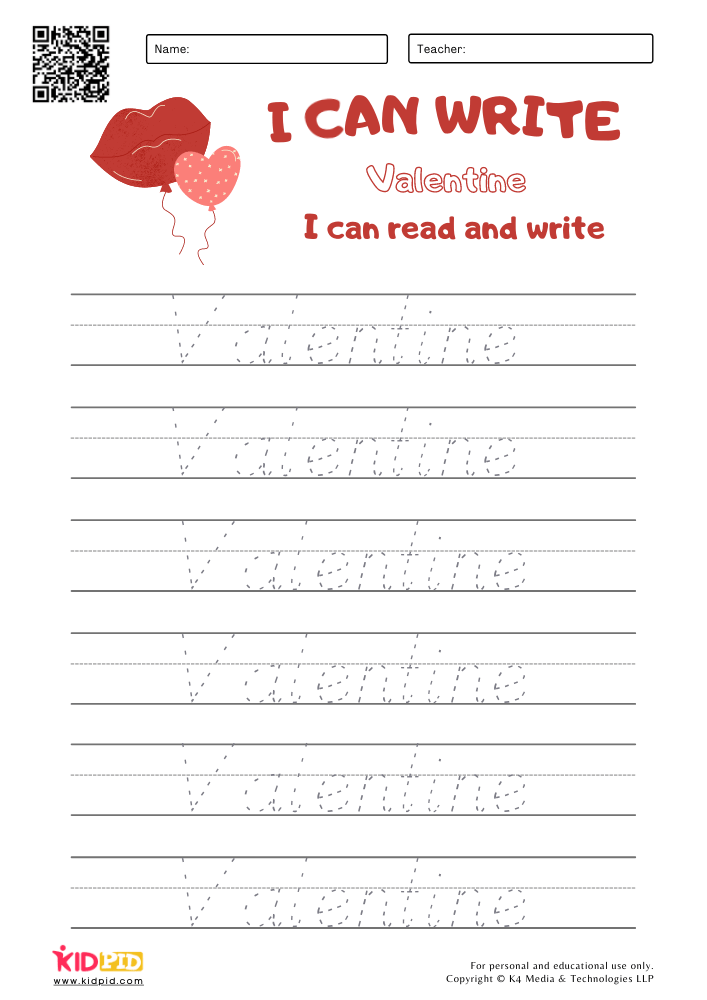
Love Letter
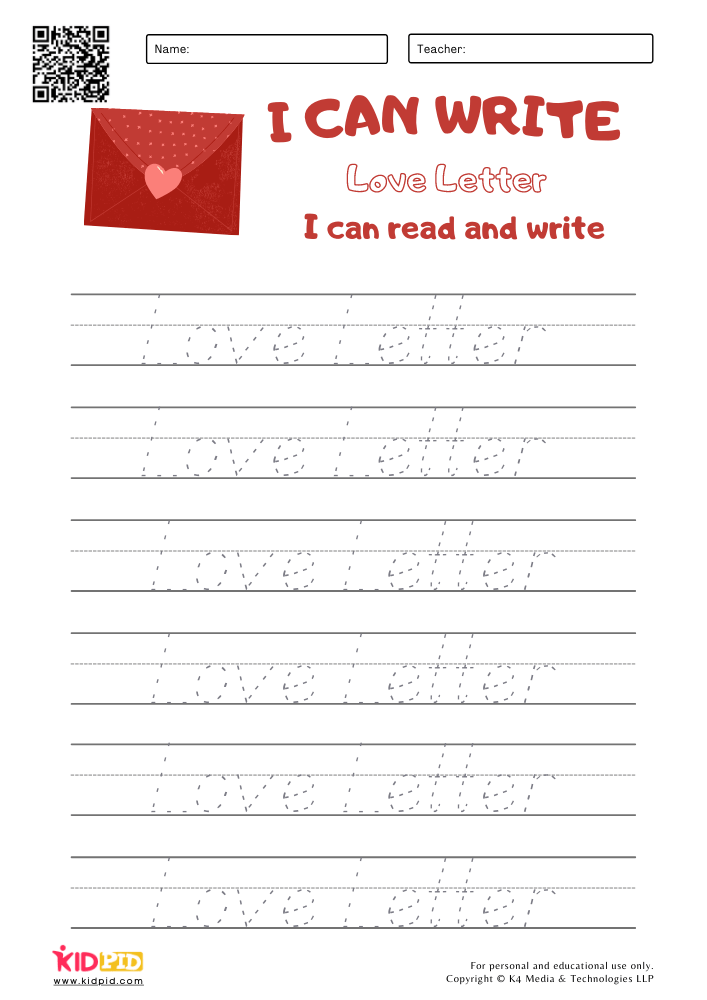
Drip Cake
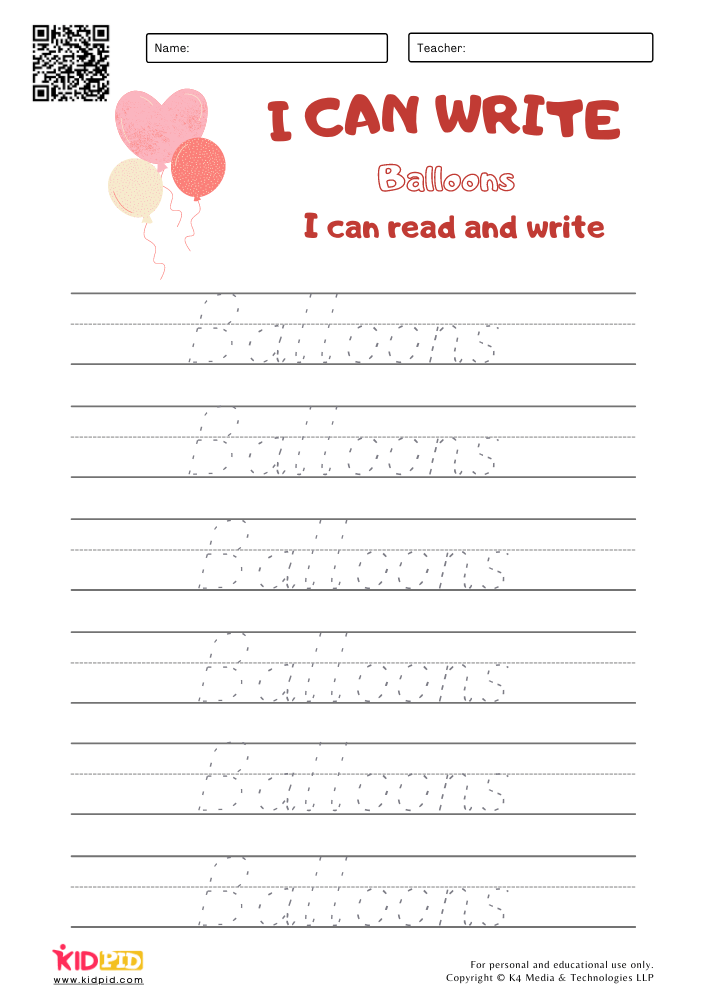
Balloons
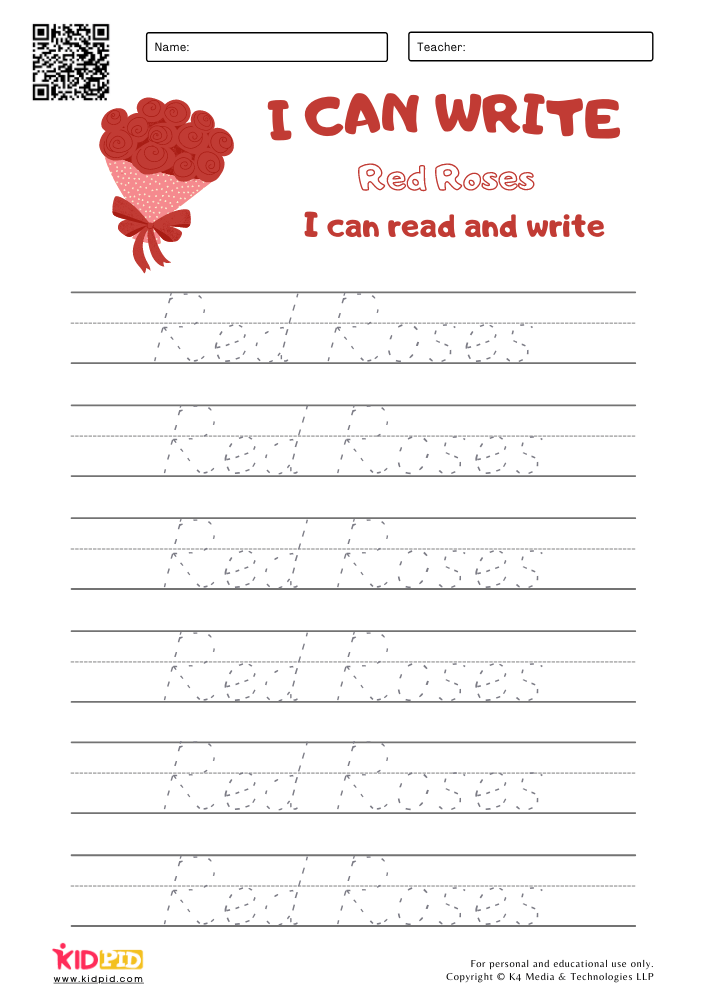
Red Roses
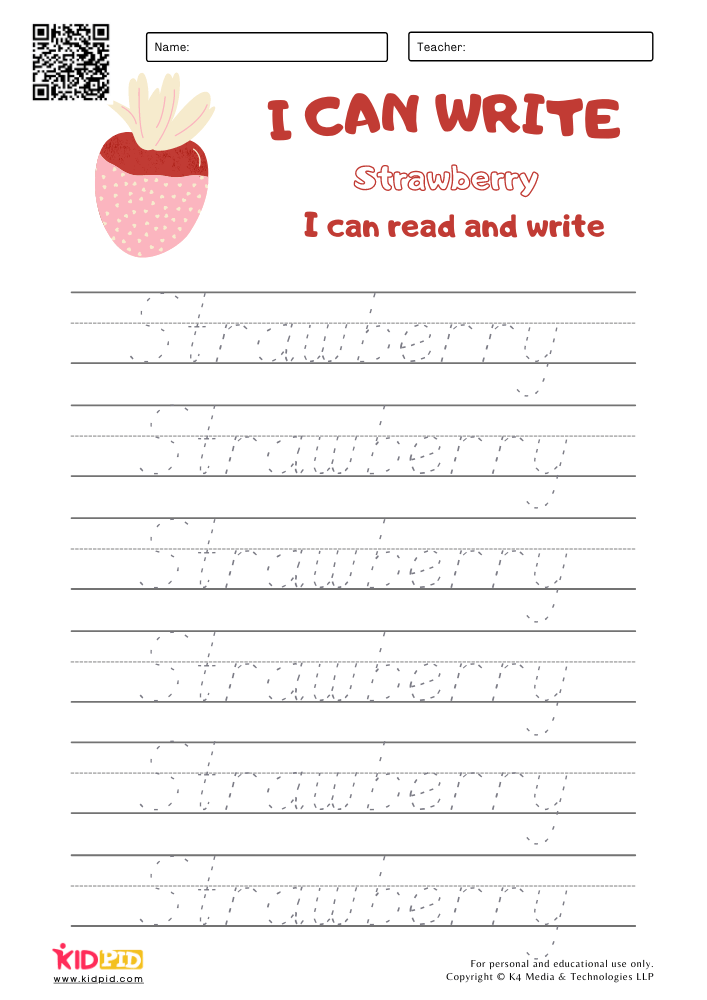
Strawberry
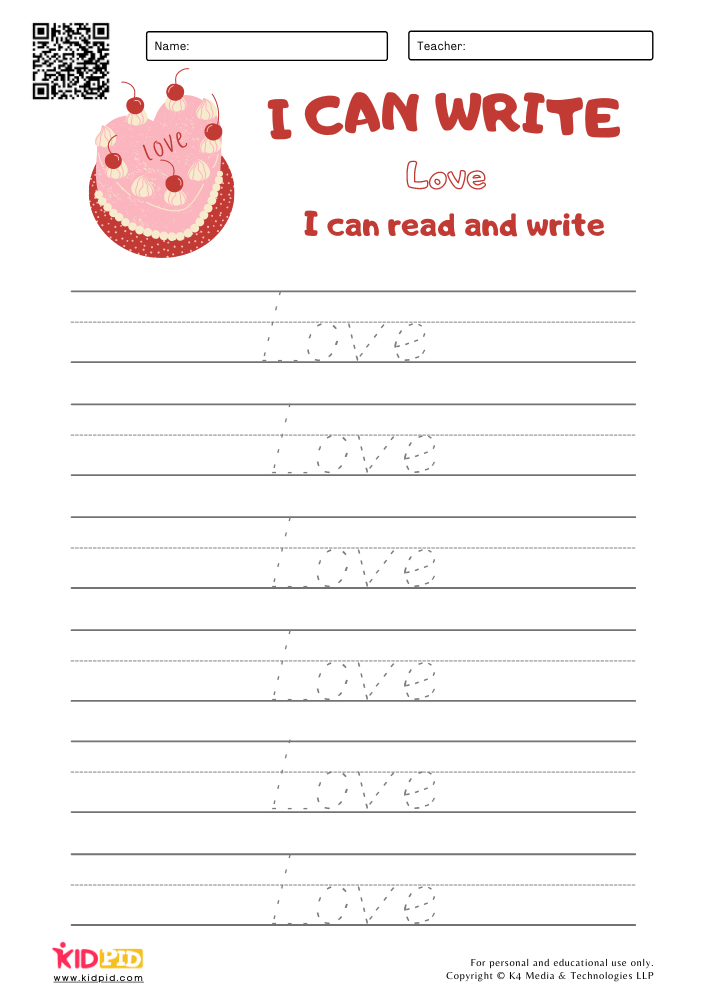
Love
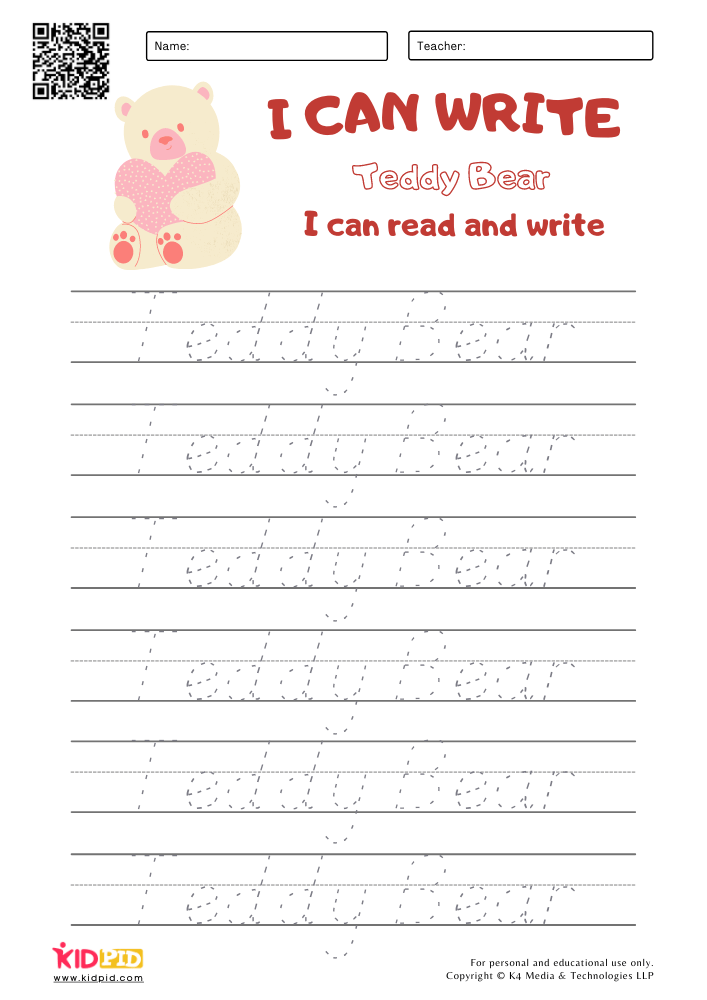
Teddy Bear
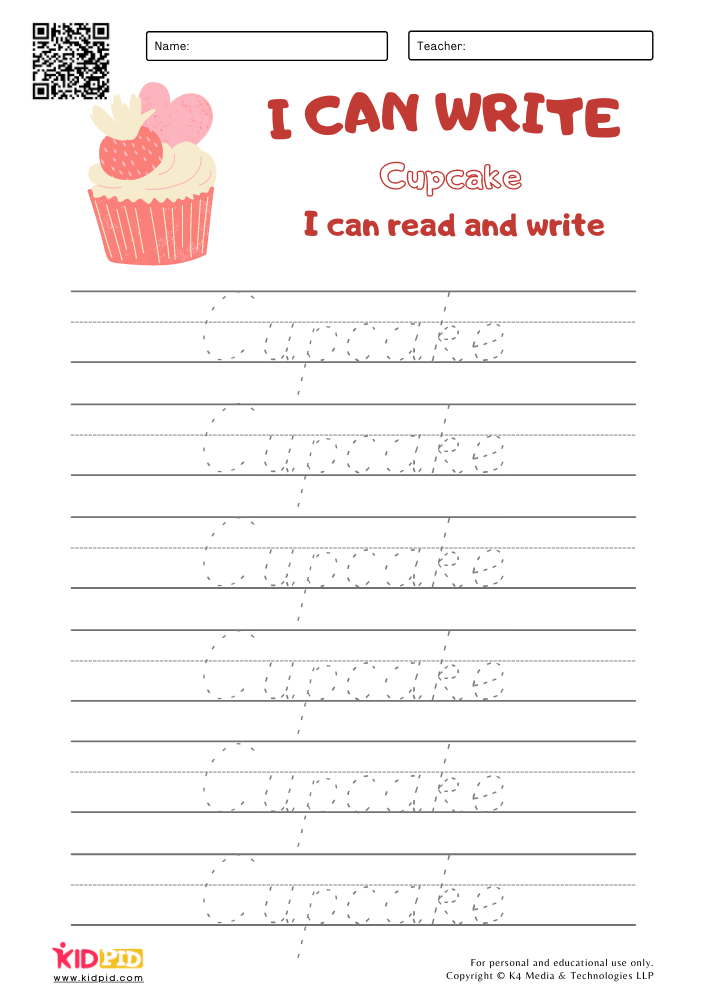
Cupcake
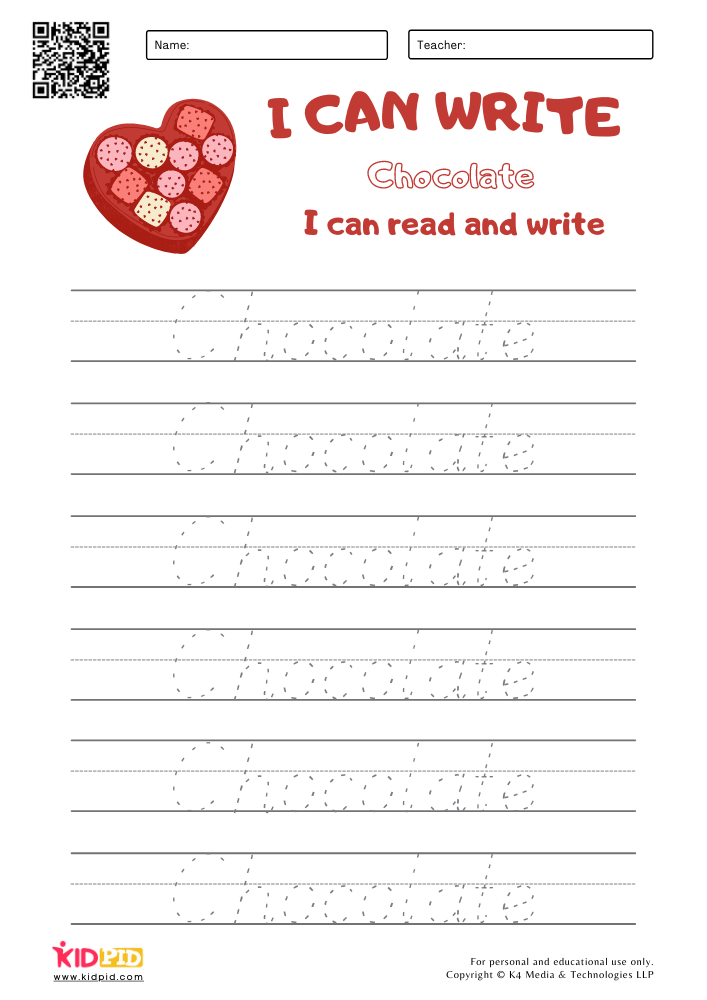
Chocolate
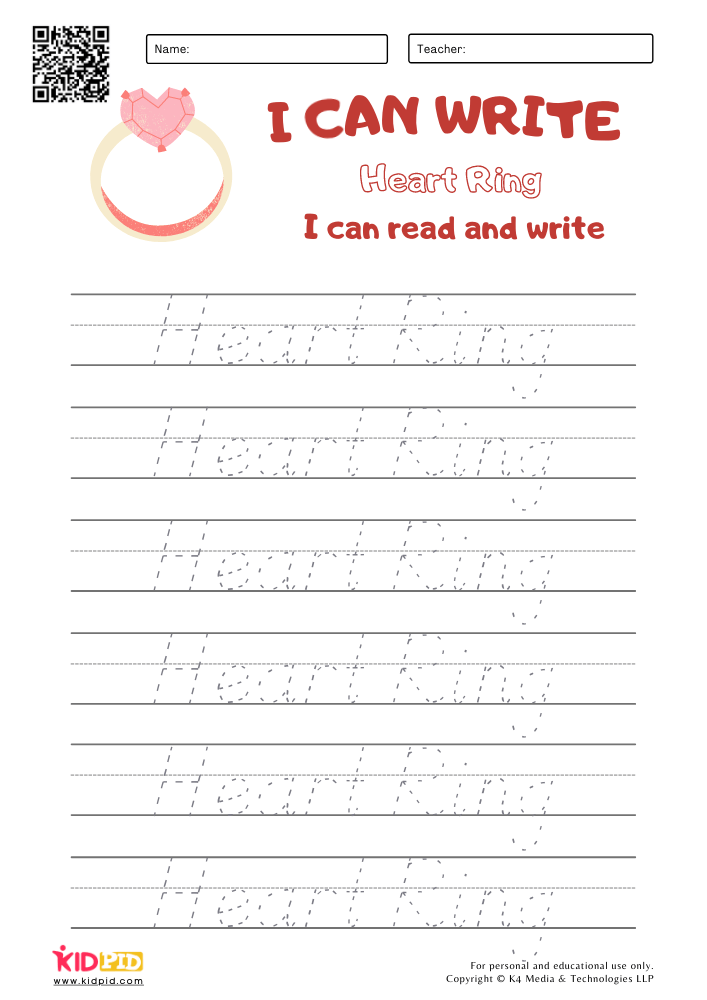
Heart Ring
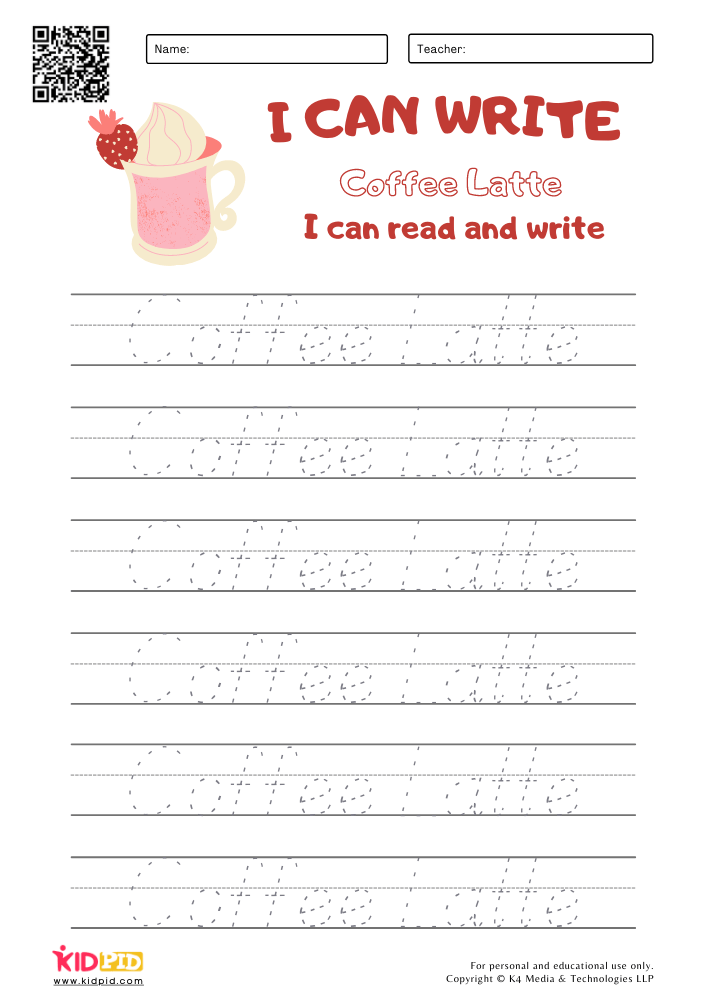
Coffee Latte
Key Facts About KidPid’s Valentine’s Day Tracing Worksheets
- Target Audience: Perfect for toddlers, preschoolers, and kindergarteners (ages 3 to 6).
- Skill Focus: Fine motor development, pencil control, hand-eye coordination, and early vocabulary building.
- Format: High-quality, downloadable, and completely free printable PDF worksheets.
- Thematic Integration: Combines essential handwriting practice with seasonal, high-interest Valentine’s Day imagery to keep young learners actively engaged.
Parts/Types/Examples of Tracing Worksheets
Early childhood development progresses from simple strokes to complex word forms. These worksheets are strategically structured into three distinct learning categories:
- Line and Path Tracing: Simple horizontal, vertical, zig-zag, and curved dotted lines designed to help toddlers master grip and pencil directionality.
- Thematic Shape Tracing: Pages dedicated to tracing festive, recognizable geometric configurations like hearts, stars, balloons, and rings.
- Holiday Vocabulary & Letter Tracing: Advanced sheets featuring dotted letters for seasonal keywords, helping children connect phonetic sounds with physical writing mechanics. Examples included in this package feature:
- Valentine, Love Letter, Teddy Bear, Drip Cake, Balloons, Red Roses, Strawberry, Cupcake, Chocolate, Heart Ring, and Coffee Latte.
How Does a Tracing Worksheet Work?
Tracing activities operate as a structural “scaffold” in early education. By following a sequence of light, dotted guidelines, a child’s brain establishes a muscle memory blueprint for pencil manipulation without the frustration of drawing freehand.
As the child tracks the visual path, the brain continuously sends feedback to the tiny muscles in the hand and wrist. This process strengthens proprioception—the body’s subconscious awareness of its position and movement in space—which is critical for clean, fluent handwriting later in life.
Benefits of Learning with Valentine’s Day Tracing Worksheets
Incorporating thematic worksheets into your lesson plan provides several research-backed benefits:
- Strengthens Fine Motor Skills: Activates and tones the intrinsic hand muscles required to transition from a primitive fist grasp to a mature, functional tripod pencil grip.
- Boosts Visual-Spatial Processing: Teaches children to estimate spacing, recognize margins, and comprehend spatial relationships on a page.
- Increases Attention Span & Task Stamina: The high-interest Valentine theme keeps engagement high, training young children to sit, focus, and complete a task from start to finish.
- Bilingual & Communication Milestones: Associating real-world objects (like a Teddy Bear or a rose) with written characters accelerates phonemic awareness and language absorption.
Learning Objectives
By completing these holiday printables, young learners will achieve the following milestone markers aligned with early childhood education standards:
- Cognitive: Correctly identify and name 11 unique Valentine’s Day symbols and holiday traditions.
- Motor: Demonstrate proper pencil grasp and exhibit controlled movement while tracking complex curves and straight lines.
- Literacy: Formulate and write foundational letters while associating specific letter strokes with holiday-themed sight words.
Worksheet Instructions
To make the most of these printables, guide your child through these step-by-step practices:
- Prepare the Environment: Print the sheets on sturdy white paper. Provide chunky crayons or washable markers for younger toddlers, and standard primary pencils for kindergarteners. Ensure their seating allows their feet to touch the floor or a footrest for proper posture.
- Demonstrate the Movement: Before handing over the pencil, have your child use their pointer finger to “air trace” or trace directly over the dotted paths on the paper. This activates sensory motor pathways.
- Follow the Dots: Instruct your child to start at the designated left-hand starting point and carefully guide their writing utensil along the dotted path to the right. Encourage slow, deliberate motions rather than rushing.
- Read and Spell Aloud: Once a shape or word (like “Cupcake” or “Love”) is traced, have the child point to the illustration and say the word aloud to solidify visual-verbal recognition.
Interesting Facts About Valentine’s Day
Give your kids a fun mental break between worksheets with these kid-friendly history facts:
- Ancient Roots: Valentine’s Day began a very long time ago at the end of the 5th century when Pope Gelasius named February 14th an official holiday.
- The First Sweet Treats: Richard Cadbury created the very first heart-shaped box of chocolates all the way back in the 1860s!
- Millions of Cards: Valentine’s Day is the second most popular day of the year for sending greeting cards, topped only by Christmas.
Vocabulary Words
Enhance your students’ literacy skills by introducing these thematic spelling words found inside our worksheets:
- Affection: A gentle feeling of fondness, liking, or loving someone.
- Tradition: A special custom or activity that families do together every year, like exchanging handmade cards.
- Emulsion: (For the bakers!) The magical culinary blending of ingredients is seen in a perfect Valentine drip cake.
- Generosity: The act of giving kindness, time, and love freely to friends and family without expecting anything in return.
FAQs
Q1. What are Valentine’s Day tracing worksheets?
Answer: Valentine’s Day tracing worksheets are printable learning activities that help children trace festive words and pictures such as hearts, chocolates, roses, teddy bears, balloons, and Valentine ‘s-themed objects. They make handwriting practice fun while celebrating the holiday.
Q2. Who can use these Valentine’s Day tracing worksheets?
Answer: These worksheets are ideal for preschoolers, kindergarteners, and early Grade 1 students who are learning pencil control, letter formation, and basic handwriting skills.
Q3. What skills do these worksheets help children develop?
Answer: They improve fine motor skills, hand-eye coordination, pencil grip, tracing accuracy, letter recognition, vocabulary, concentration, and early writing confidence through engaging Valentine’s Day activities.
Q4. Can these worksheets be used in classrooms and at home?
Answer: Yes. Teachers can use them for literacy centers, morning work, holiday-themed lessons, and handwriting practice, while parents can enjoy them as fun learning activities at home.
Q5. Do children need special materials to complete these worksheets?
Answer: No. Simply print the worksheets and provide a pencil, crayons, or colored pencils. Children can trace the words and pictures before coloring them for extra creativity.
Q6. Are these worksheets suitable for beginners?
Answer: Yes. The bold tracing lines and simple Valentine’s Day illustrations make them perfect for young learners who are just beginning to develop writing and pre-writing skills.
Q7. How can parents make tracing practice more engaging?
Answer: Parents can encourage children to color the traced pictures, read the words aloud, talk about Valentine’s Day traditions, and create handmade greeting cards using the traced vocabulary to reinforce learning.
Children can practice recognizing letters while learning the importance of capital letters at the beginning of sentences and in proper names. This collection builds strong early literacy skills in a fun way. Discover worksheets, essays, paragraphs, flashcards, quizzes, and interactive resources. Follow us on YouTube & Facebook.
The Content Team developed this worksheet to encourage scholastic improvement.
Reviewed By Sheereen
Check out these printables



