

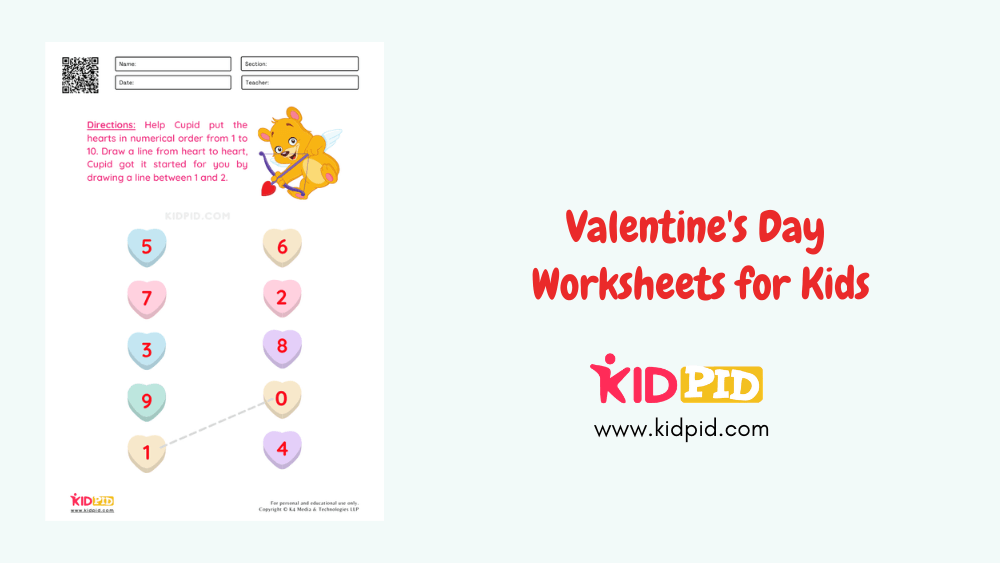
Check out these Valentine’s Day special free printable worksheets for kids. Both preschoolers and kindergarteners can use these creative and colorful worksheets to add fun to this special day.
Valentine’s Day is famously celebrated on 14 February of every year. The day is celebrated by exchanging and gifting essentials such as candies, flowers, and more. Let’s dig in deeper and know the origin of Valentine’s Day.
Contents
- Origin of Valentine’s Day
- Valentine’s Day Worksheets for Kids
- Key Facts About Valentine’s Day Worksheets
- Parts, Types, and Examples of Valentine’s Day Printables
- How Do Valentine’s Day Worksheets Work?
- Benefits of Learning About Valentine’s Day via Worksheets
- Learning Objectives
- Worksheet Instructions
- Interesting Facts About Valentine’s Day
- Vocabulary Words
- Real-Life Applications
- FAQs
Origin of Valentine’s Day
It is believed that Valentine’s Day is celebrated to honor the anniversary of Valentine’s death, which was believed to have occurred around A.D 270. On the other hand, there are different assumptions that the Christian church may have decided to place St. Valentine’s Day in mid-February so that they can ‘Christianize’ the celebration of Lupercalia. Lupercalia is a festival that was dedicated to Faunus, a Roman god
of agriculture.
Talking about Lupercalia, the festival is celebrated where the Roman priests would gather in a cave where the infants of the founder of Rome were believed to be cared for by the she-wolf, or we can say lupa.
These are all that is needed to be covered to teach your kid all about Valentine’s Day and ways that you can use to celebrate with them. Now that you have all the data that you need to celebrate the day, you are all set to make the day memorable.
Valentine’s Day Worksheets for Kids

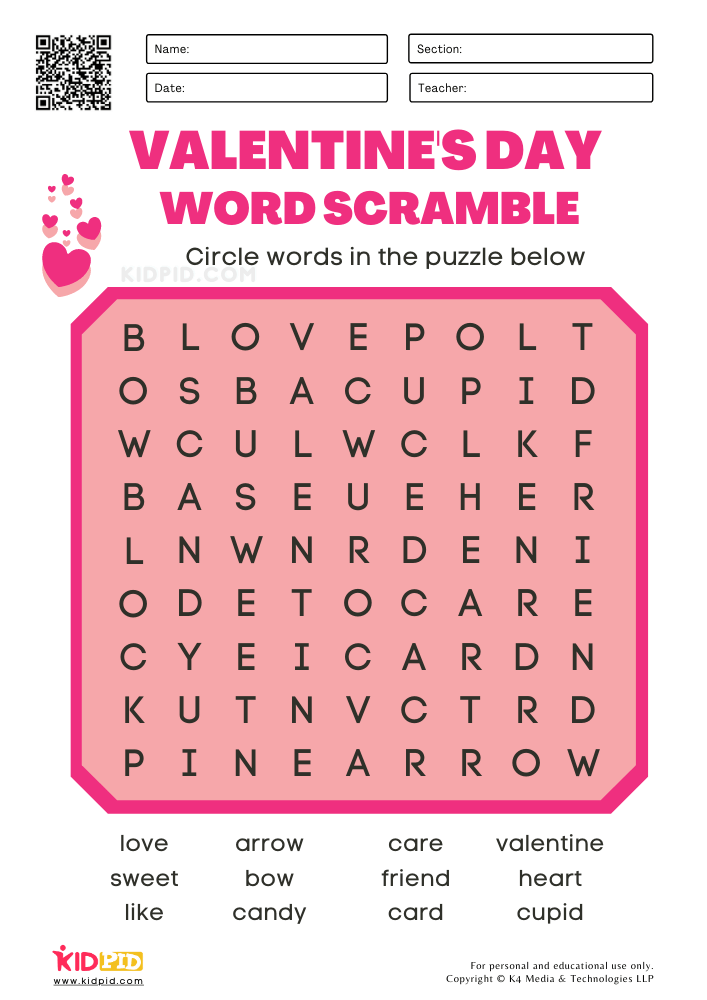
Word Scramble
Circle the word in the puzzle below.w
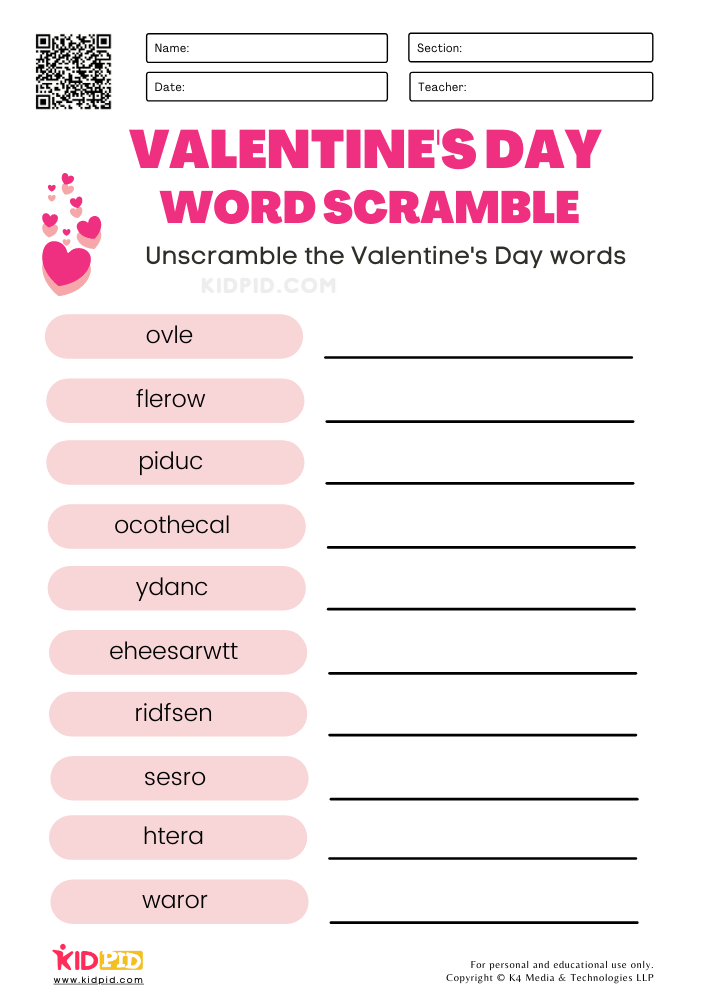
Unscramble the Valentine’s Day words.
I can spend love by….
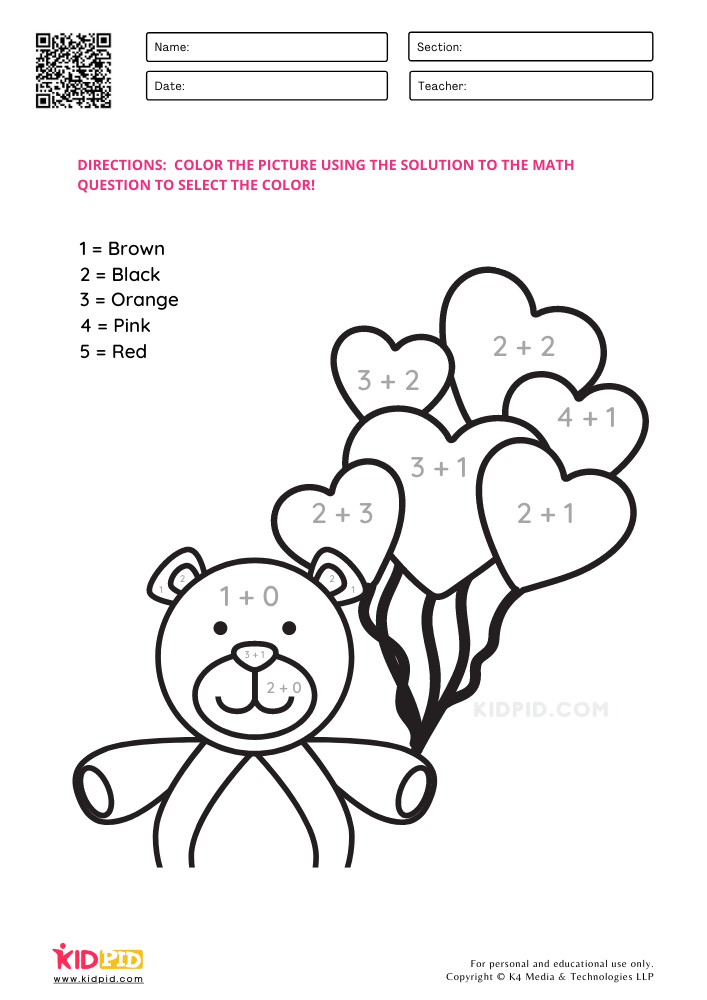
Add and Color
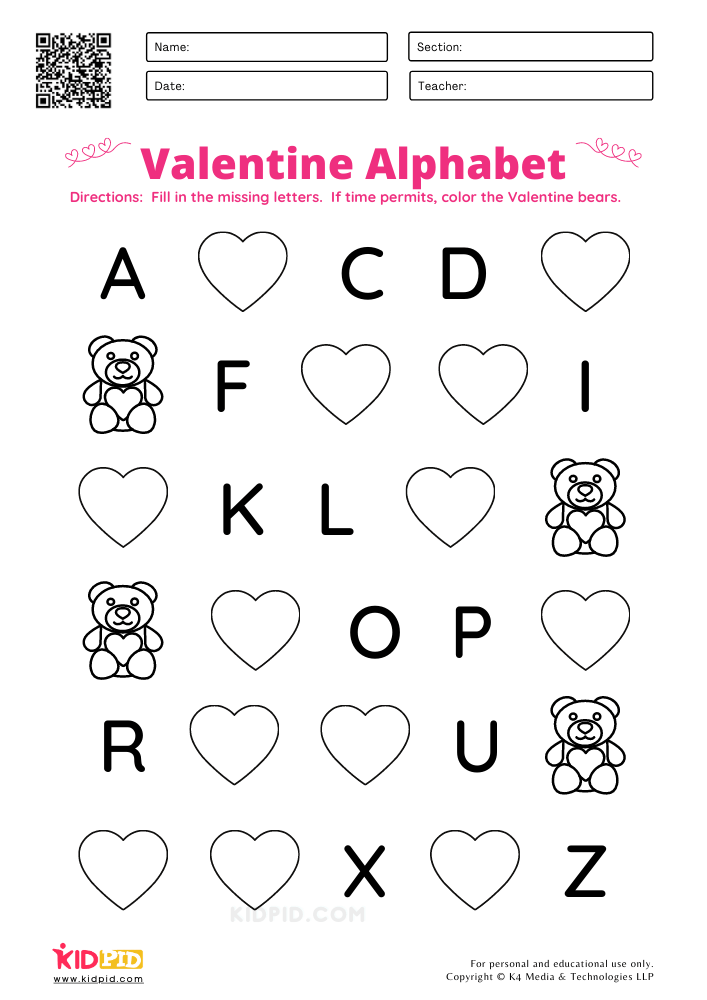
Valentine Alphabet
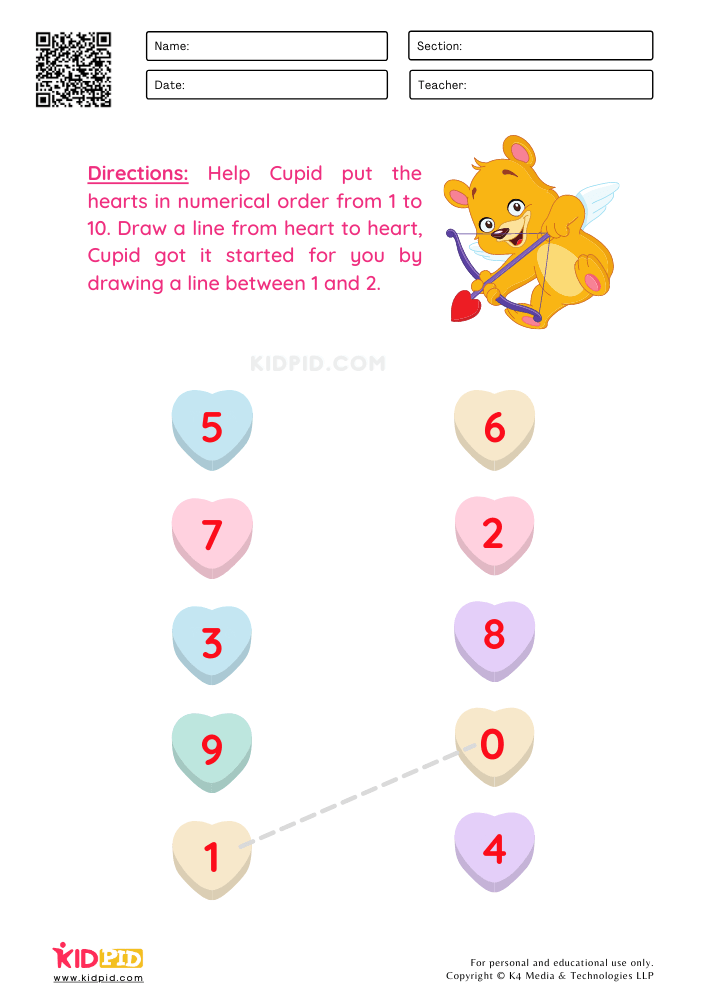
Help Cupid put the hearts
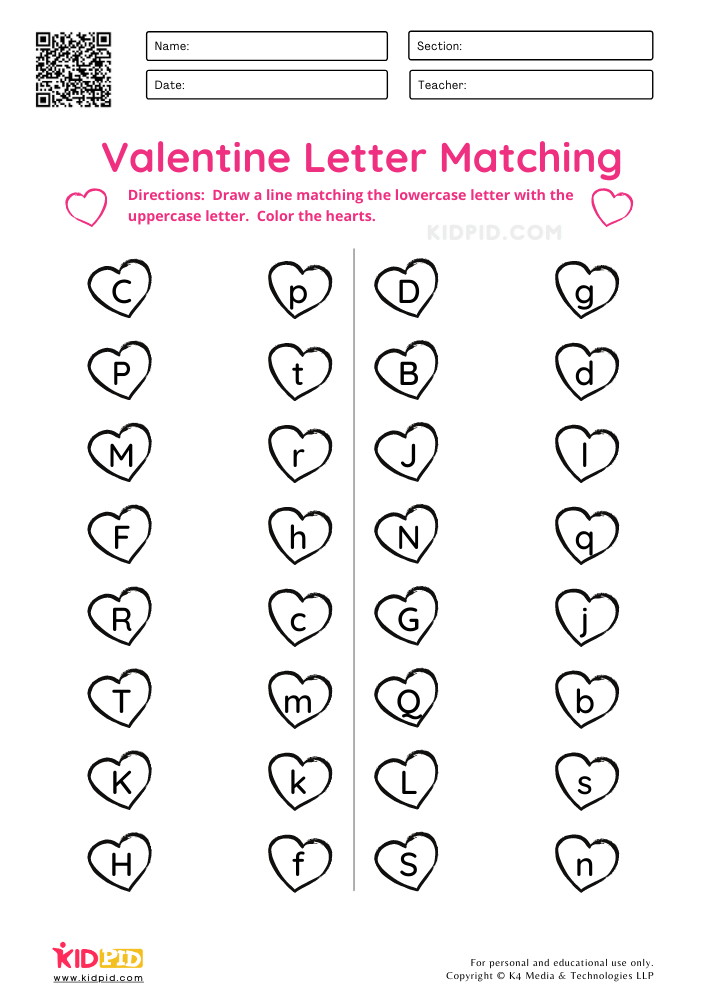
Valentine Letter Matching
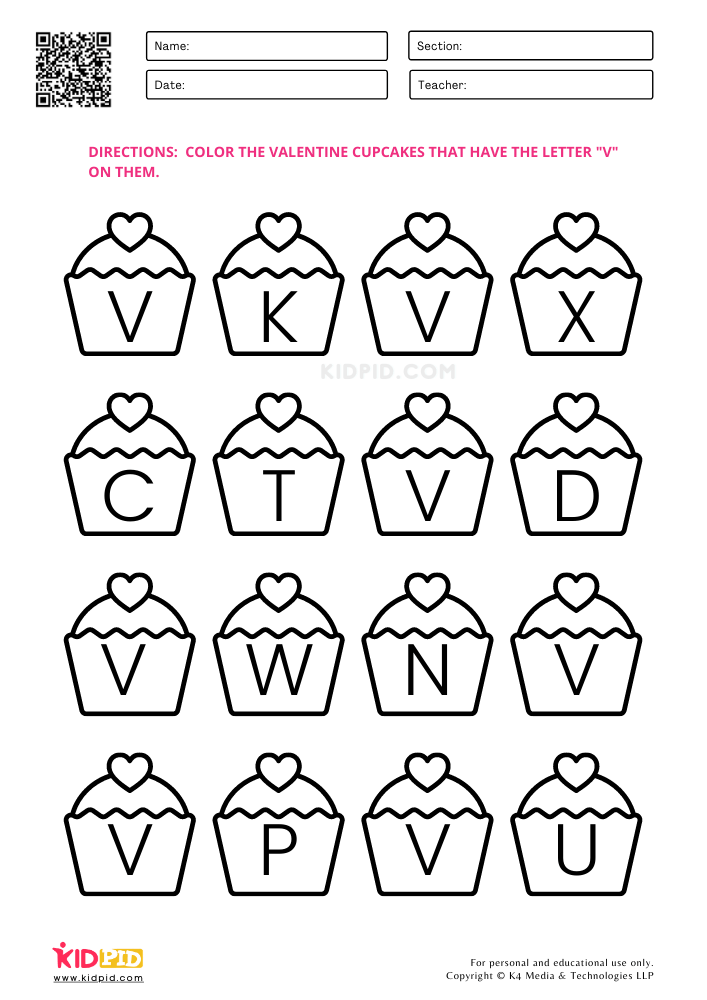
Valentine Cupcakes
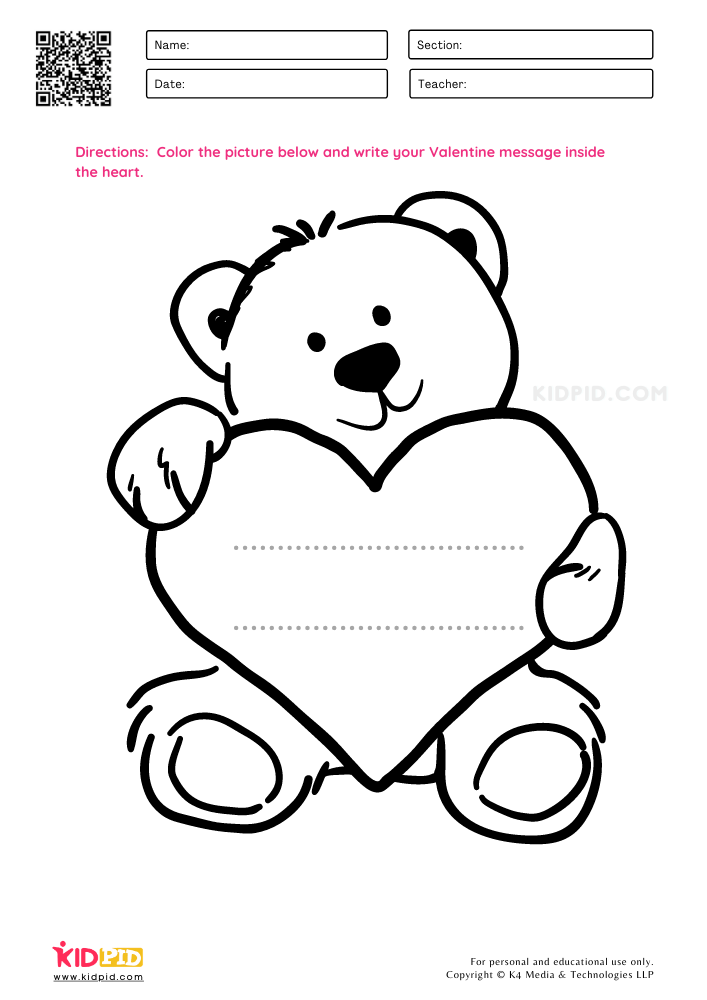
Write a Valentine’s message inside the heart.
Valentine’s Day Writing Printable
Key Facts About Valentine’s Day Worksheets
These free printable Valentine’s Day worksheets are specifically developed by childhood education specialists to combine seasonal excitement with foundational learning.
- Target Audience: Perfect for toddlers, preschoolers, and kindergarteners (ages 3 to 6).
- Skills Covered: Early literacy, fine motor development, foundational math (addition), problem-solving, and emotional intelligence.
- Format: Highly visual, downloadable PDF printables designed for crisp black-and-white or color printing.
- No-Prep Resource: Ready to use immediately for parents homeschooling or teachers planning a holiday-themed classroom activity.
Parts, Types, and Examples of Valentine’s Day Printables
To keep young learners engaged, the packet includes a variety of interactive puzzle types and design layouts. The collection features:
Literacy & Phonics Sheets: Activities like Valentine Alphabet, Word Scramble, and Valentine Letter Matching help kids recognize upper and lowercase letters while building seasonal vocabulary.
Early Math & Counting Packs: The Add and Color sheet introduces basic addition by using a visual “color-by-number” code based on math answers.
Fine Motor & Logic Puzzles: Critical thinking games like Help Cupid Put the Hearts (mazes/spatial awareness) and Valentine Cupcakes (visual discrimination and sorting).
Creative Expression Prompts: Open-ended writing and drawing printables like I can spread love by… and Write a Valentine Message inside the heart encourage early writing and emotional development.
How Do Valentine’s Day Worksheets Work?
These printables bridge the gap between abstract concepts and tactile learning. They operate on a simple three-step pedagogical cycle:
- Visual Stimulus: Colorful, thematic imagery (Cupid, hearts, cupcakes) captures the child’s attention and reduces “learning anxiety.”
- Kinesthetic Action: Children use crayons, pencils, or scissors to trace, match, color, or write, which maps cognitive tasks to physical movements.
- Immediate Feedback: Self-limiting puzzles (like matching letters or completing a word scramble) allow children to see their success instantly, boosting confidence.
Benefits of Learning About Valentine’s Day via Worksheets
Integrating thematic holiday worksheets into early childhood education offers several psychological and developmental advantages:
- Increases Engagement through Novelty: Children can get tired of standard repetitive drills. Introducing a holiday theme keeps learning fresh and exciting.
- Strengthens Fine Motor Skills: Coloring within lines, drawing paths through mazes, and practicing handwriting lines builds the hand-eye coordination required for independent writing.
- Promotes Social-Emotional Learning (SEL): Valentine’s Day is an excellent emotional sandbox. It gives educators a natural opening to teach concepts like kindness, sharing, empathy, and appreciation for friends and family.
Learning Objectives
By completing this worksheet pack, young learners will achieve the following milestone objectives aligned with early childhood education standards:
- Cognitive: Demonstrate uppercase and lowercase letter recognition and match corresponding pairs accurately.
- Quantitative: Solve simple single-digit addition problems using visual counts up to ten.
- Linguistic: Unscramble simple phonetic sounds to spell holiday-themed words.
- Affective (Social): Identify and express at least one actionable way they can show kindness and love to someone in their community.
Worksheet Instructions
To ensure a smooth, frustration-free activity session, guide your child or classroom using these clear steps:
- Word Scramble: Look at the jumbled letters next to the holiday pictures. Sound out the letters aloud and write them in the correct order on the blank lines.
- Letter Matching: Draw a straight line from the capital letter on the left heart to its matching lowercase letter on the right heart.
- Add and Color: Solve the math equations hidden inside the picture zones first. Use the color key at the bottom of the page to color in each section based on your math answers.
- Cupid’s Maze: Help Cupid navigate through the winding path to place his hearts. Use a finger to trace the path first before using a crayon.
- Writing Prompts: Draw a picture or trace words to complete the sentence explaining how you can spread kindness to others today.
Interesting Facts About Valentine’s Day
Sharing historical context with children enriches their general knowledge and reading comprehension. Here are a few kid-friendly facts to share while they color:
- A Very Old Tradition: Valentine’s Day has been celebrated for centuries! It honors historical traditions dating all the way back to the year A.D. 270.
- The Agriculture Connection: Ancient roots of mid-February celebrations are linked to an old Roman festival called Lupercalia, which celebrated Faunus, the Roman god of agriculture and farming.
- Millions of Cards: Millions of Valentine cards are exchanged around the world every year, making it one of the biggest card-sharing events alongside Christmas.
Vocabulary Words
Build your students’ or children’s language bank by practicing these seasonal terms found within the worksheets:
- Affection: A gentle feeling of fondness, liking, or loving someone.
- Cupid: A famous mythological character often shown as a winged child carrying a bow and arrow, symbolizing love.
- Empathy: The ability to understand and share the feelings of another person.
- Exchanging: Giving something to someone and receiving something back from them in return.
- Unscramble: To sort out confused or jumbled elements (like mixed-up letters) back into their proper, readable order.
Real-Life Applications
Worksheets shouldn’t end on the paper. Use these printables to inspire real-world actions:
- Creating Real Cards: Use the skills learned in the Write a Valentine Message inside the heart sheet to help your child write a real, physical card for a grandparent, sibling, or teacher.
- Practicing Kindness At Home: Follow through on the I can spread love by… prompt by turning their written answers into an explicit family checklist for Valentine’s week (e.g., helping clean up, sharing toys).
- Baking Math: Link the Valentine Cupcakes matching activity to real-life measurement and counting by baking a batch of treats together in the kitchen.
FAQs
Q1. What age group are these Valentine’s Day worksheets best suited for?
Answer: These worksheets are tailored specifically for Preschoolers, Pre-K students, and Kindergarteners (typically ages 3 to 6 years old), focusing on early developmental milestones.
Q2. Are these printables completely free to download?
Answer: Yes, these worksheets are provided as free educational resources by the Kidpid Content Team to support parents, teachers, and home educators.
Q3. Can I use these worksheets in a commercial childcare or school setting?
Answer: These sheets are free for personal, classroom, and non-commercial educational use. Please maintain the Kidpid branding footer when printing for your students.
Q4. How do holiday worksheets help children learn better?
Answer: Using themed worksheets leverages a child’s natural excitement for seasonal holidays, which increases focus, information retention, and intrinsic motivation to complete academic tasks.
These engaging activities teach kids when to use uppercase letters and help them recognize and differentiate between alphabet letters with ease. Continue the learning journey with our worksheets, essays, paragraphs, flashcards, quizzes, and interactive resources. Join us on YouTube & Facebook.
This educational worksheet is crafted by the Content Team to strengthen academic success.
Reviewed By Sanjana
Check out some more worksheets



