Free fruit name printable pages to learn the names of various fruits, such as apple, cherry, and pear, among others. It is perfect for kindergarteners. You can download these beautiful printables to make studies for your kids more interactive and entertaining.
Fruit Name Printable Worksheet for Kindergarten

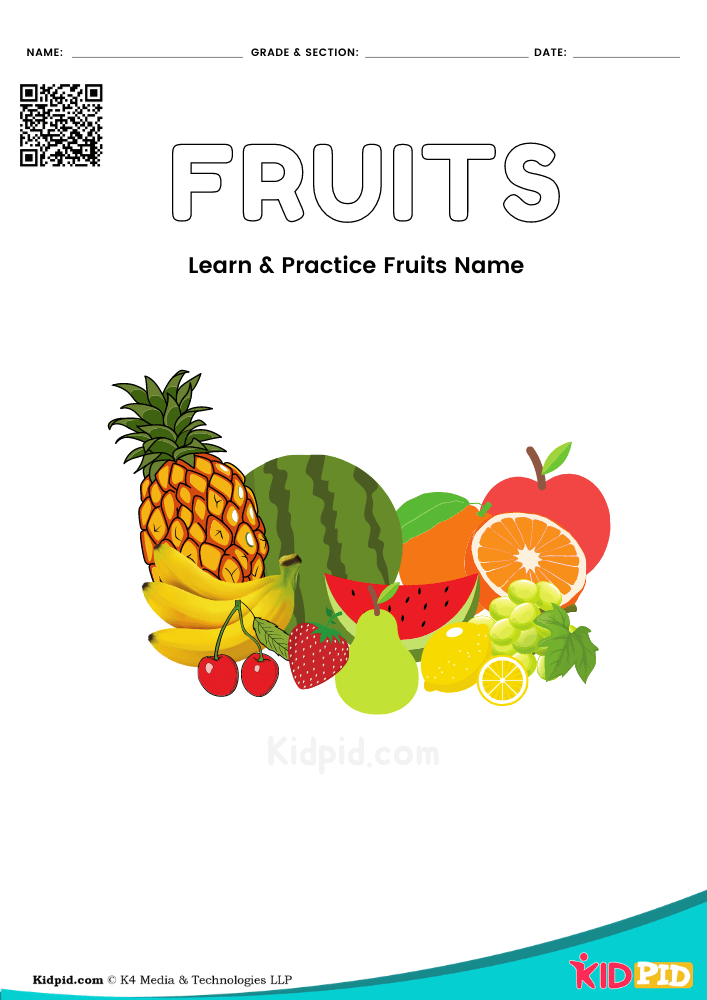
Let’s Learn & Practice Fruit Names
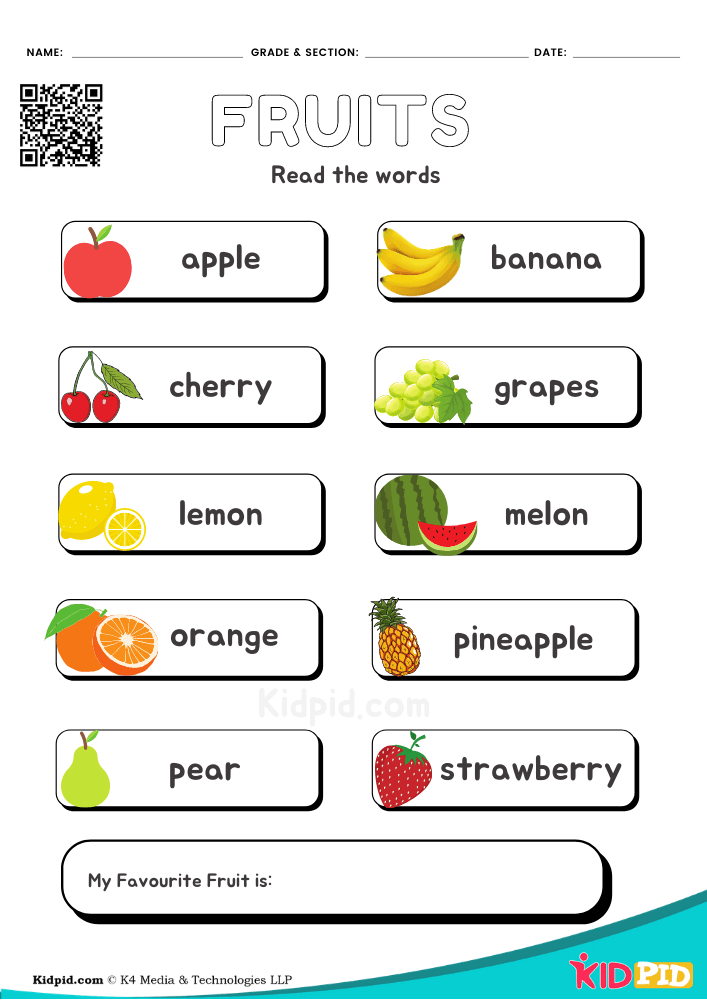
Read the Words
Connect Word With Picture Activity
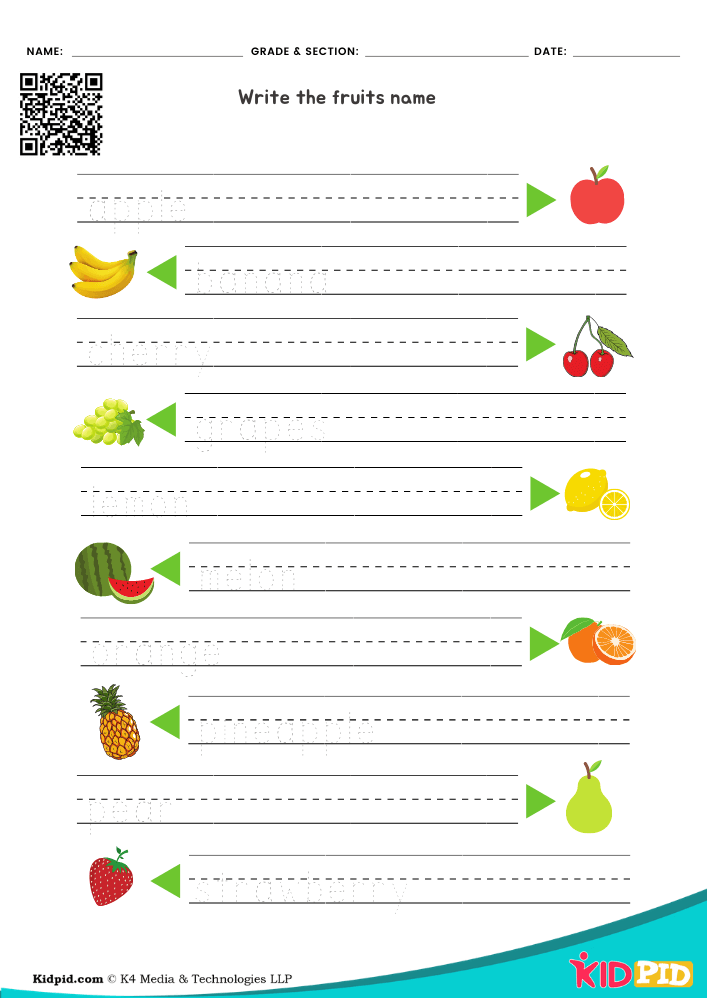
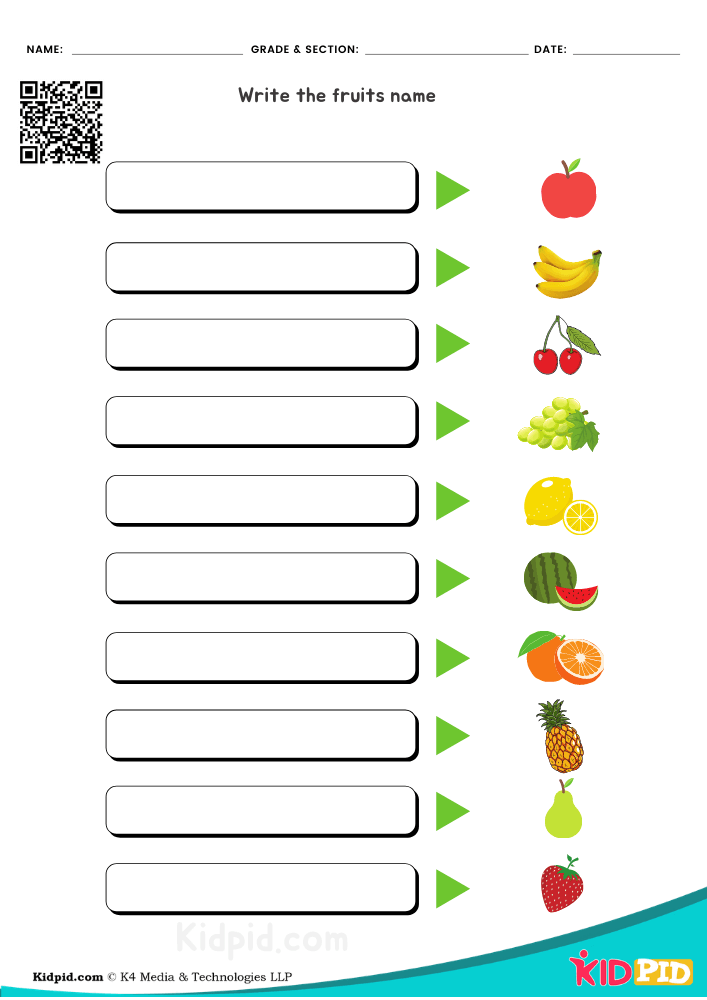
Write the Fruit’s Names
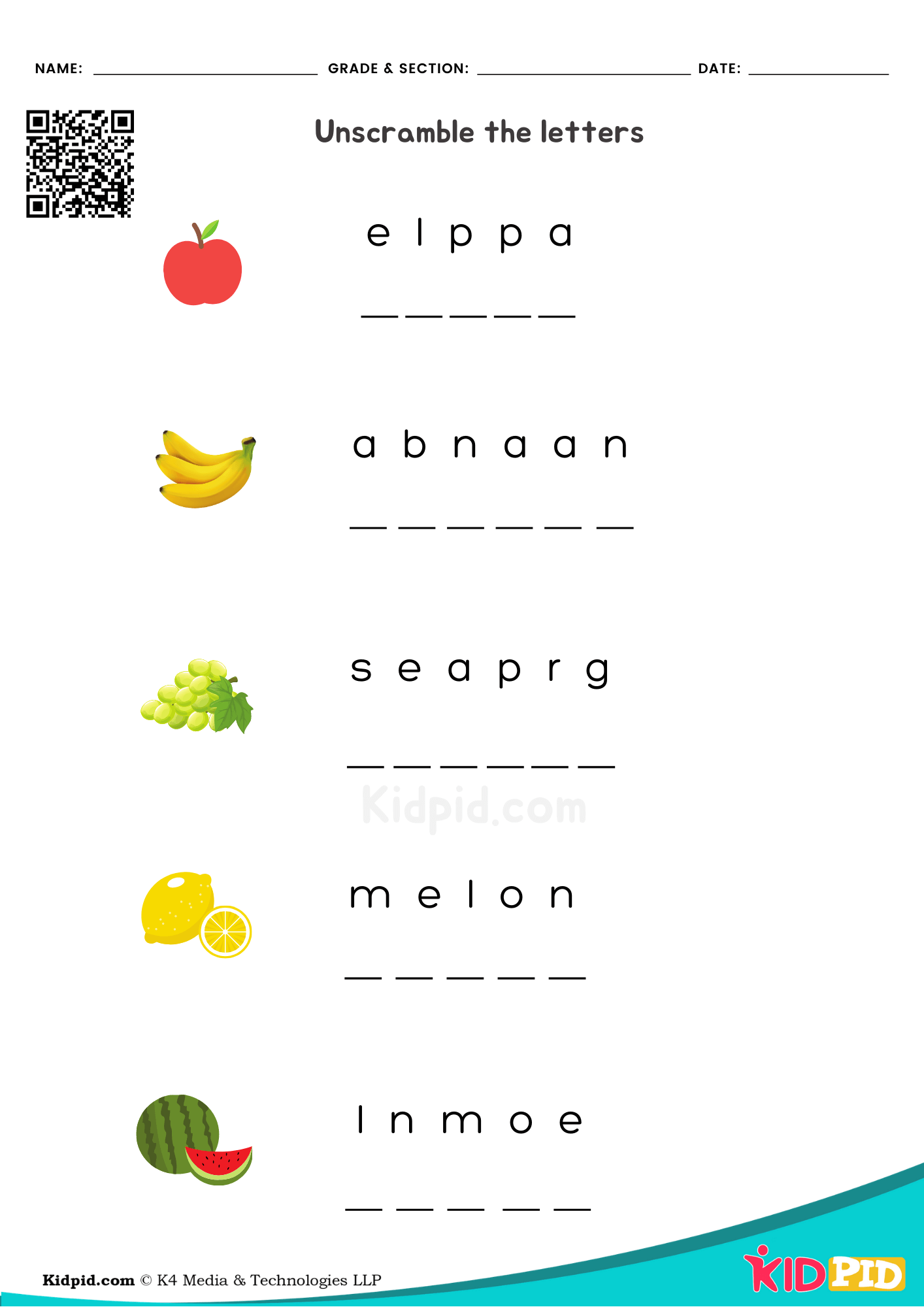
Unscramble the letters
Find the Right Word & Color the Picture
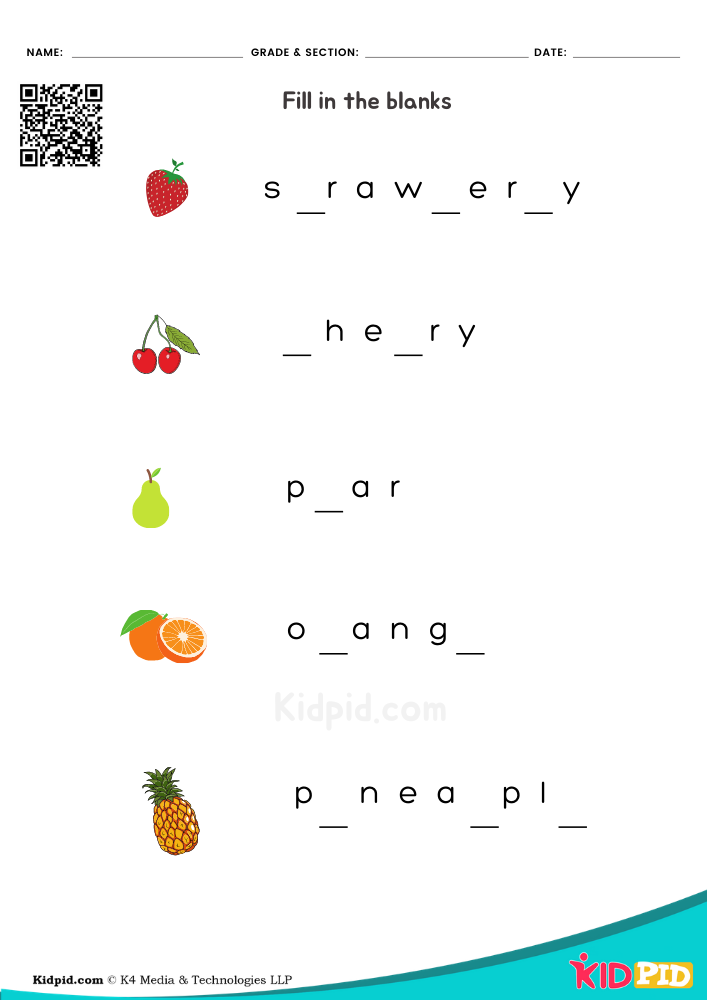
Fill in the Blanks
Write the fruit’s name
Key Facts About the Fruit Name Printable Worksheet
- Target Grade Level: Kindergarten / Early Years (Ages 4 to 6)
- Core Subject: Early Literacy, Vocabulary Expansion, and Science (Nutrition)
- Format: Free downloadable and printable high-quality PDF worksheets
- Activity Types Included: Word tracing, picture-to-word matching, letter unscrambling, fill-in-the-blanks, and coloring.
- Focus Skills: Fine motor skills (writing and coloring), phonics, word recognition, and cognitive spelling skills.
Parts/Types/Examples of Fruit Name Worksheets
To provide a comprehensive learning experience, this printable bundle features diverse activity types designed to keep young minds engaged:
- “Read the Words” Recognition Sheets: Introduce common fruits like apples, cherries, pears, and bananas with bright, clear illustrations alongside their printed names.
- Connect Word with Picture Activities: Line-matching exercises that challenge children to link visual representations of fruit with their written names, reinforcing spatial and contextual learning.
- Unscramble the Letters: A playful introduction to problem-solving where children rearrange mixed-up letters to spell a fruit correctly.
- Find the Right Word & Color the Picture: Blends creative art with text analysis, requiring kids to identify the correct vocabulary word before coloring in the corresponding fruit illustration.
- Fill in the Blanks: Structured spelling practice that helps students identify missing vowels or consonants in fruit names.
How Does the Fruit Name Printable Worksheet Work?
Multi-sensory learning is highly effective for early childhood development. This worksheet leverages a proven, three-step cognitive cycle:
- Visual Identification: A child looks at an engaging illustration (e.g., a bunch of grapes), activating prior real-world knowledge.
- Phonics & Tracing Integration: By reading the accompanying text or filling in missing letters, the child associates the phonetic sounds of the fruit with its orthographic (written) form.
- Fine Motor Execution: Whether tracing lines, writing letters, or carefully coloring within lines, the physical act of using a pencil or crayon helps commit the newly learned vocabulary word to long-term memory.
Benefits of Learning About Fruits via Printables
Integrating interactive printables into early education provides several foundational benefits:
- Accelerated Vocabulary Growth: Learning specific category words (like fruit types) helps kindergarteners build stronger lexical frameworks.
- Screen-Free Engagement: High-quality printables offer a valuable break from digital devices, encouraging tactile learning and prolonged attention spans.
- Improved Fine Motor Control: The precise movements required for matching, tracing, and coloring build the hand muscle strength essential for future writing stamina.
- Cognitive Flexibility: Activities like word unscrambling train a child’s brain to approach spelling puzzles systematically, boosting confidence in problem-solving.
Learning Objectives
By completing these worksheets, kindergarten students will be able to:
- Identify and name at least 8 to 10 common fruits based on visual illustrations.
- Match written fruit names to their corresponding images with high accuracy.
- Demonstrate foundational spelling habits by successfully filling in missing letters and unscrambling simple words.
- Refine pencil grip and spatial awareness through coloring and targeted handwriting practice.
Worksheet Instructions
Parents and teachers can guide children through the printable pages using these simple directions:
- Step 1: Read Aloud. Start with the “Read the Words” page. Point to each fruit, have the child say its name, and ask them to describe its color or taste in real life.
- Step 2: Draw the Lines. Move to the matching activity. Instruct the child to use a ruler or a steady hand to draw a direct line from the fruit image to its correct printed name.
- Step 3: Solve the Puzzles. Assist the child with the unscramble and fill-in-the-blank sheets. Encourage them to say the sounds of the letters out loud if they get stuck.
- Step 4: Color and Celebrate. Conclude with the coloring activities. Use this time to reward their focus and effort with creative expression.
Interesting Facts About Fruits for Kindergarteners
Keep the lesson fun by sharing these kid-friendly trivia tidbits while they work on the sheets:
- Apples can float! This is because about 25% of their volume is actually just trapped air.
- Strawberries wear their seeds on the outside. They are the only fruit that grows its seeds on its skin—a single strawberry can have around 200 seeds!
- Bananas are naturally curved because they grow towards the sun against gravity, a process called negative geotropism.
- Tomatoes and watermelons are cousins? Not quite, but tomatoes and pumpkins are botanically considered fruits, not vegetables!
Vocabulary Words
Introduce these key terms to enhance your child’s language skills during the lesson:
- Fruit: The sweet, fleshy product of a tree or plant that contains seeds.
- Nutritious: Something that contains vitamins and minerals to help our bodies grow healthy and strong.
- Unscramble: To put mixed-up letters or things back into their correct, readable order.
- Produce: Fresh fruits and vegetables that are grown on farms.
Real-Life Applications
Learning shouldn’t stop when the worksheet is finished. Connect the printables to the real world with these activities:
- Grocery Store Scavenger Hunt: Take the printable or a mental list to the supermarket. Have your child find the real-world versions of the fruits they colored on paper.
- Kitchen Math & Sorting: Use a fruit bowl at home to practice counting, sorting by color, or discussing the textures of different skins (smooth apples vs. rough oranges).
- DIY Fruit Salad: Involve your child in safely washing and preparing a snack, encouraging them to name each ingredient as it’s added to the bowl.
FAQs
Q1. At what age should kids start using fruit name worksheets?
Answer: These worksheets are specifically designed for kindergarteners (ages 4 to 6). However, preschool-aged children can enjoy the coloring and matching pages with a bit of adult guidance.
Q2. Can these printables be used for English as a Second Language (ESL) teaching?
Answer: Absolutely. The direct visual association between the clear fruit illustrations and basic English nouns makes this resource excellent for early ESL vocabulary development.
Q3. How do printables help with handwriting?
Answer: Activities like tracing names or guiding lines across a matching worksheet help young learners practice grip pressure, line control, and spatial awareness, which are crucial prerequisites for neat handwriting.
Q4. Are these fruit worksheets free to download?
Answer: Yes, all of the kindergarten educational activities and bundles in this post are completely free to download, print, and use for personal or classroom learning.
Hope you liked these fruit name printables. At Kidpid, you can find free printable colouring pages, sheets, colouring books, illustrations, printable pictures, clipart, black and white pictures, line art, and drawings for kids. You can find here hard and detailed patterns, advanced animal drawings, simple colorings, or easy outlines. Explore our website for a variety of worksheets, essays, paragraphs, flashcards, quizzes, and interactive resources that inspire young minds. Join us on YouTube & Facebook
This worksheet was developed by the Content Team to foster learning excellence.
Reviewed By Sansriti Pandey
More Printables