Education is nothing but a way to learn about the world and society we live in through a variety of diverse and interesting subjects. Mathematics is one such subject that allows one to understand the world through the eyes of logic and rationality. Therefore, building a strong foundation in this subject is of paramount importance. The best way to introduce new concepts to children is to combine learning with fun activities – this not only holds their attention but also helps them enjoy the process.
Once children have learned how to count, it is important to introduce the concept of less than and greater than. But before that, we must learn how to compare numbers. What is comparing numbers?
When you take two numbers side by side and try to determine if they are the same or different, it is known as comparing.
- Let’s take some coins and count them in our hands to understand the concept more clearly.
- I have 3 coins in my right hand and 3 coins in my left hand. By comparing these two numbers, I can conclude that I have the same or an equal number of coins in each hand.
- Now, I remove one coin from my right hand and place it in my left hand. Therefore, I now have only 2 coins in my right hand and 4 coins in my left hand. By comparing the number of coins in each hand, it is obvious that my left hand has a greater number of coins than my right hand or my right hand has a lesser number of coins than my left hand.
While understanding the concept of lesser and greater than may be easy, learning to use the correct vocabulary will take time and patience.
These worksheets combine the exercise of counting with comparing numbers. The bright and colourful pictures make the task appealing and fun for children while also helping them focus and learn. Repeated practice allows children to retain what they’ve learnt.
Contents
- Comparing Numbers Worksheets for Grade 1
- Key Facts About Comparing Numbers Worksheets for Grade 1
- Parts/Types/Examples of Comparing Numbers Worksheets
- How Do Comparing Numbers Worksheets Work?
- Benefits of Learning About Comparing Numbers
- Learning Objectives
- Worksheet Instructions
- Interesting Facts About Comparing Numbers
- Vocabulary Words
- Real-Life Applications
- Interactive Comparison Practice
- FAQs
- You may like this:
Comparing Numbers Worksheets for Grade 1

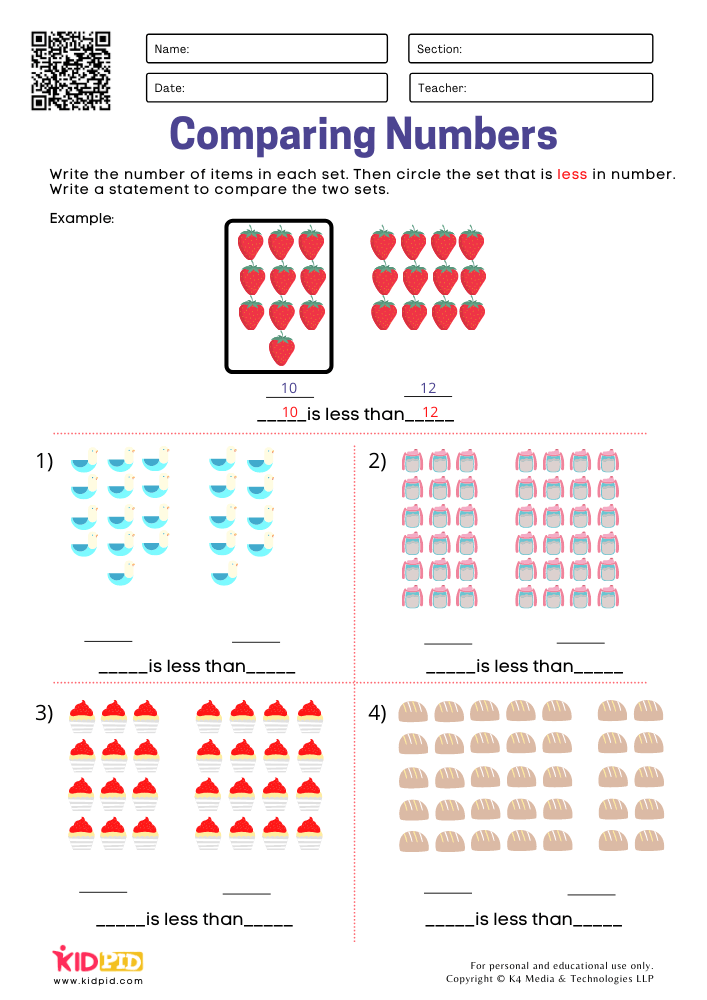
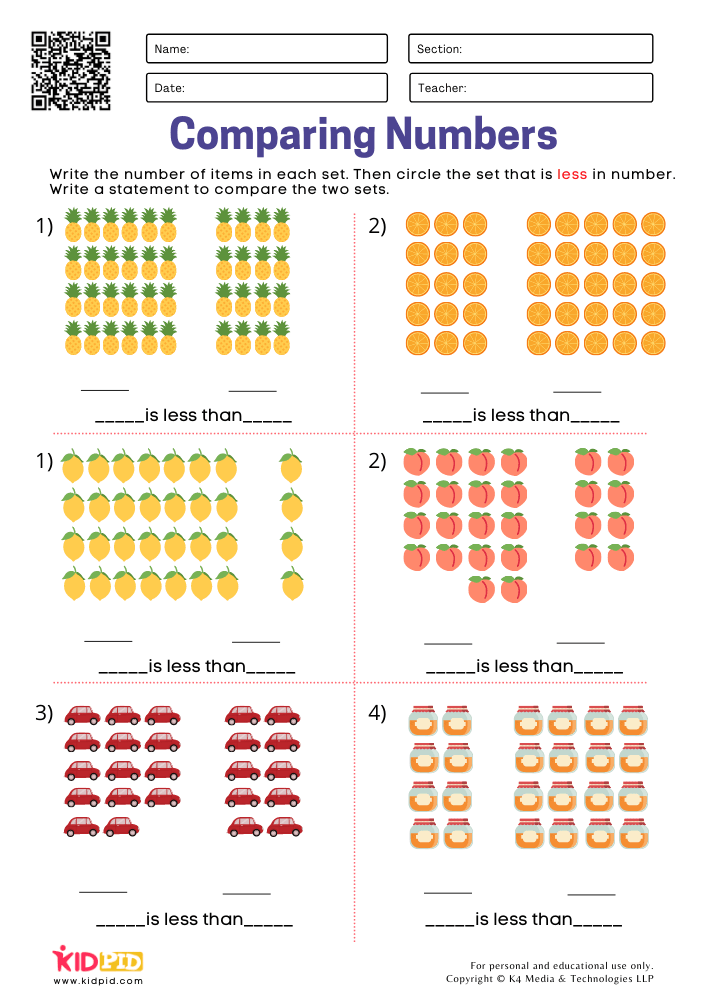
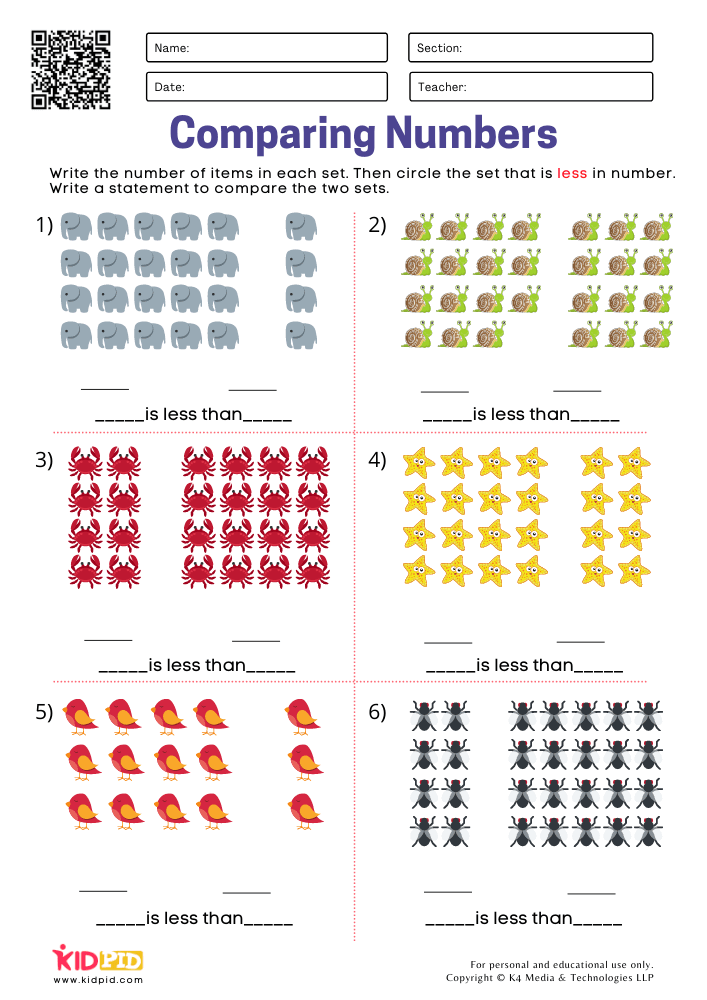
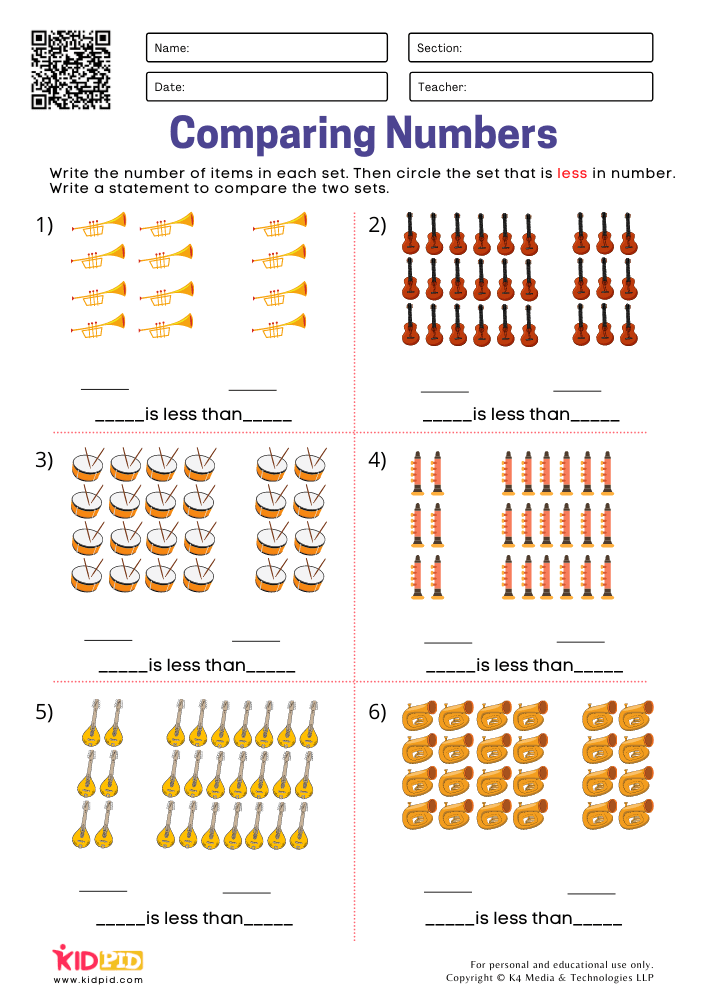
Key Facts About Comparing Numbers Worksheets for Grade 1
- Target Age Group: Typically designed for children aged 6 to 7 years old in the first grade.
- Core Mathematical Concept: Introduces the fundamental principles of quantitative relationships—specifically determining whether one value is larger, smaller, or identical to another.
- Visual-to-Abstract Progression: These worksheets utilize a scaffolding method. They start with concrete, familiar visual items (like counting coins, fruits, or animals) before transitioning young learners into abstract numerical digits.
- Symbolic Literacy: Serves as the primary instructional tool for teaching the standard mathematical comparison symbols: Greater Than (
>), Less Than (<), and Equal To (=). - Foundation for Future Math: Mastery of this milestone is a strict prerequisite for structural concepts like double-digit addition, subtraction, place value, and baseline number line positioning.
Parts/Types/Examples of Comparing Numbers Worksheets
To ensure well-rounded numerical fluency, first-grade curriculum-aligned worksheets generally feature four distinct exercise types:
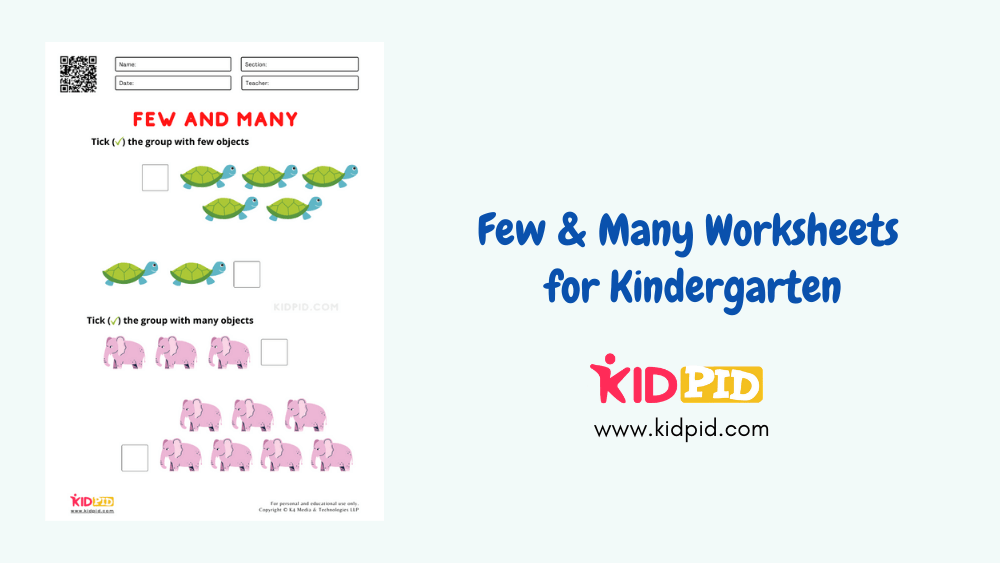
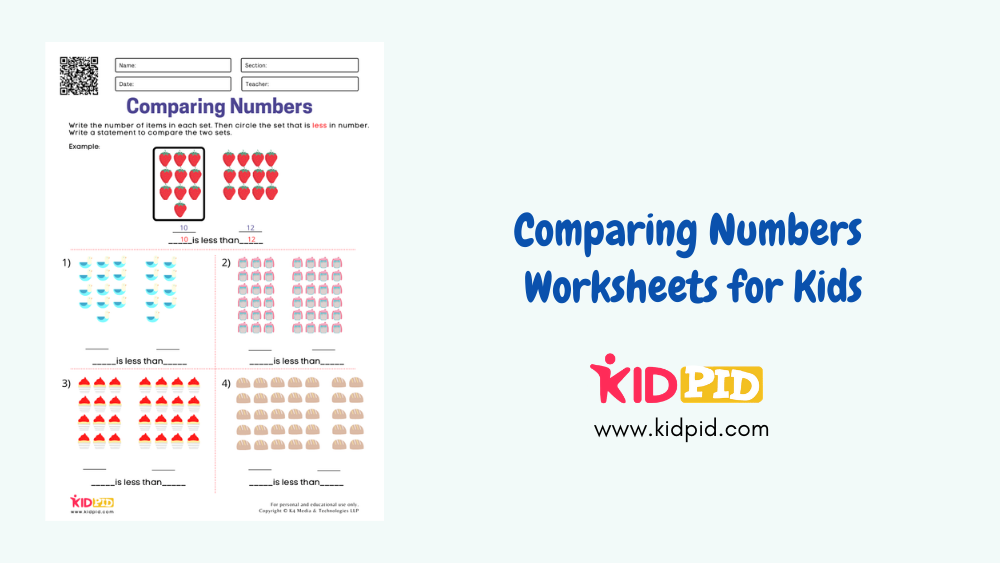
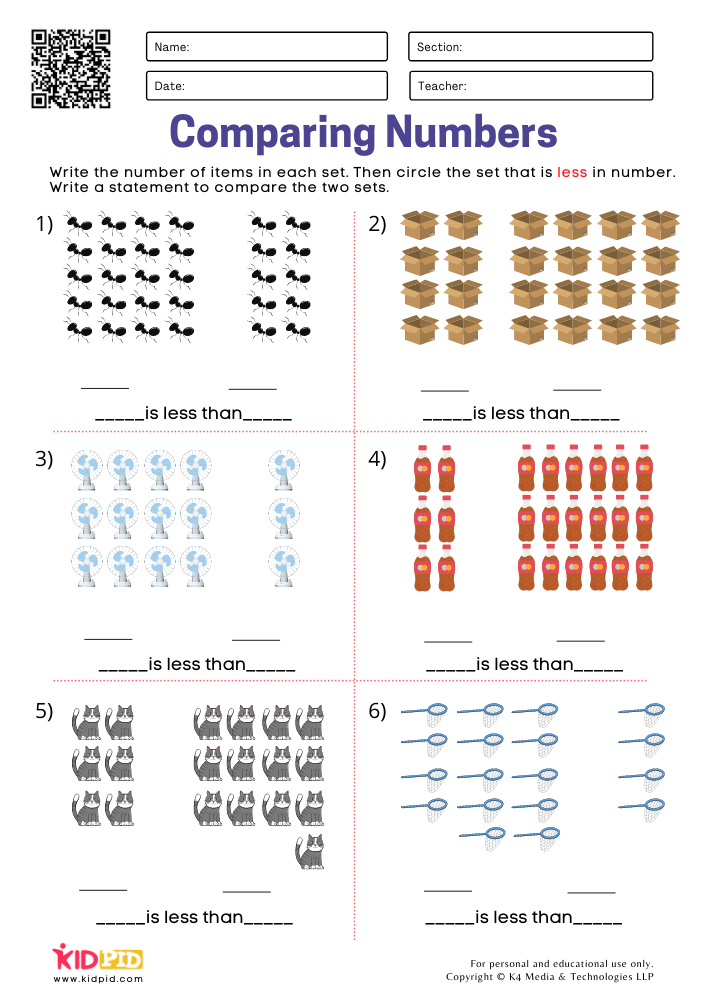
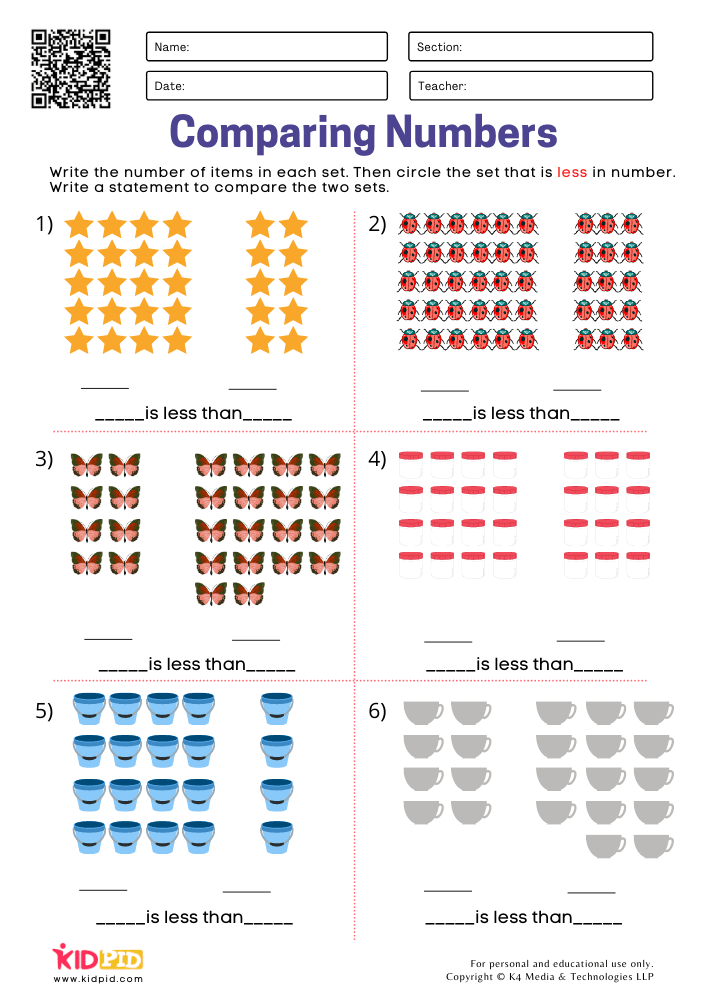
- Object Counting and Comparison (Concrete Level): Worksheets that feature side-by-side boxes filled with colorful items. Students count the items in each box, write down the corresponding digits, and circle the collection that contains “more” or “fewer.”
- Symbol Placement Exercises (Abstract Level): Traditional math drills presenting two standalone single-digit numbers (e.g.,
4and7) with an empty bubble or square in between. Students draw the correct symbol (>,<, or=) inside the blank space. - “Greater Than” vs. “Less Than” Sorting Mats: Interactive cut-and-paste or coloring activities where children sort random numbers into specific categories based on a target reference point (for example: “Color all numbers greater than 5”).
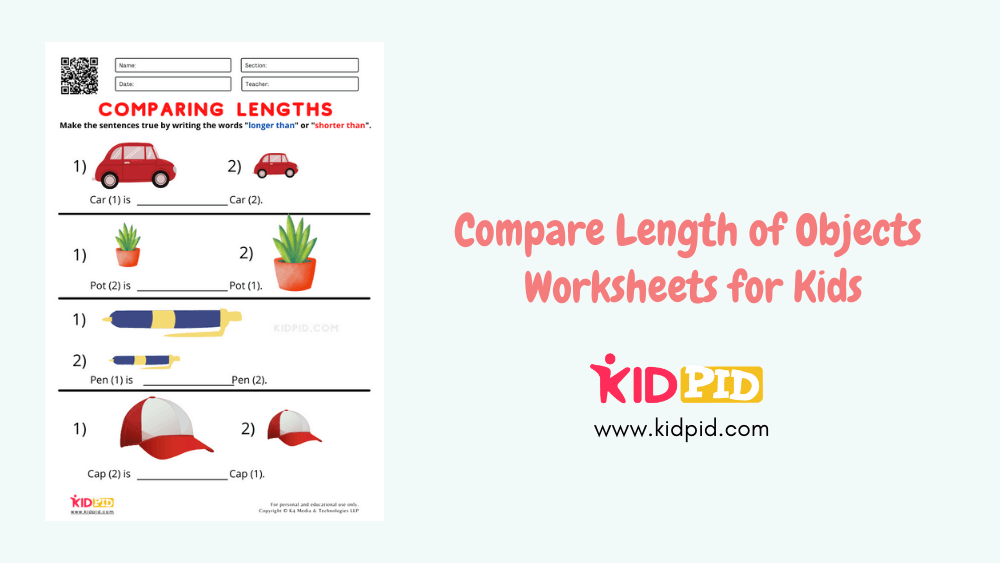
- Length and Measurement Comparisons: Visual variations that extend the logic of comparison beyond counts to physical dimensions, prompting students to identify which objects are “longer vs. shorter” or “tallest vs. shortest.”
How Do Comparing Numbers Worksheets Work?
Comparing numbers worksheets leverage cognitive developmental stages by systematically introducing math logic through three simple phases:
- Step 1: Quantifying Individual Sets: A child looks at two separate groupings of digits. They must first accurately count or recall the value of each side independently.
- Step 2: Evaluating the Relationship: The student weighs the two values against one another. They use mental sorting logic to deduce which number holds a larger place on a standard counting sequence.
- Step 3: Appending the Operator: The student applies a symbolic tag to their conclusion. Teachers frequently use the classic “alligator analogy”—explaining that the open mouth of the symbol (
>) is hungry and will always open up to “eat” the larger value. If both sides match perfectly, the two balanced bars of the equal sign (=) are drawn.
Benefits of Learning About Comparing Numbers
Developing an early, intuitive grasp of how numbers relate to one another provides significant long-term academic and practical advantages:
- Develops Robust Number Sense: It transforms abstract counting into concrete mathematical reasoning. Kids stop just reciting numbers in a memorized order and start understanding what those values actually mean in scale.
- Prevents Common Symbol Reversal Errors: Regular, targeted worksheet practice builds muscle memory, helping children clear up the frequent confusion between the directional orientations of the
<and>symbols. - Fosters Logical Deduction: Learning to compare numbers teaches critical thinking patterns. Students learn to systematically evaluate data, recognize patterns, and make evidence-based decisions.
Learning Objectives
By thoroughly completing these grade 1 comparison modules, the learner will achieve the following academic benchmarks:
- Identify and accurately read aloud the mathematical symbols for greater than (
>), less than (<), and equal to (=). - Compare any two single-digit or baseline double-digit numbers up to 20, correctly identifying which value is greater or less.
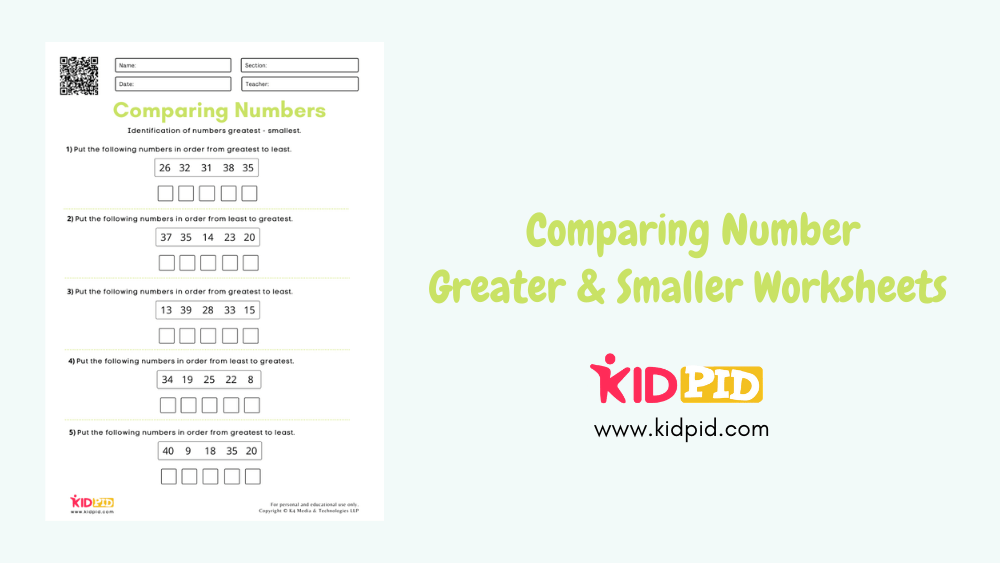
- Demonstrate spatial and quantitative awareness by ordering a series of mixed objects from shortest to tallest or fewest to most.
- Apply the correct mathematical vocabulary phrases (“is greater than”, “is less than”, “is equal to”) when verbally explaining comparisons to a teacher or parent.
Worksheet Instructions
Parents and teachers can read these clear, kid-friendly directions aloud to guide young learners through their practice pages:
Let’s Compare!
- Look closely at the two numbers or boxes of pictures side-by-side.
- Count the items on the left and write the total number below them. Do the exact same thing for the items on the right.
- Think: Which number is bigger? Remember, our friendly alligator is very hungry and always wants to eat the biggest amount!
- Draw the correct symbol (
>,<, or=) in the middle circle so that the wide, open mouth faces the larger number. If the numbers are a perfect match, draw an equal sign!
Interesting Facts About Comparing Numbers
- An Ancient Tool: The modern symbols we use for comparing numbers weren’t invented until the 16th and 17th centuries! The equal sign (
=) was designed by Robert Recorde in 1557 because he got tired of writing “is equal to” over and over again. - Nature Does It Too: Scientists have discovered that many animals, including crows, monkeys, and even honeybees, possess an innate ability to compare quantities. They can look at two clusters of food and instinctively pick the larger one to survive!
- Universal Math Language: No matter what language you speak around the globe, the mathematical symbols
>and<means the same thing to every single student on Earth.
Vocabulary Words
To build strong math communication skills, students should learn and practice using these foundational vocabulary words:
- Compare: To look at two or more things to find out how they are alike or different in size, value, or amount.
- Greater Than (
>): A phrase showing that the first number has a larger value than the second number (e.g., 5 is greater than 3). - Less Than (
<): A phrase showing that the first number has a smaller value than the second number (e.g., 2 is less than 6). - Equal To (
=): Having the same value, size, or quantity on both sides. - Digit: Any single individual number symbol from 0 to 9.
Real-Life Applications
Number comparison isn’t just an abstract school subject; it is a fundamental skill used by adults and children multiple times every single day:
- Sharing and Fairness: Deciding if a batch of treats has been split evenly among friends, or checking who got more pieces of candy.
- Smart Shopping: Comparing prices at the grocery store to see which toy, snack, or game costs less money so you can save up your allowance.
- Game Scores: Looking at a sports scoreboard to quickly figure out which team is winning by tracking who has the greater score.
- Time Management: Checking the clock to see if the minutes left before bed are fewer than the minutes needed to finish watching a favorite show.
Interactive Comparison Practice
To supplement print worksheets, students can practice visualizing how numbers change relationship balances using this interactive comparison sandbox. Adjust the values below to see how the symbols shift in real-time.
FAQs
Q1: When should children start learning how to compare numbers?
Answer: Children are typically ready for basic comparison once they can confidently count to 10 and recognize numerical digits without assistance. This milestone generally emerges at the end of Kindergarten and is fully developed during the first half of First Grade.
Q2: What is the easiest way to teach a child the difference between the > and < symbols?
Answer: The most effective strategy is using the “hungry alligator” visual technique. Draw small teeth inside the open mouth of the symbol and explain that the alligator always points its open mouth toward the bigger number because it wants to eat the most food.
Q3: Why is my child struggling to transition from counting pictures to comparing bare digits?
Answer: This is a completely normal developmental hurdle. Moving from concrete objects to abstract numbers takes time. If your child struggles with numeric worksheets, try pairing the numbers with actual physical objects (like counting blocks or pennies) directly on top of the paper until their confidence grows.
Strengthen early math skills with these Comparing Numbers Worksheets for Grade 1. Children practice identifying greater than, less than, and equal numbers through engaging printable activities that build number sense, logical thinking, counting accuracy, and confidence. Explore our site for engaging educational content, including essays, worksheets, and interactive tools. Connect with us on YouTube and Facebook for more. So, what are you waiting for? Download your free printables and get started today!
The Content Team developed this worksheet to strengthen academic performance.
Reviewed By Nausheen Fatima
You may like this:
Free Printable Greater Than, Less Than Worksheets for Grade 1 Kids
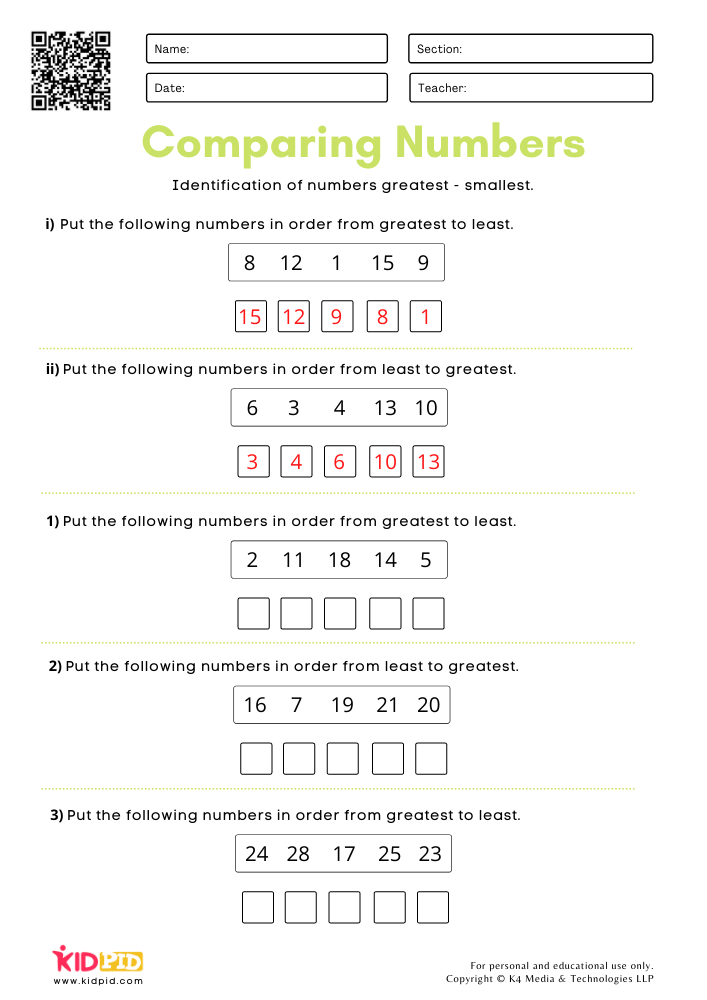
These free printable worksheets help grade 1 kids practice comparing numbers using greater than and less than symbols. Engaging in activities enhances understanding of numerical relationships in a fun way.
Compare Length of Objects Worksheets for Grade 1 Students
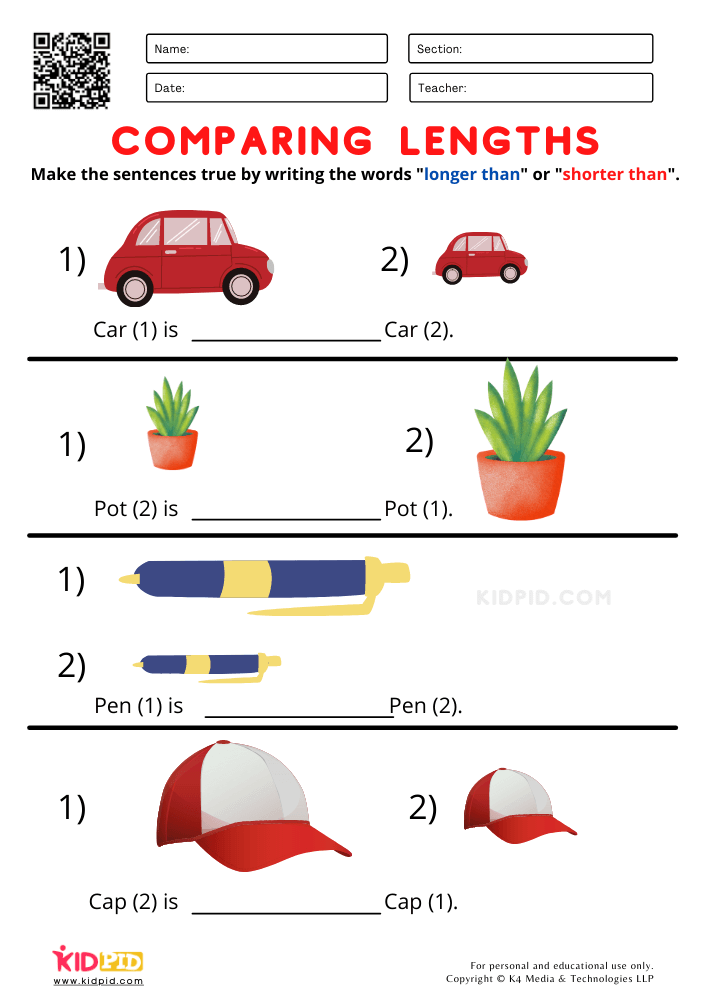
These worksheets assist grade 1 students in comparing the lengths of various objects. Fun activities encourage kids to identify which items are longer or shorter, reinforcing measurement skills effectively.
Shortest to Tallest Length Comparison Worksheets for Grade 1
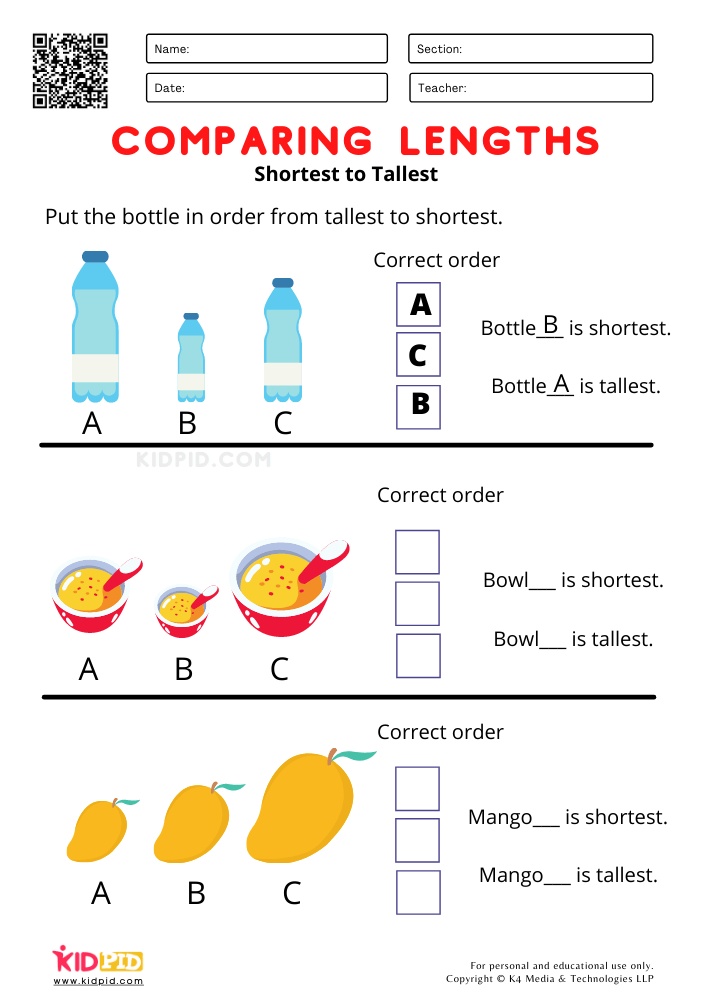
These engaging worksheets guide grade 1 students to compare objects from shortest to tallest. Interactive activities promote observational skills while making learning about length enjoyable and educational.
Free Printable Comparison Math Coloring Worksheets for Kids
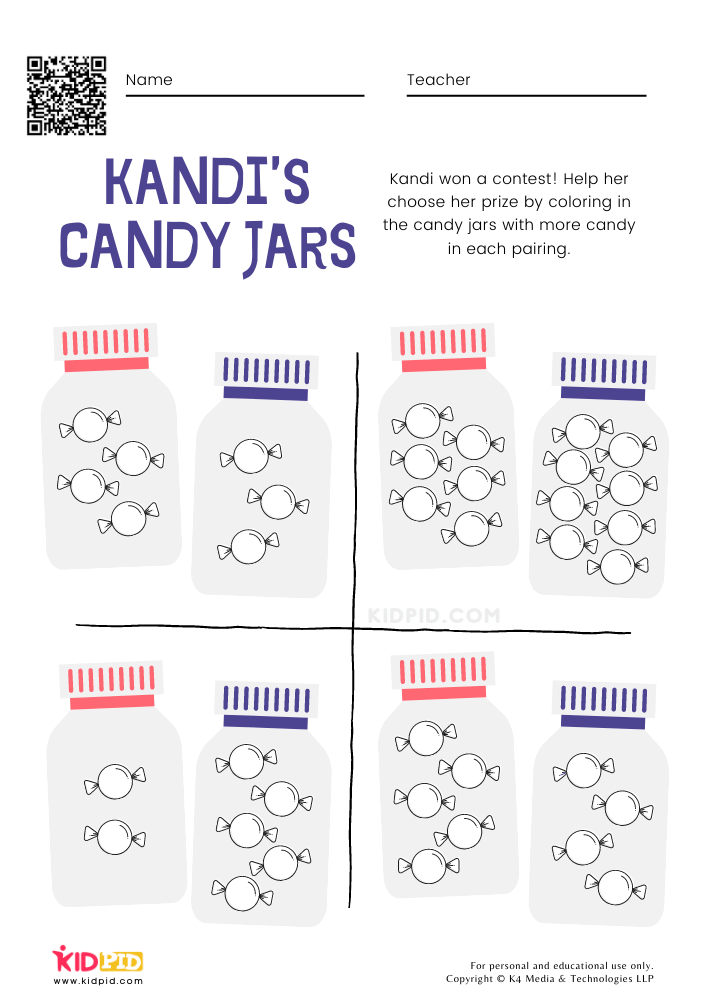
These free printable math coloring worksheets offer kids a creative way to practice comparison skills. By coloring while learning, children enhance their understanding of greater than, less than, and equal concepts.