A crucial step in learning to read and write in English is learning the various components that make up a cohesive sentence. Today, we are gonna focus on verbs. Now, what is a verb? A verb is a word that is used to describe any action in a sentence. Verbs give nouns action. The verb usually describes an activity performed by the subject of the sentence. Let’s take this statement, for example: Devi threw the ball into the basket.
Now, read the sentence carefully. We know that Devis is a noun, and so are ball and basket. So, which term here describes an activity? Yes, that’s right, “threw” describes an activity or action, and hence the verb in this sentence is “threw”.
Contents
- Verbs Practice Worksheets
- Key Facts About Grammar Verbs Worksheets
- Parts, Types, and Examples of Verbs Covered
- How Do These Grammar Verb Worksheets Work?
- Benefits of Learning About Verbs Early
- Learning Objectives & Worksheet Instructions
- Real-Life Applications: Putting Verbs to Work
- FAQs
- You may like these:
Verbs Practice Worksheets

Now, in order to get a better understanding of verbs and when and how to use them, let’s practice these fun and intriguing worksheets!
The task here is to identify the action depicted by each image and write the appropriate verb in the space provided beside it.
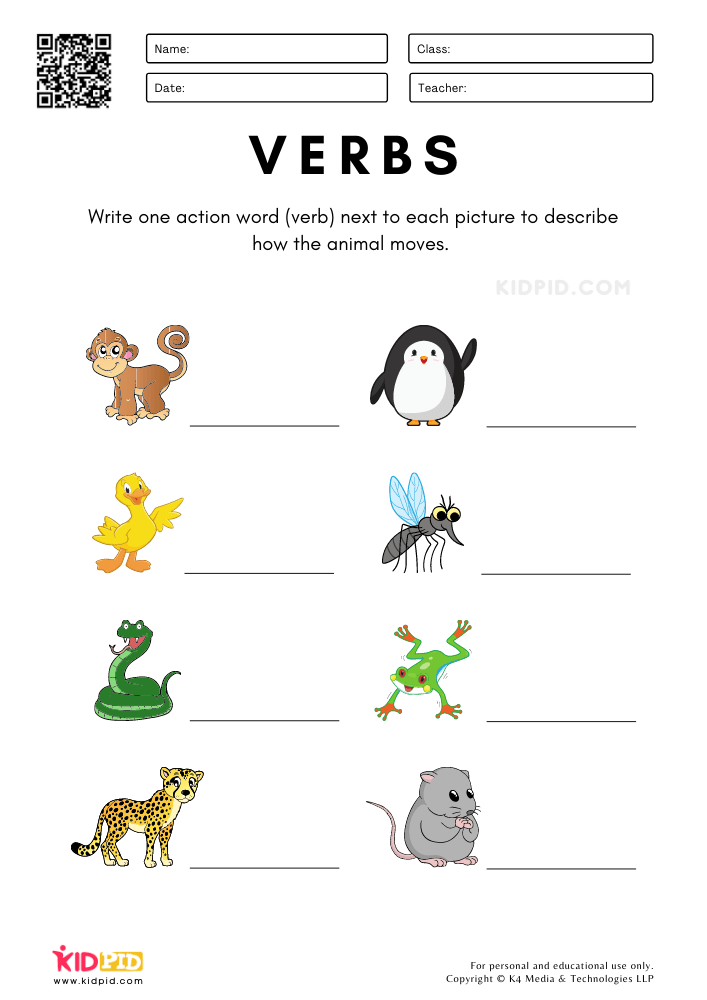
Learning verbs or action words is not easy and may not come instinctively to young learners. That is why practicing is so important. Through these worksheets, children will be able to visualize and learn new words.
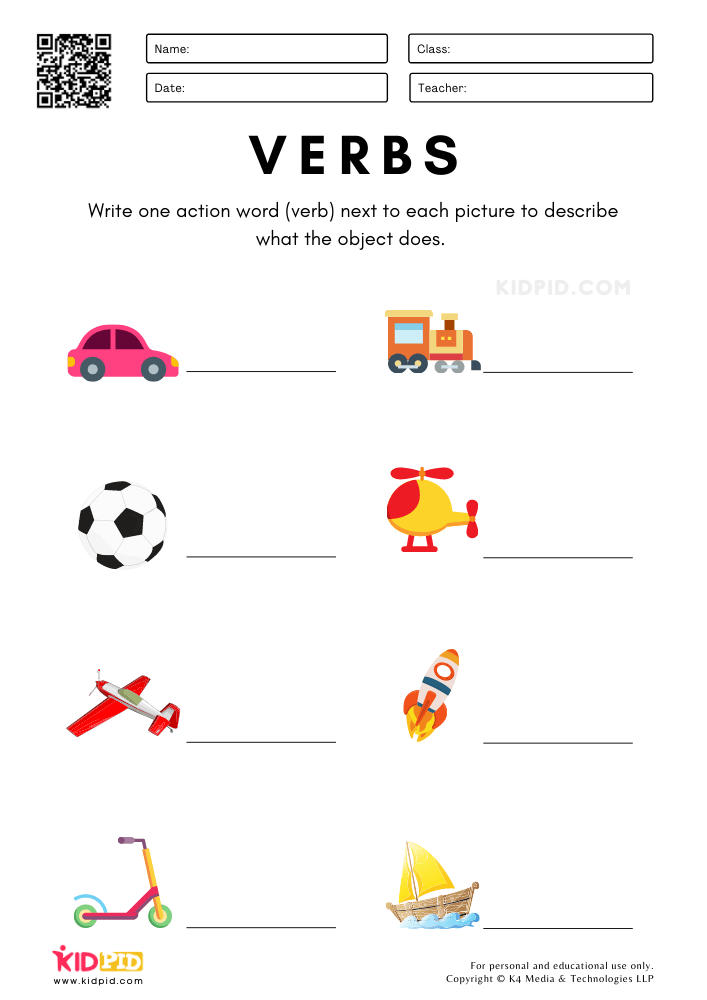
Every picture in this worksheet may convey something different to each child. This is to say that there is no single right answer to these pictures. S, as long as the children correctly use a verb to describe each picture and understand the concept, it is perfectly okay.
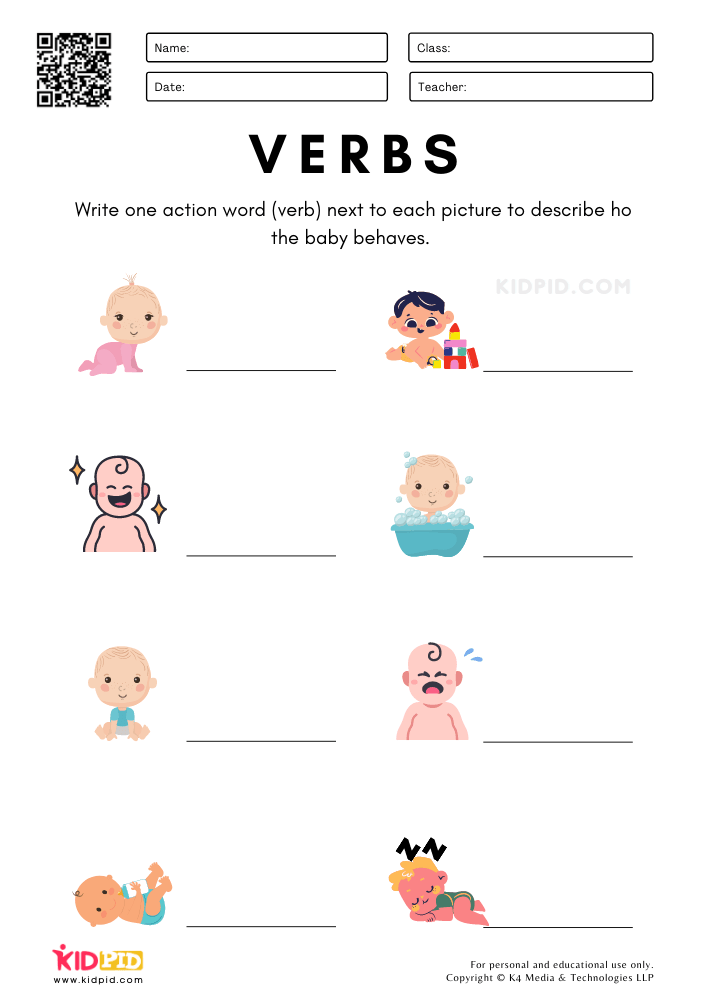
This activity will help children learn new verbs and understand their usage. When they move on to reading texts, it will be that much easier for them to understand.
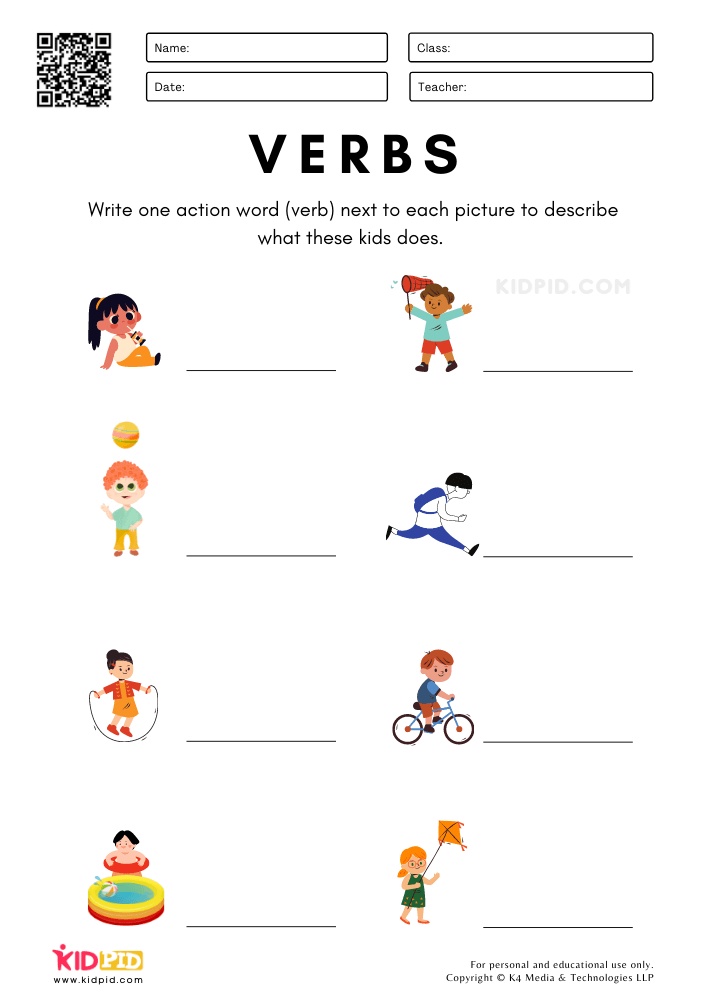
An important step in learning to speak and converse fluently in English is to understand the basics of sentence structures. Learning verbs is therefore integral to this endeavor.
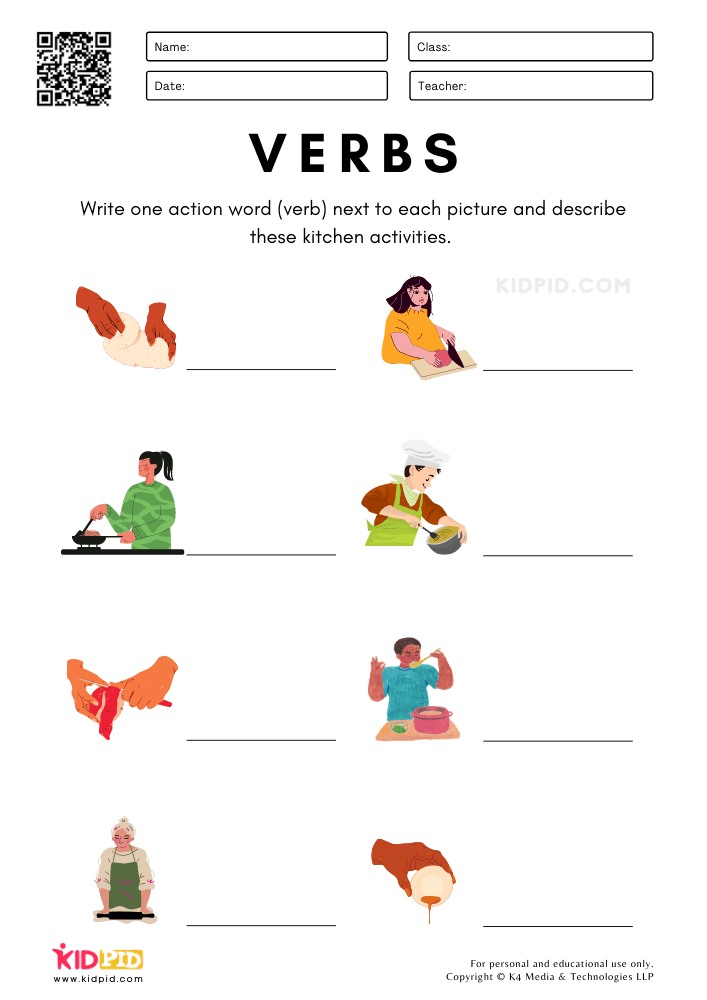
Worksheets are a great way for children to learn new concepts without feeling bored or intimidated by hefty textbooks with page after page of nothing but text. Colorful pictures ease children and also help them visualize what they’re learning, which is a tried and tested method for teaching young children.
Key Facts About Grammar Verbs Worksheets
Introducing grammar to young learners requires the right balance of fun and structure. Here are the essential details about this printable pack:
- Target Audience: Ideal for early learners, including Preschool, Kindergarten, Grade 1, and Grade 2 students.
- Core Focus: Building a strong foundation in recognizing and using “action words” (verbs).
- Learning Format: Visual-heavy, fill-in-the-blank practice sheets that eliminate textbook fatigue.
- Design Philosophy: Open-ended prompts that encourage descriptive thinking rather than rigid, single-answer testing.
- Accessibility: Available as free, instantly downloadable, and printable PDFs for home or classroom use.
Parts, Types, and Examples of Verbs Covered
While these introductory worksheets focus primarily on identifiable actions, mastering the English language involves different types of verbs. Here is what young writers gradually learn to identify:
- Action Verbs (Physical & Mental): Words that express physical movement or mental activity.
- Physical Examples: run, jump, throw, write, dance.
- Mental Examples: think, learn, guess, forget.
- State of Being / Linking Verbs: Words that connect the subject to more information about them.
- Examples: am, is, are, was, were.
- Helping (Auxiliary) Verbs: Words that work alongside the main verb to show tense or possibility.
- Examples: has, have, will, can, should.
How Do These Grammar Verb Worksheets Work?
Kidpid’s worksheets are designed around the proven educational principle of visual association. Instead of asking a child to memorize abstract grammar rules, the process is simple and interactive:
- Observe: The child looks at a vibrant, high-quality illustration of a character or animal performing an activity.
- Analyze: They decode the action taking place.
- Write: The student writes the corresponding action word in the dedicated blank space next to the image.
- Discuss: Because many images can be interpreted in multiple ways (e.g., a child with a book could be “reading,” “learning,” or “sitting”), parents and teachers can discuss different verb options, expanding the child’s descriptive vocabulary.
Benefits of Learning About Verbs Early
Verbs are the engine of the English language. Mastering them early provides foundational benefits that carry across a student’s entire academic journey:
- Stronger Sentence Structure: A sentence cannot exist without a verb. Understanding verbs helps kids move away from broken fragments and start writing complete, cohesive sentences.
- Enhanced Reading Comprehension: When children can instantly spot the action in a story, they understand what is happening much faster, boosting their overall literacy.
- Creative Expression: The broader a child’s verb vocabulary, the more vivid and exciting their writing and speaking become. Instead of just saying “the dog went,” they can say “the dog sprinted, prowled, or bounded.”
Learning Objectives & Worksheet Instructions
Learning Objectives
By completing these grammar worksheets, students will be able to:
- Identify and define what a verb is using their own words.
- Match real-world actions and visual illustrations to their correct written vocabulary words.
- Demonstrate confidence in spelling basic action verbs.
- Express actions across different contexts, building a bridge toward understanding verb tenses (past, present, and future).
Worksheet Instructions
- Step 1: Download and print the Kidpid Grammar Verbs Worksheets on standard paper.
- Step 2: Provide the child with a pencil and an eraser (encouraging a growth mindset where mistakes are part of learning).
- Step 3: Guide the child to look closely at the first picture. Ask them: “What is happening in this picture? What is the character doing?”
- Step 4: Have the child write the action word clearly in the blank space provided.
- Teacher/Parent Tip: Remind them that there is no single “right” answer! If they write “yelling” instead of “talking” for a loud scene, praise their accuracy and contextual understanding.
Interesting Facts About Verbs & Vocabulary Words
- The Ultimate Word: The word “verb” actually comes from the Latin word verbum, which literally means “the word.” This is because early grammarians viewed the verb as the most important word in any sentence!
- The Shortest Sentence: You can make a complete, grammatically perfect sentence using just one verb! For example: “Run!” or “Stop!”
- Always Moving: Unlike some words that stay static, verbs change their clothing depending on when things happen (past, present, or future tense).
Essential Early Verb Vocabulary List
Here are some excellent action words featured in early childhood learning that kids can practice spelling and writing:
- Active Movements: Jump, Skip, Climb, Kick, Crawl, March
- Daily Routines: Eat, Sleep, Brush, Wash, Read, Write
- Nature Actions: Fly, Swim, Grow, Rain, Shine, Blow
Real-Life Applications: Putting Verbs to Work
Grammar shouldn’t live exclusively on a piece of paper. You can easily take the concepts learned in the Kidpid worksheets and apply them to everyday life to reinforce learning:
- The “I Spy” Action Game: While driving or walking through the park, play a modified version of I Spy, focusing entirely on verbs. For example: “I spy a bird flying,” or “I spy a car turning.” Have your child shout out the verb.
- Cooking in the Kitchen: Turn meal prep into a live grammar lesson. Ask your child to narrate what you are doing using active verbs: stirring, chopping, pouring, baking, tasting.
- Storytime Reflection: When reading bedtime stories, pause occasionally and ask: “What action did the main character just do on this page?”
FAQs
Q1: What grade level are these worksheets best suited for?
Answer: These worksheets are specifically designed for early elementary and preschool learners (ages 4 to 8). They focus heavily on visual recognition and basic writing, making them perfect for Kindergarten, Grade 1, and Grade 2 students.
Q2: Why does the worksheet say there is “no single right answer” for the pictures?
Answer: Language is expressive! A picture of a child smiling could be described using the verbs “smiling,” “laughing,” or “playing.” As long as the word your child writes is a grammatically correct verb that logically fits the action in the image, it is correct. This builds creative confidence.
Q3: How do I transition my child from these worksheets to learning verb tenses?
Answer: Once your child comfortably identifies basic actions on these sheets, you can use the same images to introduce tenses. Point to a picture and ask: “If they did this yesterday, how would we say it?” (e.g., change “jump” to “jumped”). Kidpid also offers dedicated follow-up worksheets for Past, Present, and Future tenses!
Q4: Are these worksheets free to use for classrooms and homeschooling?
Answer: Yes! All Kidpid printable worksheets are completely free to download, print, and distribute for educational, non-commercial purposes by teachers, parents, and tutors.
Strengthen children’s grammar foundation with these engaging verb worksheets. Interactive exercises improve sentence construction, vocabulary, and language confidence while making English practice enjoyable for learners at home and school. Find a variety of educational resources on our website, from flashcards and quizzes to essays, paragraphs, worksheets, and creative learning activities. Follow us on YouTube & Facebook for daily updates.
The Content Team crafted this worksheet to encourage educational success.
Reviewed By Gargy
You may like these:
Printable Worksheets on Future Tense Verbs
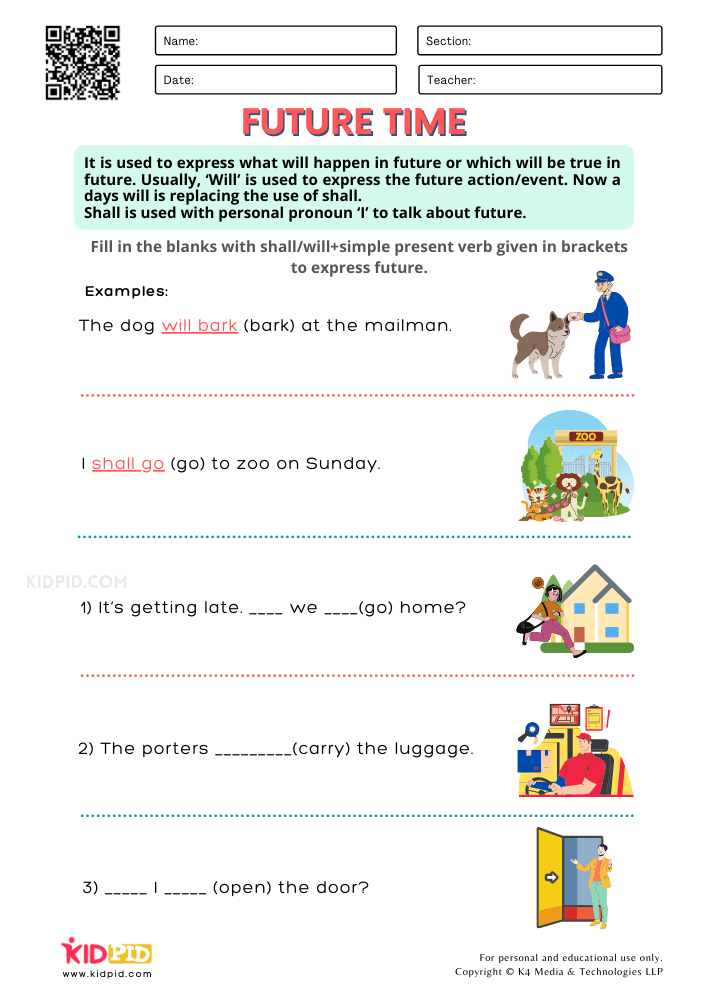
These worksheets provide practice in forming and using future tense verbs, helping students understand how to express actions or events that will occur at a later time.
Printable Worksheets on the Use of Present Tense Verbs for Grade 1
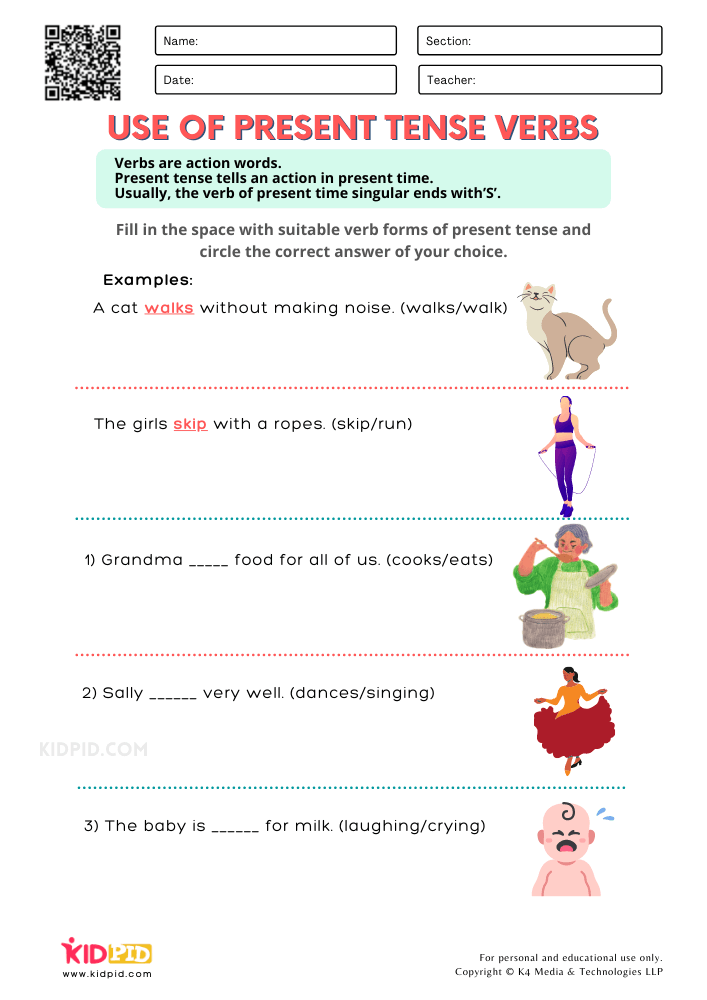
Designed for first graders, these worksheets focus on correctly using present tense verbs, enhancing students’ ability to describe current actions or states in simple sentences.
Printable Worksheets on Auxiliary Verbs for Grade 1
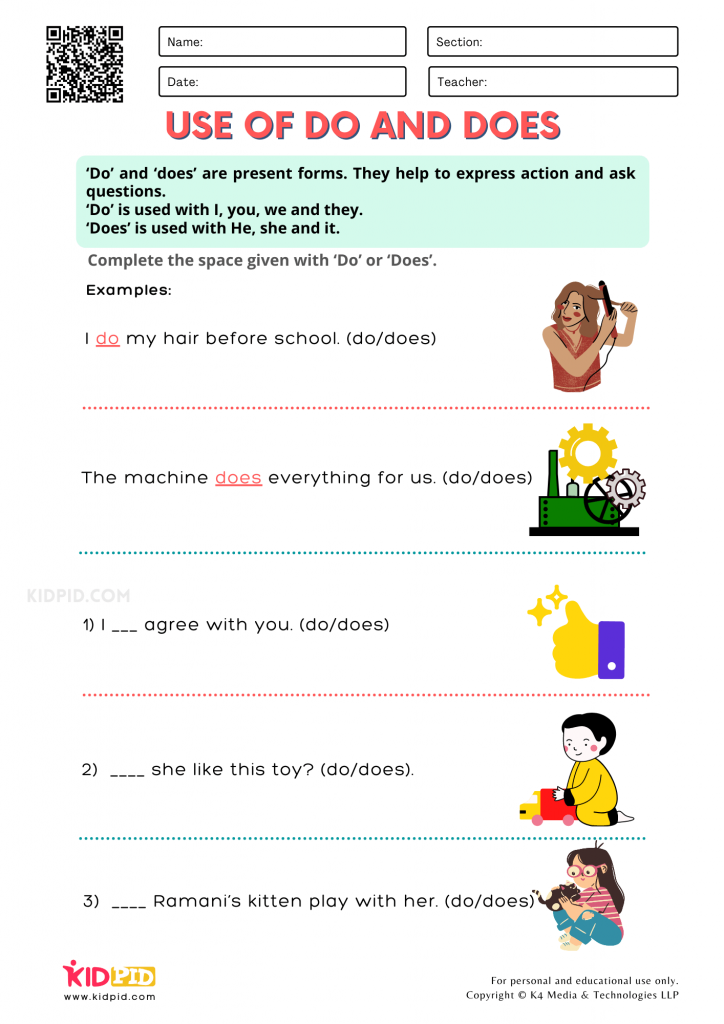
These worksheets introduce first graders to auxiliary verbs (e.g., “is,” “are,” “have”), teaching them how these verbs support main verbs in constructing meaningful sentences.
Worksheet on Continuous Action Verbs for Grade 3

This worksheet helps third graders practice using continuous action verbs (ending in “-ing”), improving their understanding of the present progressive tense and ongoing actions.
Printable Worksheets on the Past Tense of Irregular Verbs for Grade 2
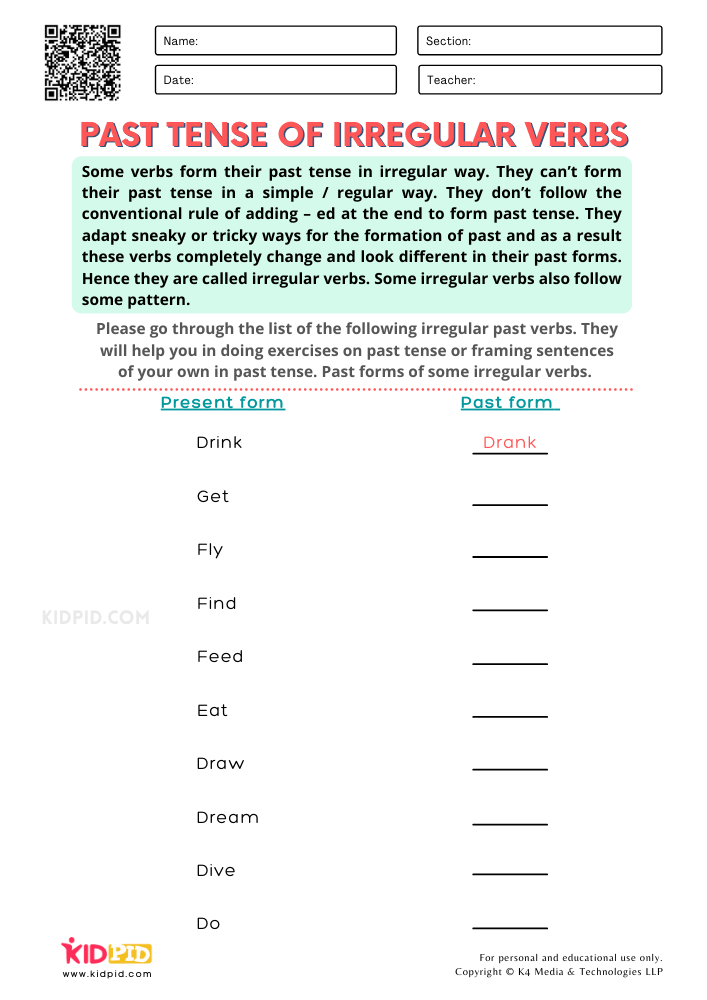
These worksheets focus on teaching second graders the past tense forms of irregular verbs, helping them master verb conjugation and improve their grammar skills.