Every parent wants their kid to interact with the other kids in a classroom. A child will only feel confident when they know the concepts taught in class and can understand them fully. In primary classes, children are more conscious about their surroundings than we think they are. At a very young age, it is important to be attentive and careful about the knowledge being transferred to them.
Kids develop the strength to read any word by the primary tone or sound of the word, and then move to learn the sound and articulation of the entire word. They start to realise what different letters can make words sound like.
The following worksheets represent a variety of popular objects and words that kids of this generation are familiar with. Under each worksheet, a few objects are provided – the assignment is to accurately trace the letters in each worksheet and then name the word with that alphabet.
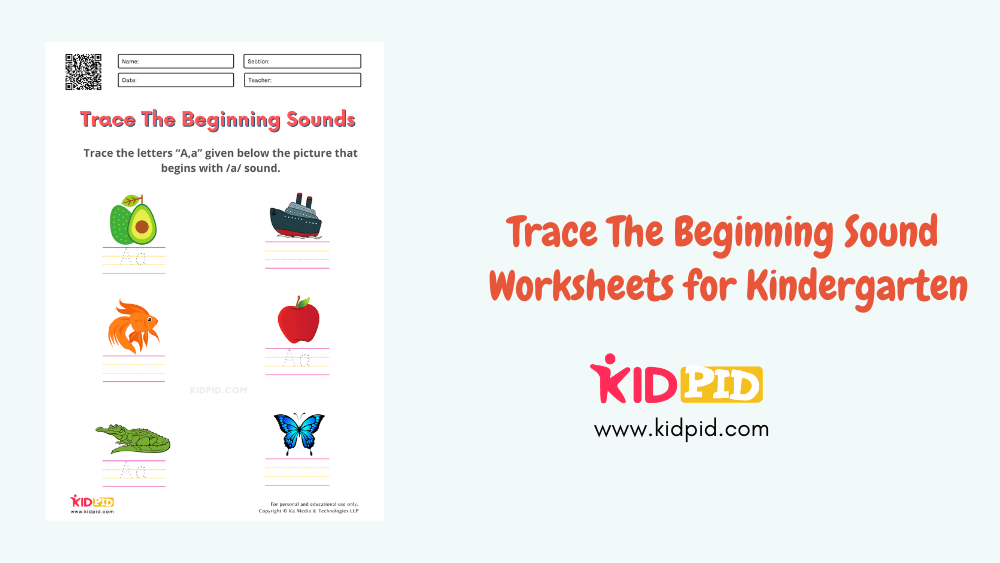
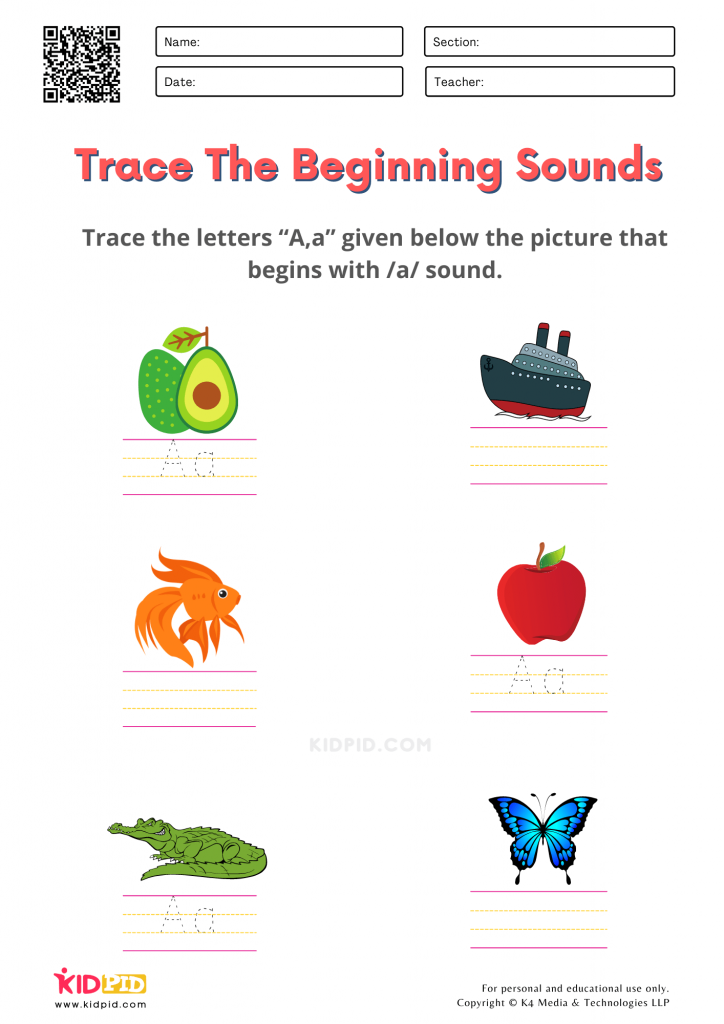
Kids may have difficulty with some words at the beginning, which is completely reasonable. A great way would be to help them with the first few worksheets and then leave them with the rest. The primary worksheet describes many well-known pictures, such as a ship, a fish, Apple, etc. The task is to make the kid sound the words out loud so that they can identify and write down the starting letter.
Contents
- Trace The Beginning Sound Worksheets
- WORKSHEET 1
- WORKSHEET 2
- WORKSHEET 3
- WORKSHEET 4
- WORKSHEET 5
- WORKSHEET 6
- WORKSHEET 7
- WORKSHEET 8
- WORKSHEET 9
- WORKSHEET 10
- WORKSHEET 11
- WORKSHEET 12
- WORKSHEET 13
- WORKSHEET 14
- WORKSHEET 15
- WORKSHEET 16
- WORKSHEET 17
- WORKSHEET 18
- WORKSHEET 19
- WORKSHEET 20
- WORKSHEET 21
- WORKSHEET 22
- WORKSHEET 23
- WORKSHEET 24
- WORKSHEET 25
- WORKSHEET 26
- Key Facts About Trace the Beginning Sound Worksheets
- Parts, Types, and Examples of Trace the Beginning Sound Worksheets
- How Does Trace the Beginning Sound Worksheets for Kindergarten Work?
- Benefits of Learning About Trace the Beginning Sound Worksheets
- Learning Objectives
- Worksheet Instructions
- Interesting Facts About Trace the Beginning Sound Worksheets
- Real-Life Applications
- FAQs
- Q1. What are Trace the Beginning Sound Worksheets?
- Q2. What age group are these worksheets suitable for?
- Q3.Why is learning beginning sounds important?
- Q4. Can these worksheets improve handwriting?
- Q5. How often should children practice beginning sounds?
- Q6. Are these worksheets useful for homeschooling?
- Q7. What skills do children gain from these worksheets?
- Read More:
Trace The Beginning Sound Worksheets

WORKSHEET 1
WORKSHEET 2
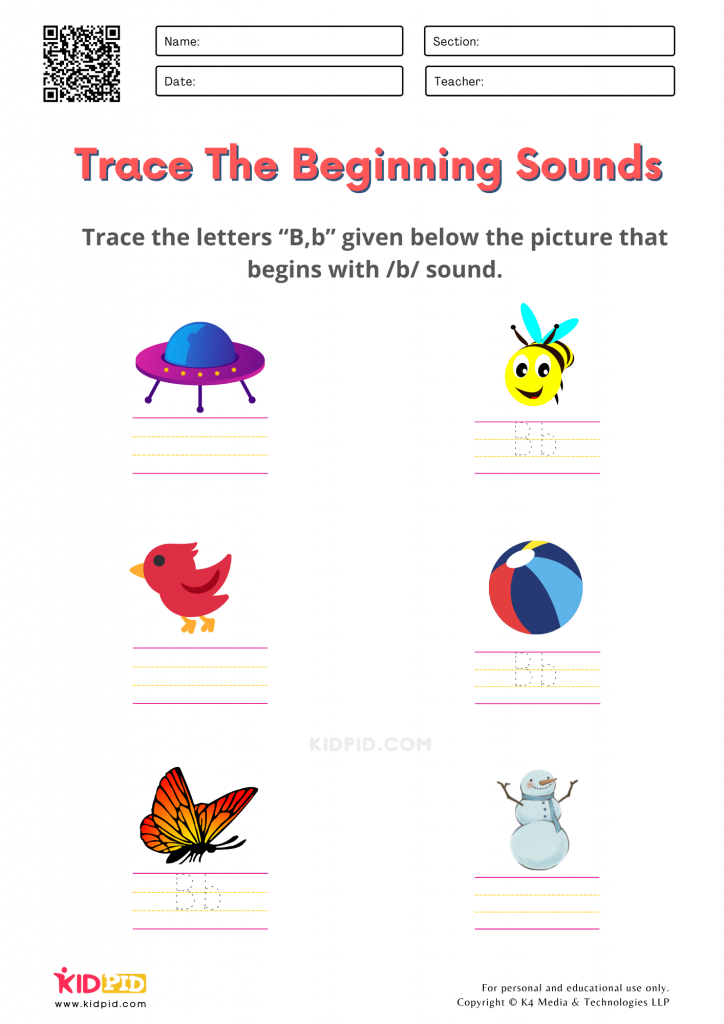
As soon as the first worksheet is over, we’ve got another worksheet where the kid will learn how to trace the sound of the words beginning with the alphabet “B,b”. This will help them learn new words according to the sounds that make up the word and thereby help them understand how to pronounce correctly.
WORKSHEET 3
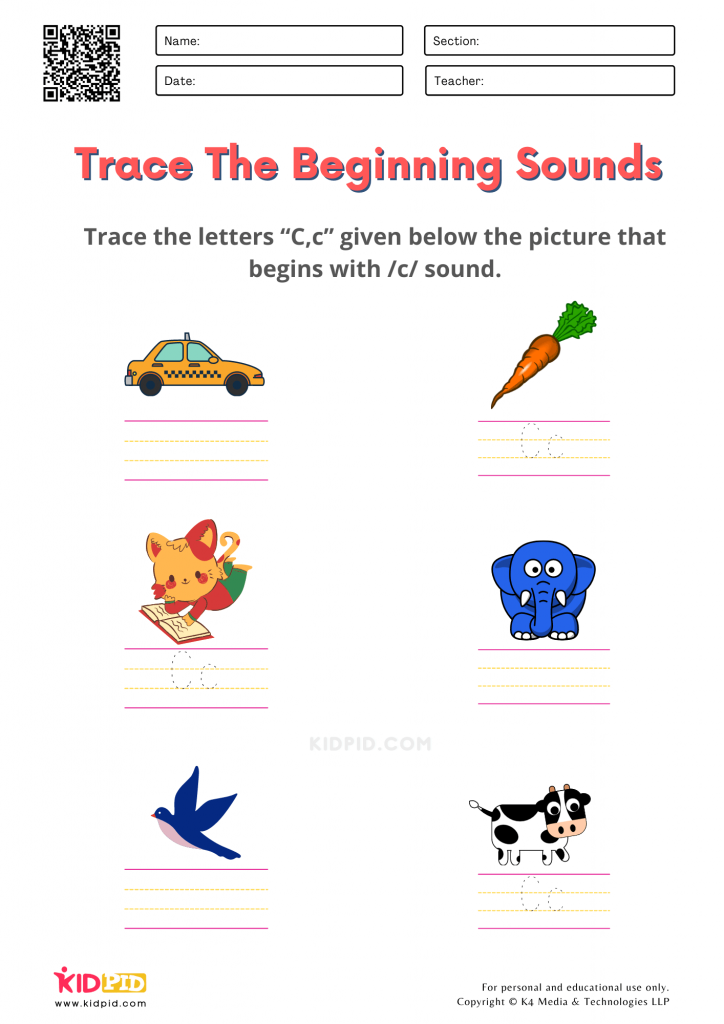
The third worksheet is for the letter “C,c” and depicts objects like Carrot, Cat, and Cow. Yet another exercise to engage children and help them learn. Just like the previous two worksheets, it’ll help children learn new words and expand their vocabulary.
WORKSHEET 4
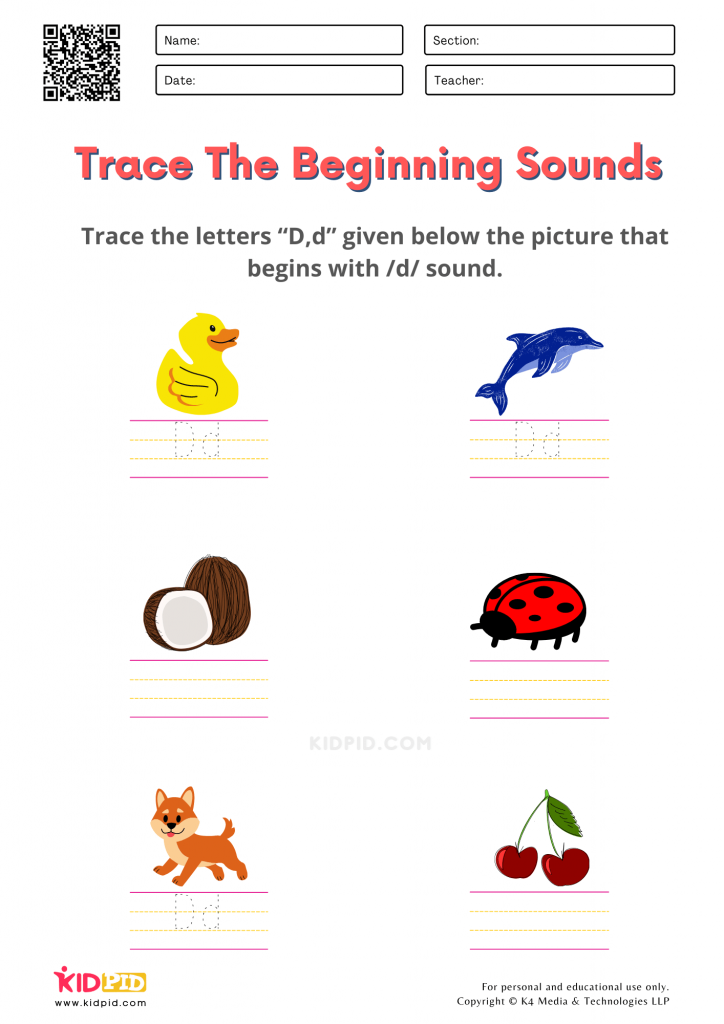
This worksheet deals with the alphabet “D,d”. The child will start to learn how to pronounce words like Duck, Dolphin, and Dog. It is important to make sure that children keep themselves engaged in the worksheets and do not lose their attention.
WORKSHEET 5
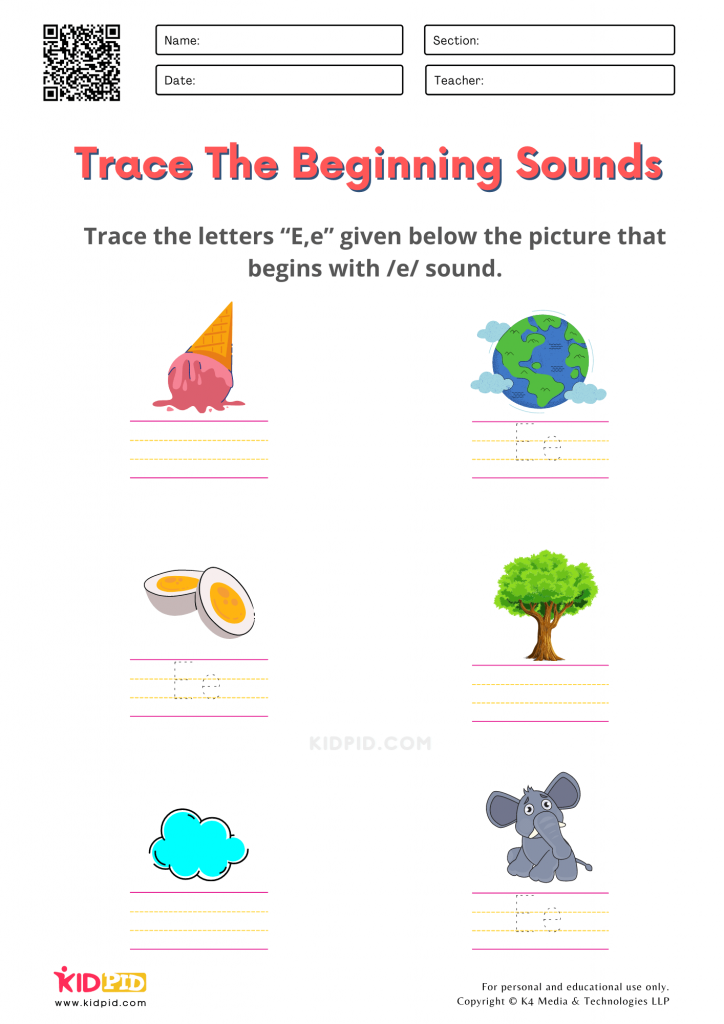
Worksheet five depicts the letter “E,e”. Here, the important thing is, few words are spelt separately from how they’re pronounced, as the same letter generates diverse sounds. For example, ‘elephant’ begins with the letter ‘E’, but the pronunciation is different for ‘earth’, which also starts with the same letter.
WORKSHEET 6
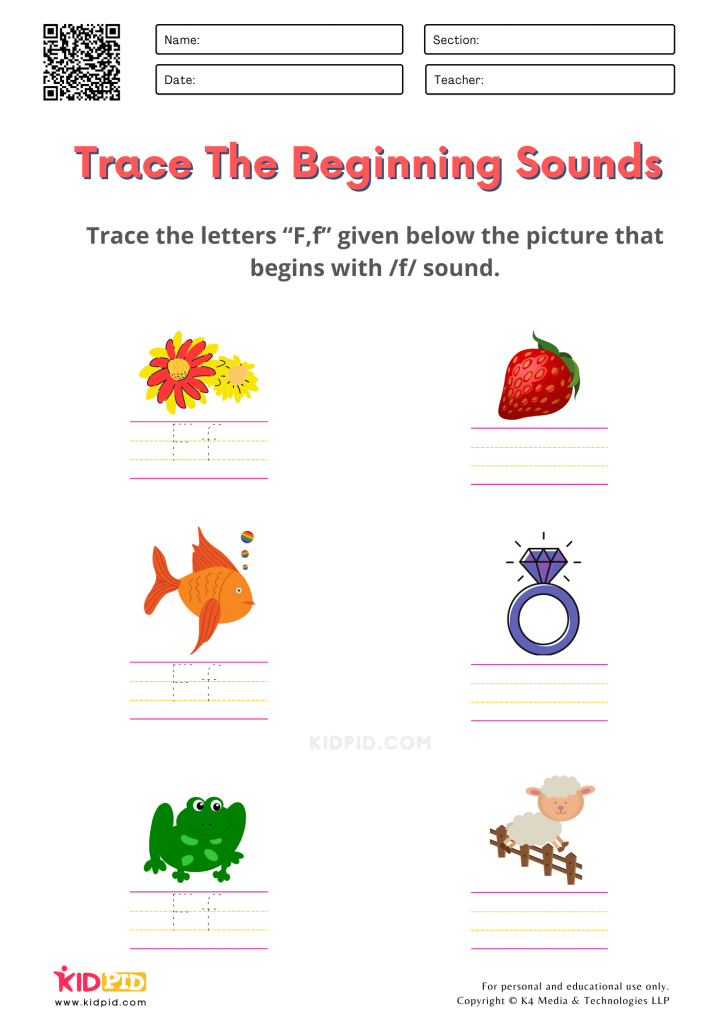
This worksheet includes the letter “F,f” and has words such as ‘Fish’ and ‘frog’, which are quite easy for growing children to pronounce. This becomes easy for the kids to pronounce after finishing the above five worksheets.
WORKSHEET 7
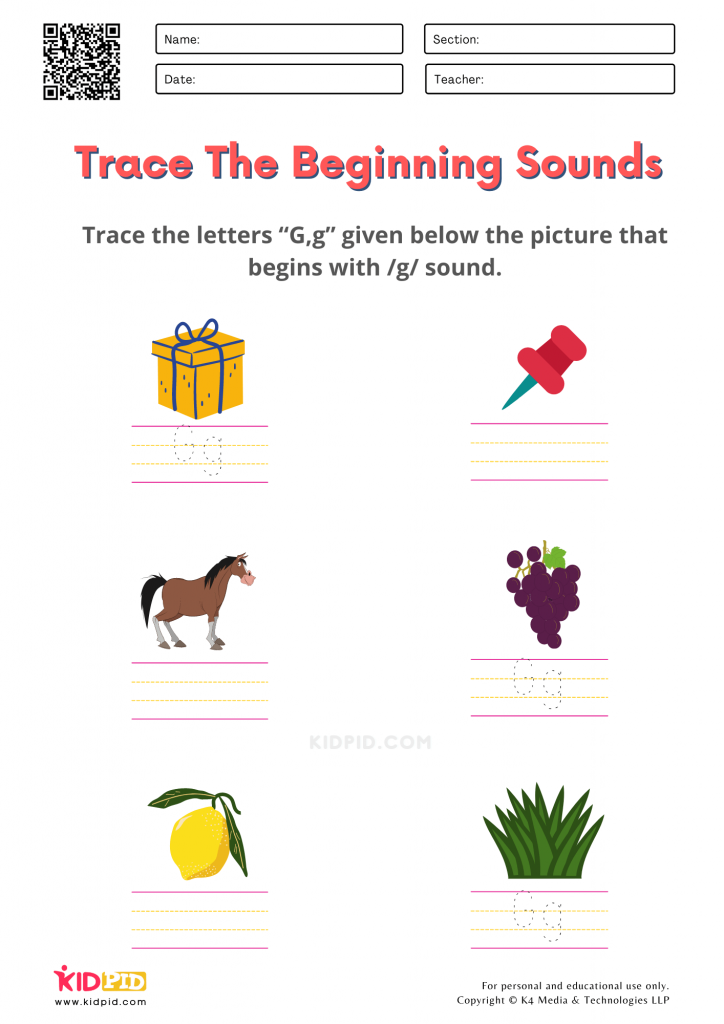
This worksheet includes the letter”G,g” and has words such as ‘Gifts’ and ‘Grass’, which allows children to understand the difference between the pronunciations of different words and letters.
WORKSHEET 8
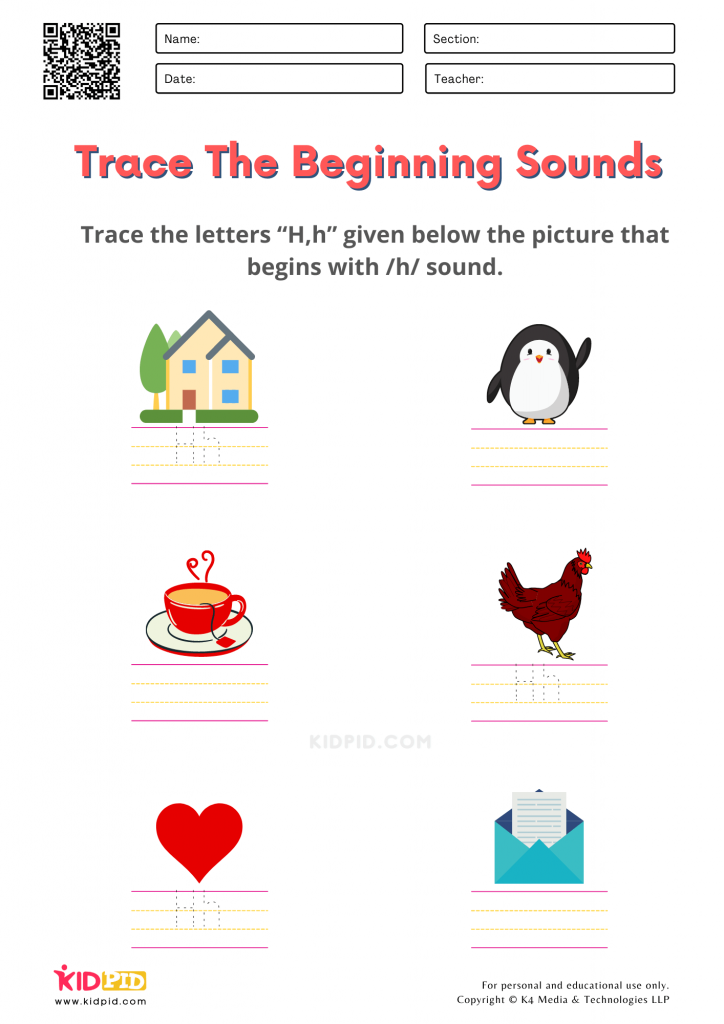
This worksheet includes the letter “H,h” and has words such as ‘House’ and ‘Horse’. These are pretty common objects which a kid will understand with ease, and the kids will also become aware of their surroundings with the help of such worksheets.
WORKSHEET 9
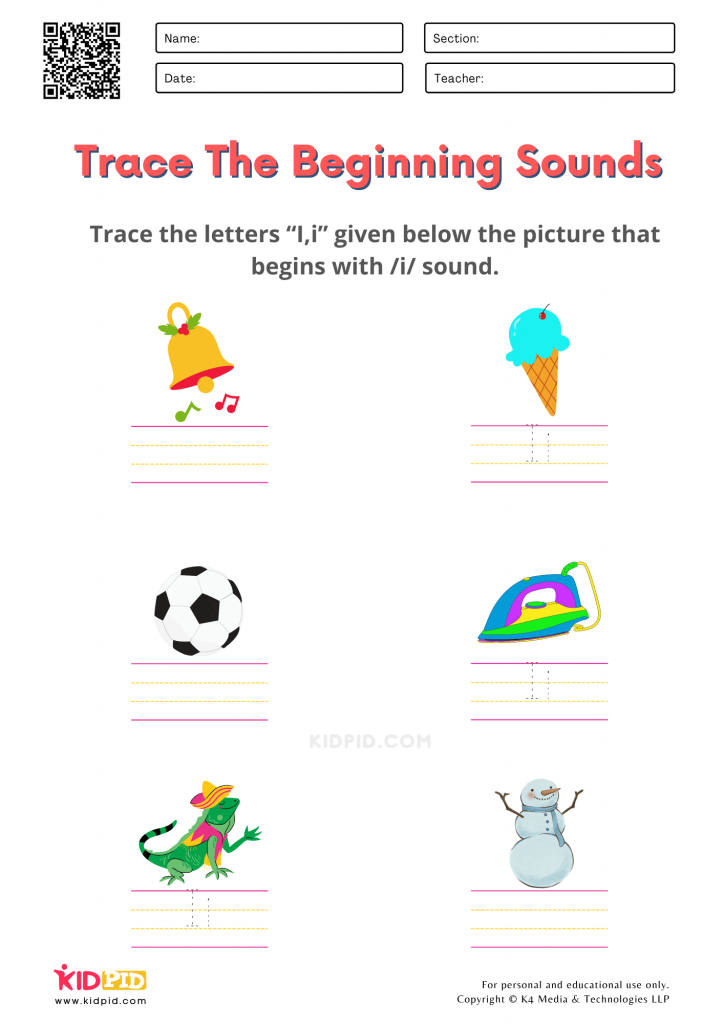
This worksheet includes the letter”I, i” and has words such as ‘Ice cream’ and ‘Iron’. The term ice cream will definitely gain their attention and will help them associate what they’re learning with the things they are comfortable and familiar with.
WORKSHEET 10
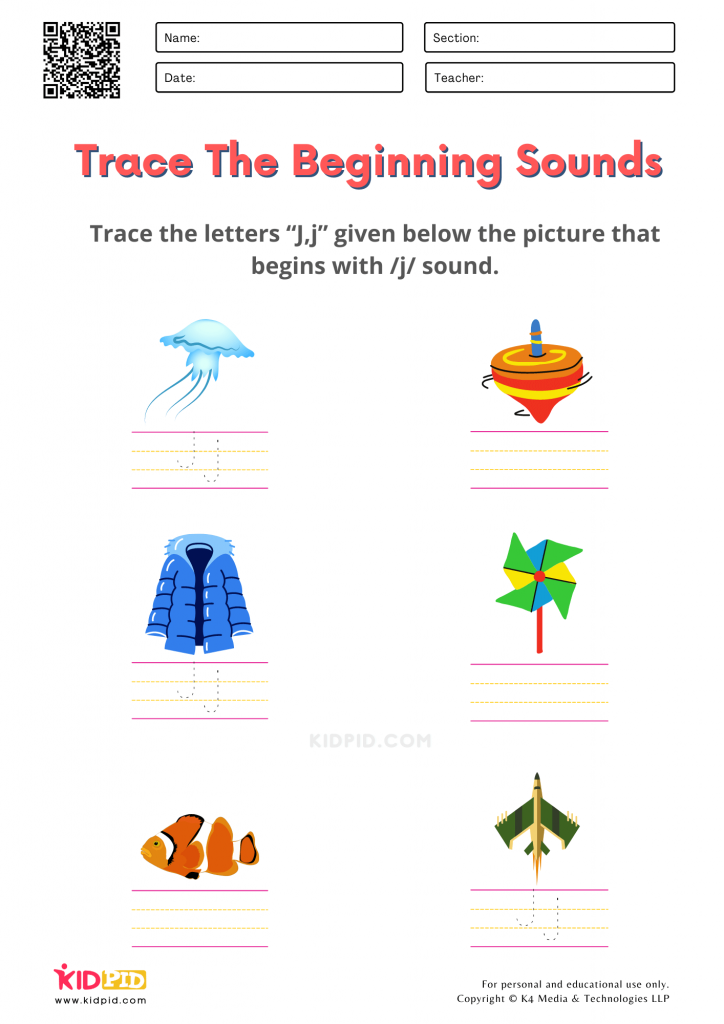
This worksheet includes the letter “J, j” and has words such as ‘Jacket’ and ‘Jet’. These are a little difficult, and so a kid needs to learn to pronounce them first.
WORKSHEET 11
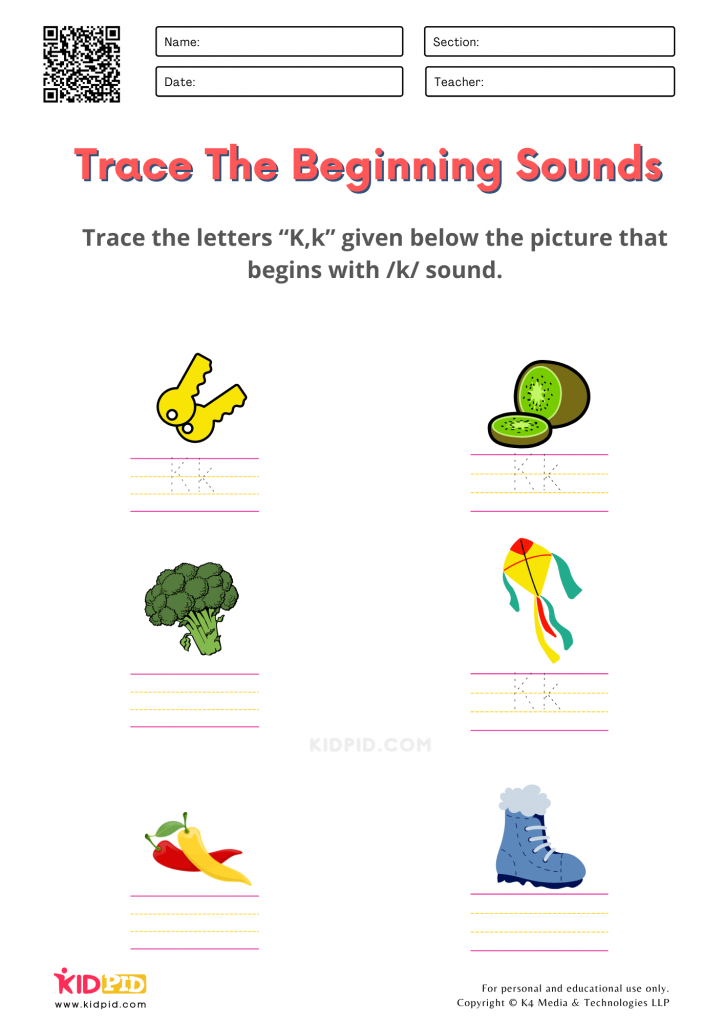
This worksheet includes the letter “K,k” and has words such as ‘Keys’ and ‘Kites’. Children can easily correlate these words to things they play with and are thus familiar with.
WORKSHEET 12
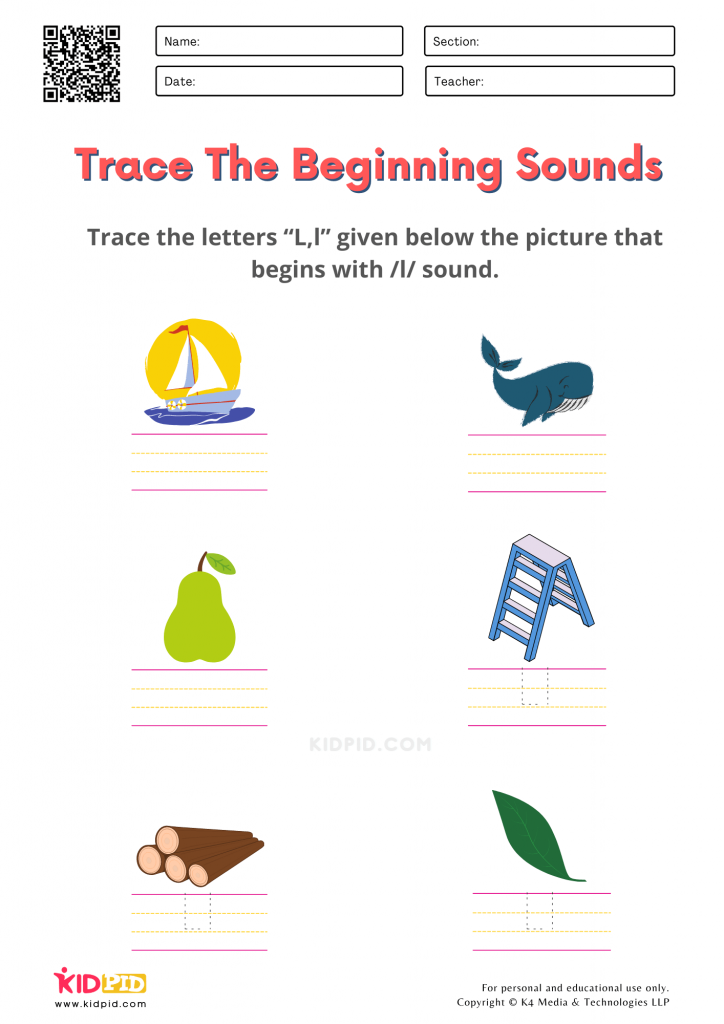
This worksheet includes the letter “L,l” and has words such as ‘Ladder’ and ‘Leaf’. Make sure the kid is pronouncing the words correctly and not overdoing it.
WORKSHEET 13
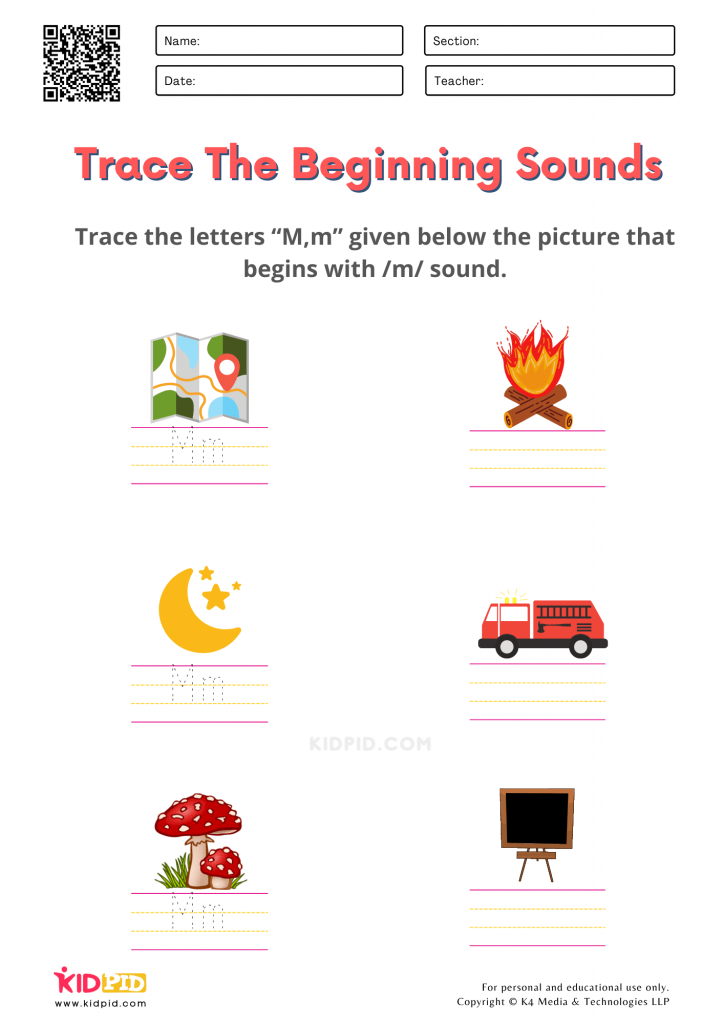
This worksheet includes the letter “M,m” and has words such as ‘Map’ and ‘Moon’. Just like the previous worksheets, the kid needs to understand the object first and then pronounce it.
WORKSHEET 14
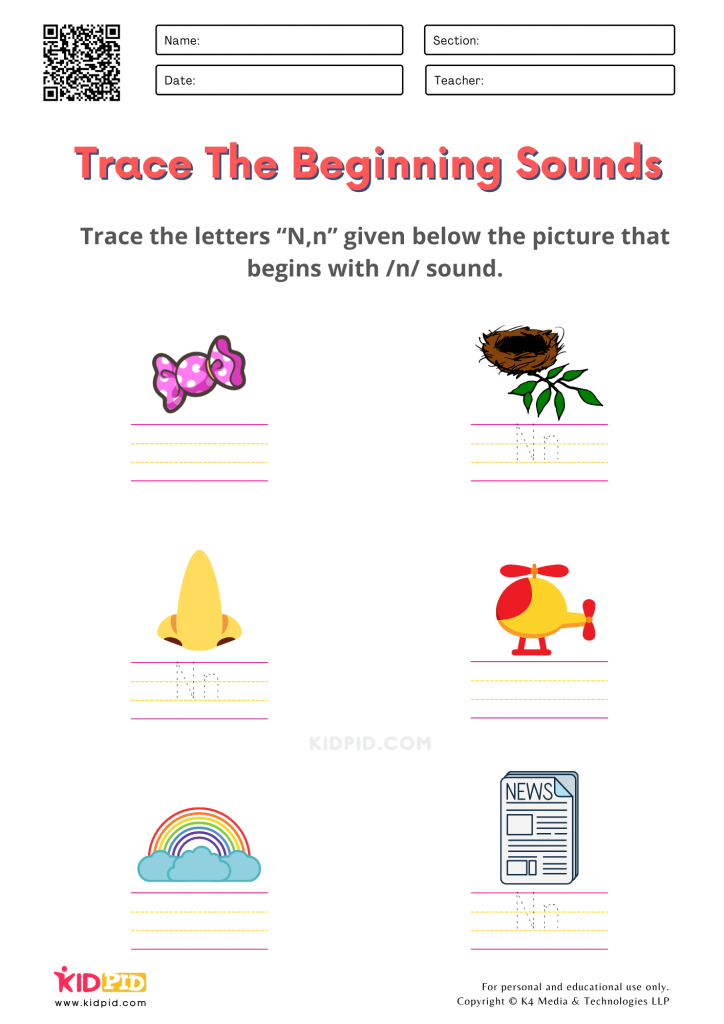
This worksheet includes the letter “N, n” and has words such as ‘Nest’ and ‘News’. Different words help kids understand that there are different meanings to each word. Apart from pronouncing it, the parents need to tell them the difference between the various words.
WORKSHEET 15
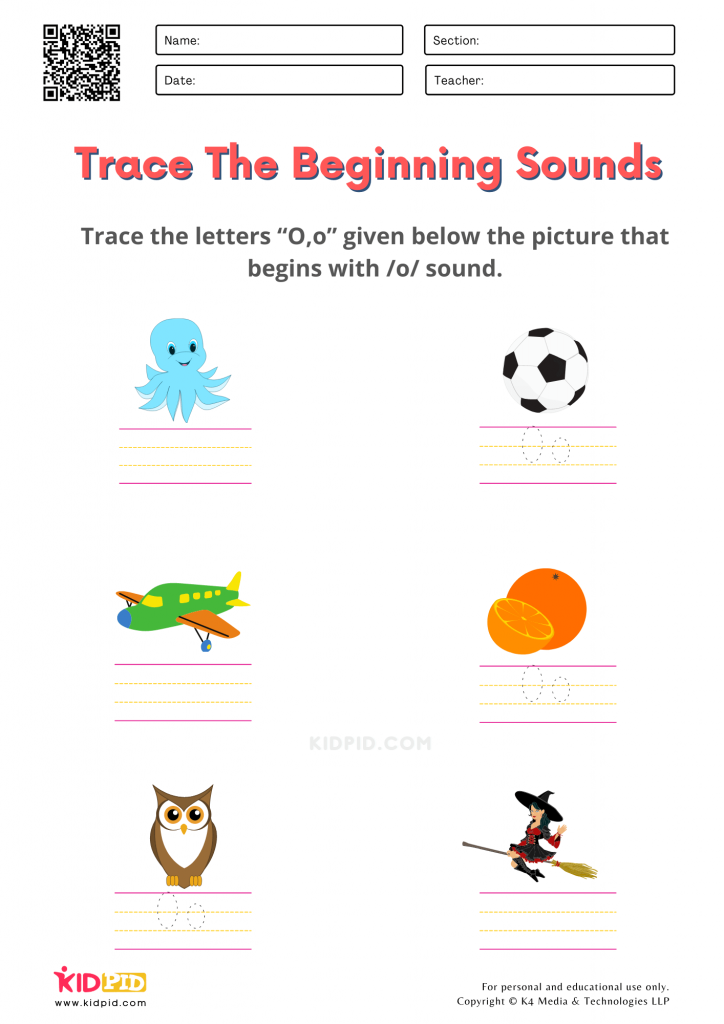
This worksheet includes the letter “O, o” and has words such as ‘Orange’ and ‘Owl’. The fun and colourful images pique the interest of young, curious minds and motivate them to learn more.
WORKSHEET 16
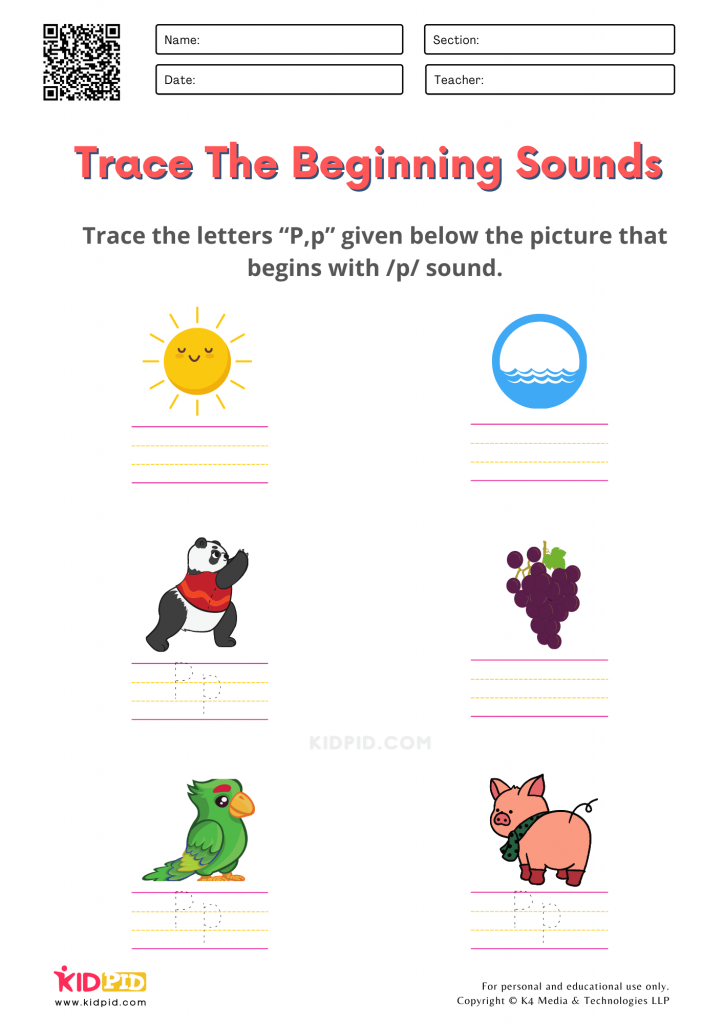
This worksheet includes the letter “p” and has words such as ‘Parrot’ and ‘Pig’. Children are fascinated by animals, and so this is a great way to combine fun and learning.
WORKSHEET 17
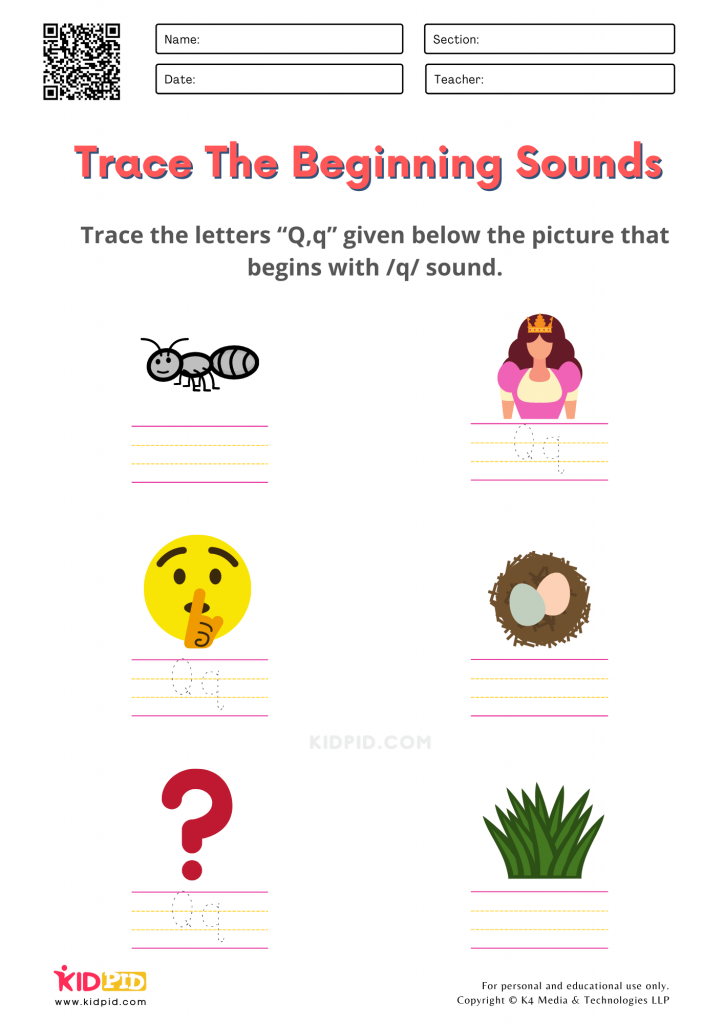
This worksheet includes the letter “Q, q” and has words such as ‘Quiet’ and ‘Question’. This worksheet is not so easy to pronounce and understand. It is important to assist them with words like this and help them learn the correct pronunciation.
WORKSHEET 18
This worksheet includes the letter “R, r” and has words such as ‘Rose’ and ‘Rat’. This worksheet will excite young children as they’ll find a flower and beloved cartoon animals. This will give them a better overall understanding of the sound of the objects.
WORKSHEET 19
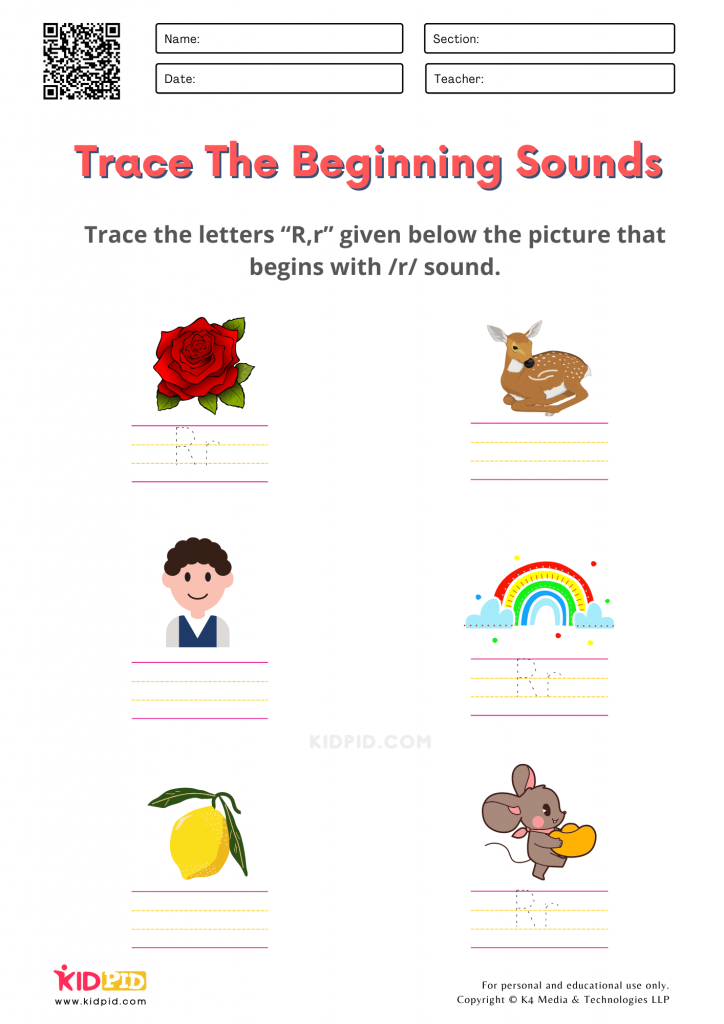
This worksheet includes the letter “s” and has words such as ‘Star’ and ‘Snake’. This worksheet describes a variety of common items and words that children at this age are already familiar with. The goal is to make them pronounce the word correctly and help them if they cannot.
WORKSHEET 20
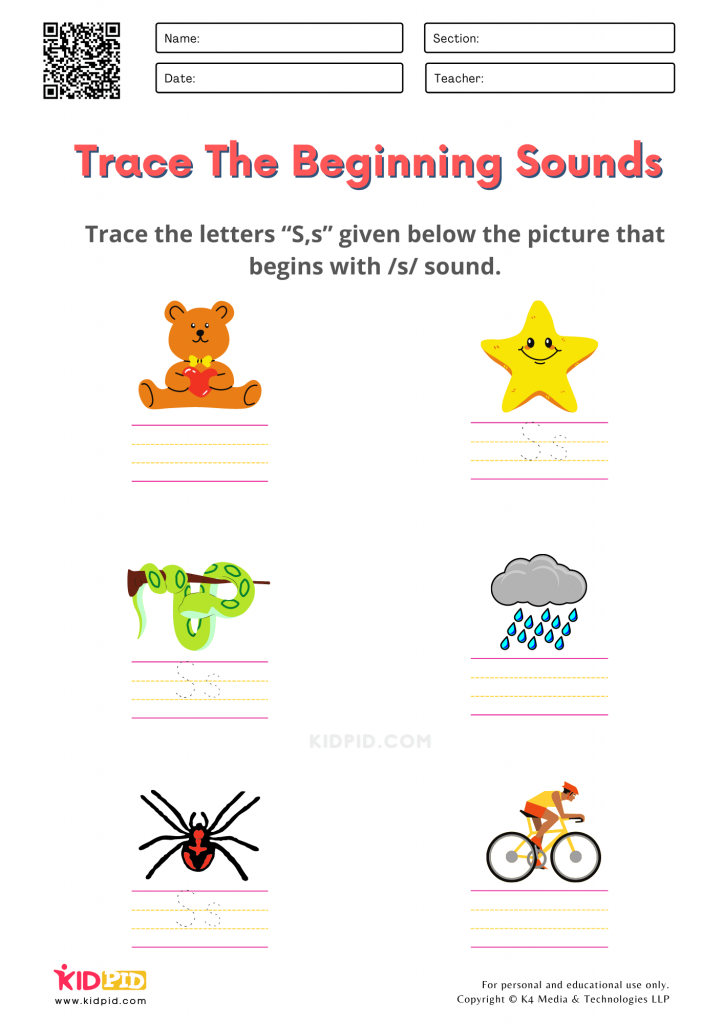
This worksheet depicts the letter “T, t” and has words such as ‘Tomato’ and ‘Tree’. Children may have trouble with certain words which are a bit too difficult to pronounce in their early stages. But, having them practise these worksheets will remove these remaining problems and help them become better readers.
WORKSHEET 21
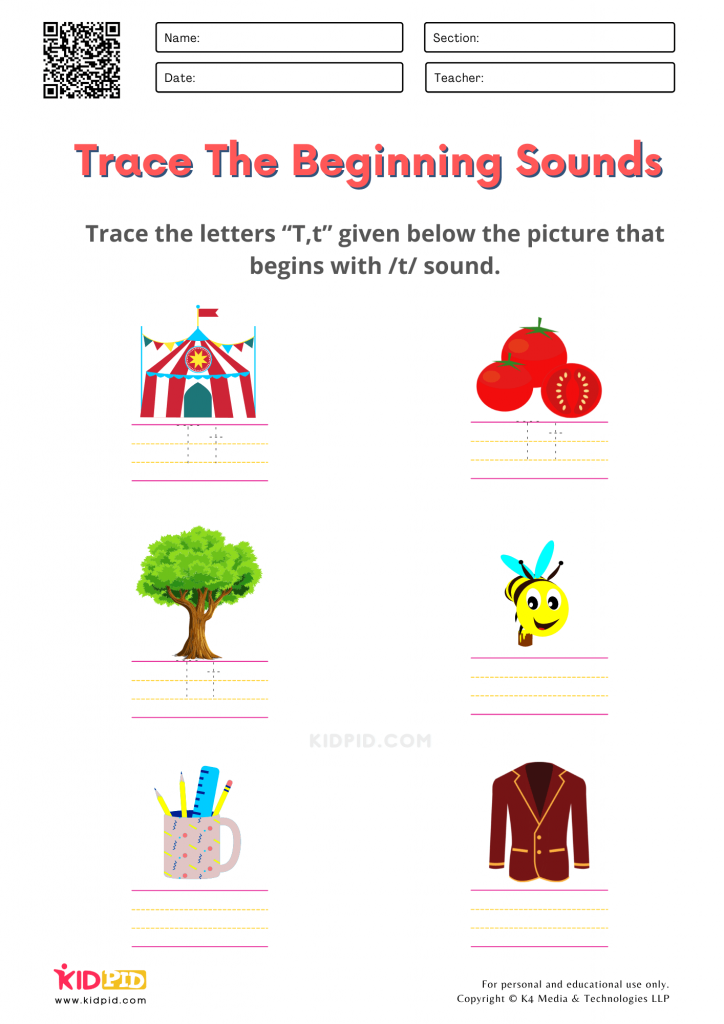
This worksheet includes the letter “U, u” and has words such as ‘Umbrella’ and ‘Unicorn’. A great way to teach the kids is to sound out the words for them very slowly and hold the word after each character. By doing this, they will learn the pronunciation directly from their sounds.
WORKSHEET 22
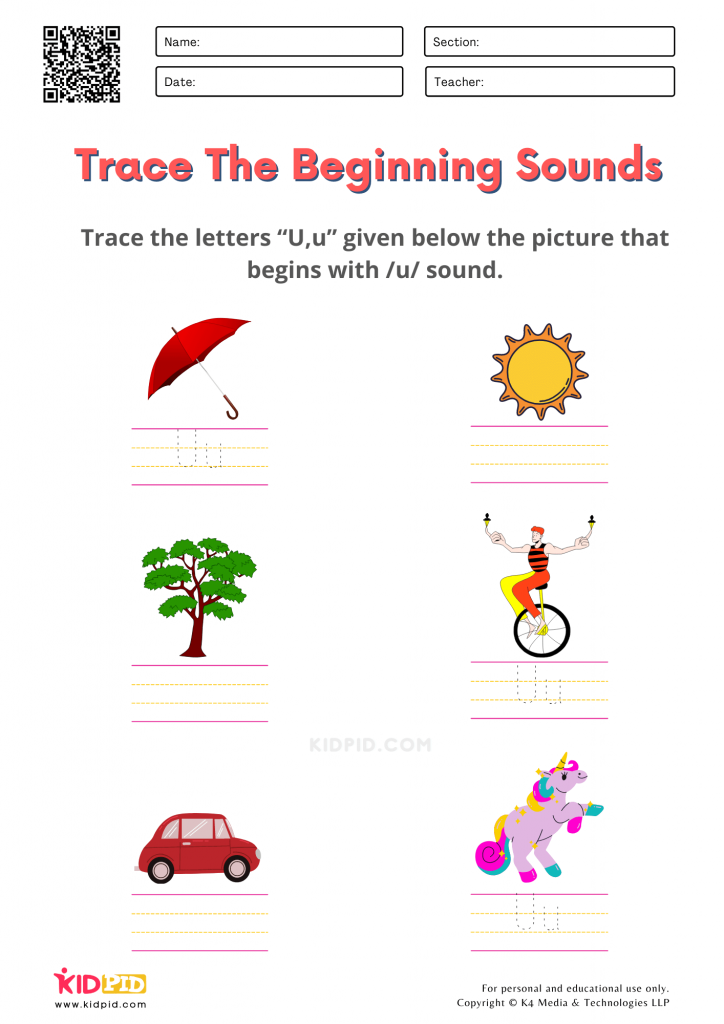
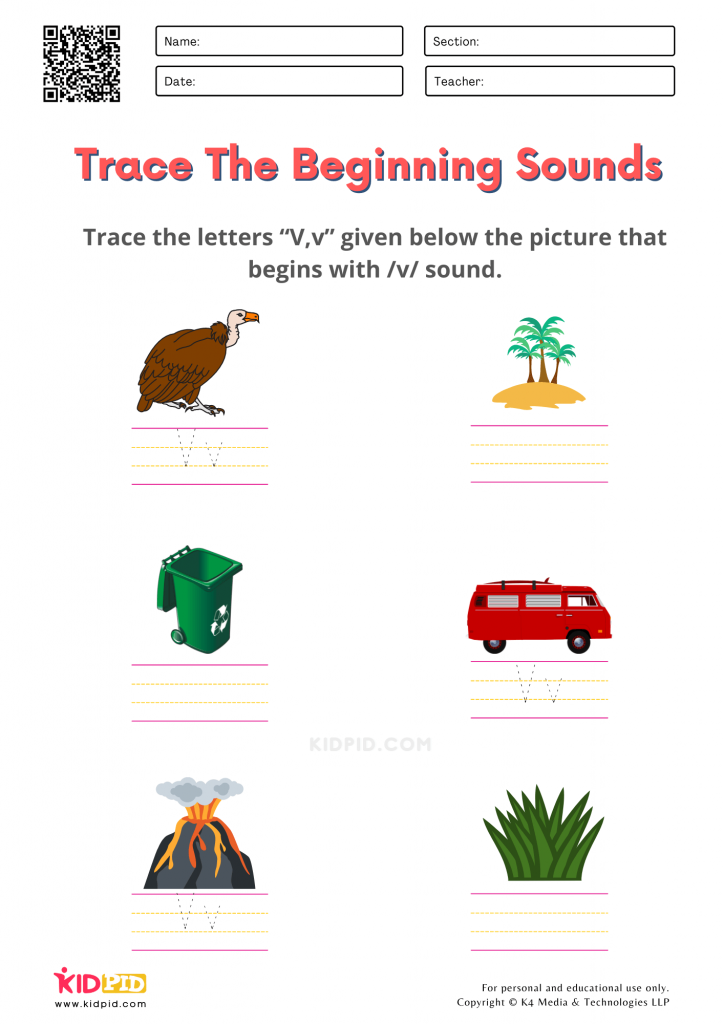
This worksheet includes the letter “V, v” and has words such as ‘Vulture’ and ‘Volcano’. The task here is to recognise the word and then make the kid pronounce it without making a mistake. This will help them break down the word according to the integral sounds and letters and give them a better overall understanding.
WORKSHEET 23
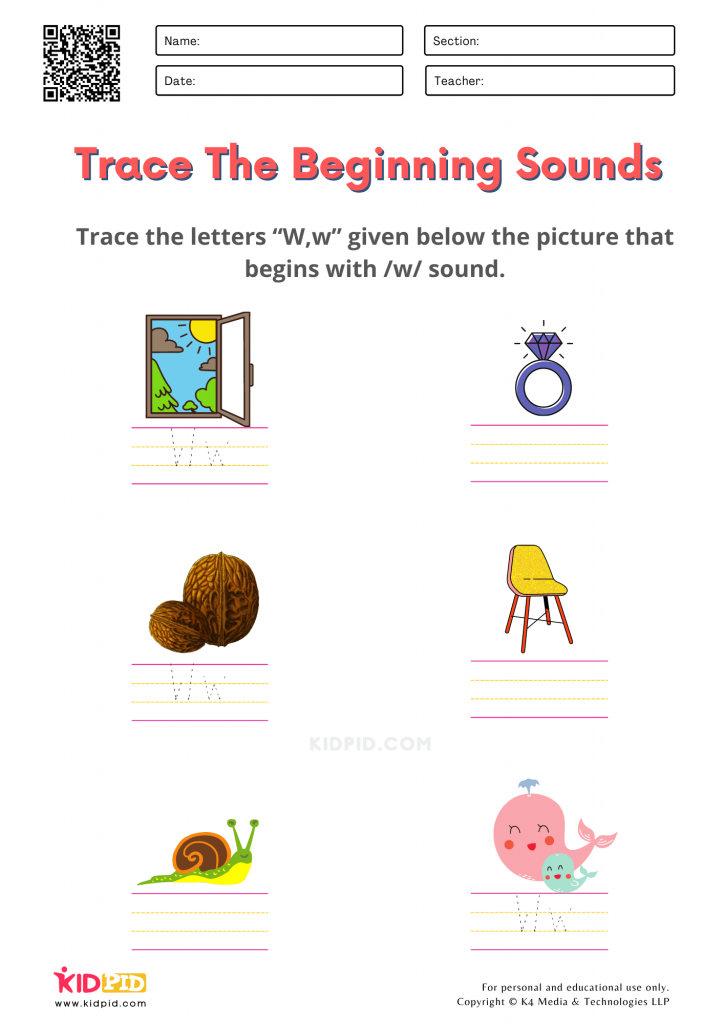
This worksheet includes the letter “W, w” and has words such as ‘Window’ and ‘Whale’. These words are unique and different from one another. It is important to make sure that children keep these differences in mind while learning.
WORKSHEET 24
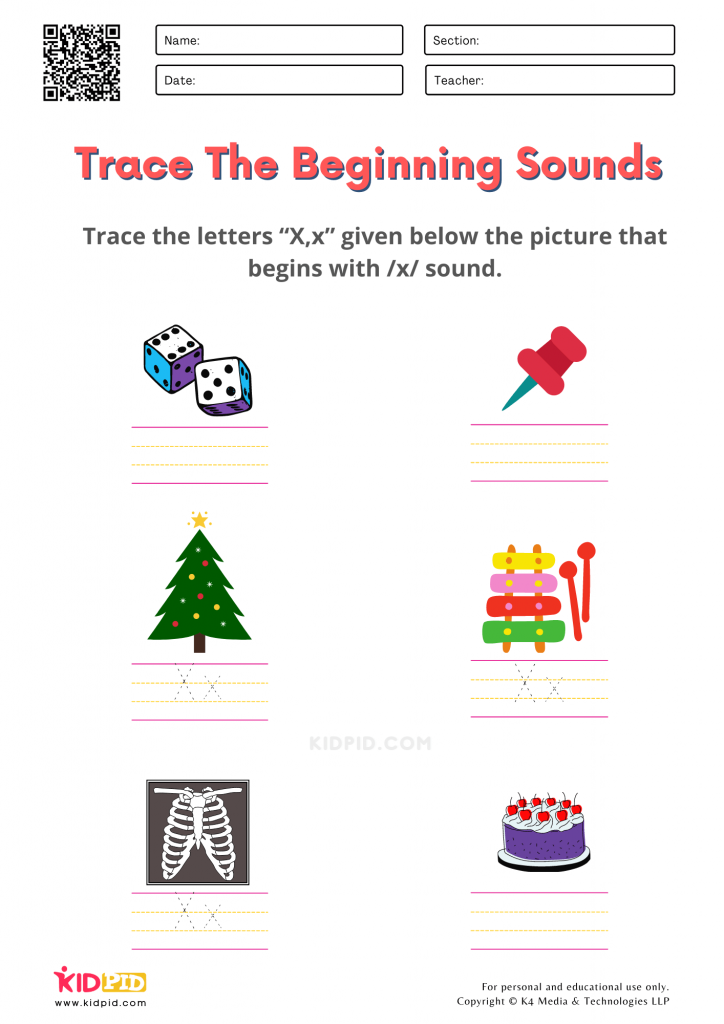
This worksheet includes the letter “X, x” and has words such as ‘X-mas tree’ and ‘X-ray’. Sound out the word carefully and then have the child pronounce the word. This way, it becomes easy for the kids to pronounce after hearing it first.
WORKSHEET 25
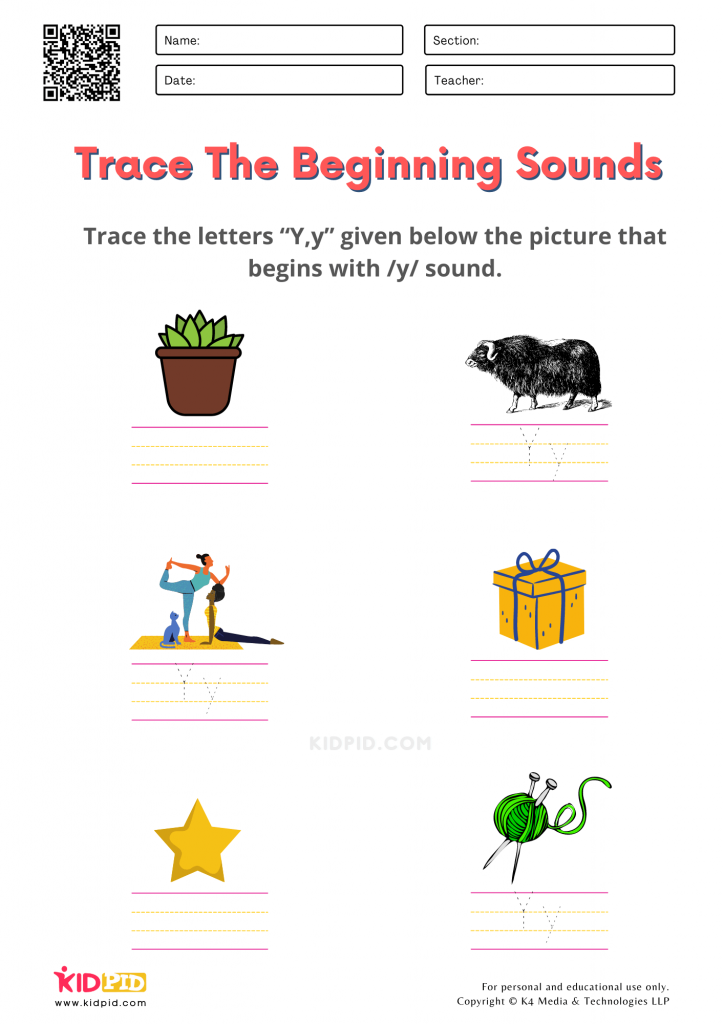
This worksheet includes the letter “Y, y” and has words such as ‘Yoga’ and ‘Yak’. These worksheets will help you introduce your children to the letters of the alphabet in a fun and playful manner. Children need to be attentive and focused while learning.
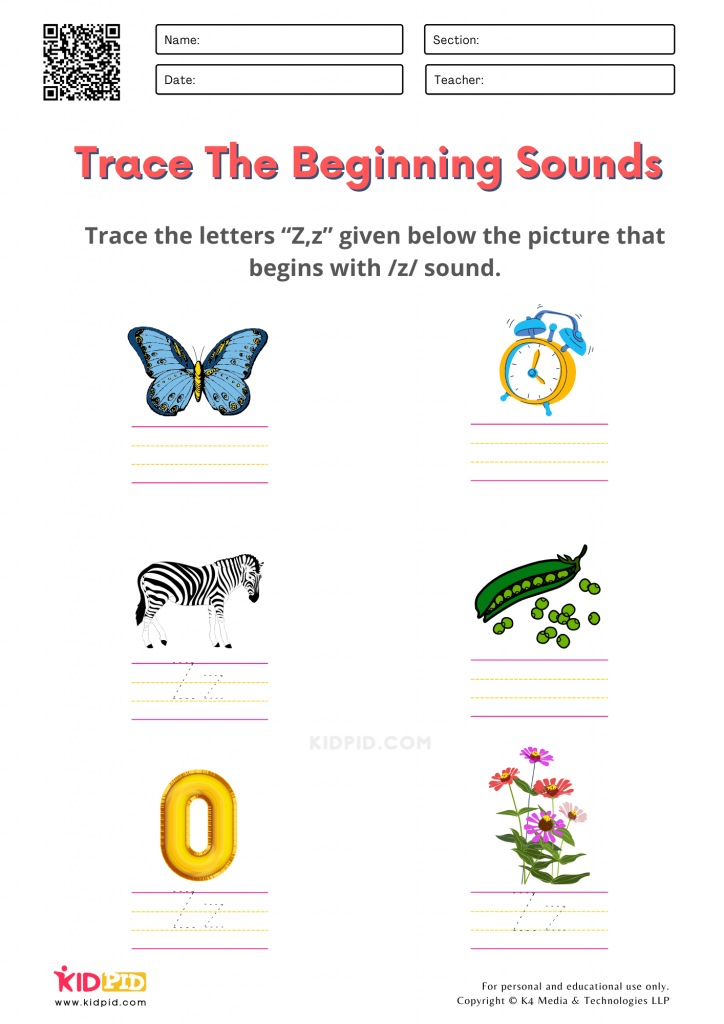
WORKSHEET 26
This worksheet includes the letter “Z, z” and has words such as ‘Zebra’. In this final worksheet, the kids will learn about the last alphabet and through repeated training and practice, they’ll learn to pronounce many new words
Key Facts About Trace the Beginning Sound Worksheets
Trace the Beginning Sound Worksheets for Kindergarten help young learners recognise and practice the first sound they hear in words. These worksheets combine phonics, letter tracing, and picture recognition activities to strengthen early reading skills. Children identify the beginning sound of an object, trace the corresponding letter, and connect sounds with written symbols. These activities support phonemic awareness, letter recognition, vocabulary development, and handwriting practice. They are designed specifically for preschool and kindergarten students who are building foundational literacy skills.
Parts, Types, and Examples of Trace the Beginning Sound Worksheets
Parts of the Worksheets
- Picture illustrations representing common objects or animals.
- Traceable uppercase and lowercase letters.
- Beginning sound identification activities.
- Matching and colouring exercises.
- Writing practice sections.
Types of Worksheets
- Letter tracing with pictures.
- Beginning sound-matching worksheets.
- Colour-the-correct-letter activities.
- Cut-and-paste sound recognition worksheets.
- Alphabet sound review worksheets.
Examples
- Apple → Trace the letter A.
- Ball → Trace the letter B.
- Cat → Trace the letter C.
- Dog → Trace the letter D.
- Fish → Trace the letter F.
How Does Trace the Beginning Sound Worksheets for Kindergarten Work?
These worksheets introduce children to phonics by encouraging them to listen carefully to the first sound in a word. Students observe a picture, identify its name, determine the beginning sound, and trace the matching letter. Repeated practice helps learners connect spoken sounds with written letters. Many worksheets also include colouring, matching, and writing activities that reinforce learning while keeping children engaged.
Benefits of Learning About Trace the Beginning Sound Worksheets
- Improves phonemic awareness skills.
- Builds strong reading foundations.
- Enhances alphabet recognition.
- Develops handwriting and fine motor skills.
- Expands vocabulary through picture-word association.
- Increases confidence in early literacy tasks.
- Supports independent learning and classroom instruction.
- Makes phonics practice fun and interactive.
Learning Objectives
By completing these worksheets, children will:
- Identify beginning sounds in common words.
- Recognise uppercase and lowercase letters.
- Connect sounds to corresponding letters.
- Improve tracing and writing abilities.
- Develop listening and pronunciation skills.
- Strengthen early reading readiness.
- Build confidence in phonics and literacy activities.
Worksheet Instructions
- Look carefully at the picture shown.
- Say the name of the object aloud.
- Listen to the first sound in the word.
- Find the matching letter.
- Trace the letter using the dotted lines.
- Complete any matching, colouring, or writing activity provided.
- Repeat the exercise for all pictures on the worksheet.
Interesting Facts About Trace the Beginning Sound Worksheets
- Beginning sound recognition is one of the first steps in learning to read.
- Children often learn letter sounds before they can read full words.
- Phonics instruction helps improve reading accuracy and fluency.
- Picture-based learning makes sound recognition easier for young learners.
- Repeated tracing activities strengthen the hand muscles needed for writing.
- Early phonemic awareness is a strong predictor of future reading success.
Real-Life Applications
Beginning sound recognition is used in everyday learning and communication. Children use these skills when reading books, identifying objects, spelling simple words, and participating in classroom activities. Understanding letter sounds helps young learners decode unfamiliar words, improve pronunciation, and build confidence in reading. These foundational literacy skills support academic success throughout elementary school and beyond.
FAQs
Q1. What are Trace the Beginning Sound Worksheets?
Answer: They are educational worksheets that help children identify and trace the first sound of a word while practising letter formation and phonics skills.
Q2. What age group are these worksheets suitable for?
Answer: These worksheets are ideal for preschoolers, kindergarten students, and early learners aged 4–6 years.
Q3.Why is learning beginning sounds important?
Answer: Beginning sounds help children develop phonemic awareness, which is essential for reading, spelling, and language development.
Q4. Can these worksheets improve handwriting?
Answer: Yes. Tracing letters strengthens fine motor skills and helps children practice proper letter formation.
Q5. How often should children practice beginning sounds?
Answer: Short daily practice sessions of 10–15 minutes can significantly improve phonics and letter recognition skills.
Q6. Are these worksheets useful for homeschooling?
Answer: Absolutely. Parents and homeschool educators can use them to teach foundational reading skills in a structured and engaging way.
Q7. What skills do children gain from these worksheets?
Answer: Children develop phonemic awareness, alphabet recognition, vocabulary, listening skills, handwriting abilities, and early reading readiness.
The most reliable way to learn anything is to concentrate on the work at hand while enjoying the process, and what better way to do that than with fun worksheets filled with pictures of animals, fruits, and vegetables. Get these worksheets done for the betterment of your kid. Expand classroom learning with essays, worksheets, paragraphs, quizzes, flashcards, and interactive resources. Join our YouTube & Facebook community.
The Content Team developed this worksheet to nurture learning success.
Reviewed By Sushmita
Read More: