

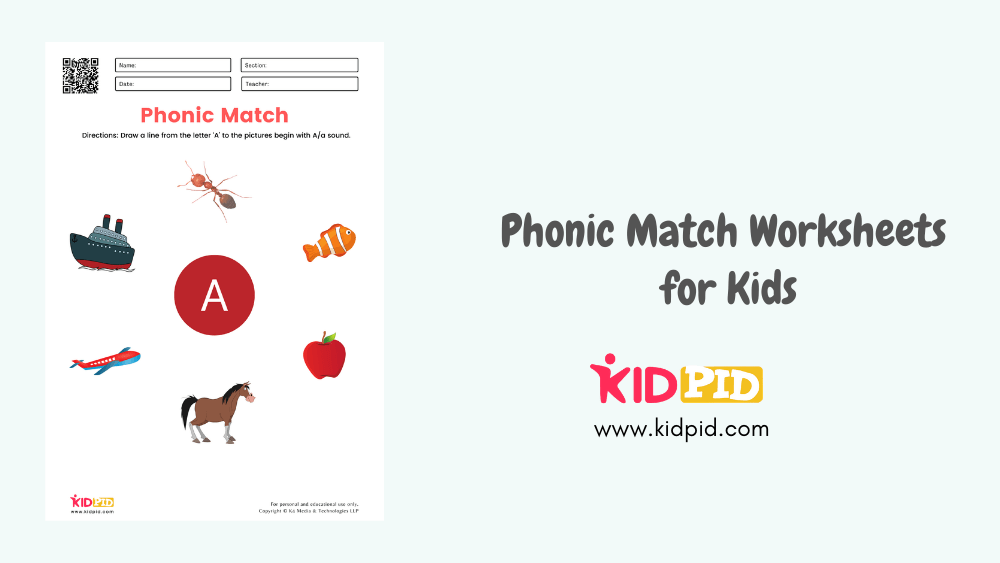
Learning how to pronounce words correctly is a crucial step in a child’s learning journey. As children grow up, they need the necessary tools to express themselves to people around them. A key part of that is verbal communication, and this is where the importance of pronunciation comes in. While children easily know how to talk and interact in their mother tongue, the case is not the same when it comes to their second language, which is usually English. Guidance and instruction are necessary when learning how to pronounce words. Encourage children to sound out each word loudly and slowly, associating each letter with its corresponding sound. Applying the already existing sound-letter relationships to pronounce a word is known as decoding the word and is the foundation of pronunciation.
The following set of worksheets primarily focuses on identifying the correct starting letter of a word from a group of images. There is a worksheet for every letter of the alphabet, providing a full workbook for children to practice their words and pronunciation.
So, let’s get started!
Contents
- Phonic Match Worksheets for Kids
- Key Facts About Phonics Match Worksheets for Kids
- Parts/Types/Examples of Phonics Worksheets
- How Does a Phonics Match Worksheet Work?
- Benefits of Learning About Phonics
- Learning Objectives
- Worksheet Instructions
- Interesting Facts About Phonics & Language Development
- Vocabulary Words Introduced in This Pack
- Real-Life Applications
- FAQs
- Read More:
Phonic Match Worksheets for Kids

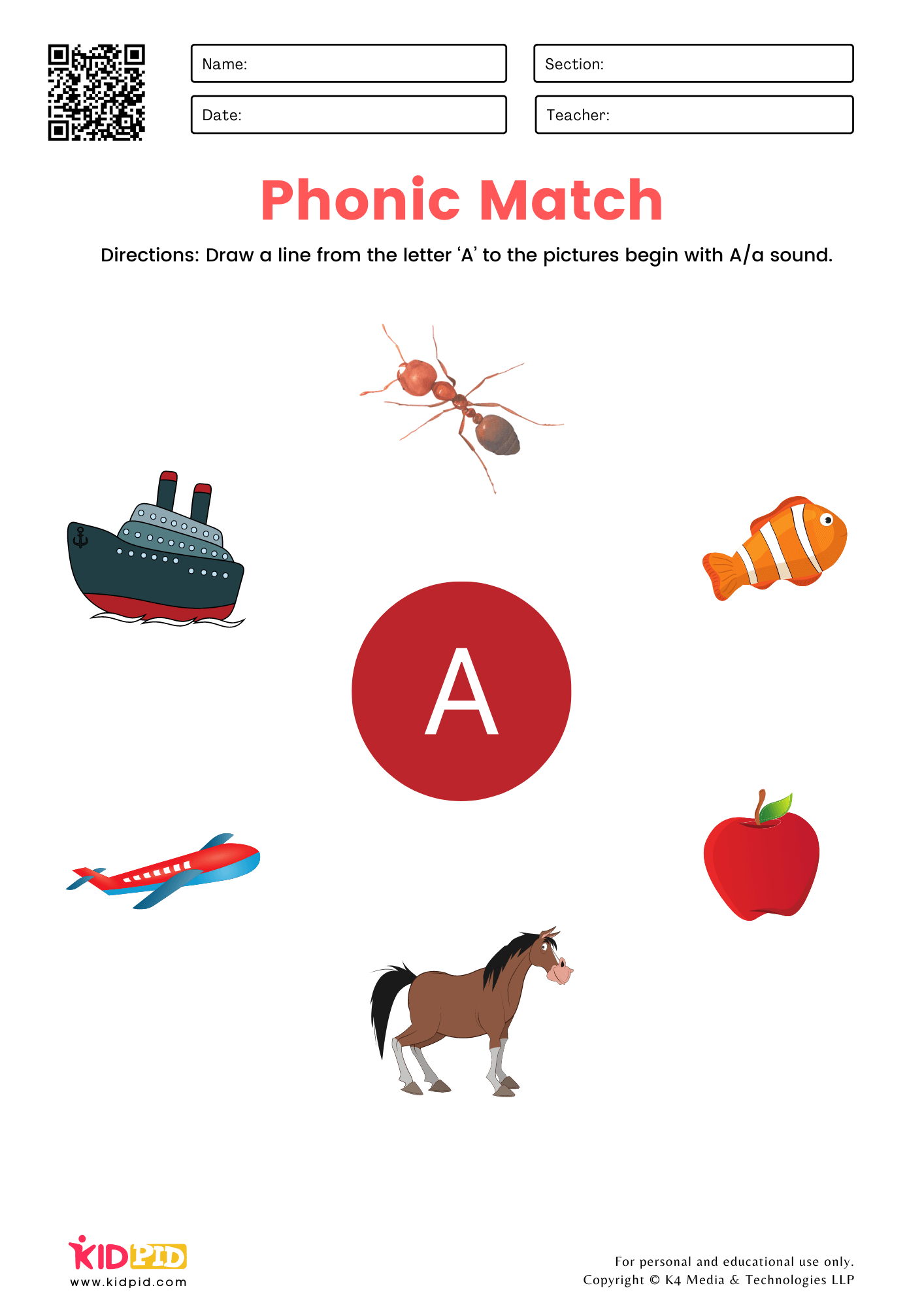
This is the first worksheet for the letter ‘ a ‘. Various familiar objects have been depicted in the worksheet, giving children a sense of familiarity.
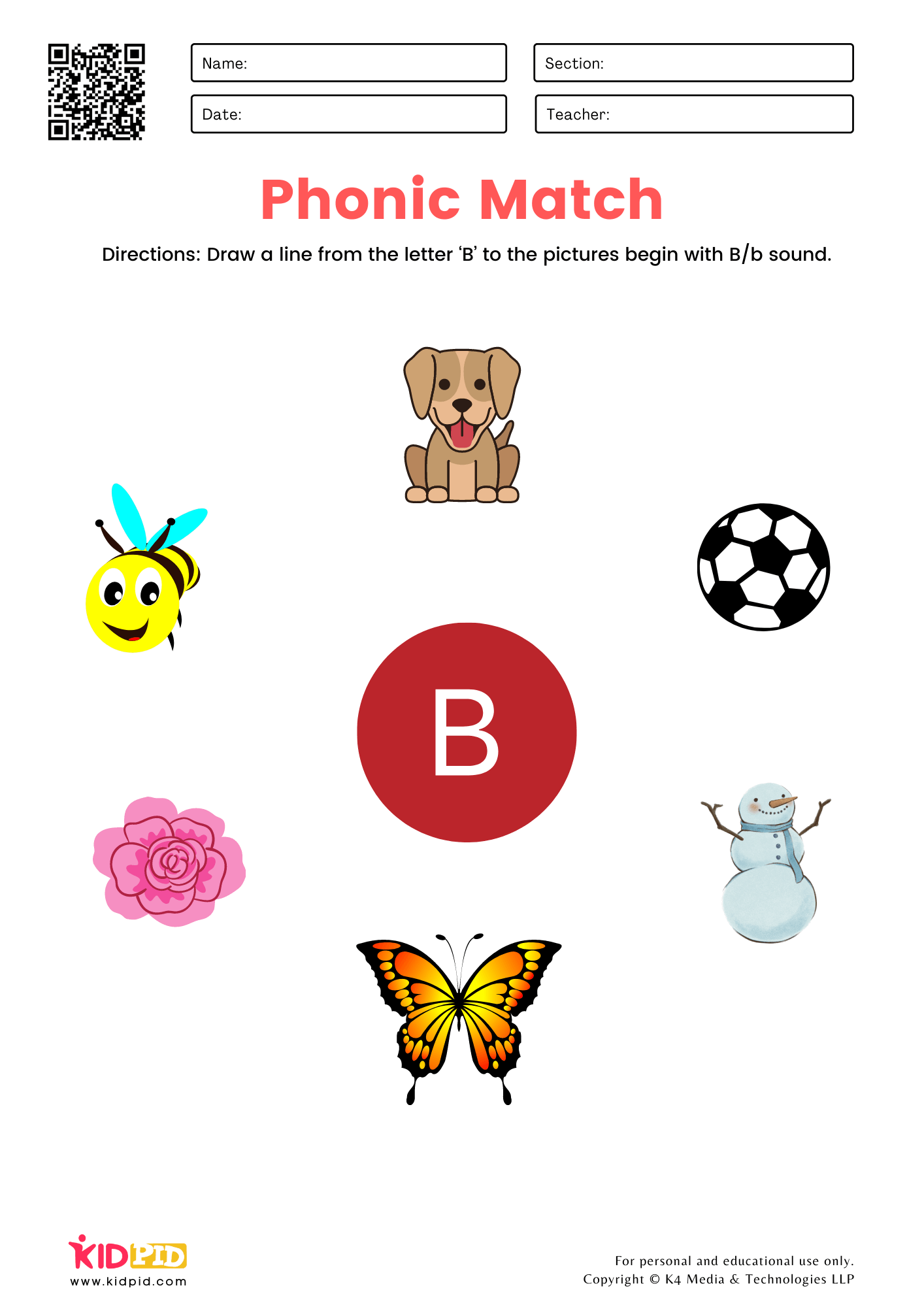
This is the worksheet for the letter ‘b’. The task is to simply identify the image corresponding to the word whose first letter is ‘b’ and match the letter to that image. Make sure to carefully look over each image; more than one word may start with the same letter.
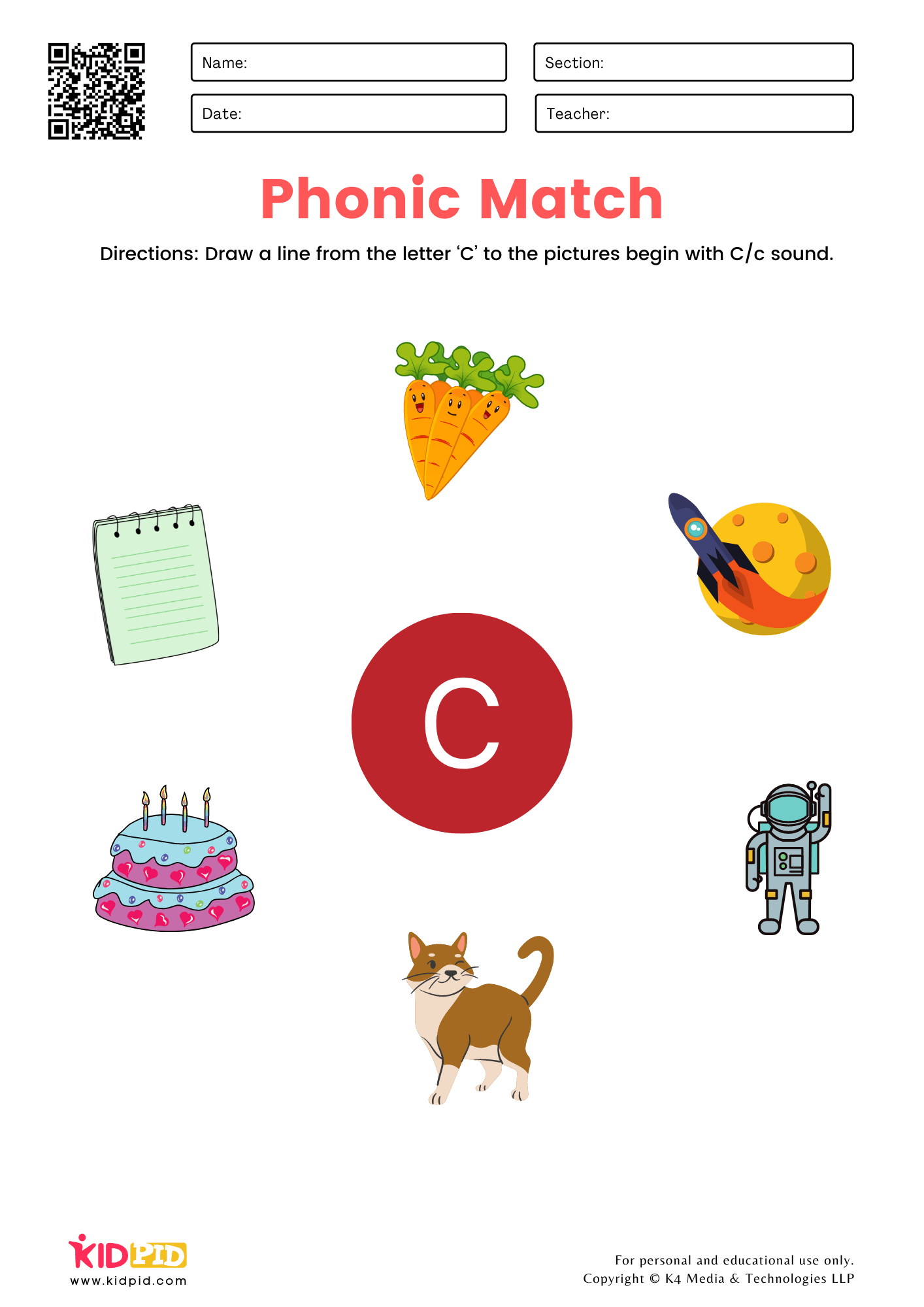
This is the worksheet for the letter ‘c’. Try sounding out each word out loud to identify the correct word.
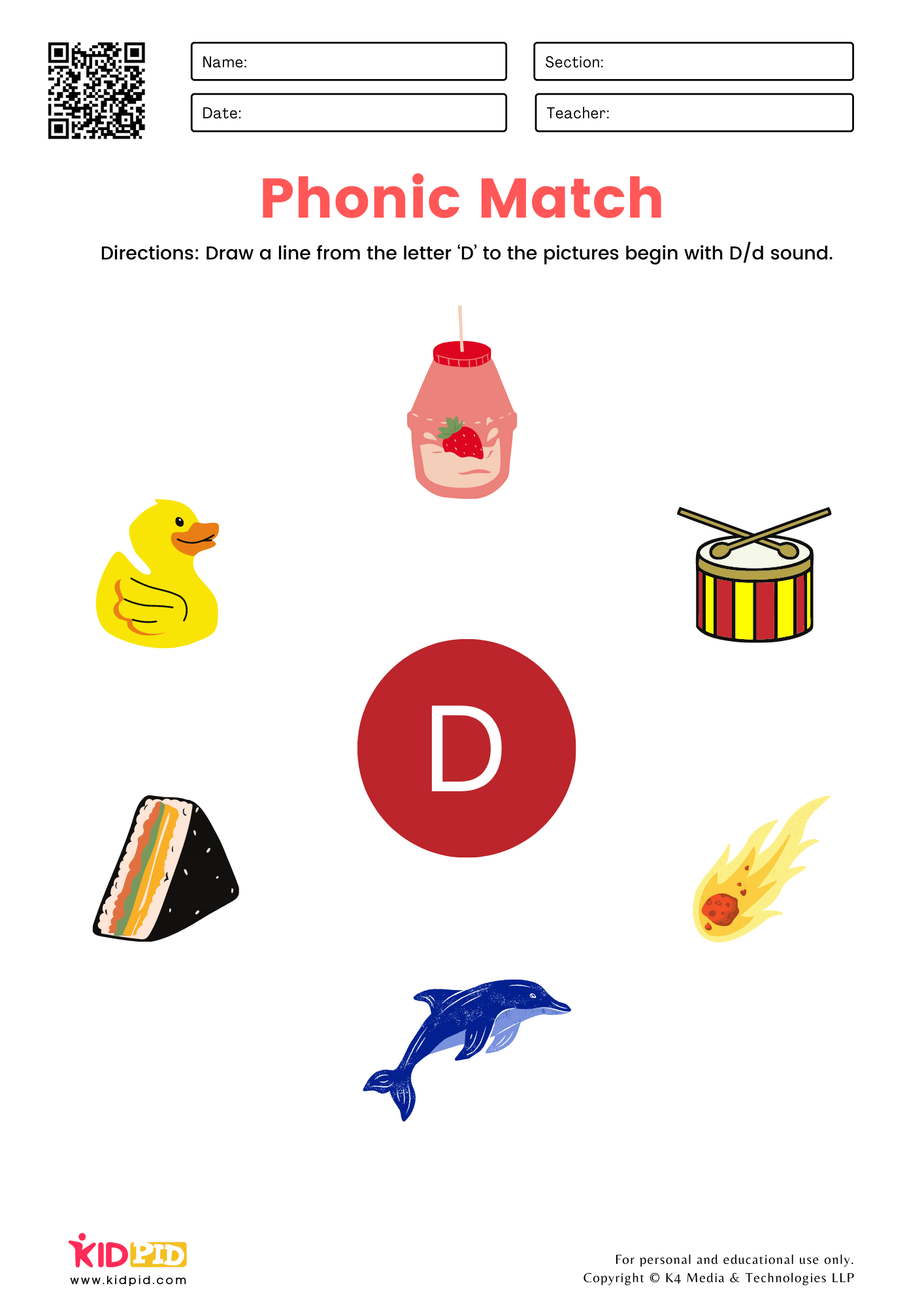
This is the worksheet for the letter ‘d’. Bright and colourful pictures pique children’s interest and keep them motivated during their tasks.
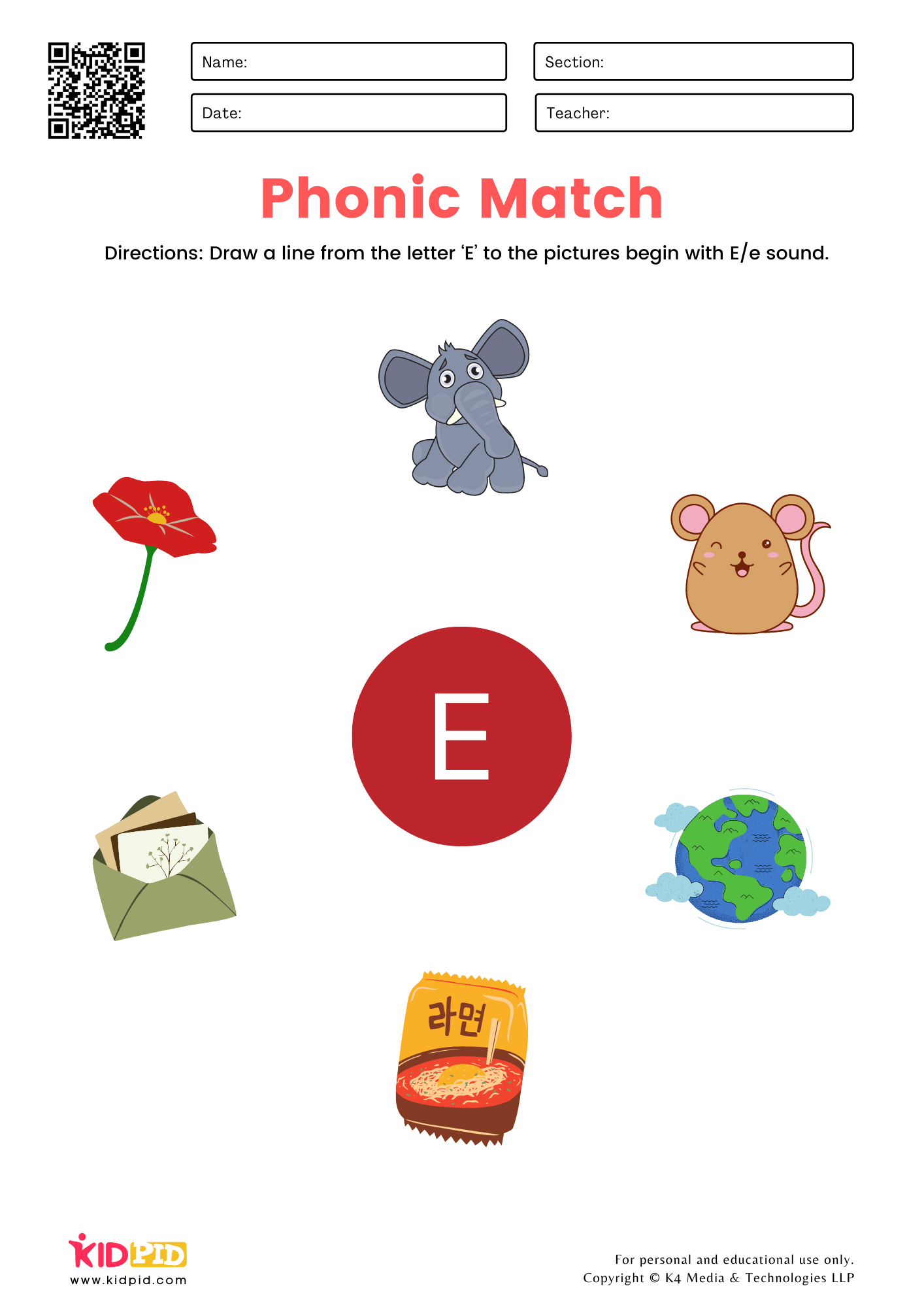
This is the worksheet for the letter ‘e’. Animals are an interesting topic for children, and worksheets like this are always fun and exciting for them to solve.
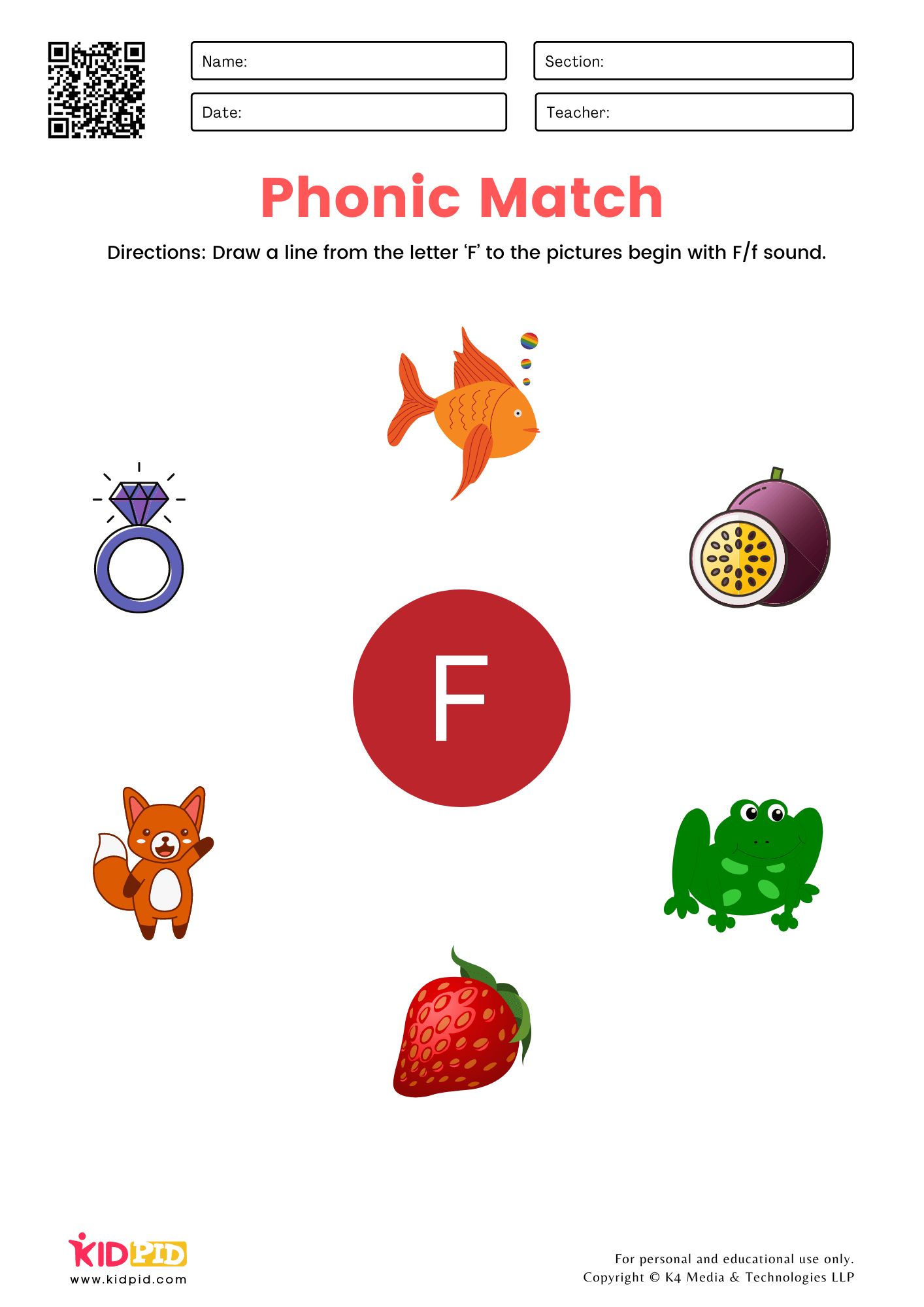
This is the worksheet for the letter ‘f’.
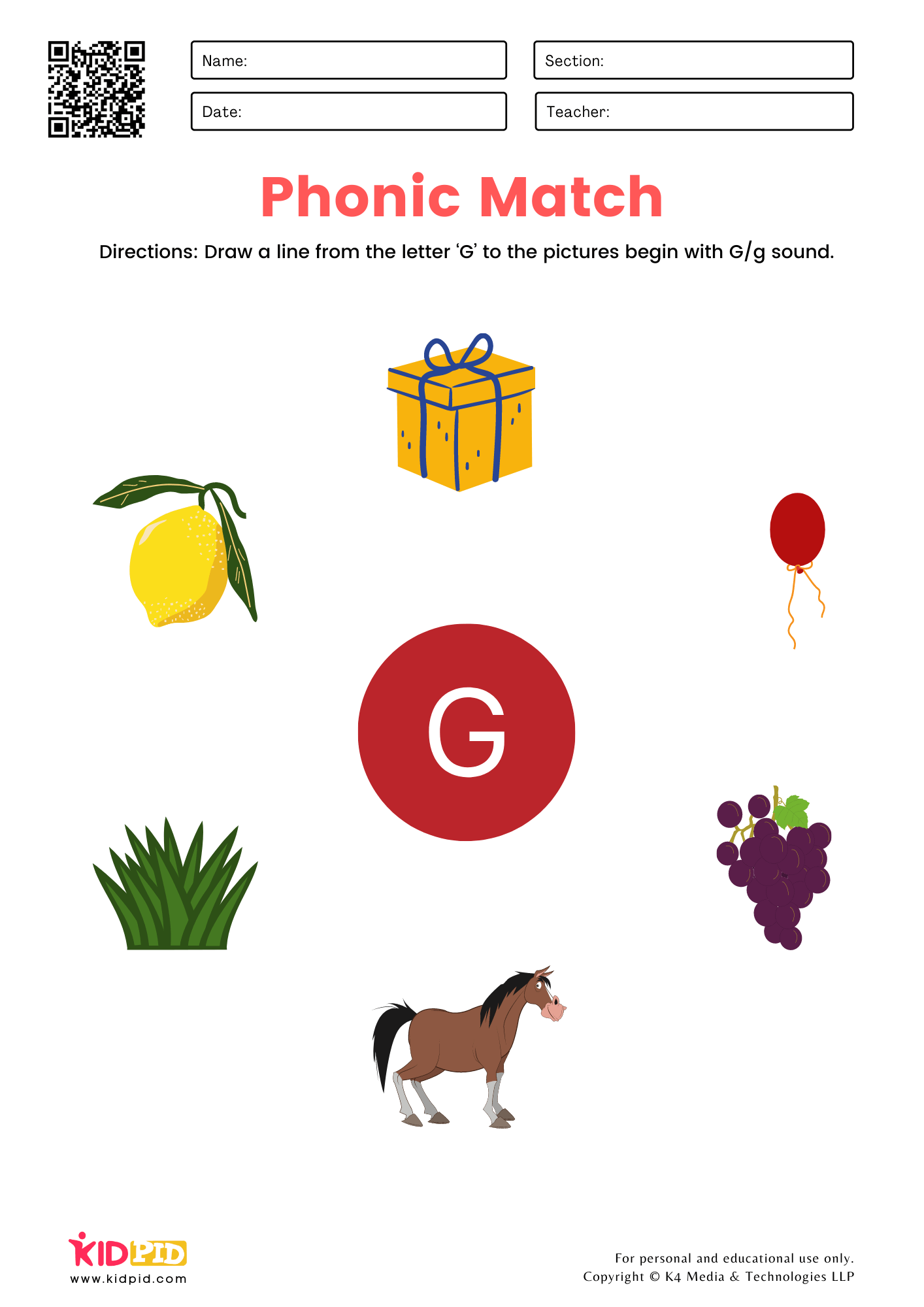
This is the worksheet for the letter ‘g’.
This is the worksheet for the letter ‘h’.
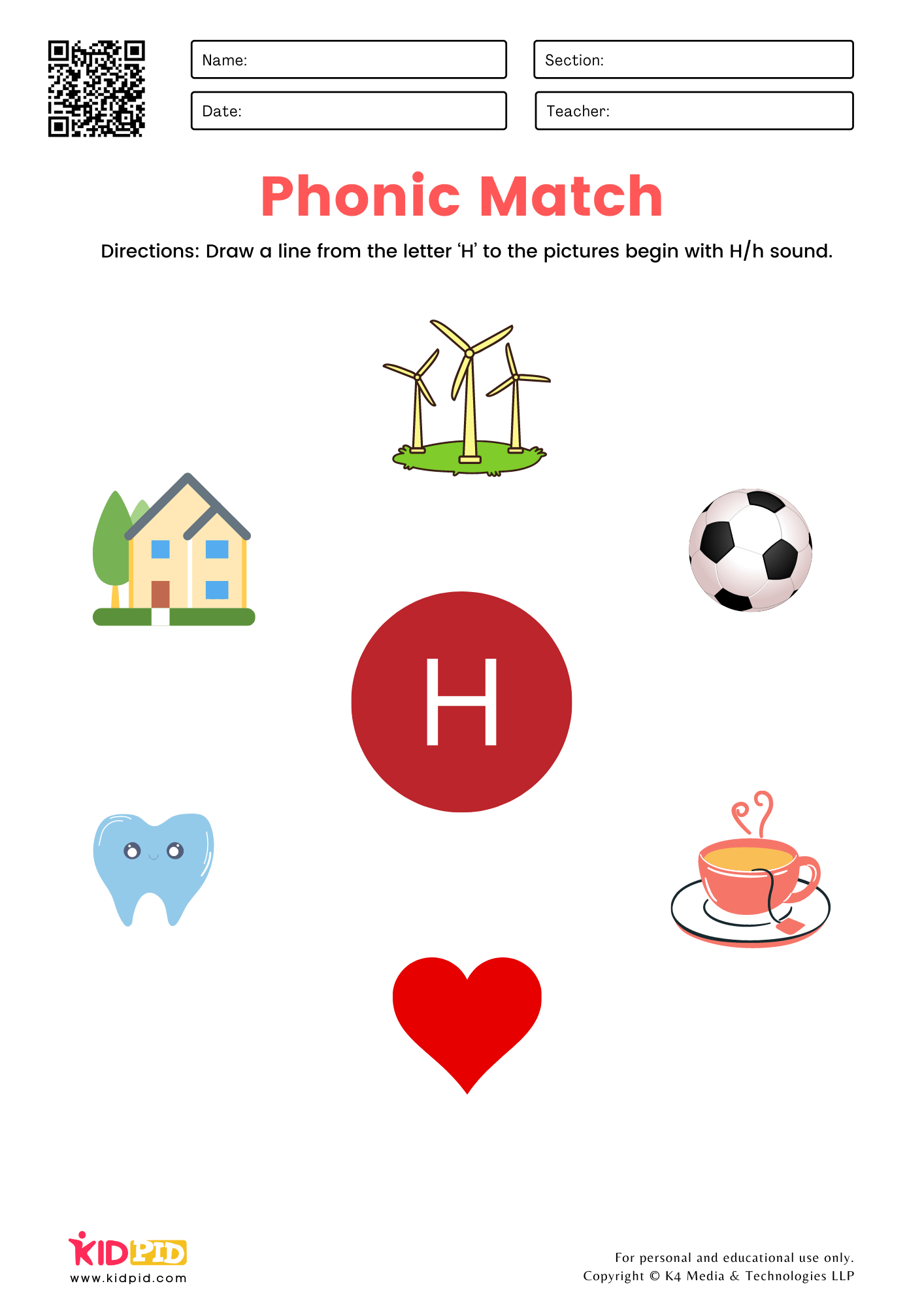
This is the worksheet for the letter ‘i ‘. Remember, more than one word begins with the same letter; if your child does not know, always know all the words, use it as an opportunity to teach them something new!
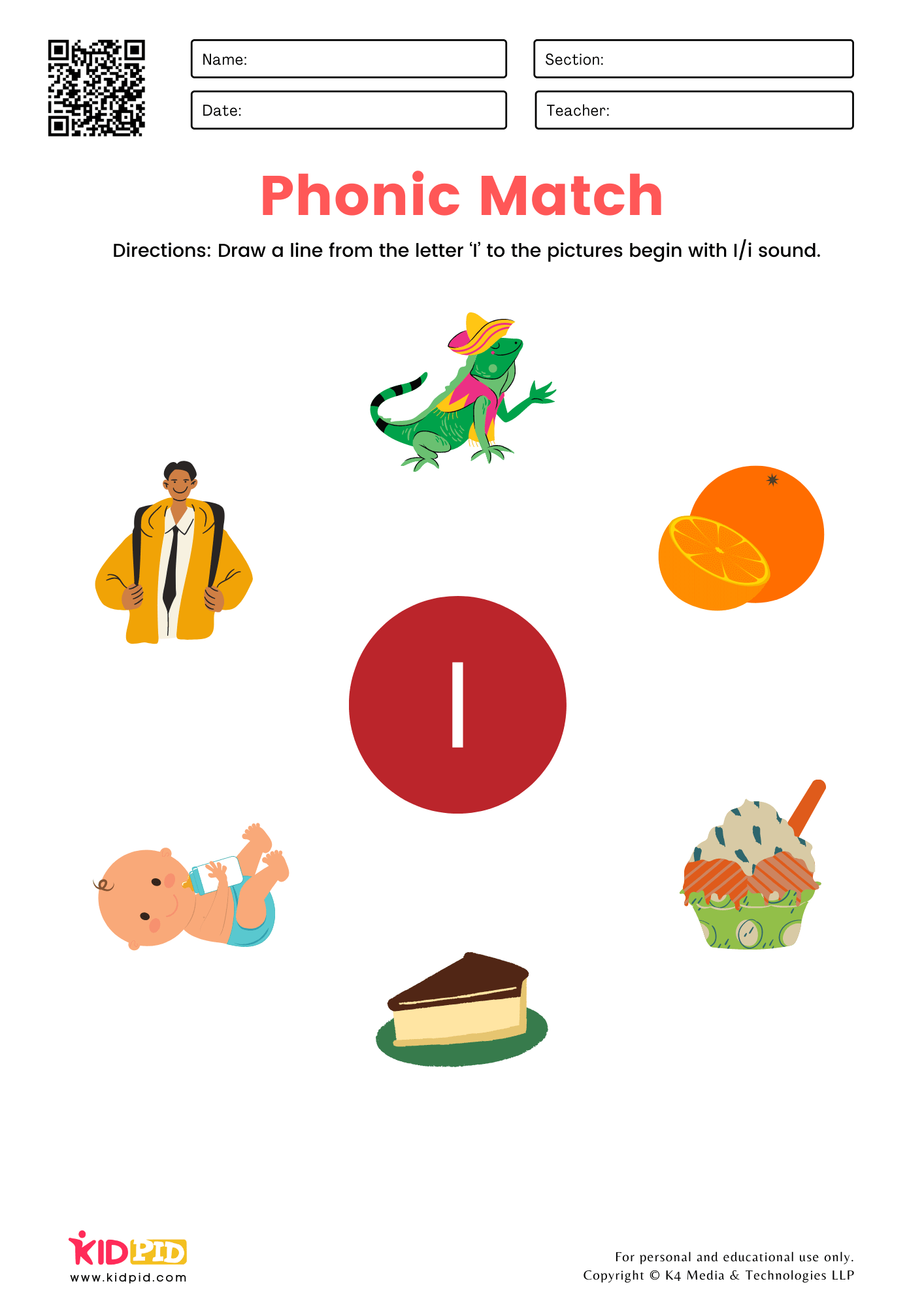
This is the worksheet for the letter ‘j’.
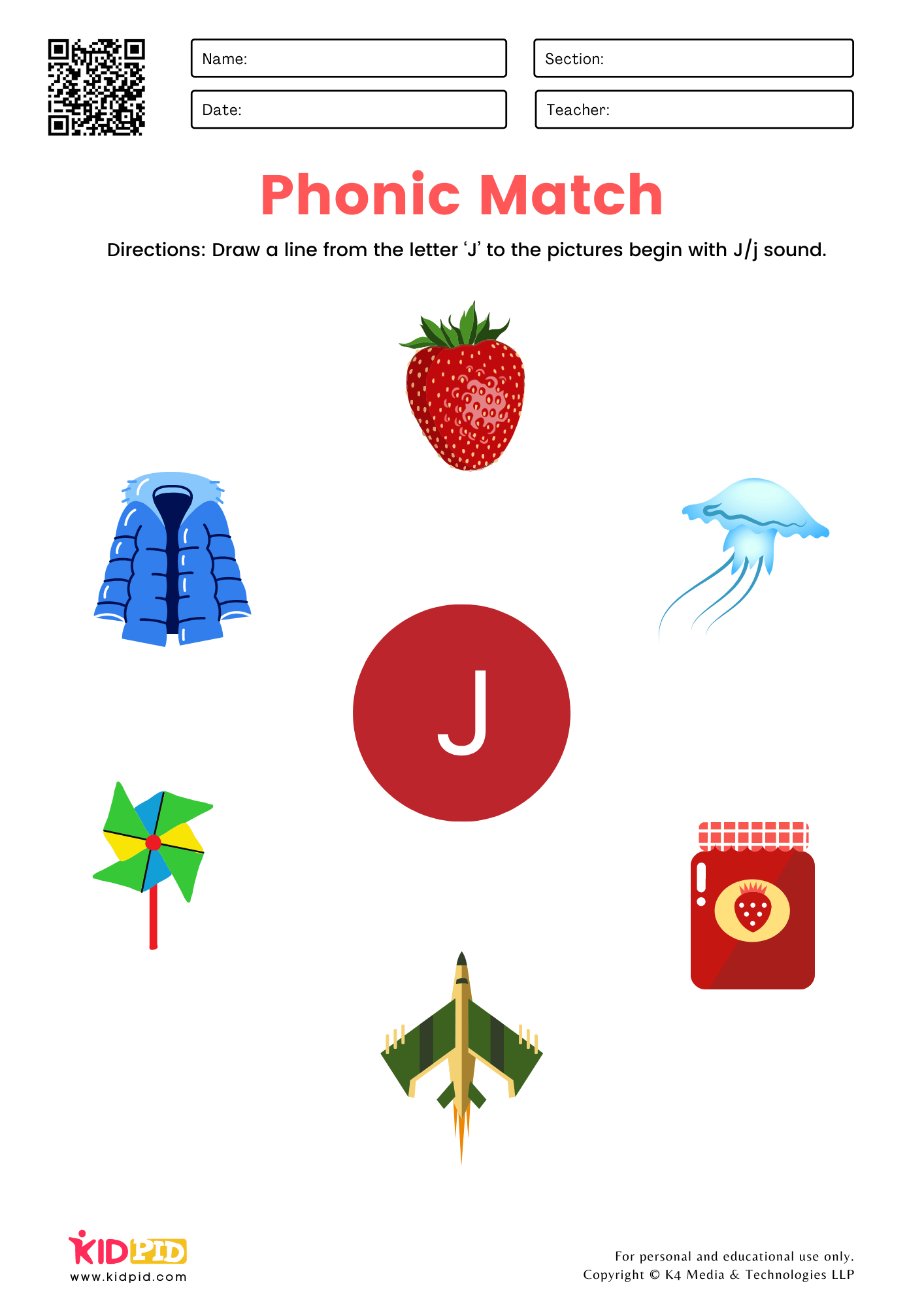
This is the worksheet for the letter ‘k’.
This is the worksheet for the letter ‘l’.
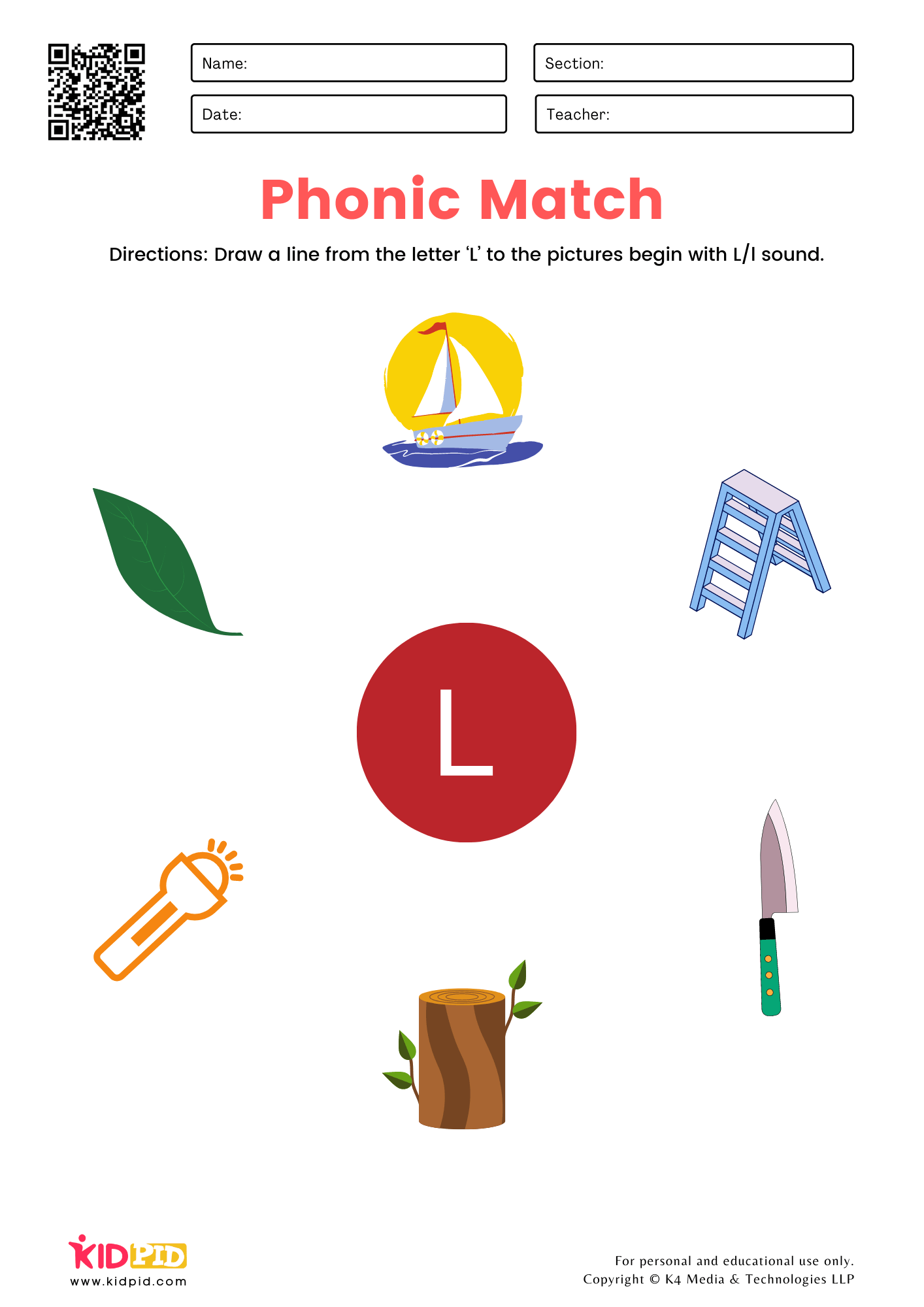
This is the worksheet for the letter ‘m ‘.
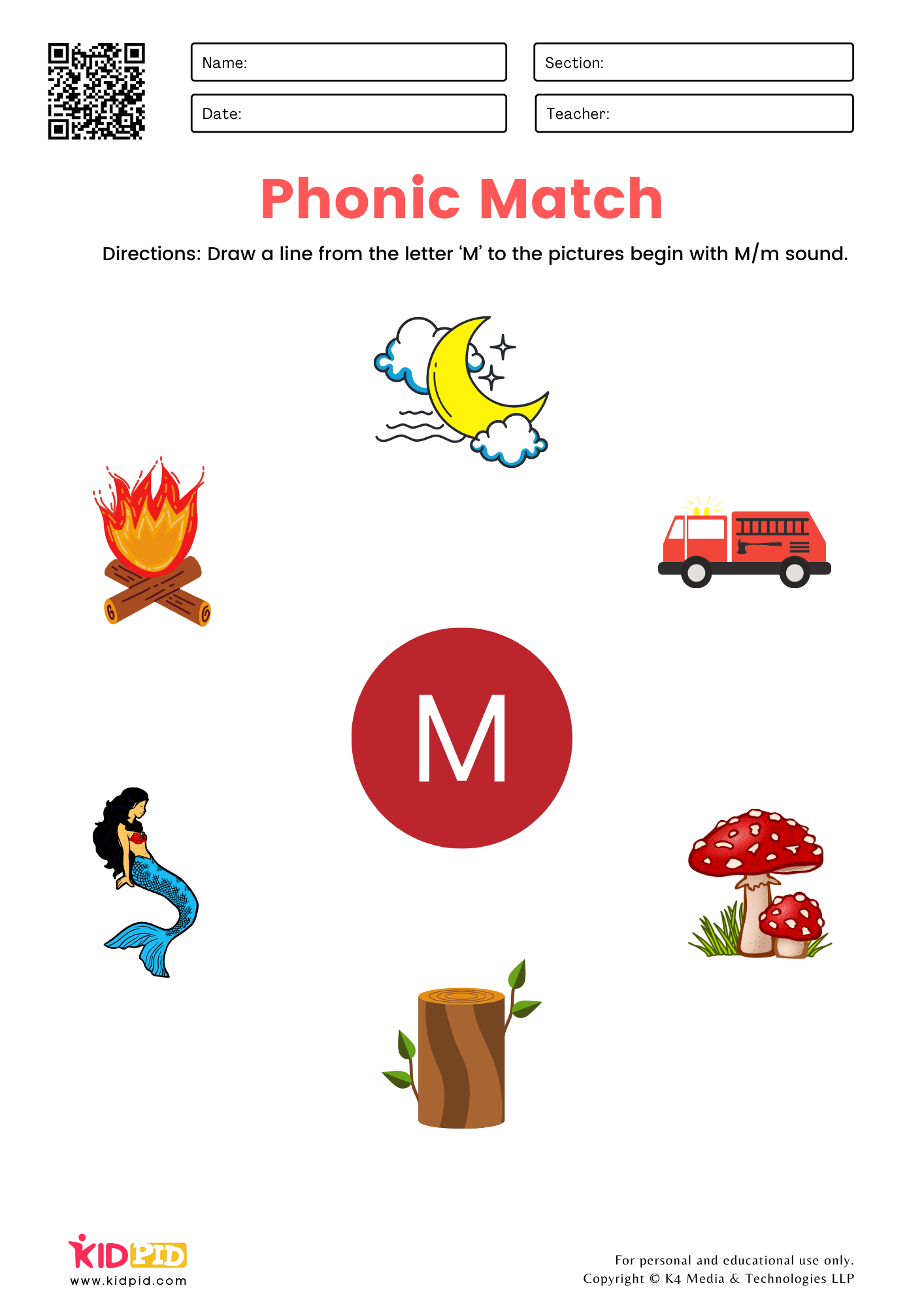
This is the worksheet for the letter ‘n’. Now, we move into more detail, as three words begin with the same letter.
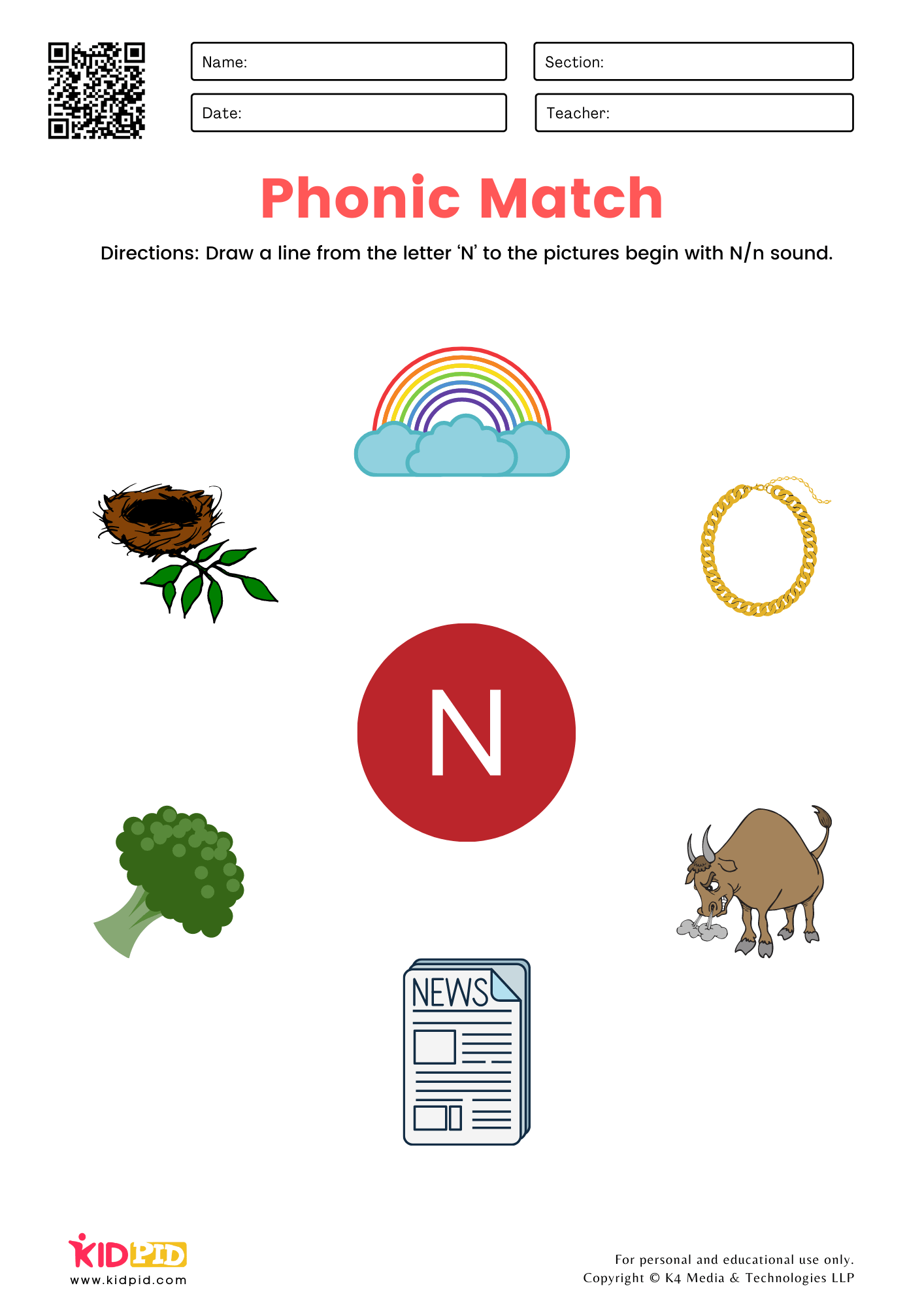
This is the worksheet for the letter ‘o’. Although the words begin with the same letter, the sound is not always the same. That might make it difficult for children to understand, but with time and practice, they will have a better grasp of the concept.
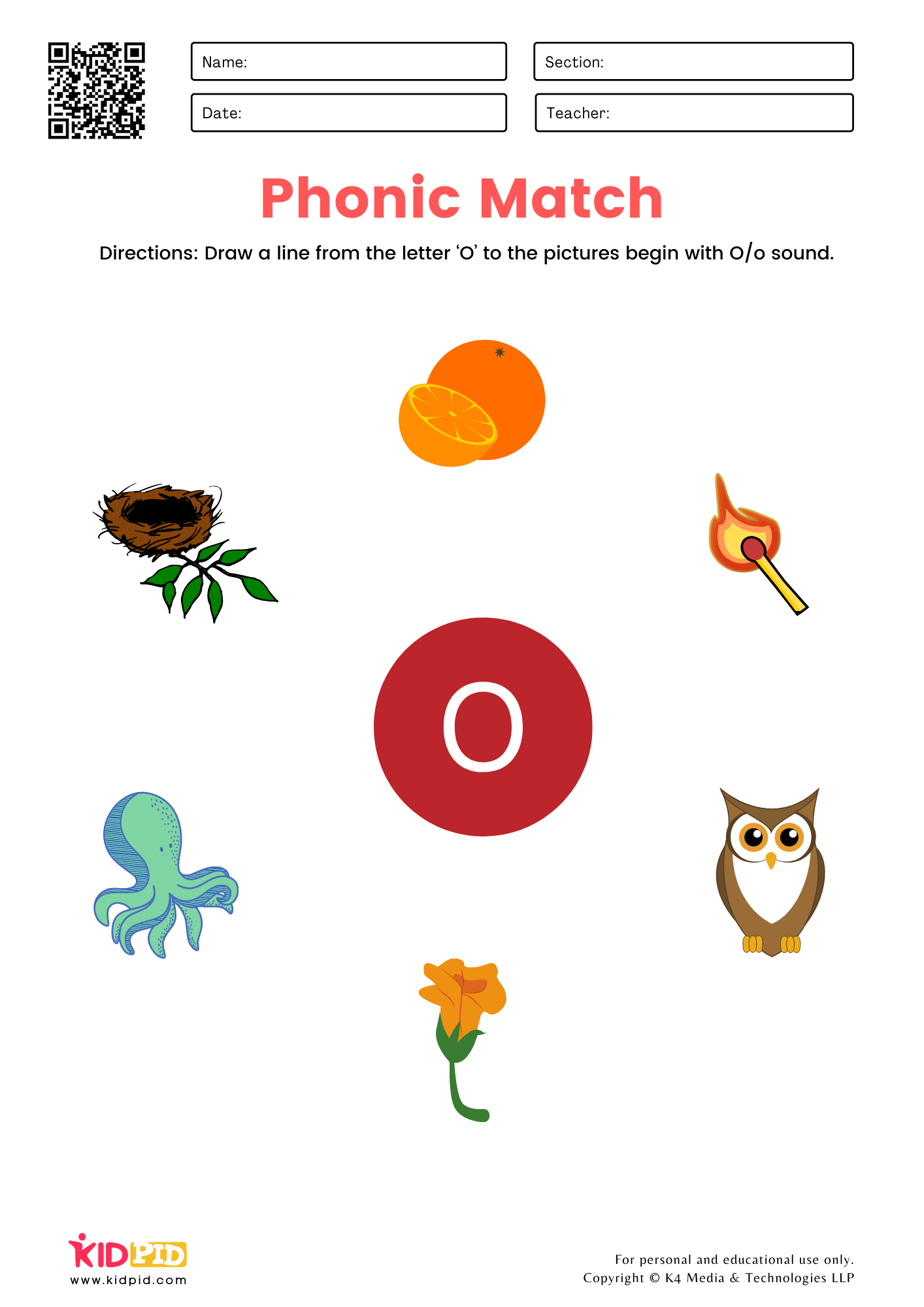
This is the worksheet for the letter ‘p’.
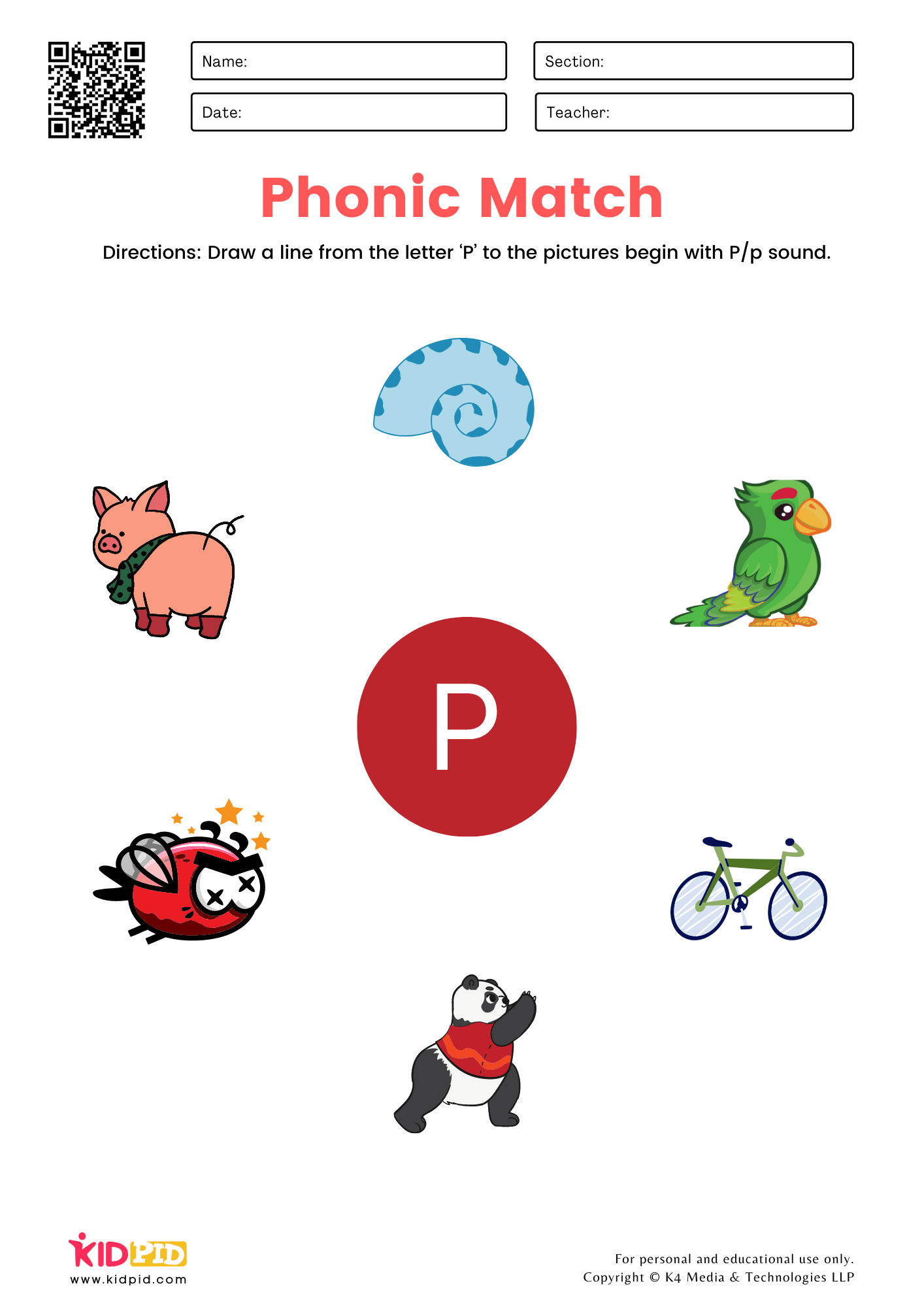
This is the worksheet for the letter ‘q’. Words that start with the letter ‘q’ are difficult to pronounce, and so it is important to guide young learners through the challenging words.
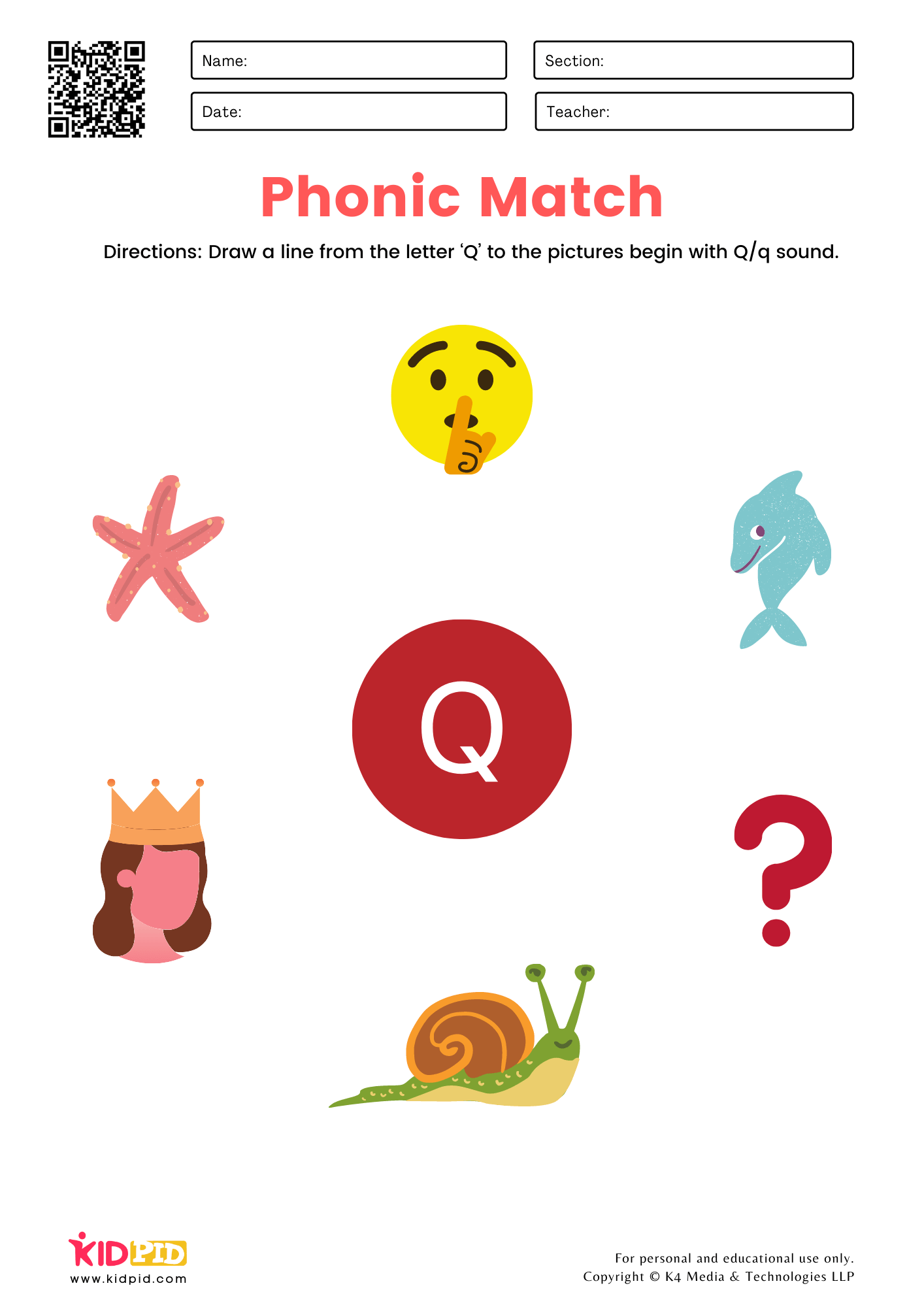
This is the worksheet for the letter ‘r’.
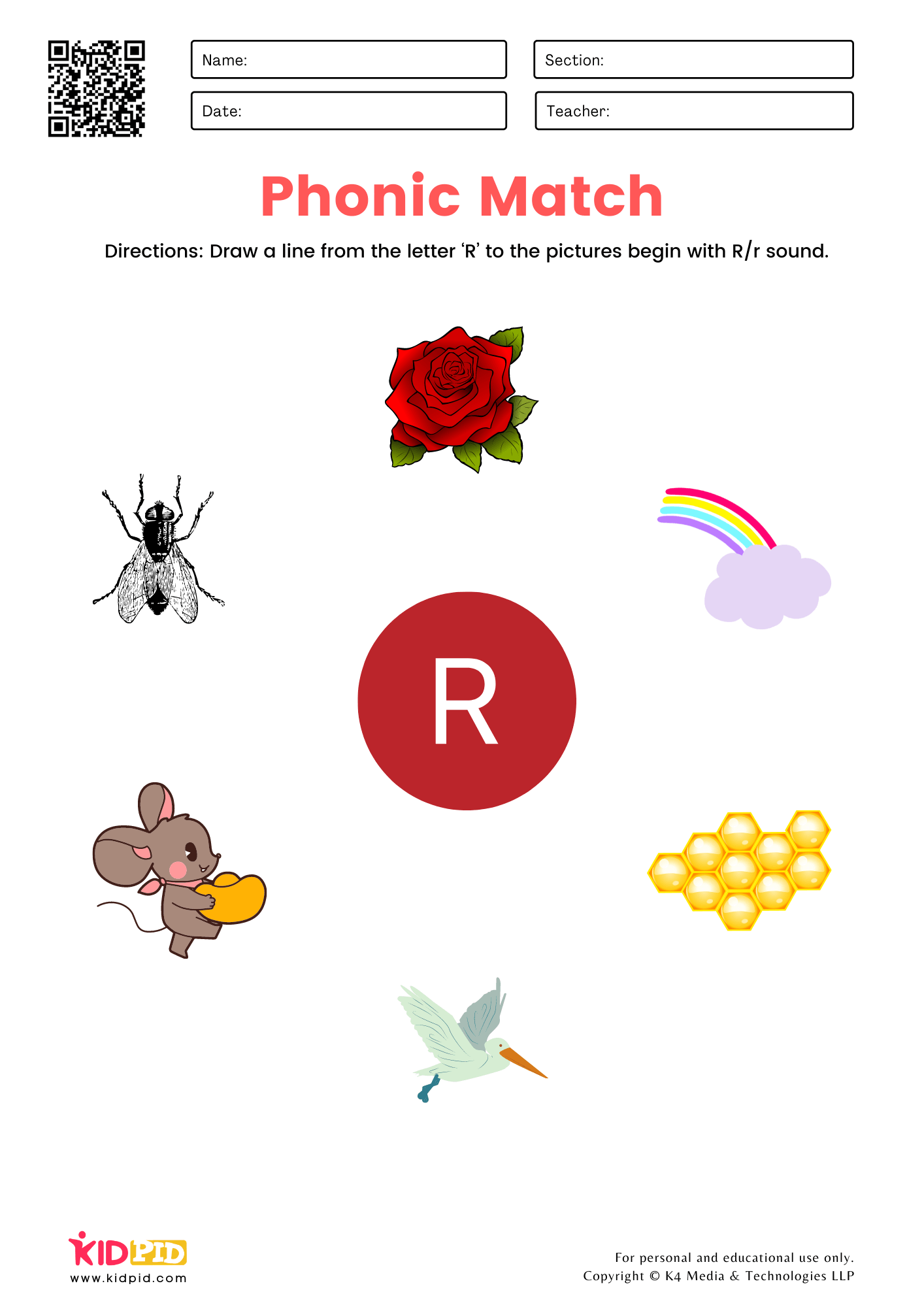
This is the worksheet for the letter ‘s’.
This is the worksheet for the letter ‘t’.
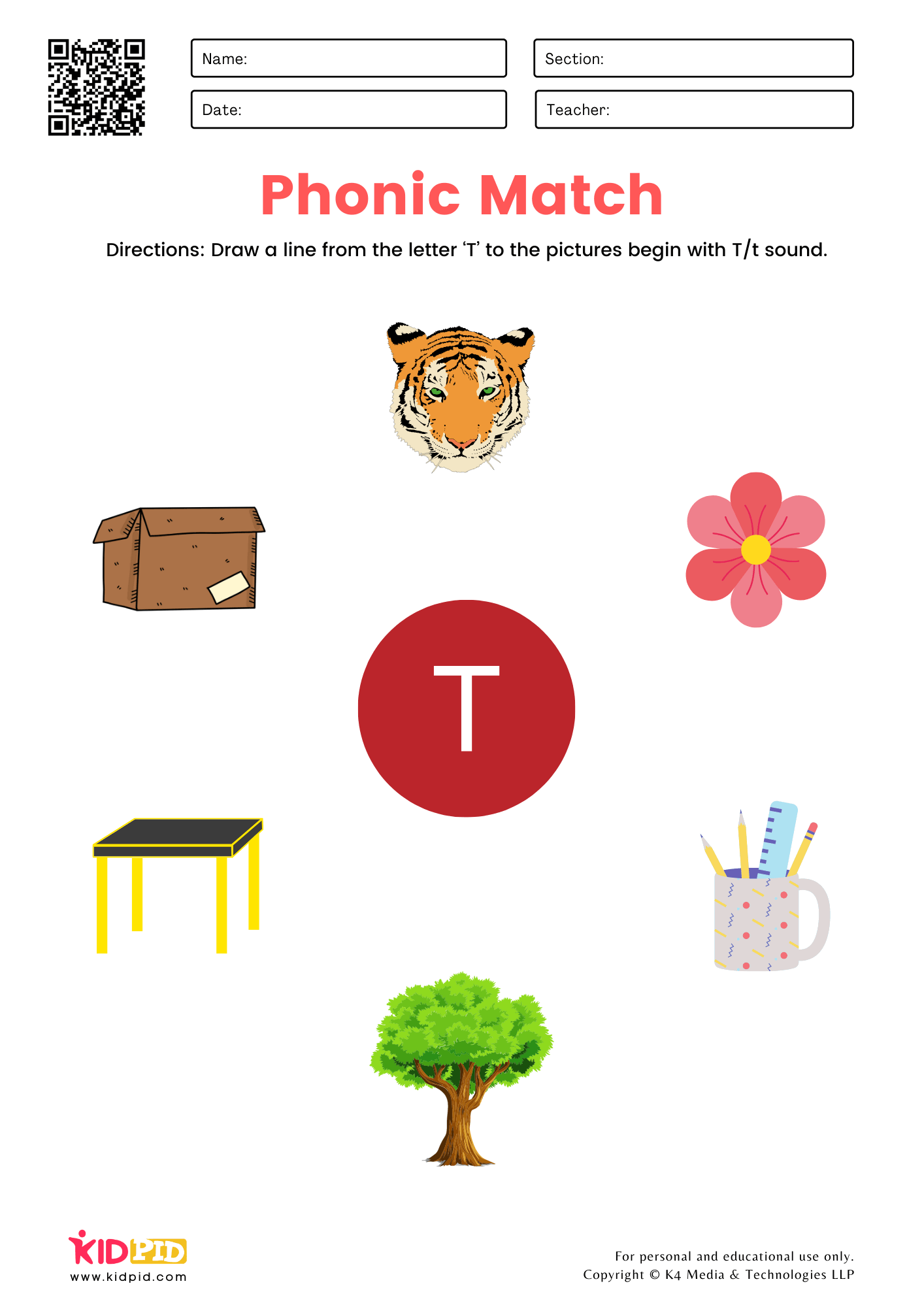
This is the worksheet for the letter ‘u’. This activity is a great way for children to learn new words and expand their vocabulary along the way.
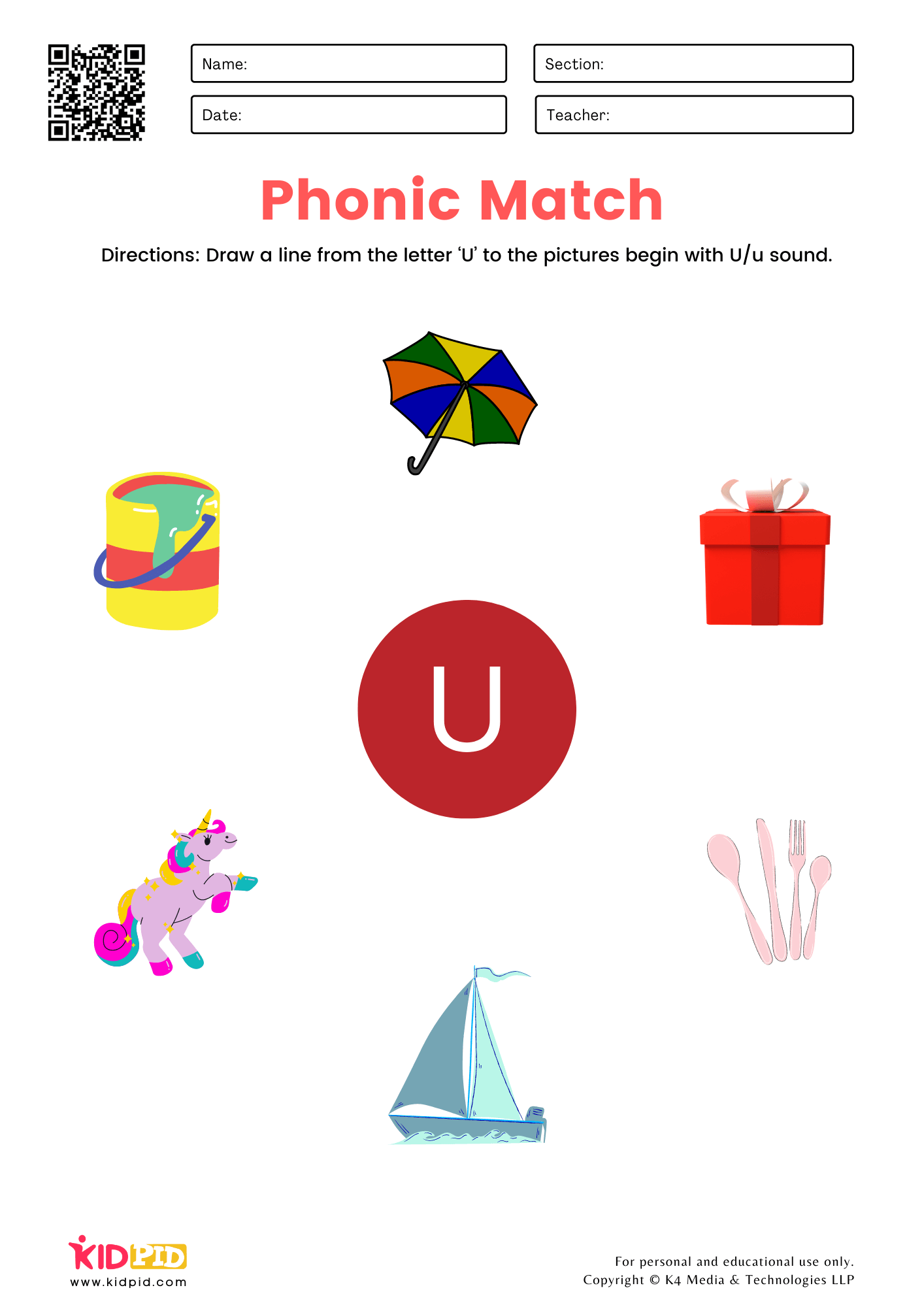
This is the worksheet for the letter ‘v’. While words with the letter ‘v’ are not very common, some simple examples have been depicted here to help children understand easily.
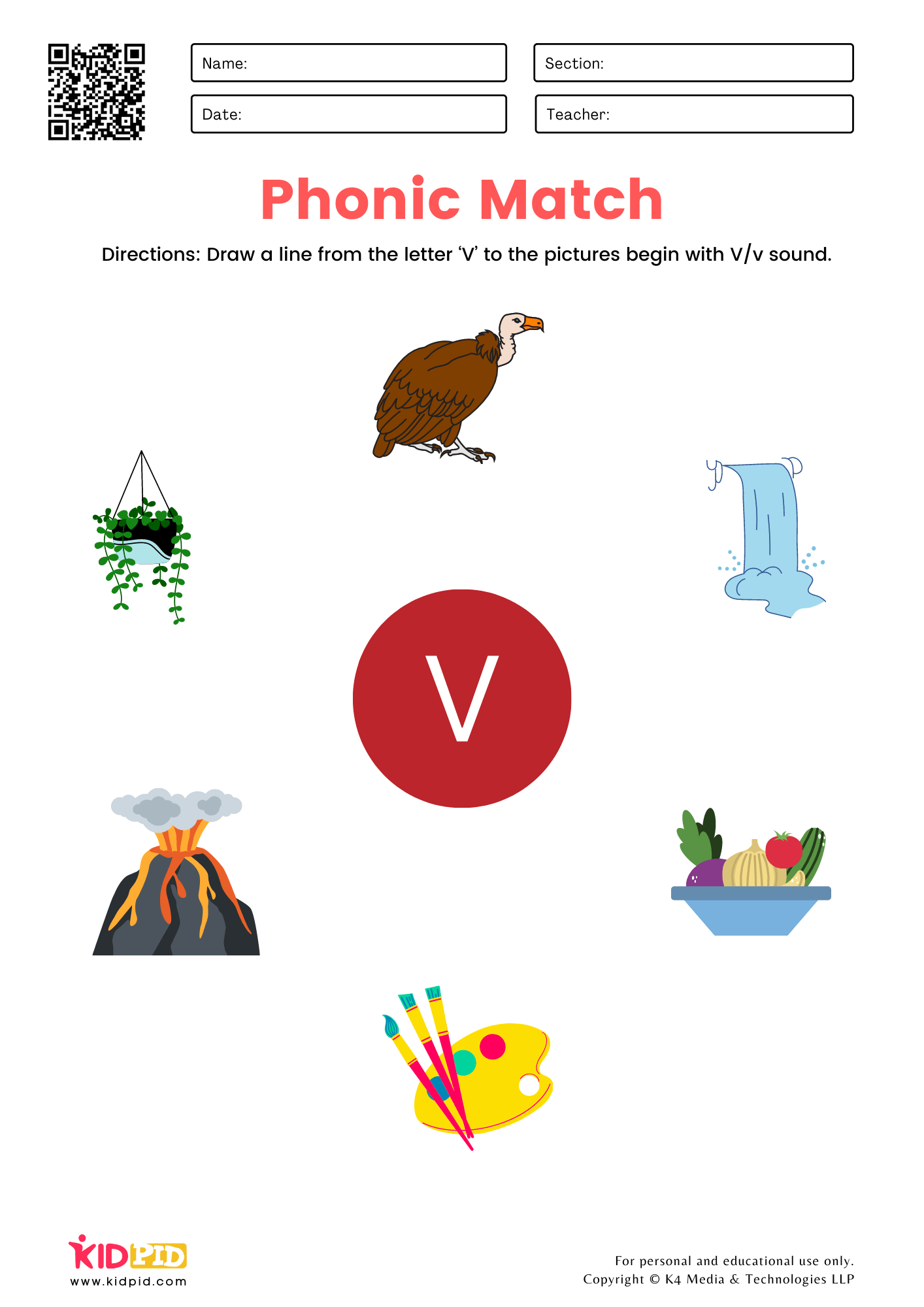
This is the worksheet for the letter ‘w’.
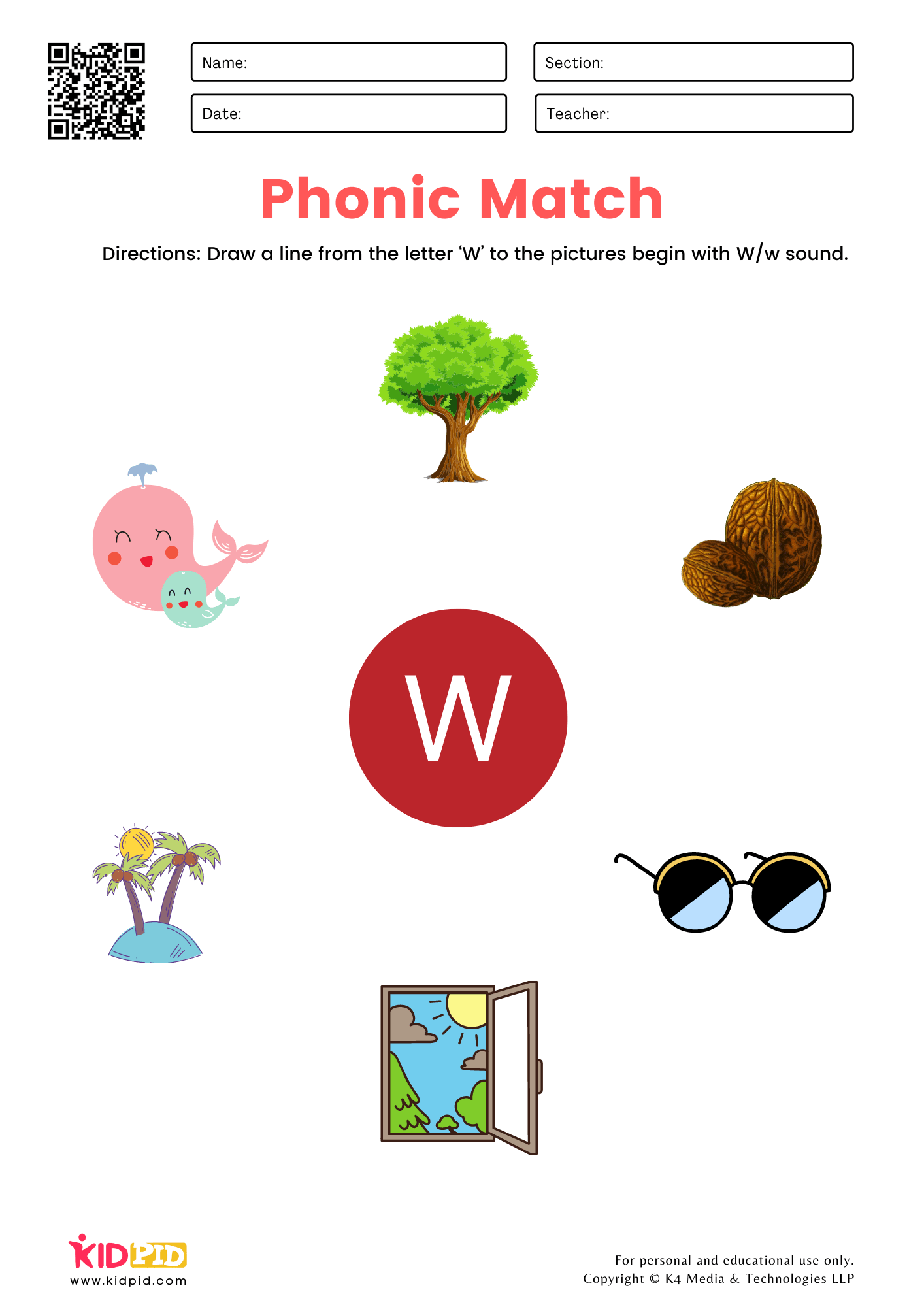
This is the worksheet for the letter ‘x’.
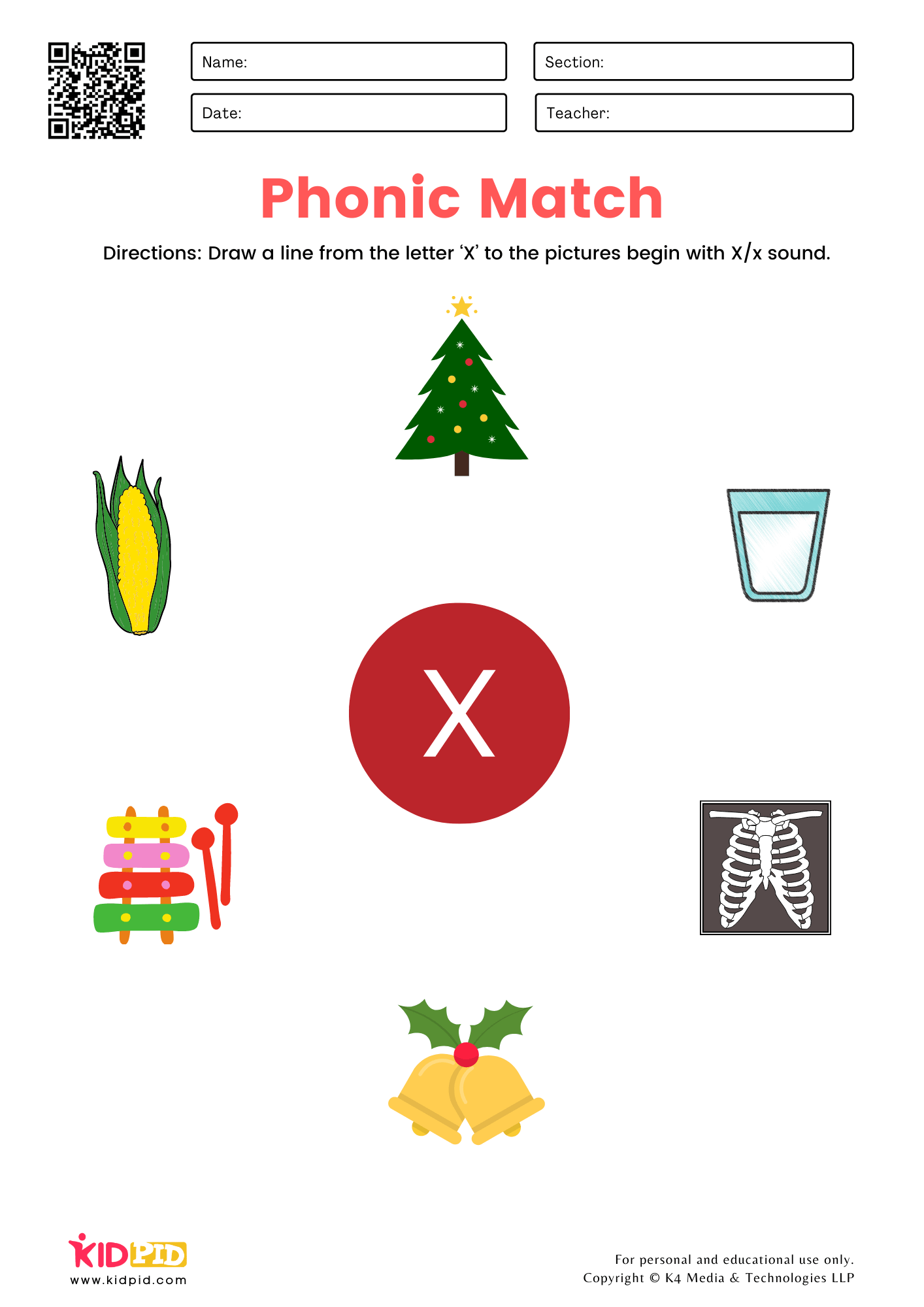
This is the worksheet for the letter ‘y ‘.
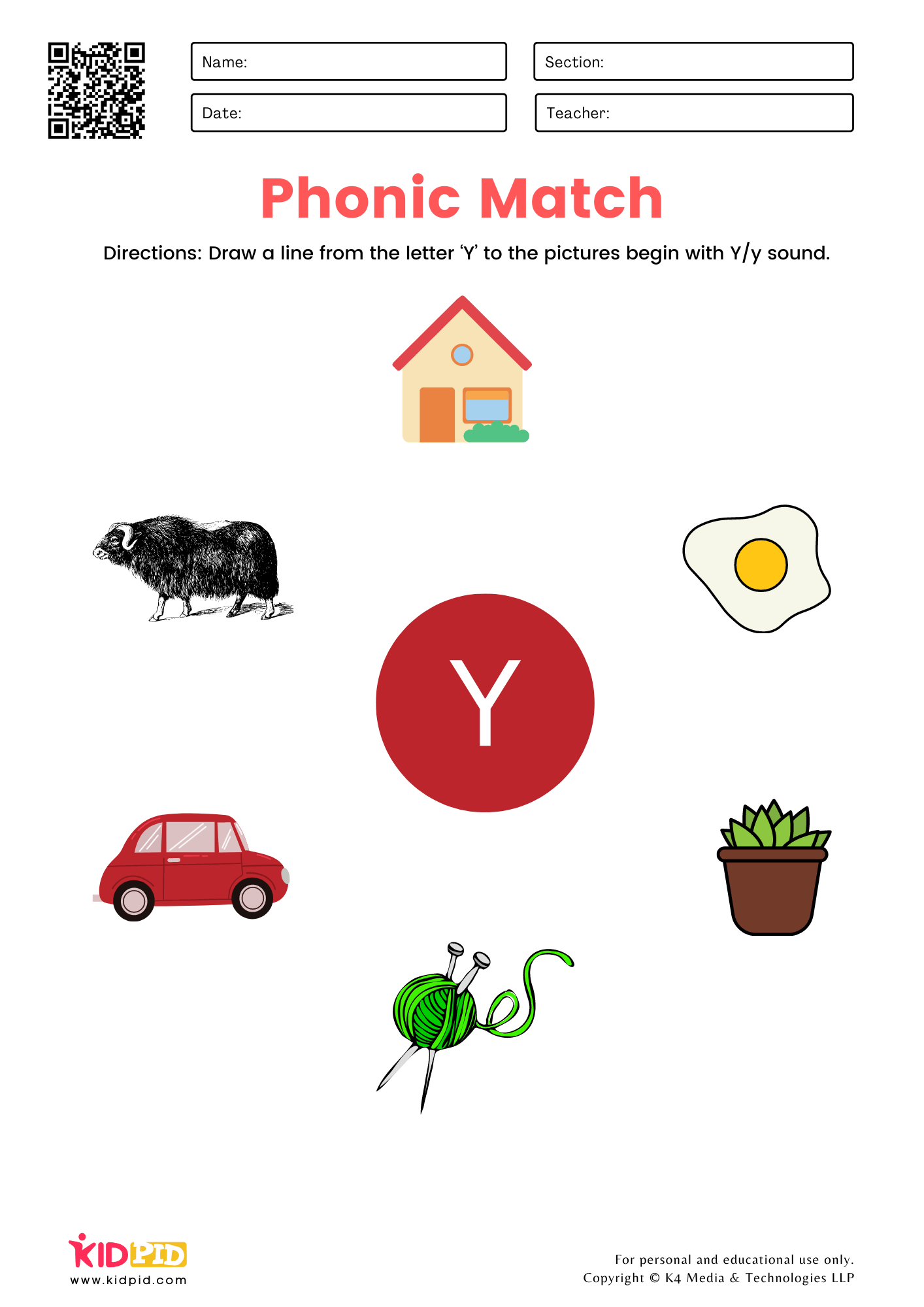
This is the last and final worksheet for the letter ‘z’.
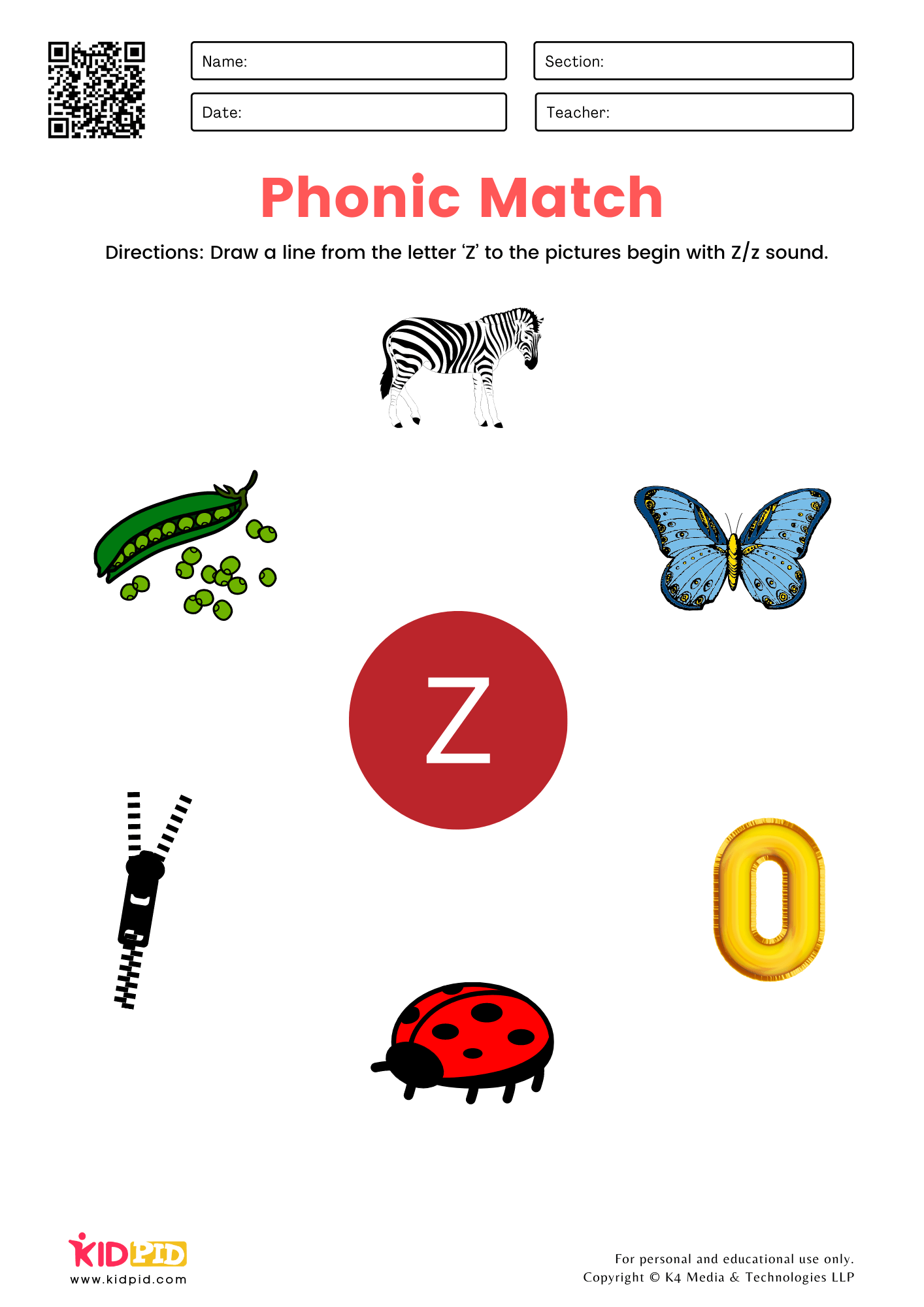
Key Facts About Phonics Match Worksheets for Kids
- Target Audience: Ideal for toddlers, preschoolers, kindergarteners, and early Grade 1 students (ages 3 to 6).
- Core Focus: Initial sound identification, grapheme-phoneme mapping (linking letters to their sounds), and early decoding skills.
- Scope: A comprehensive 26-page workbook covering the entire English alphabet from A to Z.
- Layout: Highly visual, engaging, and colorful worksheets featuring age-appropriate illustrations that represent real-world objects and animals.
- Curriculum Alignment: Built to support early childhood literacy standards and phonics-first reading approaches.
Parts/Types/Examples of Phonics Worksheets
To build comprehensive literacy, early learners transition through various types of phonics-matching exercises:
- Initial Sound Matching (Featured in this Pack): Matching a single target letter to multiple pictures that start with that specific sound (e.g., matching the letter “B” to images of a ball, bear, or banana).
- CVC (Consonant-Vowel-Consonant) Match: Connecting simple three-letter words to their corresponding images (e.g., matching the word cat to a picture of a cat).
- Vowel Sound Sorting: Differentiating between short vowel sounds (like the “a” in cat) and long vowel sounds (like the “a” in cake).
- Consonant Blends & Digraphs: Advanced worksheets matching multi-letter sounds like ch-, sh-, th-, or bl- to the correct visual objects.
How Does a Phonics Match Worksheet Work?
These worksheets leverage visual-auditory association to build neural pathways for reading:
- Visual Isolation: The child looks at a prominent target letter on the page and scans a cluster of nearby illustrations.
- Auditory Decoding: The child names the objects out loud, focusing intensely on the very first sound that comes out of their mouth (the initial phoneme).
- Phoneme-Grapheme Mapping: If the spoken initial sound matches the target letter on the page, the child draws a line to connect them or circles the correct image.
- Variable Challenge: As the workbook progresses, some pages include multiple images starting with the same letter to challenge and refine the child’s auditory discrimination.
Benefits of Learning About Phonics
- Accelerates Reading Readiness: Teaching kids to blend and segment sounds allows them to decode unfamiliar words independently, rather than relying on memorization.
- Enhances Articulation and Pronunciation: By slowing down to isolate individual letter sounds, children learn the correct mouth movements for clear verbal communication.
- Builds Visual Memory: Repeated exposure to uppercase and lowercase letters alongside familiar objects strengthens letter recognition.
- Boosts Cognitive Focus: Solving the visual puzzles within the worksheets extends the attention span and sharpens fine motor skills through drawing and tracking lines.
Learning Objectives
By completing this workbook, the learner will be able to:
- Accurately identify and name uppercase and lowercase letters from A to Z.
- Isolate the initial phoneme (starting sound) of common everyday objects.
- Connect a spoken sound to its correct written alphabetical representation.
- Expand oral vocabulary by identifying a diverse range of animals, objects, and items.
- Demonstrate improved fine motor pencil control via matching and circling activities.
Worksheet Instructions
Parents and educators can use these simple steps to guide young learners through each page:
- Point and Name: Look at the large letter at the top of the worksheet. Have your child say the letter name and make its corresponding sound out loud (e.g., “This is the letter B. It makes the /b/ sound.”).
- Scan the Pictures: Encourage your child to point to each image on the page and say the word slowly and clearly.
- Listen for the Match: Ask them, “Does that word start with the /b/ sound?”
- Connect the Dots: If it matches, have them use a pencil or crayon to draw a clean line from the letter to the picture.
- Review and Repeat: Review the page together, celebrating their correct matches and gently correcting any missteps by exaggerating the starting sounds together.
Interesting Facts About Phonics & Language Development
- The “Magic” Number: The English language uses only 26 letters, but those letters combine to create roughly 44 distinct sounds (phonemes) and hundreds of spelling variations!
- Brain Rewiring: Brain imaging studies show that learning to read through phonics literally changes the physical wiring of a child’s brain, activating the left hemisphere regions responsible for fast, fluent reading.
- Vocabulary Explosion: Between the ages of 2 and 6, a child’s vocabulary grows exponentially from a few hundred words to over 10,000 words. Systematic phonics exposure dramatically accelerates this growth.
- The “Q” and “X” Quirks: The letters ‘Q’ and ‘X’ are unique challenges for early readers. ‘Q’ is almost always paired with ‘U’ to make a /kw/ sound, while ‘X’ most frequently sounds like /ks/ at the end of words, making initial-sound tracking a great brain workout!
Vocabulary Words Introduced in This Pack
- Phoneme: The smallest distinct unit of sound in a specified language (e.g., the /c/ sound in cat).
- Grapheme: The written representation of a sound; a letter or cluster of letters.
- Decoding: The process of translating printed words into spoken sounds.
- Initial Sound: The very first phonetic sound heard at the beginning of a spoken word.
- Auditory Discrimination: The ability to detect small differences between distinct spoken sounds.
Real-Life Applications
Phonics mastery doesn’t stop when the worksheet is turned over. Kids apply these skills every day when they:
- Read Environmental Print: Recognizing grocery store signs, traffic signs, and cereal boxes out in public.
- Engage in Invented Spelling: Writing early, phonetically-spelled notes to parents (like writing “LUV” for love or “FRND” for friend).
- Play Word Games: Enjoying spoken games during car rides, such as “I Spy something that starts with the /m/ sound.”
- Build Independent Confidence: Picking up a brand-new storybook and successfully sounding out an unfamiliar word without needing an adult’s help.
FAQs
Q1: At what age should my child start using phonics match worksheets?
Answer: Most children are ready for basic initial sound matching between the ages of 3 and 5 (Preschool to Kindergarten). If your child knows their basic ABC song and shows curiosity about signs and book pages, they are ready to try!
Q2: Why does the letter ‘O’ sound different in some of these words?
Answer: English vowels are tricky because they can make “short” sounds (like ‘o’ in octopus) or “long” sounds (like ‘o’ in overall). Use these variances as a wonderful opportunity to teach your child that letters can carry more than one special sound.
Q3: My child is struggling to draw straight lines to match the pictures. What should I do?
Answer: Don’t worry! At this age, fine motor skills are still developing. You can have them use their index finger to trace the path first, use colorful dot markers, or simply have them circle the correct images instead of drawing lines.
Q4: Is it better to teach letter names or letter sounds first?
Answer: For reading success, letter sounds are much more critical than letter names. Knowing that the letter “M” is called “em” doesn’t help a child read the word mud, but knowing that it makes the /mmm/ sound does. We recommend teaching both together, with a heavy emphasis on the sound.
Matching phonics sounds with pictures strengthens early reading foundations through interactive learning. These worksheets improve sound recognition, letter associations, and decoding skills while making literacy practice enjoyable for children. From educational flashcards to creative essays, worksheets, quizzes, and paragraphs, discover resources that make learning enjoyable. Follow us on YouTube & Facebook.
The Content Team prepares this worksheet to advance academic improvement.
Reviewed By Komal Singh
Read More:


Excellent worksheet but hiw i download