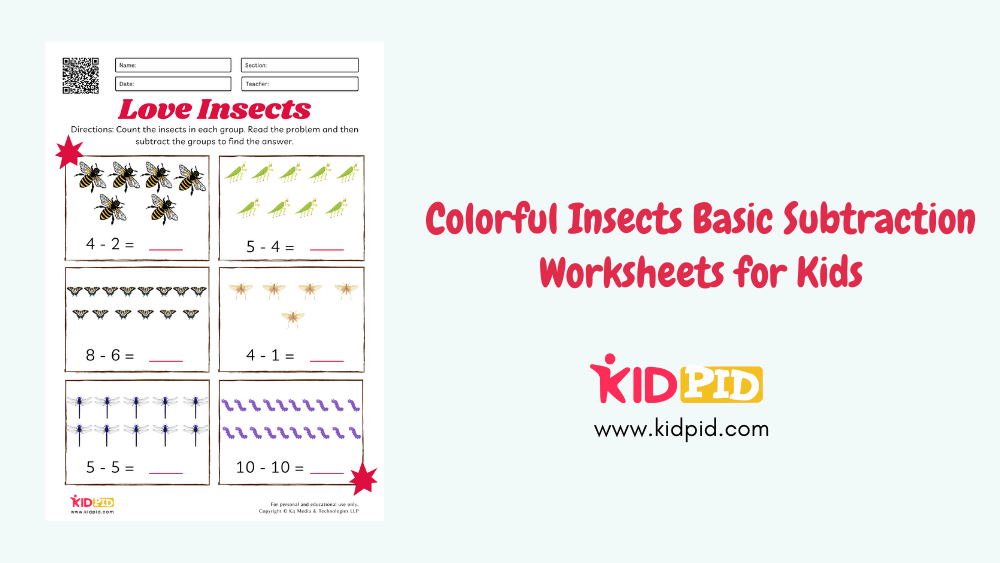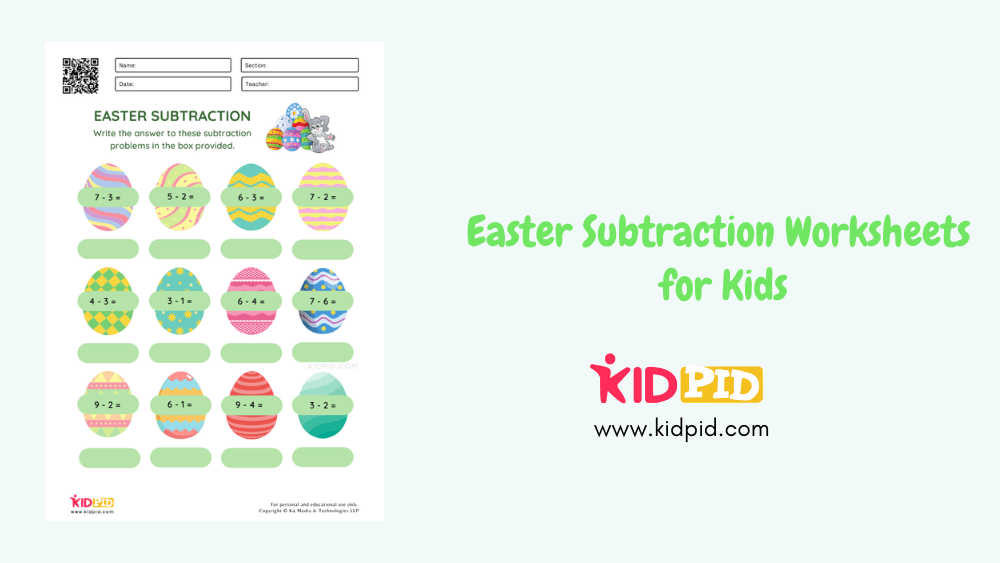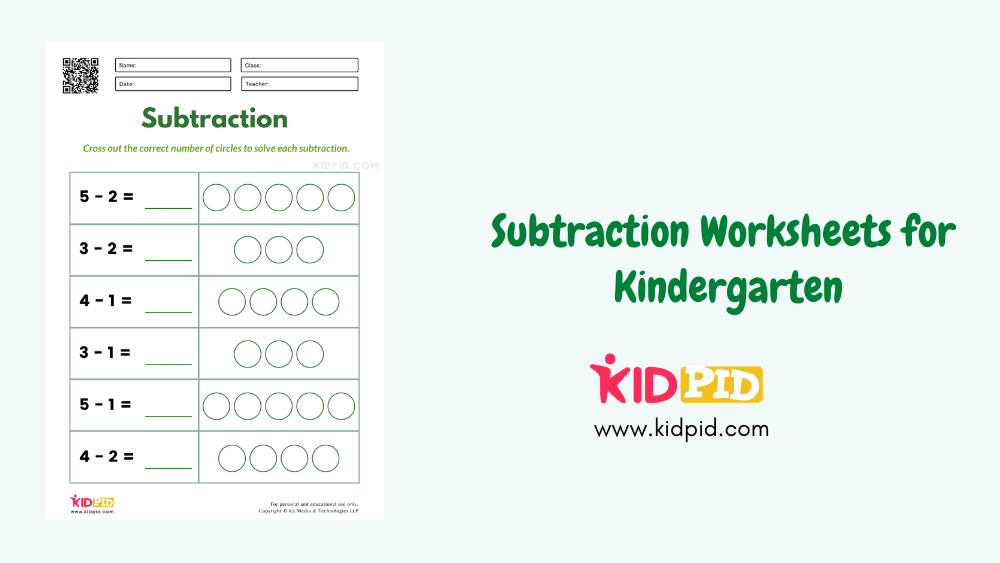
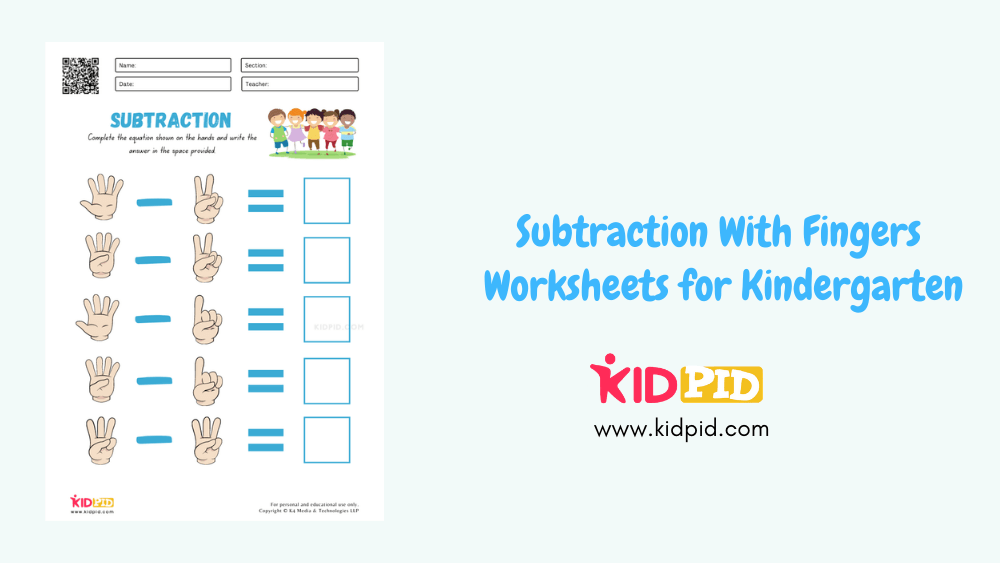
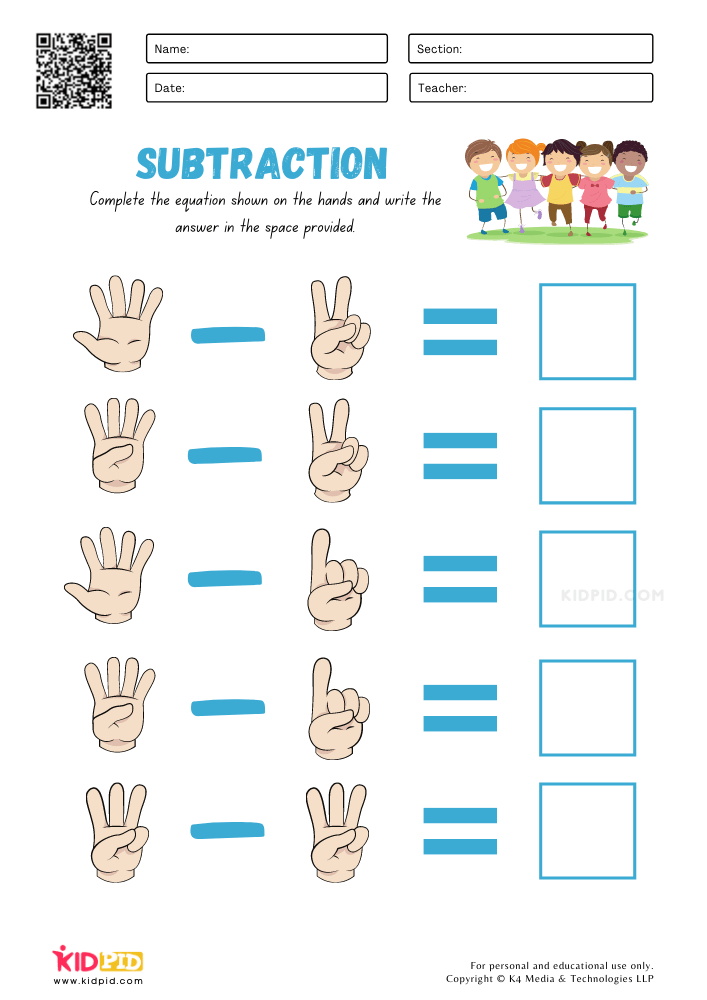
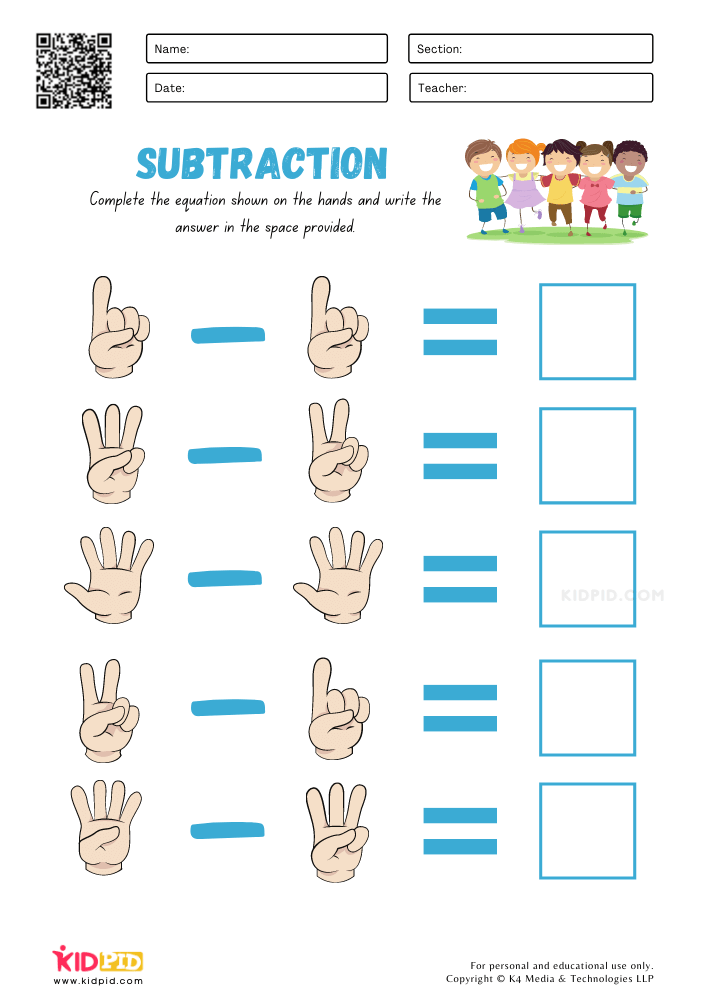
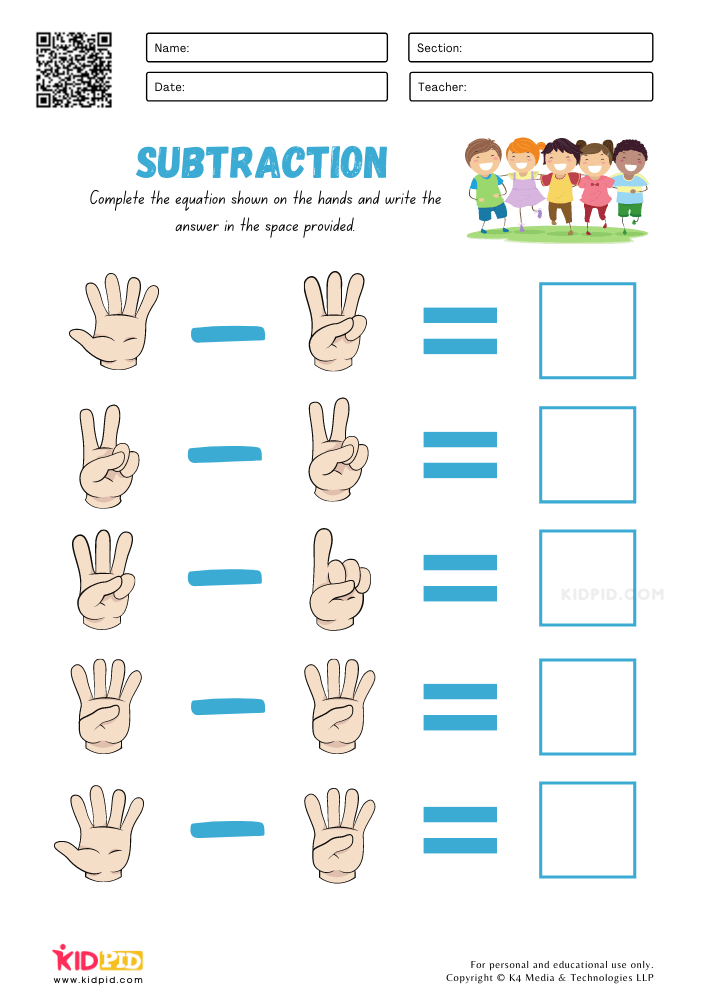
These worksheets depict how to carry out subtraction in arithmetic by counting and calculating on your hands. The hands represent the number that must be used to solve the subtraction sum. Hands are designed to make the worksheet appear appealing because youngsters are drawn to fun activities where they can actively participate. Using creative ways piques children’s curiosity and pushes them to know more about it, and in the process, they learn new things.
Contents
- Subtraction With Fingers Worksheets
- Key Facts About Subtraction With Fingers Worksheets for Kindergarten
- Parts/Types/Examples of Subtraction With Fingers Worksheets for Kindergarten
- How Does Subtraction With Fingers Worksheets for Kindergarten Work?
- Benefits of Learning About Subtraction With Fingers Worksheets for Kindergarten
- Learning Objectives
- Worksheet Instructions
- Interesting Facts About Subtraction With Fingers Worksheets for Kindergarten
- Vocabulary Words
- Real-Life Applications
- FAQs
- Q1. What age group are these worksheets suitable for?
- Q2. Why do children use fingers for subtraction?
- Q3. Do finger subtraction worksheets improve math skills?
- Q4. Can children complete these worksheets independently?
- Q5. Are finger subtraction worksheets effective for beginners?
- Q6. How often should children practice subtraction?
- Q7. What skills are needed before learning subtraction with fingers?
- Q8. Can these worksheets support homeschooling and classroom learning?
- Read More:
Subtraction With Fingers Worksheets

This is the first worksheet to help your youngster develop their subtraction abilities.
The second worksheet, which is more like a revision worksheet, will allow your child to brush up on their knowledge. More worksheets will aid in the development of their abilities and knowledge. Anything that went wrong in the first practice worksheet may be corrected in the second. Practising and obtaining the right answers will boost their confidence, and they may consider math to be one of their favourite subjects as they grow older.
You would be leading your kid through the first several worksheets, and they would have done every sum with your help, but now that they are comfortable with the pattern, you can let them do the next worksheet on their own. They will be able to master the ability of subtraction by practising on the worksheet. These worksheets can be printed and then done by the children to give them a better view of the sums.
Solving problems through interactive activities is sure to motivate your child to focus on their work and learn more. Worksheets are a great alternative to hefty books filled with only text and problems, which not only bores young learners but also intimidates them. Learning step by step through worksheets will help children progress at their own pace and learn the topics without feeling pressured.
Key Facts About Subtraction With Fingers Worksheets for Kindergarten
Subtraction With Fingers Worksheets for Kindergarten help young learners understand basic subtraction using their fingers as visual and hands-on counting tools. These worksheets are designed to make early math concepts simple, interactive, and enjoyable for children. By physically counting down fingers, kindergarteners can easily see how subtraction works and develop stronger number sense.
Key Facts:
- Designed for kindergarten and preschool learners.
- Uses fingers as visual aids for subtraction.
- Supports numbers typically from 0 to 10.
- Encourages hands-on and active learning.
- Builds foundational math skills and confidence.
- Helps children connect concrete objects to abstract numbers.
Parts/Types/Examples of Subtraction With Fingers Worksheets for Kindergarten
These worksheets come in various formats to suit different learning styles.
Parts of the Worksheets:
- Number subtraction problems
- Finger illustrations
- Answer boxes
- Visual counting prompts
- Practice sections
Types of Worksheets:
- Single-digit subtraction
- Picture-based subtraction
- Count-and-subtract activities
- Colourful finger counting exercises
- Missing number subtraction problems
Examples:
- 5 − 2 = ?
- Show 7 fingers and fold down 3.
- Count the remaining fingers after subtracting 1 from 6.
- Circle the correct answer after counting fingers.
How Does Subtraction With Fingers Worksheets for Kindergarten Work?
These worksheets teach subtraction through visual and physical counting methods. Children begin by showing a certain number of fingers and then folding down or counting away the number being subtracted. The remaining fingers represent the answer.
Learning Process:
- Read the subtraction problem.
- Show the starting number on fingers.
- Fold down the number being subtracted.
- Count the fingers left standing.
- Write the answer in the worksheet.
This method helps children understand subtraction as “taking away” rather than memorizing facts.
Benefits of Learning About Subtraction With Fingers Worksheets for Kindergarten
Subtraction worksheets using fingers provide numerous educational benefits.
Benefits Include:
- Improves early math understanding.
- Develops number recognition skills.
- Strengthens counting abilities.
- Encourages hands-on learning.
- Increases problem-solving confidence.
- Supports visual and kinesthetic learners.
- Builds a strong foundation for future arithmetic.
- Makes learning math fun and less intimidating.
Learning Objectives
By completing these worksheets, children will be able to:
- Understand the concept of subtraction.
- Use fingers as counting tools.
- Solve simple subtraction problems independently.
- Recognize numbers and quantities.
- Improve concentration and accuracy.
- Develop mathematical reasoning skills.
- Build confidence in early arithmetic activities.
Worksheet Instructions
Follow these simple steps to complete the worksheet:
- Look at the subtraction equation carefully.
- Count and raise the required number of fingers.
- Fold down the number of fingers being subtracted.
- Count the fingers remaining.
- Write the correct answer in the blank space.
- Check your work before moving to the next question.
Interesting Facts About Subtraction With Fingers Worksheets for Kindergarten
- Finger counting is one of the oldest math-learning methods in the world.
- Most children naturally use their fingers to solve math problems.
- Visual subtraction helps improve memory retention.
- Hands-on activities increase engagement and learning success.
- Finger counting supports the development of mental math skills over time.
- Early subtraction practice prepares children for more advanced mathematics.
Vocabulary Words
Understanding these math terms can help children complete the worksheets successfully.
| Word | Meaning |
|---|---|
| Subtraction | Taking away one number from another |
| Minus | A symbol (−) used for subtraction |
| Difference | The answer to a subtraction problem |
| Count | To determine how many there are |
| Number | A symbol used to represent quantity |
| Finger Counting | Using fingers to help solve math problems |
| Take Away | Another way to describe subtraction |
| Equation | A math sentence showing numbers and symbols |
Real-Life Applications
Subtraction is used in everyday situations, making these worksheets practical and meaningful.
Examples:
- Counting how many cookies are left after eating some.
- Determining how many toys remain after putting some away.
- Finding the number of pencils left in a box.
- Tracking how many stickers remain after sharing.
- Calculating remaining items during classroom activities.
These real-life connections help children understand why subtraction is important.
FAQs
Q1. What age group are these worksheets suitable for?
Answer: These worksheets are primarily designed for kindergarten children, typically ages 4–6.
Q2. Why do children use fingers for subtraction?
Answer: Fingers provide a visual and physical way to understand the concept of taking away numbers.
Q3. Do finger subtraction worksheets improve math skills?
Answer: Yes. They strengthen counting, number recognition, and early problem-solving abilities.
Q4. Can children complete these worksheets independently?
Answer: Many children can complete them independently after basic instruction, though adult guidance may be helpful initially.
Q5. Are finger subtraction worksheets effective for beginners?
Answer: Yes. They offer a concrete learning method that makes subtraction easier to understand.
Q6. How often should children practice subtraction?
Answer: Short, regular practice sessions several times a week can help reinforce learning and improve confidence.
Q7. What skills are needed before learning subtraction with fingers?
Answer: Children should be able to recognize numbers and count basic quantities.
Q8. Can these worksheets support homeschooling and classroom learning?
Answer: Absolutely. They are useful for both home and school environments and complement early math curricula.
Using fingers as a learning tool makes subtraction easier for young minds. These kindergarten worksheets promote hands-on learning, strengthen number sense, and develop confidence in solving simple subtraction problems. Whether you need paragraphs, flashcards, quizzes, worksheets, or essays, you’ll find plenty of educational resources on our website. Follow us on YouTube & Facebook.
This worksheet was developed by the Content Team to improve academic growth.
Reviewed By Sansriti Pandey
Read More: