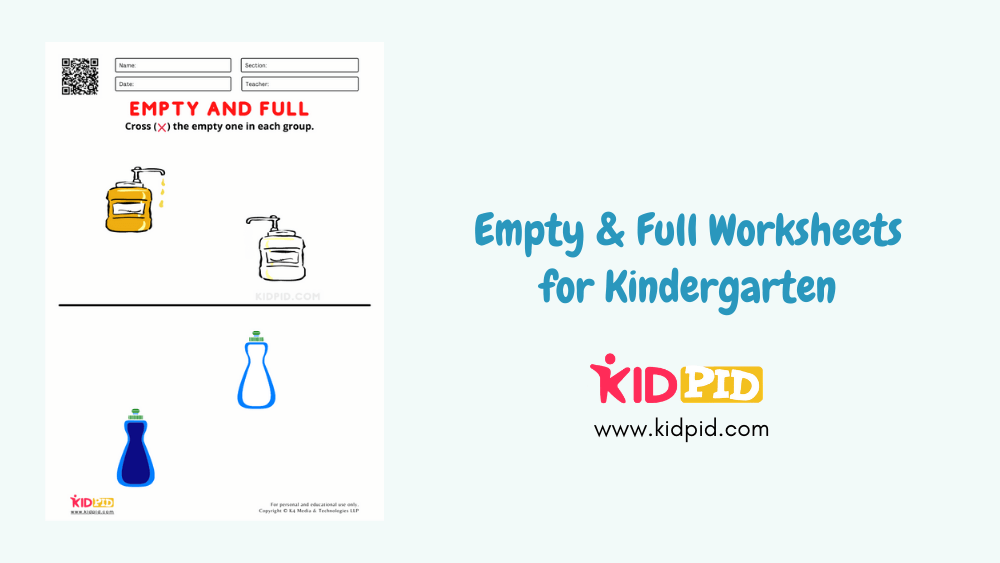
As kids learn new words, it’s important that they have a good understanding of their meanings as well. At this age, children are very perceptive, and learning comes naturally to them. However, by using creative worksheets, learning can happen in a fun way. In the following worksheets, we will focus on the concept of empty and full through easy examples.
Let’s go!
[Scroll Down for Download Link]
Contents
- Empty & Full Worksheets for Kindergarten
- Key Facts About Empty Full Worksheets for Kindergarten
- Parts/Types/Examples of Empty Full Worksheets for Kindergarten
- How Do Empty-Full Worksheets for Kindergarten Work?
- Benefits of Learning About Empty and Full Worksheets for Kindergarten
- Learning Objectives
- Worksheet Instructions
- Interesting Facts About Empty and Full Worksheets for Kindergarten
- Real-Life Applications
- FAQs
- Q1. What are Empty Full Worksheets for Kindergarten?
- Q2. Why are empty and full concepts important?
- Q3. At what age should children learn empty and full concepts?
- Q4. How do these worksheets improve learning?
- Q5. Can empty and full worksheets be used at home?
- Q6. What skills do children develop through these worksheets?
- Q7. Are empty and full worksheets suitable for beginners?
- Q8. How can teachers use these worksheets in the classroom?
Empty & Full Worksheets for Kindergarten
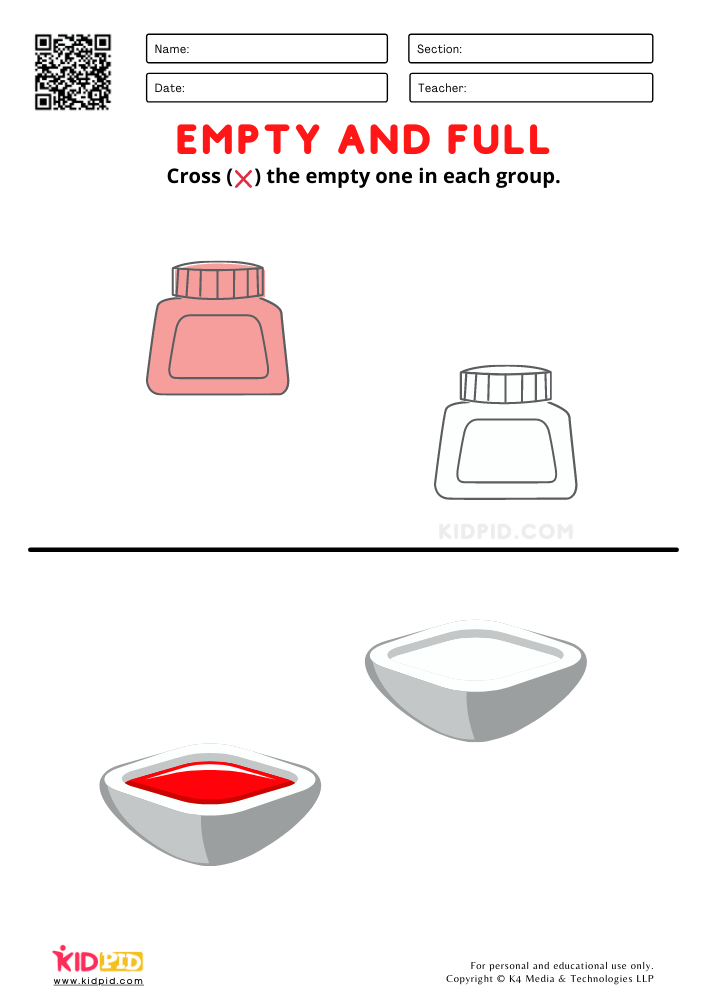
The activity is to cross out the empty item. Kids can identify the items and accordingly complete the worksheet.
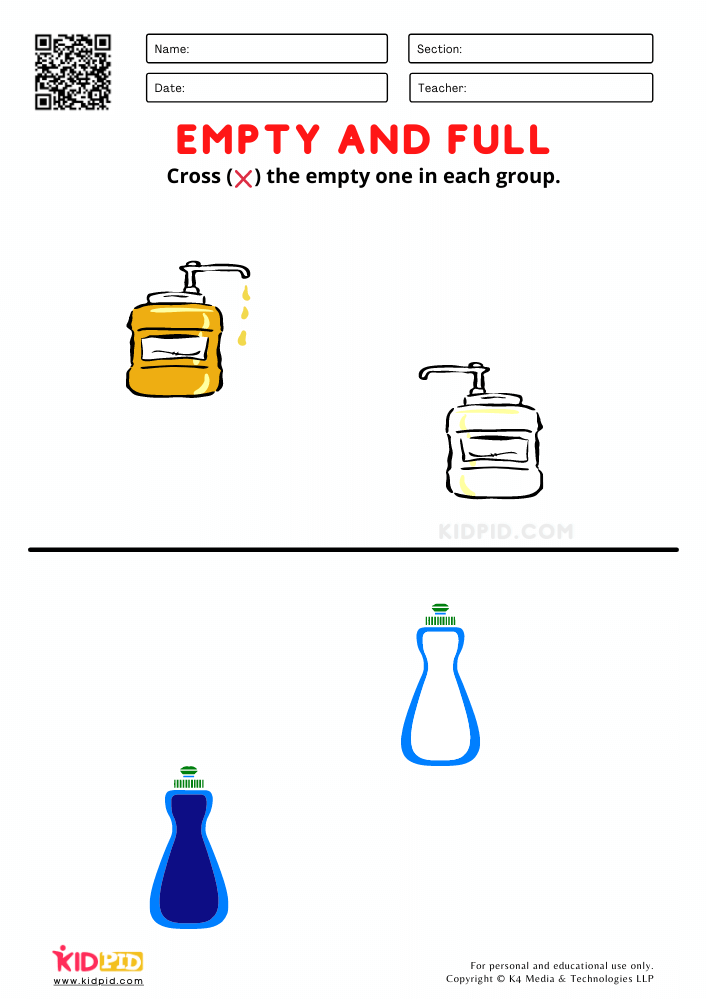
Colours help children to easily understand what the image is trying to say and ultimately help in understanding the concept. Make sure to cross out the empty items!
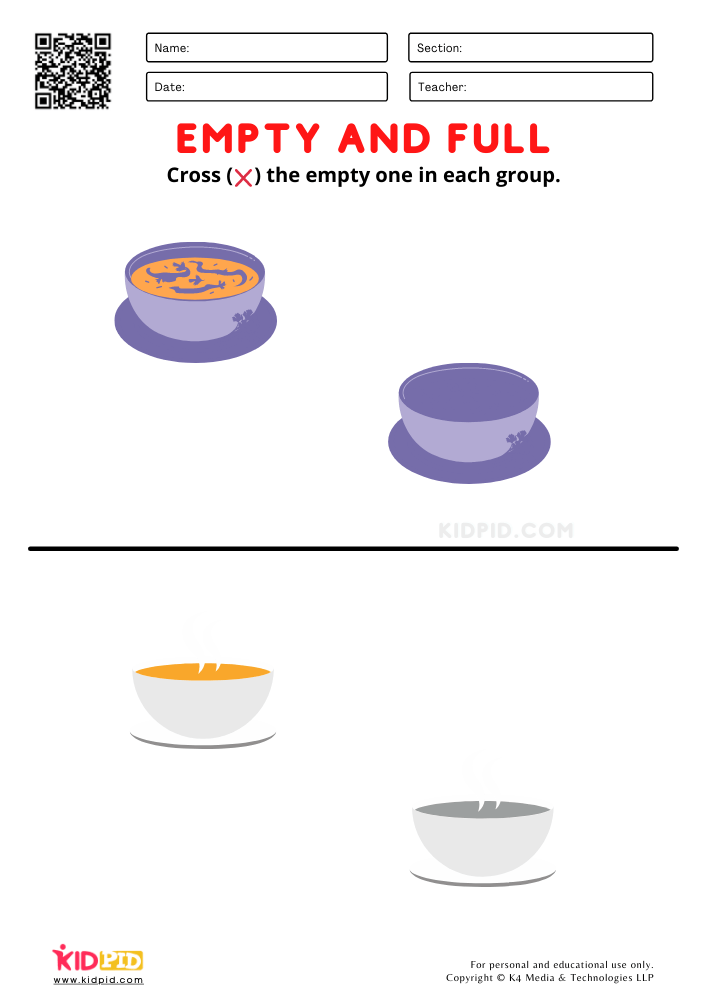
Bowls and cups are regular items that all kids have used. Familiar items allow children to relate to what they’re learning, and that increases their interest.
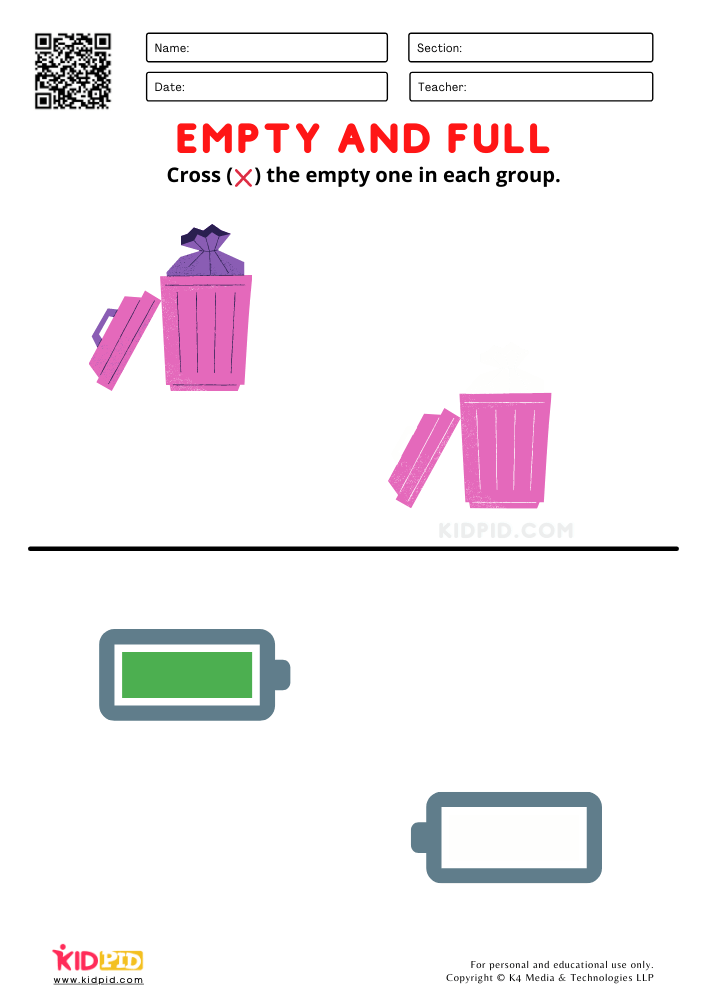
Kids of the new generation have grown up with smart devices, and looking at familiar icons makes learning concepts easier for them.
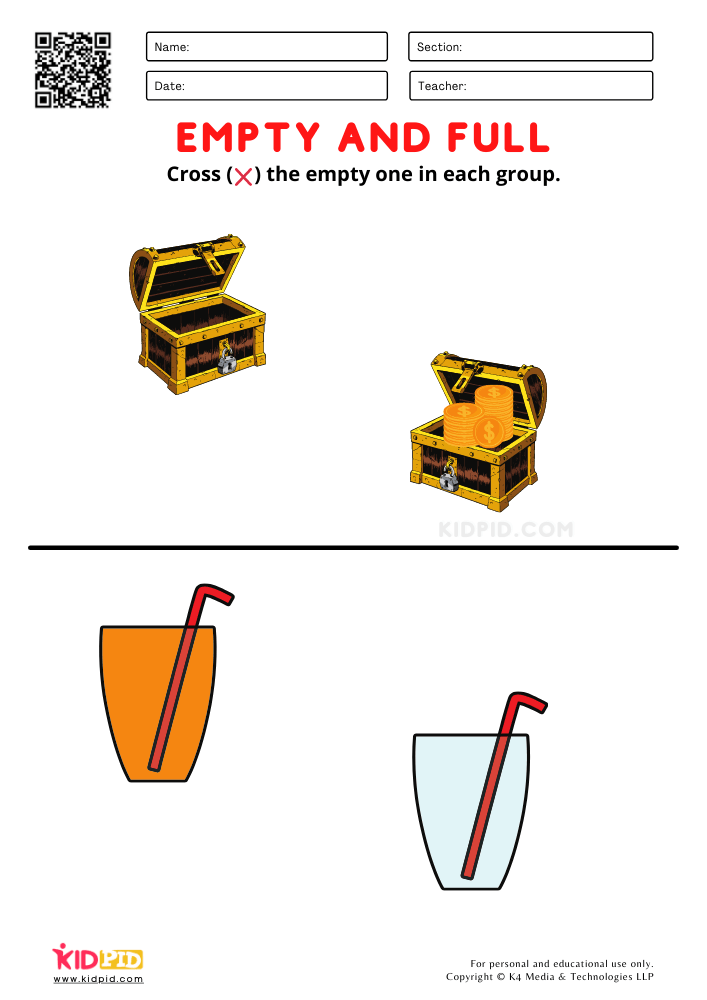
Kids can easily recognize the items in the images and call them out. This will help them recall words they’ve already learnt while learning new concepts.
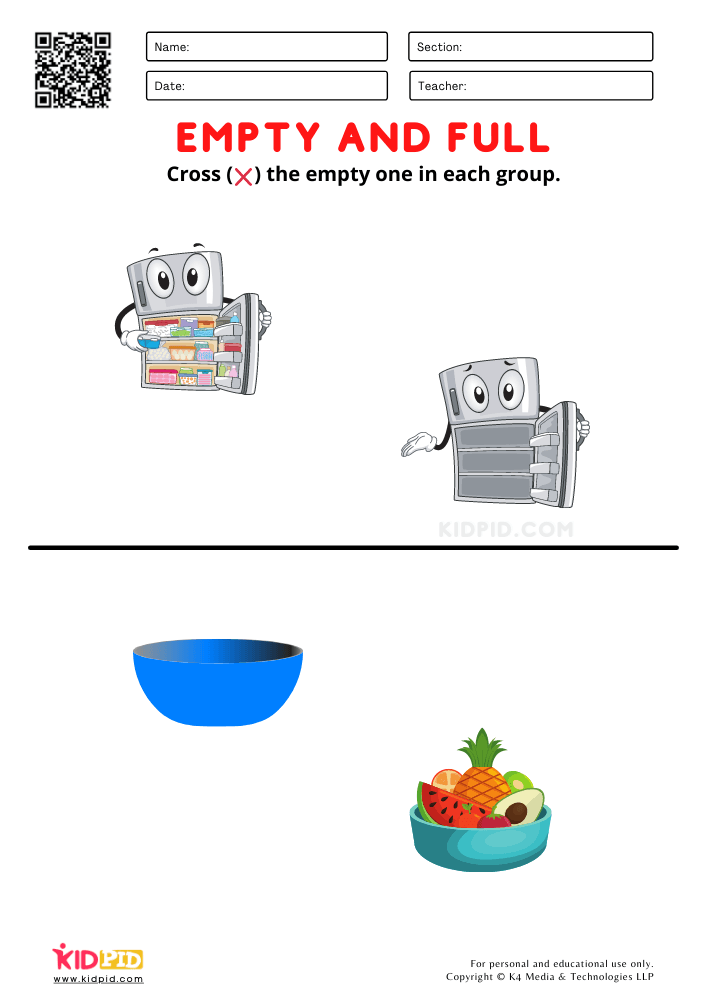
A fridge and fruits – these are very closely related to each other. Kids can recognize this similarity as they classify the items as empty and full.
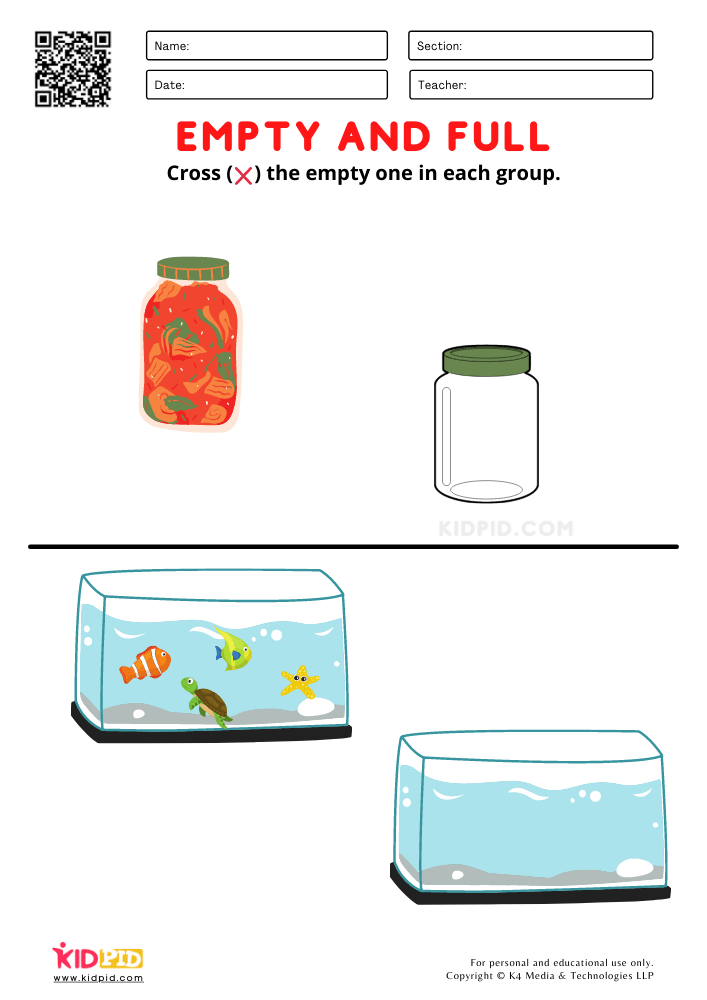
Most children show a keen interest in animals. This worksheet is sure to hold their attention and help them learn.
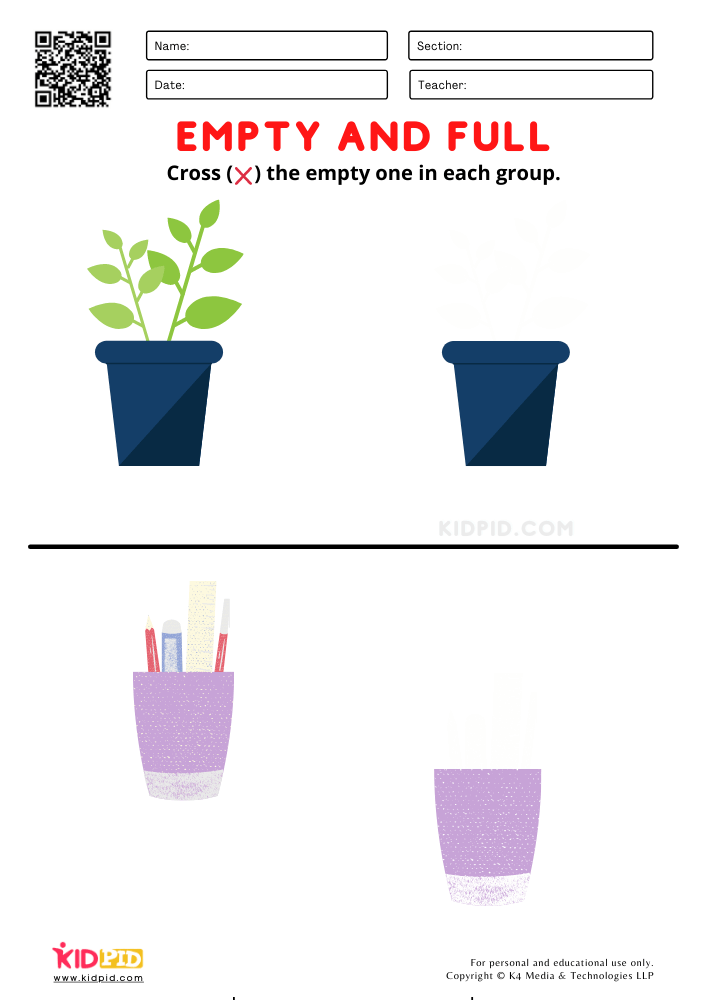
The items in this worksheet can be easily found in anyone’s surroundings, and this will help kids remember concepts very well.
Key Facts About Empty Full Worksheets for Kindergarten
Empty Full Worksheets for Kindergarten help young children understand the basic concept of quantity and capacity. These worksheets teach students to identify whether containers, objects, or spaces are empty or full through engaging visual activities. Kindergarten learners develop observation skills, comparison abilities, and early mathematical thinking while completing these exercises. The worksheets often include real-life objects such as cups, baskets, bottles, jars, and boxes to make learning meaningful and relatable. Understanding empty and full concepts builds a strong foundation for measurement, volume, and logical reasoning skills that students will use in higher grades.
Parts/Types/Examples of Empty Full Worksheets for Kindergarten
Different types of empty and full worksheets help children practice the concept in various ways:
- Picture Identification Worksheets – Students identify whether objects are empty or full.
- Coloring Activities – Children color empty and full containers using different colors.
- Matching Worksheets – Learners match empty objects with other empty objects and full objects with full ones.
- Cut and Paste Activities – Students sort pictures into empty and full categories.
- Circle the Correct Answer Worksheets – Children choose the correct option based on the image.
- Real-Life Object Comparison Activities – Worksheets featuring bottles, cups, bowls, and baskets.
Examples include identifying an empty glass versus a full glass or comparing a basket with no fruits to one filled with fruits.
How Do Empty-Full Worksheets for Kindergarten Work?
These worksheets present visual examples of objects with different levels of content. Students carefully observe each image and determine whether it is empty or full. Activities may require coloring, circling, matching, drawing lines, or cutting and pasting pictures. Through repeated practice, children learn to recognize capacity differences and understand how objects can hold varying amounts. The visual nature of the worksheets makes them easy for young learners to understand and apply in everyday situations.
Benefits of Learning About Empty and Full Worksheets for Kindergarten
Learning through empty and full worksheets offers many educational benefits:
- Develops early measurement and capacity concepts.
- Strengthens visual discrimination skills.
- Improves observation and attention to detail.
- Builds critical thinking and comparison abilities.
- Supports mathematical readiness.
- Enhances vocabulary development.
- Encourages real-world problem-solving skills.
- Promotes independent learning and confidence.
- Helps children understand basic science and volume concepts.
- Makes learning interactive and enjoyable.
Learning Objectives
By completing Empty Full Worksheets for Kindergarten, children will be able to:
- Identify empty and full objects correctly.
- Compare quantities visually.
- Understand basic capacity concepts.
- Use descriptive vocabulary related to quantity.
- Improve observation and classification skills.
- Develop logical reasoning abilities.
- Recognize real-world examples of empty and full containers.
- Build foundational math and measurement skills.
- Follow simple instructions independently.
- Apply learned concepts in daily activities.
Worksheet Instructions
- Look carefully at each picture.
- Decide whether the object is empty or full.
- Circle, color, or mark the correct answer as directed.
- Match similar empty and full objects when required.
- Complete cut-and-paste activities by sorting pictures correctly.
- Check your answers before moving to the next page.
- Discuss the objects with a parent or teacher to reinforce learning.
- Practice identifying empty and full objects around your home or classroom.
Interesting Facts About Empty and Full Worksheets for Kindergarten
- The concept of empty and full is one of the first measurement skills children learn.
- Understanding capacity helps prepare children for advanced math topics.
- Young learners often understand visual quantity concepts before numerical measurement.
- Empty and full activities improve critical observation skills.
- Everyday objects like cups and bottles provide excellent learning examples.
- Capacity concepts are used in cooking, science experiments, and daily household tasks.
- Visual learning activities help children retain concepts more effectively.
- Early measurement skills contribute to future academic success.
Real-Life Applications
Children use empty and full concepts regularly in daily life:
- Checking if a water bottle needs refilling.
- Determining whether a glass contains juice or is empty.
- Helping with cooking and measuring ingredients.
- Organizing containers at home.
- Understanding storage and packing concepts.
- Participating in science activities involving liquids.
- Learning about recycling bins and waste containers.
- Managing school supplies and storage boxes.
- Developing practical decision-making skills.
- Understanding basic volume and capacity in everyday situations.
FAQs
Q1. What are Empty Full Worksheets for Kindergarten?
Answer: These are educational worksheets designed to teach children how to identify and compare empty and full objects using visual activities.
Q2. Why are empty and full concepts important?
Answer: They help children understand capacity, measurement, comparison, and observation skills that support future mathematical learning.
Q3. At what age should children learn empty and full concepts?
Answer: Most children begin learning these concepts between ages 4 and 6 during preschool and kindergarten.
Q4. How do these worksheets improve learning?
Answer: They provide hands-on visual practice that strengthens observation, vocabulary, and logical thinking skills.
Q5. Can empty and full worksheets be used at home?
Answer: Yes. Parents can use these worksheets to reinforce classroom learning and encourage real-world practice.
Q6. What skills do children develop through these worksheets?
Answer: Children develop comparison skills, visual discrimination, measurement awareness, vocabulary, critical thinking, and problem-solving abilities.
Q7. Are empty and full worksheets suitable for beginners?
Answer: Yes. They are specifically designed for young learners and use simple, engaging visuals to introduce basic concepts.
Q8. How can teachers use these worksheets in the classroom?
Answer: Teachers can use them as independent practice, group activities, assessment tools, homework assignments, or learning center activities.
Build early measurement and vocabulary skills with these Empty & Full Worksheets for Kindergarten. Fun printable activities help children identify empty and full objects, strengthen observation, develop comparison skills, and enhance everyday learning through interactive practice. Browse educational worksheets, engaging essays, fun paragraphs, flashcards, quizzes, and interactive resources on our website. Stay connected via YouTube & Facebook.
The Content Team has prepared this worksheet to encourage academic progress.
Reviewed By Kartik
Read More: