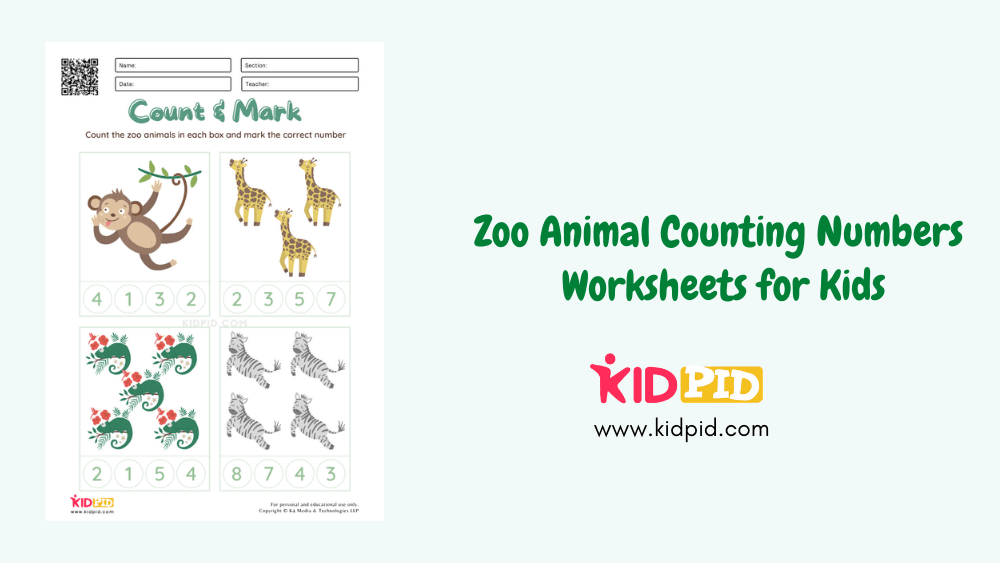
Children at that young age are very interested and inherently want to know about the different animals because they think the animals are cool and fun. So, by using the animals from the zoo, we have brought an edition where the kid will count the number of animals and then circle the correct number. Learning about various types of animals and counting them will be an interesting phase in a child’s education campaign, and what better way to teach them than using entertaining and picturesque worksheets?
[Scroll Down for Download Link]
Contents
- Zoo Animal Counting Practice Worksheets
- Key Facts About Zoo Animal Counting Numbers Worksheets
- Parts/Types/Examples of Zoo Animal Counting Worksheets
- How Does the Zoo Animal Counting Worksheet Work?
- Benefits of Learning About Zoo Animal Counting Numbers
- Learning Objectives
- Worksheet Instructions
- Interesting Facts About Zoo Animals & Numbers
- Vocabulary Words
- Real-Life Applications
- FAQs
Zoo Animal Counting Practice Worksheets
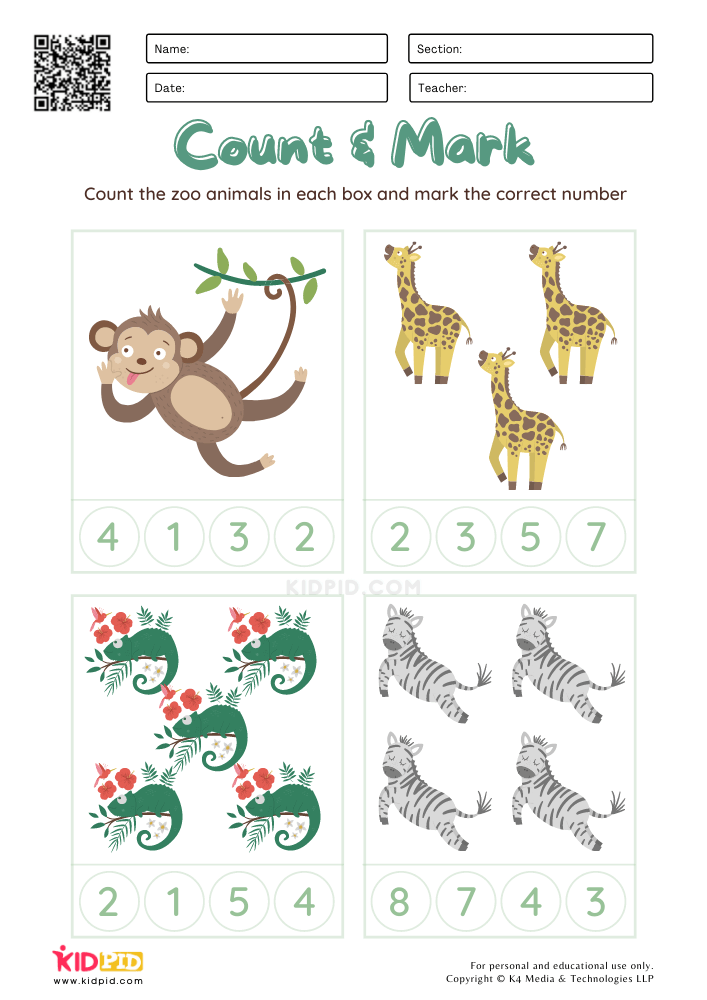
This first worksheet represents the four different animals. There are a few numbers given at the end of each animal. The child needs to count how many animals are present in each box. You can direct the child and point out each animal as they learn the word for it- this will help them envision the numbers that they’re studying.
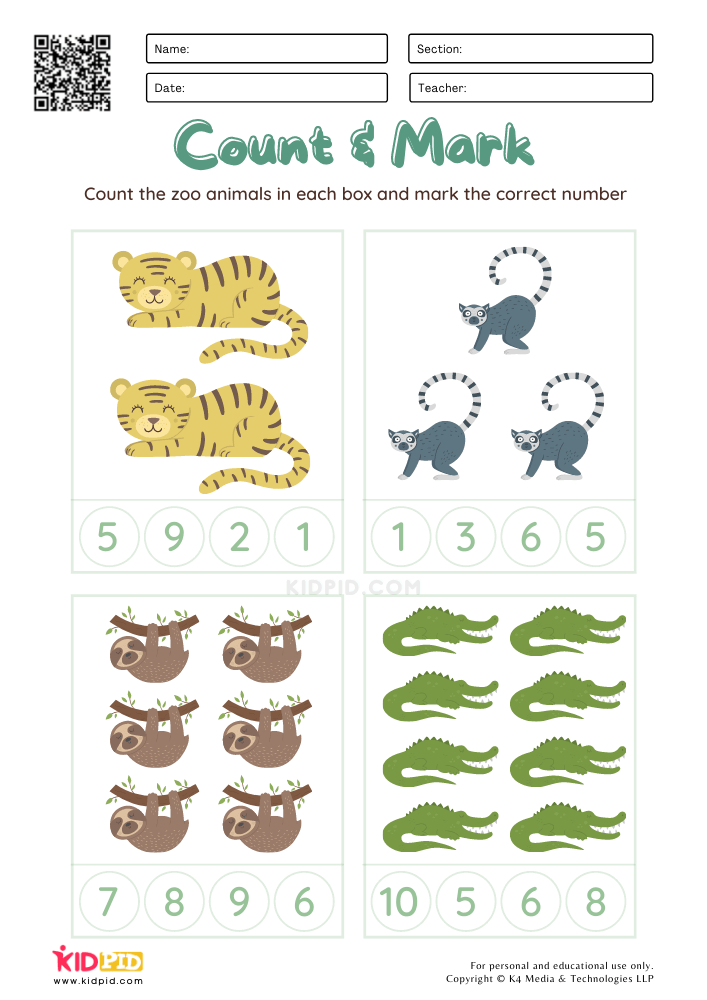
The second worksheet works in the same way. Have some fun with your kid by making the activity more interesting and helping them learn better. This will keep them excited and focus-driven throughout the process. Learning to count will help the kids express themselves adequately, both literally and in writing. Help the kid if he gets into any trouble.
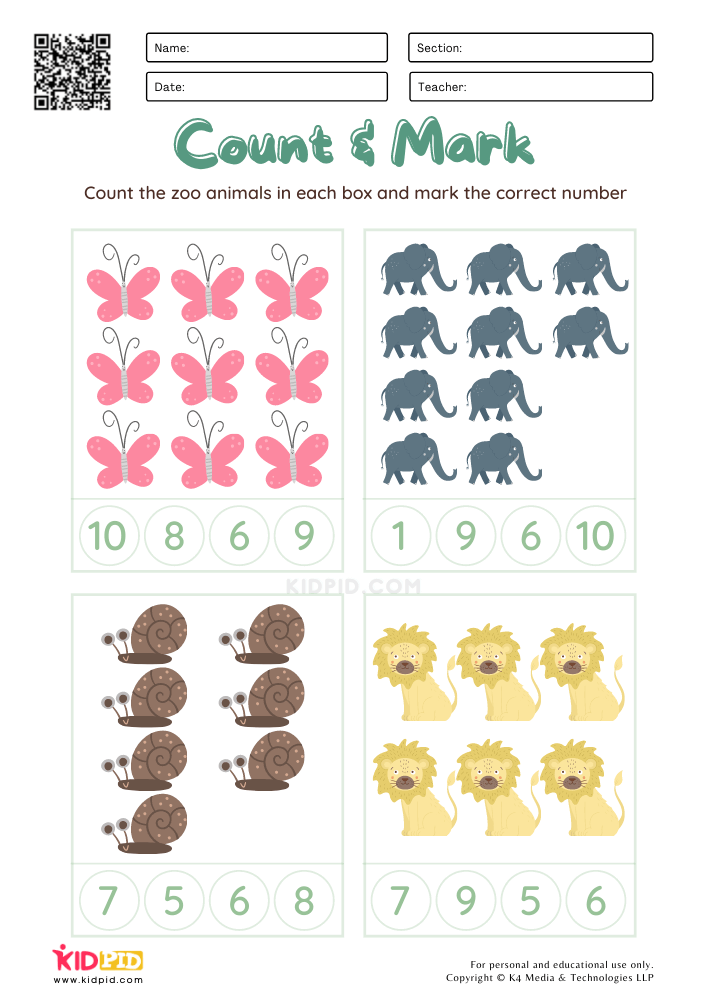
The third and final worksheet will help the kid to completely understand the given concept. In this final worksheet, make the kid do the thing on his own. This is where the information transferred will come in handy for the child. It is quite simple to do, and the child should not face any difficulty while solving this, but if they do, the child’s queries need to be answered.
Key Facts About Zoo Animal Counting Numbers Worksheets
- Target Audience: Perfect for toddlers, preschoolers, and kindergarten-aged children (ages 2 to 5).
- Core Skills Addressed: Early numeracy, number recognition, visual tracking, and fine motor pencil control.
- Design Format: High-contrast, engaging zoo animal illustrations paired with multiple-choice number options to reduce frustration for early writers.
- Pedagogical Approach: Utilizes theme-based contextual learning (zoo animals) to naturally lower cognitive barriers and increase engagement in young learners.
Parts/Types/Examples of Zoo Animal Counting Worksheets
These printable sheets are divided into progressive sections featuring a variety of beloved animals that kids love to recognize.
- Themed Grouping Boxes: Each sheet contains structured boxes featuring uniform clusters of specific animals (e.g., a box of friendly lions, a group of tall giraffes, or a family of elephants).
- Varying Quantity Fields: Quantities typically range from 1 to 10, allowing children to build confidence with smaller numbers before moving to higher digits.
- Number Choice Rows: Positioned directly beneath or beside each animal cluster is a selection of numbers. For example, a box with 4 monkeys will display the options “3, 4, 5” for the child to evaluate and select.
How Does the Zoo Animal Counting Worksheet Work?
The mechanics of these worksheets are rooted in foundational cognitive development strategies:
- Visual Separation: The child focuses on a single isolated box to prevent visual overwhelm.
- Point-and-Count Execution: The child physically or visually points to each animal one by one, practicing the “one-to-one correspondence” rule (assigning one number to one object).
- Numerical Matching: Once the total is found, the child scans the provided number options, reinforcing the connection between a quantity they just counted and its written symbol (the numeral).
- The Action Step: The child circles or colors the correct number, which locks in the learning and provides a clear indicator of success.
Benefits of Learning About Zoo Animal Counting Numbers
Introducing early math through these interactive sheets provides several distinct developmental advantages:
- Improves One-to-One Correspondence: This is the critical math milestone where a child understands that counting “1, 2, 3” corresponds to exactly three physical objects, rather than just reciting numbers from memory.
- Enhances Cognitive Focus and Attention Span: Tracking multiple objects within an enclosed boundary trains the brain to maintain focus and prevents “skipping” items.
- Boosts Fine Motor Skills: Holding a crayon or pencil to cleanly circle a specific number strengthens the small hand muscles needed for future writing.
- Encourages Independent Problem Solving: The simple multiple-choice structure allows kids to self-correct if their count doesn’t match any of the provided number options.
Learning Objectives
By completing these math worksheets, the student will be able to:
- Accurately count groups of objects up to 10 without repeating or omitting items.
- Identify and recognize written numbers (digits 1–10) out of sequential order.
- Demonstrate basic data tracking by checking off or pointing to objects systematically (left to right, top to bottom).
- Express mathematical quantities both verbally (“There are five bears!”) and structurally by circling the correct symbol.
Worksheet Instructions
To get the most out of this activity, follow these simple steps with your child:
- Look and Name: Pick a box on the worksheet and ask your child to name the zoo animal they see to build excitement.
- Touch and Count: Have your child use their finger or the eraser end of a pencil to touch each animal as they loudly count out loud: “One, two, three…”
- Find the Number: Look at the row of numbers at the bottom of the box. Ask, “Can you find the number that matches what you just counted?”
- Circle It: Have your child draw a circle around the correct number using their favorite colored pencil or crayon. Parent Tip: If they miscount, don’t just give them the answer! Say, “Let’s count them together one more time just to be sure,” and guide their finger.
Interesting Facts About Zoo Animals & Numbers
Keep your little learner engaged between pages with these fun, numbers-focused animal facts:
- Giraffes only need to sleep for about 2 hours a day—and they usually do it standing up!
- Elephants have 4 massive legs, but did you know they are one of the only mammals that cannot jump?
- A lion’s roar is so incredibly loud that other animals can hear it from up to 5 miles away!
- Flamingos love the number 1—they almost always stand on just one leg to save their body heat.
Vocabulary Words
Introduce these key terms while working through the sheets to build both math and language literacy:
- Count: To find the total number of things by naming them one by one.
- Quantity: How much or how many of something there is.
- Numeral: The written symbol that stands for a number (like the symbol “3” means three things).
- Zoo: A safe place where wild animals live so people can visit, look at them, and learn about them.
- Match: To find two things that belong together (like a group of 4 birds matching the number 4).
Real-Life Applications
Math doesn’t stop when the paper is turned over! You can easily translate these worksheet skills into everyday routines:
- Grocery Shopping: Ask your child to help you count out exactly 5 red apples or 3 bananas into your shopping cart.
- Toy Cleanup: Turn cleanup time into a game by asking them to count out 10 blocks or 4 toy cars as they put them back into the bin.
- Mealtime Math: Before eating, have them count the number of carrots on their plate or the number of spoons on the dinner table.
FAQs
Q1. What is the ideal age for these zoo animal counting worksheets?
Answer: These sheets are best suited for children aged 3 to 5 years old (Preschool and Kindergarten). However, younger toddlers who are showing early interest in numbers can use them with heavy parental guidance.
Q2. Why use zoo animals instead of simple shapes like circles or squares?
Answer: Children learn best through context and storytelling. Colorful zoo animals capture a child’s imagination, keeping them engaged far longer than abstract shapes would, which significantly improves knowledge retention.
Q3. My child keeps counting the same animal twice. How can I help them?
Answer: This is very common! Encourage them to use a crayon to put a small dot or an “X” on each animal as they count it. This gives them a visual marker showing which animals have already been counted.
Q4. How do these worksheets prepare my child for elementary school math?
Answer: Before children can learn addition or subtraction, they must master number sense and cardinality (knowing that the last number counted represents the total amount). These worksheets directly build that essential foundation.
The good thing about these worksheets is that the kids will not get bored at any stage. The child must know the importance of these worksheets and how this is going to help him develop his mental abilities. That is very essential. After handing in the worksheet, the parents have to be responsible as well for being competent and supervising them if they make errors. This is all a kid needs in his early days before going to school. It will also encourage them to complete the course of simple counting in a very simple way. So, give your best to make your kid smart by not letting him get dull or bored. Explore fresh learning resources, including essays, worksheets, quizzes, paragraphs, flashcards, and creative educational projects. Follow us on YouTube & Facebook.
This worksheet was created by the Content Team to promote academic improvement.
Reviewed By Madhulika
Read More: